


1. Search Result
Search Result
Results for "

amphiphilic properties

" in MedChemExpress (MCE) Product Catalog:

14

Inhibitors & Agonists

2

Fluorescent Dyes

7

Biochemical Assay Reagents

1

Peptides

1

Natural
Products

3

Oligonucleotides

Cat. No. Product Name Target Research Areas Chemical Structure
  • HY-145942

    Biochemical Assay Reagents Others
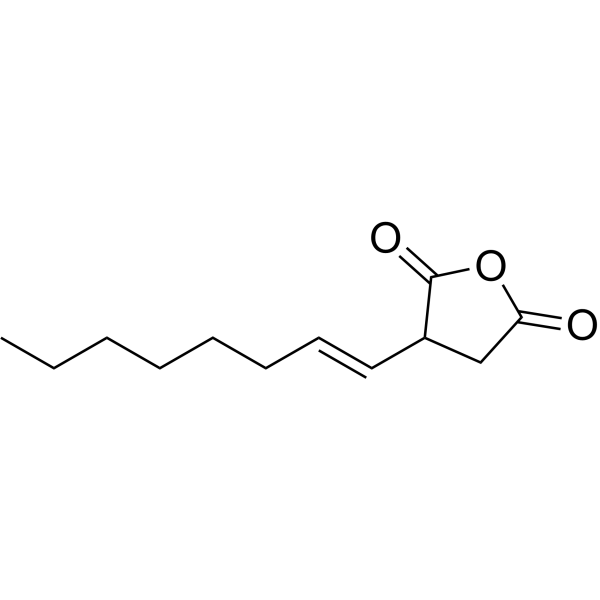
    Octenyl succinic anhydride is a versatile chemical intermediate. Octenyl succinic anhydride can undergo esterification with polysaccharides such as starch and Inulin (HY-N7075). Octenyl succinic anhydride affects the intermolecular interactions on the outer surfaces of two starch granules by altering the molecular surface structure. Octenyl succinic anhydride modifies the properties of polysaccharides. Octenyl succinic anhydride can be used for starch esterification to produce OS-starch, an amphiphilic hydrocolloid .
    Octenyl succinic anhydride
  • HY-W127703
    Octadecyl Rhodamine B chloride
    1 Publications Verification

    Fluorescent Dye Biochemical Assay Reagents Others
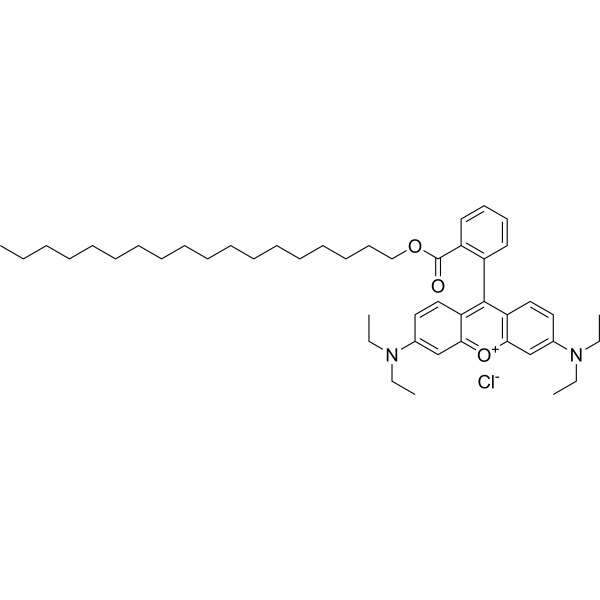
    Octadecyl Rhodamine B chloride is an amphiphilic fluorescent probe with both membrane-binding ability and fluorescent properties, which easily forms aggregates in aqueous phase leading to self-quenching. Octadecyl Rhodamine B chloride can be used for cell membrane staining and further applied in membrane biology research. The maximum absorption/emission wavelengths of Octadecyl Rhodamine B chloride monomer in Triton X-100 are 565 nm/585 nm; the absorption peaks of aggregates in water are blue-shifted to 524 nm and 574 nm, with significantly quenched fluorescence .
    Octadecyl Rhodamine B chloride
  • HY-W440896

    Liposome Others
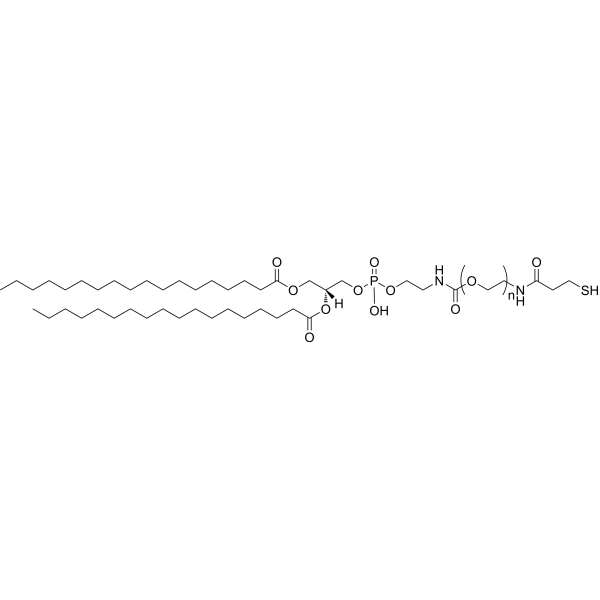
    DSPE-PEG2000-SH is an amphiphilic thiol-functionalized DSPE-PEG molecule. DSPE-PEG2000-SH inserts into extracellular vesicle (EV) bilayer membranes via hydrophobic interactions, displaying surface thiol groups to form EV-SH crosslinkers.DSPE-PEG2000-SH enables crosslinking of EV-SH with 8-arm PEG-norbornene via thiol-ene photochemistry to construct hydrogels, with hydrogel mechanical properties tunable via PEG segment molecular weight variation.DSPE-PEG2000-SH can be used to encapsulate agents for drug delivery system, such as mRNA vaccine .
    DSPE-PEG2000-SH
  • HY-154644

    Environmental Pollutants Biochemical Assay Reagents Cancer
    Soya Lecithin is a phospholipid mixture that can be used as a drug delivery vehicle and is a pharmaceutical excipient. Soya Lecithin can form a lipid bilayer structure through self-assembly, and its binding properties are amphiphilic (hydrophilic head and hydrophobic tail), encapsulating hydrophobic drugs. Soya Lecithin forms stable nanoliposomes or microemulsions, improves the solubility and cellular uptake efficiency of poorly soluble drugs (such as Curcumin (HY-N0005)), and exerts activities such as enhancing drug delivery and regulating cell proliferation .
    Soya Lecithin
  • HY-W923198

    Methacryloyloxy fluorescein

    Fluorescent Dye Others
    Fluorescein O-methacrylate (Methacryloyloxy fluorescein) is a pH-responsive fluorescent monomeric dye. Fluorescein O-methacrylate exhibits pH-responsive fluorescence properties: its fluorescence is activated under alkaline conditions and quenched under neutral or acidic conditions; reversible switching of fluorescence is achievable by adjusting the pH of the solution. Fluorescein O-methacrylate can be used as a monomer for the synthesis of amphiphilic fluorescein polymers. These polymers can self-assemble into stable polymer nanoparticles with enhanced aqueous-phase fluorescence, and also enable the conjugation of nanoparticles with amine-containing biomolecules to support sensitive optical detection of biomarkers (Ex/Em = 490/520 nm) .
    Fluorescein O-methacrylate
  • HY-W440886

    Liposome Others
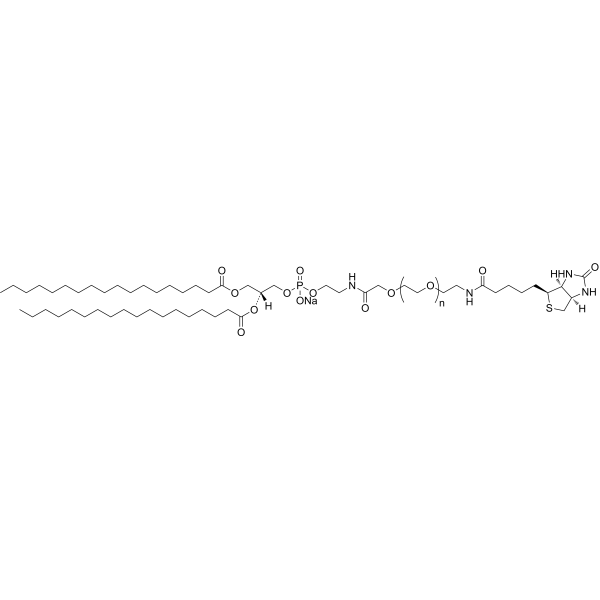
    DSPE-PEG3400-Biotin is a phospholipid PEG for biotinylation. The amphiphilic property of the DSPE-PEG is useful for precision drug delivery and cancer therapy.
    DSPE-PEG3400-Biotin
  • HY-W099642

    Trimethyl-n-octylammonium bromide

    Biochemical Assay Reagents Others
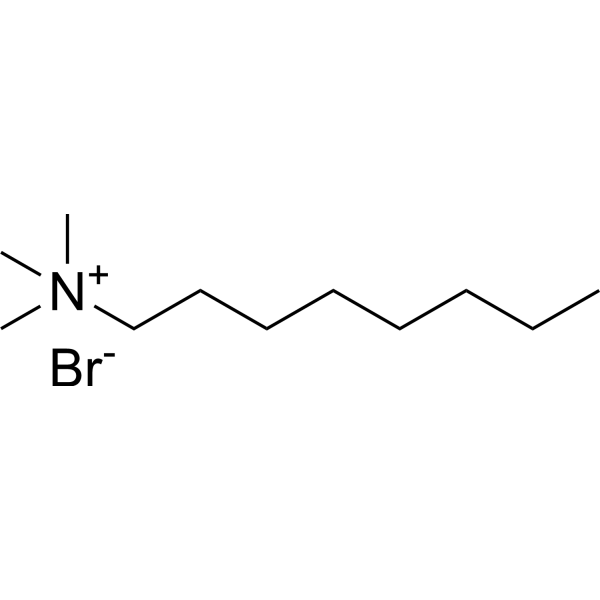
    Trimethyloctylammonium bromide (TOAB) is used as a surfactant and phase transfer catalyst in various chemical reactions. TOAB can be used in the synthesis of nanomaterials due to its ability to selectively transfer ions across interfaces and as a surfactant in the production of emulsions and foams. It is valued for its amphiphilic properties, which allow it to interact with water and oils, stabilizing and dispersing mixtures.
    Trimethyloctylammonium bromide
  • HY-D1005A4

    PEG-PPG-PEG, 1630 (Average)

    Biochemical Assay Reagents Infection
    Poloxamer 122 L42 (PEG-PPG-PEG, 1630 (Average)) is a synthetic nonionic triblock copolymer composed of polyoxyethylene-polyoxypropylene, with emulsifying and wetting properties. Poloxamer 122 L42 forms large spherical aggregates in aqueous solutions near its cloud point,. Poloxamer 122 L42 can form thermoreversible hydrogels, and is also used in research related to serving as a drug delivery carrier in the fields of food additives, cosmetics, pharmaceutical preparations and tissue engineering .
    Poloxamer 122 (L42)
  • HY-157922

    α-D-Glucopyranosyl-α-D-glucopyranoside monododecanoate

    Biochemical Assay Reagents Others
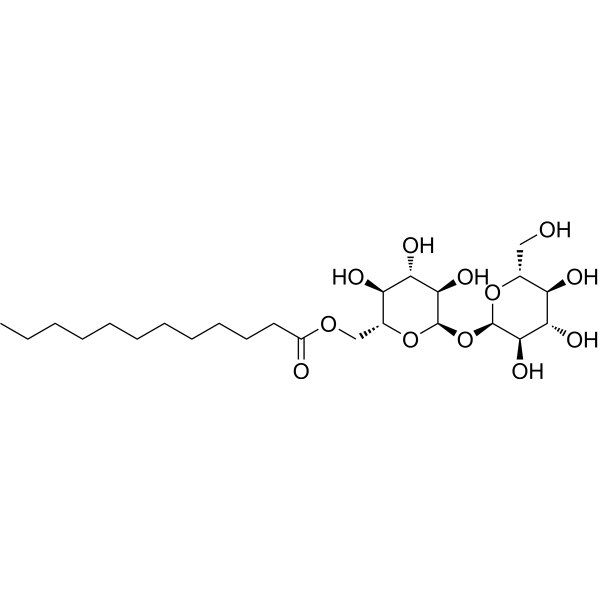
    Trehalose C12 (α-D-Glucopyranosyl-α-D-glucopyranoside monododecanoate) is a nonreducing disaccharide with amphiphilic property, which is used as emulsifier, surfactant, encapsulating materials, and in the biochemical researches of cellular processes and membrane interactions .
    Trehalose C12
  • HY-W008974

    Biochemical Assay Reagents Others
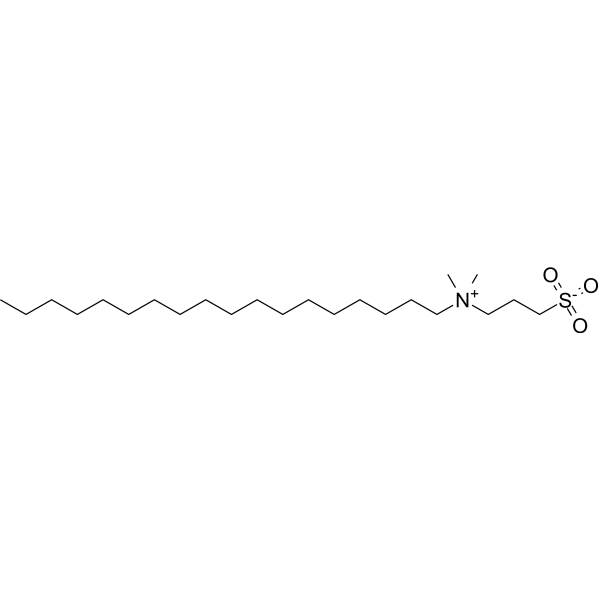
    3-(Dimethyl(octadecyl)ammonio)propane-1-sulfonate is a class of quaternary ammonium compounds. It is a surfactant and cationic detergent with amphiphilic properties and therefore useful in various industrial and biomedical applications. 3-(Dimethyl(octadecyl)ammonium)propane-1-sulfonate is commonly used as an emulsifier, solubilizer and antimicrobial agent in personal care products, detergents, textiles and pharmaceutical formulations. It is also used as a reagent in analytical chemistry, especially in the analysis of proteins and DNA.
    Sulfobetaine-18
  • HY-162828

    STAT HDAC Cancer
    STAT3/HDAC-IN-2 (compound 18) is a dual inhibitor of STAT3 and HDAC, inducing autophagy and apoptosis. STAT3/HDAC-IN-2 is an amphiphilic hydroxamic acid hybrid based on the natural product isopropanol lactone (IAL) and is a nanoscale anticancer agent. STAT3/HDAC-IN-2 can self-assemble in water to form nanoparticles, which have higher tumor tissue accumulation, cellular uptake and anticancer properties compared to the free state .
    STAT3/HDAC-IN-2
  • HY-154871

    Drug Derivative Biochemical Assay Reagents Others
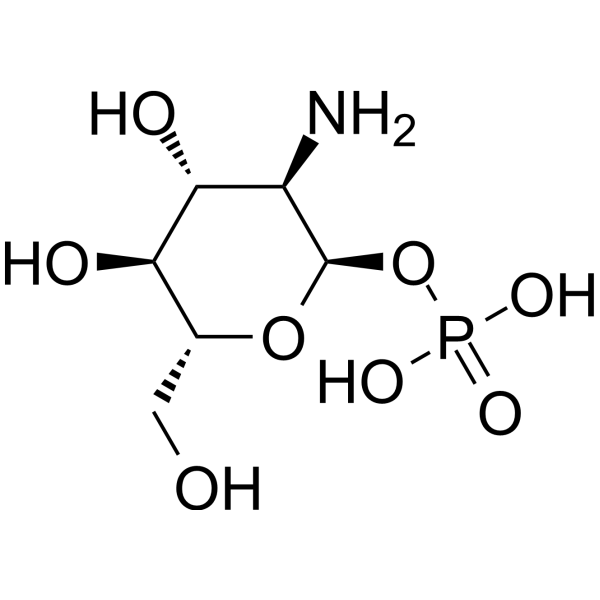
    α-D-Glucosamine 1-phosphate is a glycosyl donor analog of Glc-1-P. α-D-Glucosamine 1-phosphate acts as a glycosyl donor to produce α(1→4)-linked glucosamine chains in the enzyme-catalyzed polymerization reaction mediated by thermostable α-glucan phosphorylase. α-D-Glucosamine 1-phosphate serves as a glycosyl donor analog to generate a pentasaccharide with a glucosamine residue at the non-reducing end in the maltotetraose glucosamination reaction catalyzed by potato α-glucan phosphorylase. α-D-Glucosamine 1-phosphate is used for the synthesis of amphiphilic block polysaccharides with pH-responsive assembly/disassembly properties .
    α-D-Glucosamine 1-phosphate
  • HY-171936

    GM1 (d18:1/C18:0) ammonium; C18 Ganglioside GM1 (d18:1/18:0) ammonium

    Endogenous Metabolite Neurological Disease
    Ganglioside GM1 (ammonium) is a monosialylated ganglioside and the prototypic ganglioside for those containing one sialic acid residue. Ganglioside GM1 (ammonium) is one of the most abundant gangliosides in the brain which provides neuroprotection. Ganglioside GM1 (ammonium) exhibits anti-inflammatory property. Ganglioside GM1 (ammonium) has a well-balanced amphiphilic behavior. Ganglioside GM1 (ammonium) can reduce the fluidity of the plasma membrane that implies a retention and enrichment of the ganglioside in specific membrane domains that are called lipid rafts. Ganglioside GM1 (ammonium) can modify the process of differentiation, amplifies responses to neurotrophic factors, protects against excitatory amino acid-related neurotoxicity. Ganglioside GM1 (ammonium) can alleviate acute nerve cell damage through blocking cytotoxicity and potentiating neurotophic factors. Ganglioside GM1 (ammonium) can be studied in neurodegenerative diseases such as Alzheimer’s disease .
    Ganglioside GM1 ammonium
  • HY-119753

    SC-31828

    Others
    Disobutamide (SC-31828) is an orally active, blood-brain barrier permeable cationic amphiphilic ditertiary amine piperidine ring compound with antiarrhythmic properties. Disobutamide induces lysosomal phospholipid accumulation, which triggers extensive cytoplasmic vacuolization and leads to cell death. Disobutamide prolongs multiple electrocardiographic intervals in canine hearts, induces cardiac arrest at high doses, and causes decreased retinal reflectivity. Disobutamide can be used in studies related to arrhythmias, and also serves as a model drug for investigating the storage mechanisms and toxicity thresholds of intracellular amphiphilic compounds .
    Disobutamide

Inquiry Online

Your information is safe with us. * Required Fields.

Salutation


Country or Region *

Applicant Name *


Organization Name *

Department *


Email Address *


Product Name *

Cat. No.


Requested quantity *

Phone Number *


Remarks

Inquiry Online

Inquiry Information

Product Name:
Cat. No.:
Quantity:
MCE Japan Authorized Agent:

