1. Search Result
Search Result
Results for "

anion transporter

" in MedChemExpress (MCE) Product Catalog:

24

Inhibitors & Agonists

6

Natural
Products

3

Recombinant Proteins

1

Antibodies

Cat. No. Product Name Target Research Areas Chemical Structure
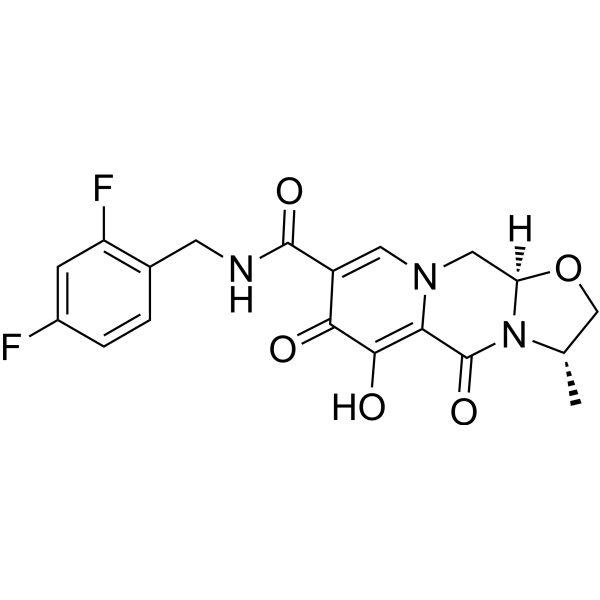
  • HY-15592
    Cabotegravir
    10+ Cited Publications

    GSK-1265744; S/GSK1265744

    OAT HIV HIV Integrase Infection
    Cabotegravir (GSK-1265744) is a orally active and long-acting HIV integrase strand transfer inhibitor and organic anion transporter 1/3 (OAT1/OAT3) inhibitor with IC50 values of 2.5 nM, 0.41 μM and 0.81 μM for HIVADA, OAT3 and OAT1, respectively. Cabotegravir is primarily metabolized by uridine diphosphate glucuronosyltransferase (UGT) 1A1, with low potential to interact with other antiretroviral agents (ARVs). Cabotegravir can be used to research AIDS .
    Cabotegravir
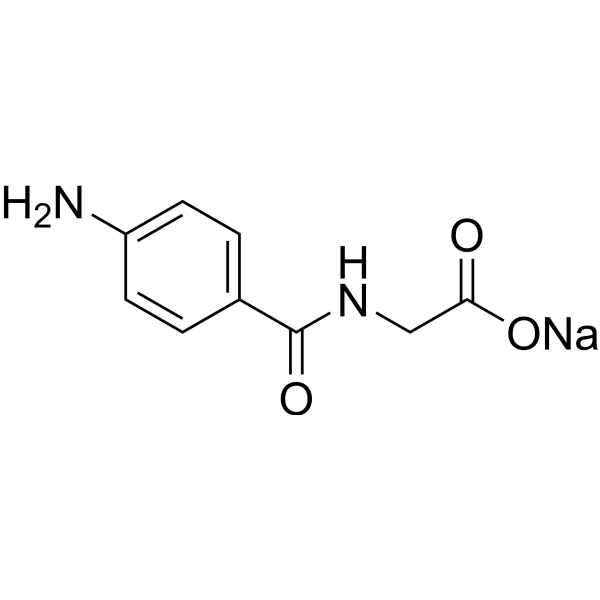
  • HY-A0080
    Aminohippurate sodium
    4 Publications Verification

    Sodium p-aminohippurate; p-Aminohippuric acid sodium salt

    Biochemical Assay Reagents
    Aminohippurate sodium is a renal tubular transport inhibitor and a substrate for organic anion transporters. Aminohippurate sodium inhibits renal tubular reabsorption of phosphate and promotes increased urinary phosphate excretion. Aminohippurate sodium inhibits renal tubular reabsorption of vitamin C as well as the transport of glucose .
    Aminohippurate sodium
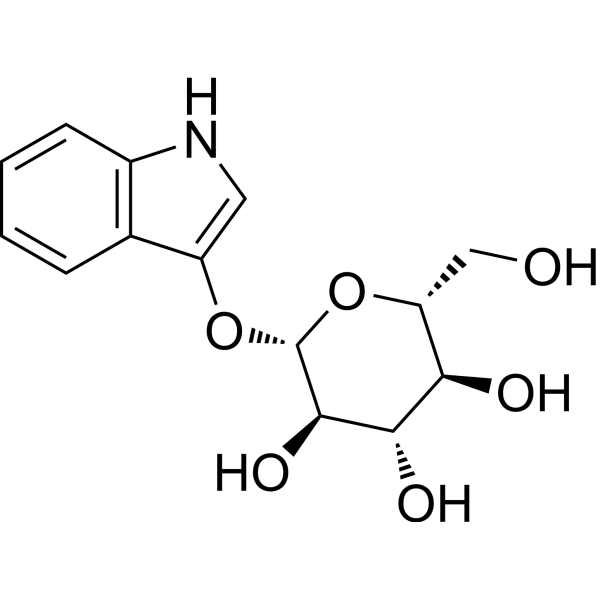
  • HY-122009

    Indoxyl-β-D-glucoside

    P-glycoprotein OAT Fluorescent Dye Others
    Indican (Indoxyl-β-D-glucoside), a glycoside of indoxyl, is a precursor of the dyesindigo and indirubin. Indican has a major metabolite, indoxyl sulfate (IS). IS, an uremic toxin, is a substrate/inhibitor of organic anion transporter (OAT) 1, OAT 3 and multidrug resistance-associated protein (MRP) 4 .
    Indican
  • HY-113493

    Endogenous Metabolite Metabolic Disease
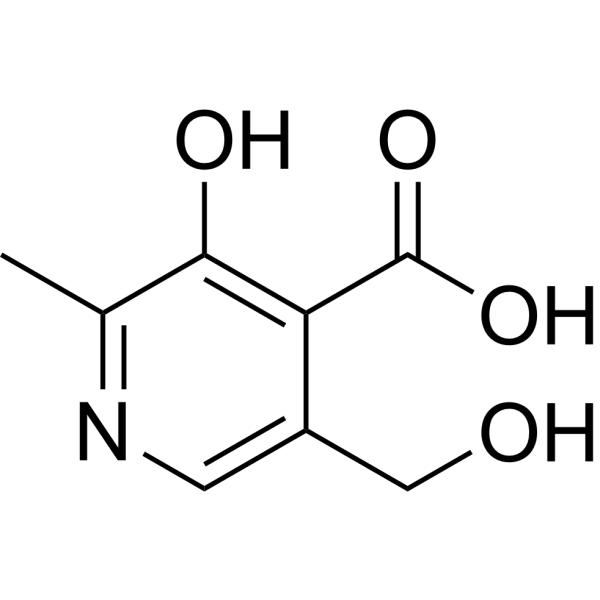
    4-Pyridoxic acid is an endogenous substrate of renal organic anion transporters (OAT1/3) and a catabolite of vitamin B6. 4-Pyridoxic acid is excreted through OAT1/3-mediated tubular active secretion, which can reflect OAT1/3 activity. Elevated plasma concentrations of 4-Pyridoxic acid are associated with decreased OAT1/3 activity in chronic kidney disease (CKD) and can be used as a biomarker to reflect the severity of knee osteoarthritis (KOA) and lumbar spondylosis (LS) .
    4-Pyridoxic acid
  • HY-W042301

    Anion Exchangers Carbonic Anhydrase Endothelin Receptor Cardiovascular Disease
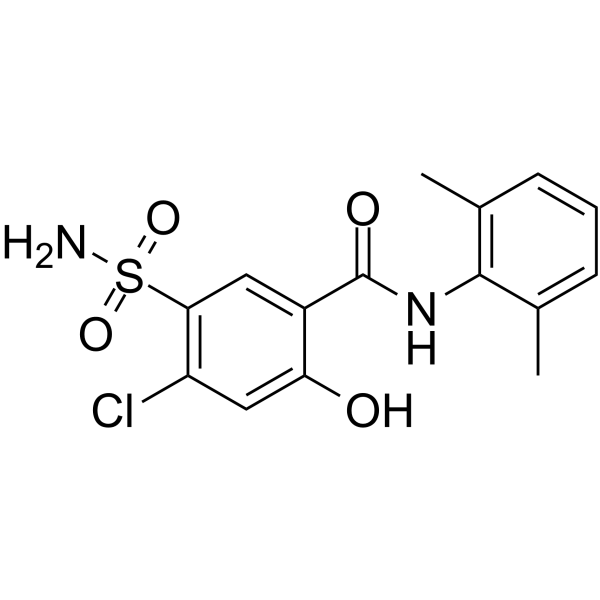
    Xipamide is an orally active carbonic anhydrase (CA) inhibitor and Na +/Cl --potassium transporter inhibitor with diuretic and antihypertensive effects. Xipamide reduces NaCl reabsorption by inhibiting the Cl -/NaCO3 - anion exchanger, and increases calcium reabsorption while promoting potassium and magnesium excretion. Xipamide is mainly cleared via the renal pathway and causes a temporary decrease in glomerular filtration rate under specific conditions. Xipamide does not affect Ca 2+ signaling induced by endothelin-1 and other factors, nor does it inhibit various ion cotransport or pump activities in red blood cells. Xipamide can be used in researches related to cardiovascular diseases, hypertension (especially with left ventricular hypertrophy), advanced renal failure, and liver cirrhosis with ascites .
    Xipamide
  • HY-W404916
    Probenecid sodium
    Maximum Cited Publications
    43 Publications Verification

    Influenza Virus Interleukin Related Cardiovascular Disease Infection Neurological Disease Inflammation/Immunology
    Probenecid sodium is an orally active, blood-brain barrier-permeable Pannexin 1 channel inhibitor. Probenecid sodium exhibits anti-inflammatory, antiviral, and neuroprotective activities. Probenecid sodium can be used in research related to multiple sclerosis, focal cerebral ischemic injury, influenza virus infection, and nephropathy .
    Probenecid sodium
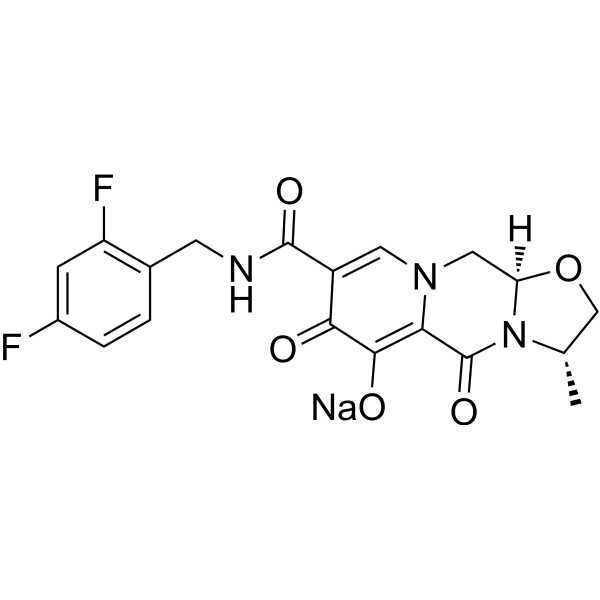
  • HY-15592A
    Cabotegravir sodium
    10+ Cited Publications

    GSK-1265744 sodium; S/GSK1265744 sodium

    OAT HIV HIV Integrase Infection
    Cabotegravir (GSK-1265744) sodium is a orally active and long-acting HIV integrase strand transfer inhibitor and organic anion transporter 1/3 (OAT1/OAT3) inhibitor with IC50 values of 2.5 nM, 0.41 μM and 0.81 μM for HIVADA, OAT3 and OAT1, respectively. Cabotegravir sodium is primarily metabolized by uridine diphosphate glucuronosyltransferase (UGT) 1A1, with low potential to interact with other antiretroviral agents (ARVs). Cabotegravir sodium can be used to research AIDS .
    Cabotegravir sodium
  • HY-158991

    CFTR Inflammation/Immunology
    I1421 is an activator of the cystic fibrosis transmembrane conductance regulator (CFTR) with an EC50 of 64 nM for WT CFTR currents. I1421 also allosterically activates multiple mutants causing cystic fibrosis (CF) with good in vivo potency, with an oral bioavailability of 60% in mice corresponding to a half-life of 75 min. I1421 synergizes with Elexacaftor (HY-111772) to enhance CFTR currents .
    I1421
  • HY-B1127

    N-Benzoyl-β-alanine

    Antibiotic Bacterial Infection Endocrinology
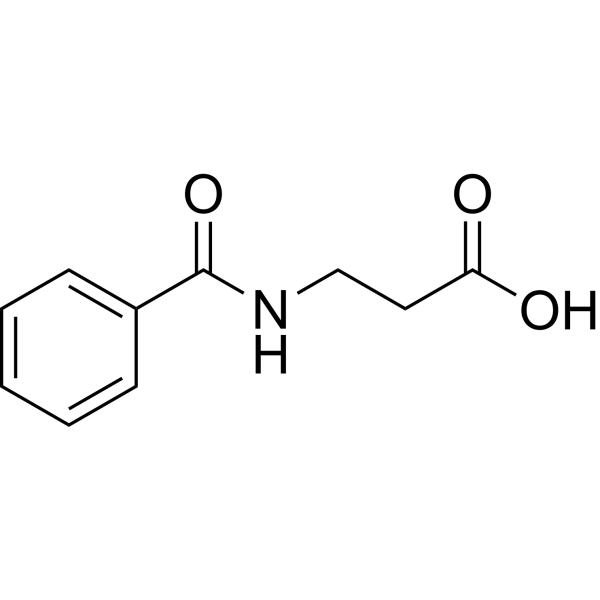
    Betamipron (N-benzoyl-β-alanine) is a carbapenem β-lactam antibiotic with antibacterial activity against most Gram-positive and Gram-negative aerobic and anaerobic bacteria. Betamipron can target and inhibit renal organic anion transporters, alleviate renal injury caused by Cisplatin (HY-17394), without interfering with the biological activity of cisplatin. Betamipron is often used in combination with panipenem, which can attenuate the renal effects induced by panipenem and slightly promote the proliferation of Clostridium difficile in the cecum. Betamipron can be used in studies related to renal injury and bacterial infection .
    Betamipron
  • HY-148682

    Glycyrrhetic acid 3-O-hydrogen sulfate

    OAT 11β-HSD Drug Metabolite Metabolic Disease Inflammation/Immunology
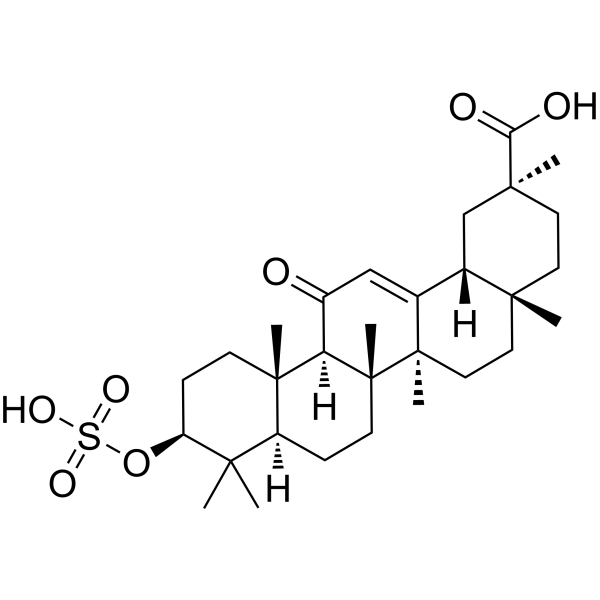
    18β-Glycyrrhetyl-3-O-sulfate (Glycyrrhetic acid 3-O-(hydrogen sulfate)) is a potent type 2 11β-hydroxysteroid dehydrogenase (11β-HSD2) inhibitor with an IC50 of 0.10 µM using rat kidney microsome. 18β-Glycyrrhetyl-3-O-sulfate is the major metabolite of Glycyrrhetinic acid (GA). 18β-Glycyrrhetyl-3-O-sulfate is the substrate of organic anion transporter (OAT) 1 and OAT3. 18β-Glycyrrhetyl-3-O-sulfate has anti-inflammatory effects and has the potential for pseudohyperaldosteronism research .
    18β-Glycyrrhetyl-3-O-sulfate
  • HY-111345

    UR-1102; URC-102

    OAT URAT1 Metabolic Disease Inflammation/Immunology
    Epaminurad (UR-1102) is an orally active, potent and selective URAT1 (urate transporter 1) inhibitor, with a Ki of 0.057 μM. Epaminurad quite modestly inhibits OAT1 and OAT3 (organic anion transporter). Epaminurad is a uricosuric agent. Epaminurad can be used for gout and hyperuricemia research .
    Epaminurad
  • HY-174148

    Anion Exchangers Ferroptosis Cancer
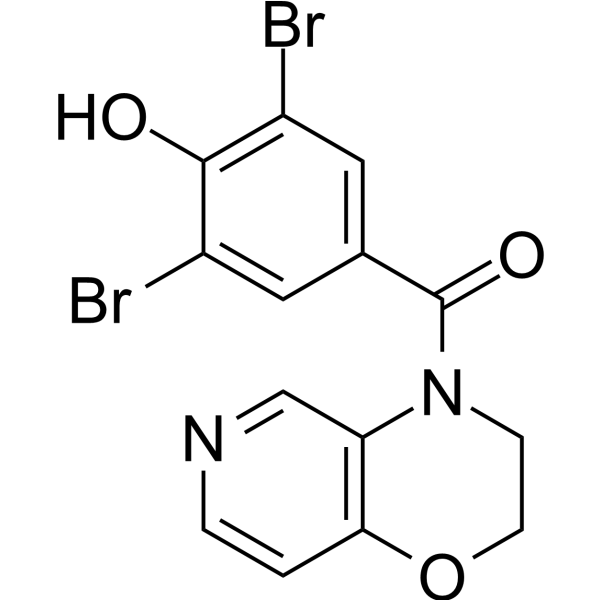
    Anion transporter-4 (Compound 6) is a small-molecule anion transporter, which induces tubulin degradation and mitochondrial dysfunction. Anion transporter-4 can increase intracellular anion levels such as chloride ions by disrupting microtubule dynamics, promoting lipid peroxidation, and impairing mitochondrial function. Anion transporter-4 triggers ferroptosis to exert anticancer activity. Anion transporter-4 is promising for research of cancers .
    Anion transporter-4
  • HY-111345A

    UR-1102 hydrochloride; URC-102 hydrochloride

    OAT URAT1 Metabolic Disease Inflammation/Immunology
    Epaminurad (UR-1102) hydrochloride is an orally active, potent and selective URAT1 (urate transporter 1) inhibitor, with a Ki of 0.057 μM. Epaminurad hydrochloride quite modestly inhibits OAT1 and OAT3 (organic anion transporter). Epaminurad hydrochloride is a uricosuric agent. Epaminurad hydrochloride can be used for gout and hyperuricemia research .
    Epaminurad hydrochloride
  • HY-W740244

    OAT Metabolic Disease
    4’-hydroxy Trazodone is a metabolite of the antidepressant and sedative trazodone. It is an inhibitor of organic anion transporter 3 (OAT3; Ki=16.9 μM) and is selective for OAT3 over OAT1 (Ki=>200 μM).
    4’-Hydroxy Trazodone
  • HY-148682R

    Glycyrrhetic acid 3-O-hydrogen sulfate (Standard)

    OAT Reference Standards 11β-HSD Drug Metabolite Metabolic Disease Inflammation/Immunology
    (Z)-Methyl icos-11-enoate (Standard) is the analytical standard of (Z)-Methyl icos-11-enoate. This product is intended for research and analytical applications. (Z)-Methyl icos-11-enoate is a biochemical reagent that can be used as a biological material or organic compound for life science related research.
    18β-Glycyrrhetyl-3-O-sulfate (Standard)
  • HY-15592R

    GSK-1265744 (Standard); S/GSK1265744 (Standard)

    OAT Reference Standards HIV HIV Integrase Infection
    Cabotegravir (Standard) is the analytical standard of Cabotegravir. This product is intended for research and analytical applications. Cabotegravir (GSK-1265744) is a orally active and long-acting HIV integrase strand transfer inhibitor and organic anion transporter 1/3 (OAT1/OAT3) inhibitor with IC50 values of 2.5 nM, 0.41 μM and 0.81 μM for HIVADA, OAT3 and OAT1, respectively. Cabotegravir is primarily metabolized by uridine diphosphate glucuronosyltransferase (UGT) 1A1, with low potential to interact with other antiretroviral agents (ARVs). Cabotegravir can be used to research AIDS .
    Cabotegravir (Standard)
  • HY-168524

    Na+/HCO3- Cotransporter Cancer
    SOAT-IN-1 (compound 40) is a potent and selective sodium-dependent organic anion transporter (SOAT) inhibitor with IC50 values of 1.6, 14.3 µM for SOAT, NTCP, respectively .
    SOAT-IN-1
  • HY-N12008

    OAT Metabolic Disease
    OAT1/3-IN-2 (compound 8) is a dual inhibitor of OAT1 and OAT3. OAT1/3-IN-2 can reverse the toxicity of Cys-Hg on HEK-OAT1 cells (10 μM) and has a potential protective effect on the kidneys. OAT1/3-IN-2 can be used to study mercury-induced kidney damage .
    OAT1/3-IN-2
  • HY-N12007

    OAT Metabolic Disease
    OAT1/3-IN-1 (compound 7) is a dual inhibitor of OAT1 and OAT3. OAT1/3-IN-1 can reverse the toxicity of Cys-Hg on HEK-OAT1 cells (10 μM) and has a potential protective effect on the kidneys. OAT1/3-IN-1 can be used to study mercury-induced kidney damage .
    OAT1/3-IN-1
  • HY-B1127R

    N-Benzoyl-β-alanine (Standard)

    Reference Standards Bacterial Antibiotic Infection Endocrinology
    Betamipron (Standard) is the analytical standard of Betamipron (HY-B1127). This product is intended for research and analytical applications. Betamipron (N-benzoyl-β-alanine) is a carbapenem β-lactam antibiotic with antibacterial activity against most Gram-positive and Gram-negative aerobic and anaerobic bacteria. Betamipron can target and inhibit renal organic anion transporters, alleviate renal injury caused by Cisplatin (HY-17394), without interfering with the biological activity of cisplatin. Betamipron is often used in combination with panipenem, which can attenuate the renal effects induced by panipenem and slightly promote the proliferation of Clostridium difficile in the cecum. Betamipron can be used in studies related to renal injury and bacterial infection .
    Betamipron (Standard)
  • HY-182542

    OAT Cancer
    SOAT-IN-3 is a selective inhibitor of sodium-dependent organic anion transporter (SOAT/SLC10A6). SOAT-IN-3 reduces intracellular estradiol synthesis, the process of dehydroepiandrosterone (DHEA) production from DHEAS, and DHEAS-induced cancer cell proliferation. SOAT-IN-3 shows no cytotoxicity against breast cancer cells at the tested concentrations. SOAT-IN-3 can be used in the research of breast cancer .
    SOAT-IN-3
  • HY-182767

    Na+/HCO3- Cotransporter Cancer
    SOAT-IN-2 is a selective sodium-dependent organic anion transporter (SOAT, SLC10A6) inhibitor. SOAT-IN-2 blocks sodium-dependent cellular uptake of sulfated steroid Dehydroepiandrosterone sulfate (DHEAS, HY-113416). SOAT-IN-2 reduces intracellular estradiol synthesis, DHEA (HY-14650) formation, and DHEAS-stimulated cancer cell proliferation without inducing cytotoxicity. SOAT-IN-2 can be used for the research of breast cancer .
    SOAT-IN-2
  • HY-78162

    ASCT Cancer
    cis-L-3-Hydroxyproline is an Alanine-Serine-Cysteine transporter 2 (ASCT2, SLC1A5) substrate that can induces inwardly-directed anion current, and forms key interactions with ASCT2 binding site residues including Asn471.cis-L-3-Hydroxyproline can be used for the research of melanoma .
    cis-3-Hydroxyproline
  • HY-N7308

    Drug Derivative Others
    Effususol A is a natural phenolic compound.
    Effususol A

Inquiry Online

Your information is safe with us. * Required Fields.

Salutation


Country or Region *

Applicant Name *


Organization Name *

Department *


Email Address *


Product Name *

Cat. No.


Requested quantity *

Phone Number *


Remarks

Inquiry Online

Inquiry Information

Product Name:
Cat. No.:
Quantity:
MCE Japan Authorized Agent:

