13 Results for "

antipsychotic drug

" in MedChemExpress (MCE) Product Catalog:
Products (13)

13 Results for "antipsychotic drug" in MCE Product Catalog:

Cat. No.: HY-W009247
CAS No.: 161696-76-0
Synonyms: N-Demethylolanzapine; LY170055
Target:  

Endogenous Metabolite

Research Areas:  

Neurological Disease

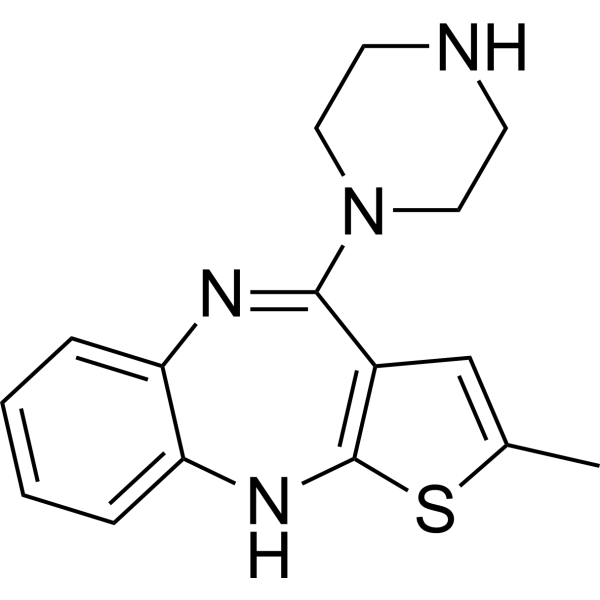
N-Desmethylolanzapine is an antipsychotic drug. The formation of N-Desmethylolanzapine correlates with the level and activity of human liver flavin-containing monooxygenase (FMO3). N-Desmethylolanzapine can be used in the study of antipsychotic drugs .
loading...
    loading...
Cat. No.: HY-156532
CAS No.: 2104810-18-4
Purity:  99.86%
Target:  

5-HT Receptor

Research Areas:  

Neurological Disease

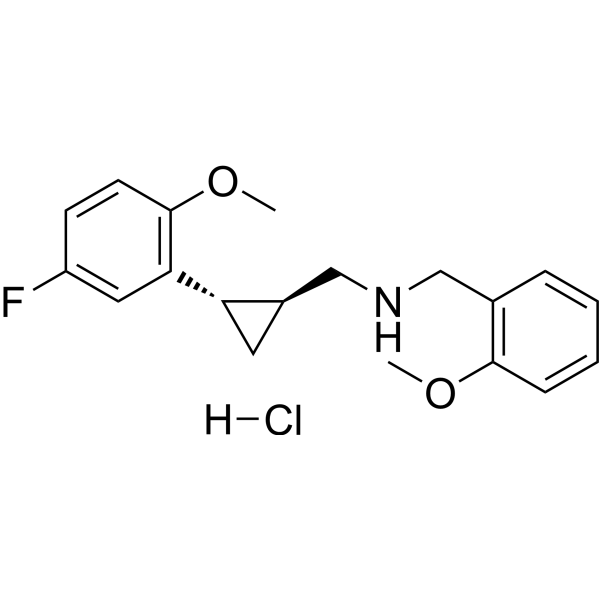
5-HT2C agonist-3 ((+)-19) is a selective 5-HT2C agonist (EC50: 24 nM, Ki: 78 nM). 5-HT2C agonist-3 has antipsychotic drug-like activity. 5-HT2C agonist-3 blocks Amphetamine-induced hyperactivity .
loading...
    loading...
Cat. No.: HY-10554
CAS No.: 1204607-09-9
Target:  

nAChR

Research Areas:  

Neurological Disease

WYE-103914 is an orally active α7 nAChR (EC50 = 0.49 µM for rat α7 nAChR, EC50 = 0.57 µM for human α7 nAChR) agonist. WYE-103914 exhibits the ability to enhance memory in multiple cognitive models. WYE-103914 is used in combination with antipsychotic drugs. WYE-103914 can be used for research on schizophrenia .
loading...
    loading...
Cat. No.: HY-W009247S1
CAS No.: 2711722-81-3
Synonyms: N-Demethylolanzapine-d8 hydrochloride; LY170055-d8 hydrochloride
N-Desmethylolanzapine-d8 hydrochloride (N-Demethylolanzapine-d8 hydrochloride) is the deuterium labeled N-Desmethylolanzapine (HY-W009247). N-Desmethylolanzapine is an antipsychotic drug. The formation of N-Desmethylolanzapine correlates with the level and activity of human liver flavin-containing monooxygenase (FMO3). N-Desmethylolanzapine can be used in the study of antipsychotic drugs .
loading...
    loading...
Cat. No.: HY-130689
CAS No.: 14008-46-9
Target:  

Endogenous Metabolite

Research Areas:  

Neurological Disease

Pinoxepin hydrochloride is an antipsychotic drug with sedative and antidepressant activities. Pinoxepin hydrochloride is used to suppress mental disorders such as schizophrenia and depression. Pinoxepin hydrochloride also has the effect of improving sleep quality .
loading...
    loading...
Cat. No.: HY-W424918
CAS No.: 316-07-4
Target:  

Dopamine Receptor

Research Areas:  

Neurological Disease

Opromazine hydrochloride is an antipsychotic medication that exhibits sedative and antiemetic pharmacological effects, making it effective for treating psychiatric disorders such as schizophrenia and psychosis. Opromazine hydrochloride functions by reducing dopaminergic activity through the blockade of dopamine receptors in the brain. Opromazine hydrochloride has been analyzed for its metabolites in various microsomal enzymes, revealing differences in formation rates that underscore the variability of drug-metabolizing enzymes in human liver and placenta microsomes.
loading...
    loading...
Cat. No.: HY-156532A
CAS No.: 2104810-17-3
Target:  

5-HT Receptor

Research Areas:  

Neurological Disease

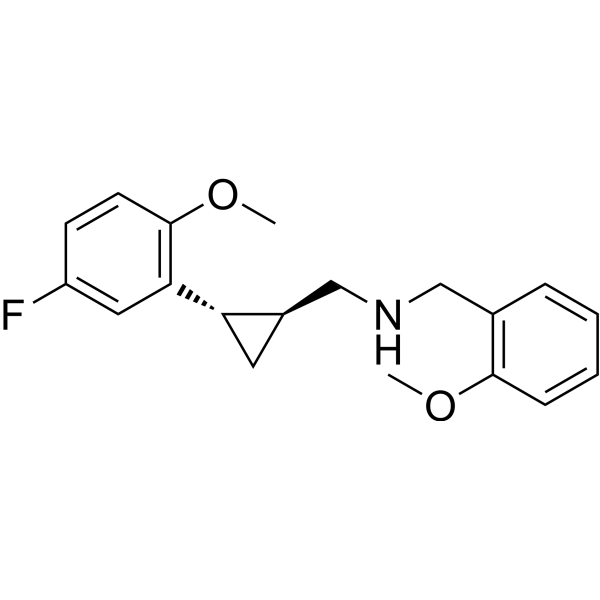
5-HT2C agonist-3 ((+)-19) free base is a selective 5-HT2C agonist (EC50: 24 nM, Ki: 78 nM). 5-HT2C agonist-3 free base has antipsychotic drug-like activity. 5-HT2C agonist-3 free base blocks Amphetamine-induced hyperactivity .
loading...
    loading...
Cat. No.: HY-117063
CAS No.: 145204-80-4
Target:  

5-HT Receptor

Research Areas:  

Endocrinology

LEK 8841 methanesulfonate is a gastrointestinal calming agent with strong selective 5-HT2 receptor antagonist activity. The antipsychotic potential of LEK 8841 has made it the focus of research into alternative medicines. LEK 8841 behaves as a pure competitive antagonist in response to 5-HT and norepinephrine, with pA2 values of 7.93 and 6.45, respectively. The selectivity of LEK 8841 is better than that of the comparative drug ketanserin, making it an important reference value in corresponding receptor research. Studies related to structural modifications have shown that LEK 8841 exhibits high affinity for 5-HT2 receptors and low alpha-adrenergic receptor activity .
loading...
    loading...
Cat. No.: HY-W009247R
CAS No.: 161696-76-0
Synonyms: N-Demethylolanzapine (Standard); LY170055 (Standard)
N-Desmethylolanzapine (Standard) is the analytical standard of N-Desmethylolanzapine. This product is intended for research and analytical applications. N-Desmethylolanzapine is an antipsychotic drug. The formation of N-Desmethylolanzapine correlates with the level and activity of human liver flavin-containing monooxygenase (FMO3). N-Desmethylolanzapine can be used in the study of antipsychotic drugs .
loading...
    loading...
Cat. No.: HY-W800259
CAS No.: 95586-99-5
Synonyms: trans-(3R)-BW 234U
Research Areas:  

Neurological Disease

trans-(3R)-Rimcazole (trans-(3R)-BW 234U) is an antipsychotic agent. trans-(3R)-Rimcazole reduces drug-induced aggressive behavior in rats and exhibits antipsychotic activity. trans-(3R)-Rimcazole can be used for the research of psychosis .
loading...
    loading...
Cat. No.: HY-L225
260 compounds

Drug development is both expensive and time-consuming, with approximately one-third of drug discontinuations caused by severe adverse drug reactions (ADRs). Among these, drug-induced cardiotoxicity (DICT) is one of the primary reasons for late-stage clinical drug failures and market withdrawals. To date, cardiotoxicity has been observed in multiple drug classes, such as anticancer drugs, antipsychotics, antidepressants, antibiotics, and neurodegenerative disease medications. To reduce cardiac ADRs, it is crucial to determine the clinical relevance of DICT to treatment, elucidate the underlying molecular mechanisms, identify reliable biomarkers, and develop new diagnostic and therapeutic approaches.

MCE offers 260 cardiotoxicity compounds, including some FDA-approved drugs as well as inhibitors/blockers of the hERG potassium channel.

Cat. No.: HY-183489
CAS No.: 1357266-44-4
TAAR1-agonist-4 is a TAAR1 agonist and oral hypoglycemic agent with an EC50 of 0.0046 μM for TAAR1. TAAR1-agonist-4 alleviates antipsychotic-related metabolic side effects, improves negative and cognitive symptoms, and reduces drug abuse behaviors. TAAR1-agonist-4 is applicable to research on schizophrenia, acute manic episodes associated with bipolar disorder, and glucose intolerance .
loading...
    loading...
Cat. No.: HY-L121
430 compounds

5-HT receptors, also called Serotonin receptors, are a group of G protein-coupled receptors (GPCRs) and ligand-gated ion channels (LGICs) found in the central and peripheral nervous systems. These receptors are now classified into seven families, 5-HT1–7, comprising a total of 14 structurally and pharmacologically distinct mammalian 5-HT receptor subtypes. The 5-HT receptors influence various biological and neurological processes such as aggression, anxiety, appetite, cognition, learning, memory, mood, nausea, sleep, andthermoregulation. The serotonin receptors are the target of a variety of pharmaceutical drugs, including many antidepressants, antipsychotics, anorectics, antiemetics, gastroprokinetic agents, antimigraine agents, hallucinogens, and entactogens.

MCE 5-HT Receptor Compound Library consists of 430 5-HT receptor inhibitors and activators, which can be used for neuropsychiatric disorders drugs discovery.

  • 1

