1. Search Result
Search Result
Pathways Recommended: Antibody-drug Conjugate/ADC Related
Results for "

antipsychotic drugs

" in MedChemExpress (MCE) Product Catalog:

13

Inhibitors & Agonists

2

Screening Libraries

1

Natural
Products

1

Isotope-Labeled Compounds

Cat. No. 상품명 Target 연구분야 Chemical Structure
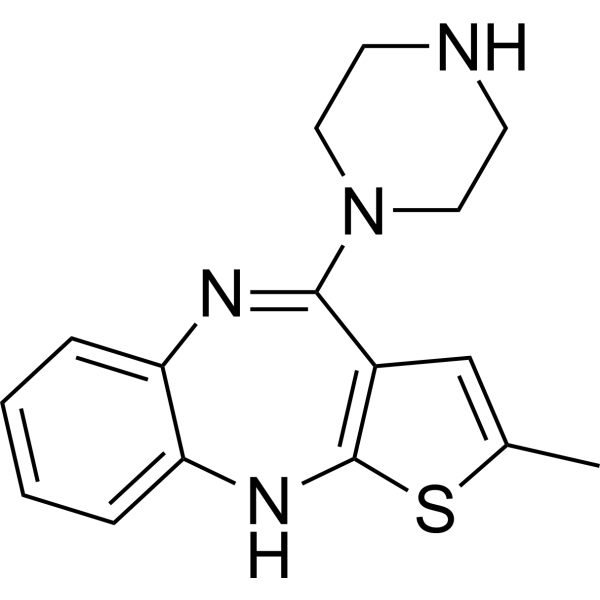
  • HY-W009247

    N-Demethylolanzapine; LY170055

    Endogenous Metabolite Neurological Disease
    N-Desmethylolanzapine is an antipsychotic drug. The formation of N-Desmethylolanzapine correlates with the level and activity of human liver flavin-containing monooxygenase (FMO3). N-Desmethylolanzapine can be used in the study of antipsychotic drugs .
    N-Desmethylolanzapine
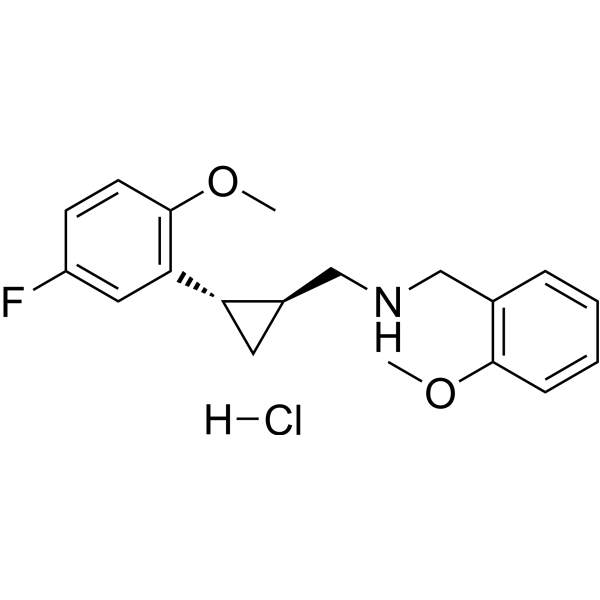
  • HY-156532

    5-HT Receptor Neurological Disease
    5-HT2C agonist-3 ((+)-19) is a selective 5-HT2C agonist (EC50: 24 nM, Ki: 78 nM). 5-HT2C agonist-3 has antipsychotic drug-like activity. 5-HT2C agonist-3 blocks Amphetamine-induced hyperactivity .
    5-HT2C agonist-3
  • HY-W052508R

    N-Desalkylquetiapine (Standard)

    5-HT Receptor Reference Standards Neurological Disease
    Norquetiapine is an antidepressant and neuroprotective agent and is the active metabolic component of Quetiapine (HY-14544). Norquetiapine is also a partial 5-HT1A receptor agonist, and a presynaptic α2, 5-HT2C and 5-HT7 b> Receptor antagonist. Norquetiapine can also selectively inhibit norepinephrine transporter (NET), inhibit norepinephrine reuptake, and has potential inhibitory effects on bipolar depression, major depressive disorder, and generalized anxiety disorder. Norquetiapine demonstrated in vivo activity in forced swimming in mice and learned helplessness tests in rats .
    Norquetiapine (Standard)
  • HY-10554

    nAChR Neurological Disease
    WYE-103914 is an orally active α7 nAChR (EC50 = 0.49 µM for rat α7 nAChR, EC50 = 0.57 µM for human α7 nAChR) agonist. WYE-103914 exhibits the ability to enhance memory in multiple cognitive models. WYE-103914 is used in combination with antipsychotic drugs. WYE-103914 can be used for research on schizophrenia .
    WYE-103914
  • HY-W009247S1

    N-Demethylolanzapine-d8 hydrochloride; LY170055-d8 hydrochloride

    Isotope-Labeled Compounds Neurological Disease
    N-Desmethylolanzapine-d8 hydrochloride (N-Demethylolanzapine-d8 hydrochloride) is the deuterium labeled N-Desmethylolanzapine (HY-W009247). N-Desmethylolanzapine is an antipsychotic drug. The formation of N-Desmethylolanzapine correlates with the level and activity of human liver flavin-containing monooxygenase (FMO3). N-Desmethylolanzapine can be used in the study of antipsychotic drugs .
    N-Desmethylolanzapine-d8 hydrochloride
  • HY-130689

    Endogenous Metabolite Neurological Disease
    Pinoxepin hydrochloride is an antipsychotic drug with sedative and antidepressant activities. Pinoxepin hydrochloride is used to suppress mental disorders such as schizophrenia and depression. Pinoxepin hydrochloride also has the effect of improving sleep quality .
    Pinoxepin hydrochloride
  • HY-123743

    Phosphodiesterase (PDE) Neurological Disease
    JNJ-42314415 is a centrally active phosphodiesterase 10A (PDE10A) inhibitor, with Ki values of 35 nM and 64 nM for human recombinant PDE10A and rPDE10A, respectively .
    JNJ-42314415
  • HY-W424918

    Dopamine Receptor Neurological Disease
    Opromazine hydrochloride is an antipsychotic medication that exhibits sedative and antiemetic pharmacological effects, making it effective for treating psychiatric disorders such as schizophrenia and psychosis. Opromazine hydrochloride functions by reducing dopaminergic activity through the blockade of dopamine receptors in the brain. Opromazine hydrochloride has been analyzed for its metabolites in various microsomal enzymes, revealing differences in formation rates that underscore the variability of drug-metabolizing enzymes in human liver and placenta microsomes.
    Opromazine hydrochloride
  • HY-N5159

    iGluR Neurological Disease
    Ampullosporin A is a peptaibol-type polypeptide that can be isolated from the fungus Sepedonium ampullosporum HKI-0053, exhibiting neuroleptic-like activity. Ampullosporin A can inhibit hyperactivity induced by NMDA receptor antagonist MK-801 (HY-15084B) and ameliorate social behavior abnormalities caused by subchronic drug treatment. Ampullosporin A alters the activity of glutamate receptors without affecting dopamine D1 and D2 receptors .
    Ampullosporin A
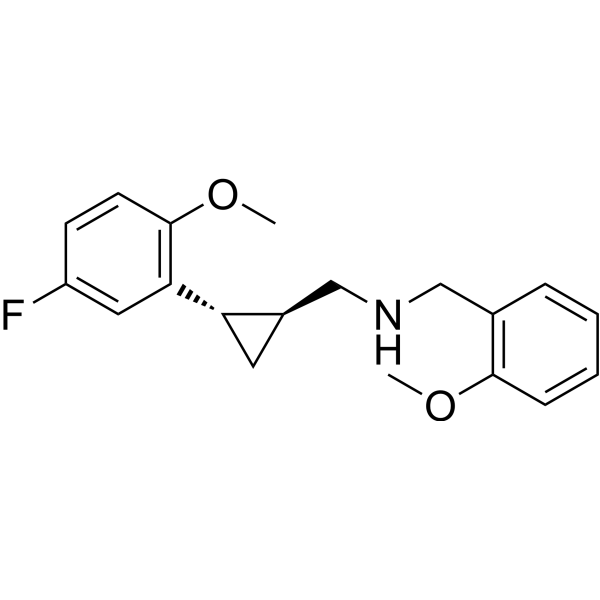
  • HY-156532A

    5-HT Receptor Neurological Disease
    5-HT2C agonist-3 ((+)-19) free base is a selective 5-HT2C agonist (EC50: 24 nM, Ki: 78 nM). 5-HT2C agonist-3 free base has antipsychotic drug-like activity. 5-HT2C agonist-3 free base blocks Amphetamine-induced hyperactivity .
    5-HT2C agonist-3 free base
  • HY-117063

    5-HT Receptor Endocrinology
    LEK 8841 methanesulfonate is a gastrointestinal calming agent with strong selective 5-HT2 receptor antagonist activity. The antipsychotic potential of LEK 8841 has made it the focus of research into alternative medicines. LEK 8841 behaves as a pure competitive antagonist in response to 5-HT and norepinephrine, with pA2 values of 7.93 and 6.45, respectively. The selectivity of LEK 8841 is better than that of the comparative drug ketanserin, making it an important reference value in corresponding receptor research. Studies related to structural modifications have shown that LEK 8841 exhibits high affinity for 5-HT2 receptors and low alpha-adrenergic receptor activity .
    LEK 8841 methanesulfonate
  • HY-183489

    Trace Amine-associated Receptor (TAAR) Neurological Disease Metabolic Disease
    TAAR1-agonist-4 is a TAAR1 agonist and oral hypoglycemic agent with an EC50 of 0.0046 μM for TAAR1. TAAR1-agonist-4 alleviates antipsychotic-related metabolic side effects, improves negative and cognitive symptoms, and reduces drug abuse behaviors. TAAR1-agonist-4 is applicable to research on schizophrenia, acute manic episodes associated with bipolar disorder, and glucose intolerance .
    TAAR1-agonist-4
  • HY-W009247R

    N-Demethylolanzapine (Standard); LY170055 (Standard)

    Endogenous Metabolite Reference Standards Neurological Disease
    N-Desmethylolanzapine (Standard) is the analytical standard of N-Desmethylolanzapine. This product is intended for research and analytical applications. N-Desmethylolanzapine is an antipsychotic drug. The formation of N-Desmethylolanzapine correlates with the level and activity of human liver flavin-containing monooxygenase (FMO3). N-Desmethylolanzapine can be used in the study of antipsychotic drugs .
    N-Desmethylolanzapine (Standard)

온라인 문의

Your information is safe with us. * Required Fields.

호칭


Country or Region *

고객명 *


회사명 *

Department *


메일주소 *


상품명 *

Cat. No.


Requested quantity *

전화번호 *


비고

온라인 문의

Inquiry Information

상품명:
Cat. No.:
수량:
MCE Japan Authorized Agent:

