



1. Search Result
Search Result
Results for "

arginine residues

" in MedChemExpress (MCE) Product Catalog:

22

Inhibitors & Agonists

1

Screening Libraries

1

Fluorescent Dyes

7

Peptides

1

Natural
Products

Cat. No. 상품명 Target 연구분야 Chemical Structure
  • HY-129047E

    Ser/Thr Protease Others
    Trypsin, porcine pancreas (Cell culture grade) is a serine protease that hydrolyzes proteins at the carboxyl side of lysine or arginine residues. Trypsin, porcine pancreas (Cell culture grade) exhibits excellent protein digestibility for α-lactalbumin and β-casein. Trypsin, porcine pancreas (Cell culture grade) removes cellular components while preserving extracellular matrix structures to achieve uniform decellularization of porcine pancreas .
    Trypsin, porcine pancreas (Cell culture grade)
  • HY-123606
    GSK484
    Maximum Cited Publications
    49 Publications Verification

    Protein Arginine Deiminase MHC Cardiovascular Disease Inflammation/Immunology
    GSK484 is a PAD4 inhibitor that effectively inhibits protein citrullination and the formation of neutrophil extracellular traps (NETs) by blocking the catalytic activity of PAD4. GSK484 suppresses the production of histone H3, MHC-I expression, CD8 + T cell activation, proliferation and inflammatory cytokine release. GSK484 reduces inflammation and bone destruction in collagen-induced rheumatoid arthritis, alleviates pain and mast cell activation in sickle cell disease, and improves myocardial ischemia-reperfusion injury and experimental colitis. In addition, GSK484 restores intestinal microbial homeostasis by reversing ferroptosis-induced dysbiosis. GSK484 can be used to study the disease mechanisms of rheumatoid arthritis, sickle cell disease, thrombosis, myocardial injury, colitis and other conditions .
    GSK484
  • HY-P2746

    EC 3.4.2.2

    Endogenous Metabolite Metabolic Disease
    Carboxypeptidase B, Porcine pancreas (EC 3.4.2.2) is a peptide exonuclease that can specifically degrade peptide chains. Carboxypeptidase B is progressively degraded from the C-terminal to release free amino acids. Carboxypeptidase B hydrolyzes only peptide bonds with basic amino acids (such as arginine and lysine) as C-terminal residues .
    Carboxypeptidase B, Porcine pancreas
  • HY-118952A

    Sodium Channel Neurological Disease
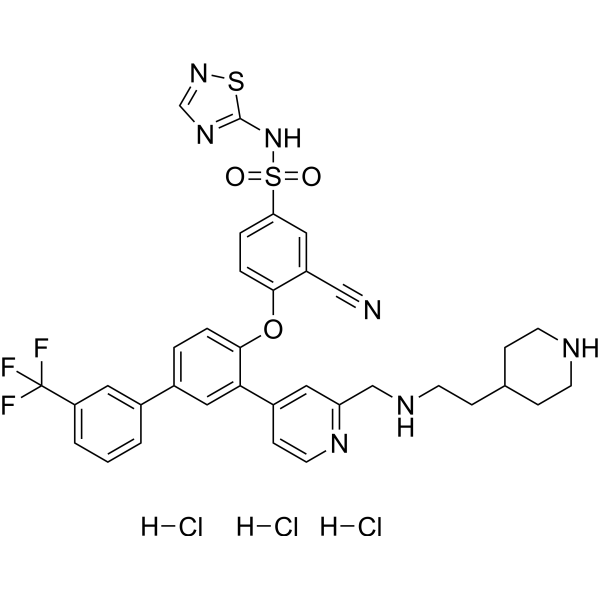
    PF-06456384 trihydrochloride is an extremely potent and selective Nav1.7 sodium channel blocker (IC50: 0.01 nM for hNaV1.7; 75 nM for rNaV1.7; <0.1 nM for mNaV1.7). PF-06456384 trihydrochloride shows no significant analgesic efficacy in the mouse Formalin pain model .
    PF-06456384 trihydrochloride
  • HY-P2895

    Clostridiopeptidase B

    Endogenous Metabolite Others
    Clostripain (Clostridiopeptidase B) is a thiol protease isolated from Clostridium histolyticum. Clostripain exhibits proteolytic activity as well as amidase-esterase activity. The specificity of Clostripain is primarily restricted to arginine residues, but it also shows minor hydrolytic activity toward most lysine-containing substrates. Clostripain catalyzes the ammonolysis of Carbobenzoxyarginyl methyl ester to generate various dipeptides .
    Clostripain
  • HY-W013750

    Fmoc-L-arginine

    Amino Acid Derivatives Others
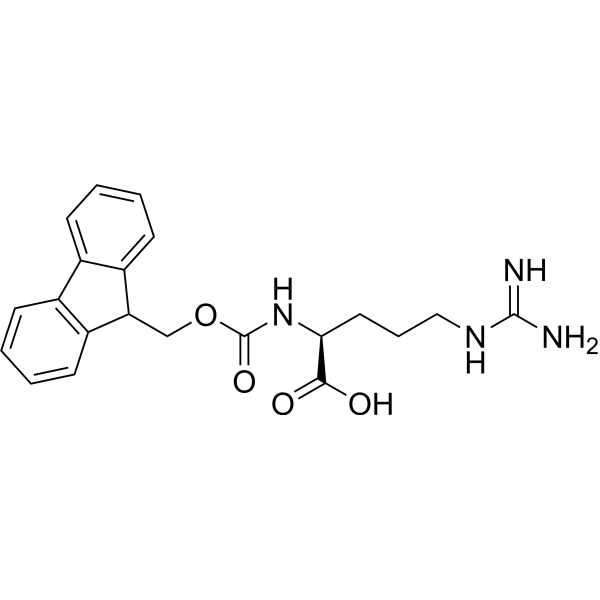
    Fmoc-Arg-OH (Fmoc-L-Arginine), an Fmoc modified Arginine, is used in peptide synthesis .
    Fmoc-Arg-OH
  • HY-P0133

    Nona-L-arginine; Peptide R9

    Ser/Thr Protease Neurological Disease
    (Arg)9 (Nona-L-arginine) is a cell-penetrating peptide (CPP) made up of 9 arginine residues, which is an inhibitor of serine endoprotease Furin. (Arg)9 has neuroprotective property, exhibits neuroprotective activity with an IC50 of 0.78 μM in the glutamic acid model .
    (Arg) 9
  • HY-P0133A
    (Arg)9 TFA
    1 Publications Verification

    Nona-L-arginine TFA; Peptide R9 TFA

    Ser/Thr Protease Neurological Disease
    (Arg)9 (Nona-L-arginine) TFA is a cell-penetrating peptide (CPP) made up of 9 arginine residues. (Arg)9 TFA has neuroprotective property, exhibits neuroprotective activity with an IC50 of 0.78 μM in the glutamic acid model .
    (Arg)9 TFA
  • HY-E70201

    EC 3.4.2.2 (MS grade)

    Endogenous Metabolite Others
    Carboxypeptidase B (MS grade) is a peptide exonuclease that can specifically degrade peptide chains. Carboxypeptidase B (MS grade) is progressively degraded from the C-terminal to release free amino acids. Carboxypeptidase B (MS grade) hydrolyzes only peptide bonds with basic amino acids (such as arginine and lysine) as C-terminal residues .
    Carboxypeptidase B (MS grade)
  • HY-P0133B
    (Arg)9 acetate
    1 Publications Verification

    Nona-L-arginine acetate; Peptide R9 acetate

    Ser/Thr Protease Neurological Disease
    (Arg)9 (Nona-L-arginine) acetate is a cell-penetrating peptide (CPP) made up of 9 arginine residues. (Arg)9 acetate has neuroprotective property, exhibits neuroprotective activity with an IC50 of 0.78 μM in the glutamic acid model .
    (Arg)9 acetate
  • HY-P4257

    Angiotensin-converting Enzyme (ACE) Cardiovascular Disease
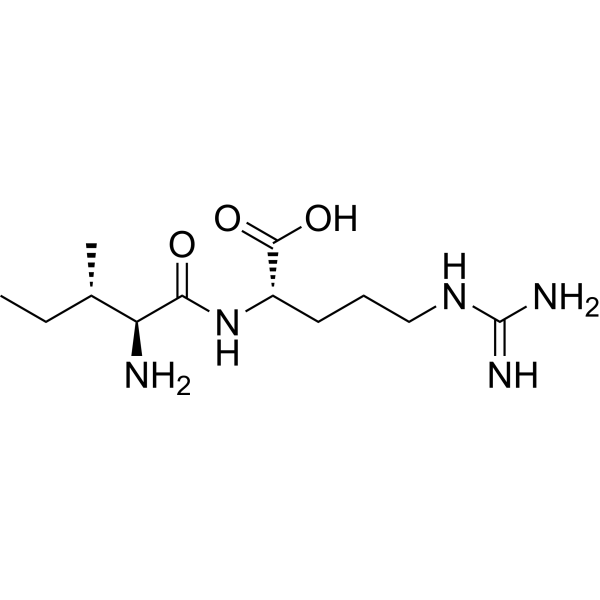
    L-Isoleucyl-L-arginine is a dipeptide formed from L-isoleucine and L-arginine residues. L-Isoleucyl-L-arginine is a potent angiotensin-converting enzyme (ACE) inhibitor. L-Isoleucyl-L-arginine can be used for research of hypertension .
    L-Isoleucyl-L-arginine
  • HY-P11374

    Bcl-2 Family Apoptosis Cancer
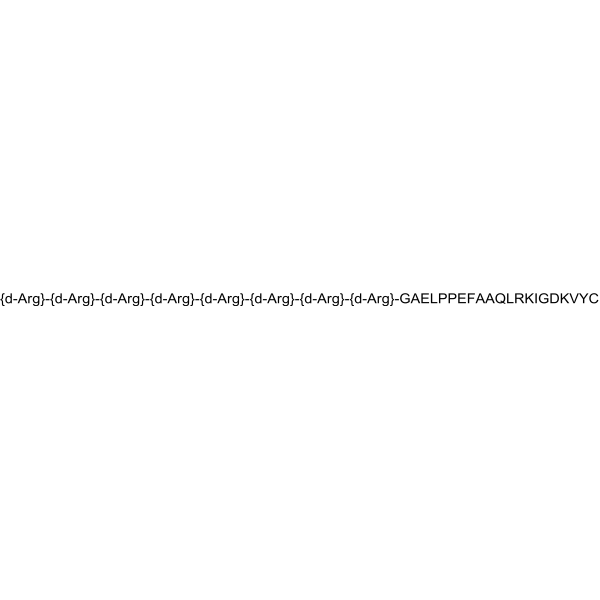
    Bid BH3-Gly-r8 is Bid BH3 linked to eight arginine residues. Bid BH3-Gly-r8 shows no difference in apoptotic effects compared to its unmodified peptide homologue. Bid BH3 has high affinity for Bax and Bcl-2. Bid BH3-Gly-r8 can be used in the research of tumors .
    Bid BH3-Gly-r8
  • HY-P5329

    NADPH Oxidase Others
    r8-Gly-Noxa A BH3 is a biological active peptide. (This cell permeable peptide is derived from the BH3 domain (a death domain) of Noxa A, amino acid residues 17 to 36. Eight D-Arginine residues and a Glycine linker residue are added to the amino terminal of the peptide.)
    r8-Gly-Noxa A BH3
  • HY-143892

    Keap1-Nrf2 Inflammation/Immunology
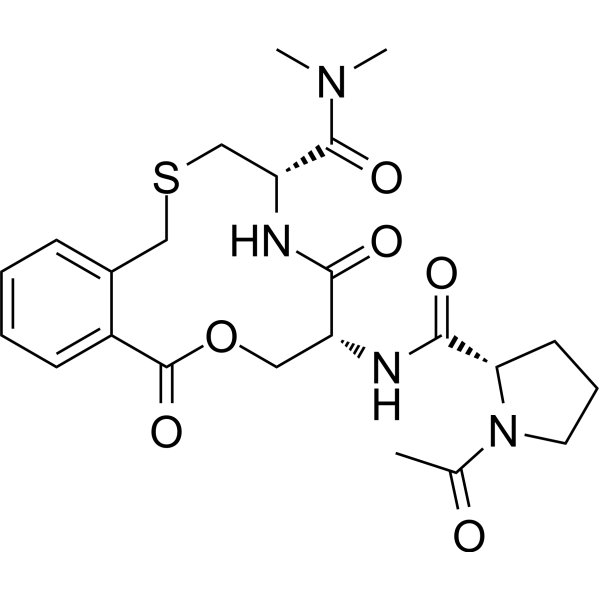
    Keap1-Nrf2-IN-5 (compound 1) is a potent Keap1-Nrf2 PPI (Keap1-Nrf2 protein−protein interaction) inhibitor with an IC50 of 4.1 µM, Kd of 3.7 µM .
    Keap1-Nrf2-IN-5
  • HY-143893

    Keap1-Nrf2 Inflammation/Immunology
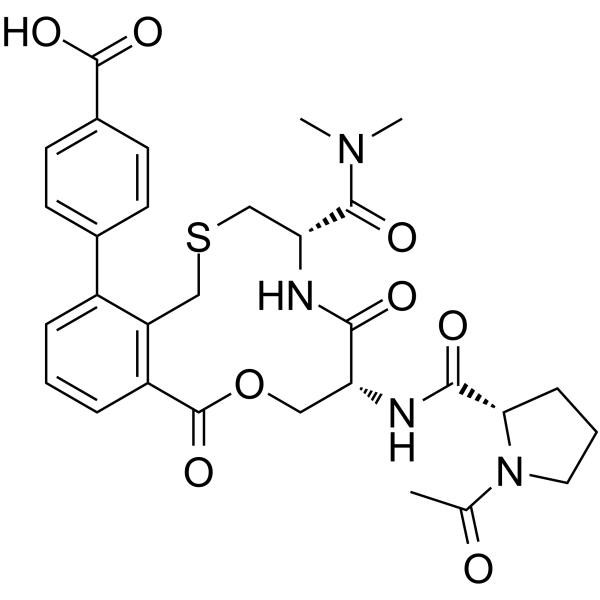
    Keap1-Nrf2-IN-6 (compound 64) is a potent and selective Keap1-Nrf2 PPI (Keap1-Nrf2 protein−protein interaction) inhibitor with an IC50 of 41 nM, Kd of 68 nM .
    Keap1-Nrf2-IN-6
  • HY-135414A

    Fluorescent Dye Others
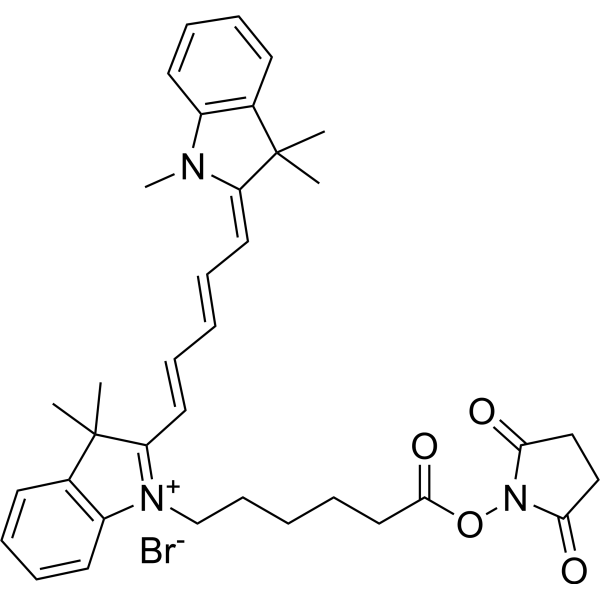
    Cyanine5 NHS ester bromide is a active compound, can be used to label amino groups in peptides, proteins, and oligonucleotides. Cyanine5 NHS ester bromide is a cyanine dye, fluorescence-labeling neurotensin (8-13) via arginine residues .
    Cyanine5 NHS ester bromide
  • HY-136887

    Bacterial Infection
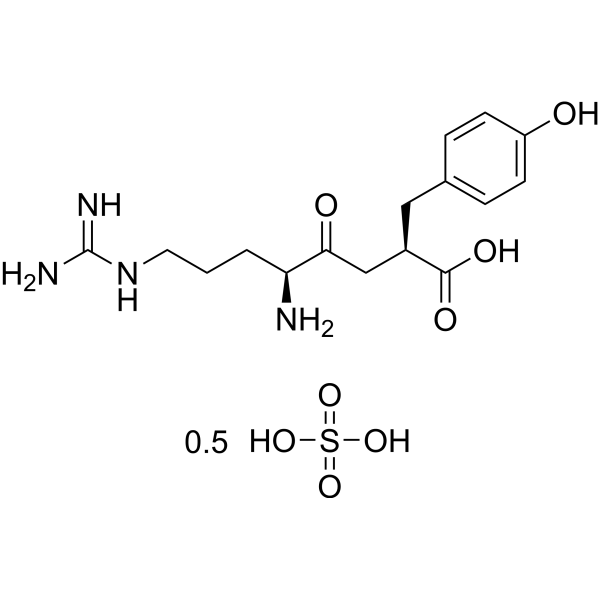
    Arphamenine B hemisulfate is a Zn 2+-dependent exopeptidase that selectively removes arginine and/or lysine residues from the NH2-terminus of several peptide substrates. Arphamenine B hemisulfate is an inhibitor of aminopeptidase B that can be isolated from bacteria. Arphamenine B hemisulfate enhances the immune response and is used to characterize novel proteases .
    Arphamenine B hemisulfate
  • HY-159920

    Orphan Nuclear Receptor Neurological Disease Inflammation/Immunology
    PSB-22269 is a GPR17 antagonist with a Ki value of 8.91 nM. PSB-22269 further demonstrated significant inhibitory effects in cAMP and G protein activation assays. Molecular docking studies revealed that the binding site of PSB-22269 contains positively charged arginine residues and a hydrophobic pocket. PSB-22269 provides a strategy to promote remyelination and holds promise for research in the field of multiple sclerosis .
    PSB-22269
  • HY-136679

    GSK-3 Neurological Disease Metabolic Disease
    TD114-2 (cmpound 29) is a potent and highly selective inhibitor of glycogen synthase kinase-3β (GSK-3β) (IC50=48 nM). TD114-2 is associated with the hydrogen bond formation of arginine 141 (ARG141) specific to GSK-3β, an amino acid that is often a negatively charged residue in other kinases, which determines the high selectivity of GSK-3β. TD114-2 can be used in the study of diabetes, neurodegenerative diseases and other diseases associated with GSK-3β .
    TD114-2
  • HY-P11772

    Bacterial Infection
    LBP-14, a peptide, is a synthetic fragment of the LPS (HY-D1056) binding protein (LBP) and is a LPS antagonist. LBP-14 interacts with LPS via electrostatic contacts between arginine/lysine residues and LPS phosphate groups, and hydrophobic contacts between aromatic/aliphatic residues and LPS acyl chains, blocking LPS binding to LBP. LBP-14 moderately inhibits LPS-induced TNF-α formation. LBP-14 can be used for the research of gram-negative sepsis .
    LBP-14
  • HY-N15079

    Bacterial Infection
    Arphamenine B is a Zn 2+-dependent exopeptidase that selectively removes arginine and/or lysine residues from the NH2-terminus of several peptide substrates. Arphamenine B is an inhibitor of aminopeptidase B that can be isolated from bacteria. Arphamenine B enhances the immune response and is used to characterize novel proteases .
    Arphamenine B
  • HY-114510

    Discoidin Domain Receptor Histone Acetyltransferase Sirtuin Fungal Apoptosis Infection Cancer
    PRMT/HKMT-IN-1 is an epigenetic multi-target protein arginine methyltransferases (PRMTs) and histone lysine methyltransferases (HKMTs) inhibitor. PRMT/HKMT-IN-1 inhibits Aspergillus nidulans RmtA with an IC50 of 29 μM. PRMT/HKMT-IN-1 inhibits human PRMT1, p300/CBP HAT, CARM1, SET7, SIRT1 and SIRT2. PRMT/HKMT-IN-1 inhibits methylation of histone H3K4, H4R3, and H3R17 residues. CBP/p300-IN-23 induces apoptosis, arrests cell cycle in S phase, and triggers granulocytic differentiation in leukemia cells. PRMT/HKMT-IN-1 can be used for the research of leukemia .
    PRMT/HKMT-IN-1

온라인 문의

Your information is safe with us. * Required Fields.

호칭


Country or Region *

고객명 *


회사명 *

Department *


메일주소 *


상품명 *

Cat. No.


Requested quantity *

전화번호 *


비고

온라인 문의

Inquiry Information

상품명:
Cat. No.:
수량:
MCE Japan Authorized Agent:

