19 Results for "

auxin herbicide

" in MedChemExpress (MCE) Product Catalog:
Products (19)

19 Results for "auxin herbicide" in MCE Product Catalog:

2
2 Cited Publications
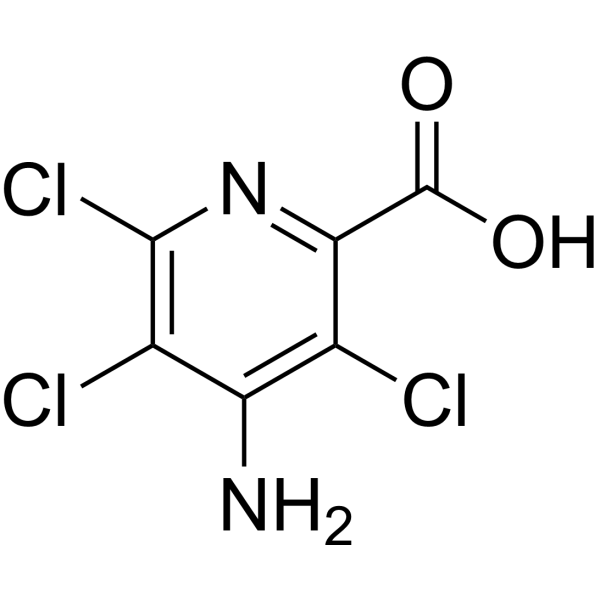
Cat. No.: HY-B2034
CAS No.: 1918-02-1
Research Areas:  

Others

Picloram is a synthetic auxin herbicide that is widely used to control dicotyledonous weed .
loading...
    loading...
Cat. No.: HY-174423
CAS No.: 1994348-72-9
Synonyms: NC-656
Target:  

Herbicide HPPD

Research Areas:  

Others

Iptriazopyrid is a 4-hydroxyphenylpyruvate dioxygenase (HPPD) inhibitor, with a Ki value of 24.3 nM against Arabidopsis thaliana and 33.3 nM against Oryza sativa. Iptriazopyrid binds to the active pocket of HPPD, occupies the catalytic site, inhibits carotenoid biosynthesis, prevents chloroplast formation, and induces albino and chlorotic symptoms in sensitive plants. Used as a herbicide, Iptriazopyrid can control barnyardgrass when applied alone, and its efficacy does not decrease when mixed with labeled residual herbicides. When Iptriazopyrid is mixed with 2,4-D or triclopyr, its barnyardgrass control effect shows an antagonistic effect. Iptriazopyrid is a triazole carboxamide herbicide that exhibits selectivity for Oryza sativa over Echinochloa crus-galli, and has partial tank-mix compatibility with synthetic auxin herbicides registered for rice .
loading...
    loading...
Cat. No.: HY-19698
CAS No.: 122-88-3
Synonyms: 4-CPA; p-Chlorophenoxyacetic acid
4-Chlorophenoxyacetic acid (4-CPA) is a widely used herbicide and plant growth regulator. 4-Chlorophenoxyacetic acid (4-CPA) mimics endogenous auxin and regulates plant cell division, differentiation and gene expression. 4-Chlorophenoxyacetic acid (4-CPA) is used to control weeds and promote fruit growth .
loading...
    loading...
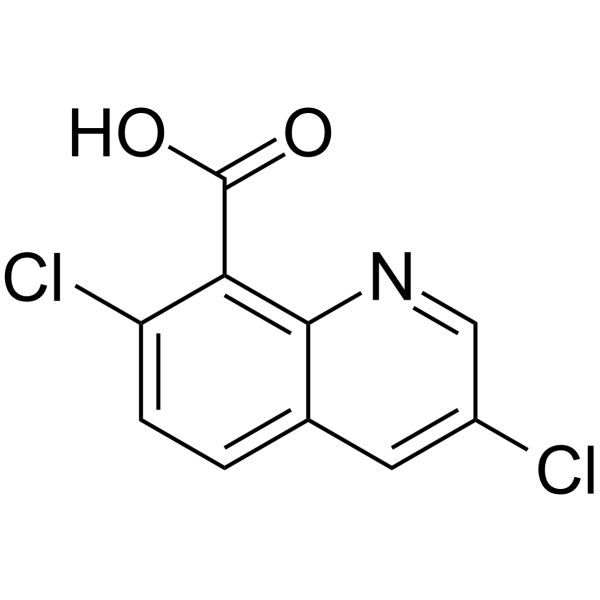
Cat. No.: HY-B0871
CAS No.: 84087-01-4
Research Areas:  

Others

Quinclorac is a highly selective quinoline carboxylic acid synthetic auxin herbicide. Quinclorac weakly inhibits HPPD, accompanied by a transient decrease in carotenoids. Quinclorac upregulates ACC synthase (ACS), leading to the co-accumulation of ethylene and cyanide, while increasing the ABA/IAA ratio, which induces ROS burst, membrane lipid peroxidation (MDA) and lethal growth inhibition. Residual Quinclorac in soil can cause abnormal growth of subsequent tobacco crops. In calli of Phaseolus vulgaris, Quinclorac induces oxidative stress (increased MDA and decreased RGR), but cells after stepwise pressurized acclimation acquire a constitutive antioxidant state, which remains stable after de-acclimation and tolerates oxidative damage caused by Quinclorac. Quinclorac can be used in studies related to herbicide action mechanisms, bioremediation of soil residues, and adaptive responses of plant cells to oxidative stress .
loading...
    loading...
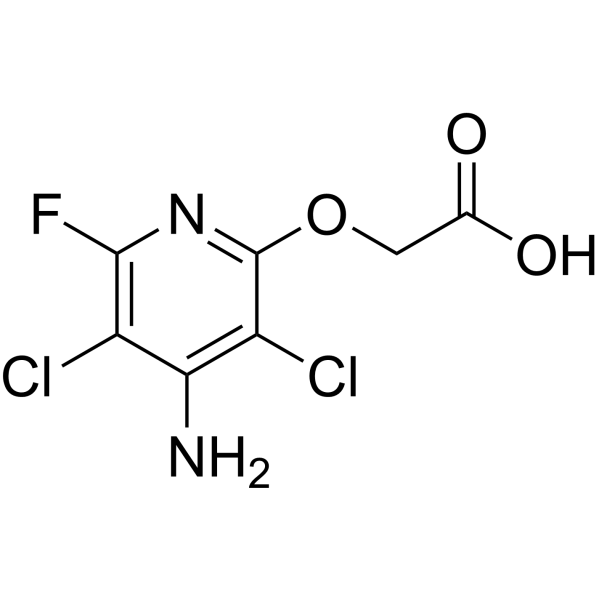
Cat. No.: HY-B1842
CAS No.: 69377-81-7
Target:  

Herbicide

Research Areas:  

Others

Fluroxypyr is an auxin herbicide to control annual or perennial weeds. Fluroxypyr icauses auxin overdose or excessive endogenous auxin concentrations, thereby resulting in an imbalance of auxin homeostasis and interaction with other hormones in tissues .
loading...
    loading...
Cat. No.: HY-19698A
CAS No.: 13730-98-8
Synonyms: 4-CPA sodium; p-Chlorophenoxyacetic acid sodium
4-Chlorophenoxyacetic acid sodium is a widely used herbicide and plant growth regulator. 4-Chlorophenoxyacetic acid sodium mimics endogenous auxin and regulates plant cell division, differentiation and gene expression. 4-Chlorophenoxyacetic acid sodium is used to control weeds and promote fruit growth .
loading...
    loading...
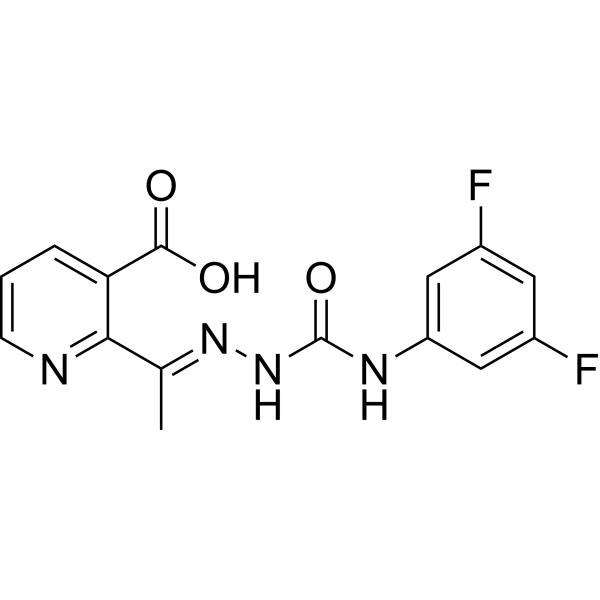
Cat. No.: HY-123158
CAS No.: 109293-97-2
Synonyms: SAN 835H
Target:  

Herbicide

Research Areas:  

Others

Diflufenzopyr (SAN 835H) is an auxin transport inhibitor. Diflufenzopyr can enhance the activity of auxin herbicides, such as quinclorac (HY-B0871) and picloram (HY-B2034), and of the synthetic auxin, 1-naphthaleneacetic acid (HY-18570) .
loading...
    loading...
Cat. No.: HY-W726600
CAS No.: 1390661-72-9
Target:  

Herbicide

Research Areas:  

Infection

Florpyrauxifen-benzyl is an auxin herbicide. Florpyrauxifen-benzyl is promising for research of agricultural weeds, such as Echinochloa crusgalli in rice paddies .
loading...
    loading...
Cat. No.: HY-B0868
CAS No.: 25168-26-7
Target:  

Herbicide

Research Areas:  

Others

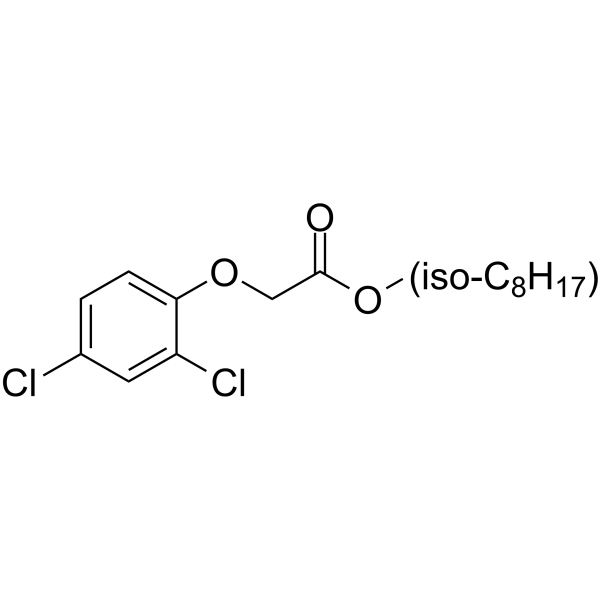
2,4-D isooctyl ester, a synthetic auxin herbicide, is a TIR1 protein transport inhibitor. 2,4-D isooctyl ester interacts with TIR1 to facilitate auxin signal transduction, activating auxin-mediated growth responses. 2,4-D isooctyl ester functions as a pro-herbicide bio-transformed into phytotoxic 2,4-D post-plant absorption, disrupting normal plant growth. 2,4-D isooctyl ester can be used to control broadleaf weeds .
loading...
    loading...
Cat. No.: HY-B1842R
CAS No.: 69377-81-7
Research Areas:  

Others

Fluroxypyr (Standard) is the analytical standard of Fluroxypyr. This product is intended for research and analytical applications. Fluroxypyr is an auxin herbicide to control annual or perennial weeds. Fluroxypyr icauses auxin overdose or excessive endogenous auxin concentrations, thereby resulting in an imbalance of auxin homeostasis and interaction with other hormones in tissues .
loading...
    loading...
Cat. No.: HY-W768772
Fluroxypyr- 13C2,d2 is the deuterium labeled and 13C-labeled Fluroxypyr (HY-B1842). Fluroxypyr is an auxin herbicide to control annual or perennial weeds. Fluroxypyr icauses auxin overdose or excessive endogenous auxin concentrations, thereby resulting in an imbalance of auxin homeostasis and interaction with other hormones in tissues .
loading...
    loading...
Cat. No.: HY-B1842S1
Fluroxypyr-d2 is the deuterium labeled Fluroxypyr (HY-B1842). Fluroxypyr is an auxin herbicide to control annual or perennial weeds. Fluroxypyr icauses auxin overdose or excessive endogenous auxin concentrations, thereby resulting in an imbalance of auxin homeostasis and interaction with other hormones in tissues .
loading...
    loading...
Cat. No.: HY-W714973
CAS No.: 943831-98-9
Target:  

Herbicide

Research Areas:  

Others

Halauxifen-methyl is a 6-arylpicolinic acid herbicide. As a synthetic auxin, Halauxifen-methyl interferes with the normal growth and development of sensitive weeds by mimicking the action of endogenous plant auxins, causing malformation, uncontrolled growth and eventual death .
loading...
    loading...
Cat. No.: HY-123158R
CAS No.: 109293-97-2
Synonyms: SAN 835H (Standard)
Research Areas:  

Others

Diflufenzopyr (Standard) is the analytical standard of Diflufenzopyr. This product is intended for research and analytical applications. Diflufenzopyr (SAN 835H) is an auxin transport inhibitor. Diflufenzopyr can enhance the activity of auxin herbicides, such as quinclorac (HY-B0871) and picloram (HY-B2034), and of the synthetic auxin, 1-naphthaleneacetic acid (HY-18570) .
loading...
    loading...
Cat. No.: HY-W726600S
Florpyrauxifen-benzyl-d5 is the deuterium labeled Florpyrauxifen-benzyl (HY-W726600). Florpyrauxifen-benzyl is an auxin herbicide. Florpyrauxifen-benzyl is promising for research of agricultural weeds, such as Echinochloa crusgalli in rice paddies .
loading...
    loading...
Cat. No.: HY-N12990
CAS No.: 34328-57-9
Synonyms: MyA
Myrigalone A (MyA) is a plant ethylene biosynthesis inhibitor and natural herbicide . Myrigalone A possesses antioxidant, antifungal, and antimicrobial activities. Myrigalone A interferes with auxin homeostasis during seed germination. Myrigalone A delays seed germination, inhibits the formation of roots, hypocotyls, and root hairs, and causes developmental delay in specific organisms. Myrigalone A triggers the induction of detoxification programs, alters the metabolism of gibberellins, cis-(+)-12-oxophytodienoic acid, and jasmonic acid, disrupts the antioxidant system and oxidative signaling, and impairs the function of aquaporins and water uptake in imbibed seeds. Myrigalone A can be used in studies related to herbicides and plant growth regulators .
loading...
    loading...
Cat. No.: HY-W008484
CAS No.: 150114-71-9
Research Areas:  

Infection

Aminopyralid is a synthetic auxin herbicide. Aminopyralid provides foliar and soil residual weed control, and also increases forage yield in bahiagrass pastures. When present as a soil residue, Aminopyralid causes phytotoxicity, reduced plant height, decreased flower number and fruit yield loss in rotated vegetable crops. Aminopyralid is registered for the control of annual and perennial broadleaf weeds in pastures, permanent grasslands and non-cropped areas .
loading...
    loading...
Cat. No.: HY-B0871R
CAS No.: 84087-01-4
Quinclorac (Standard) is the analytical standard of Quinclorac (HY-B0871). This product is intended for research and analytical applications. Quinclorac is a highly selective quinoline carboxylic acid synthetic auxin herbicide. Quinclorac weakly inhibits HPPD, accompanied by a transient decrease in carotenoids. Quinclorac upregulates ACC synthase (ACS), leading to the co-accumulation of ethylene and cyanide, while increasing the ABA/IAA ratio, which induces ROS burst, membrane lipid peroxidation (MDA) and lethal growth inhibition. Residual Quinclorac in soil can cause abnormal growth of subsequent tobacco crops. In calli of Phaseolus vulgaris, Quinclorac induces oxidative stress (increased MDA and decreased RGR), but cells after stepwise pressurized acclimation acquire a constitutive antioxidant state, which remains stable after de-acclimation and tolerates oxidative damage caused by Quinclorac. Quinclorac can be used in studies related to herbicide action mechanisms, bioremediation of soil residues, and adaptive responses of plant cells to oxidative stress .
loading...
    loading...
Cat. No.: HY-B0871S
Quinclorac- 13C is the 13C-labeled Quinclorac (HY-B0871). Quinclorac is a highly selective quinoline carboxylic acid synthetic auxin herbicide. Quinclorac weakly inhibits HPPD, accompanied by a transient decrease in carotenoids. Quinclorac upregulates ACC synthase (ACS), leading to the co-accumulation of ethylene and cyanide, while increasing the ABA/IAA ratio, which induces ROS burst, membrane lipid peroxidation (MDA) and lethal growth inhibition. Residual Quinclorac in soil can cause abnormal growth of subsequent tobacco crops. In calli of Phaseolus vulgaris, Quinclorac induces oxidative stress (increased MDA and decreased RGR), but cells after stepwise pressurized acclimation acquire a constitutive antioxidant state, which remains stable after de-acclimation and tolerates oxidative damage caused by Quinclorac. Quinclorac can be used in studies related to herbicide action mechanisms, bioremediation of soil residues, and adaptive responses of plant cells to oxidative stress .
loading...
    loading...
  • 1

