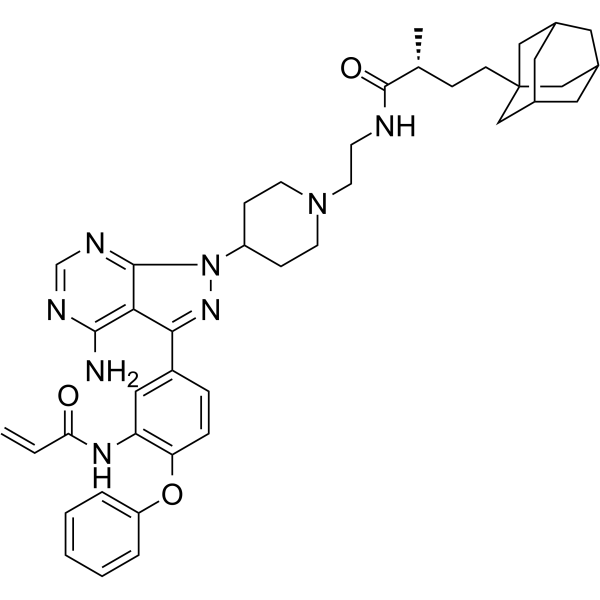
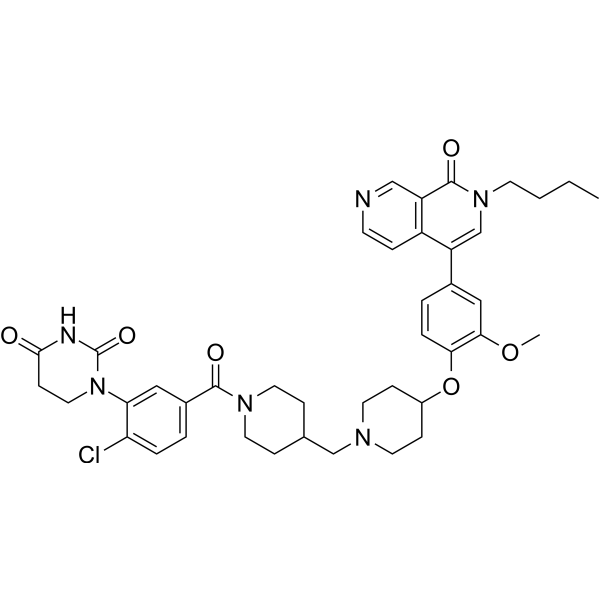
1. Search Result
Search Result
Results for "

bifunctional degrader

" in MedChemExpress (MCE) Product Catalog:

41

Inhibitors & Agonists

1

Isotope-Labeled Compounds

1

Click Chemistry

Cat. No. Product Name Target Research Areas Chemical Structure
  • HY-138642
    Vepdegestrant
    5+ Cited Publications

    ARV-471

    PROTACs Estrogen Receptor/ERR Cancer
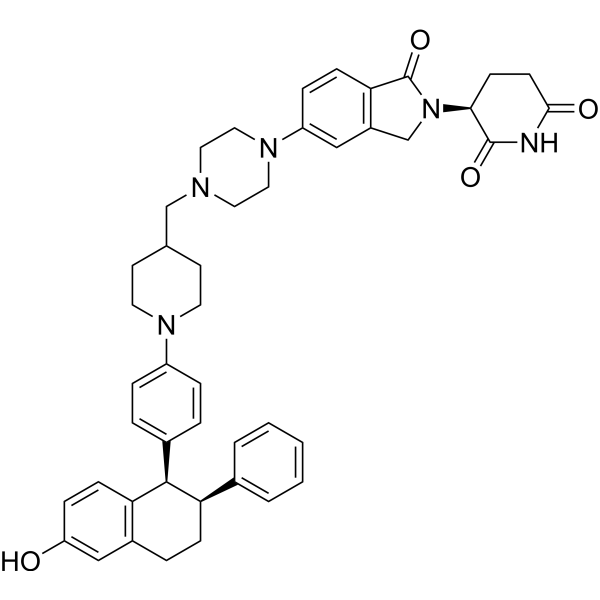
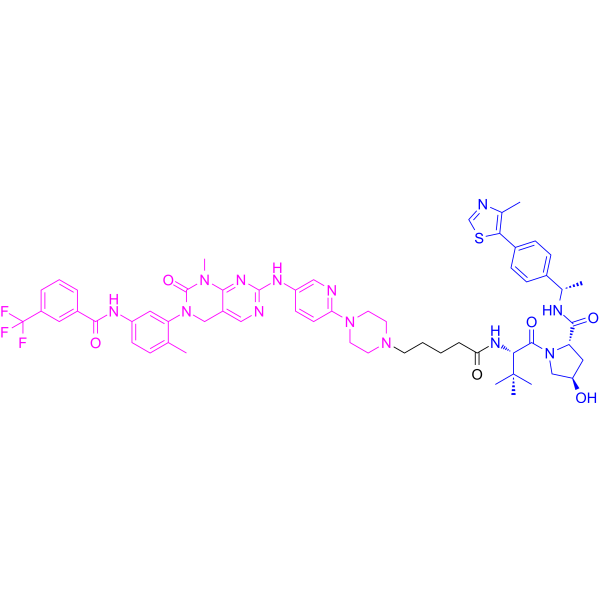
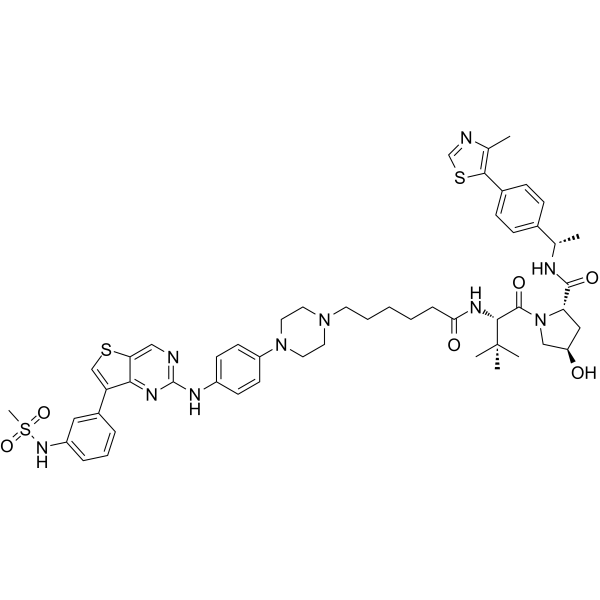
    Vepdegestrant (ARV-471) is an orally active PROTAC estrogen receptor degrader against breast cancer. Vepdegestrant is a hetero-bifunctional molecule that facilitates the interactions between estrogen receptor alpha and an intracellular E3 ligase complex. Vepdegestrant leads to the ubiquitylation and subsequent degradation of estrogen receptors via the proteasome. Vepdegestrant robustly degrades ER in ER-positive breast cancer cell lines with a half-maximal degradation concentration (DC50) of about 2 nM .
    Vepdegestrant
  • HY-153341

    CFT1946

    PROTACs Raf Cancer
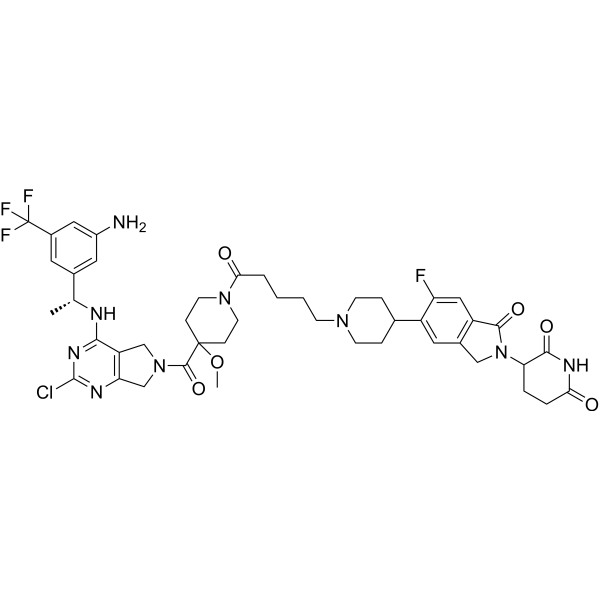
    Tagarafdeg (CFT1946) is an orally active, CRBN-based and mutant-selective bifunctional degradation activating compound (BiDAC) degrader of BRAF V600E with a DC50 of 14 nM in A375 cells. Tagarafdeg is capable of degrading BRAF V600E (Class I), G469A (Class II), G466V (Class III) mutations, and the p61-BRAF V600E splice variant. Tagarafdeg can be used in tumor research .
    Tagarafdeg
  • HY-111519
    dTRIM24
    5+ Cited Publications

    PROTACs Epigenetic Reader Domain Cancer
    dTRIM24 is a selective bifunctional degrader of TRIM24 based on PROTAC, consists of ligands for von Hippel-Lindau and TRIM24.
    dTRIM24
  • HY-176528

    ERK PROTACs Cancer
    PROTAC ERK5 degrader-1 (compound 2) is a bifunctional ERK5 PROTAC degrader. PROTAC ERK5 degrader-1 induces ERK5 degradation via VHL-mediated proteasome pathway in MOLT-4 cells. PROTAC ERK5 degrader-1 can be used for the study of a disease or disorder characterized by aberrant ERK5 activity, such as acute lymphoblastic leukemia .
    PROTAC ERK5 degrader-1
  • HY-157763

    PROTAC-Linker Conjugates for PAC Btk Cancer
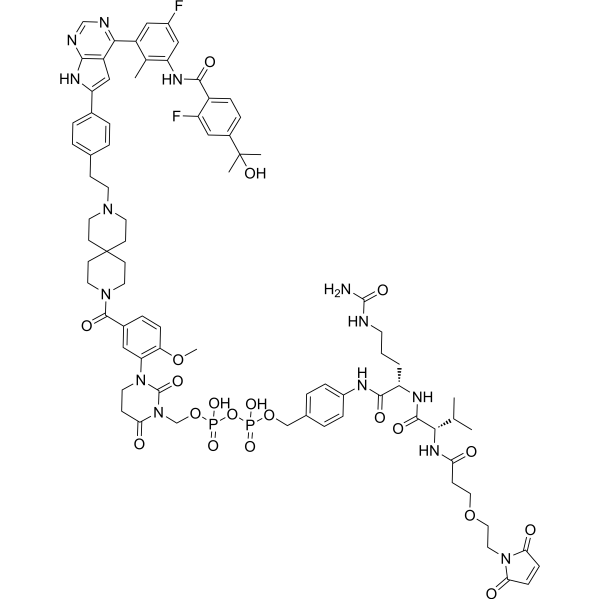
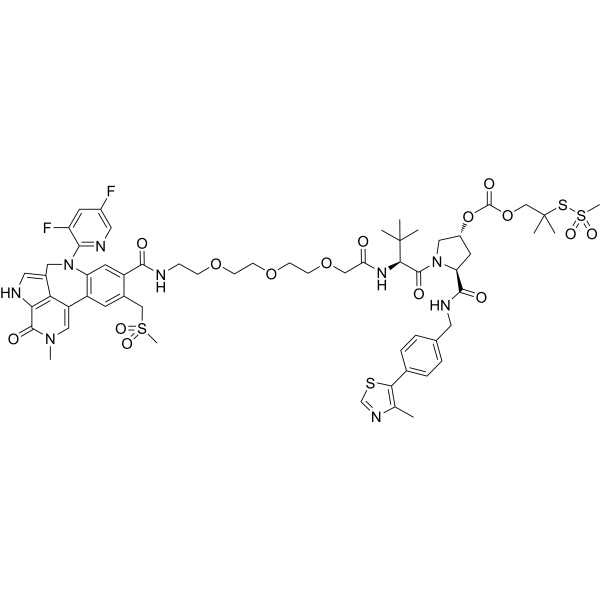
    Mal-PEG1-Val-Cit-PABC-diphosphate-BTK degrader-1 is a cleavable linker-payload conjugate and cereblon-binding BTK bifunctional degrader. Mal-PEG1-Val-Cit-PABC-diphosphate-BTK degrader-1 induces BTK degradation and exerts cytotoxic effects when delivered via CD79b monoclonal antibody. Mal-PEG1-Val-Cit-PABC-diphosphate-BTK degrader-1, when formulated as a CD79b antibody-drug conjugate, achieves sustained in vivo BTK degradation in tumor-bearing mice with reduced systemic payload exposure. Mal-PEG1-Val-Cit-PABC-diphosphate-BTK degrader-1 can be used for the research of activated b-cell-like diffuse large b-cell lymphoma (ADC linker: (HY-130944); PROTAC: (HY-163295)) .
    Mal-PEG1-Val-Cit-PABC-diphosphate-BTK degrader-1
  • HY-148061

    PROTACs Bcr-Abl CDK Salt-inducible Kinase (SIK) Cyclin G-associated Kinase (GAK) MAP4K MAPKAPK2 (MK2) Ferroptosis ULK LIM Kinase (LIMK) Cancer
    DB1113 (Example 24) is a bifunctional compound targeted protein degradation of kinases. DB1113 degrades ABL1, ABL2, BLK, CDK11B, CDK4, CSK, EPHA3, FER, GAK, LIMK1, MAP3K20, MAP4K1, MAP4K2, MAP4K3, MAP4K5, MAPK14, MAPK7, MAPK8, MAPK9, MAPKAPK2, MAPKAPK3, NLK, PDIK1L, PTK2B, RIPK1, RPS6KA1, RPS6KA3, SIK2, SIK3, STK35, TNK2, and ULK1. DB1113 can be used for research of disease or disorder mediated by aberrant kinase activity .
    DB1113
  • HY-153821

    Ras PROTACs Cancer
    PROTAC KRAS G12C degrader-2 (compound 432) is a modulator of K-Ras protein hydrolysis. PROTAC KRAS G12C degrader-2 is a bifunctional compound, which contain on one end a cereblon inhibitor of apoptosis proteins (IAP) and on the other end a moiety which binds KRAS .
    PROTAC KRAS G12C degrader-2
  • HY-138632

    PROTACs Epigenetic Reader Domain PROTAC-Linker Conjugates for PAC Cancer
    PROTAC BRD4 Degrader linker conjugate is a linker-payload conjugate as well as a bifunctional degrader of BRD4 that binds to VHL, consisting of PROTAC and a linker. PROTAC BRD4 Degrader linker conjugate can be conjugated with STEAP1 and CLL1 antibodies to degrade BRD4 protein, with DC50 values of 0.86 nM and 7.6 nM, respectively. PROTAC BRD4 Degrader linker conjugate can be used in research related to prostate cancer and acute myeloid leukemia (BRD4 ligand: (HY-129939); VHL ligand: (HY-125845)) .\n


    PROTAC BRD4 Degrader linker conjugate
  • HY-171860

    PROTACs HIV Infection Cancer
    FC-14369 is a PROTAC degrader targeting the HIV-1 Nef protein, with a DC50 value of 160 nM. Through its bifunctional structure, FC-14369 binds to Nef and the Cereblon E3 ubiquitin ligase, induces Nef ubiquitination and proteasomal degradation, restores the expression of cell-surface CD4 and MHC-I, and inhibits HIV-1 replication. FC-14369 can be used in research on HIV infection and AIDS. FC-14369 is applicable to studies related to HIV-1 infection .
    FC-14369
  • HY-144258

    PD-1/PD-L1 Inflammation/Immunology Cancer
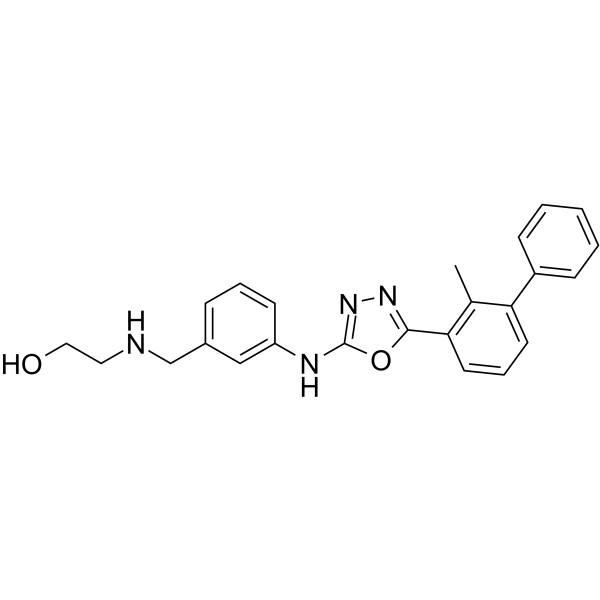
    PD-1/PD-L1-IN-14 (compound 17) is a bifunctional inhibitor of PD-1/PD-L1 interactions, with an IC50 of 27.8 nM. PD-1/PD-L1-IN-14 (compound 17) inhibits PD-1/PD-L1 interactions and promotes dimerization, internalization, and degradation of PD-L1 .
    PD-1/PD-L1-IN-14
  • HY-162809

    Ras Cancer
    XMU-MP-9 is a bifunctional compound that binds to the C2 domain of Nedd4-1 and the allosteric site of K-Ras. XMU-MP-9 enhances the interaction between Nedd4-1 and K-Ras, induces conformational changes in the Nedd4-1/K-Ras complex, promotes the ubiquitination and degradation of multiple K-Ras mutants, and inhibits the proliferation of cells carrying K-Ras mutants. XMU-MP-9 can be used for the study of colon, lung and pancreatic cancer .
    XMU-MP-9
  • HY-123109

    VH032-Boc

    Ligands for E3 Ligase Cancer
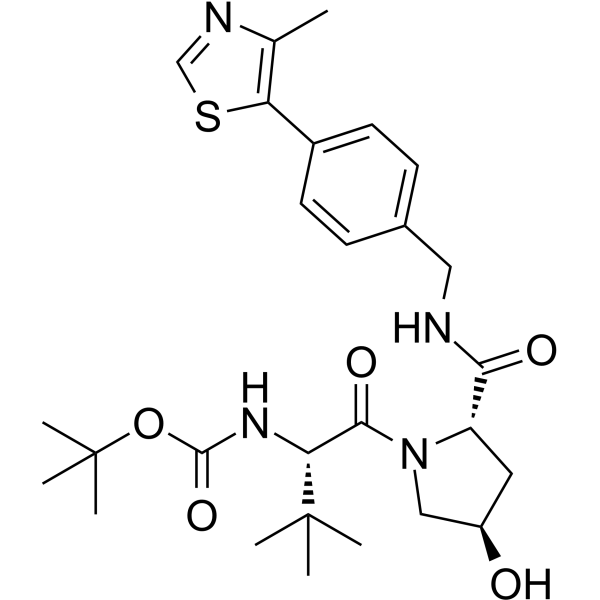
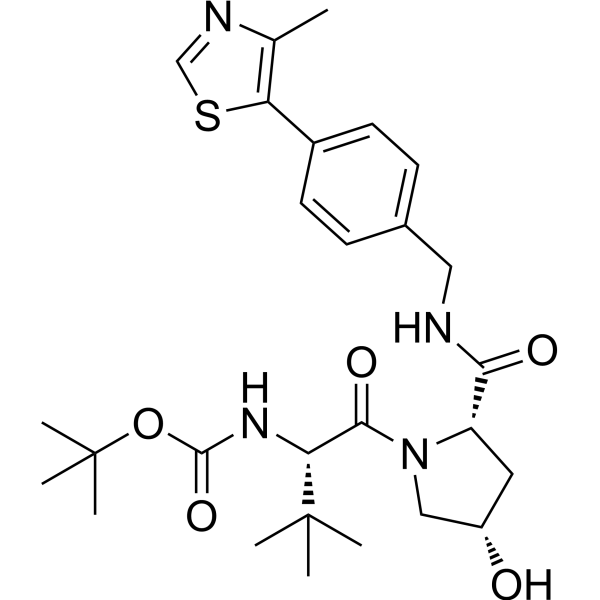
    (S,R,S)-AHPC-Boc (VH032-Boc) is a ligand used in the recruitment of the von Hippel-Lindau (VHL) protein. (S,R,S)-AHPC-Boc is used in PROTAC technology .
    (S,R,S)-AHPC-Boc
  • HY-148062

    PROTACs CDK AAK1 Cyclin G-associated Kinase (GAK) Salt-inducible Kinase (SIK) LIM Kinase (LIMK) Wee1 SnRK Others
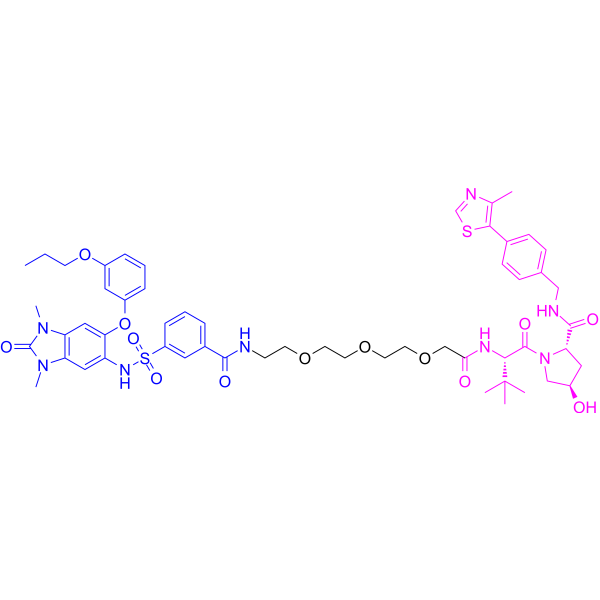
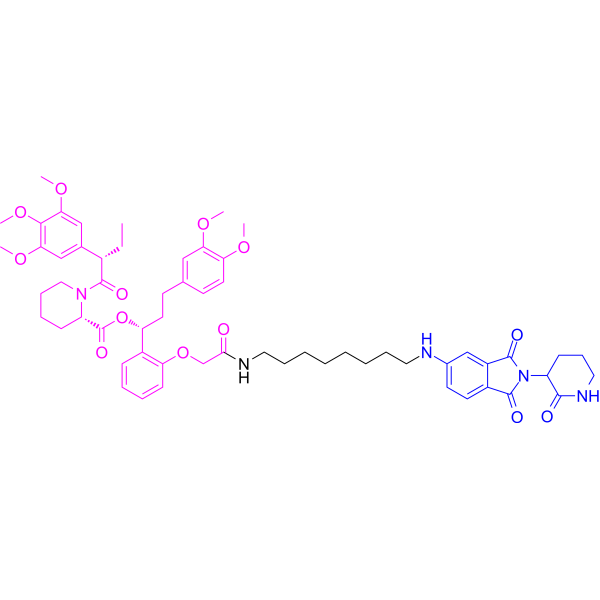
    RSS0680 is a small noncoding RNA (sRNA) targeting the mRNA ribosome binding site (RBS) and a PROTAC with protein kinase degradation activity (Pink: FLT3-IN-17 (HY-148070); Black: Linker (HY-W041970); Blue: E3 ligase Ligand (HY-112078)). RSS0680 competitively binds to RBS through the conserved CCUCCUCCC anti-Shine-Dalgarno (aSD) sequence and inhibits the translation initiation of target genes. RSS0680 can interact with the DUF1127 protein CcaF1, regulate its own stability and participate in bacterial oxidative stress defense, enhancing the host's resistance to heat shock and oxidative damage by affecting pathways such as C1 metabolism and pyruvate dehydrogenase complex. RSS0680 degrades AAK1, CDK1, CDK16, CDK2, CDK4, CDK6, EIF2AK4, GAK, LATSl, LIMK2, MAPK6, MAPKAPK5, MARK2, MARK4, MKNK2, NEK9, RPS6KB1, SIK2, SNRK, STK17A, STK17B, STK35, and WEEl. RSS0680 can be used to study diseases or disorders mediated by aberrant kinase activity and regulatory mechanisms of noncoding RNAs in α-proteobacteria[1][2].
    RSS0680
  • HY-163295

    ADC Payload Btk Cancer
    BTK degrader-1 (compound 1) is a Bruton’s tyrosine kinase (BTK) bifunctional degrader that can be conjugated with CD79b. BTK degrader-1 (compound 1) has anti-tumor effect .
    BTK degrader-1
  • HY-161235

    SOS1 Molecular Glues Ras Cancer
    BTX-7312 is a cereblon-based SOS1 bifunctional degrader and a molecular glue. BTX-7312 reduces downstream signaling markers pERK and pS6 and shows antiproliferative activity in various KRAS-mutated cells .
    BTX-7312
  • HY-145403

    PROTACs Cancer
    PROTAC BRD9 Degrader-4 is a BRD9 bifunctional degrader for researching cancer.
    PROTAC BRD9 Degrader-4
  • HY-123109A

    (S,S,S)-VH032-Boc

    Ligands for E3 Ligase Cancer
    (S,S,S)-AHPC-Boc is the isomer of (S,R,S)-AHPC-Boc (HY-123109), and can be used as an experimental control. (S,R,S)-AHPC-Boc (VH032-Boc) is a ligand used in the recruitment of the von Hippel-Lindau (VHL) protein. (S,R,S)-AHPC-Boc is used in PROTAC technology .
    (S,S,S)-AHPC-Boc
  • HY-161233A

    PROTACs SOS1 ERK Cancer
    BTX-6654 formate is a target-dependent and -specific cereblon-based bifunctional SOS1 PROTAC degrader. BTX-6654 formate reduces downstream signaling markers pERK and pS6, and displays antiproliferative activity in cells harboring various KRAS mutations .
    BTX-6654 formate
  • HY-170405

    PROTACs mTOR Cancer
    YB-3-17 is a bifunctional molecule, that inhibits mTOR (IC50=0.22 nM) or degrades G1 to S phase transition 1 gene (GSPT1, DC50=5 nM) in a PROTAC mechanism. YB-3-17 exhibits antiproliferative activity in multi glioblastoma cell lines with IC50 of nanomolare levels. YB-3-17 exhibits antitumor efficacy in mouse models . (Pink: ligand for target protein (HY-170407); Black: linker (HY-A0102); Blue: ligand for E3 ligase Cereblon (HY-14658))
    YB-3–17
  • HY-145400

    PROTACs Cancer
    PROTAC BRD9 Degrader-3 is a BRD9 bifunctional degrader for researching cancer.
    PROTAC BRD9 Degrader-3
  • HY-161233

    PROTACs SOS1 ERK Cancer
    BTX-6654 is a target-dependent and -specific cereblon-based bifunctional SOS1 PROTAC degrader. BTX-6654 reduces downstream signaling markers pERK and pS6, and displays antiproliferative activity in cells harboring various KRAS mutations .
    BTX-6654
  • HY-138642S

    ARV-471-d5

    Isotope-Labeled Compounds Cancer
    Vepdegestrant-d5 (ARV-471-d5) is the deuterium labeled Vepdegestrant (HY-138642). Vepdegestrant (ARV-471) is an orally active PROTAC estrogen receptor degrader against breast cancer. Vepdegestrant is a hetero-bifunctional molecule that facilitates the interactions between estrogen receptor alpha and an intracellular E3 ligase complex. Vepdegestrant leads to the ubiquitylation and subsequent degradation of estrogen receptors via the proteasome. Vepdegestrant robustly degrades ER in ER-positive breast cancer cell lines with a DC50 of about 2 nM .
    Vepdegestrant-d5
  • HY-163811

    Molecular Glues Epigenetic Reader Domain Cancer
    BRD9 Degrader-4 (BRD9c), a bifunctional molecular glue, is a potent BRD9 degrader with a DC50 of ≤25 nM. BRD9 Degrader-4 has anti-cancer effects .
    BRD9 Degrader-4
  • HY-153820

    Epigenetic Reader Domain PROTACs Cancer
    PROTAC BRD4 Degrader-20 (compound 195) is an bifunctional compound and an degrader of BRD4 .
    PROTAC BRD4 Degrader-20
  • HY-142881

    LYTACs Others
    D-MoDE-A (1) is a bifunctional small molecule that mediates the degradation of extracellular proteins through the asialoglycoprotein receptor (ASGPR).
    D-MoDE-A (1)
  • HY-161236

    Molecular Glues SOS1 Ras Cancer
    KRAS ligand 4 (compound 2) is a bifunctional molecular glue degrader based on SOS1. KRAS ligand 4 reduces downstream signaling markers pERK and pS6 and displays anti-additional activity in cells with multiple KRAS mutations .
    KRAS ligand 4
  • HY-138642A

    (Rac)-ARV-471

    Estrogen Receptor/ERR PROTACs Cancer
    (Rac)-Vepdegestrant is the isomer of Vepdegestrant (HY-138642). Vepdegestrant ((R)-Lavandulol) is an orally active PROTAC estrogen receptor degrader against breast cancer. Vepdegestrant is a hetero-bifunctional molecule that facilitates the interactions between estrogen receptor alpha and an intracellular E3 ligase complex. Vepdegestrant leads to the ubiquitylation and subsequent degradation of estrogen receptors via the proteasome. Vepdegestrant robustly degrades ER in ER-positive breast cancer cell lines with a half-maximal degradation concentration (DC50) of about 2 nM .
    (Rac)-Vepdegestrant
  • HY-170769

    Target Protein Ligand-Linker Conjugates FLT3 Cancer
    FLT3 Ligand-Linker Conjugate 1 (compound 7) contains the FLT3 ligand and a PROTAC linker, which can recruit the E3 ligase VHL. FLT3 Ligand-Linker Conjugate 1 can be used to synthesize the PROTAC RSS0680 (HY-148062). PROTAC RSS0680 is a bifunctional compound that targets protein degradation of kinases .
    FLT3 Ligand-Linker Conjugate 1
  • HY-179562

    Btk Cancer
    BTK degrader-2 (Example 2) is a BTK dual-functional degrading agent, which causes the degradation of BTK through the ubiquitin-proteasome pathway. BTK degrader-2 can be used for the study of B-cell-related diseases .
    BTK degrader-2
  • HY-163812

    Molecular Glues Estrogen Receptor/ERR Cancer
    ER degrader 9 (compound 1), a bifunctional molecular glue, is a potent estrogen receptor (ER) degrader with a DC50 of ≤10 nM in MCF-7 cells. ER degrader 9 can be used for the research of breast cancer .
    ER degrader 9
  • HY-145395

    PROTACs Cancer
    PROTAC BRD9 Degrader-2 is a BRD9 bifunctional degrader for researching cancer.
    PROTAC BRD9 Degrader-2
  • HY-142885

    LYTACs Others
    M-MoDE-A (2) is a bifunctional small molecule that mediates the degradation of extracellular proteins through the asialoglycoprotein receptor (ASGPR).
    M-MoDE-A (2)
  • HY-153665

    Biochemical Assay Reagents Others
    Deg-1 is a a bifunctional probe with a cleavage group and a covalent binding group. Deg-1 covalently binds to the target nucleic acid, and serves as click-degrader to cleave a nucleic acid molecule. Deg-1 has potential to selectively cleave target nucleic acids in cells . It contains an azide group and can undergo copper-catalyzed azide-alkyne cycloaddition (CuAAc) with molecules containing alkyne groups. It can also undergo ring strain-promoted alkyne-azide cycloaddition (SPAAC) with molecules containing DBCO or BCN groups.
    Deg-1
  • HY-175445

    PROTACs Estrogen Receptor/ERR IAP NF-κB TNF Receptor Apoptosis Cancer
    GNE-5472 is a potent bifunctional ERα PRRTAC degrader, with its E3 ligand being a pan-IAP antagonist. GNE-5472 antagonizes cIAP1/2, activating the non-classical NF-κB pathway, resulting in a significant upregulation of TNFα expression. GNE-5472 inhibits the proliferation of breast cancer cells and induces cell apoptosis. GNE-5472 can be used for the study of breast cancer .
    GNE-5472
  • HY-171441

    STAT Inflammation/Immunology Cancer
    STAT6 degrader-1 (Compound 21) is a bifunctional molecular glue degrader of STAT6 that recruits E3 ubiquitin ligase. STAT6 degrader-1 induces proteasomal degradation of STAT6. STAT6 degrader-1 is applicable to the research of cancer, inflammatory diseases and colorectal cancer .
    STAT6 degrader-1
  • HY-181499

    Proteasome Cancer
    RA190-PEG1-NH2 (Compound S16), RA190 (HY-100739) derivative, is a Proteasome ligand. RA190-PEG1-NH2 can be used to synthesis FKBP12 CAP-TAC degrader RAFKBP12 (HY-181498) .
    RA190-PEG1-NH2
  • HY-178519

    Target Protein Ligand-Linker Conjugates Cancer
    JQ-1 (carboxylic acid)-NH-C8-COOH is a synthetic target protein ligand-conjugate linker, which can be used to synthesize JQ1-S(GlcNAc)Cq (HY-178510). JQ1-S(GlcNAc)Cq is a potent Sugar-Coated PROTAC bifunctional degrader with anti-tumor activity .
    JQ-1 (carboxylic acid)-NH-C8-COOH
  • HY-171342

    LYTACs Inflammation/Immunology
    Mal-C2-amide-C10-tri-GalNAc (Compound 1226) is an asialoglycoprotein receptor (ASGPR) binding ligand fragment and a component of lysosome-targeted bifunctional molecules. Mal-C2-amide-C10-tri-GalNAc promotes the sequestration and degradation of extracellular target molecules in lysosomes. Mal-C2-amide-C10-tri-GalNAc is used in the research of autoimmune diseases .
    Mal-C2-amide-C10-tri-GalNAc
  • HY-180485

    PROTACs Wee1 CDK Cancer
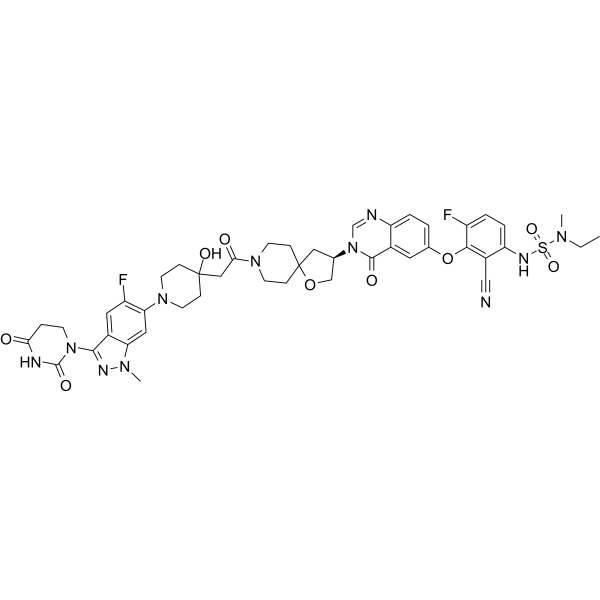
    PROTAC D16-M1P2 is an orally active PKMYT1 PROTAC degrader with a DC50 of 0.7 nM. PROTAC D16-M1P2 also inhibits the activity of PKMYT1 with an IC50 of 7.6 nM. PROTAC D16-M1P2 inhibits pCDK1 with an IC50 of 9 nM. PROTAC D16-M1P2 has demonstrated significant anti-tumor efficacy in mouse models and can be used for research on breast cancer .
    PROTAC D16-M1P2
  • HY-181607

    YAP Others
    TEAD ligand-Linker Conjugate 3 (the blue structure + black structure of A536 in the literature) is a conjugate of a TEAD1-targeting ligand and a linker. TEAD ligand-Linker Conjugate 3 can be coupled with an IAP ligand (HY-181531) to form an IAP-recruiting bifunctional protein degrader (IPD) (HY-181594), also known as a SNIPER degrader. This TEAD SNIPER simultaneously binds to the TEAD1 palmitoylation pocket and the BIR3 domain of cIAP1 to form a ternary complex, efficiently inducing the ubiquitination and degradation of both TEAD1 and cIAP1 (DC50=110 nM, Dmax=51%; IC50=122 nM for cIAP1). TEAD ligand-Linker Conjugate 3 and its synthesized SENIPER molecule can be utilized in research on Hippo pathway dysregulation-related diseases, such as NF2-mutant tumors .
    TEAD ligand-Linker Conjugate 3
  • HY-182964

    ClpP Cardiovascular Disease Neurological Disease Metabolic Disease Cancer
    WY165 is a bifunctional molecule comprising TR79, an activator of the mitochondrial protease complex caseinolytic protease P (ClpP), linked to desthiobiotin. WY165 mediates selective degradation of monomeric streptavidin (mSA) and its fusion proteins localized to the mitochondrial matrix with a DC50 of 197 nM. WY165 restores mitochondrial morphology by reducing the level of mSA fused to short transmembrane protein 1 (mSA-STMP1) in cells overexpressing mSA-STMP1. WY165 can be used for research in cancer, neurodegenerative diseases, cardiovascular diseases, and metabolic diseases .
    WY165

Inquiry Online

Your information is safe with us. * Required Fields.

Salutation


Country or Region *

Applicant Name *


Organization Name *

Department *


Email Address *


Product Name *

Cat. No.


Requested quantity *

Phone Number *


Remarks

Inquiry Online

Inquiry Information

Product Name:
Cat. No.:
Quantity:
MCE Japan Authorized Agent:

