22 Results for "

carbapenemases

" in MedChemExpress (MCE) Product Catalog:
Products (22)

22 Results for "carbapenemases" in MCE Product Catalog:

2
2 Cited Publications
Cat. No.: HY-19806A
CAS No.: 936111-69-2
Synonyms: CXA-101; FR264205
Target:  

Bacterial Antibiotic

Research Areas:  

Infection

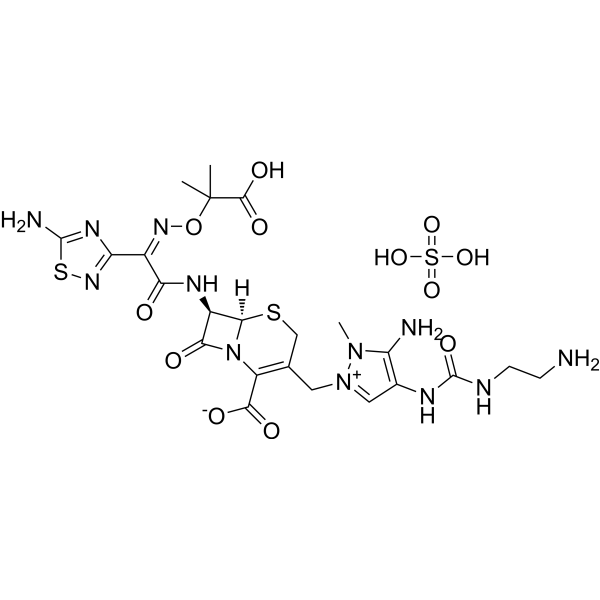
Ceftolozane sulfate is a cephalosporin antibiotic active against Gram-negative pathogens. Ceftolozane sulfate acts as a bactericide and reduces Klebsiella pneumoniae thigh tissue loads in neutropenic mice. Ceftolozane sulfate can be used in studies related to bacterial infections .
loading...
    loading...
2
2 Cited Publications
Cat. No.: HY-106257A
CAS No.: 1628046-32-1
Purity:  98.17%
Target:  

Bacterial Antibiotic

Research Areas:  

Infection

Ceftolozane TFA is a cephalosporin antibiotic active against Gram-negative pathogens. Ceftolozane TFA acts as a bactericide and reduces Klebsiella pneumoniae thigh tissue loads in neutropenic mice. Ceftolozane TFA can be used in studies related to bacterial infections .
loading...
    loading...
Cat. No.: HY-111521
CAS No.: 2031124-72-6
Synonyms: Carbavance
Research Areas:  

Infection

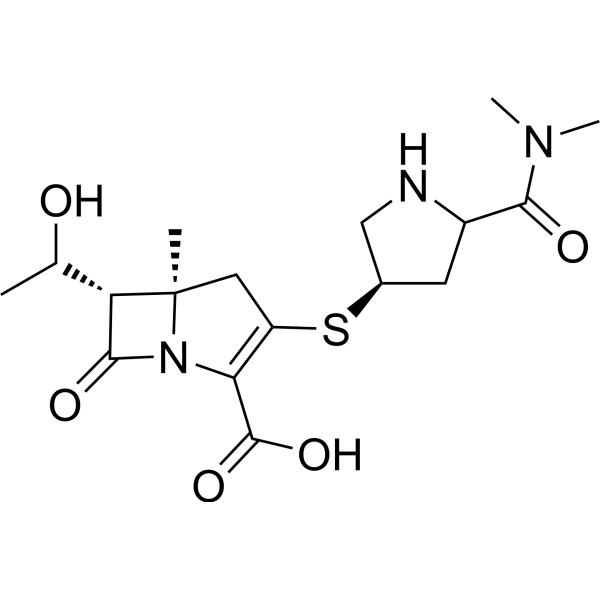
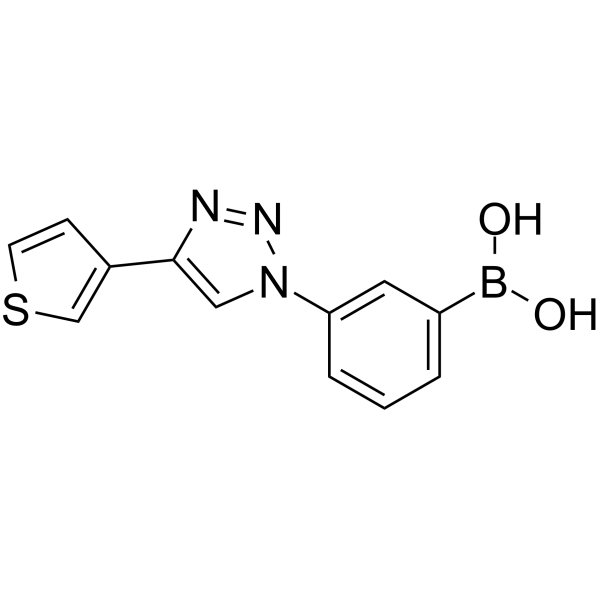
Meropenem-vaborbactam (Carbavance) is a Carbapenem Antibiotic and Boronic acid-based beta-lactamase inhibitor, is a fixed-dose combination product with potent in vitro activity against Enterobacteriaceae that are Klebsiella pneumoniae carbapenemase producers. Meropenem-vaborbactam exhibits activity against Pseudomonas aeruginosa isolates , with an MIC50 of 0.5 μg/mL and an MIC90 of 8 μg/mL .
loading...
    loading...
Cat. No.: HY-19806
CAS No.: 689293-68-3
Synonyms: CXA-101 free base; FR264205 free base
Target:  

Bacterial Antibiotic

Research Areas:  

Infection

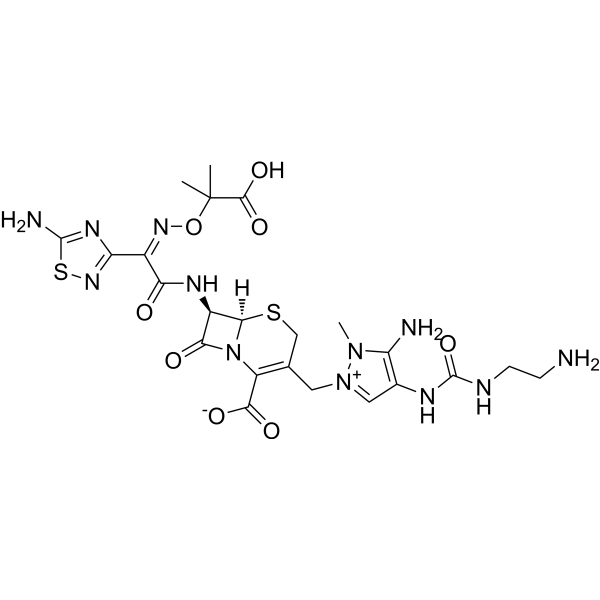
Ceftolozane is a cephalosporin antibiotic active against Gram-negative pathogens. Ceftolozane acts as a bactericide and reduces Klebsiella pneumoniae thigh tissue loads in neutropenic mice. Ceftolozane can be used in studies related to bacterial infections .
loading...
    loading...
Cat. No.: HY-P1726
CAS No.: 1416983-77-1
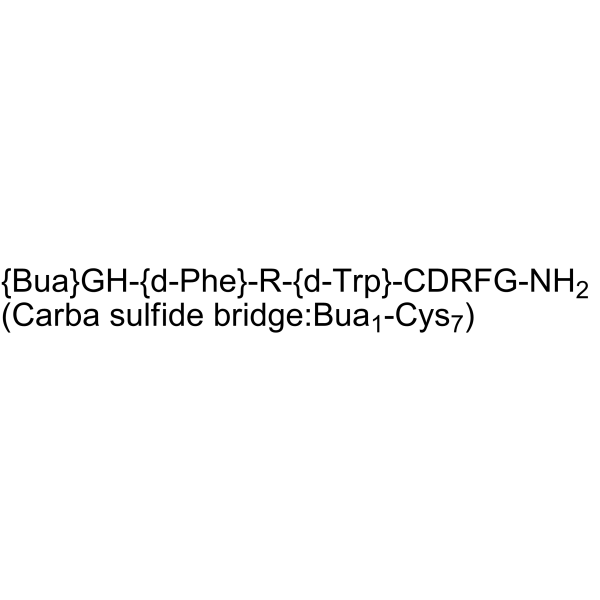
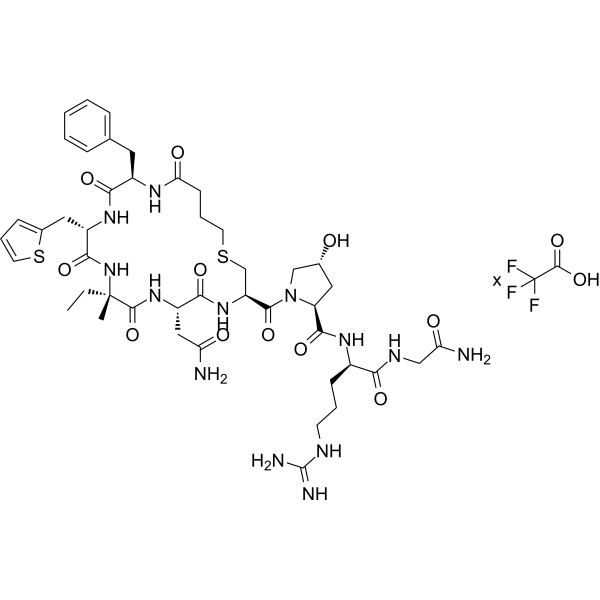
MSG606 is a selective melanocortin 1 receptor (MC1R) antagonist. MSG606 can abolish the neuroprotective effects of BMS-470539 (HY-15616) (MC1R agonist). MSG606 can inhibit cancer cell proliferation and transition from the G1 to the S phase. MSG606 can delay pain hypersensitivity and reduce cholesterol levels. MSG606 can be used for the researches of cancer, inflammation, neurological and metabolic disease, such as breast cancer and subarachnoid hemorrhage (SAH) .
loading...
    loading...
Cat. No.: HY-106257S
Research Areas:  

Infection

Ceftolozane-d6 TFA is the deuterated-labeled Ceftolozane TFA (HY-106257A). Ceftolozane TFA is a cephalosporin antibiotic active against Gram-negative pathogens. Ceftolozane TFA acts as a bactericide and reduces Klebsiella pneumoniae thigh tissue loads in neutropenic mice. Ceftolozane TFA can be used in studies related to bacterial infections .
loading...
    loading...
Cat. No.: HY-122699
CAS No.: 247115-03-3
Research Areas:  

Infection

LN-1-255 sodium is a β-lactamase inhibitor. LN-1-255 sodium has broad-spectrum inhibitory effect on type D carbapenemases (CHDLs) with an IC50 for OXA-48 of 3 nM, and it also has strong activity against OXA-23, OXA-24/40, etc. LN-1-255 sodium combined with carbapenem antibiotics has a synergistic effect. LN-1-255 sodium can be used to study the bacterial resistance crisis caused by CHDLs .
loading...
    loading...
Cat. No.: HY-171112
CAS No.: 2380240-20-8
Research Areas:  

Infection

KSP-1007 is a bicyclic boronate-based broad-spectrum β-lactamase inhibitor. KSP-1007 can effectively inhibit class A, B, C and D β-lactamases, including serine-type, metallo-type (such as NDM, VIM, IMP) and Acinetobacter baumannii OXA-type enzymes. KSP-1007 can enhance the antibacterial activity of Meropenem (HY-13678), reduce its MIC value, and be effective against carbapenemase-producing Enterobacteriaceae, Acinetobacter baumannii, and Pseudomonas aeruginosa. KSP-1007 can be used for the research of bacterial infection .
loading...
    loading...
Cat. No.: HY-P0077
CAS No.: 1190083-57-8
Target:  

Oxytocin Receptor

Research Areas:  

Endocrinology

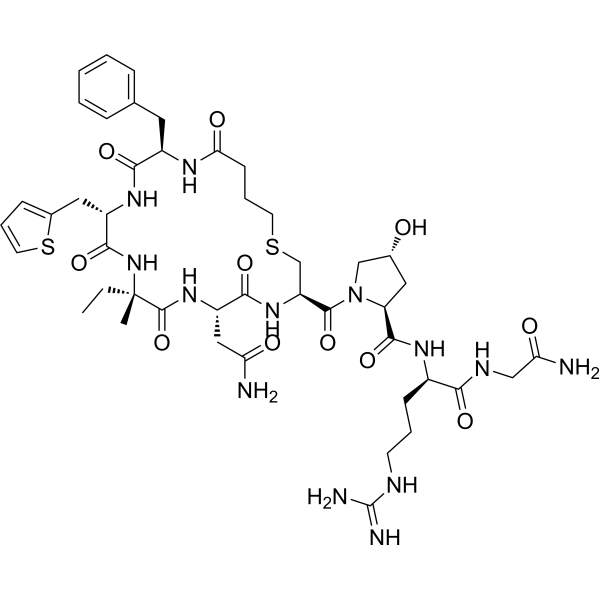
Merotocin is a selective, short-acting peptidic oxytocin receptor agonist. Merotocin can be used to support lactation .
loading...
    loading...
Cat. No.: HY-P1726A
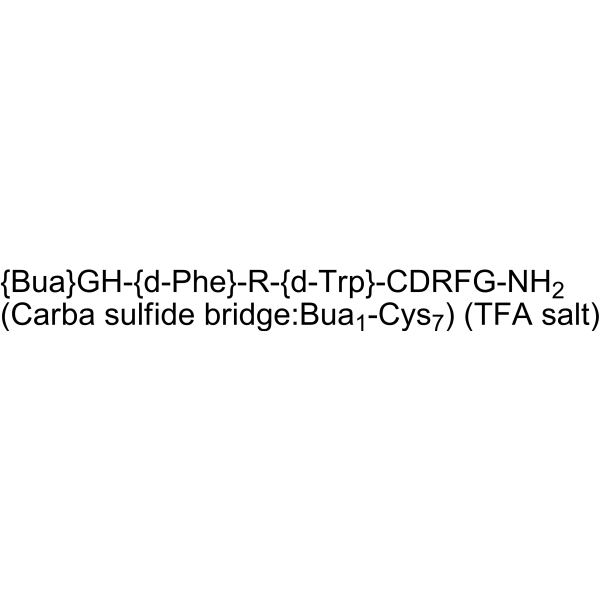
MSG606 TFA is a selective melanocortin 1 receptor (MC1R) antagonist. MSG606 TFA can abolish the neuroprotective effects of BMS-470539 (HY-15616) (MC1R agonist). MSG606 TFA can inhibit cancer cell proliferation and transition from the G1 to the S phase. MSG606 TFA can delay pain hypersensitivity and reduce cholesterol levels. MSG606 TFA can be used for the researches of cancer, inflammation, neurological and metabolic disease, such as breast cancer and subarachnoid hemorrhage (SAH) .
loading...
    loading...
Cat. No.: HY-P0041A
Target:  

Vasopressin Receptor

Research Areas:  

Neurological Disease

F992 TFA is an antidiuretic peptide and vasopressin (antidiuretic hormone) analogue .
loading...
    loading...
Cat. No.: HY-161397
CAS No.: 2254566-25-9
Target:  

Bacterial

Research Areas:  

Infection Inflammation/Immunology

NA-1-157 is a potent irreversible covalent inhibitor of the GES-5 carbapenemase, with a MIC of 0.5 μg/mL .
loading...
    loading...
Cat. No.: HY-150767
CAS No.: 3034185-71-9
Target:  

Bacterial

Research Areas:  

Infection

KPC-2-IN-2 (Compound 6c) is a potent Klebsiella pneumoniae carbapenemase (KPC-2) inhibitor (Ki=0.038 μM). KPC-2-IN-2 can enhance the activity of cefotaxime in KPC-2 expressing Escherichia coli .
loading...
    loading...
Cat. No.: HY-170803
Target:  

Bacterial

Research Areas:  

Infection

KPC-IN-1 (compound 1e) is an inhibitor of Klebsiella pneumoniae carbapenemase KPC-2 (IC50=8.3 nM). KPC is a β-lactamase expressed in Gram-negative bacteria that hydrolyzes carbapenems. KPC causes significant bacterial resistance to carbapenem antibiotics .
loading...
    loading...
Cat. No.: HY-P2331
CAS No.: 59165-34-3
Synonyms: Antibiotic A 3802-IV-3; Gardimycin
Target:  

Antibiotic

Research Areas:  

Infection

Actagardin is a tetracyclic lantibiotic produced by several species of Actinoplanes. It is composed of macrocyclic rings formed by thioether bridges. Actagardin preferably targets Gram-positive bacteria, inhibiting the synthesis of peptidoglycan.
loading...
    loading...
Cat. No.: HY-P10014
CAS No.: 153507-46-1
Target:  

Inhibitory Antibodies

Research Areas:  

Cardiovascular Disease

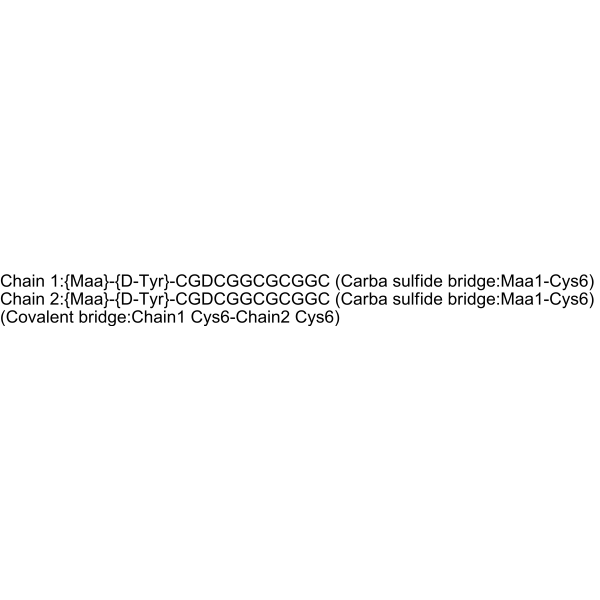
Bibapcitide, a 26 amino acid, inhibits thrombosis .
loading...
    loading...
Cat. No.: HY-P0041
CAS No.: 162277-99-8
Target:  

Vasopressin Receptor

Research Areas:  

Neurological Disease

F992 is an antidiuretic peptide and vasopressin (antidiuretic hormone) analogue .
loading...
    loading...
Cat. No.: HY-P11720
Research Areas:  

Infection

M104 peptide is an OXA-48 carbapenemase inhibitor and antibiotic potentiator. M104 peptide effectively blocks the binding and active site cavity of OXA-48 . M104 peptide restores Meropenem (HY-13678)’s antibacterial activity against OXA-48-producing Klebsiella pneumoniae. M104 peptide can be used for the research of Carbapenem-resistant Klebsiella pneumoniae infection .
loading...
    loading...
Cat. No.: HY-111521R
CAS No.: 2031124-72-6
Synonyms: Carbavance (Standard)
Meropenem-vaborbactam (Standard) is the analytical standard of Meropenem-vaborbactam (HY-111521). This product is intended for research and analytical applications. Meropenem-vaborbactam (Carbavance) is a Carbapenem Antibiotic and Boronic acid-based beta-lactamase inhibitor, is a fixed-dose combination product with potent in vitro activity against Enterobacteriaceae that are Klebsiella pneumoniae carbapenemase producers. Meropenem-vaborbactam exhibits activity against Pseudomonas aeruginosa isolates , with an MIC50 of 0.5 μg/mL and an MIC90 of 8 μg/mL .
loading...
    loading...
Cat. No.: HY-W923278
CAS No.: 73547-70-3
Synonyms: GR20263 dihydrochloride
Target:  

Antibiotic Bacterial

Research Areas:  

Infection

Ceftazidime (GR20263) dihydrochloride is a cephalosporin β-lactam antibiotic. Ceftazidime dihydrochloride exhibits activity against susceptible Enterobacteriaceae, multidrug-resistant Gram-negative bacteria, Pseudomonas aeruginosa, and bacteria producing Ambler class A, C, and some class D β-lactamases, but shows no activity against microorganisms producing metallo-β-lactamases. Ceftazidime dihydrochloride reduces bacterial loads in mouse models of splenic, hepatic, and thigh infections, but has low efficacy against ESBL- and KPC-producing Enterobacteriaceae. Ceftazidime dihydrochloride can be used in research related to complicated urinary tract infections, complicated intra-abdominal infections, hospital-acquired pneumonia, carbapenemase-producing Klebsiella pneumoniae infections, carbapenem-resistant Enterobacterales infections, and severe Gram-negative bacterial infections .
loading...
    loading...

