6 Results for "

causal

" in MedChemExpress (MCE) Product Catalog:
Products (6)

6 Results for "causal" in MCE Product Catalog:

Cat. No.: HY-B2167R
CAS No.: 6217-54-5
Synonyms: DHA (Standard); Cervonic acid (Standard)
Docosahexaenoic acid (Standard) is the analytical standard of Docosahexaenoic acid. This product is intended for research and analytical applications. Docosahexaenoic Acid (DHA) is an omega-3 fatty acid abundantly present brain and retina. It can be obtained directly from fish oil and maternal milk. In Vitro: Docosahexaenoic acid (DHA) is essential for the growth and functional development of the brain in infants. DHA is also required for maintenance of normal brain function in adults. The inclusion of plentiful DHA in the diet improves learning ability and memory . DHA is an essential requirement in every step of brain development like neural cell proliferation, migration, differentiation, synaptogenesis. The multiple double bonds and unique structure allow DHA to impart special membrane characteristics for effective cell signaling. Many development disorders like dyslexia, autism spectrum disorder, attention deficit hyperactivity disorder, schizophrenia etc. are causally related to decreased level of DHA . DHA is a potent RXR ligand inducing robust RXR activation already at low micro molar concentrations. The EC50 for RXRα activation by DHA is about 5-10 μM fatty acid . In Vivo: Docosahexaenoic acid administration over 10 weeks significantly reduces the number of reference memory errors, without affecting the number of working memory errors, and significantly increases the docosahexaenoic acid content and the docosahexaenoic acid/arachidonic acid ratio in both the hippocampus and the cerebral cortex . DHA treatment exerts neuroprotective actions on an experimental mouse model of PD. There is a decrease tendency in brain lipid oxidation of MPTP mice but it does not significantly .
loading...
    loading...
Cat. No.: HY-108024A
CAS No.: 2751586-94-2
Purity:  97.19%
Synonyms: KAF156 hydrochloride; GNF156 hydrochloride
Target:  

Parasite

Research Areas:  

Infection

Ganaplacide (KAF156) hydrochloride is a first-in-class, orally active imidazolopiperazine antimalarial agent. Ganaplacide hydrochloride is active against a broad range of Plasmodium species, including drug-resistant parasites. Ganaplacide hydrochloride is parasiticidal against both asexual and sexual blood stages as well as the liver stages of the parasite .
loading...
    loading...
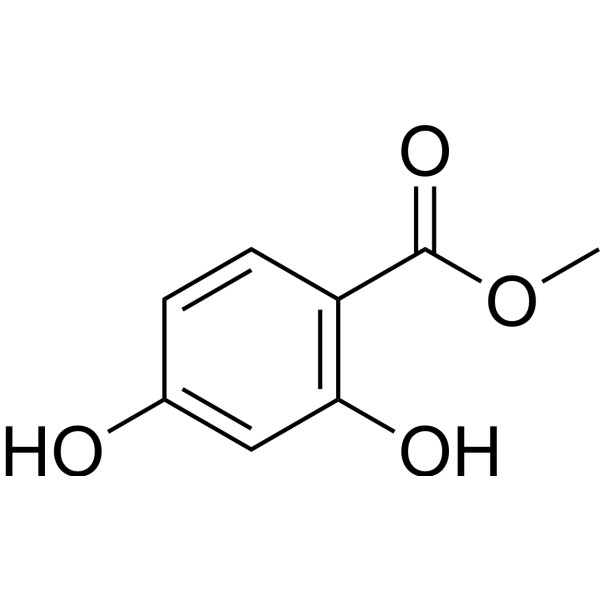
Cat. No.: HY-W010076
CAS No.: 2150-47-2
Target:  

Fungal

Research Areas:  

Infection

Methyl 2,4-dihydroxybenzoate is an antifungal agent and plant defense activator. Methyl 2,4-dihydroxybenzoate disrupts the fungal antioxidant system, induces oxidative stress, interferes with N-glycosylation and protein synthesis, inhibits energy metabolism, and impairs transport function. Methyl 2,4-dihydroxybenzoate exhibits potent antifungal activity against the causal agent of banana Panama disease (Fusarium oxysporum f. sp. cubense) . Methyl 2,4-dihydroxybenzoate can also serve as a cosmetic raw material and is used in the synthesis of fine chemical raw materials. Methyl 2,4-dihydroxybenzoate is applicable to research related to Panama disease (Fusarium wilt) .
loading...
    loading...
Cat. No.: HY-108024AR
CAS No.: 2751586-94-2
Synonyms: KAF156 hydrochloride (Standard); GNF156 hydrochloride (Standard)
Research Areas:  

Infection

Ganaplacide hydrochloride (Standard) is the analytical standard of Ganaplacide (hydrochloride) (HY-108024A). This product is intended for research and analytical applications. Ganaplacide (KAF156) hydrochloride is a first-in-class, orally active imidazolopiperazine antimalarial agent. Ganaplacide hydrochloride is active against a broad range of Plasmodium species, including drug-resistant parasites. Ganaplacide hydrochloride is parasiticidal against both asexual and sexual blood stages as well as the liver stages of the parasite .
loading...
    loading...
Cat. No.: HY-18746
CAS No.: 1513879-18-9
Target:  

Parasite PI4K

Research Areas:  

Infection

KAI-407 is an orally active inhibitor of Plasmodium PI4K kinase, which can broadly inhibit multiple stages of the parasite lifecycle. KAI-407 exhibits EC50s of for the blood stage of malignant Plasmodium of 81 nM; for the liver schizonts of P. yoelii of 88 nM; and IC50s for the liver schizonts and dormant bodies of P. cynomolgi of 0.64 μM and 0.69 μM respectively. KAI-407 can prevent Plasmodium berghei infection 100%. KAI-407 can be used for the study of vivax malaria .
loading...
    loading...
Cat. No.: HY-L114
1,649 compounds

Inflammation promotes physiological and pathological processes by the activation of the immune system, local vascular system, and various cells within the damaged tissue. Accumulating epidemiological and clinical evidence shows that chronic inflammation is causally linked to various human diseases, including cerebrovascular, cardiovascular, joint, cutaneous, pulmonary, blood, liver, and intestinal diseases as well as diabetes.

Various natural products from Traditional Chinese Medicine (TCM) have been shown to safely suppress proinflammatory pathways and control inflammation-associated disease. MCE designs a unique collection of 1,649 Traditional Chinese Medicine active compounds with anti-inflammatory activity, which are derived from Coptis chinensis, Radix isatidis, Flos Lonicerae, Forsythia suspensa, etc. MCE Anti-inflammatory Traditional Chinese Medicine Active Compound Library is a useful tool for discovery anti-inflammatory drugs from TCM.

