23 Results for "

divalent metal ions

" in MedChemExpress (MCE) Product Catalog:
Products (23)

23 Results for "divalent metal ions" in MCE Product Catalog:

1
1 Cited Publications
Cat. No.: HY-17624
CAS No.: 119-04-0
Synonyms: Neomycin B; Fradiomycin B
Target:  

Bacterial Antibiotic

Research Areas:  

Infection

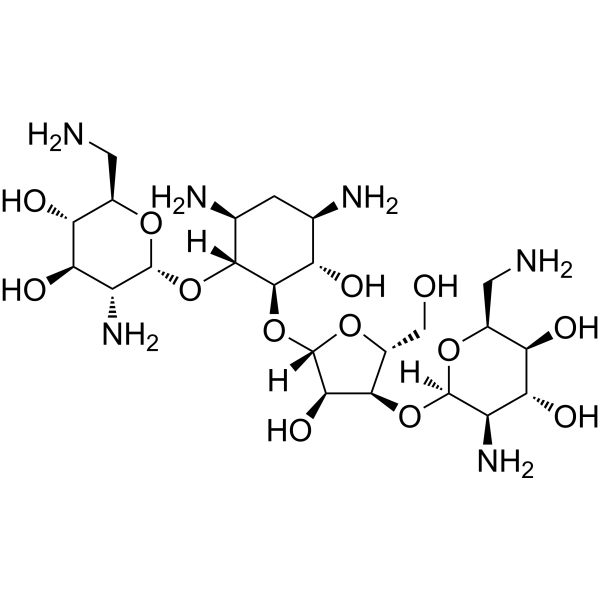
Framycetin (Neomycin B), an aminoglycoside antibiotic, is a potent RNase P cleavage activity inhibitor with a Ki of 35 μM. Framycetin competes for specific divalent metal ion binding sites in RNase P RNA. Framycetin inhibits hammerhead ribozyme with a Ki of 13.5 μM. Framycetin, a 5″-azido neomycin B precursor, binds the Drosha site in miR-525 and is used for hepatic encephalopathy and enteropathogenic E. coli infections .
loading...
    loading...
1
1 Cited Publications
Cat. No.: HY-17624A
CAS No.: 4146-30-9
Synonyms: Neomycin B sulfate; Fradiomycin B sulfate
Target:  

Antibiotic Bacterial

Research Areas:  

Infection

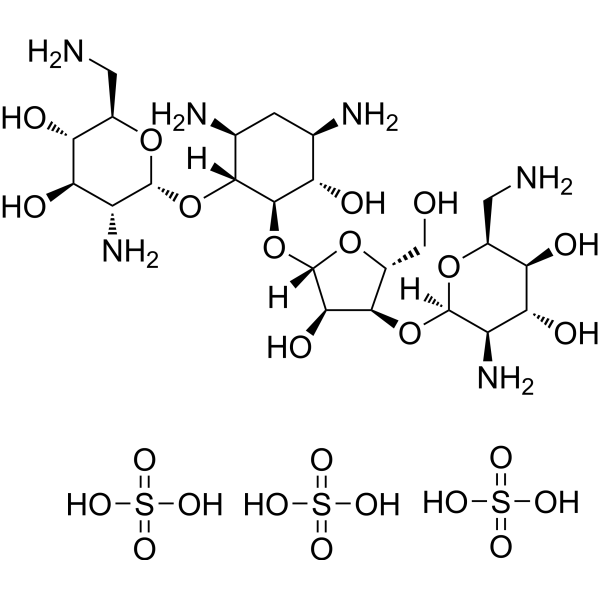
Framycetin sulfate (Neomycin B sulfate), an aminoglycoside antibiotic, is a potent RNase P cleavage activity inhibitor with a Ki of 35 μM. Framycetin sulfate competes for specific divalent metal ion binding sites in RNase P RNA. Framycetin sulfate inhibits hammerhead ribozyme with a Ki of 13.5 μM. Framycetin sulfate, a 5″-azido neomycin B precursor, binds the Drosha site in miR-525 and is used for hepatic encephalopathy and enteropathogenic E. coli infections .
loading...
    loading...
Cat. No.: HY-Y0682S
CAS No.: 203806-08-0
Synonyms: EDTA-d12
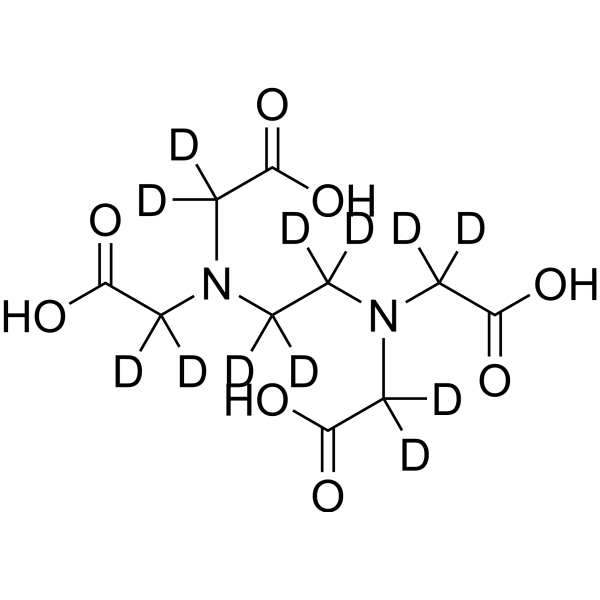
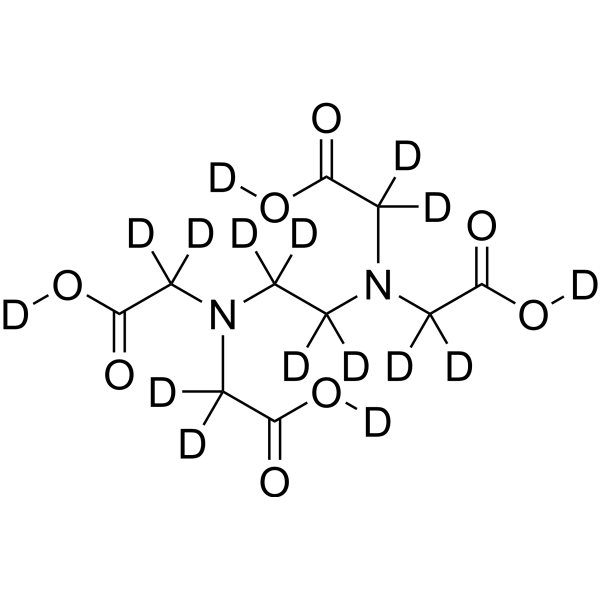
Ethylenediaminetetraacetic acid-d12 is the deuterium labeled Ethylenediaminetetraacetic acid . Ethylenediaminetetraacetic acid (EDTA) is a metal chelators (binds to metal divalent and trivalent cations including calcium), which shows activities of anticoagulant and anti-hypercalcemic. Ethylenediaminetetraacetic acid decreases the metal ion-catalyzed oxidative damage to proteins, and allows maintenance of reducing environment during protein purification. Ethylenediaminetetraacetic acid can also decrease the formation of disulfide bonds .
loading...
    loading...
Cat. No.: HY-W587753
CAS No.: 22601-59-8
Research Areas:  

Infection

Bacitracin A is an antibiotic with antibacterial activity against Gram-positive bacteria. Bacitracin A forms a ternary complex with divalent metal ions and C55-isopentenyl pyrophosphate, thereby inhibiting peptidoglycan biosynthesis and cell wall synthesis. Bacitracin A induces the formation of protoplasts and L-form bacteria, alters membrane permeability, regulates metal ion transport, inhibits in vitro enzyme biosynthesis, disrupts the cytoplasmic membrane and exerts bactericidal activity. Bacitracin A can be used in studies related to bacterial infections, fungal infections and amoebic infections .
loading...
    loading...
Cat. No.: HY-P2765
CAS No.: 9075-65-4
Synonyms: GPDH, rabbit muscle; α-Glycerophosphate dehydrogenase, rabbit muscle; Glycerol phosphate dehydrogenase, rabbit muscle
Research Areas:  

Metabolic Disease

Glycerol‑3‑phosphate dehydrogenase, rabbit muscle (GPDH; α-Glycerophosphate dehydrogenase; Glycerol phosphate dehydrogenase) is an NADH-dependent oxidoreductase derived from rabbit muscle that participates in glycolysis, gluconeogenesis, and the glycerol‑3‑phosphate shuttle metabolic pathway. Glycerol‑3‑phosphate dehydrogenase, rabbit muscle uses NADH as a reducing equivalent donor, and its substrate binding relies on the phosphate-binding site in the active center; it catalyzes the reversible reduction of dihydroxyacetone phosphate to L‑α‑glycerol‑3‑phosphate. The catalytic activity of the enzymatic reaction of Glycerol‑3‑phosphate dehydrogenase, rabbit muscle is regulated by pH and divalent metal ions. Glycerol‑3‑phosphate dehydrogenase, rabbit muscle can be used in metabolism-related studies .
loading...
    loading...
Cat. No.: HY-W105699
CAS No.: 13235-36-4
Synonyms: Ethylenediaminetetraacetic acid tetrasodium tetrahydrate
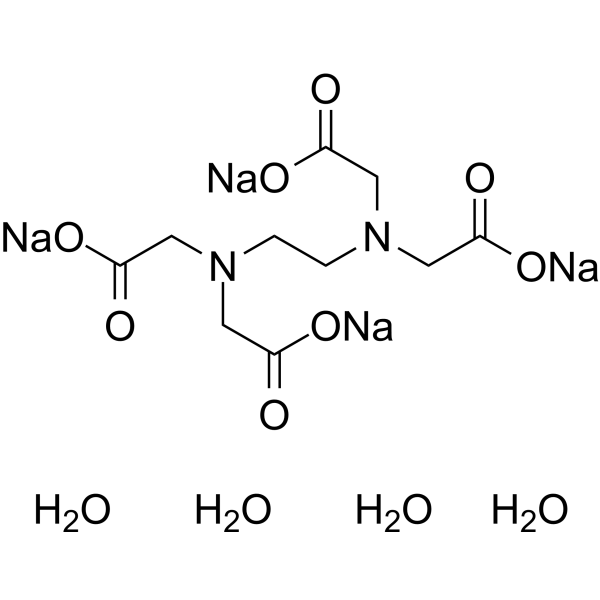
EDTA tetrasodium tetrahydrate is a metal chelator (binds to metal divalent and trivalent cations including calcium), which shows activities of anticoagulant and anti-hypercalcemic. EDTA tetrasodium tetrahydrate decreases the metal ion-catalyzed oxidative damage to proteins, and allows maintenance of reducing environment during protein purification. EDTA tetrasodium tetrahydrate can also decrease the formation of disulfide bonds .
loading...
    loading...
Cat. No.: HY-Y0682S1
CAS No.: 203805-96-3
Synonyms: EDTA-d16
Ethylenediaminetetraacetic acid-d16 is the deuterium labeled Ethylenediaminetetraacetic acid . Ethylenediaminetetraacetic acid (EDTA) is a metal chelators (binds to metal divalent and trivalent cations including calcium), which shows activities of anticoagulant and anti-hypercalcemic. Ethylenediaminetetraacetic acid decreases the metal ion-catalyzed oxidative damage to proteins, and allows maintenance of reducing environment during protein purification. Ethylenediaminetetraacetic acid can also decrease the formation of disulfide bonds .
loading...
    loading...
Cat. No.: HY-W110925
CAS No.: 1324-80-7
Alkali blue 6B monosodium (IND) is a basic dye that can be used as a reagent in biochemical and medical research. Alkali blue 6B monosodium (IND) interacts with various proteins, and can be used in protein adsorption studies. Alkali blue 6B monosodium (IND) contains SO3H -, NH and OH groups that may react with divalent heavy metal ions, and can be used for the removal of heavy metals from aqua .
loading...
    loading...
Cat. No.: HY-P2765A
CAS No.: 9075-65-4
Synonyms: GPDH, microorganism; α-Glycerophosphate dehydrogenase, microorganism; Glycerol phosphate dehydrogenase, microorganism
Research Areas:  

Metabolic Disease

Glycerol-3-phosphate dehydrogenase, microorganism (GPDH; α-Glycerophosphate dehydrogenase; Glycerol phosphate dehydrogenase) is an NADH-dependent oxidoreductase derived from microorganism that participates in glycolysis, gluconeogenesis, and the glycerol‑3‑phosphate shuttle metabolic pathway. Glycerol-3-phosphate dehydrogenase, microorganism uses NADH as a reducing equivalent donor, and its substrate binding relies on the phosphate-binding site in the active center; it catalyzes the reversible reduction of dihydroxyacetone phosphate to L‑α‑glycerol‑3‑phosphate. The catalytic activity of the enzymatic reaction of Glycerol-3-phosphate dehydrogenase, microorganism is regulated by pH and divalent metal ions. Glycerol-3-phosphate dehydrogenase, microorganism can be used in metabolism-related studies .
loading...
    loading...
Cat. No.: HY-P2735
CAS No.: 9012-69-5
Target:  

Phosphorylase

Research Areas:  

Metabolic Disease

Phosphorylase b is one of the two forms of phosphorylase present in skeletal muscle. The other is Phosphorylase a, which can be transformed into one another. The conversion process requires the addition of divalent metal ions and ATP .
loading...
    loading...
Cat. No.: HY-121858
CAS No.: 34441-14-0
Nicotianamine is an orally active ACE inhibitor with an IC50 of 76 nM for rhACE2 and an IC50 of 59 nM for rhACE. Nicotianamine is also a metal chelator with high affinity for ferrous ions and other divalent metal cations. Nicotianamine is isolated from soybean. Nicotianamine reduces systolic blood pressure in spontaneously hypertensive rats. Nicotianamine chelates iron and zinc, promotes iron transport, enhances iron bioavailability through stable Fe 2+-NA complexes and intestinal Fe 2+ uptake, and promotes phloem-to-sink Fe mobilization, long-distance transport of Zn to leaves and flowers, and pollen development. Nicotianamine is a biosynthetic precursor of plant phytosiderophores, reverses chlorosis, and rescues sterility in NA-free mutants. Nicotianamine is used in research on hypertension, chlorosis, and iron deficiency anemia .
loading...
    loading...
Cat. No.: HY-17624AR
CAS No.: 4146-30-9
Synonyms: Neomycin B sulfate (Standard); Fradiomycin B sulfate (Standard)
Research Areas:  

Infection

Framycetin (sulfate) (Standard) is the analytical standard of Framycetin (sulfate). This product is intended for research and analytical applications. Framycetin sulfate (Neomycin B sulfate), an aminoglycoside antibiotic, is a potent RNase P cleavage activity inhibitor with a Ki of 35 μM. Framycetin sulfate competes for specific divalent metal ion binding sites in RNase P RNA. Framycetin sulfate inhibits hammerhead ribozyme with a Ki of 13.5 μM. Framycetin sulfate, a 5″-azido neomycin B precursor, binds the Drosha site in miR-525 and is used for hepatic encephalopathy and enteropathogenic E. coli infections .
loading...
    loading...
Cat. No.: HY-P11825
Target:  

Bacterial

Research Areas:  

Infection

APH-IN-1 is an Aminoglycoside phosphotransferase (APH) inhibitor with a Kd values of 63 nM against Escherichia coli APH(3′)-Ia. APH-IN-1 binds primarily to the ATP-binding pocket of APH in an ATP-competitive manner, with binding affinity enhanced by divalent metal ions (Mg 2+ and Ca 2+). APH-IN-1 can be used for the research of aminoglycoside-resistant bacterial infections .
loading...
    loading...
Cat. No.: HY-E71580
Research Areas:  

Others

2-Keto-myo-inositol isomerase (EC 5.3.99.11) requires a divalent metal ion for activity.
loading...
    loading...
Cat. No.: HY-E71101
Research Areas:  

Others

(R)-Limonene synthase (EC 4.2.3.20) requires divalent metal ions (preferably Mn2+) for catalysis. (R)-Limonene synthase (EC 4.2.3.20) is found in plants of the genera Citrus, Carum, and Anethum.
loading...
    loading...
Cat. No.: HY-E71073
Research Areas:  

Others

(4S)-Limonene synthaseis a recombinant enzyme (also known as a monoterpene synthase or cyclase) from the grand fir (Abies grandis) requires Mn2+ and K+ for activity. Mg2+ is essentially ineffective as the divalent metal ion cofactor.
loading...
    loading...
Cat. No.: HY-E71529
Research Areas:  

Others

2-epi-Valiolone synthase (EC 4.2.3.155) can produce 2-epi-valine ketone, which requires a divalent metal ion (Zn2+ or Co2+) and a NAD+ cofactor. The NAD+ cofactor is briefly reduced during the reaction.
loading...
    loading...
Cat. No.: HY-17624S
Synonyms: Neomycin B-d2; Fradiomycin B-d2
Framycetin-d2 (Neomycin B-d2) is the deuterium labeled Framycetin (HY-17624). Framycetin (Neomycin B), an aminoglycoside antibiotic, is a potent RNase P cleavage activity inhibitor with a Ki of 35 μM. Framycetin competes for specific divalent metal ion binding sites in RNase P RNA. Framycetin inhibits hammerhead ribozyme with a Ki of 13.5 μM. Framycetin, a 5″-azido neomycin B precursor, binds the Drosha site in miR-525 and is used for hepatic encephalopathy and enteropathogenic E. coli infections.
loading...
    loading...
Cat. No.: HY-E71528
Research Areas:  

Others

2-epi-5-epi-Valiolone synthase (EC 4.2.3.152) exhibits high specificity for α-D-sedaripogonanone-7-phosphate. 2-epi-5-epi-Valiolone synthase (EC 4.2.3.152) requires a divalent metal ion (Zn2+ or Co2+) and a NAD+ cofactor, the latter of which is transiently reduced during the reaction. 2-epi-5-epi-Valiolone synthase (EC 4.2.3.152) participates in the biosynthesis of C7N-aminocyclic alcohols.
loading...
    loading...
Cat. No.: HY-P2765B
Synonyms: GPDH, Rabbit; α-Glycerophosphate dehydrogenase, Rabbit; Glycerol phosphate dehydrogenase, Rabbit
Research Areas:  

Metabolic Disease

Glycerol-3-phosphate dehydrogenase, Rabbit (GPDH; α-Glycerophosphate dehydrogenase; Glycerol phosphate dehydrogenase) is an NADH-dependent oxidoreductase derived from Rabbit that participates in glycolysis, gluconeogenesis, and the glycerol‑3‑phosphate shuttle metabolic pathway. Glycerol-3-phosphate dehydrogenase, Rabbit uses NADH as a reducing equivalent donor, and its substrate binding relies on the phosphate-binding site in the active center; it catalyzes the reversible reduction of dihydroxyacetone phosphate to L‑α‑glycerol‑3‑phosphate. The catalytic activity of the enzymatic reaction of Glycerol-3-phosphate dehydrogenase, Rabbit is regulated by pH and divalent metal ions. Glycerol-3-phosphate dehydrogenase, Rabbit can be used in metabolism-related studies .
loading...
    loading...

