1. Search Result
Search Result
Results for "

equine butyrylcholinesterase

" in MedChemExpress (MCE) Product Catalog:

9

Inhibitors & Agonists

1

Natural
Products

Cat. No. Product Name Target Research Areas Chemical Structure
  • HY-121382

    Cholinesterase (ChE) Apoptosis Necroptosis Neurological Disease Cancer
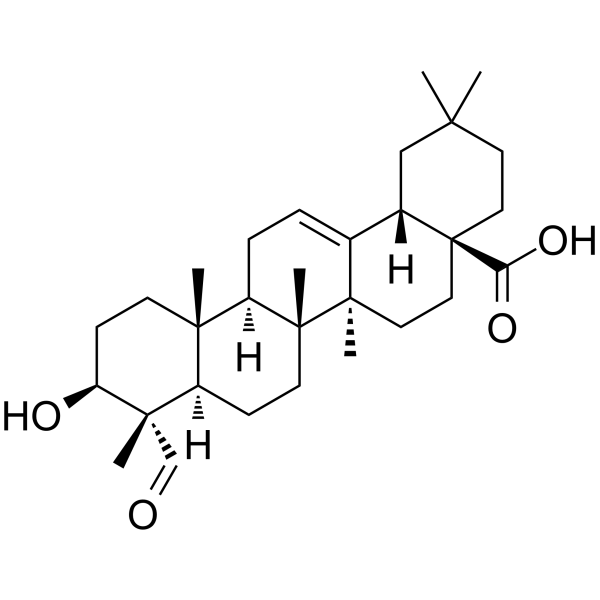
    Gypsogenin is a selective mixed-type BChE inhibitor (Ki=19.99 μM) that also exhibits significant cytotoxicity against various human cancer cell lines. Gypsogenin inhibits tumor growth by inducing cell cycle arrest and triggering apoptosis. Gypsogenin displays antibacterial activity against bacteria such as Bacillus subtilis and Bacillus thuringiensis, and often serves as a key parent nucleus for the synthesis of anticancer compounds. Gypsogenin is widely used in research on Alzheimer's disease and various cancers including colon cancer, melanoma, and leukemia .
    Gypsogenin
  • HY-146035

    Cholinesterase (ChE) Histamine Receptor Neurological Disease
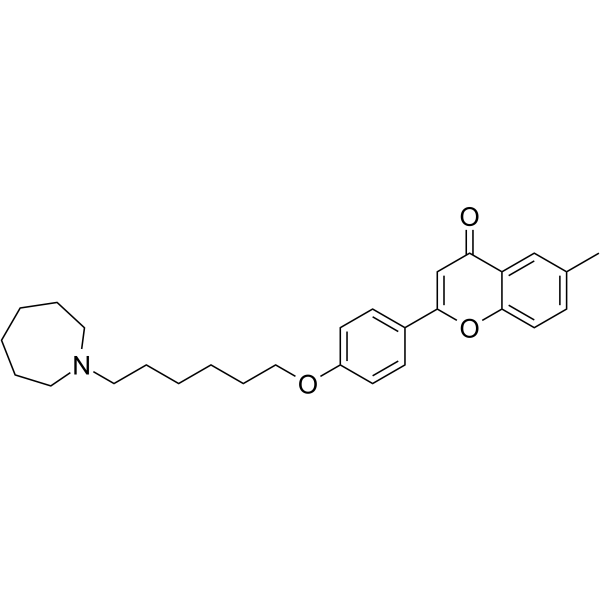
    AChE-IN-14 (compound 5) is a potent cholinesterase inhibitor with IC50s of 0.46 , 0.48, and 0.44 μM for electric eel acetylcholinesterase (eeAChE), human recombinant acetylcholinesterase (hAChE), and equine serum butyrylcholinesterase (eqBuChE), respectively. AChE-IN-14 exhibits high affinity toward human H3 receptor (H3R; Ki= 159.8 nM). AChE-IN-14 can be used for the research of Alzheimer’s disease .
    AChE-IN-14
  • HY-175658

    Cholinesterase (ChE) Amyloid-β Tau Protein Neurological Disease
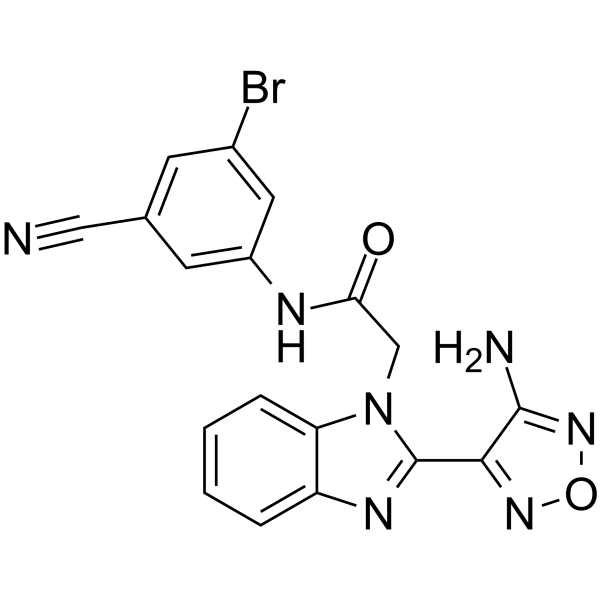
    AChE/BChE-IN-29 is an AChE/BChE inhibitor. AChE/BChE-IN-29 exhibits balanced dual cholinesterase inhibitory activity with IC50 values of 2.1 μM for Electrophorus electricus AChE (eeAChE) and 6.3 μM for equine serum butyrylcholinesterase (eqBChE). AChE/BChE-IN-29 effectively inhibits amyloid-β (42) aggregation and tau protein aggregation in E. coli cell models. AChE/BChE-IN-29 can be used for the study of Alzheimer’s disease (AD) .
    AChE/BChE-IN-29
  • HY-147859

    Amyloid-β Neurological Disease
    BChE-IN-8 (compound 20) is an orally active, potent and BBB-penetrated BChE (butyrylcholinesterase) inhibitor, with IC50 values of 0.15 nM (eqBChE, equine serum BChE) and 45.2 nM (hBChE), respectively. High stability of BChE-IN-8 contributes to significantly improved blood concentration and tissue exposure. BChE-IN-8 can exert neuro-protecting and cognition improving properties through multiple modulations, including cholinergic system, Aβ aggregation, neuropeptide levels. BChE-IN-8 can be used for Alzheimer's disease (AD) research .
    BChE-IN-8
  • HY-136813

    Beta-secretase Amyloid-β Cholinesterase (ChE) Neurological Disease
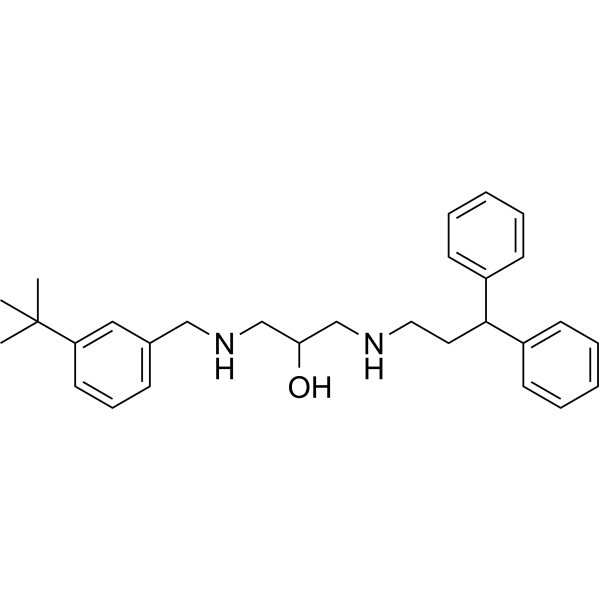
    Multitarget AD inhibitor-1 is a selective and reversible butyrylcholinesterase (BuChE) inhibitor with IC50s of 7.22 μM and 1.55 μM for hBuChE and eqBuChE (BuChE from equine serum), respectively. Multitarget AD inhibitor-1 inhibits β-secretase (IC50hBACE-1=41.60 μM), amyloid β aggregation (IC50Aβ=3.09 μM), tau aggregation. Multitarget AD inhibitor-1, a diphenylpropylamine derivative, has the potential for multifunctional disease-modifying anti-Alzheimer’s research .
    Multitarget AD inhibitor-1
  • HY-146669

    Cholinesterase (ChE) Neurological Disease
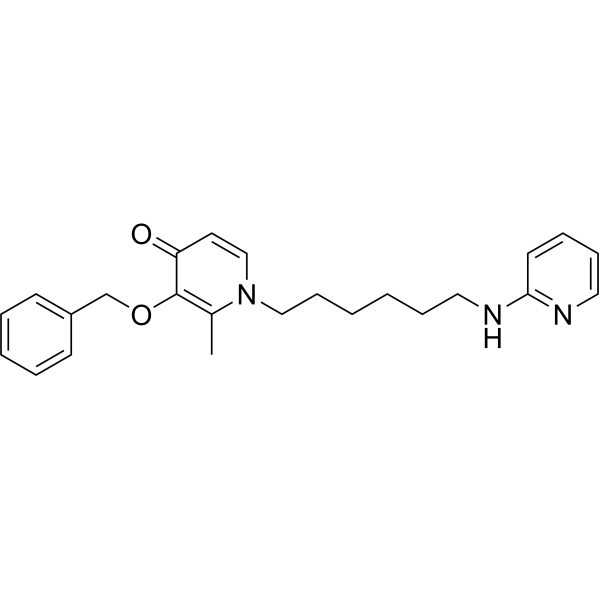
    BChE-IN-6 (compound 12) is a potent BChE inhibitor, with a Ki of 0.182 μM. BChE-IN-6 shows chelating capacity on Zn 2+. BChE-IN-6 can be used for Alzheimer’s disease (AD) research .
    BChE-IN-6
  • HY-182254

    Cholinesterase (ChE) Neurological Disease
    AChE/BChE-IN-35, Tacrine (HY-111338) derivative, is a brain-penetrant dual AChE/BChE inhibitor with an Electric Eel AChE IC50 of 123.66 nM, human AChE IC50 of 122.34 nM, and equine BChE IC50 of 488.00 nM. AChE/BChE-IN-35 undergoes LAT1-mediated active transport across cell membranes. AChE/BChE-IN-35 exhibits enhanced brain exposure with slower brain tissue elimination. AChE/BChE-IN-35 can be used for the research of alzheimer's disease .
    AChE/BChE-IN-35
  • HY-183303

    Cholinesterase (ChE) Reactive Oxygen Species (ROS) Neurological Disease
    AChE-IN-116 is a selective acetylcholinesterase (AChE) inhibitor with an electric eel AChE IC50 of 1.60 μM and Ki of 1.72 μM. AChE-IN-116 exhibits weak ability to scavenge DPPH radical. AChE-IN-116 can be used for the research of Alzheimer's disease .
    AChE-IN-116
  • HY-181161

    Cholinesterase (ChE) Neurological Disease
    AChE-IN-107 is a selective acetylcholinesterase (AChE) inhibitor with an IC50 of 0.22 μM and a Ki of 0.207 μM. AChE-IN-107 shows no inhibitory effect on equine serum BChE at 10 μM. AChE-IN-107 exhibits mixed-type inhibition of electric eel acetylcholinesterase, binding to both free enzyme and enzyme-substrate complex. AChE-IN-107 acts as a cytotoxin, reduces cell viability in hepatocellular carcinoma HepG2 cells.AChE-IN-107 can be used for the research of alzheimer's disease .
    AChE-IN-107

Inquiry Online

Your information is safe with us. * Required Fields.

Salutation


Country or Region *

Applicant Name *


Organization Name *

Department *


Email Address *


Product Name *

Cat. No.


Requested quantity *

Phone Number *


Remarks

Inquiry Online

Inquiry Information

Product Name:
Cat. No.:
Quantity:
MCE Japan Authorized Agent:

