Search Result
Results for "
flavonol glycoside
" in MedChemExpress (MCE) Product Catalog:
| Cat. No. |
상품명 |
Target |
연구분야 |
Chemical Structure |
-
- HY-N0014
-
-
-
- HY-N0649
-
|
Narcissoside
|
EBV
|
Neurological Disease
Cancer
|
|
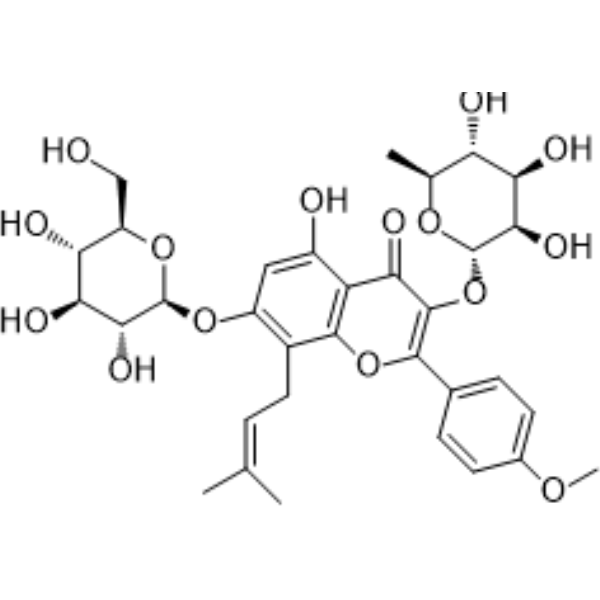
Narcissin (Narcissoside), a flavonol glycoside, exhibits evident scavenging activity against both authentic ONOO - and SIN-1-derived ONOO - with IC50s of 3.5 and 9.6 μM, respectively .
|
-
-
- HY-N1441
-
|
Kaempferol-3-O-rhamnoside
|
Mitochondrial Metabolism
PTEN
Autophagy
Bacterial
|
Infection
Cardiovascular Disease
Neurological Disease
Inflammation/Immunology
|
|
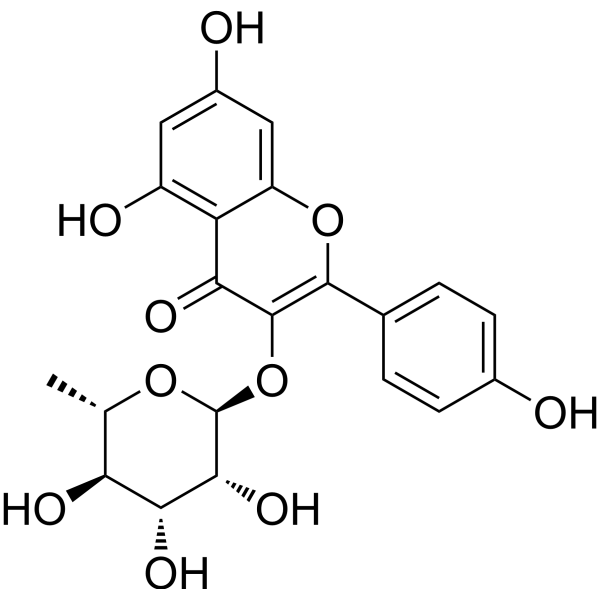
Afzelin (Kaempferol-3-O-rhamnoside)It is a flavonol glycoside that has anti-inflammatory, anti-oxidative stress response, anti-apoptotic, and anti-cardiac cytotoxic effects. AfzelinIt can reduce mitochondrial damage, enhance mitochondrial biosynthesis, and reduce mitochondria-related proteins. Parkinand PTENinduced putative kinase 1 (putative kinase 1)s level. AfzelinCan be improved D-galactosamine(GalN)/LPSSurvival rate of mice treated with doxorubicin prophylaxis (HY-15142A)Induced cardiotoxicity and scopolamine (HY-N0296)-induced neurological injury. AfzelinAlso inhibits asthma and allergies caused by ovalbumin .
|
-
-
- HY-N7368
-
|
|
Adenosine Deaminase
Bacterial
Caspase
|
Infection
Neurological Disease
Inflammation/Immunology
Cancer
|
|
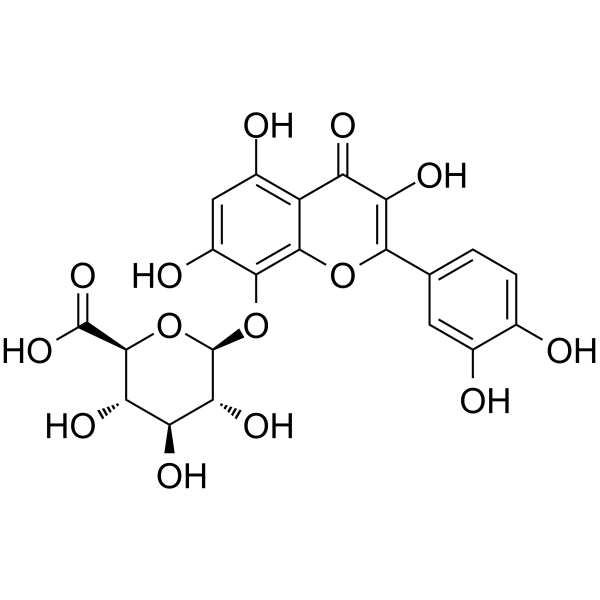
Hibifolin is a flavonol glycoside that can be isolated from Helicteres isora. Hibifolin is an inhibitor of adenosine deaminase (ADA) (Ki = 49.92 μM). Hibifolin protects neurons against β-amyloid-induced neurotoxicity. Hibifolin possesses a potent protective activity against cell death induced by aggregated Aβ. Hibifolin can abolish Aβ-induced caspase-3 and caspase-7 activation. Hibifolin induces Akt phosphorylation in cortical neurons. Hibifolin is also a natural sortase A (SrtA) inhibitor (IC50 = 31.2 μM) through direct binding to SrtA protein. Hibifolin attenuates the pathogenic behavior of Staphylococcus aureus including adhesion, invasion, and biofilm formation. Hibifolin improves the survival of pneumonia induced by Staphylococcus aureus in mouse model and alleviates pathological damage. Hibifolin shows a synergistic antibacterial effect with Cefotaxime (HY-A0088A) .
|
-
-
- HY-N7989
-
|
Tellimoside
|
Others
|
Others
|
|
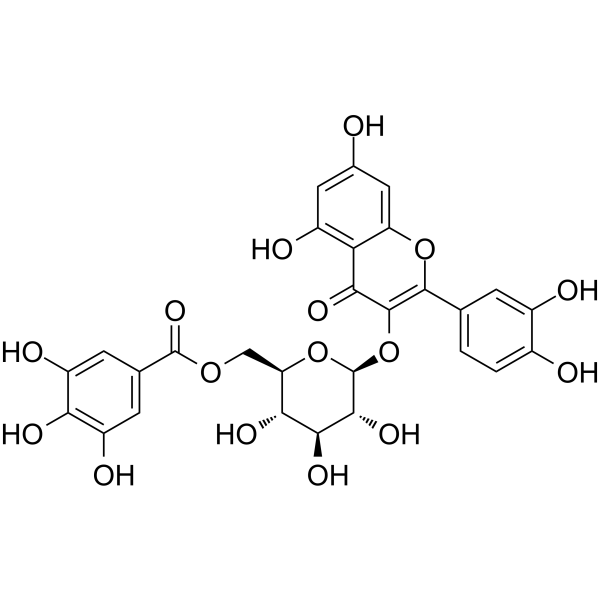
Quercetin 3-O-(6''-O-galloyl)-β-D-glucoside (Tellimoside) is a flavonol glycoside with strong inhibitory activity against the growth of Microcystis aeruginosa .
|
-
-
- HY-N0875
-
-
-
- HY-N9397
-
|
|
Others
|
Metabolic Disease
|
|
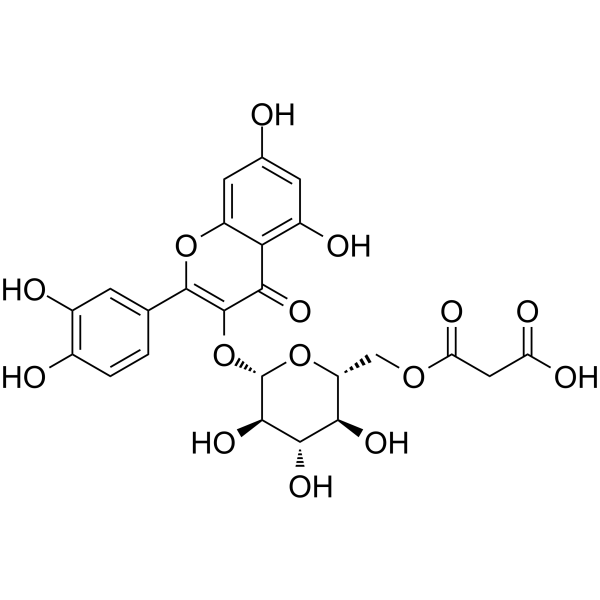
Quercetin 3-O-(6''-O-malonyl)-β-D-glucoside is a flavonol glycoside. Quercetin 3-O-(6''-O-malonyl)-β-D-glucoside possesses antioxidant activity .
|
-
-
- HY-N10407
-
|
|
Drug Derivative
|
Others
|
|
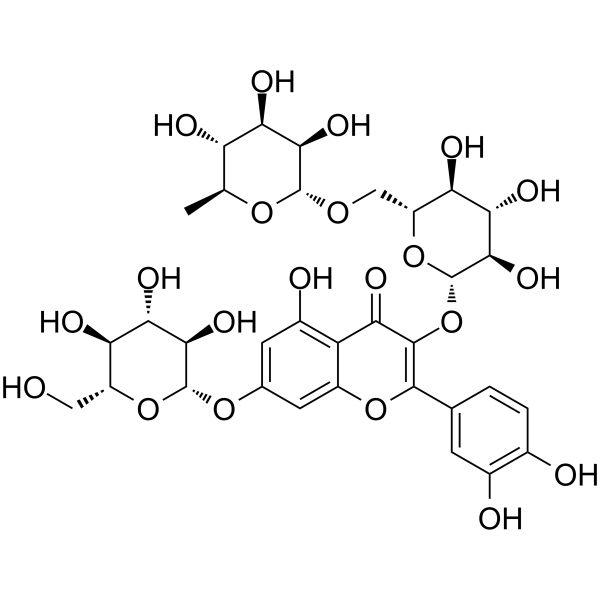
Quercetin 3-O-rutinoside-7-O-glucoside is a flavonol glycoside and a derivative of Quercetin (HY-18085). Quercetin 3-O-rutinoside-7-O-glucoside can be isolated from the leaves and fruits of Korean Morus alba L. as well as the leaves of Hemerocallis fulva. Quercetin 3-O-rutinoside-7-O-glucoside inhibits lipid peroxidation in large unilamellar vesicles in vitro. Quercetin 3-O-rutinoside-7-O-glucoside possesses antioxidant activity .
|
-
-
- HY-N8194
-
|
Syringetin 3-O-β-D-glucoside
|
Others
|
Neurological Disease
|
|
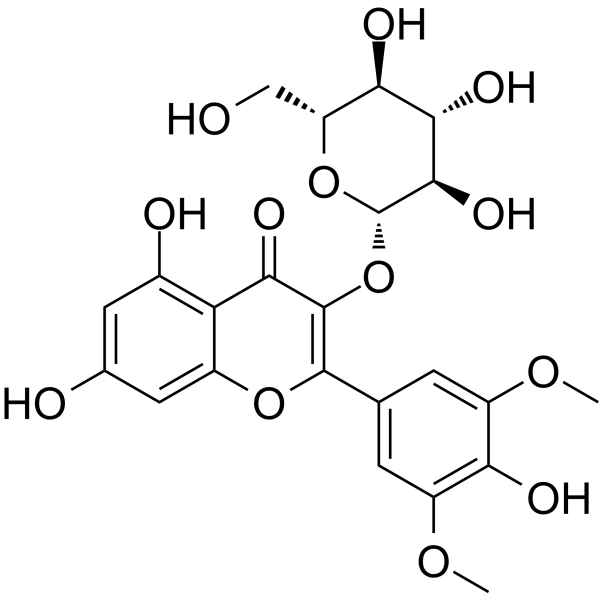
Syringetin-3-O-glucosid (Syringetin 3-O-β-D-glucoside), a flavonol glycoside, shows relatively weak DPPH and ABTS radical scavenging activity .
|
-
-
- HY-N0014R
-
-
-
- HY-N7597
-
|
Korepimedoside A
|
Others
|
Others
|
|
Epimedoside is a flavonol glycoside, isolated from the aerial parts of Epimedium koreanum Nakai (Berberidaceae) .
|
-
-
- HY-N16554
-
|
|
Others
|
Others
|
|
2′-O-Glucosylrutin (Compound 32) is a type of flavonol glycoside and can be found in Lablab Flos Alba .
|
-
-
- HY-N12963
-
|
Quercetin 3,7-dirhamnoside
|
Others
|
Others
|
|
Quercetin-3,7-di-O-α-rhamnopyranoside (Quercetin 3,7-dirhamnoside) is a flavonoid glycoside isolated from plants of the genus Randonia africana. The compound belongs to the group of flavonol glycosides identified in the aerial parts of Randonia africana .
|
-
-
- HY-N12532
-
|
|
Others
|
Others
|
|
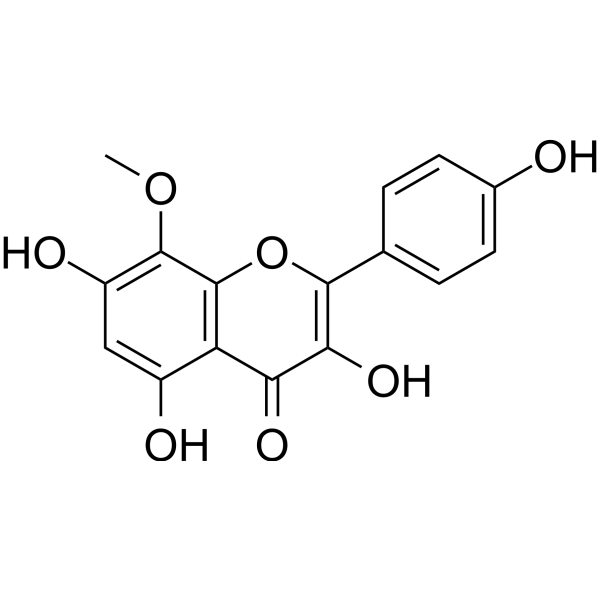
8-Methoxykaempferol is a natural flavonol glycoside found in unifloral honeys .
|
-
-
- HY-N16520
-
|
|
Others
|
Others
|
|
Kaempferol 3-O-β-D-glucopyranoside 6′′-(3-hydroxy-3-methylglutarate) is an acylated flavonol glycoside. Kaempferol 3-O-β-D-glucopyranoside 6′′-(3-hydroxy-3-methylglutarate) can be isolated from 10-year-old callus cultures of Mexican lime .
|
-
-
- HY-N1441R
-
|
Kaempferol-3-O-rhamnoside (Standard)
|
Mitochondrial Metabolism
PTEN
Autophagy
Bacterial
Reference Standards
|
Infection
Cardiovascular Disease
Neurological Disease
Inflammation/Immunology
|
|
Afzelin (Standard) is the analytical standard of Afzelin. This product is intended for research and analytical applications. Afzelin (Kaempferol-3-O-rhamnoside)It is a flavonol glycoside that has anti-inflammatory, anti-oxidative stress response, anti-apoptotic, and anti-cardiac cytotoxic effects. AfzelinIt can reduce mitochondrial damage, enhance mitochondrial biosynthesis, and reduce mitochondria-related proteins. Parkinand PTENinduced putative kinase 1 (putative kinase 1)s level. AfzelinCan be improved D-galactosamine(GalN)/LPSSurvival rate of mice treated with doxorubicin prophylaxis (HY-15142A)Induced cardiotoxicity and scopolamine (HY-N0296)-induced neurological injury. AfzelinAlso inhibits asthma and allergies caused by ovalbumin .
|
-
-
- HY-N0649R
-
|
Narcissoside (Standard)
|
EBV
Reference Standards
|
Neurological Disease
Cancer
|
|
Narcissin (Standard) is the analytical standard of Narcissin. This product is intended for research and analytical applications. Narcissin (Narcissoside), a flavonol glycoside, exhibits evident scavenging activity against both authentic ONOO-?and SIN-1-derived ONOO- with IC50s?of 3.5 and 9.6 μM, respectively .
|
-
-
- HY-N2225
-
|
|
Others
|
Infection
|
|
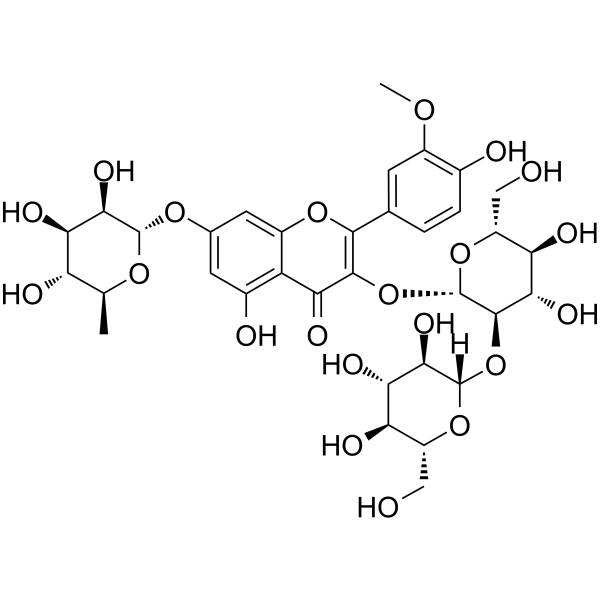
Isorhamnetin-3-O-sophoroside-7-O-rhamnoside, the major flavonol glycoside, is isolated from sea buckthorn (Hippopha rhamnoides). Isorhamnetin-3-O-sophoroside-7-O-rhamnoside has the algicidal activity against the growth of the harmful microalgae .
|
-
-
- HY-N0861
-
|
Ikarisoside-F; Icarisoside-F
|
Others
|
Cancer
|
|
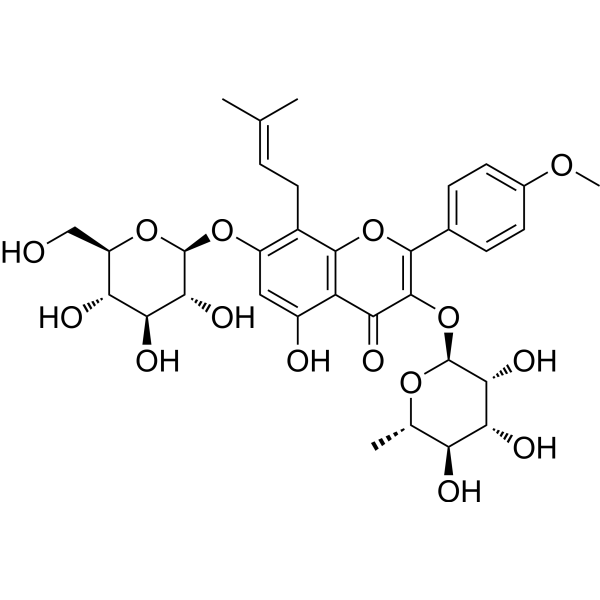
Ikarisoside F is a flavonol glycoside from Vancouveria hexandra; could bind to AdoHcy hydrolase.
|
-
-
- HY-N0624
-
|
|
Others
|
Cancer
|
|
Complanatoside A is a flavonol glycoside isolated from Astragalus complanatus, and currently it is used as a quality control index for A. complanatus in the 2010 edition of the Chinese Pharmacopoeia.
|
-
-
- HY-N12862
-
|
|
Aldose Reductase
|
Inflammation/Immunology
|
|
Floramanoside A is a flavonol glycoside that can be isolated from the flowers of Abelmouschus manihot. Floramanoside A has DPPH scavenging (IC50: 10.1 μM) and aldose reductase inhibition activities (IC50: 17.8 μM) .
|
-
-
- HY-N10644
-
|
|
Others
|
Others
|
|
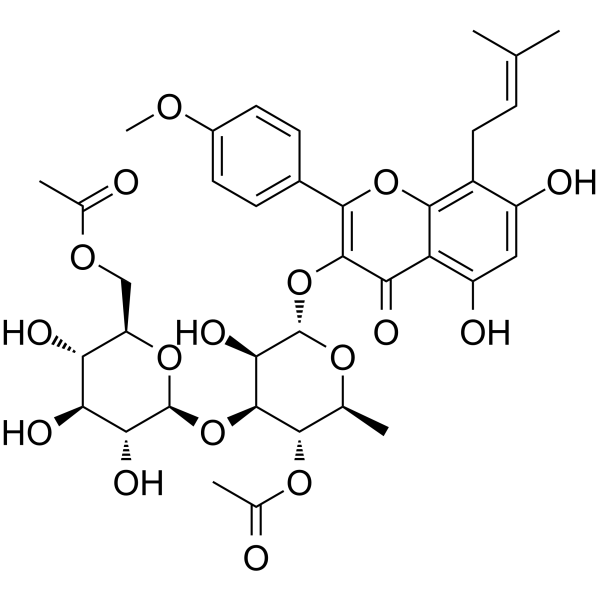
Complanatin is an acylated flavonol glycoside, it can be isolated from Astragalus complanatus R. Br .
|
-
-
- HY-N10645
-
|
|
Others
|
Others
|
|
Rhamnocitrin 3-O-β-D-apiofuranosyl(1→2)-β-D-glucopyranoside is a flavonol O-glycoside, isolated from Astragali semen of leguminous plants .
|
-
-
- HY-N13103
-
|
|
Others
|
Others
|
|
Sagittasine A is an isoprenyl flavonol glycoside that can be isolated from Epimedium sagittatum.
|
-
-
- HY-N12442
-
|
|
Others
|
Metabolic Disease
|
|
Sarmenoside III is a flavonol glycoside with hepatoprotective activity isolated from Sedum sarmentosum.
|
-
-
- HY-N13129
-
|
|
Others
|
Others
|
|
Koreanoside G is a flavonol glycoside that can be isolated from the leaves of Epimedium koreanum .
|
-
-
- HY-N12854
-
|
|
Others
|
Others
|
|
Azaleatin-3-rutinoside is a flavonol glycoside that can be isolated from Carya pecan .
|
-
-
- HY-N11557
-
|
|
Others
|
Others
|
|
Gossypetin 3-sophoroside-8-glucoside is a flavonol glycoside, which can be isolated from the aerial parts of Equisetum hyemale L. .
|
-
-
- HY-N12440
-
|
|
Others
|
Others
|
|
Sarmenoside II is a flavonol glycoside with activity that inhibits lipid accumulation. Sarmenoside II inhibits albumin-oleate-induced lipid accumulation in HepG2 cells by approximately 30% at 100 μM.
|
-
-
- HY-N8007
-
|
|
Others
|
Metabolic Disease
|
|
Quercetin 3-O-Glc-(1→2)-Rha-7-O-Rha is a flavonol glycoside with no significant inhibitory activity against albumin oleate-induced lipid accumulation.
|
-
-
- HY-N12871
-
|
|
Aldose Reductase
|
Others
|
|
Floramanoside D is a flavonol glycoside. Floramanoside D inhibits aldose reductase (IC50 is 2.2 μM), scavenges the 2,2-diphenyl-1-picrylhydrazyl (DPPH) (SC50 is 12.5 μM) .
|
-
-
- HY-N8086
-
|
Epimedin I
|
Others
|
Cardiovascular Disease
Metabolic Disease
Inflammation/Immunology
|
|
Korepimedoside C (Epimedin I), a flavonol glycoside, is isolated from the aerial parts of Epimedium koreanum Nakai. Epimedium koreanum Nakai is a famous Chinese herbal medicine for the research of impotence, osteoporosis, immune suppression and cardiovascular diseases .
|
-
-
- HY-N8087
-
|
Korepimedoside B
|
Others
|
Cardiovascular Disease
Metabolic Disease
Inflammation/Immunology
|
|
Epimedin K (Korepimedoside B), a flavonol glycoside, is isolated from the aerial parts of Epimedium koreanum Nakai. Epimedium koreanum Nakai is a famous Chinese herbal medicine for the research of impotence, osteoporosis, immune suppression and cardiovascular diseases .
|
-
-
- HY-N12012
-
|
11-Dehydroxy-mogroside IIA2 O-rhamnoside
|
Others
|
Others
|
|
11-Oxomogroside II A2 (11-Dehydroxy-mogroside IIA2 O-rhamnoside) (compound 101) is a mogroside isolated from the fruit of Luo Han Guo .
|
-
-
- HY-N12443
-
|
|
Cytochrome P450
|
Inflammation/Immunology
|
|
Antioxidant agent-18 (compound 5) is a flavonol glycoside with antioxidant activity isolated from Ginkgo biloba. Antioxidant agent-18 scavenges DPPH radicals (IC50: 15.8 μM) and reduces cytochrome c (IC50: 14.7 μM).
|
-
-
- HY-N12327
-
|
|
Others
|
Others
|
|
Ombuin-3-O-glucoside is a flavonoid glycoside derived from Gynostemma pentaphyllum. Ombuin-3-O-glucoside has antioxidant activity .
|
-
-
- HY-N17749
-
|
|
Others
|
Others
|
|
Sagittasine C is a flavonol glycoside found in the aerial parts of Epimedium pubescens MAXIM .
|
-
-
- HY-N17856
-
|
|
Others
|
Others
|
|
Gossypetin 3-O-arabinofuranoside (compound 2) is a flavonol glycoside that can be found in the leaves of Metrosideros polymorpha .
|
-
-
- HY-N19315
-
|
|
Drug Derivative
|
Others
|
|
Amurensin is a flavonol glycoside that can be isolated from the leaves of Phellodendron amurense Ruprecht .
|
-
-
- HY-N9397R
-
|
|
Reference Standards
Others
|
Metabolic Disease
|
|
Quercetin 3-O-(6''-O-malonyl)-β-D-glucoside (Standard) is an analytical standard for Quercetin 3-O-(6''-O-malonyl)-β-D-glucoside. This product is intended for research and analytical applications. Quercetin 3-O-(6''-O-malonyl)-β-D-glucoside is a flavonol glycoside. Quercetin 3-O-(6''-O-malonyl)-β-D-glucoside has antioxidant activity.
|
-
-
- HY-N17301
-
|
|
Others
|
Others
|
|
Capilliposide I is a tetrasaccharide flavonol glycoside found in the whole herbs of Lysimachia capillipes .
|
-
-
- HY-N18273
-
|
|
Drug Derivative
|
Others
|
|
Kaempferol-3-glucoside-7-rhamnoside (Compound 11) is a flavonol glycoside. Kaempferol-3-glucoside-7-rhamnoside can be isolated from the pomace of Hippophae rhamnoides .
|
-
-
- HY-N7368R
-
|
|
Reference Standards
Adenosine Deaminase
Bacterial
Caspase
|
Neurological Disease
Inflammation/Immunology
Cancer
|
|
Hibifolin (Standard) is the analytical standard of Hibifolin. This product is intended for research and analytical applications. Hibifolin is a flavonol glycoside that can be isolated from Helicteres isora. Hibifolin is an inhibitor of adenosine deaminase (ADA) (Ki = 49.92 μM). Hibifolin protects neurons against β-amyloid-induced neurotoxicity. Hibifolin possesses a potent protective activity against cell death induced by aggregated Aβ. Hibifolin can abolish Aβ-induced caspase-3 and caspase-7 activation. Hibifolin induces Akt phosphorylation in cortical neurons. Hibifolin is also a natural sortase A (SrtA) inhibitor (IC50 = 31.2 μM) through direct binding to SrtA protein. Hibifolin attenuates the pathogenic behavior of Staphylococcus aureus including adhesion, invasion, and biofilm formation. Hibifolin improves the survival of pneumonia induced by Staphylococcus aureus in mouse model and alleviates pathological damage. Hibifolin shows a synergistic antibacterial effect with Cefotaxime (HY-A0088A) .
|
-
-
- HY-N17398
-
|
|
Others
|
Others
|
|
Kaempherol-3-O-β-D-(2"-O-trans-p-coumaroyl)-rutinoside is an acylated flavonol glycoside found in the leaves of Ginkgo biloba L .
|
-
-
- HY-N17981
-
|
|
Drug Derivative
|
Others
|
|
(-)-Isorhamnetin 3-O-robinobioside (compound 6) is a flavonol glycoside. (-)-Isorhamnetin 3-O-robinobioside can be found in the aerial parts of Anthyllis sericea (Leguminosae) .
|
-
-
- HY-N17303
-
|
|
Drug Derivative
|
Others
|
|
Capilliposide II is a flavonol glycoside found in the whole herbs of Lysimachia capillipes. Capilliposide II has the structure kaempferol-3-O---β-D-galactopyranoside .
|
-
-
- HY-N17847
-
|
|
Others
|
Others
|
|
Quercetin-3-O-β-D-xylosyl-(1→2)-β-D-galactoside (compound 2) is a flavonol glycoside. Quercetin-3-O-β-D-xylosyl-(1→2)-β-D-galactoside occurs in the leaves of horseradish Armoracia rusticana. Quercetin-3-O-β-D-xylosyl-(1→2)-β-D-galactoside serves as one of the feeding stimulants for the flea beetle Phyllotreta armoraciae .
|
-
-
- HY-114341
-
|
Kaempferol 5-O-β-D-glucopyranoside
|
Others
|
Inflammation/Immunology
|
|
Kaempferol 5-glucoside (Kaempferol 5-O-β-D-glucopyranoside) is an orally active flavonol glycoside and immunomodulator. Kaempferol 5-glucoside is isolated from the aerial parts of Indigofera aspalathoides Vahl ex DC. Kaempferol 5-glucoside enhances delayed-type hypersensitivity in rats. Kaempferol 5-glucoside increases humoral antibody titers. Kaempferol 5-glucoside is used for the research of autoimmune diseases .
|
-
-
- HY-N17388
-
|
|
Others
|
Cardiovascular Disease
Inflammation/Immunology
|
|
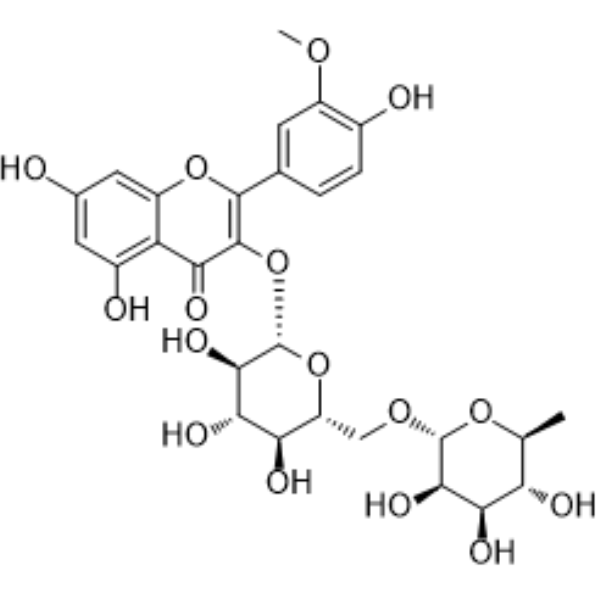
5,7,5′-Trihydroxy-3′,4′-dimethoxyflavonol-3-O-α-L-rhamnopyranosyl-(1→6)-β-D-glucopyranoside is a flavonol glycoside found in the leaves of Ginkgo biloba. 5,7,5′-Trihydroxy-3′,4′-dimethoxyflavonol-3-O-α-L-rhamnopyranosyl-(1→6)-β-D-glucopyranoside exerts antioxidative and cardioprotective effects. 5,7,5′-Trihydroxy-3′,4′-dimethoxyflavonol-3-O-α-L-rhamnopyranosyl-(1→6)-β-D-glucopyranoside can be used for the research of inflammation and cardiac injury .
|
-
-
- HY-N15178
-
|
|
Others
|
Others
|
|
Azaleatin 3-glucoside is a flavonol glycoside that can be isolated from the branches of Carya pecan .
|
-
- HY-N19080
-
|
|
Bacterial
|
Infection
Inflammation/Immunology
Cancer
|
|
Smilax glabra extract possesses a variety of benefits, including anti-inflammatory, antioxidant, antibacterial, and anticancer properties. It contains numerous active ingredients, such as dihydroflavonol glycosides (e.g., asstebin and neo-asstebin), flavonol glycosides, and steroidal saponins, including smilax saponin.
|
-
- HY-N17857
-
|
|
Glycosidase
|
Infection
|
|
Quercetin 3'-methoxy-3-O-α-L-arabinofuranoside is a weak inhibitor of α-glucosidase, which can found in the leaves and twigs of Fagus hayatae .
|
-
- HY-N17737
-
|
|
Fatty Acid Synthase (FASN)
Cytochrome P450
|
Metabolic Disease
Inflammation/Immunology
|
|
Floramanoside F is a type of flavonol glycoside compound. Floramanoside F has a moderate free radical scavenging effect, with a SC₅₀ value of 25.1 μM. Floramanoside F has a relatively weak inhibitory activity on aldose reductase, with a IC₅₀ value greater than 100 μM. Floramanoside F has strong binding affinity with key target enzymes of type 1 diabetic nephropathy (T1DN) (Fasn, Cyp2e1, Cyp4a32), and can inhibit lipid accumulation and oxidative stress, thereby alleviating renal inflammation and fibrosis. Floramanoside F can be used to study type 1 diabetic nephropathy and diabetic complications .
|
-
| Cat. No. |
상품명 |
Category |
Target |
Chemical Structure |
-
- HY-N0014
-
-
-
- HY-N0649
-
-
-
- HY-N1441
-
-
-
- HY-N7368
-
|
|
Flavonols
Flavonoids
other families
Neurological Disease
Classification of Application Fields
Phenols
Polyphenols
Plants
Inflammation/Immunology
Disease Research Fields
Source Classification
|
Adenosine Deaminase
Bacterial
Caspase
|
|
Hibifolin is a flavonol glycoside that can be isolated from Helicteres isora. Hibifolin is an inhibitor of adenosine deaminase (ADA) (Ki = 49.92 μM). Hibifolin protects neurons against β-amyloid-induced neurotoxicity. Hibifolin possesses a potent protective activity against cell death induced by aggregated Aβ. Hibifolin can abolish Aβ-induced caspase-3 and caspase-7 activation. Hibifolin induces Akt phosphorylation in cortical neurons. Hibifolin is also a natural sortase A (SrtA) inhibitor (IC50 = 31.2 μM) through direct binding to SrtA protein. Hibifolin attenuates the pathogenic behavior of Staphylococcus aureus including adhesion, invasion, and biofilm formation. Hibifolin improves the survival of pneumonia induced by Staphylococcus aureus in mouse model and alleviates pathological damage. Hibifolin shows a synergistic antibacterial effect with Cefotaxime (HY-A0088A) .
|
-
-
- HY-N7989
-
-
-
- HY-N0875
-
-
-
- HY-N9397
-
-
-
- HY-N8194
-
-
-
- HY-N0014R
-
-
-
- HY-N7597
-
-
-
- HY-N16554
-
-
-
- HY-N12963
-
-
-
- HY-N12532
-
-
-
- HY-N16520
-
-
-
- HY-N1441R
-
|
Kaempferol-3-O-rhamnoside (Standard)
|
Flavonols
Structural Classification
Flavonoids
Saururaceae
Houttuynia cordata Thunb.
Phenols
Polyphenols
Plants
Source Classification
|
Mitochondrial Metabolism
PTEN
Autophagy
Bacterial
Reference Standards
|
|
Afzelin (Standard) is the analytical standard of Afzelin. This product is intended for research and analytical applications. Afzelin (Kaempferol-3-O-rhamnoside)It is a flavonol glycoside that has anti-inflammatory, anti-oxidative stress response, anti-apoptotic, and anti-cardiac cytotoxic effects. AfzelinIt can reduce mitochondrial damage, enhance mitochondrial biosynthesis, and reduce mitochondria-related proteins. Parkinand PTENinduced putative kinase 1 (putative kinase 1)s level. AfzelinCan be improved D-galactosamine(GalN)/LPSSurvival rate of mice treated with doxorubicin prophylaxis (HY-15142A)Induced cardiotoxicity and scopolamine (HY-N0296)-induced neurological injury. AfzelinAlso inhibits asthma and allergies caused by ovalbumin .
|
-
-
- HY-N0649R
-
-
-
- HY-N2225
-
-
-
- HY-N0861
-
-
-
- HY-N0624
-
-
-
- HY-N12862
-
-
-
- HY-N10644
-
-
-
- HY-N10645
-
-
-
- HY-N13103
-
-
-
- HY-N12442
-
-
-
- HY-N13129
-
-
-
- HY-N12854
-
-
-
- HY-N11557
-
-
-
- HY-N12440
-
-
-
- HY-N8007
-
-
-
- HY-N12871
-
-
-
- HY-N8086
-
-
-
- HY-N8087
-
-
-
- HY-N12012
-
-
-
- HY-N12443
-
-
-
- HY-N12327
-
-
-
- HY-N17749
-
-
-
- HY-N17856
-
-
-
- HY-N19315
-
-
-
- HY-N9397R
-
-
-
- HY-N17301
-
-
-
- HY-N18273
-
-
-
- HY-N7368R
-
|
|
Flavonols
Structural Classification
Flavonoids
other families
Phenols
Polyphenols
Plants
Source Classification
|
Reference Standards
Adenosine Deaminase
Bacterial
Caspase
|
|
Hibifolin (Standard) is the analytical standard of Hibifolin. This product is intended for research and analytical applications. Hibifolin is a flavonol glycoside that can be isolated from Helicteres isora. Hibifolin is an inhibitor of adenosine deaminase (ADA) (Ki = 49.92 μM). Hibifolin protects neurons against β-amyloid-induced neurotoxicity. Hibifolin possesses a potent protective activity against cell death induced by aggregated Aβ. Hibifolin can abolish Aβ-induced caspase-3 and caspase-7 activation. Hibifolin induces Akt phosphorylation in cortical neurons. Hibifolin is also a natural sortase A (SrtA) inhibitor (IC50 = 31.2 μM) through direct binding to SrtA protein. Hibifolin attenuates the pathogenic behavior of Staphylococcus aureus including adhesion, invasion, and biofilm formation. Hibifolin improves the survival of pneumonia induced by Staphylococcus aureus in mouse model and alleviates pathological damage. Hibifolin shows a synergistic antibacterial effect with Cefotaxime (HY-A0088A) .
|
-
-
- HY-N17398
-
-
-
- HY-N17981
-
-
-
- HY-N17303
-
-
-
- HY-N17847
-
-
-
- HY-114341
-
-
-
- HY-N17388
-
|
|
Structural Classification
Flavonols
Flavonoids
Ginkgoaceae
Plants
Ginkgo biloba
Source Classification
|
Others
|
|
5,7,5′-Trihydroxy-3′,4′-dimethoxyflavonol-3-O-α-L-rhamnopyranosyl-(1→6)-β-D-glucopyranoside is a flavonol glycoside found in the leaves of Ginkgo biloba. 5,7,5′-Trihydroxy-3′,4′-dimethoxyflavonol-3-O-α-L-rhamnopyranosyl-(1→6)-β-D-glucopyranoside exerts antioxidative and cardioprotective effects. 5,7,5′-Trihydroxy-3′,4′-dimethoxyflavonol-3-O-α-L-rhamnopyranosyl-(1→6)-β-D-glucopyranoside can be used for the research of inflammation and cardiac injury .
|
-
-
- HY-N15178
-
-
-
- HY-N19080
-
|
|
Structural Classification
Extract
|
Bacterial
|
|
Smilax glabra extract possesses a variety of benefits, including anti-inflammatory, antioxidant, antibacterial, and anticancer properties. It contains numerous active ingredients, such as dihydroflavonol glycosides (e.g., asstebin and neo-asstebin), flavonol glycosides, and steroidal saponins, including smilax saponin.
|
-
- HY-N17857
-
-
- HY-N17737
-
-
Your information is safe with us. * Required Fields.
Inquiry Information
- 상품명:
- Cat. No.:
- 수량:
- MCE Japan Authorized Agent:

