24 Results for "

fluorescent chemical probes

" in MedChemExpress (MCE) Product Catalog:
Products (24)

24 Results for "fluorescent chemical probes" in MCE Product Catalog:

7
7 Cited Publications
Cat. No.: HY-D1063
CAS No.: 207399-07-3
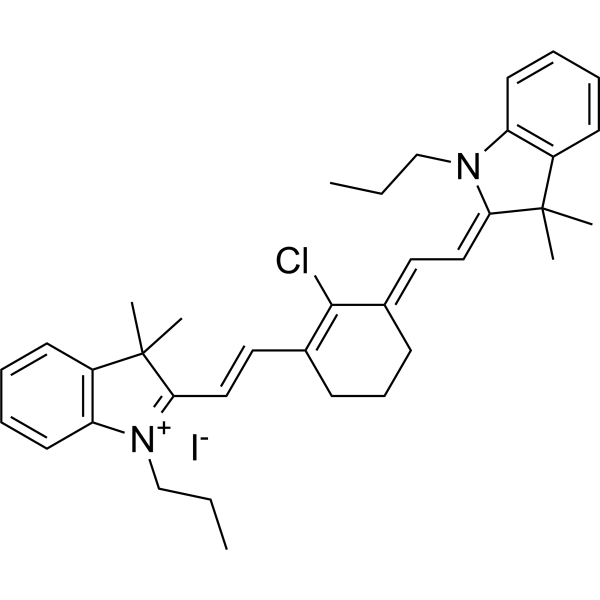
IR-780 is a near-infrared fluorescent probe for in vivo imaging of tumor cells. IR-780 is transported into tumor cells via OATPs and ABCB10, with uptake dependent on glycolytic activity and plasma membrane potential. IR-780 preferentially accumulates in tumor cell mitochondria, including those of drug-resistant cancer cells, without chemical conjugation. IR-780 generates reactive oxygen species (ROS), induces hyperthermia and apoptosis, inhibits tumor growth and recurrence, and modulates HSP70 expression upon ultrasound or 808 nm laser exposure. IR-780 acts as a sonosensitizer, photodynamic and photothermal agent, and drug delivery carrier, with low acute imaging-dose toxicity and rapid vital organ clearance. IR-780 can be used for the research of cancer, such as breast cancer, lung cancer, and non-small cell lung cancer (NSCLC) .
loading...
    loading...
Cat. No.: HY-34515
CAS No.: 1660-93-1
Synonyms: TMPhen; 3,4,7,8-Tetramethyl-1,10-phenanthroline
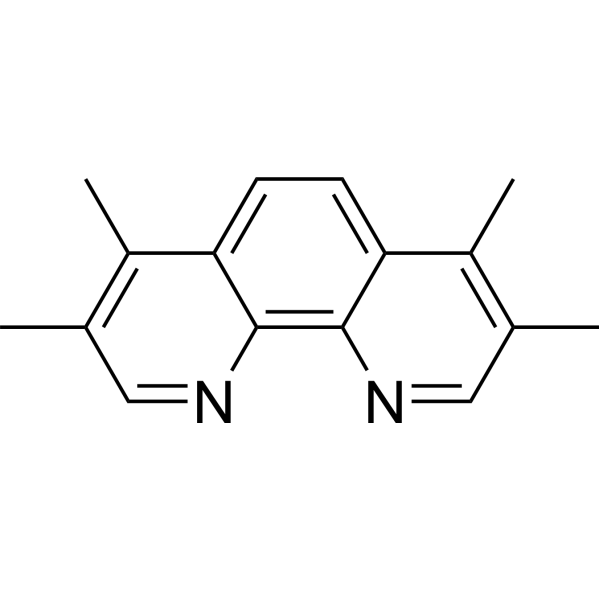
3,4,7,8-Tetramethyl-1,10-phenanthroline (TMPhen) is an organic molecule commonly used as a ligand or catalyst. It has a wide range of applications in different fields, such as organometallic chemical reactions, electrochemical detection, and organic optoelectronic devices. Due to its excellent performance in fluorescent probes, biosensors and photocatalytic reactions, it has been widely used in research in the fields of chemistry and life sciences.
loading...
    loading...
Cat. No.: HY-P10943
CAS No.: 3051946-11-0
Target:  

Fluorescent Dye

Research Areas:  

Inflammation/Immunology Cancer

APO-15 is a phosphatidylserine-binding fluorescent probe and apoptosis imaging reagent. APO-15 exhibits high chemical stability under proteolytic and oxidative conditions, enables quantification and imaging of drug-induced apoptosis in preclinical mouse models, and is applicable to fixed tissue samples and multiple in vivo administration routes (Ex = 488 nm; Em = 525 nm). APO-15 can be used in studies related to acute lung injury and breast cancer .
loading...
    loading...
Cat. No.: HY-171179
CAS No.: 1357578-02-9
BD-Oligo is an oligomer-specific fluorescent chemical probe. BD-Oligo preferentially identifies Aβ oligomer assemblies over monomers or fibrils by using diversity-directed fluorescent library (DOFL) screening and computational techniques. BD-Oligo exhibits dynamic oligomer monitoring capabilities during Aβ peptide fibril formation as Aβ is induced to form oligomers and ultimately fibrils over time. BD-Oligo also exhibits blood-brain barrier permeability with the ability to stain Aβ oligomers in vivo .
loading...
    loading...
Cat. No.: HY-155640
CAS No.: 787632-00-2
Purity:  98.54%
Target:  

Fluorescent Dye Fungal

Research Areas:  

Infection

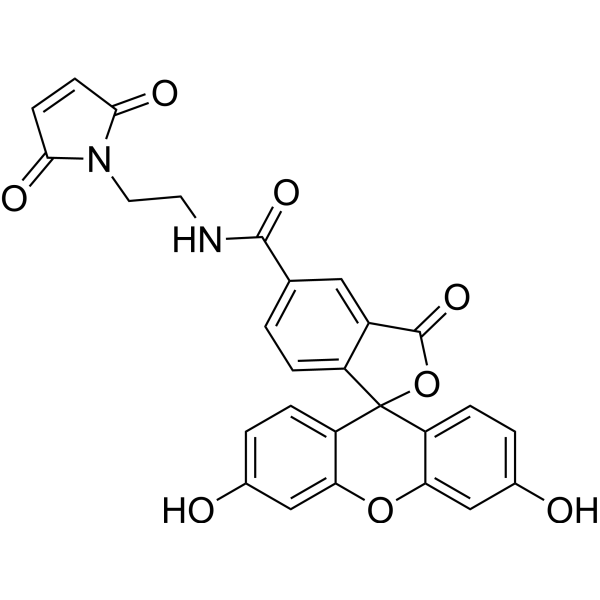
5-FAM maleimide is a fluorescein-based maleimide reagent and fluorescent chemical probe. 5-FAM maleimide is fed into fungal cultures for untargeted UHPLC-MS/MS-FBMN analysis .
loading...
    loading...
Cat. No.: HY-124197
CAS No.: 113707-87-2
Purity:  97.11%
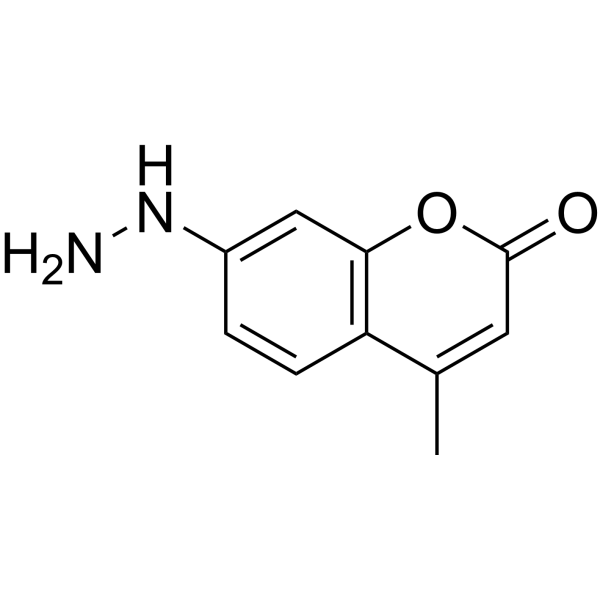
Coumarin hydrazine is a fluorescent chemical probeex=420–450/λem=468nm) to label cellular protein- and lipid-bound carbonyls .
loading...
    loading...
Cat. No.: HY-D2443
AF594 DBCO is an AlexaFluor 594-conjugated DBCO click chemistry probe for fluorescent labeling of azido-modified cholesterol probes. DBCO is a commonly used chemical biomarker group. AF594 DBCO (Excitation wavelength about 590 nm, emission wavelength about 617 nm) can be used to label proteins, cells and other biomolecules for fluorescence imaging and flow cytometry detection .
loading...
    loading...
Cat. No.: HY-59303
CAS No.: 3034-50-2
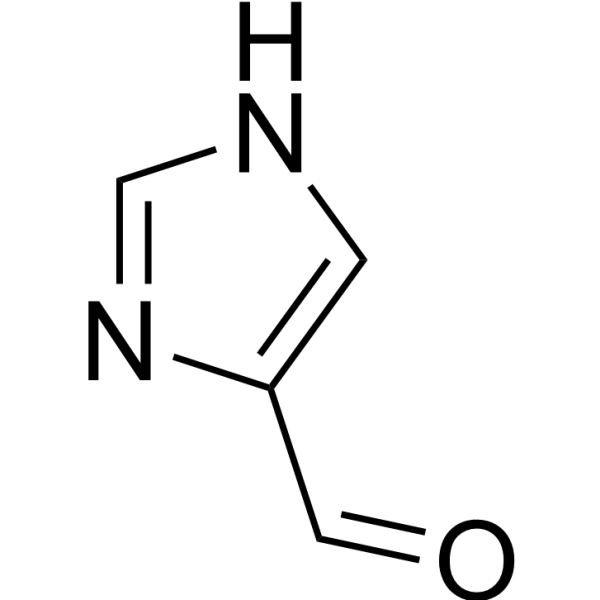
1H-Imidazole-5-carboxaldehyde can be used as a chemical reagent in organic synthesis reactions. 1H-Imidazole-5-carboxaldehyde can be used to prepare other imidazole compounds, such as imidazole pyrimidine and imidazolone. 1H-Imidazole-5-carboxaldehyde can also be used as biochemical dyes and fluorescent probes.
loading...
    loading...
Cat. No.: HY-150087
CAS No.: 2365532-65-4
Ctrl-CF4-S2 is a chemically modified control probe of the copper probe Copper Fluor-4 (CF4, HY-150086), in which two of the four thioether ligands in CF4 (HY-150086) are replaced with methylene groups. CF4 (HY-150086) is a fluorescent probe used for detecting the presence and distribution of copper ions, whereas Ctrl-CF4-S2 does not respond to copper ions. This allows it to eliminate background signals from copper, thereby helping to determine whether the signals from CF4 (HY-150086) accurately reflect the dynamic changes of copper ions in biological systems
loading...
    loading...
Cat. No.: HY-W140535
CAS No.: 301206-84-8
Target:  

Fluorescent Dye MOFs

Research Areas:  

Others

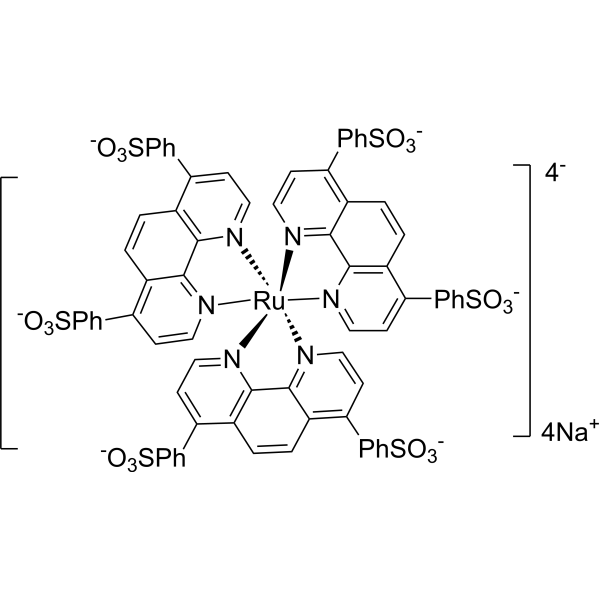
Tetrasodium, 4-(1,10-phenanthrolin-4-yl)benzenesulfonate,ruthenium((II)) is a luminescent ruthenium complex. Tetrasodium, 4-(1,10-phenanthrolin-4-yl)benzenesulfonate,ruthenium((II)) is used in biological and chemical fields as a fluorescent indicator dye and an electrochemiluminescent probe .
loading...
    loading...
Cat. No.: HY-135639
CAS No.: 2752193-03-4
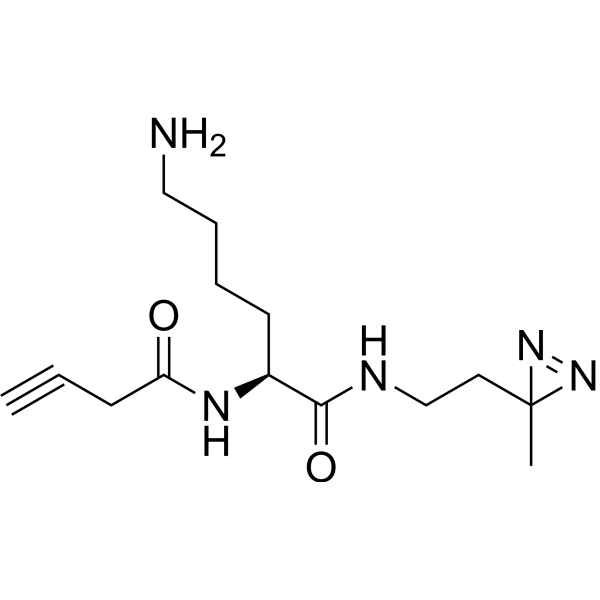
Alkyne-probe 1 is usually used as a Alkyne-labeled chemical or fluorescent probe. Alkyne-probe 1 is a click chemistry reagent, it contains an Alkyne group and can undergo copper-catalyzed azide-alkyne cycloaddition (CuAAc) with molecules containing Azide groups.
loading...
    loading...
Cat. No.: HY-75423
CAS No.: 89488-30-2
Research Areas:  

Others

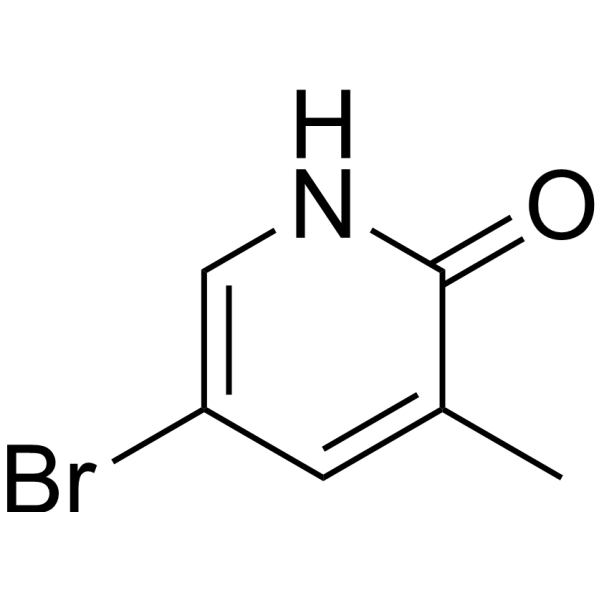
5-Bromo-3-methylpyridin-2-ol is a 2-pyridone-based chemical intermediate that can be used for the synthesis of the ratiometric fluorescent probe NAP-t-PY. 5-Bromo-3-methylpyridin-2-ol is applicable to research on organic synthesis and fluorescent probe development .
loading...
    loading...
Cat. No.: HY-W014692
CAS No.: 76387-70-7
Synonyms: N-t-Boc-amino-D-alanine; Boc-D-Dap-OH
Research Areas:  

Others

Boc-D-2,3-diaminopropionic acid (N-t-Boc-amino-D-alanine; Boc-D-Dap-OH) is a Boc-protected D-diamino acid building block that serves as a precursor for the synthesis of fluorescent carbon dots and fluorescent D-amino acid probes (such as HADA and NADA), and can be used in amide coupling reactions. Boc-D-2,3-diaminopropionic acid is applicable to fluorescent probe development and chemical biology research .
loading...
    loading...
Cat. No.: HY-135637
CAS No.: 2748500-05-0
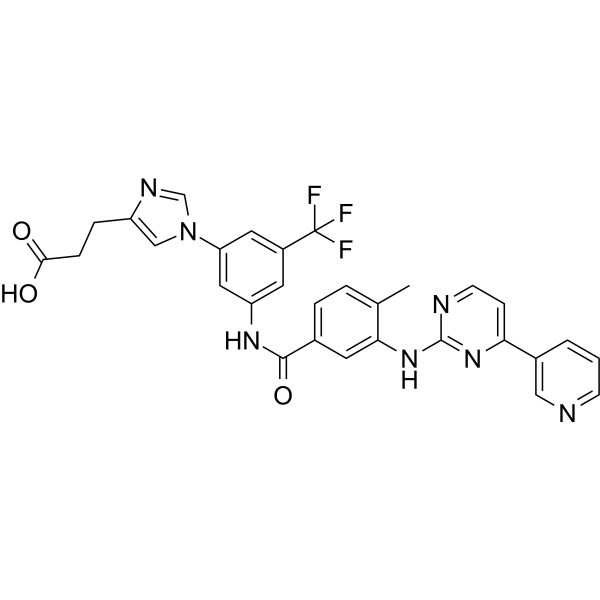
Nilotinib Acid, an analogue of Nilotinib, is usually used as a labeled chemical or fluorescent probe.
loading...
    loading...
Cat. No.: HY-D2322
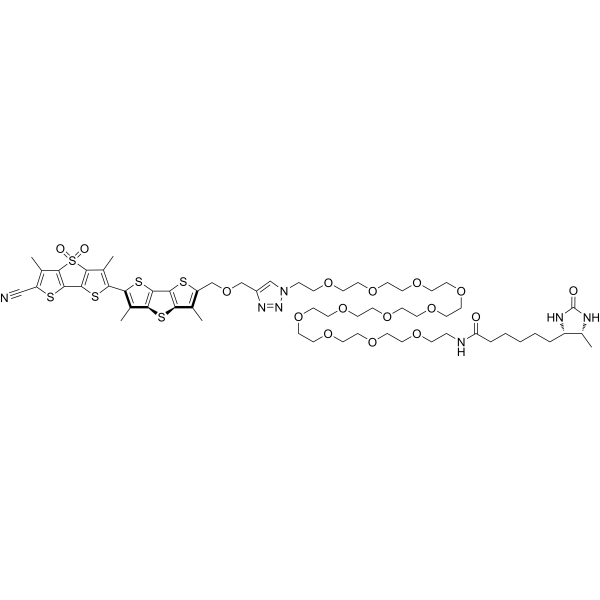
SupraFlipper 31 is a fluorescent probe. SupraFlipper 31 can be released in the membrane of interest (MOI) via chemical stimulation.
loading...
    loading...
Cat. No.: HY-135634
CAS No.: 2749287-69-0
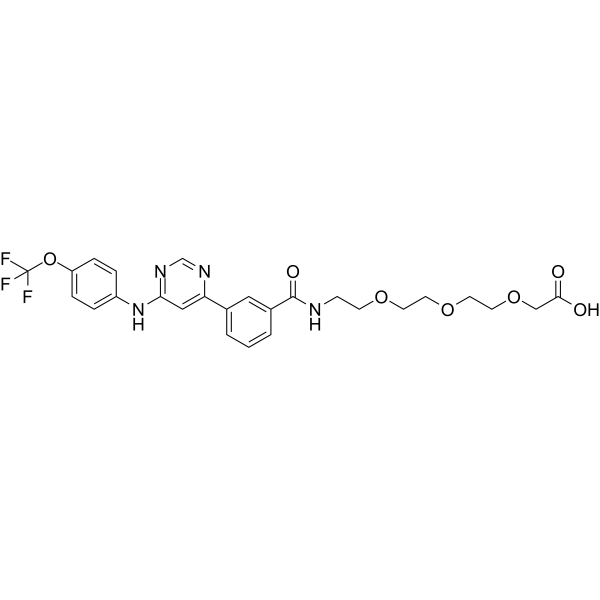
GNF-2-PEG-acid, an analogue of GNF-2, is usually used as a labeled chemical or fluorescent probe.
loading...
    loading...
Cat. No.: HY-135635
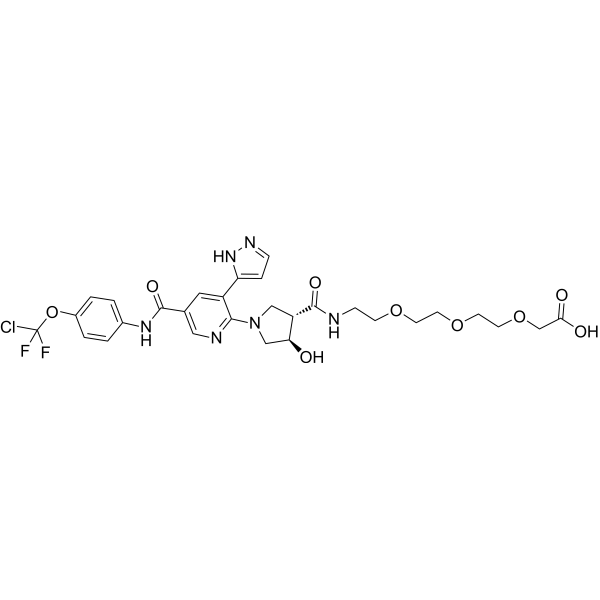
ABL-001-Amide-PEG3-acid, an analogue of ABL-001, is usually used as a labeled chemical or fluorescent probe.
loading...
    loading...
Cat. No.: HY-135636
CAS No.: 2748500-17-4
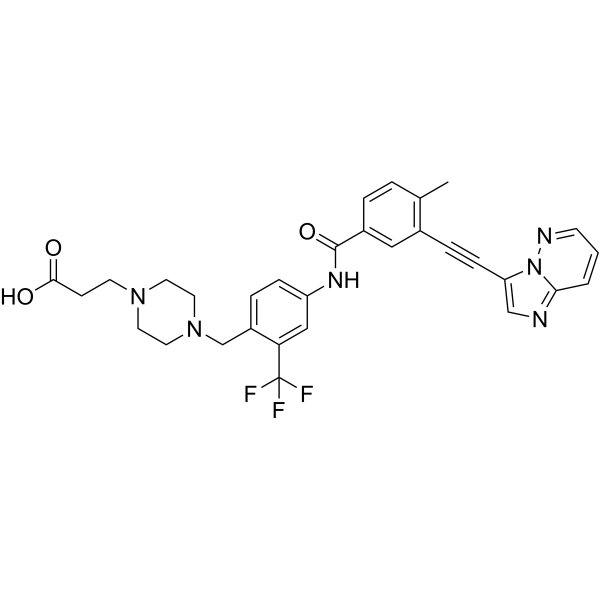
Ponatinib Acid, an analogue of Ponatinib, is usually used as a labeled chemical or fluorescent probe. Ponatinib Acid is a click chemistry reagent, it contains an Alkyne group and can undergo copper-catalyzed azide-alkyne cycloaddition (CuAAc) with molecules containing Azide groups.
loading...
    loading...
Cat. No.: HY-114541
CAS No.: 190788-61-5
Target:  

Fluorescent Dye

Research Areas:  

Others

Coumarin-7-pinacolboronate is a fluorescent probe. Taking hydrogen peroxide for instance, Coumarin-7-pinacolboronate and HOO- undergo a nucleophilic reaction to produce INT1. The chemical reaction mechanisms are nearly identical for the reactions of Coumarin-7-pinacolboronate with hydrogen peroxide, hypochlorous acid, peroxynitrite, and tyrosine hydroperoxide, respectively .
loading...
    loading...
Cat. No.: HY-D3180
CAS No.: 1201643-01-7
CDr20 is a fluorescent chemical probe capable of crossing the blood-brain barrier. CDr20 undergoes glucuronidation catalyzed by the UDP-glucuronosyltransferase Ugt1a7c, which triggers a fluorescence turn-on response. CDr20 enables visualization of live microglial cells. CDr20 can be used for research on Alzheimer's disease, stroke, and autism .
loading...
    loading...

