8 Results for "

fluoroadenine

" in MedChemExpress (MCE) Product Catalog:
Products (8)

8 Results for "fluoroadenine" in MCE Product Catalog:

10
10 Cited Publications
Cat. No.: HY-16938
CAS No.: 2457-80-9
Synonyms: 5'-(Methylthio)-5'-deoxyadenosine; 5'-Deoxy-5'-(methylthio)adenosine; 5'-S-Methyl-5'-thioadenosine
5'-Methylthioadenosine (5'-(Methylthio)-5'-deoxyadenosine) is a nucleoside generated from S-adenosylmethionine (SAM) during polyamine synthesis . 5'-Methylthioadenosine suppresses tumors by inhibiting tumor cell proliferation, invasion, and the induction of apoptosis while controlling the inflammatory micro-environments of tumor tissue. 5'-Methylthioadenosine and its associated materials have striking regulatory effects on tumorigenesis .
loading...
    loading...
1
1 Cited Publications
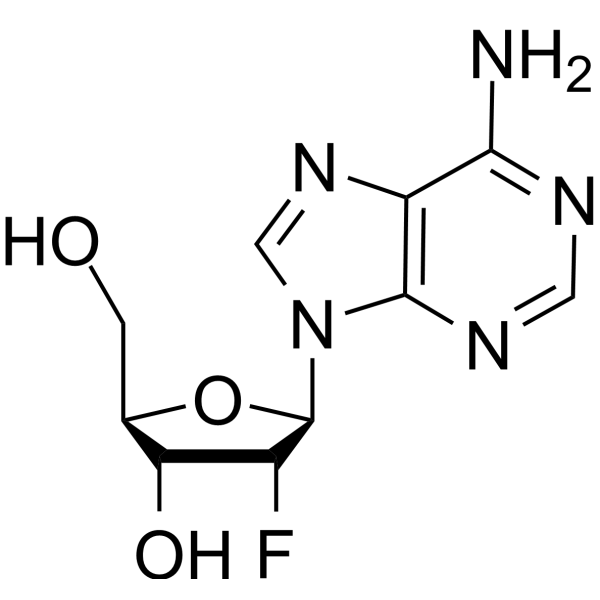
Cat. No.: HY-W039442
CAS No.: 64183-27-3
Research Areas:  

Infection Cancer

2′-Deoxy-2′-fluoroadenosine is a fluorinated deoxyadenosine with antitumor and antiviral activity, able to interfere with viral or cancer cell replication by being incorporated into DNA. 2′-Deoxy-2′-fluoroadenosine can be used for the synthesis of 2′-Deoxy-2′-fluoro-modified oligonucleotides hybridized with RNA. 2′-Deoxy-2′-fluoroadenosine can be cleaved efficiently by E. coli purine nucleoside phosphorylase (PNP) to the toxic agent 2-fluoroadenine (FAde). 2′-Deoxy-2′-fluoroadenosine shows excellent in vivo activity against tumors expressing E. coli PNP .
loading...
    loading...
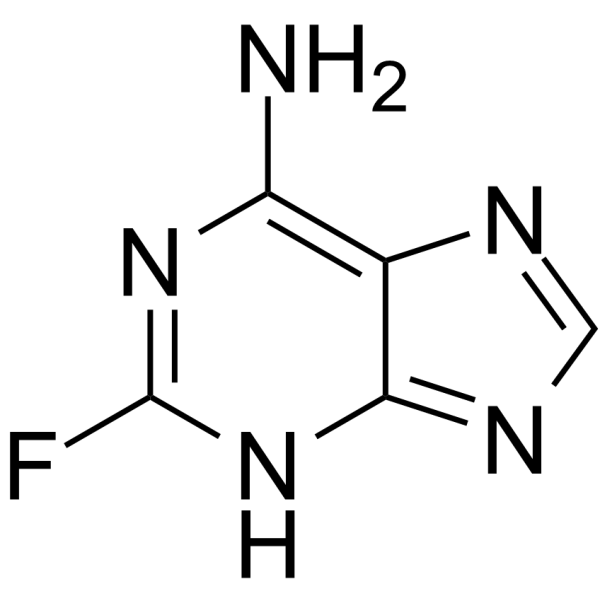
Cat. No.: HY-W008469
CAS No.: 700-49-2
Target:  

DNA/RNA Synthesis

Research Areas:  

Cancer

2-Fluoroadenine is a toxic purine bases. 2-Fluoroadenine has toxicity in nonproliferating and proliferating tumor cells. 2-Fluoroadenine can be used for researching anticancer .
loading...
    loading...
Cat. No.: HY-P5372A
Research Areas:  

Cancer

Ala-parafluoroPhe-Arg-Cha-Cit-Tyr-NH2 TFA, a bioactive peptide, is a selective Protease activating receptor 1 (PAR-1) agonist over PAR-2. PAR-1 belongs to a subfamily of G-protein coupled receptors and is known to mediate the cellular effects of thrombin. In addition to its varied cellular effects of thrombin, PAR-1 has also been shown to coordinate with PAR-4 and regulate thrombin-induced hepatocellular carcinoma harboring thrombin formation within the tumor environment classified as 'coagulation type' .
loading...
    loading...
Cat. No.: HY-W008469R
CAS No.: 700-49-2
Research Areas:  

Cancer

2-Fluoroadenine is a toxic purine bases. 2-Fluoroadenine has toxicity in nonproliferating and proliferating tumor cells. 2-Fluoroadenine can be used for researching anticancer .
loading...
    loading...
Cat. No.: HY-16938R
CAS No.: 2457-80-9
Synonyms: 5'-(Methylthio)-5'-deoxyadenosine (Standard); 5'-Deoxy-5'-(methylthio)adenosine (Standard); 5'-S-Methyl-5'-thioadenosine (Standard)
5'-Methylthioadenosine (Standard) is the analytical standard of 5'-Methylthioadenosine. This product is intended for research and analytical applications. 5'-Methylthioadenosine (5'-(Methylthio)-5'-deoxyadenosine) is a nucleoside generated from S-adenosylmethionine (SAM) during polyamine synthesis[1]. 5'-Methylthioadenosine suppresses tumors by inhibiting tumor cell proliferation, invasion, and the induction of apoptosis while controlling the inflammatory micro-environments of tumor tissue. 5'-Methylthioadenosine and its associated materials have striking regulatory effects on tumorigenesis[2].
loading...
    loading...
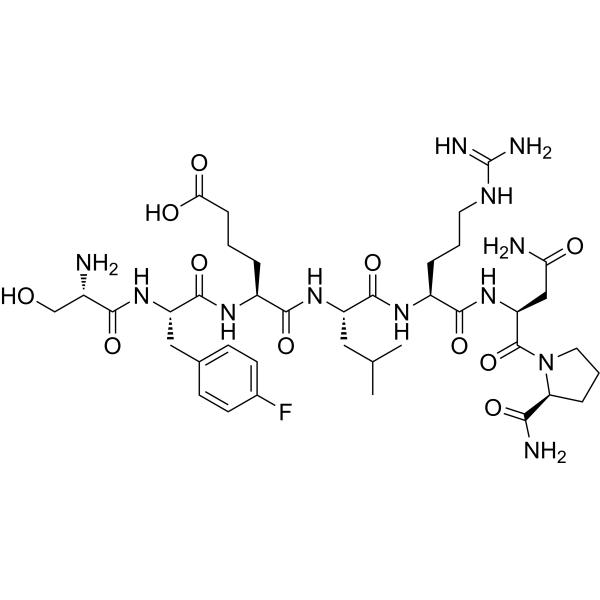
Cat. No.: HY-P5373
CAS No.: 237409-87-9
Target:  

Peptides

Research Areas:  

Others

Ser-parafluoroPhe-Aad-Leu-Arg-Asn-Pro-NH2 is a biological active peptide. (Structure-activity studies of thrombin receptor-tethered ligand SFLLRNP have revealed the importance of the Phe-2-phenyl group in receptor recognition and the replacement of the Phe-2 by para-fluorophenylalanine [(p-F)Phe] was found to enhance its activity)
loading...
    loading...
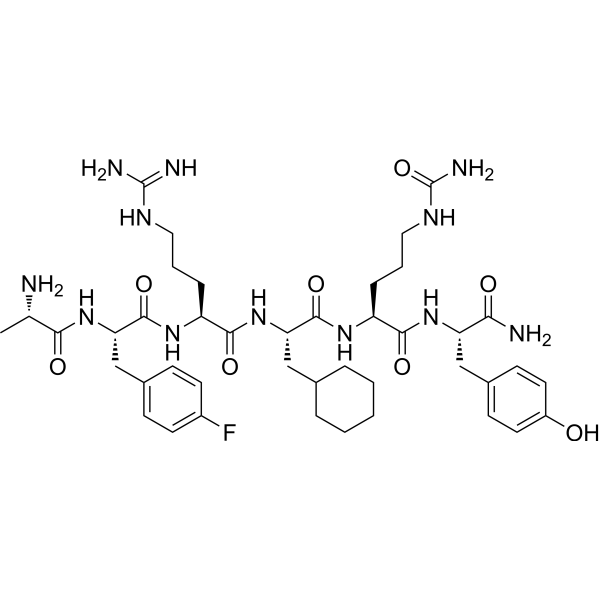
Cat. No.: HY-P5372
CAS No.: 211190-38-4
Research Areas:  

Cancer

Ala-parafluoroPhe-Arg-Cha-Cit-Tyr-NH2, a bioactive peptide, is a selective Protease activating receptor 1 (PAR-1) agonist over PAR-2. PAR-1 belongs to a subfamily of G-protein coupled receptors and is known to mediate the cellular effects of thrombin. In addition to its varied cellular effects of thrombin, PAR-1 has also been shown to coordinate with PAR-4 and regulate thrombin-induced hepatocellular carcinoma harboring thrombin formation within the tumor environment classified as 'coagulation type' .
loading...
    loading...

