25 Results for "

fluorophore linker

" in MedChemExpress (MCE) Product Catalog:
Products (25)

25 Results for "fluorophore linker" in MCE Product Catalog:

1
1 Cited Publications
Cat. No.: HY-100335
CAS No.: 1022899-36-0
Purity:  ≥98.0%
Target:  

Fluorescent Dye Btk

Research Areas:  

Cancer

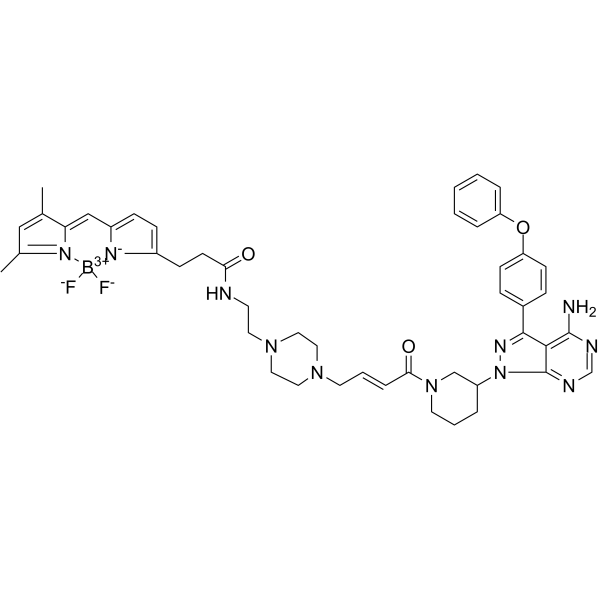
PCI-33380 is a fluorescent probe ( (Ex=532 nm, Em=555 nm). PCI-33380 consists of a (BTK) inhibitor PCI-32765 (HY-10997) attaching with a Bodipy-FL fluorophore via a piperazine linker. PCI-33380 binds predominantly to Btk in B cell lysates with cell permeable activity. PCI-33380 can be used for imaging live cancer cells such as non-Hodgkin lymphoma research
loading...
    loading...
Cat. No.: HY-P4425
CAS No.: 201852-70-2
Research Areas:  

Others

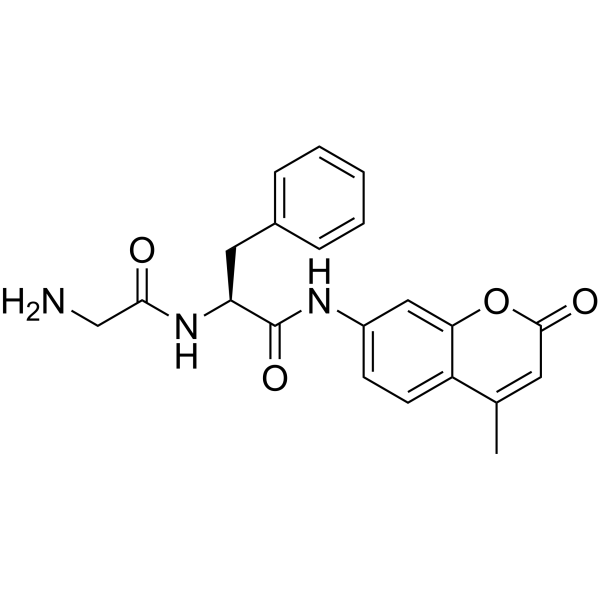
Gly-Phe-AMC is a fluorogenic peptide substrate consisting of a peptide sequence composed of glycine and phenylalanine, linked to the fluorophore AMC. Gly-Phe-AMC also serves as a cathepsin C substrate. Gly-Phe-AMC is widely used to detect the activity of various proteases .
loading...
    loading...
Cat. No.: HY-D1090
CAS No.: 82855-40-1
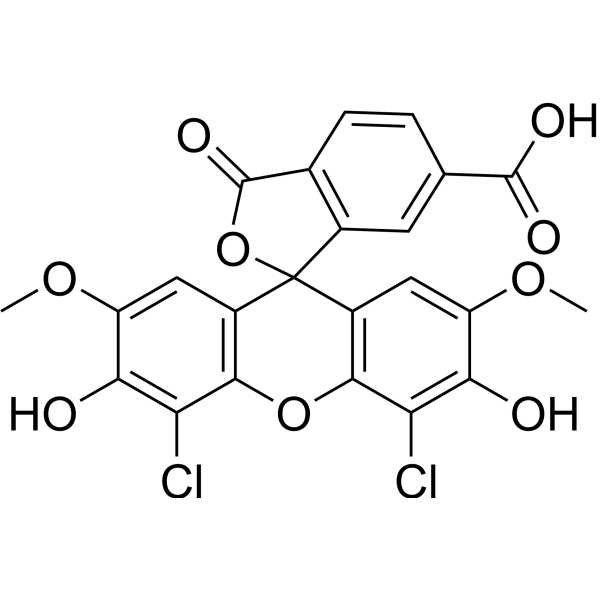
JOE is a xanthene fluorophore (i.e., 4′,5′-dichloro-2′,7′-dimethoxy-5 (6)-carboxyfluorescein; 2',7'-dimethoxy-4',5'-dichloro-6-carboxyfluorescein) with an absorption wavelength of approximately 525 nm and an emission wavelength of approximately 550 nm. The fluorescence quantum yield of JOE correlates with the rigidity of the linker arm and the distance to dG nucleoside. JOE is commonly used as a fluorescent label for oligonucleotides and molecular beacon probes, and also serves as the acceptor fluorophore in fluorescence energy transfer primers for DNA sequencing .
loading...
    loading...
Cat. No.: HY-114354
CAS No.: 302795-84-2
Purity:  98.41%
Synonyms: BOD FL alkyne
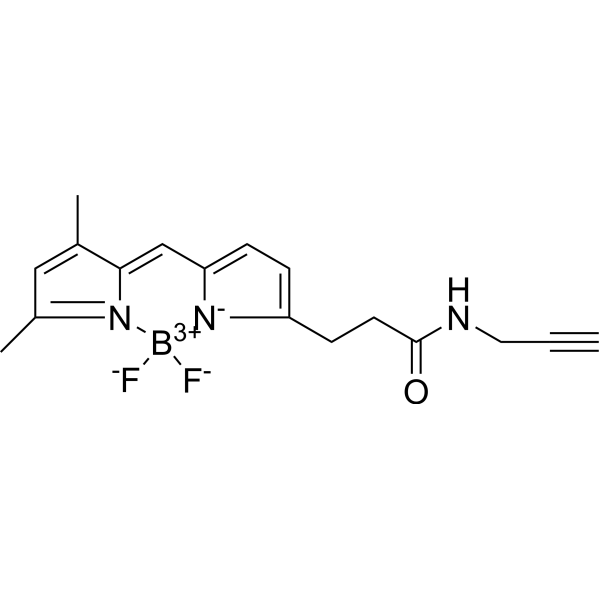
BODIPY (BOD) FL alkyne is an alkyne-containing BODIPY fluorophore derivative. BODIPY FL alkyne is a bioorthogonal labeling reagent with low toxicity and extremely low non-specific reactivity, and it is widely used in fluorescent bioimaging. BODIPY FL alkyne specifically labels azide groups on intracellular glycoconjugates mainly via strain-promoted azide-alkyne cycloaddition (SPAAC), or mediates site-specific conjugation with proteins such as IL-33, and supports positive cross-linking with other probes (e.g., DBCO-SCy5) for dual labeling. With the advantages of high specificity and low background interference, BODIPY FL alkyne can be used in the research of related diseases such as asthma, atopic dermatitis and inflammatory bowel disease .
loading...
    loading...
Cat. No.: HY-151720
CAS No.: 1857352-95-4
Purity:  ≥99.0%
Target:  

ADC Linkers

Research Areas:  

Others

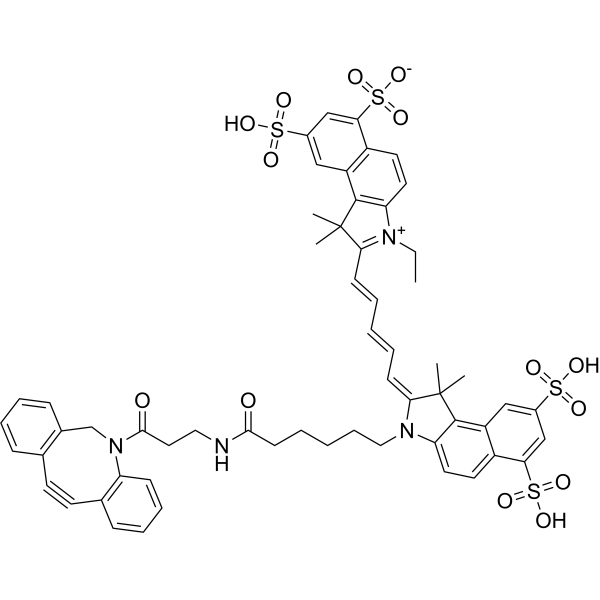
Cy5.5 DBCO is a click chemistry reagent containing an cycloalkynes group. Cy5.5 DBCO is a linker of Cyanine5.5 fluorophore. DBCO group enables copper free biocompatible click chemistry with fast reaction kinetics and good stability .
loading...
    loading...
Cat. No.: HY-D2155
CAS No.: 178623-11-5
Target:  

Fluorescent Dye

Research Areas:  

Others

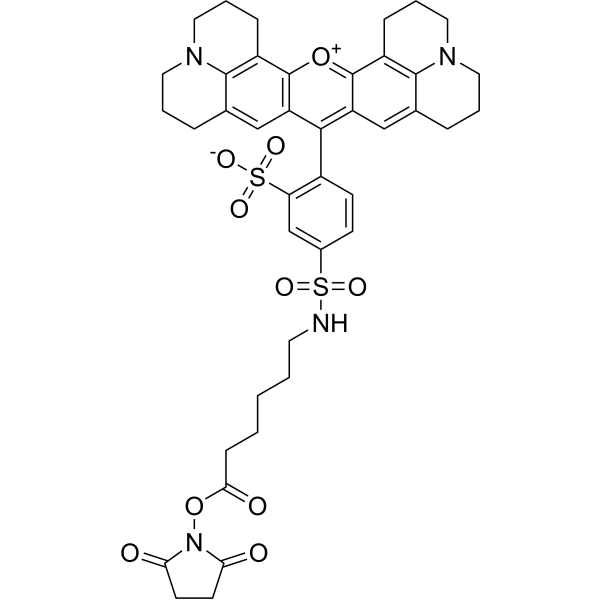
Texas Red-X 4-succinimidyl ester is a derivative of Texas Red (HY-101878) and serves as an amine-reactive dye. It features an aminocaproic acid linker that provides spacing between the fluorophore and the biomolecule, thereby minimizing interactions between them. The succinimidyl ester moiety enables covalent conjugation with molecules containing amino groups (such as proteins and antibodies) (Ex/Em = 595/615 nm).
loading...
    loading...
Cat. No.: HY-159194
Target:  

Liposome

Research Areas:  

Cancer

DSPE-PEG2000-Cy5.5 is a phospholipid-fluorophore conjugate consisting of Cy5.5 covalently linked to 1,2-distearoyl-sn-glycero-3-phosphoethanolamine (DSPE), serving as a surface label for liposomes in multimodal CT/optical imaging.DSPE-PEG2000-Cy5.5 can be used for the research of non-small cell lung cancer .
loading...
    loading...
Cat. No.: HY-P6023
Target:  

Factor Xa

Research Areas:  

Cardiovascular Disease

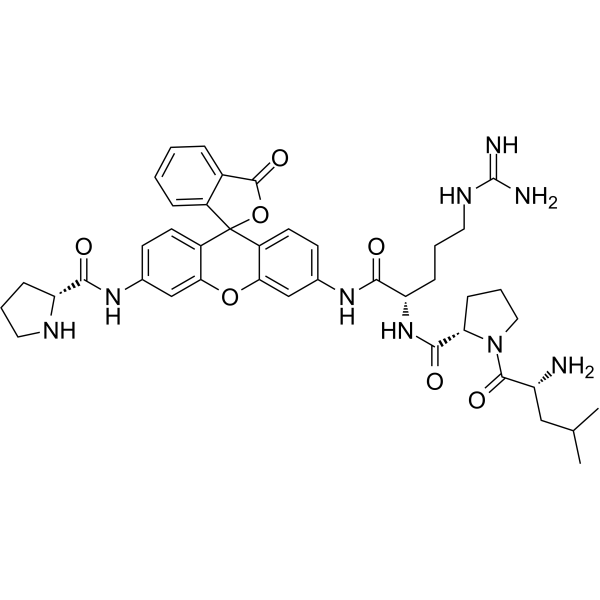
D-Leu-Pro-Arg-Rh110-D-Pro is a substrate for Factor Xa I (FXIa) with binding affinity. D-Leu-Pro-Arg-Rh110-D-Pro consists of Rhodamine 110 (HY-D0817) linked to a peptide chain through a cleavable bond. Cleavable bond cleavage enhances fluorophore intensity. D-Leu-Pro-Arg-Rh110-D-Pro can be used to detect FXIa activity .
loading...
    loading...
Cat. No.: HY-151712
CAS No.: 1801924-46-8
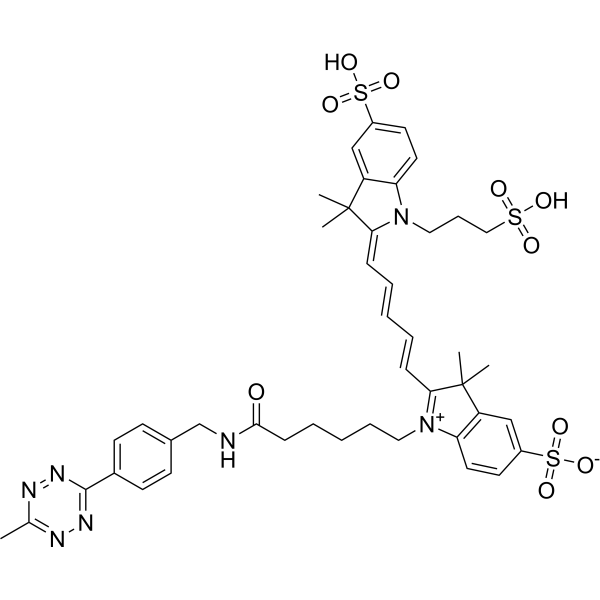
Sulfo-Cy5-Methyltetrazine is a click chemistry reagent containing a methyltetrazine group. Sulfo-Cy5-Methyltetrazine acts as a fluorophore linker for trans-cyclooctene-based labeling. Sulfo-Cy5-Methyltetrazine shows good stability at physiological pH and is also highly reactive towards cyclooctene.
loading...
    loading...
Cat. No.: HY-151728
CAS No.: 1895849-34-9
Target:  

Fluorescent Dye

Research Areas:  

Others

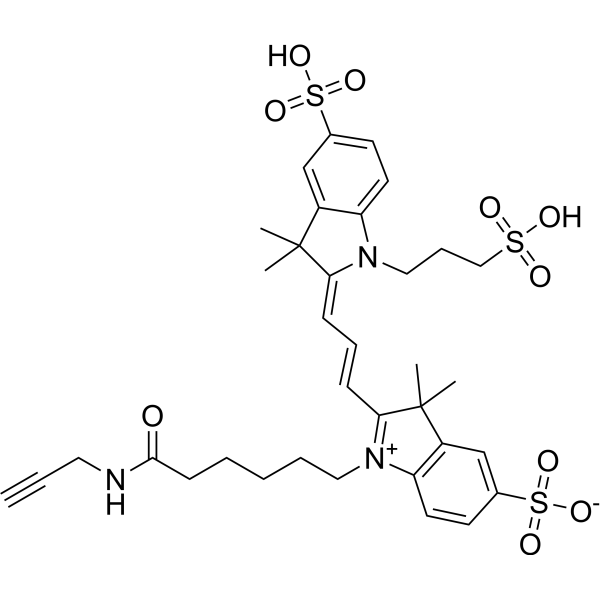
Trisulfo-Cy3-Alkyne is a water soluble cyanine linker containing an alkyne group, which enables Click Chemistry to attach trisulfo-Cy3 to various azide-bearing molecules. Trisulfo-Cyanine3 is a fluorophore which is compatible with a wide range of fluorescent scanners, imagers, microscopes, etc. It is a bright and photostable dye and can be easily detected in gels by naked eye in low amounts (nmol). Reagent grade, for research use only . Trisulfo-Cy3-Alkyne is a click chemistry reagent, it contains an Alkyne group and can undergo copper-catalyzed azide-alkyne cycloaddition (CuAAc) with molecules containing Azide groups.
loading...
    loading...
Cat. No.: HY-P6023A
Target:  

Factor Xa

Research Areas:  

Cardiovascular Disease

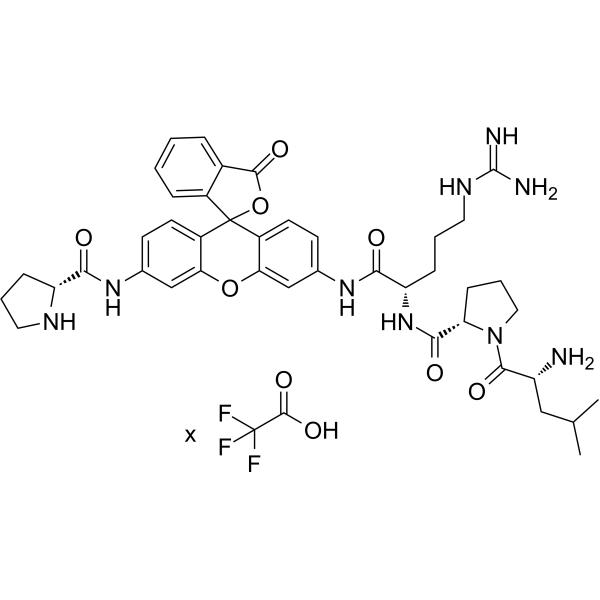
D-Leu-Pro-Arg-Rh110-D-Pro TFA is a substrate for Factor Xa I (FXIa) with binding affinity. D-Leu-Pro-Arg-Rh110-D-Pro TFA consists of Rhodamine 110 (HY-D0817) linked to a peptide chain through a cleavable bond. Cleavable bond cleavage enhances fluorophore intensity. D-Leu-Pro-Arg-Rh110-D-Pro TFA can be used to detect FXIa activity .
loading...
    loading...
Cat. No.: HY-N16302
CAS No.: 3091879-41-0
Category:  

Lipids

Target:  

Fluorescent Dye

Cyanine 5.5 DBCO chloride is a click chemistry reagent containing an cycloalkynes group. Cyanine 5.5 DBCO chloride is a linker of Cyanine5.5 fluorophore. DBCO group enables copper free biocompatible click chemistry with fast reaction kinetics and good stability (Ex/Em = 680/715 nm) .
loading...
    loading...
Cat. No.: HY-D2422B
Research Areas:  

Cancer

Cy5-Paclitaxel is a fluorescently labeled drug probe formed by conjugating the fluorescent dye Cy5 (Cyanine 5) with the chemotherapeutic agent Paclitaxel, which is used to track the cellular uptake, subcellular distribution and drug delivery process of Paclitaxel. The Cy5 (Cyanine 5) fluorophore is covalently linked to Paclitaxel, possessing both fluorescent tracing function and the biological activities of Paclitaxel (promoting tubulin polymerization and arresting the cell cycle at the G2/M phase); after entering cells, Cy5 emits far-red fluorescence, enabling real-time monitoring of drug localization and release .
loading...
    loading...
Cat. No.: HY-D1267
CAS No.: 1613402-20-2
Target:  

Apoptosis

Research Areas:  

Cancer

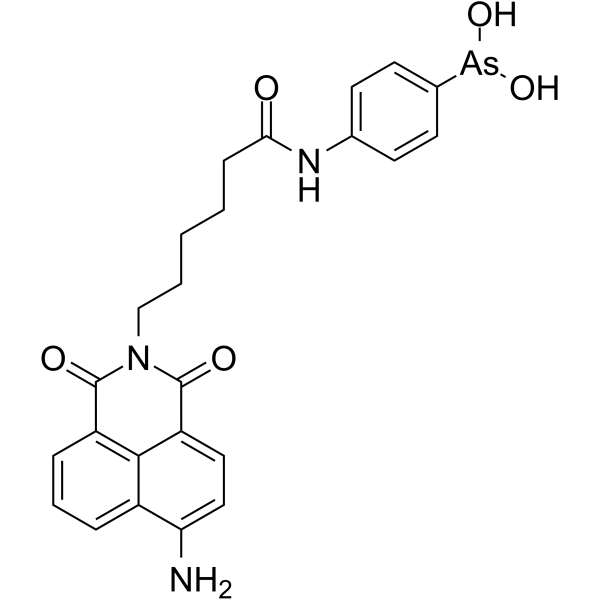
PAO-Nap is the modified PAO attached a naphthalimide fluorophore using aminocaproic acid as a linker. PAO induces oxidative stress-mediated apoptosis in HL-60 cells by selectively targeting thioredoxin reductase .
loading...
    loading...
Cat. No.: HY-N16310
CAS No.: 3091879-37-4
Category:  

Lipids

Target:  

Fluorescent Dye

Cyanine 3 DBCO chloride is a click chemistry reagent containing an cycloalkynes group. Cyanine 3 DBCO chloride is a linker of Cyanine5.5 fluorophore. DBCO group enables copper free biocompatible click chemistry with fast reaction kinetics and good stability (Ex/Em = 550/570 nm).
loading...
    loading...
Cat. No.: HY-P6023B
Target:  

Factor Xa

Research Areas:  

Cardiovascular Disease

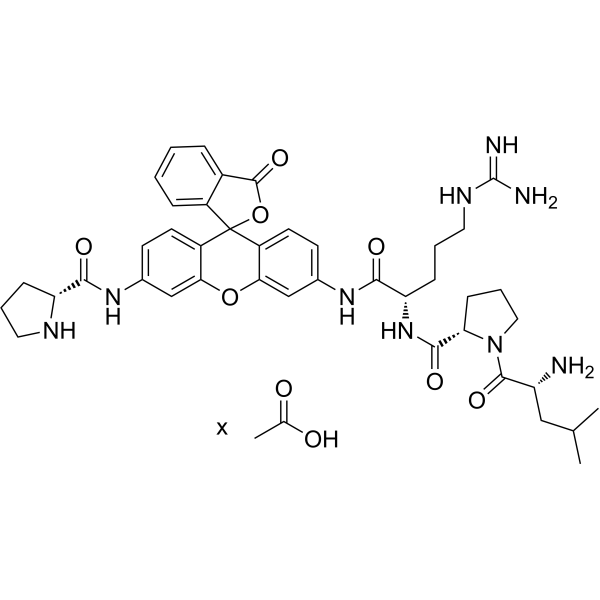
D-Leu-Pro-Arg-Rh110-D-Pro acetate is a substrate for Factor Xa I (FXIa) with binding affinity. D-Leu-Pro-Arg-Rh110-D-Pro acetate consists of Rhodamine 110 (HY-D0817) linked to a peptide chain through a cleavable bond. Cleavable bond cleavage enhances fluorophore intensity. D-Leu-Pro-Arg-Rh110-D-Pro acetate can be used to detect FXIa activity .
loading...
    loading...
Cat. No.: HY-D2422C
Research Areas:  

Cancer

Cy5-Paclitaxel bromide is a fluorescently labeled drug probe formed by conjugating the fluorescent dye Cy5 (Cyanine 5) with the chemotherapeutic agent Paclitaxel, which is used to track the cellular uptake, subcellular distribution and drug delivery process of Paclitaxel. The Cy5 (Cyanine 5) fluorophore is covalently linked to Paclitaxel, possessing both fluorescent tracing function and the biological activities of Paclitaxel (promoting tubulin polymerization and arresting the cell cycle at the G2/M phase); after entering cells, Cy5 emits far-red fluorescence, enabling real-time monitoring of drug localization and release .
loading...
    loading...
Cat. No.: HY-D2477
CAS No.: 1974271-78-7
Target:  

Fluorescent Dye

Research Areas:  

Cancer

Sulfo-QSY21-NHS is an N-hydroxysuccinimide ester derivative fluorescent quencher that reduces the fluorescence intensity of paired fluorophores via proximity effect and relieves quenching after linker extension induced by mechanical force. Sulfo-QSY21-NHS can label streptavidin through NHS ester bioconjugation and be integrated into fluorescence-based molecular tension sensors to map the mechanical forces of cell surface receptors. Sulfo-QSY21-NHS also serves as a quencher for cysteine cathepsin-targeted quenched fluorescent substrate probes, and is widely used in studies related to breast cancer, colorectal cancer and lung adenocarcinoma .
loading...
    loading...
Cat. No.: HY-N16305
CAS No.: 3091879-60-3
Category:  

Lipids

Target:  

Fluorescent Dye

Cyanine 7 DBCO chloride is a click chemistry reagent containing an cycloalkynes group. Cyanine 7 DBCO chloride is a linker of Cyanine5.5 fluorophore. DBCO group enables copper free biocompatible click chemistry with fast reaction kinetics and good stability (Ex/Em = 745/785 nm) .
loading...
    loading...
Cat. No.: HY-N16324
Category:  

Lipids

Target:  

Fluorescent Dye

Cyanine 7.5 DBCO chloride is a click chemistry reagent containing an cycloalkynes group. Cyanine 7.5 DBCO chloride is a linker of Cyanine5.5 fluorophore. DBCO group enables copper free biocompatible click chemistry with fast reaction kinetics and good stability (Ex/Em = 780/820 nm) .
loading...
    loading...

