1. Search Result
Search Result
Pathways Recommended: Membrane Transporter/Ion Channel
Results for "

hERG channels

" in MedChemExpress (MCE) Product Catalog:

207

Inhibitors & Agonists

2

Screening Libraries

2

Biochemical Assay Reagents

3

Peptides

11

Natural
Products

8

Isotope-Labeled Compounds

1

Click Chemistry

Cat. No. Product Name Target Research Areas Chemical Structure
  • HY-100545
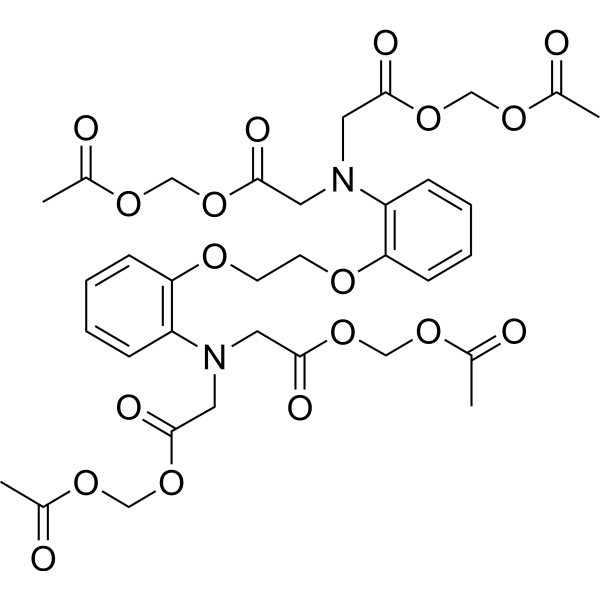
    BAPTA-AM
    120+ Cited Publications

    Potassium Channel Cardiovascular Disease
    BAPTA-AM is a well-known membrane permeable Ca 2+ chelator. BAPTA-AM inhibits hERG channels, hKv1.3 and hKv1.5 channels in HEK 293 cells with IC50s of 1.3 μM, 1.45 μM and 1.23 μM, respectively .
    BAPTA-AM
  • HY-15551
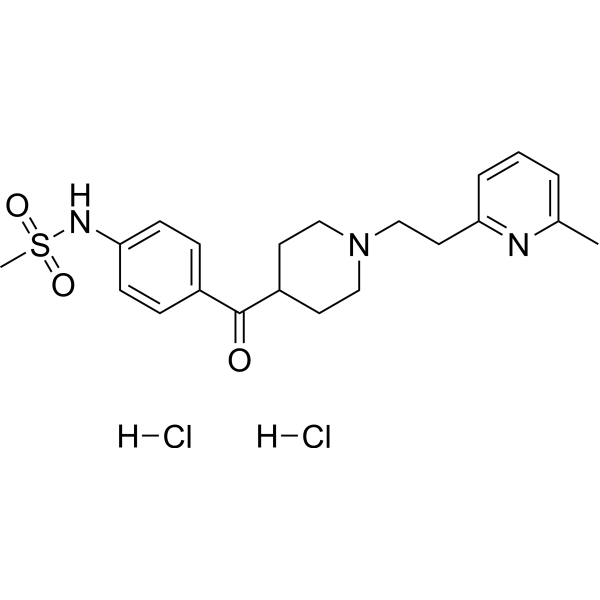
    E-4031
    5+ Cited Publications

    Potassium Channel Cardiovascular Disease
    E-4031 is a selective hERG potassium channel blocker for use in class III anti-arrhythmic studies .
    E-4031
  • HY-B2136
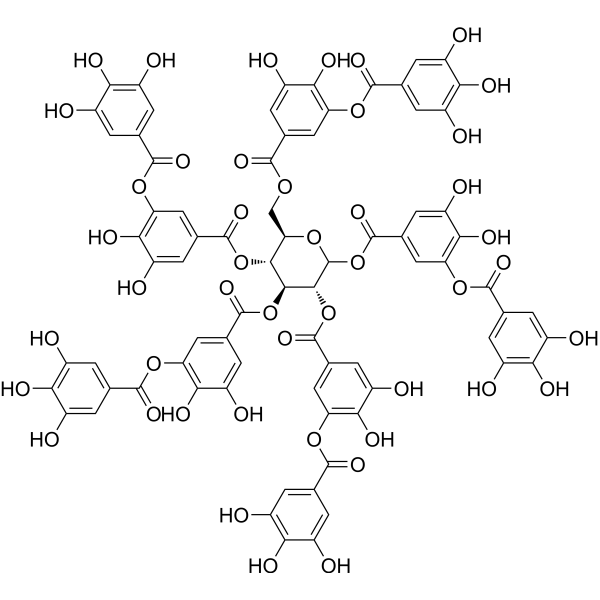
    Tannic acid
    5+ Cited Publications

    Environmental Pollutants Potassium Channel Inflammation/Immunology Cancer
    Tannic acid is a novel hERG channel blocker with IC50 of 3.4 μM.
    Tannic acid
  • HY-B1193
    Terfenadine
    4 Publications Verification

    (±)-Terfenadine; MDL-991

    Potassium Channel Histamine Receptor Na+/Ca2+ Exchanger Caspase Apoptosis Inflammation/Immunology Endocrinology Cancer
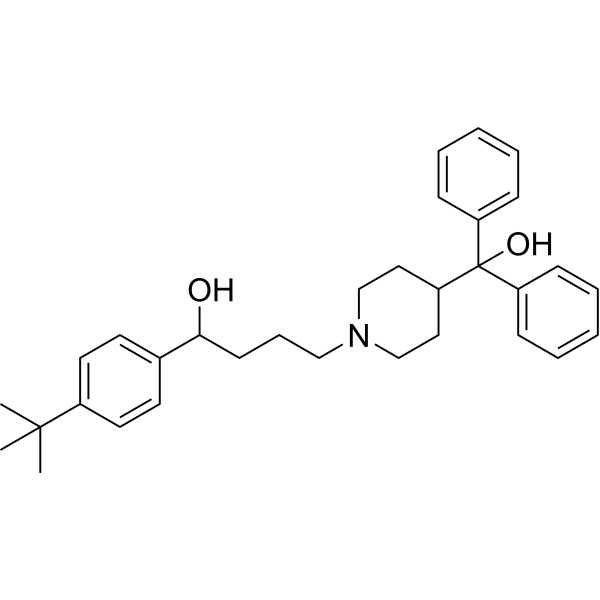
    Terfenadine ((±)-Terfenadine) is a potent open-channel blocker of hERG with an IC50 of 204 nM . Terfenadine, an H1 histamine receptor antagonist, acts as a potent apoptosis inducer in melanoma cells through modulation of Ca 2+ homeostasis. Terfenadine induces ROS-dependent apoptosis, simultaneously activates Caspase-4, -2, -9 .
    Terfenadine
  • HY-12532
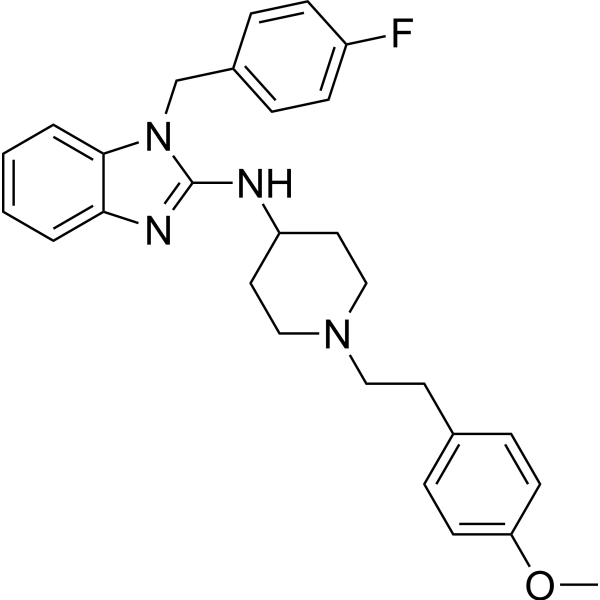
    Astemizole
    5+ Cited Publications

    R 43512

    Histamine Receptor Potassium Channel Inflammation/Immunology Endocrinology
    Astemizole (R 43512), a second-generation antihistamine agent to diminish allergic symptoms with a long duration of action, is a histamine H1-receptor antagonist, with an IC50 of 4 nM. Astemizole also shows potent hERG K + channel blocking activity with an IC50 of 0.9 nM. Astemizole has antipruritic effects .
    Astemizole
  • HY-B0480
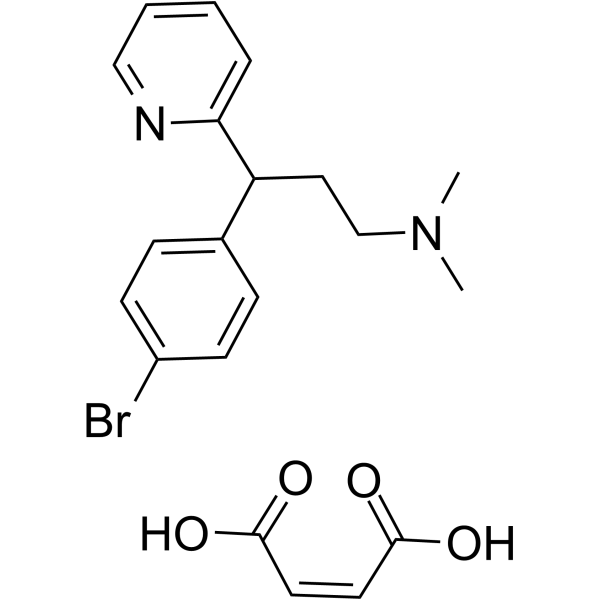
    Brompheniramine maleate
    2 Publications Verification

    (±)-Brompheniramine maleate

    Histamine Receptor mAChR Potassium Channel Sodium Channel Calcium Channel Neurological Disease Inflammation/Immunology Endocrinology
    Brompheniramine ((±)-Brompheniramine) maleate is a potent and orally active antihistamine of the alkylamine class. Brompheniramine maleate is a selective histamine H1 receptor antagonist with a Kd of 6.06 nM. Brompheniramine maleate can block the hERG channels, calcium channels, and sodium channels with IC50s of 0.90 μM, 16.12 μM and 21.26 μM, respectively. Brompheniramine maleate has anticholinergic, antidepressant and anesthetic properties and can be used for allergic rhinitis research .
    Brompheniramine maleate
  • HY-B1167

    Cardiorythmine; (+)-Ajmaline

    Sodium Channel Cardiovascular Disease
    Ajmaline (Cardiorythmine) is a sodium channel blocking, class 1A anti-arrhythmic agent. Ajmaline blocks HERG currents with an IC50 of 1 μM in HEK cells and 42.3 μM in Xenopus oocytes. Ajmaline can be used for the research of the ventricular tachyarrhythmia .
    Ajmaline
  • HY-12533
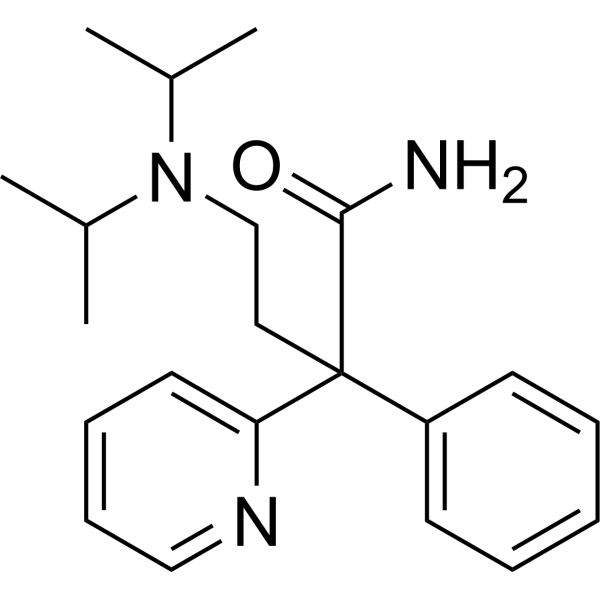
    Disopyramide
    2 Publications Verification

    Dicorantil; SC-7031

    Sodium Channel Potassium Channel Cardiovascular Disease
    Disopyramide (Dicorantil) is a class IA antiarrhythmic agent with efficacy in ventricular and atrial arrhythmias. Disopyramide blocks the fast inward sodium current of cardiac muscle and prolongs the duration of cardiac action potentials. Disopyramide inhibits HERG encoded potassium channels. Disopyramide also exhibits complex protein binding, and has a potent negative inotropic action .
    Disopyramide
  • HY-134494
    MS48107
    2 Publications Verification

    GPR68 Neurological Disease
    MS48107 is a potent and selective positive allosteric modulator of G protein-coupled receptor 68 (GPR68). MS48107 is selective for GPR68 over the closely related proton GPCRs, neurotransmitter transporters, and hERG ion channels. MS48107 can readily cross the blood-brain barrier (BBB) in mice .
    MS48107
  • HY-108586

    Potassium Channel Neurological Disease
    NS3623 is an activator of human ether-a-go-go-related gene (hERG1/KV11.1) potassium channels. NS3623 activates the IKr and Ito currents and has antiarrhythmic effect. NS3623 has a dual mode of action, being an inhibitor of hERG1 channels .
    NS3623
  • HY-136832

    Serotonin Transporter Potassium Channel Arrestin Opioid Receptor Cardiovascular Disease Neurological Disease
    Noribogaine hydrochloride is an orally active, blood-brain barrier permeable SERT inhibitor (IC50=50-300 nM) and hERG channel blocker. Noribogaine hydrochloride enhances serotonergic transmission, activates the κ-opioid receptor (OPRK) G protein signaling pathway and inhibits β-arrestin recruitment. Meanwhile, Noribogaine hydrochloride blocks the μ-opioid receptor (OPRM) signaling pathway as well as ion channels associated with cardiac repolarization. Noribogaine hydrochloride induces neuritogenesis, upregulates GDNF mRNA expression, and modulates opioid tolerance. Noribogaine hydrochloride reduces alcohol-seeking behavior in experimental animals, and is widely used in studies related to depression, addiction, alcoholism, and cardiotoxicity .
    Noribogaine hydrochloride
  • HY-111747
    TBAJ-587
    3 Publications Verification

    Bacterial Infection Cardiovascular Disease
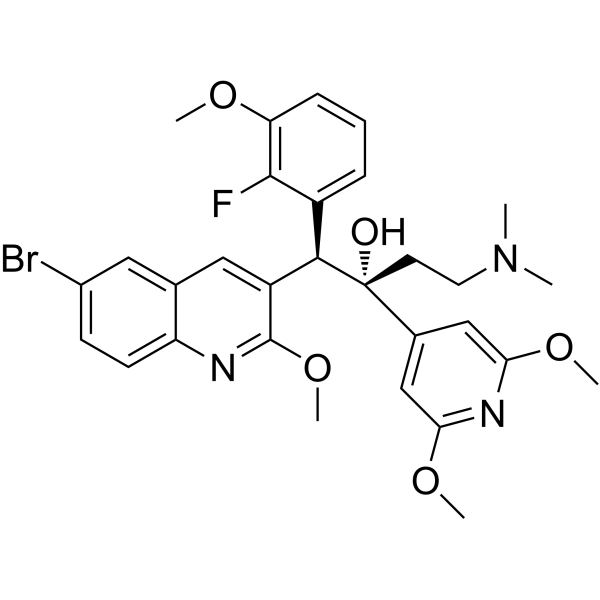
    TBAJ-587, a potent anti-tuberculosis agent, inhibits M.tb strain H37Rv growth with MIC90s of 0.006 and <0.02 μg/mL in MABA and LORA assay, respectively. TBAJ-587 inhibits hERG channel minimally, attenuates inhibition of the cardiac potassium channel protein coded by the hERG, which is important for cardiac repolarization .
    TBAJ-587
  • HY-112075

    Potassium Channel Calcium Channel Cardiovascular Disease
    Lidoflazine is a high affinity blocker of the HERG (human ether-a-go-go-related gene) K + channel. Lidoflazine is an antianginal calcium channel blocker that carries a significant risk of QT interval prolongation and ventricular arrhythmia .
    Lidoflazine
  • HY-116838

    Bacterial Infection
    TAM-16 is a potent and orally active polyketide synthase 13 (Pks13) inhibitor with an IC50 value of 0.32 μM. TAM-16 has promising activity against Mycobacterium tuberculosis. TAM-16 inhibits hERG cardiac ion channel .
    TAM-16
  • HY-103309
    ML218
    2 Publications Verification

    Calcium Channel Neurological Disease
    ML218 is a potent, selective and orally active T-type Ca 2+ channels (Cav3.1, Cav3.2, Cav3.3) inhibitor with IC50s of 310 nM and 270 nM for Cav3.2 and Cav3.3, respectively. ML218 inhibits the burst activity in subthalamic nucleus (STN) neurons. ML218 has no significant inhibition of L- or N-type calcium channels, KATP or hERG potassium channels. ML218 can penetrate the blood-brain barrier .
    ML218
  • HY-16916
    NS1643
    1 Publications Verification

    Potassium Channel Autophagy Cancer
    NS1643 is a partial agonist of human ether-a-go-go-related gene (hERG) K + channels with an EC50 of 10.5 μM. NS1643 inhibits the growth of breast cancer tumors in TNBC mouse models. NS1643 inhibits cell migration and invasion of breast cancer cells .
    NS1643
  • HY-12533A
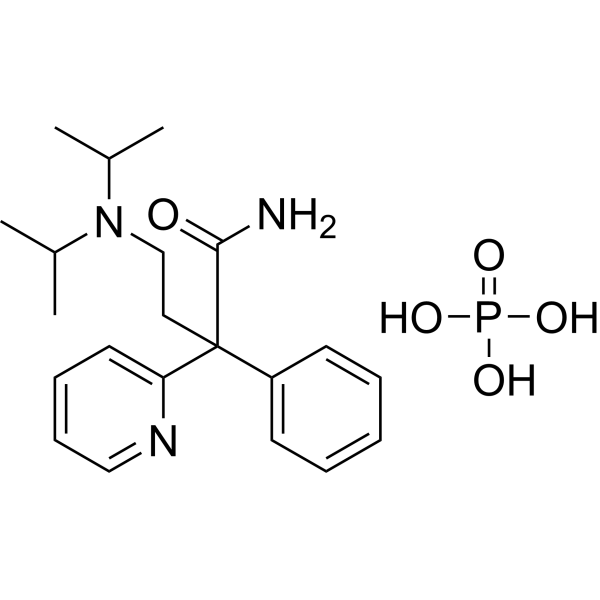
    Disopyramide phosphate
    2 Publications Verification

    Dicorantil phosphate; SC-7031 phosphate

    Potassium Channel Sodium Channel Cardiovascular Disease
    Disopyramide phosphate is a class IA antiarrhythmic agent with efficacy in ventricular and atrial arrhythmias. Disopyramide phosphate blocks the fast inward sodium current of cardiac muscle and prolongs the duration of cardiac action potentials. Disopyramide phosphate inhibits HERG encoded potassium channels. Disopyramide phosphate also exhibits complex protein binding, and has a potent negative inotropic action .
    Disopyramide phosphate
  • HY-108594

    Potassium Channel Metabolic Disease
    PD-118057 is a hERG channel activator without causing hERG blockade. PD-118057 activates hERG channel to suppress changes in membrane excitability .
    PD-118057
  • HY-16915
    RPR-260243
    1 Publications Verification

    Potassium Channel Cardiovascular Disease
    RPR-260243, a potent activator of human ether-a-go-go-related gene (hERG), slows deactivation and attenuates inactivation of hERG1 channels. RPR260243-modified HERG currents are inhibited by Dofetilide (IC50=58 nM). RPR260243 displays no activator-like effects on other voltage-dependent ion channels, including the closely related ERG3 K+ channel . RPR-260243 is a click chemistry reagent, it contains an Alkyne group and can undergo copper-catalyzed azide-alkyne cycloaddition (CuAAc) with molecules containing Azide groups.
    RPR-260243
  • HY-B1482A

    TPS-23

    Potassium Channel Neurological Disease
    Mesoridazine (TPS-23) , a metabolite of Thioridazine (HY-B0965A), acts as an orally active phenothiazine antipsychotic agent. Mesoridazine is a potent and rapid open-channel blocker of human ether-a-go-go related gene (hERG) channels and blocks hERG currents with an IC50 of 550 nM (at 0 mV) in human embryonic kidney 293 cells .Mesoridazine can be used for the research of schizophrenia, as well as certain other psychiatric disorders .
    Mesoridazine
  • HY-100238

    Histamine Receptor Cytochrome P450 Potassium Channel Neurological Disease Endocrinology
    Antihistamine-1 is a H1-antihistamine (Ki=6.9 nM) with acceptable blood-brain barrier penetration and also an inhibitor of CYP2D6 and hERG channel with IC50s of 5.4 and 0.8 μM, respectively.
    Antihistamine-1
  • HY-13044
    ADL-5859 hydrochloride
    1 Publications Verification

    Opioid Receptor Potassium Channel Cytochrome P450 Neurological Disease Inflammation/Immunology
    ADL-5859 hydrochloride (compound 20) is a selective and orally active δ opioid receptor (DOR) agonist with an Ki and an EC50 value of 0.84 and 20 nM, respectively. ADL-5859 hydrochloride also shows inhibitory activity to hERG channel with an IC50 value of 78 μM. ADL-5859 hydrochloride can be used for the research of pain .
    ADL-5859 hydrochloride
  • HY-124702
    ICA-105574
    1 Publications Verification

    Potassium Channel Cardiovascular Disease
    ICA-105574 is a potent and efficacious hERG channel activator. The primary mechanism by which ICA-105574 potentiates hERG channel activity is by removing hERG channel inactivation. ICA-105574 steeply potentiates current amplitudes more than 10-fold with an EC50 value of 0.5 +/- 0.1 μM and a Hill slope (n(H)) of 3.3 +/- 0.2. ICA-105574 can prevent arrhythmias induced by cardiac delayed repolarization. ICA-105574 shortens action potential duration in ventricular myocytes concentration-dependently .
    ICA-105574
  • HY-N7511

    Potassium Channel Endogenous Metabolite Metabolic Disease
    O-Nornuciferine, an aporphine-type alkaloid from lotus leaf, is a potent hERG channel inhibitor .
    O-Nornuciferine
  • HY-100545R

    Reference Standards Potassium Channel Cardiovascular Disease
    BAPTA-AM (Standard) is the analytical standard of BAPTA-AM. This product is intended for research and analytical applications. BAPTA-AM is a well-known membrane permeable Ca2+ chelator. BAPTA-AM inhibits hERG channels, hKv1.3 and hKv1.5 channels in HEK 293 cells with IC50s of 1.3 μM, 1.45 μM and 1.23 μM, respectively .
    BAPTA-AM (Standard)
  • HY-178494

    Sodium Channel Potassium Channel Neurological Disease
    Nav1.7-IN-19 is a potent, selective and orally active Nav1.7 inhibitor with an IC50 of 0.49 μM. Nav1.7-IN-19 shows high selectivity for Nav1.7, with selectivities of 312-fold and 662-fold against Nav1.1 and Nav1.5 in the inactivated state. Nav1.7-IN-19 exhibits weak inhibition on hERG potassium channels. Nav1.7-IN-19 exhibits analgesic effect and can be used for the research of neurological disease .
    Nav1.7-IN-19
  • HY-W074537

    Phosphodiesterase (PDE) Neurological Disease
    P7-2104 is a selective CNS-penetrant PDE7A inhibitor with an IC50 of of 31 nM. P7-2104 exhibits selectivity over hERG channels and most CYP450 isoforms. P7-2104 can be used for PDE7-targeted PET neuroimaging, and for the research of neurodegenerative disorders .
    P7-2104
  • HY-149591

    TGF-β Receptor Anaplastic lymphoma kinase (ALK) Cancer
    M4K-2009 is an orally bioactive ALK2 inhibitor with an IC50 of 13 nM. M4K-2009 exerts comparable inhibitory potency against wild-type and mutant ALK2 G328V, ALK2 R206H, and ALK2 R258G. M4K-2009 exhibits moderate off-target inhibitory activity against hERG potassium channels. M4K-2009 can be used in studies related to diffuse intrinsic pontine glioma .
    M4K-2009
  • HY-12082A

    Potassium Channel Parasite Infection
    GSK369796 Dihydrochloride is an affordable and effective antimalarial and inhibits hERG potassium ion channel repolarization with an IC50 of 7.5 μM.
    GSK369796 Dihydrochloride
  • HY-B0480A
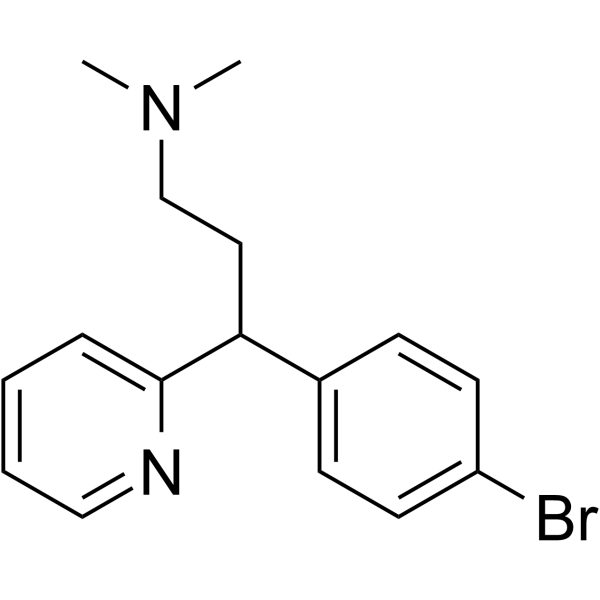
    Brompheniramine
    2 Publications Verification

    (±)-Brompheniramine

    Histamine Receptor mAChR Potassium Channel Sodium Channel Calcium Channel Neurological Disease Inflammation/Immunology Endocrinology
    Brompheniramine ((±)-Brompheniramine) is a potent and orally active antihistamine of the alkylamine class. Brompheniramine is a selective histamine H1 receptor antagonist with a Kd of 6.06 nM. Brompheniramine can block the hERG channels, calcium channels, and sodium channels with IC50s of 0.90 μM, 16.12 μM and 21.26 μM, respectively. Brompheniramine has anticholinergic, antidepressant and anesthetic properties and can be used for allergic rhinitis research .
    Brompheniramine
  • HY-175668

    Potassium Channel Neurological Disease
    IDOR-1104-0086 is an orally active Kv7 potassium channel opener with an EC50 of 210 nM that can cross blood-brain barrier. IDOR-1104-0086 displays strong selectivity against the hERG channel with an IC20 of 25 μM. IDOR-1104-0086 exhibits efficacy in two rodent models of epilepsy and a favorable tolerability profile. IDOR-1104-0086 can used for the study of epilepsy .
    IDOR-1104-0086
  • HY-172374

    Potassium Channel Inflammation/Immunology
    KV1.3-IN-2 is a kv1.3 potassium channel inhibitor without affecting hERG channel activity. KV1.3-IN-2 can be used in research of immune-related diseases such as psoriasis, rheumatoid arthritis, and systemic lupus erythematosus .
    KV1.3-IN-2
  • HY-W516880

    O-Demethylastemizole

    Drug Metabolite Parasite Histamine Receptor Potassium Channel Infection Cardiovascular Disease
    Desmethylastemizole (O-Demethylastemizole) , a metabolite of Astemizole (HY-12532), is a β-hematin (βH) inhibitor. Desmethylastemizole has an antiplasmodium activity against P. falciparum with IC50 of 0.12, 0.11 and 0.06  μM for Pf3D7, PfDd2, and PfItG strains, respectively. Desmethylastemizole is also a Histamine H1 receptor antagonist. Desmethylastemizole significantly blocks hERG K + channels and also inhibits histone-lysine N-methyltransferase EZH2 activity. Desmethylastemizole can be used for long QT syndrome and malaria research .
    Desmethylastemizole
  • HY-N5006

    Potassium Channel Cardiovascular Disease
    Guanfu base G is an antiarrhythmic alkaloid isolated from Aconitum coreanum. Guanfu base G inhibits HERG channel current with an IC50 of 17.9 μM .
    Guanfu base G
  • HY-172374A

    Potassium Channel Inflammation/Immunology
    KV1.3-IN-2 hydrochloride is a kv1.3 potassium channel inhibitor without affecting hERG channel activity. KV1.3-IN-2 hydrochloride can be used in research of immune-related diseases such as psoriasis, rheumatoid arthritis, and systemic lupus erythematosus .
    KV1.3-IN-2 hydrochloride
  • HY-15551R

    Potassium Channel Reference Standards Cardiovascular Disease
    E-4031 (Standard) is the analytical standard of E-4031. This product is intended for research and analytical applications. E-4031 is a selective hERG potassium channel blocker for use in class III anti-arrhythmic studies .
    E-4031 (Standard)
  • HY-144287

    Glucokinase Sodium Channel Metabolic Disease
    Glucokinase activator 3 is an orally active Glucokinase (GK) activator with an AC50 of 38 nM. Glucokinase activator 3 inhibits hERG channel and sodium channel in patch clamp assays. Glucokinase activator 3 exhibits high efficacy in reducing blood glucose in diet-induced obese (DIO) mice. Glucokinase activator 3 has the potential for the research of type 2 diabetes .
    Glucokinase activator 3
  • HY-106912A

    MK 499 free base

    Potassium Channel Cardiovascular Disease
    L-706000 (MK 499) free base is a potent hERG channel blocker with an IC50 of 32 nM. L-706000 free base is a class III antiarrhythmic agent that can be used for the study of malignant ventricular tachyarrhythmias .
    L-706000 free base
  • HY-132201

    Potassium Channel Metabolic Disease
    MK-8153 is a potent, selective and orally active inhibitor of renal outer medullary potassium channel (ROMK), with IC50s of 5 nM, 34 μM for ROMK electrophysiology (EP) and hERG EP, respectively. MK-8153 can be used as the diuretic/atriuretic .
    MK-8153
  • HY-W064918

    Bacterial Infection
    NITD-304 is an orally active anti-tuberculosis agent. NITD-304 exerts inhibitory and bactericidal activities gainst Mycobacterium tuberculosis and multidrug-resistant Mycobacterium tuberculosis. NITD-304 inhibits mycobacterial cell wall biosynthesis and demonstrates synergistic or additive growth inhibitory activity with select antibacterial agents. NITD-304 shows low risk of cardiotoxicity and drug-drug interactions, with no inhibition of major cytochrome P-450 enzymes or hERG channel. NITD-304 can be used for the research of tuberculosis and multidrug-resistant tuberculosis .
    NITD-304
  • HY-120375

    Potassium Channel Cardiovascular Disease
    LUF7346 is a potent Kv11.1 (hERG) channel negative allosteric modulator, with an IC50 of 35.6 ± 3.2 nM .
    LUF7346
  • HY-122024

    Potassium Channel Cardiovascular Disease
    AZSMO-23 is a potent hERG K + channel activator. AZSMO-23 activats WT hERG pre-pulse and tail current with EC50 values of 28.6, 11.2 µM, respectively. AZSMO-23 has the potential for the research of long QT syndrome .
    AZSMO-23
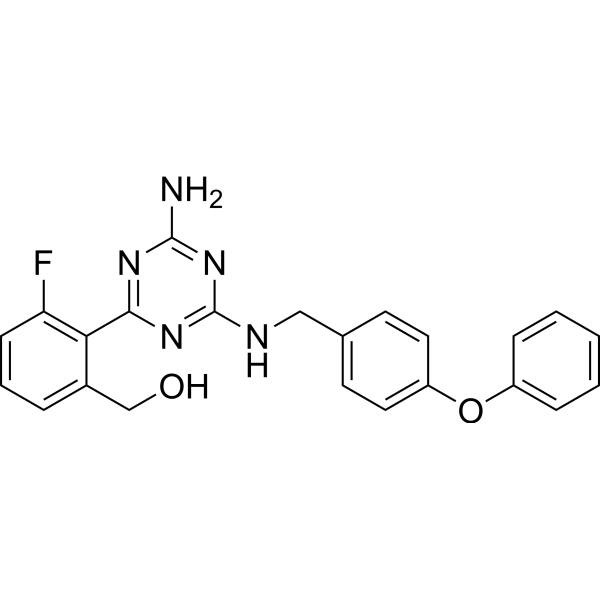
  • HY-146380

    Histone Demethylase Cancer
    S1427 is a tranylcypromine-derived LSD1 inhibitor with the IC50 of 390 nM and Ki of 80 nM. S1427 exhibits desirable hERG channel inhibition and microsomal stability profiles. Inhibition of LSD1 partially reduces the proliferation of cancer cells .
    S1427
  • HY-175289

    Potassium Channel Sodium Channel Adrenergic Receptor Neurological Disease
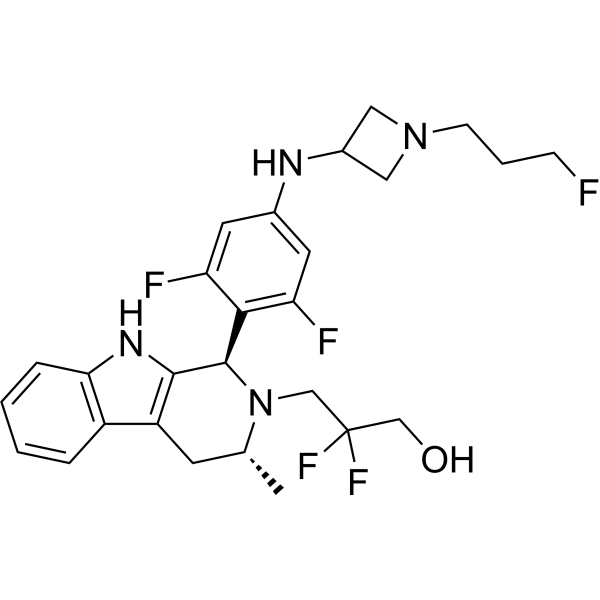
    hERG-IN-3 is an orally active hERG blocker with an IC50 of 44.5 nM. hERG-IN-3 exhibits a Ki for β2-adrenergic receptor of 14 nM. hERG-IN-3 exhibits the skeletal muscle Nav1.4 and sodium channel-blocking activities (IC50 = 4.4 μM, 3-fold increasement than hNav1.5). hERG-IN-3 displays a potent antimyotonic activity in an animal model. hERG-IN-3 can be used for the study of Myotonia Congenita .
    hERG-IN-3
  • HY-B1482

    TPS-23 benzenesulfonate

    Potassium Channel Neurological Disease
    Mesoridazine (TPS-23) benzenesulfonate, a metabolite of Thioridazine (HY-B0965A), acts as an orally active phenothiazine antipsychotic agent. Mesoridazine benzenesulfonate is a potent and rapid open-channel blocker of human ether-a-go-go related gene (hERG) channels and blocks hERG currents with an IC50 of 550 nM (at 0 mV) in human embryonic kidney 293 cells .Mesoridazine benzenesulfonate can be used for the research of schizophrenia, as well as certain other psychiatric disorders .
    Mesoridazine benzenesulfonate
  • HY-147256

    Niferidil free base

    Potassium Channel Cardiovascular Disease
    Cavutilide (Niferidil (free base)) is a class III antiarrhythmic agent that inhibits hERG K + channel. Cavutilide has the potential for the study of persistent atrial fibrillation .
    Cavutilide
  • HY-14848

    PRX 00023

    5-HT Receptor Potassium Channel Neurological Disease
    Naluzotan is a novel, potent, and selective amidosulfonamide 5-HT1A agonist with IC50 and Ki of appr 20 nM and 5.1 nM, used for the treatment of anxiety and depression; Also a weak hERG K + channel blocker, with IC50 of 3800 nM.
    Naluzotan
  • HY-101622

    5-HT Receptor Dopamine Receptor Neurological Disease
    5-HT6/7 antagonist 1 is a multifunctional ligand that antagonizes 5-HT6/7/2A and D2 receptors, without interacting with M1 receptors and hERG channels.
    5-HT6/7 antagonist 1
  • HY-P5795

    Sodium Channel Potassium Channel Neurological Disease
    GsAF-I is a potent Nav and hERG1 channels blocker with IC50s of 0.36, 0.6, 1.28, 0.33, 1.2, 0.04 and 4.8 μM against Nav1.1, Nav1.2, Nav1.3, Nav1.4, Nav1.6, Nav1.7 and hERG1, respectively .
    GsAF-I
  • HY-175226

    Dipeptidyl Peptidase Calcium Channel Sodium Channel Potassium Channel Cancer
    DPP8/9-IN-2 (Compound 21) is a DPP8/9 inhibitor with IC50 values of 0.22 nM and 3 nM, respectively, and Ki values of 2.9 nM and 6 nM, respectively . DPP8/9-IN-2 has certain cardiotoxicity, with IC50 values of 0.7 μM, 29.0 μM and 27.7 μM for hERG potassium channel, Nav1.5 sodium channel and Cav1.2 calcium channel, respectively. DPP8/9-IN-2 can be used in the research of diseases such as tumors .
    DPP8/9-IN-2

Inquiry Online

Your information is safe with us. * Required Fields.

Salutation


Country or Region *

Applicant Name *


Organization Name *

Department *


Email Address *


Product Name *

Cat. No.


Requested quantity *

Phone Number *


Remarks

Inquiry Online

Inquiry Information

Product Name:
Cat. No.:
Quantity:
MCE Japan Authorized Agent:

