


1. Search Result
Search Result
Results for "

hepatocellular carcinoma.

" in MedChemExpress (MCE) Product Catalog:

410

Inhibitors & Agonists

2

Screening Libraries

3

Fluorescent Dyes

12

Biochemical Assay Reagents

15

Peptides

1

MCE Kits

23

Inhibitory Antibodies

104

Natural
Products

4

Recombinant Proteins

7

Isotope-Labeled Compounds

6

Antibodies

8

Oligonucleotides

Cat. No. Product Name Target Research Areas Chemical Structure
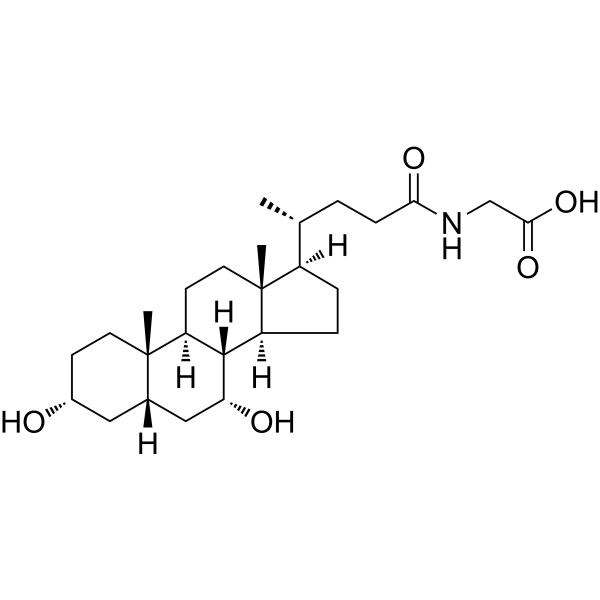
  • HY-N2334
    Glycochenodeoxycholic acid
    5 Publications Verification

    Chenodeoxycholylglycine

    Endogenous Metabolite Apoptosis STAT BCL6 Interleukin Related Caspase Metabolic Disease Cancer
    Glycochenodeoxycholic acid (Chenodeoxycholylglycine) is a relatively toxic bile salt generated in the liver from chenodeoxycholic acid and glycine. Glycochenodeoxycholic acid inhibits Autophagosome formation and impairs lysosomal function by inhibiting lysosomal proteolysis and increasing lysosomal pH in human normal liver cells, leading to the Apoptosis of human hepatocyte cells. Glycochenodeoxycholic acid induces stemness and chemoresistance via activating STAT3 signaling pathway in hepatocellular carcinoma cells (HCC). Glycochenodeoxycholic acid is promising for research in the field of cholestasis desease, hepatocellular carcinoma and primary sclerosing cholangitis (PSC) .
    Glycochenodeoxycholic acid
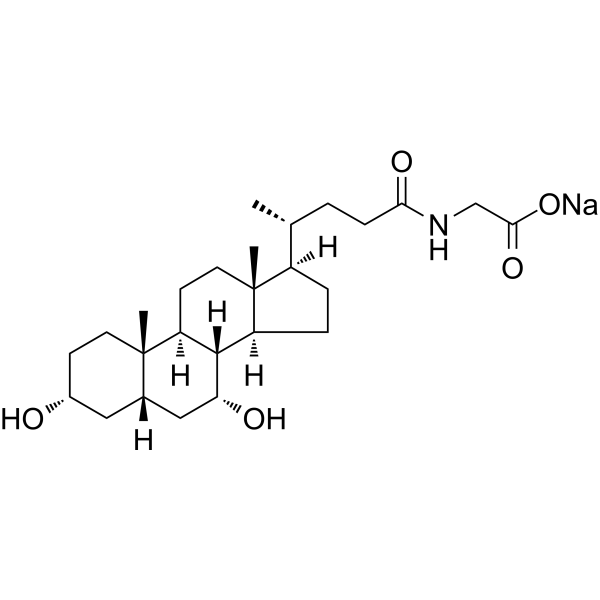
  • HY-N2334A
    Glycochenodeoxycholic acid sodium salt
    5 Publications Verification

    Chenodeoxycholylglycine sodium salt; Sodium glycochenodeoxycholate

    Endogenous Metabolite Apoptosis STAT BCL6 Interleukin Related Caspase Metabolic Disease Cancer
    Glycochenodeoxycholic acid sodium salt (Sodium glycochenodeoxycholate) is a relatively toxic bile salt generated in the liver from chenodeoxycholic acid and glycine. Glycochenodeoxycholic acid sodium salt inhibits Autophagosome formation and impairs lysosomal function by inhibiting lysosomal proteolysis and increasing lysosomal pH in human normal liver cells, leading to the Apoptosis of human hepatocyte cells. Glycochenodeoxycholic acid sodium salt induces stemness and chemoresistance via activating STAT3 signaling pathway in hepatocellular carcinoma cells (HCC). Glycochenodeoxycholic acid sodium salt is promising for research in the field of cholestasis desease, hepatocellular carcinoma and primary sclerosing cholangitis (PSC) .
    Glycochenodeoxycholic acid sodium salt
  • HY-N1404
    Sodium aescinate
    2 Publications Verification

    NF-κB Inflammation/Immunology Cancer
    Sodium aescinate is a triterpene saponin derived from Aesculus hippocastanum seeds, with anti-inflammatory and antioxidant activities . Sodium aescinate inhibits hepatocellular carcinoma growth by targeting CARMA3/NF-κB pathway .
    Sodium aescinate
  • HY-121360

    DNA/RNA Synthesis Reactive Oxygen Species (ROS) Cancer
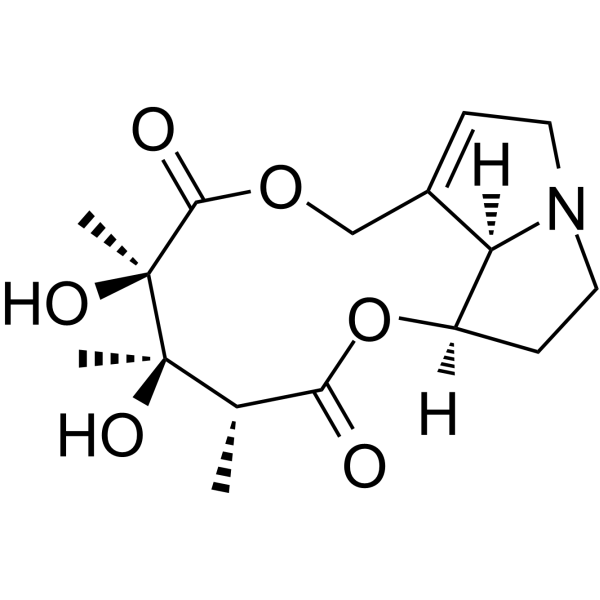
    Cylindrospermopsin, a cyanotoxin, is a polycyclic uracil derivative containing guanidine and sulfate groups, which can inhibit protein synthesis and covalently modify DNA or RNA. Cylindrospermopsin induces hepatocellular hypertrophy, renal cellular hypertrophy, intracellular reactive oxygen species (ROS), DNA strand breaks, mitochondrial hyperpolarisation, ultrastructural damage, and altered gene expression in liver, kidney, and intestinal cells. Cylindrospermopsin can be used in research including hepatocellular carcinoma and water quality testing .
    Cylindrospermopsin
  • HY-B0435
    Roxithromycin
    5+ Cited Publications

    RU-28965

    Bacterial Antibiotic Apoptosis p38 MAPK NF-κB Infection Cardiovascular Disease Inflammation/Immunology Cancer
    Roxithromycin (RU-28965) is an orally active semi-synthethic macrolide antibiotic. Roxithromycin inhibits protein biosynthesis in the elongation step by binding to 50S bacterial ribosome. Roxithromycin has antimicrobial, antiproliferative, anti-inflammatory, tumour vasculature inhibiting and lung injury ameliorating effects .
    Roxithromycin
  • HY-N2591

    Endogenous Metabolite Cancer
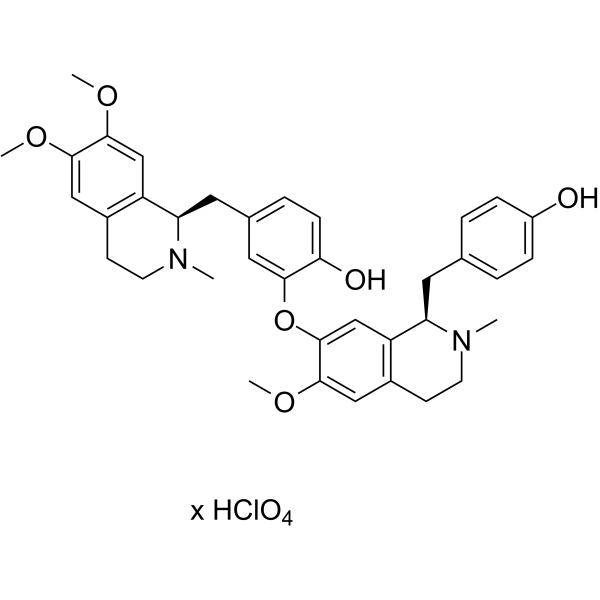
    Isocorydine is isolated from Dicranostigma leptopodum (Maxim.) Fedde (DLF). Isocorydine combines with Doxorubicin (DOX) has a promising potential to eradicate hepatocellular carcinoma (HCC) .
    Isocorydine
  • HY-P99758

    CS1003

    PD-1/PD-L1 Cancer
    Nofazinlimab (CS1003) is a humanised IgG4 anti-PD-1 monoclonal antibody. Nofazinlimab shows antitumor activity and can be used for the research of unresectable or metastatic hepatocellular carcinoma .
    Nofazinlimab
  • HY-N0754

    YAP HSP Reactive Oxygen Species (ROS) ERK Autophagy Apoptosis Tyrosinase DNA/RNA Synthesis Neurological Disease Inflammation/Immunology Cancer
    Eupalinolide A is a Yes-associated protein (YAP) degrader and HSP70 inducer. Eupalinolide A inhibits osteogenic differentiation of tendon-derived stem cells (TDSCs). Eupalinolide A induces autophagy in hepatocellular carcinoma cells via activating the ROS/ERK signaling pathway. Eupalinolide A protects PAM212 cells from UVB-, Menadione (HY-B0332)-, or heat shock-induced apoptosis. Eupalinolide A alleviates trauma-induced heterotopic ossification (HO) of Achilles tendon and inhibits growth of MHCC97-L and HCCLM3 hepatocellular carcinoma xenograft tumors in mice. Eupalinolide A can be used for the study of traumatic heterotopic ossification of tendons and hepatocellular carcinoma .
    Eupalinolide A
  • HY-19832
    SC66
    5 Publications Verification

    MOFs Akt Apoptosis Cancer
    SC66 is an Akt inhibitor, reduces cell viability in a dose- and time-dependent manner, inhibits colony formation and induces apoptosis in hepatocellular carcinoma (HCC) cells.
    SC66
  • HY-150750A

    Toll-like Receptor (TLR) Apoptosis Interleukin Related TNF Receptor IFNAR Inflammation/Immunology Cancer
    ODN M362 sodium is a TLR9 agonist that acts as a vaccine adjuvant. ODN M362 sodium activates mouse splenocytes, induces apoptosis in human hepatocellular carcinoma cells, upregulates proinflammatory cytokines in human hepatocellular carcinoma cells, and inhibits the proliferation of human hepatocellular carcinoma cells. ODN M362 sodium upregulates the expression of TLR9/TLR6, activates downstream signaling pathways via IRAK4 and IRF7, and strongly amplifies antigen-specific cellular immune responses to participate in innate immune activation. ODN M362 sodium can be used in research related to hepatocellular carcinoma and breast cancer .
    ODN M362 sodium
  • HY-W092109

    Phenylalanyltryptophan; Phe-Trp

    Endogenous Metabolite Neurological Disease Cancer
    H-Phe-Trp-OH (Phenylalanyltryptophan) is an endogenous metabolite. H-Phe-Trp-OH can be used in the research of hepatocellular carcinoma and tic disorders .
    H-Phe-Trp-OH
  • HY-145396

    Biochemical Assay Reagents Cancer
    PLGA-PEG-NH2 is a material to synthesis nanomicelles. PLGA-PEG-NH2 nanomicelle is an efficient delivery system of Irinotecan for targeted colorectal cancer and hepatocellular carcinoma .
    PLGA12000-PEG2000-NH2
  • HY-111130

    Histamine Receptor mAChR Neurological Disease Cancer
    Methapyrilene is a histamine antagonist, a pyridine chemical with anticholinergic activity. Methapyrilene can cause target organ-specific epigenetic alterations, such as a decrease in DNA methylation levels. Methapyrilene induces hepatocellular carcinoma in rats .
    Methapyrilene
  • HY-P11228

    PROTACs Apoptosis DNA/RNA Synthesis Cancer
    FPP29 is a potent peptide-based FOXM1 PROTAC degrader. FPP29 induces ubiquitination and degradation of FOXM1. FPP29 inhibits FOXM1 via the ubiquitin-proteasome degradation pathway. FPP29 induces Apoptosis. FPP29 suppresses tumor growth in hepatocellular carcinoma xenograft models. FPP29 can be used in the research of hepatocellular carcinoma (cell-penetrating peptide: (HY-P0133); VHL ligase ligand: (HY-P11493); linker: (HY-W013664); FOXM1 ligand: (HY-P11494)) .
    FPP29
  • HY-P99353
    Ascrinvacumab
    2 Publications Verification

    Anti-ACVRL1 / ALK-1 Reference Antibody (ascrinvacumab); PF-03446962; GT-90001C

    Anaplastic lymphoma kinase (ALK) Cancer
    Ascrinvacumab (PF-03446962) is a human IgG2 monoclonal antibody targets ALK-1. Ascrinvacumab shows binding efficiency with human ALK1 with a Kd value of 7 nM. Ascrinvacumab can be used for the research of hepatocellular carcinoma (HCC) .
    Ascrinvacumab
  • HY-D2312

    Fluorescent Dye Ferroptosis Cancer
    Mito-Rh-S is a ratiometric near-infrared (NIR) fluorescent probe that detects the fluctuation of mitochondrial HClO levels during ferroptosis in hepatocellular carcinoma (HCC) .
    Mito-Rh-S
  • HY-N15388

    Drug Derivative Cancer
    Hericenone A is an isoindolinone found in the fruiting bodies of Hericium erinaceus. Hericenone A exerts cytotoxic activity against cancer cells. Hericenone A can be used for the research of cancer, such as metastatic human hepatocellular carcinoma .
    Hericenone A
  • HY-14653

    TAC-101; Am 555S

    RAR/RXR Apoptosis Cancer
    Amsilarotene (TAC-101; Am 555S), an orally active synthetic retinoid, has selective affinity for retinoic acid receptor α (RAR-α) binding with Ki of 2.4, 400 nM for RAR-α and RAR-β. Amsilarotene induces the apoptotic of human gastric cancer, hepatocellular carcinoma and ovarian carcinoma cells. Amsilarotene can be used for the research of cancer .
    Amsilarotene
  • HY-132177
    α-L-Fucosidase, Microorganism
    1 Publications Verification

    EC 3.2.1.51; FUC

    Endogenous Metabolite Cancer
    α-L-Fucosidase, Microorganism (EC 3.2.1.51) is an enzyme that catalyzes the chemical reaction. Serum activity of α-L-Fucosidase, Microorganism, a lysosomal enzyme present in all mammalian cells, has been proposed as a marker of hepatocellular carcinoma (HCC) .
    α-L-Fucosidase, Microorganism
  • HY-123901

    Apoptosis Cancer
    Garcinone E is a natural xanthone found in the rind of the mangosteen fruit. Garcinone E induces apoptosis and inhibits cancer cell migration. Garcinone E has anticancer effects on different human cancer cell lines, including colorectal, breast, and hepatocellular carcinomas .
    Garcinone E
  • HY-121799

    THCA

    Endogenous Metabolite Cancer
    Taurohyocholic acid is a taurine-conjugated hyocholic acid. Taurohyocholic acid is predictor of the efficacy of tyrosine kinase inhibitors combined withPD-1 inhibitors in hepatocellular carcinoma (HCC) .
    Taurohyocholic acid
  • HY-121799A

    THCA sodium salt

    Endogenous Metabolite Others
    Taurohyocholic acid (THCA) sodium salt is a taurine-conjugated hyocholic acid. Taurohyocholic acid sodium salt is predictor of the efficacy of tyrosine kinase inhibitors combined withPD-1 inhibitors in hepatocellular carcinoma (HCC) .
    Taurohyocholic acid sodium salt
  • HY-N4168B

    Others Cancer
    Methyl chlorogenate is an antioxidant, and has radical scavenging activity. Methyl chlorogenate is an anti-inflammatory agent. Methyl chlorogenate also inhibits hepatocellular carcinoma (HCC) cell proliferation and metastasis .
    Methyl chlorogenate
  • HY-N2334R

    Chenodeoxycholylglycine (Standard)

    Reference Standards Endogenous Metabolite Apoptosis STAT BCL6 Interleukin Related Caspase Metabolic Disease Cancer
    Glycochenodeoxycholic acid (Standard) is the analytical standard of Glycochenodeoxycholic acid. This product is intended for research and analytical applications. Glycochenodeoxycholic acid (Chenodeoxycholylglycine) is a relatively toxic bile salt generated in the liver from chenodeoxycholic acid and glycine. Glycochenodeoxycholic acid inhibits Autophagosome formation and impairs lysosomal function by inhibiting lysosomal proteolysis and increasing lysosomal pH in human normal liver cells, leading to the Apoptosis of human hepatocyte cells. Glycochenodeoxycholic acid induces stemness and chemoresistance via activating STAT3 signaling pathway in hepatocellular carcinoma cells (HCC). Glycochenodeoxycholic acid is promising for research in the field of cholestasis desease, hepatocellular carcinoma and primary sclerosing cholangitis (PSC)[1][2][3][4].
    Glycochenodeoxycholic acid (Standard)
  • HY-N2334AR

    Chenodeoxycholylglycine sodium salt (Standard); Sodium glycochenodeoxycholate (Standard)

    Reference Standards Endogenous Metabolite Apoptosis STAT BCL6 Interleukin Related Caspase Metabolic Disease Cancer
    Glycochenodeoxycholic acid sodium salt (Standard) is the analytical standard of Glycochenodeoxycholic acid sodium salt. This product is intended for research and analytical applications. Glycochenodeoxycholic acid sodium salt (Sodium glycochenodeoxycholate) is a relatively toxic bile salt generated in the liver from chenodeoxycholic acid and glycine. Glycochenodeoxycholic acid sodium salt inhibits Autophagosome formation and impairs lysosomal function by inhibiting lysosomal proteolysis and increasing lysosomal pH in human normal liver cells, leading to the Apoptosis of human hepatocyte cells. Glycochenodeoxycholic acid sodium salt induces stemness and chemoresistance via activating STAT3 signaling pathway in hepatocellular carcinoma cells (HCC). Glycochenodeoxycholic acid sodium salt is promising for research in the field of cholestasis desease, hepatocellular carcinoma and primary sclerosing cholangitis (PSC) .
    Glycochenodeoxycholic acid sodium salt (Standard)
  • HY-N8540

    Phosphoglycerate Kinase (PGK) Fungal Apoptosis Infection Cancer
    Ilicicolin H is a selective and non-ATP-competitive phosphoglycerate kinase 1 (PGK1) (IC50 = 9.02 μM) and mitochondrial cytochrome bc1 reductase (IC50 = 2-3 ng/mL) inhibitor. Ilicicolin H directly binds to PGK1 with KD of 60 μM .Ilicicolin H can inhibit cell proliferation and induce apoptosis. Ilicicolin H can inhibit the lactate production and glucose uptake of hepatocellular carcinoma (HCC) cells. Ilicicolin H has a broad antifungal spectrum including C. albicans, Cryptococcus and A. fumigatus. Ilicicolin H can be used for the researches of cancer and infection, such as hepatocellular carcinoma (HCC) and C. albicans infection .
    Ilicicolin H
  • HY-160765

    APS-8-100-2

    Wnt Apoptosis Cancer
    WNTinib (APS-8-100-2) is a multi-kinase inhibitor that selectively antagonizes β-catenin (CTNNB1) mutated hepatocellular carcinoma (HCC). WNTinib downregulates oncogenicWntsignaling by inhibiting KIT/MAPK and downstream EZH2 activation .
    WNTinib
  • HY-P10323

    Tumstatin (74-98), human

    Integrin FAK mTOR Apoptosis Cancer
    T7 Peptide is a protein synthesis inhibitor and anti-angiogenic agent, with a Kd of 10 nM for human transferrin receptor. T7 Peptide inhibits the phosphorylation of focal adhesion kinase, the activation of phosphatidylinositol 3-kinase and Akt, the kinase activity of mTOR, as well as the phosphorylation of 4E-BP1 in endothelial cells. T7 Peptide induces G0/G1 cell cycle arrest, apoptosis and protective autophagy in hepatocellular carcinoma cells, and suppresses tumor growth in mouse models. T7 Peptide is applicable to research related to cancer, glioblastoma, hepatocellular carcinoma and glioma .
    T7 Peptide
  • HY-P11050A

    Apoptosis Cancer
    SP94 is a peptide ligand with high specificity for hepatocellular carcinoma cells. SP94 selectively binds to multiple hepatocellular carcinoma cell lines in vitro. SP94 inhibits tumor growth in a mouse model of hepatocellular carcinoma by promoting apoptosis and reducing angiogenesis. SP94 can be used as a specific probe for hepatocellular carcinoma imaging. SP94 is useful for hepatocellular carcinoma research .
    SP94
  • HY-103257

    NSC656158

    Microtubule/Tubulin Cancer
    CHM-1, a microtubule-destabilizing agent, inhibits tubulin polymerization. CHM-1 is a potent and selective antimitotic antitumor activity against human hepatocellular carcinoma. CHM-1 induces growth inhibition and apoptosis via G2-M phase arrest in human hepatocellular carcinoma cells by activation of Cdc2 kinase activity .
    CHM-1
  • HY-N11429

    Endogenous Metabolite Metabolic Disease Cancer
    Glycochenodeoxycholic acid 3-glucuronide is a type of steroid glucuronide and a plasma metabolite that can be used in the research of biomarkers for diabetes and hepatocellular carcinoma (HCC) .
    Glycochenodeoxycholic acid 3-glucuronide
  • HY-W013514

    Environmental Pollutants DNA/RNA Synthesis Cancer
    2-Acetamidofluorene is a potent carcinogenan. 2-Acetamidofluorene is can be used fot induction of hepatocellular carcinoma (HCC) and multiple primary tumours .
    2-Acetamidofluorene
  • HY-161679S

    Isotope-Labeled Compounds Cancer
    Pyruvate Carboxylase-IN-3 (Compd 36) is a potent Pyruvate Carboxylase inhibitor. Pyruvate Carboxylase-IN-3 inhibits hepatocellular carcinoma cells activity with an IC50 of 4.3 μM .
    Pyruvate Carboxylase-IN-3
  • HY-179243

    PROTACs STAT MDM-2/p53 Cancer
    S3D5 is a highly efficient and selective PROTAC degrader targeting STAT3 (KD = 4.35 μM). S3D5 induces degradation of STAT3 in HepG2 cells without significant effects on other STAT proteins. S3D5 exhibits good anti-hepatocellular carcinoma cell proliferation activity, which can be explained by activating the p53 pathway. S3D5 degradation of the STAT3 protein is mediated by the ubiquitin–proteasome system (UPS). S3D5 can be used for the study of hepatocellular carcinoma .
    S3D5
  • HY-16232

    D 19575; Glucosylifosfamide mustard

    Apoptosis Caspase Bcl-2 Family Cancer
    Glufosfamide is a glucose-conjugated alkylating cytotoxic agent and a derivative of Ifosfamide (HY-17419). Glufosfamide induces apoptosis frequency and increase the expression of caspase-9 and caspase-3 in cancer cells. Glufosfamide shows great anti-tumor activity in MiaPaCa-2-RFP mouse model. Glufosfamide can be used for the study of hepatocellular carcinoma, prostate cancer and pancreatic carcinoma .
    Glufosfamide
  • HY-N8306

    Bacterial PKC Apoptosis SARS-CoV Cancer
    Isojacareubin can be isolated from Hypericum japonicum. Isojacareubin covalently inhibits SARS-CoV-2 3CLpro. Isojacareubin also has anti-helicobacter activity. Isojacareubin inhibits PKC, and suppresses hepatocellular carcinoma metastasis and induces apoptosis .
    Isojacareubin
  • HY-N10985

    Drug Derivative Cancer
    Xanthone V1a, a derivative of Xanthone (HY-N0126), is an antioxidant that can be found in the roots of Cudrania tricuspidata and twig extracts of Maclura fruticosa. Xanthone V1a exerts cytotoxic effects against colon, hepatocellular, and gastric carcinoma cells. Xanthone V1a exhibits scavenging activitys against DPPH and ABTS. Xanthone V1a can be used for the research of colon carcinoma, hepatocellular carcinoma, and gastric carcinoma .
    Xanthone V1a
  • HY-179035

    Molecular Glues CXCR Cancer
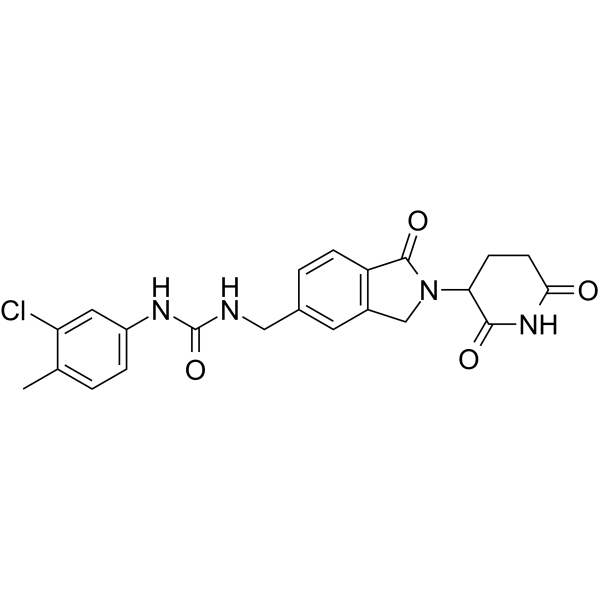
    TBS6b is a potent and selective ACKR3 molecular glue degrader. TBS6b degrades ACKR3 via the ubiquitin-proteasome pathway. TBS6b inhibits hepatocellular carcinoma cell proliferation, migration, and invasion. TBS6b is relevant to hepatocellular carcinoma (HCC) research .
    TBS6b
  • HY-151461

    Arf Family GTPase Cancer
    CHNQD-01255 is an orally active Arf-GEFs inhibitor with potent anti-hepatocellular carcinoma (HCC) efficacy .
    CHNQD-01255
  • HY-N1443

    Environmental Pollutants Endogenous Metabolite Apoptosis Metabolic Disease Cancer
    Demethylcantharidate disodium, an endogenous metabolite, induces apoptosis in hepatocellular carcinoma cells via ER stress. Demethylcantharidate disodium shows excellent anticancer activity against multiple types of cancer .
    Demethylcantharidate disodium
  • HY-171450

    Trk Receptor Cancer
    VMD-928 is an orally active, allosteric, irreversible and selective tropomyosin receptor kinase A (TrkA) inhibitor. VMD-928 blocks the downstream signaling pathways triggered by the binding of nerve growth factor (NGF) to TrkA, thereby inhibiting cell proliferation, invasion, and promoting cancer cell death. VMD-928 is promising for research of various cancers, including prostate cancer, thymic carcinoma, mesothelioma, squamous cell carcinoma of the head and neck, squamous cell carcinoma of the lung, ovarian cancer, hepatocellular carcinoma .
    VMD-928
  • HY-175283

    Molecular Glues NEKs Cancer
    ABT-002 is a molecular glue degrader targeting GSPT1 and NEK7. ABT-002 is the active metabolite of ABS-752 (HY-W599279). ABT-002 is promising for research of hepatocellular carcinoma (HCC) .
    ABT-002
  • HY-N0530
    Dryocrassin ABBA
    2 Publications Verification

    Dryocrassin

    Apoptosis Influenza Virus Cancer
    Dryocrassin ABBA (Dryocrassin) is an orally active phloroglucinol derivative that can be extracted from Phyllopteris officinalis. Dryocrassin ABBA has antitumor and antiviral activity. Dryocrassin ABBA induced apoptosis of human hepatocellular carcinoma cells through mitochondrial pathway mediated by Caspase .
    Dryocrassin ABBA
  • HY-18203

    Apoptosis Akt mTOR Cancer
    HBF-0079 is a selective anti-hepatocellular carcinoma agent. HBF-0079 induces cell cycle arrest and Apoptosis. HBF-0079 modulates cell-growth and anti-apoptotic signaling through AKT and mTOR. HBF-0079 exhibits antitumor activity against hepatocellular carcinoma .
    HBF-0079
  • HY-W013514R

    DNA/RNA Synthesis Reference Standards Cancer
    2-Acetamidofluorene is a potent carcinogenan. 2-Acetamidofluorene is can be used fot induction of hepatocellular carcinoma (HCC) and multiple primary tumours .
    2-Acetamidofluorene (Standard)
  • HY-178918

    Acetyl-CoA Carboxylase Cancer
    XZA-1 is a 3-hydroxyacyl-coenzyme A dehydrogenase (HADH) activator. XZA-1 increases the intracellular level of acetoacetyl-CoA, which in turn induces acetoacetylation modification of Chromobox Protein Homolog 4 (CBX4) at lysine 106 (K106). XZA-1 exhibits antitumor effects in a xenograft model of human hepatocellular carcinoma SMMC7721 cells overexpressing CBX4. XZA-1 can be used for the study of hepatocellular carcinoma .
    XZA-1
  • HY-128366

    Apoptosis Cancer
    Waltonitone is a ursane-type pentacyclic triterpene isolated from Gentian waltonii Burkill. Waltonitone significantly inhibits hepatocellular carcinoma cells growth and induces apoptosis in vitro and in vivo .
    Waltonitone
  • HY-N0882

    Deacetylcinobufotalin

    Apoptosis Bcl-2 Family Inflammation/Immunology Cancer
    Desacetylcinobufotalin is an active component isolated from Venenum Bufonis, which exhibits significant cytotoxicity against human hepatocellular carcinoma HepG2 cells (IC50 = 0.0279 µmol/mL). Desacetylcinobufotalin upregulates Bax protein expression, downregulates Bcl-2 protein expression, and induces apoptosis via the mitochondrial pathway. Desacetylcinobufotalin inhibits cancer cell survival, and shows lower cytotoxicity compared to its parent compound Cinobufagin (HY-N0421). Desacetylcinobufotalin can be used in hepatocellular carcinoma-related research .
    Desacetylcinobufotalin
  • HY-P3341

    Neuropeptide Y Receptor Metabolic Disease Inflammation/Immunology Cancer
    OB3, a derivative of Leptin, show more effective than leptin in reducing obesity and diabetes in mouse models. OB3 can reduce Leptin-related inflammation and proliferation in hepatocellular carcinoma cells .
    OB3
  • HY-174450

    Epigenetic Reader Domain Cancer
    KMT9-IN-1 (Compound 8) is a KMT9 inhibitor and the ethyl ester prodrug of compound 7b. KMT9-IN-1 releases the active form 7b via esterases in cells. KMT9-IN-1 targets KMT9 in cells and reduces H4K12me1 levels. KMT9-IN-1 has antitumor activity against colon cancer. KMT9-IN-1 can be used in the research of prostate cancer and hepatocellular carcinoma .
    KMT9-IN-1

Inquiry Online

Your information is safe with us. * Required Fields.

Salutation


Country or Region *

Applicant Name *


Organization Name *

Department *


Email Address *


Product Name *

Cat. No.


Requested quantity *

Phone Number *


Remarks

Inquiry Online

Inquiry Information

Product Name:
Cat. No.:
Quantity:
MCE Japan Authorized Agent:

