
21 Results for "

human epidermal keratinocyte

" in MedChemExpress (MCE) Product Catalog:
Products (21)

21 Results for "human epidermal keratinocyte" in MCE Product Catalog:

  • Targets Recommended:
8
8 Cited Publications
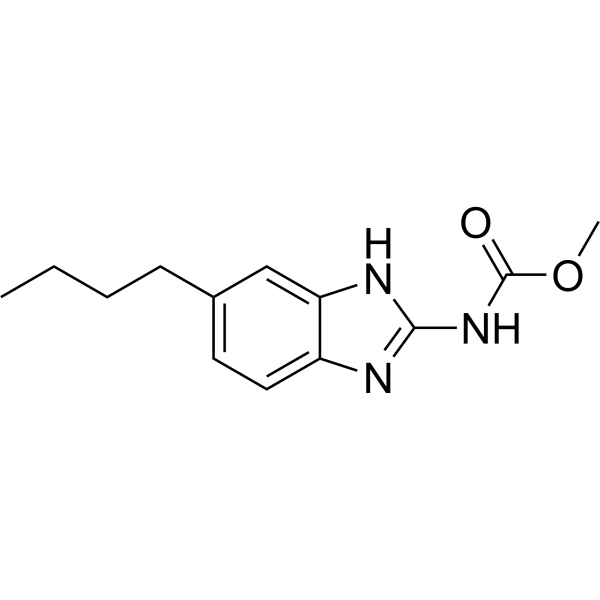
Cat. No.: HY-115364
CAS No.: 14255-87-9
Purity:  99.87%
Synonyms: SKF 29044
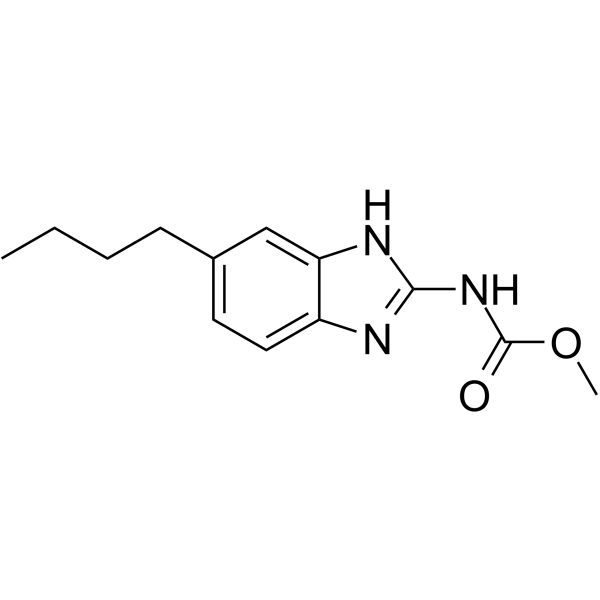
Parbendazole (SKF‑29044) is an orally active benzimidazole carbamate compound with multiple biological activities. Parbendazole binds to free tubulin and inhibits microtubule polymerization; it also activates the JNK/c‑Jun signaling axis and upregulates the expression of the downstream axonal repulsion factor Sema3A. Parbendazole upregulates KAL-1 mRNA expression, reduces nerve growth factor levels, and promotes the terminal differentiation of normal human epidermal keratinocytes. Parbendazole induces apoptosis in differentiated acute myeloid leukemia monocytes and exerts antileukemic activity in a mouse xenograft model of acute myeloid leukemia. Parbendazole exhibits broad-spectrum anthelmintic activity against various animal nematodes. Parbendazole is used in research related to acute myeloid leukemia and parasitic infections .
loading...
    loading...
2
2 Cited Publications
Cat. No.: HY-113509
CAS No.: 89663-86-5
Purity:  98.0%
Synonyms: LXA4
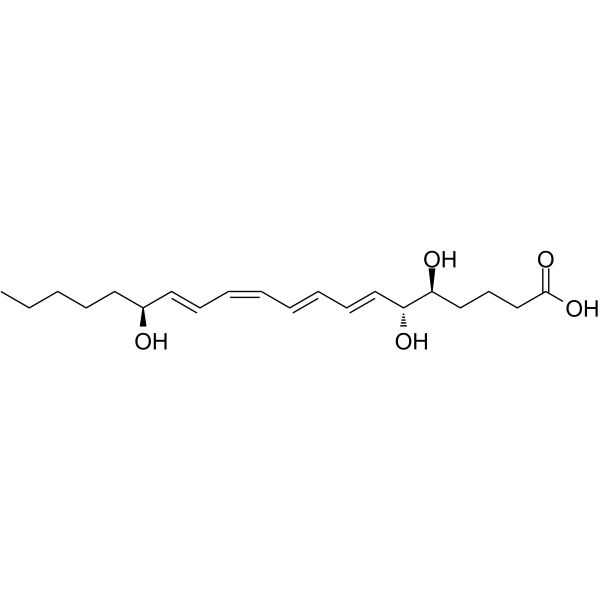
Lipoxin A4 (LXA4), an endogenous lipoxygenase-derived eicosanoid mediator, has potent dual pro-resolving and anti-inflammatory properties . Lipoxin A4 inhibits proliferation and inflammatory cytokine/chemokine production of human epidermal keratinocytes (NHEKs) associated with the ERK1/2 and NF-kB pathways . Lipoxin A4 inhibits serum amyloid A (SAA)-mediated IL-8 release with an IC50 value of 25.74 nM .
loading...
    loading...
Cat. No.: HY-W089800
CAS No.: 18829-56-6
Synonyms: trans-2-Nonen-1-al
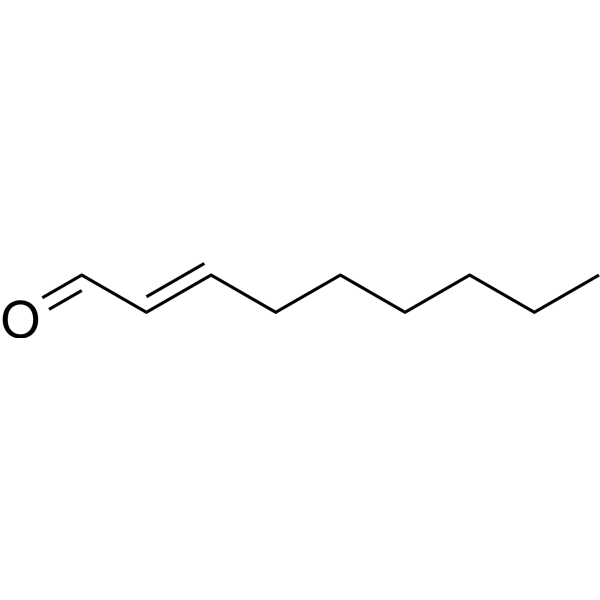
trans-2-Nonenal (trans-2-Nonen-1-al) is an endogenous peroxidation product of polyunsaturated fatty acids, acting as an inhibitor of COX and 12-LOX, as well as an inducer of apoptosis. trans-2-Nonenal is also a malodorous compound secreted by the human body, and its content gradually increases with aging. trans-2-Nonenal inhibits the activities of multiple enzymes such as platelet membrane-bound PTPase, preferentially covalently modifies proteins at lysine residues to form immunogenic adducts, and regulates platelet Arachidonic acid (HY-109590) metabolism. trans-2-Nonenal also exhibits significant cytotoxicity, reduces the viability of keratinocytes, promotes their apoptosis, and effectively decreases the thickness of epidermal models and the number of proliferating cells. trans-2-Nonenal is commonly used in studies of thrombotic, atherosclerotic diseases, renal adenocarcinoma, etc. .
loading...
    loading...
Cat. No.: HY-145726
CAS No.: 250755-32-9
ISIS 104838 is an antisense oligonucleotide targeting TNF-α. ISIS 104838 specifically binds to human TNF-α mRNA via Watson-Crick base pairing to form a DNA:RNA hybrid duplex, thereby recruiting the ubiquitously expressed intracellular enzyme RNase H to degrade the target mRNA and inhibit TNF-α protein synthesis at the transcriptional level. ISIS 104838 induces moderate, self-limiting thrombocytopenia in cynomolgus monkeys. ISIS 104838 can be used for the study of inflammatory diseases .
loading...
    loading...
Cat. No.: HY-W014983
CAS No.: 141-12-8
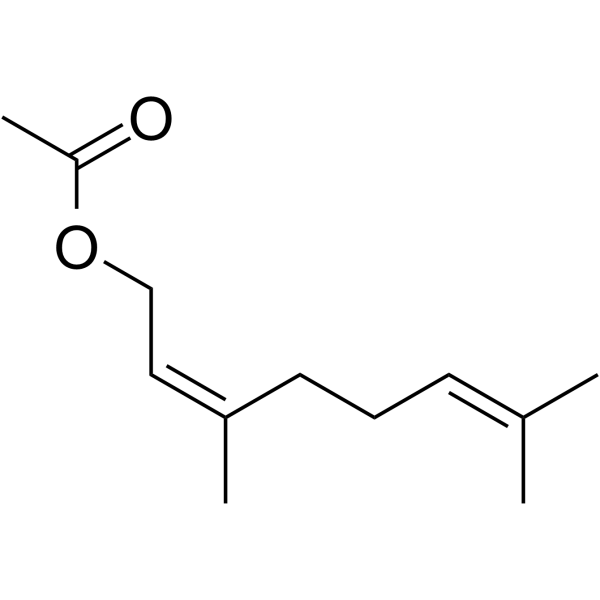
Neryl acetate is an essential oil component. Neryl acetate upregulates genes associated with epidermal differentiation, skin barrier formation and ceramide synthesis; it also increases filaggrin expression, total lipid and ceramide contents. Neryl acetate acts as the core driver mediating the skin barrier-forming and antibacterial effects of Helichrysum italicum essential oil .
loading...
    loading...
Cat. No.: HY-164826
CAS No.: 30881-23-3
Acetyl zingerone is an analog of Zingerone (HY-14621). Acetyl zingerone downregulates the expression of ROS metabolism-related genes, fibroblast senescence-related genes, keratinocyte differentiation-related genes, and IL-17A target genes. Acetyl zingerone inhibits the activities of MMP-1, MMP-3, and MMP-12, as well as the activation of NLRP3 inflammasome, pyroptosis (pyroptosis), ferroptosis (ferroptosis), cartilage destruction, and UVA-induced cyclobutane pyrimidine dimer formation. Acetyl zingerone upregulates the expression of collagen, proteoglycan, extracellular matrix glycoprotein, Notch pathway, and GPX4 gene, activates Nrf2 and HO-1, induces extracellular matrix synthesis and PINK1/Parkin-mediated mitophagy (mitophagy), and promotes chondrocyte survival. Acetyl zingerone alleviates the progression of osteoarthritis in mice . Acetyl zingerone can be used in research related to skin aging, inflammatory skin diseases, osteoarthritis, melanoma, and non-melanoma skin cancer .
loading...
    loading...
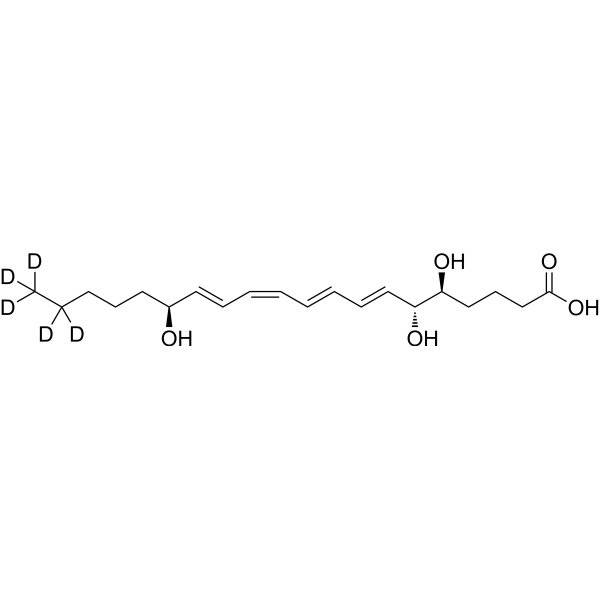
Cat. No.: HY-113509S
CAS No.: 1622429-53-1
Synonyms: LXA4-d5
Lipoxin A4-d5 is the deuterium labeled Lipoxin A4. Lipoxin A4 (LXA4), an endogenous lipoxygenase-derived eicosanoid mediator, has potent dual pro-resolving and anti-inflammatory properties . Lipoxin A4 inhibits proliferation and inflammatory cytokine/chemokine production of human epidermal keratinocytes (NHEKs) associated with the ERK1/2 and NF-kB pathways . Lipoxin A4 inhibits serum amyloid A (SAA)-mediated IL-8 release with an IC50 value of 25.74 nM .
loading...
    loading...
Cat. No.: HY-115364R
CAS No.: 14255-87-9
Synonyms: SKF 29044 (Standard)
Parbendazole (Standard) (SKF 29044 (Standard)) is the analytical standard of Parbendazole (HY-115364). This product is intended for research and analytical applications. Parbendazole (SKF‑29044) is an orally active benzimidazole carbamate compound with multiple biological activities. Parbendazole binds to free tubulin and inhibits microtubule polymerization; it also activates the JNK/c‑Jun signaling axis and upregulates the expression of the downstream axonal repulsion factor Sema3A. Parbendazole upregulates KAL-1 mRNA expression, reduces nerve growth factor levels, and promotes the terminal differentiation of normal human epidermal keratinocytes. Parbendazole induces apoptosis in differentiated acute myeloid leukemia monocytes and exerts antileukemic activity in a mouse xenograft model of acute myeloid leukemia. Parbendazole exhibits broad-spectrum anthelmintic activity against various animal nematodes. Parbendazole is used in research related to acute myeloid leukemia and parasitic infections .
loading...
    loading...
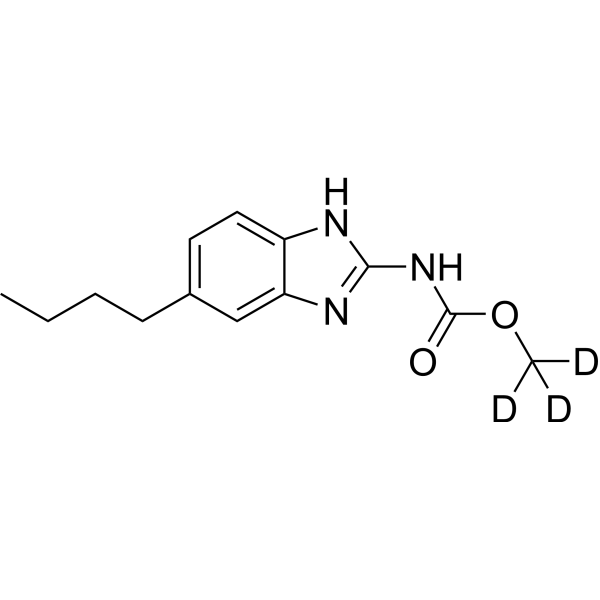
Cat. No.: HY-115364S
CAS No.: 1613439-58-9
Synonyms: SKF 2904-d3
Parbendazole-d3 (SKF 2904-d3) is the deuterated-labeled Parbendazole (HY-115364). Parbendazole (SKF‑29044) is an orally active benzimidazole carbamate compound with multiple biological activities. Parbendazole binds to free tubulin and inhibits microtubule polymerization; it also activates the JNK/c‑Jun signaling axis and upregulates the expression of the downstream axonal repulsion factor Sema3A. Parbendazole upregulates KAL-1 mRNA expression, reduces nerve growth factor levels, and promotes the terminal differentiation of normal human epidermal keratinocytes. Parbendazole induces apoptosis in differentiated acute myeloid leukemia monocytes and exerts antileukemic activity in a mouse xenograft model of acute myeloid leukemia. Parbendazole exhibits broad-spectrum anthelmintic activity against various animal nematodes. Parbendazole is used in research related to acute myeloid leukemia and parasitic infections .
loading...
    loading...
Cat. No.: HY-172148
CAS No.: 2641132-66-1
Target:  

Interleukin Related

Research Areas:  

Inflammation/Immunology

Itaconic acid prodrug-1 (Compound P2) is an orally active prodrug of Itaconic acid (HY-Y0520) that efficiently delivers the active ingredient Itaconic acid to skin tissue following oral administration. Itaconic acid prodrug-1 possesses immunomodulatory properties, significantly inhibiting Poly(I:C)/IFNγ-induced inflammatory cytokines in human epidermal keratinocytes. Itaconic acid prodrug-1 can be utilized for the research of alopecia areata and other inflammatory skin diseases .
loading...
    loading...
Cat. No.: HY-N20677
CAS No.: 1151683-53-2
9''-Methyl lithospermic acid is a serine palmitoyltransferase (SPT) activator. 9''-Methyl lithospermic acid increases the levels of SPT1 and SPT2 in human keratinocytes. 9''-Methyl lithospermic acid maintains epidermal permeability barrier function by promoting SPT expression .
loading...
    loading...
Cat. No.: HY-115364A
CAS No.: 83601-81-4
Synonyms: SKF 29044 hydrochloride
Research Areas:  

Infection Cancer

Parbendazole hydrochloride (SKF‑29044 hydrochloride) is an orally active benzimidazole carbamate compound with multiple biological activities. Parbendazole hydrochloride binds to free tubulin and inhibits microtubule polymerization; it also activates the JNK/c‑Jun signaling axis and upregulates the expression of the downstream axonal repulsion factor Sema3A. Parbendazole hydrochloride upregulates KAL-1 mRNA expression, reduces nerve growth factor levels, and promotes the terminal differentiation of normal human epidermal keratinocytes. Parbendazole hydrochloride induces apoptosis in differentiated acute myeloid leukemia monocytes and exerts antileukemic activity in a mouse xenograft model of acute myeloid leukemia. Parbendazole hydrochloride exhibits broad-spectrum anthelmintic activity against various animal nematodes. Parbendazole hydrochloride is used in research related to acute myeloid leukemia and parasitic infections .
loading...
    loading...
Cat. No.: HY-182824
CAS No.: 25915-57-5
Target:  

Autophagy

Research Areas:  

Others

Sucrose dilaurate acts as an emulsifier, dispersant and stabilizer. Sucrose dilaurate reduces the release of HMGB1 from UVB-irradiated keratinocytes. Sucrose dilaurate inhibits melanogenesis and decreases bilirubin levels. Sucrose dilaurate induces autophagy in human epidermal keratinocytes, thereby reducing carboxymethyl lysine (CML) levels. Sucrose dilaurate reduces the secretion of insulin-like growth factor-binding protein 3 (IGFBP3) and nerve growth factor (NGF) by senescent keratinocytes. Sucrose dilaurate is investigated as an emulsifier, dispersant or stabilizer in the cosmetics, food and pharmaceutical industries .
loading...
    loading...
Cat. No.: HY-P992413

Target:  

Integrin

Research Areas:  

Inflammation/Immunology

MOR102 is a fully human IgG4 monoclonal antibody and an ICAM-1 inhibitor, lacking cross-reactivity with ICAM-2 and ICAM-3. MOR102 binds to the LFA-1 binding site within ICAM-1 domain 1, blocks ICAM-1/LFA-1 interaction, binds human keratinocytes with increased binding to interferon-γ-stimulated keratinocytes. MOR102 inhibits lymphocyte adhesion, reduces lymphocyte proliferation, prevents local T-cell activation, reduces inflammatory infiltrate, restores orthokeratotic differentiation, and reduces epidermal thickness. MOR102 can be used for the research of psoriasis .
loading...
    loading...
Cat. No.: HY-P3395B
Target:  

Inhibitory Antibodies

Research Areas:  

Others

Catestatin sCst TFA is a scrambled control peptide that serves as a negative control for Catestatin TFA (HY-P1271A) .
loading...
    loading...
Cat. No.: HY-P3395A
Target:  

Inhibitory Antibodies

Research Areas:  

Others

Catestatin sCst is a scrambled control peptide that serves as a negative control for Catestatin (HY-P1271) .
loading...
    loading...
Cat. No.: HY-182517
CAS No.: 2225980-49-2
Target:  

TRP Channel

Research Areas:  

Inflammation/Immunology

AG1529 is a TRPV1 inhibitor and capsaicinoid-based soft agent with a human TRPV1 IC50 of 0.9-0.93 μM. AG1529 reversibly blocks capsaicin-evoked TRPV1 activation, binds to the TRPV1 capsaicin binding site, moderately affects pH-induced TRPV1 gating, and does not alter voltage- or heat-mediated TRPV1 responses. AG1529 suppresses TRPV1-mediated neuronal excitability, reduces capsaicin- and pH-evoked neuronal firing, abolishes histaminergic and inflammation-mediated TRPV1 sensitization. AG1529 exhibits anti-nociceptive and antipruritic effects, attenuates in vivo hyperalgesia and pruritus, dose-dependently reduces acute histaminergic itch in rodents, and mildly blocks hTRPA1 and hTRPM8 channel activity. AG1529 undergoes hydrolysis and dermal deactivation, minimizes TRPV1-associated side reactions, does not evoke capsaicin-like burning sensation, and does not disrupt physiological thermal regulation. AG1529 can be used for the research of inflammatory cutaneous nociception and acute histaminergic pruritus .
loading...
    loading...
Cat. No.: HY-N17732
CAS No.: 109469-87-6
7-Hydroxy-5,3',4'-trimethoxyflavanone (Compound AG2) is a key flavanone derivative obtained from the hydrolysis of Methyl-Hesperidin (HY-N0165). 7-Hydroxy-5,3',4'-trimethoxyflavanone exhibits only weak Nrf2-ARE activation activity and is insufficient to initiate the cellular antioxidant defense system .
loading...
    loading...
Cat. No.: HY-122859
CAS No.: 2252153-94-7
Target:  

TOPK ERK p38 MAPK JNK AP-1

Research Areas:  

Inflammation/Immunology

ADA-07 is a TOPK inhibitor with activity at the ATP-binding pocket that does not inhibit MEK1 activity. ADA-07 suppresses solar ultraviolet (SUV)-induced phosphorylation of ERK1/2, p38, and JNKs, and inhibits AP-1 activity. ADA-07 attenuates tumor incidence, multiplicity, and volume in SUV-exposed SKH-1 hairless mice. ADA-07 can be used for the research of solar ultraviolet-induced skin carcinogenesis .
loading...
    loading...
Cat. No.: HY-P992384

Target:  

Interleukin Related

Research Areas:  

Inflammation/Immunology

IMG-008 is a fully human antagonistic antibody targeting IL-36R, acting as a high-affinity IL-36R inhibitor (Kd = 6.23 pM). IMG-008 competitively blocks the pro-inflammatory signaling pathway mediated by human IL-36R, inhibiting receptor activation and the production of inflammatory cytokines. IMG-008 suppresses Imiquimod (HY-B0180)-induced skin inflammation in humanized mice, and Fc modification increases its serum exposure and prolongs its half-life. IMG-008 can be used in studies related to IL-36R-mediated inflammatory diseases such as psoriasis .
loading...
    loading...

