
1. Search Result
Search Result
Results for "

human malignant melanoma

" in MedChemExpress (MCE) Product Catalog:

12

Inhibitors & Agonists

1

Peptides

5

Inhibitory Antibodies

4

Natural
Products

1

Antibodies

Targets Recommended:
Cat. No. Product Name Target Research Areas Chemical Structure
  • HY-N4114

    Apoptosis Cancer
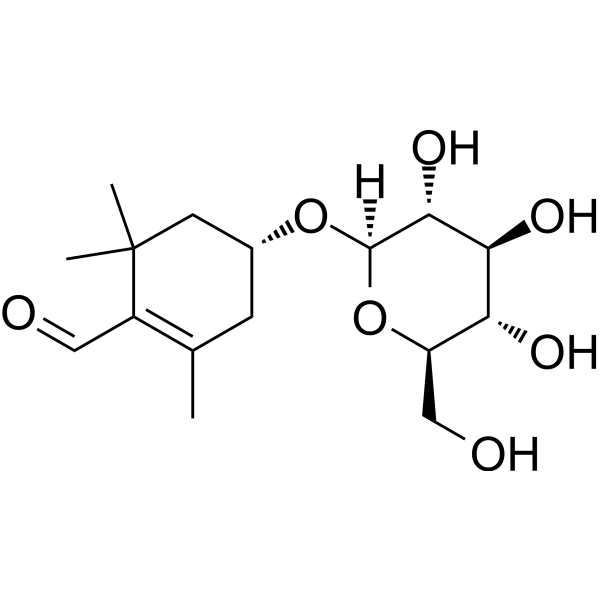
    Picrocrocin, an apocarotenoid found in Saffron. Picrocrocin shows anticancer effect. Picrocrocin exhibits growth inhibitory effects against SKMEL-2 human malignant melanoma cells .
    Picrocrocin
  • HY-P99781

    MLN-1202

    CCR Inflammation/Immunology Cancer
    Plozalizumab (MLN-1202) is a humanized anti-CCR2 IgG1 monoclonal antibody. Plozalizumab blocks the recruitment of myeloid cells to the tumor microenvironment by inhibiting the CCL2/CCR2 axis. In addition, Plozalizumab also ameliorates synovial inflammation in rheumatoid arthritis. Plozalizumab can be used in the research of malignant melanoma and bone metastasis-related cancers. Recommended isotype control: Human IgG1 kappa, Isotype Control (HY-P99001) .
    Plozalizumab
  • HY-148819A

    ADC Payload Topoisomerase Cancer
    NH2-bicyclopentane-7-MAD-MDCPT hydrochloride (Formula I) is a topoisomerase I (TOP1) inhibitor. NH2-bicyclopentane-7-MAD-MDCPT hydrochloride is applicable to the synthesis of the ADC ABBV-969. NH2-bicyclopentane-7-MAD-MDCPT hydrochloride is used in research on lung adenocarcinoma and melanoma .
    NH2-bicyclo[1.1.1]pentane-7-MAD-MDCPT hydrochloride
  • HY-N4114R

    Reference Standards Apoptosis Cancer
    Picrocrocin (Standard) is the analytical standard of Picrocrocin. This product is intended for research and analytical applications. Picrocrocin, an apocarotenoid found in Saffron. Picrocrocin shows anticancer effect. Picrocrocin exhibits growth inhibitory effects against SKMEL-2 human malignant melanoma cells .
    Picrocrocin (Standard)
  • HY-12814A

    DNA/RNA Synthesis Microtubule/Tubulin Cancer
    TH588 hydrochloride is a highly selective human MTH1 inhibitor (IC50=5 nM) with additional microtubule-targeting properties. TH588 hydrochloride interferes with mitotic progression, induces genomic 8-oxodG formation, DNA damage and cell cycle arrest, and exhibits significant cytotoxicity. Combined with phenethyl isothiocyanate, TH588 hydrochloride enhances ROS-mediated effects and effectively inhibits the growth of visceral metastases of malignant melanoma in mice. TH588 hydrochloride is widely applicable to research related to cancers, pancreatic cancer, leukemia, lymphoma, malignant melanoma and lung cancer .
    TH588 hydrochloride
  • HY-P991425

    Transmembrane Glycoprotein Cancer
    AT-1413 is a human monoclonal antibody (mAb) targeting CD43. AT-1413 induces antibody-dependent cell-mediated cytotoxicity (ADCC) in melanoma cell lines and acute myeloid leukemia (AML) cells. AT-1413 has antitumor activity in AML mouse models. AT-1413 can be used in Acute myeloid leukaemia, Breast cancer, Malignant melanoma and Myelodysplastic syndromes research. Recommended isotype control: Human IgG1 kappa, Isotype Control (HY-P99001) .
    AT-1413
  • HY-W237439

    MDM-2/p53 Cancer
    SEN205A is a fragment compound that binds to the hydrophobic pocket of human S100B (Kd=0.5-1.0 mM), which is the key region for the interaction of S100B with TRTK-12 and p53, and SEN205A can be displaced from this site by TRTK-12. SEN205A exhibits excellent in vitro ADME properties, including high metabolic stability, chemical stability, and good solubility under physiological pH conditions. SEN205A can serve as a starting fragment for structure-based optimization to develop inhibitors targeting the S100B-p53 protein-protein interaction and investigate the pathogenesis of malignant melanoma .
    SEN205A
  • HY-P991959

    CTLA-4 Inflammation/Immunology Cancer
    JMW-3B3 is a humanized IgG1λ monoclonal antibody targeting CTLA-4. JMW-3B3 selectively binds the unique C-terminal sequence of sCTLA-4 to block its immunoregulatory and immunosuppressive activity without cross-reacting with full-length CTLA-4 receptor. JMW-3B3 enhances cytokine profiles in PBMC cultures responding to lupus autoantigen-derived peptides. JMW-3B3 enhances IFN-γ production in anti-CD3 stimulated PBMC from melanoma patients at low anti-CD3 doses. JMW-3B3 can be used for the research of systemic lupus erythematosus and malignant melanoma.
    JMW-3B3
  • HY-N19312

    Apoptosis Glutathione S-transferase Topoisomerase Cancer
    Diospyrin is a dinaphthoquinone anticancer agent with pro-apoptotic (apoptosis) activity, glutathione S-transferase (Glutathione S-transferase) inhibitory activity, and topoisomerase (Topoisomerase) I inhibitory activity. Diospyrin is present in the heartwood of various Diospyros plants and can be used for research on Ehrlich ascites carcinoma, acute myeloid leukemia, chronic myeloid leukemia, mammary adenocarcinoma, cervical epithelial carcinoma, malignant cutaneous melanoma, laryngeal epidermoid carcinoma, human osteosarcoma, and human lymphoblastic carcinoma .
    Diospyrin
  • HY-P992399

    TNF Receptor NF-κB Cancer
    LBL-019 is a humanized IgG1 monoclonal antibody targeting TNFR2. LBL-019 costimulates TNFR2 and activates the NF-κB signaling pathway in an Fc crosslinking-dependent manner. LBL-019 can be used for the research of advanced malignant tumors, including hepatocellular carcinoma and melanoma. The recommended isotype control is human IgG1 kappa (HY-P99001) .
    LBL-019
  • HY-N18009

    Bacterial Infection Cancer
    1-Hydroxy-3,5-dimethoxyxanthone is a xanthone and Antibacterial agent. 1-Hydroxy-3,5-dimethoxyxanthone can be isolated from Lomatogonium rotatum. 1-Hydroxy-3,5-dimethoxyxanthone inhibits the growth of Pseudomonas aeruginosa ATCC27853 and Escherichia coli ATCC25923 with an MIC of 640 μg/mL. 1-Hydroxy-3,5-dimethoxyxanthone exhibits anticancer activity against cervical cancer, breast cancer, melanoma, liver cancer, and gastric cancer .
    1-Hydroxy-3,5-dimethoxyxanthone
  • HY-P992200

    Transmembrane Glycoprotein PI3K Akt p38 MAPK NF-κB MMP Apoptosis Caspase Bcl-2 Family Cardiovascular Disease Cancer
    Anti-CD146 Antibody (AA98) is an antibody targeting CD146 and an angiogenesis inhibitor. Anti-CD146 Antibody (AA98) blocks the dimerization of CD146 as well as its downstream PI3K/AKT, p38 MAPK and NF-κB signaling pathways; it inhibits the expression of MMP9 and ICAM1, epithelial-mesenchymal transition (EMT), and the proliferation, migration and tube formation of endothelial cells. Anti-CD146 Antibody (AA98) enhances radiation-induced cancer cell apoptosis and survival inhibition, reduces tumor microvessel density, and suppresses tumor growth, invasion and vasculogenic mimicry. Anti-CD146 Antibody (AA98) can be used in research related to cervical cancer, liver cancer, malignant phyllodes tumor of the breast, uveal melanoma, leiomyosarcoma, pancreatic cancer, other tumors and angiogenesis .
    Anti-CD146 Antibody (AA98)

Inquiry Online

Your information is safe with us. * Required Fields.

Salutation


Country or Region *

Applicant Name *


Organization Name *

Department *


Email Address *


Product Name *

Cat. No.


Requested quantity *

Phone Number *


Remarks

Inquiry Online

Inquiry Information

Product Name:
Cat. No.:
Quantity:
MCE Japan Authorized Agent: