
1. Search Result
Search Result
Results for "

human melanoma

" in MedChemExpress (MCE) Product Catalog:

171

Inhibitors & Agonists

3

Fluorescent Dyes

3

Biochemical Assay Reagents

21

Peptides

36

Inhibitory Antibodies

34

Natural
Products

21

Protéines recombinantes

16

Antibodies

6

Oligonucleotides

Targets Recommended:
Cat. No. Nom du produit Target Áreas de investigación Chemical Structure
  • HY-P9901
    Ipilimumab
    4 Publications Verification

    MDX-010; BMS-734016

    CTLA-4 Cancer
    Ipilimumab is a fully human monoclonal antibody IgG1κ that blocks the inhibitory receptor cytotoxic T lymphocyte antigen 4 (CTLA-4) on T cells. Ipilimumab can be used in unresectable or metastatic melanoma (MM) studies .
    Ipilimumab
  • HY-P99205

    ADC Antibody Cancer
    Glembatumumab is a fully human IgG2 monoclonal antibody directed against the extracellular structural domain of GPNMB expressed in human breast cancer and melanoma. Glembatumumab can be coupled to the microtubule inhibitor monomethyl auristatin E to form glembatumumab vedotin. Glembatumumab vedotin is an antibody-agent coupling (ADC) with antitumor activity .
    Glembatumumab
  • HY-N4114

    Apoptosis Cancer
    Picrocrocin, an apocarotenoid found in Saffron. Picrocrocin shows anticancer effect. Picrocrocin exhibits growth inhibitory effects against SKMEL-2 human malignant melanoma cells .
    Picrocrocin
  • HY-13241A
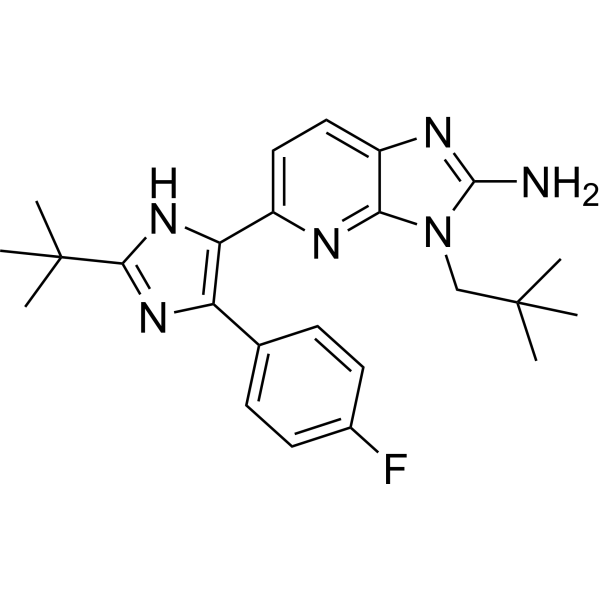
    Ralimetinib
    Maximum Cited Publications
    15 Publications Verification

    LY2228820

    p38 MAPK Autophagy Cancer
    Ralimetinib is an ATP-competitive p38α and p38β MAPK inhibitor with an IC50 of 5.3 nmol/L against human p38α and an IC50 of 3.2 nmol/L against human p38β. Ralimetinib slows tumor growth in preclinical in vivo cancer models, exhibits oral bioavailability in mice, and achieves sustained target inhibition for 4 to 8 h. Ralimetinib is applicable for research on melanoma, non-small cell lung cancer, ovarian cancer, glioma, multiple myeloma, breast cancer, renal cancer, and head and neck squamous cell carcinoma .
    Ralimetinib
  • HY-P9918

    Ticilimumab; CP-675206

    CTLA-4 Inflammation/Immunology Cancer
    Tremelimumab (Ticilimumab) is a fully human monoclonal antibody specific for cytotoxic T-lymphocyte antigen-4 (CTLA-4) and can be used for metastatic melanoma research .
    Tremelimumab
  • HY-154954
    Ogremorphin
    2 Publications Verification

    OGM; GPR68-IN-1; OGM-8345

    GPR68 Ferroptosis Inflammation/Immunology Cancer
    Ogremorphin (OGM) is a G protein coupled sensor GPR68 inhibitor with anti-inflammatory and anti-tumor activities. Ogremorphin can inhibit the migration of human melanoma cells and induce ferroptosis in glioblastoma cells .
    Ogremorphin
  • HY-160406

    STING IFNAR Interleukin Related Inflammation/Immunology Cancer
    SNX281 is a selective STING agonist, with IC50 values of 4.1, 4.5, 10.7, and 3.7 μM against human, mouse, rat, and monkey STING, respectively. SNX281 undergoes homodimerization at the STING binding site, triggering a conformational shift of STING from an inactive open state to an active closed state, thereby driving downstream STING-dependent signaling pathways. SNX281 induces type I interferons, IFN-β, TNF-α, IL-6, cytokine release, T cell responses, and long-lasting immune memory. SNX281 exhibits anti-tumor activity and is applicable to research related to colorectal cancer, melanoma, advanced solid tumors, lymphoma, and ovarian cancer .
    SNX281
  • HY-159069

    Toll-like Receptor (TLR) TNF Receptor Connexin Infection Cancer
    Zymosan (ZM), 95% is a yeast cell wall-derived carbohydrate-rich preparation and immunomodulator. Zymosan (ZM), 95% binds to and activates TLR-2, TLR-4, and Dectin-1 receptor to trigger downstream signaling pathways. Zymosan (ZM), 95% upregulates TLR-2, TLR-4, and TNF-α mRNA expression, increases serum TNF-α levels, and stimulates splenocyte number and viability in mice. Zymosan (ZM), 95% attenuates melanoma growth progression, modulates macrophage marker gene expression, and mediates phagocytosis, ROS generation, and cytokine production. Zymosan (ZM), 95% reduces Connexin 43 protein and mRNA levels, inhibits gap junctional intercellular communication, and induces proinflammatory factor production in human corneal cells. Zymosan (ZM), 95% induces peritoneal inflammation in mice, functions as a drug carrier, and supports fibroblast cell attachment in hydrogel formulations. Zymosan (ZM), 95% can be used for the research of melanoma, tumors, fungal keratitis, ocular surface inflammatory disorders, and peritoneal inflammation .
    Zymosan (ZM), 95%
  • HY-156483
    TT-012
    2 Publications Verification

    Microphthalmia Associated Transcription Factor (MITF) Cancer
    TT-012 is a MITF inhibitor with a human MITF IC50 of 13.1 nM and a human MITF Kd value of 15.5 nM. TT-012 reduces mRNA levels of MITF downstream genes linked to melanosome biogenesis, cell survival, and proliferation, and upregulates cell cycle-inhibiting genes. TT-012 can be used for the research of melanoma[1][2][3].
    TT-012
  • HY-P99807

    BCD-100

    PD-1/PD-L1 Cancer
    Prolgolimab (BCD-100) is a human IgG1 anti-PD-1 monoclonal antibody containing the Fc-silencing 'LALA' mutation. Prolgolimab can be used for the research of advanced melanoma .
    Prolgolimab
  • HY-N2571

    Reverse Transcriptase HIV Opioid Receptor Infection Neurological Disease Cancer
    Corydine is a HIV-1 reverse transcriptase inhibitor and μ-opioid receptor (MOR) agonist, with an IC50 of 356.7 μg/mL against HIV-1 reverse transcriptase, an EC50 of 0.51 μM for MOR, and a Ki of 2.82 μM for MOR. Corydine produces antinociceptive effects by inhibiting acetic acid-induced writhing behavior in a MOR-dependent manner. Corydine inhibits the proliferation of cancer cells, mitogen-stimulated lymphocytes and IL-2-dependent cells. Corydine can be used in studies related to human immunodeficiency virus infection, visceral pain, leukemia, melanoma, bladder cancer and colon adenocarcinoma .
    Corydine
  • HY-13718

    H-Glu-Trp-OH; L-Glutamyl-L-tryptophan

    VEGFR HCV Endogenous Metabolite Infection Cardiovascular Disease Inflammation/Immunology Cancer
    Oglufanide (H-Glu-Trp-OH) is a dipeptide immunomodulator isolated from calf thymus. Oglufanide inhibits vascular endothelial growth factor (VEGF). Oglufanide can stimulate the immune response to hepatitic C virus (HCV) and intracellular bacterial infections. Oglufanide shows antitumor and anti-angiogenesis activities .
    Oglufanide
  • HY-155108B
    OATD-02 hydrochloride
    1 Publications Verification

    Arginase Cancer
    OATD-02 hydrochloride is the hydrochloride salt form of OATD-02 (HY-155108). OATD-02 hydrochloride an orally active, competitive, reversible, noncovalent dual inhibitor of Arginase1 and Arginase2. OATD-02 hydrochloride is a slow offset inhibitor, blocking intracellular arginases with IC50s of 20 nM (hARG1), 39 nM (hARG2), 39 nM (mARG1), and 28 nM (rARG1), respectively. OATD-02 hydrochloride bolishes tumor immunosuppression induced by both arginases. OATD-02 hydrochloride can be used for melanoma study .
    OATD-02 hydrochloride
  • HY-P1585
    Gp100 (25-33), human
    1 Publications Verification

    Hgp100 (25-33)

    MHC Cancer
    Gp100 (25-33), human (Hgp100 (25-33)) is the amino acids 25-33 fragment of the human melanoma antigen. Gp100 (25-33), human is a 9-amino acid (AA) epitope restricted by MHC class I H-2D b and recognized by the T cells. Gp100 (25-33), human has immunogenicity and induces specific T cells. Gp100 (25-33), human can be used for the cancer research, such as melanoma .
    Gp100 (25-33), human
  • HY-100948

    Myosin Cancer
    ATM-3507 is a potent tropomyosin inhibitor with IC50s from 3.83-6.84 μM in human melanoma cell lines.
    ATM-3507
  • HY-153863

    PROTACs MEK Raf Cancer
    MS934 is a novel improved VHL-recruiting MEK 1/2 PROTAC degrader. MS934 also degrades CRAF. MS934 can be used for the research of variety of human cancers, such as melanoma, nonsmall cell lung cancer (NSCLC), colorectal cancer, primary brain tumors, and hepatocellular carcinoma (Pink: Target protein ligand (HY-168288); Black: linker (HY-168289); Blue: E3 ligase ligand (HY-112078)) .
    MS934
  • HY-P99266

    Anti-human CD4 Recombinant Antibody

    Transmembrane Glycoprotein Inflammation/Immunology Cancer
    Zanolimumab (Anti-Human CD4 Recombinant Antibody) is a fully human monoclonal antibody targets CD4. Zanolimumab effectively inhibits T-cell receptor (TCR) signal transduction. Zanolimumab can be used for the research of heumatoid arthritis, psoriasis, melanoma, cutaneous and peripheral T-cell lymphoma .
    Zanolimumab
  • HY-155108

    Arginase Cancer
    OATD-02 is an orally active, competitive, reversible, noncovalent dual inhibitor of Arginase1 and 2. OATD-02 is a slow offset inhibitor, blocking intracellular arginases with IC50s of 20 nM (hARG1), 39 nM (hARG2), 39 nM (mARG1), and 28 nM (rARG1), respectively. OATD-02 abolishes tumor immunosuppression induced by both arginases. OATD-02 can be used for melanoma study .
    OATD-02
  • HY-170510

    Galectin Cancer
    GB2095 is an orally active and selective galectin-3 inhibitor. GB2095 shows superior selectivity for both human (KD = 0.036 μM) and mouse galectin-3 (KD = 0.35 μM) over other galectins (such as h-Gal-1/4N/4C/8N/8C/9N/9C and m-galectin-1). GB2095 inhibits tumor growth in syngeneic mouse models of breast and melanoma cancers. GB2095 can be used for breast and melanoma cancer research .
    GB2095
  • HY-142118A
    Trabedersen sodium
    1 Publications Verification

    AP 12009 sodium

    TGF-beta/Smad Cancer
    Trabedersen (AP 12009) sodium is an orally active synthetic antisense phosphorothioate oligodeoxynucleotide that selectively targets human TGFβ2 mRNA. Trabedersen sodium blocks TGFβ2 protein production, enters the nucleus without a transfection vector, and exerts dose-dependent antitumor effects. By reversing TGFβ2-induced immunosuppression and enhancing immune cytotoxicity, Trabedersen sodium exhibits significant antiproliferative, antimigratory, and antimetastatic activities, with favorable safety profiles. Trabedersen sodium is widely used in research related to various solid tumors, including anaplastic astrocytoma, glioblastoma, colorectal tumor, and melanoma .
    Trabedersen sodium
  • HY-P1585A
    Gp100 (25-33), human TFA
    1 Publications Verification

    Hgp100 (25-33) TFA

    MHC Cancer
    Gp100 (25-33), human TFA (Hgp100 (25-33) (TFA)) is the amino acids 25-33 fragment of the human melanoma antigen. Gp100 (25-33), human TFA is a 9-amino acid (AA) epitope restricted by MHC class I H-2D b and recognized by the T cells. Gp100 (25-33), human TFA has immunogenicity and induces specific T cells. Gp100 (25-33), human TFA can be used for the cancer research, such as melanoma .
    Gp100 (25-33), human TFA
  • HY-P99622

    IMC-20D7S

    Tyrosinase Cancer
    Flanvotumab (IMC-20D7S) is a human monoclonal antibody targeting to tyrosinase-related protein (TYRP1), specifically expressed in melanocytes and melanoma cells. Flanvotumab acts function via natural killing-mediated antibody-dependent cell-mediated cytotoxicity (ADCC). Flanvotumab has potent anti-tumor activity and good tolerance .
    Flanvotumab
  • HY-P3742

    Tyrosinase MHC Cancer
    Tyrosinase (192-200), human mouse is a HLA-B*4403-restricted tyrosinase epitope with affinity for HLA-B4403 and HLA-B4402. Tyrosinase (192-200), human mouse binds to HLA-B*4403 to form a complex, which is recognized by the autologous cytotoxic T lymphocyte clone 22/31 derived from melanoma. Tyrosinase (192-200), human mouse binds to HLA-B4402 to form a complex, which is recognized by the CTL clone 329B/5 derived from healthy HLA-B4402 donors. Tyrosinase (192-200), human mouse is applicable to melanoma-related research .
    Tyrosinase (192-200), human mouse
  • HY-152194

    Tyrosinase Cancer
    Tyrosinase-IN-10 (Compound 23) is a partially competitive tyrosinase inhibitor with an IC50 of 1.6 μM against tyrosinase activity from human melanoma cell lysates .
    Tyrosinase-IN-10
  • HY-102010

    (+)-Pancratistatin

    Apoptosis Cancer
    Pancratistatin is an isoquinoline alkaloid that can be isolated from Hymenocallis littoralis. Pancratistatin induces apoptosis of human melanoma cells. Pancratistatin can be used for the research of neuroblastoma, leukemia and breast cancer .
    Pancratistatin
  • HY-P99760

    BCD-145

    CTLA-4 Cancer
    Nurulimab (BCD-145) is an anti-cytotoxic T lymphocyte antigen-4 (anti-CTLA-4) human monoclonal antibody. Nurulimab can be can be used in research of melanoma .
    Nurulimab
  • HY-P991455

    TNF Receptor Cancer
    PTX-35 is a human IgG monoclonal antibody (mAb) targeting TNFRSF25. PTX-35 reduces the suppressive activity of regulatory T cells and enhances CD4+ T cell effector responses in a mouse melanoma model. PTX-35 can be used in Islet cell transplant rejection and Solid tumours research. Recommended isotype control: Human IgG1 lambda2, Isotype Control (HY-P990096) .
    PTX-35
  • HY-P990861

    Transmembrane Glycoprotein Infection Inflammation/Immunology Cancer
    Anti-CD4 Antibody (OKT-4) is a kind of mouse IgG2b κ chimeric antibody inhibitor, targeting to human CD4. Anti-CD4 Antibody (OKT-4) can deplete T cells. Anti-CD4 Antibody (OKT-4) can be used for the researches of cancer, infection and immunology, such as melanoma and adenovirus infection .
    Anti-CD4 Antibody (OKT-4)
  • HY-157343A

    Apoptosis Mitochondrial Metabolism Caspase Neurological Disease Cancer
    GD3 Ganglioside sodium is an Apoptosis inducer and biomarker for mouse neural stem cells. GD3 Ganglioside sodium expresses in neural stem cells and the subventricular zone of the adult mouse brain. GD3 Ganglioside sodium targets the mitochondrial permeability transition pore complex, induces pore opening, dissipates mitochondrial transmembrane potential, triggers Mitochondrial swelling, releases pro-apoptotic factors, and activates Caspase-9. GD3 Ganglioside sodium is applicable to research related to glioblastoma .
    GD3 Ganglioside sodium
  • HY-157343B

    Apoptosis Mitochondrial Metabolism Caspase Neurological Disease Cancer
    GD3 Ganglioside ammonium is an Apoptosis inducer and biomarker for mouse neural stem cells. GD3 Ganglioside ammonium expresses in neural stem cells and the subventricular zone of the adult mouse brain. GD3 Ganglioside ammonium targets the mitochondrial permeability transition pore complex, induces pore opening, dissipates mitochondrial transmembrane potential, triggers Mitochondrial swelling, releases pro-apoptotic factors, and activates Caspase-9. GD3 Ganglioside ammonium is applicable to research related to glioblastoma .
    GD3 Ganglioside ammonium
  • HY-16676

    4-epi-Docetaxel; 7-Epidocetaxel; 7-Epitaxotere

    Drug Metabolite Cytochrome P450 Cancer
    7-Epi-docetaxel (4-epi-Docetaxel; 7-Epidocetaxel; 7-Epitaxotere) is the major C7 epimeric impurity/in vivo metabolite of Docetaxel (HY-B0011). 7-Epi-docetaxel acts as a potent allosteric activator of rhCYP1B1. 7-Epi-docetaxel exhibits certain cell line-specific anti-migratory activity . 7-Epi-docetaxel can be used in research related to melanoma and lung adenocarcinoma .
    7-Epi-docetaxel
  • HY-P991447

    VISTA Cancer
    Anti-VSIR/VISTA Antibody (SG7) is a human monoclonal antibody (mAb) targeting VISTA/B7-H5. Anti-VSIR/VISTA Antibody (SG7) inhibits VISTA function and prevents PSGL-1 and VSIG3 from binding to VISTA. Anti-VSIR/VISTA Antibody (SG7) has anti-tumor activity in the mouse B16F10 melanoma model. Recommended isotype control: Human IgG1 kappa, Isotype Control (HY-P99001) .
    Anti-VSIR/VISTA Antibody (SG7)
  • HY-172200

    PD-1/PD-L1 HDAC Inflammation/Immunology Cancer
    PD-L1/HDAC6-IN-1 is an orally active dual inhibitor of PD-L1 and HDAC6, with IC50 values of 26.8 nM and 78 nM, respectively. PD-L1/HDAC6-IN-1 binds to human and murine PD-L1 proteins with high affinity, while it reduces STAT3 phosphorylation and downregulates PD-L1 expression by inhibiting HDAC6, thus blocking the PD-1/PD-L1 interaction. PD-L1/HDAC6-IN-1 exhibits potent anti-tumor activity in a mouse melanoma model. PD-L1/HDAC6-IN-1 is suitable for research on tumor immune regulation related to melanoma .
    PD-L1/HDAC6-IN-1
  • HY-N4114R

    Reference Standards Apoptosis Cancer
    Picrocrocin (Standard) is the analytical standard of Picrocrocin. This product is intended for research and analytical applications. Picrocrocin, an apocarotenoid found in Saffron. Picrocrocin shows anticancer effect. Picrocrocin exhibits growth inhibitory effects against SKMEL-2 human malignant melanoma cells .
    Picrocrocin (Standard)
  • HY-111604

    Others Cancer
    Turbinaric acid is a kind of secosqualene carboxylic acid. Turbinaric acid exhibits cytotoxicity against mouse melanoma cells and human colon cancer cells. Turbinaric acid can be used as a chemical marker for T. conoides. Turbinaric acid can be used for research on melanoma and colon cancer .
    Turbinaric acid
  • HY-100948B

    Myosin Cancer
    ATM-3507 trihydrochloride is a potent tropomyosin inhibitor with IC50s from 3.83-6.84 μM in human melanoma cell lines.
    ATM-3507 trihydrochloride
  • HY-P990149

    Tyrosinase Cancer
    Anti-Mouse/Human TYRP1 Antibody (TA99) is a mouse-derived IgG2a κ type antibody inhibitor, targeting to mouse/human TYRP1. Anti-Mouse/Human TYRP1 Antibody (TA99) binds to Tyrp1 (tyrosinase related protein-1) on tumor. Anti-Mouse/Human TYRP1 Antibody (TA99) enhances infiltration of the tumor by CD8 + T cells. Anti-Mouse/Human TYRP1 Antibody (TA99) can be used for the research of melanoma .
    Anti-Mouse/Human TYRP1 Antibody (TA99)
  • HY-119398

    Amyloid-β Cholinesterase (ChE) Apoptosis Neurological Disease Cancer
    Lanuginosine is an alkaloid. Lanuginosine can be isolated from the stems of Xylopia laevigata (Annonaceae) and the leaves of Magnolia grandiflora. Lanuginosine induces Apoptosis. Lanuginosine inhibits AChE (IC50: 10.9 μM). Lanuginosine inhibits aggregation. Lanuginosine exhibits anticancer activity against hepatocellular carcinoma, human promyelocytic leukemia, human chronic myeloid leukemia, melanoma, and brain tumors. Lanuginosine can be used in the research of Alzheimer's disease .
    Lanuginosine
  • HY-E70649

    Raf Cancer
    BRAF is a member of the Raf kinase family of growth signal transduction protein kinases. BRAF has multiple mutants. BRAF V600E is commonly found in melanoma. BRAF V600E Recombinant Human Active Protein Kinase is a recombinant BRAF V600E protein that can be used to study BRAF V600E-related functions .
    BRAF V600E Recombinant Human Active Protein Kinase
  • HY-P991243

    EGFR Akt Cancer
    MP-RM-1 is an antibody-based, non-competitive ErbB-3 inhibitor with a Kd value of 32.7 nM. MP-RM-1 inhibits both ligand-dependent and ligand-independent ErbB-3 activation, blocks ErbB-2/ErbB-3 heterodimerization, induces ErbB-3 internalization and degradation, and suppresses the phosphorylation of downstream Akt. MP-RM-1 exerts its antagonistic effect through a non-competitive mechanism. MP-RM-1 inhibits tumor growth in melanoma and prostate cancer xenograft models in nude mice and reduces the proliferative activity of tumor cells .
    MP-RM-1
  • HY-120241

    K 251-1

    Phosphodiesterase (PDE) Cancer
    Reticulol (K 251-1) is an inhibitor of cyclic adenosine 3', 5'-monophosphate phosphodiesterase. Reticulol shows antitumor activity independent with cell cycle arrest or apoptosis. Reticulol inhibits cell growth of murine melanoma cells and human lung tumor cells. Reticulol protects its lung metastasis via the bloodstream by inhibiting the growth of B16F10 melanoma .
    Reticulol
  • HY-P1796A

    Transmembrane Glycoprotein Cancer
    Gp100 (619-627) acetate is amino acids 619 to 627 fragment of human melanoma antigen glycoprotein 100 (gp100). Gp100 has been a widely studied target for melanoma immunotherapy .
    Gp100 (619-627) acetate
  • HY-163326

    Tyrosinase Cancer
    Tyrosinase-IN-25 (compound 1l) is an inhibitor of tyrosinase and melanin biosynthesis in human melanoma cells .
    Tyrosinase-IN-25
  • HY-169195

    Carbonic Anhydrase Cancer
    CAIX/CAXII-IN-3 (compound 11) is an inhibitor of CAIX/CAXII, with an IC50 value of less than 65 nM. CAIX/CAXII-IN-3 inhibits the proliferation of human melanoma cells .
    CAIX/CAXII-IN-3
  • HY-P991425

    Transmembrane Glycoprotein Cancer
    AT-1413 is a human monoclonal antibody (mAb) targeting CD43. AT-1413 induces antibody-dependent cell-mediated cytotoxicity (ADCC) in melanoma cell lines and acute myeloid leukemia (AML) cells. AT-1413 has antitumor activity in AML mouse models. AT-1413 can be used in Acute myeloid leukaemia, Breast cancer, Malignant melanoma and Myelodysplastic syndromes research. Recommended isotype control: Human IgG1 kappa, Isotype Control (HY-P99001) .
    AT-1413
  • HY-N14435

    Antibiotic Fungal Infection
    Pradimicin Q is an antibiotic. The cytotoxicity (IC50) to human colon HCT-116 cells and murine melanoma B16-F10 cells are 75 and 100 μg/mL, respectively .
    Pradimicin Q
  • HY-N14095

    Bacterial HIV Infection Cancer
    Curromycin A has antibacterial activity against Gram-positive bacteria such as Bacillus subtilis. Curromycin A can inhibit the replication of human immunodeficiency virus (HIV), inhibit mouse melanoma B16 and leukemia P388 cells .
    Curromycin A
  • HY-174727

    mRNA Inflammation/Immunology
    Human CXCR2 mRNA encodes the human C-X-C motif chemokine receptor 2 (CXCR2) protein, a member of the G-protein-coupled receptor family. CXCR2 is a receptor for interleukin 8 (IL8). It binds to IL8 with high affinity, and transduces the signal through a G-protein activated second messenger system. This receptor also binds to chemokine (C-X-C motif) ligand 1 (CXCL1/MGSA), a protein with melanoma growth stimulating activity, and has been shown to be a major component required for serum-dependent melanoma cell growth.
    Human CXCR2 mRNA
  • HY-N14110

    Bacterial HIV Infection
    Curromycin B has antibacterial activity against Gram-positive bacteria such as Bacillus subtilis. Curromycin B can inhibit the replication of human immunodeficiency virus (HIV), inhibit mouse melanoma B16 and leukemia P388 cells .
    Curromycin B
  • HY-114585

    Bacterial Infection Cancer
    Sperabillin A is an antibacterial agent against gram-positive and gram-negative bacteria. Sperabillin A shows strong inhibition of human umbilical vein endothelial (HUVE) cell proliferation. Sperabillin A also shows anti-tumor acfivity against B16 melanoma in mouse .
    Sperabillin A

Demande en ligne

Your information is safe with us. * Required Fields.

Civilité


Country or Region *

Nom du demandeur *


Nom de l'organisation *

Department *


Adresse e-mail *


Nom du produit *

Cat. No.


Requested quantity *

Numéro de téléphone *


Remarques

Demande en ligne

Inquiry Information

Nom du produit:
Cat. No.:
Quantité:
MCE Japan Authorized Agent:

