

1. Search Result
Search Result
Results for "

hydrogenation reactions

" in MedChemExpress (MCE) Product Catalog:

44

Inhibitors & Agonists

1

Screening Libraries

2

Fluorescent Dyes

10

Biochemical Assay Reagents

3

Natural
Products

1

Isotope-Labeled Compounds

1

Click Chemistry

1

Oligonucleotides

Cat. No. Product Name Target Research Areas Chemical Structure
  • HY-113324
    NADPH
    15+ Cited Publications

    Endogenous Metabolite Cancer
    NADPH is a coenzyme of glutathione reductase (GR), thioredoxin reductase (TrxR) and NADPH oxidase (NOX), and participates in redox reactions as a hydrogen donor. NADPH has the characteristic of selectively participating in the regulation of cellular redox homeostasis. NADPH exerts antioxidant activity and resists reactive oxygen species (ROS) damage by providing reducing equivalents for the regeneration of glutathione (GSH) and thioredoxin (Trx); at the same time, it acts as a substrate of NOX to generate superoxide anions, mediating oxidative stress and immune response. NADPH participates in maintaining the intracellular reducing environment, biosynthesis and regulating gene expression (such as the Nrf2 pathway), and is mainly used in the study of oxidative stress-related diseases (such as cardiovascular diseases, neurodegenerative diseases, cancer) and immune regulation mechanisms .
    NADPH
  • HY-15914

    DCHBS

    Fluorescent Dye Others
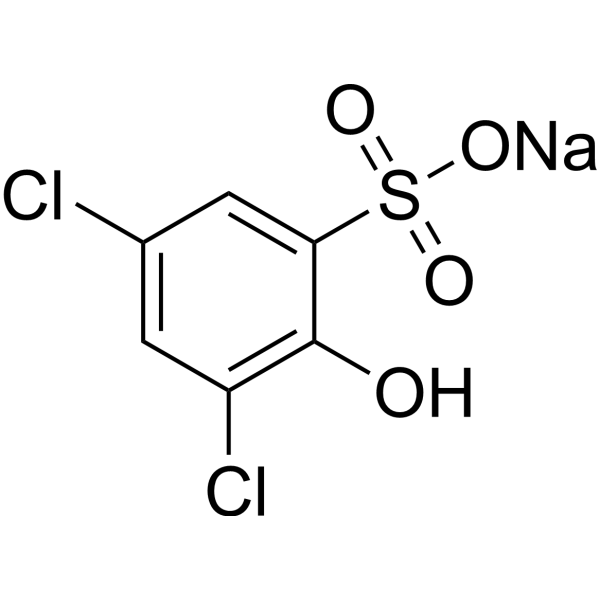
    DHBS (3, 5-dichloro-2-hydroxybenzenesulfonate) is used in conjunction with 4-aminoantipyrine (4-AAP) (HY-W100990) and hydrogen peroxide (H2O2) for chromogenic quantitation of peroxidase in coupled enzymatic reactions. Component of Trinder reagent for use with peroxidase to measure generation of hydrogen peroxide in automated systems .
    DHBS
  • HY-145442

    Adenosine Deaminase Others
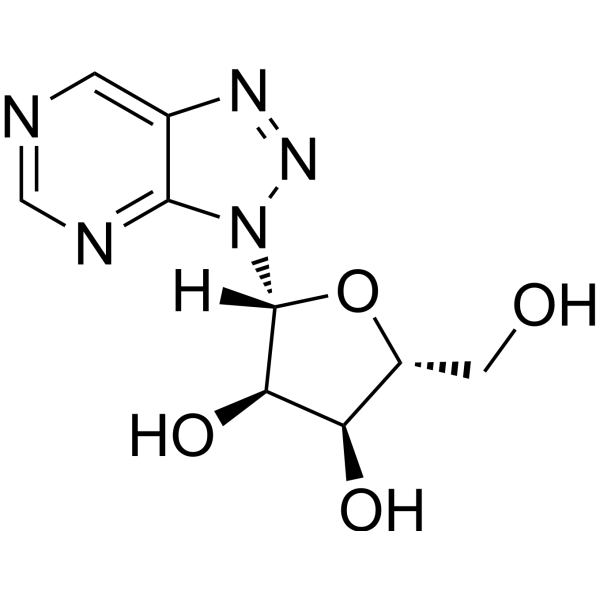
    8-Azanebularine, a compound with hydrogen in place of the C6 amino group, inhibits the ADAR2 reaction at high concentrations (IC50=15 mM). 8-Azanebularine is incorporated into an RNA structure recognized by human ADAR2 results in high-affinity binding (KD=2 nM). 8-Azanebularine can be used for the research of ADAR-catalyzed RNA-editing reaction .
    8-Azanebularine
  • HY-P2833

    GSH-Px; EC 1.11.1.9

    Glutathione Peroxidase Metabolic Disease
    Glutathione Peroxidase (GSH-Px; EC 1.11.1.9) belongs to the peroxidase family and is commonly used in biochemical research. Glutathione Peroxidase can catalyze reduced glutathione (GSH) to form a disulfide bridge with another glutathione molecule, convert it into oxidized glutathione (GSSG), and react with hydrogen peroxide or lipid peroxide reaction, reducing it to H2O. Glutathione Peroxidase is an effective antioxidant against oxidative stress .
    Glutathione Peroxidase
  • HY-W127776

    Ethylenediaminetetraacetic acid zinc disodium tetrahydrate

    Biochemical Assay Reagents Others
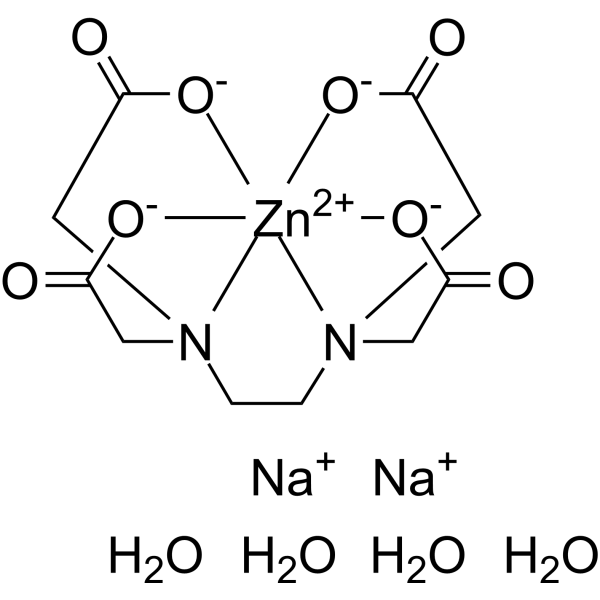
    Zn(II)-EDTA (Ethylenediaminetetraacetic acid zinc) disodium tetrahydrate is a coordinating agent. Zn(II)-EDTA disodium tetrahydrate coordinates with Zn 2+ to modify its solvated structure, provides pre-synthesized EDTA-Zn complexes that release Zn 2+ to repair zinc anode defects under interfacial electric field, adsorbs onto zinc anode surface to block oxygen and water molecules, inhibits corrosion and hydrogen evolution reactions, promotes uniform Zn 2+ deposition, suppresses zinc dendrite formation, and modulates the hydrogen bonding network within the electrolyte. Zn(II)-EDTA disodium tetrahydrate acts as an electrolyte additive to enhance reversibility and stability of zinc anodes in aqueous zinc-ion batteries .
    Zn(Ⅱ)-EDTA disodium tetrahydrate
  • HY-D1157
    HKPerox-2
    5 Publications Verification

    Fluorescent Dye Reactive Oxygen Species (ROS) Others
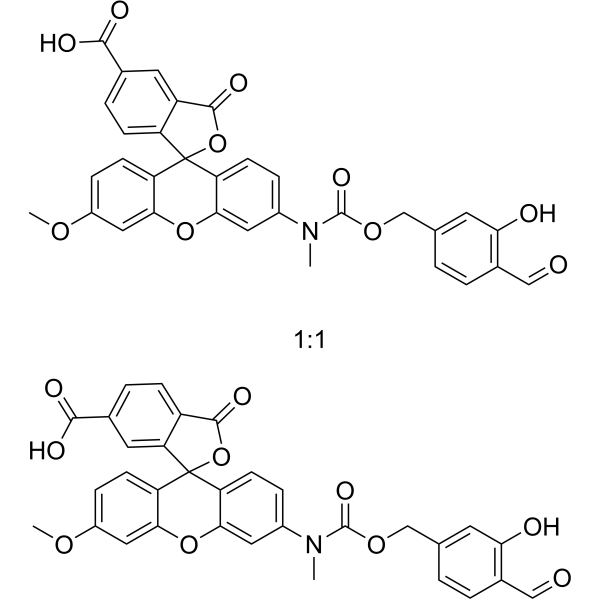
    HKPerox-2 is a highly sensitive green fluorescent probe for the specific detection of H2O2 in living cells with a maximum excitation wavelength and emission wavelength of 520 nm and 543 nm, respectively .
    HKPerox-2
  • HY-W011548

    Nucleoside Antimetabolite/Analog Others
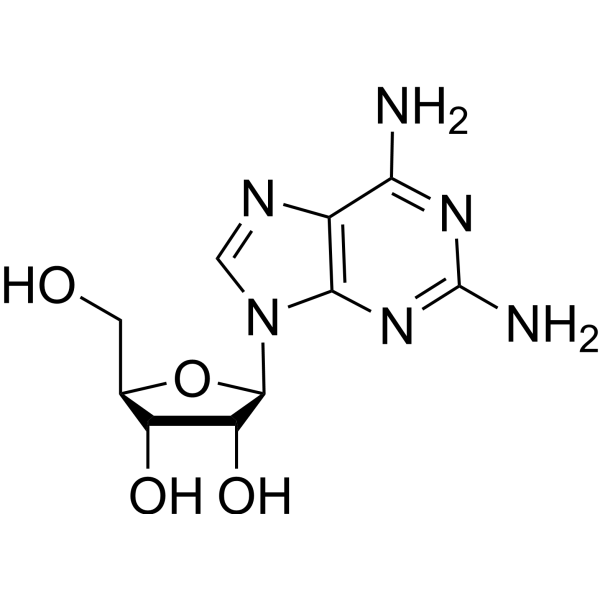
    2-Aminoadenosine is a modified adenine base and adenosine analog that stabilizes RNA duplexes and enhances template-directed nucleotide condensation reactions. 2-Aminoadenosine forms three hydrogen bonds with uracil to increase the melting temperature of hybrid strands, thereby stabilizing uracil-containing RNA duplexes .
    2-Aminoadenosine
  • HY-110128

    SF7-AM

    Fluorescent Dye Others
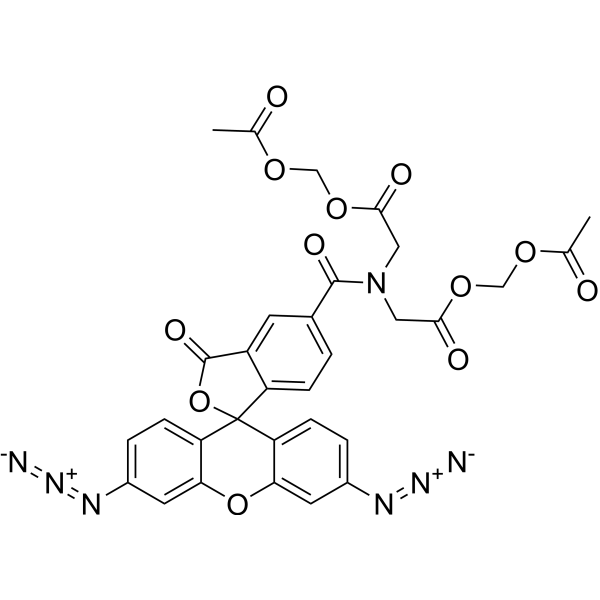
    Sulfidefluor 7-AM is a stable hydrogen sulphide (H2S) fluorescent probe . Sulfidefluor 7-AM is a click chemistry reagent, it contains an Azide group and can undergo copper-catalyzed azide-alkyne cycloaddition reaction (CuAAc) with molecules containing Alkyne groups. It can also undergo strain-promoted alkyne-azide cycloaddition (SPAAC) reactions with molecules containing DBCO or BCN groups.
    Sulfidefluor 7-AM
  • HY-W016618

    Ethyl benzoylformate; Phenylglyoxylic acid ethyl ester

    Drug Intermediate Biochemical Assay Reagents Carboxylesterase (CES) Others
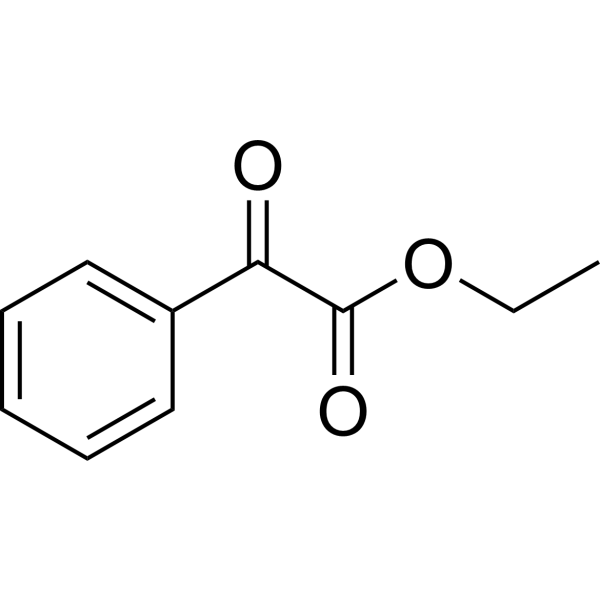
    Ethyl phenylglyoxylate (Ethyl benzoylformate), the ethyl ester of phenylglyoxylic acid, is used as a synthetic reagent. Ethyl phenylglyoxylate is also a poor substrate but a potent inhibitor of chicken liver carboxylesterase. Additionally, Ethyl phenylglyoxylate exhibits photoreactivity, where its excited triplet carbonyl can initiate intermolecular hydrogen abstraction, radical coupling and cross-linking reactions .
    Ethyl phenylglyoxylate
  • HY-24312

    Biochemical Assay Reagents Others
    AD-mix-α is a mixture of organic compounds, commonly used to distinguish and identify asymmetric carbon atoms in chiral compounds. It consists of compounds containing catalytically active metals and chiral ligands. AD-mix-α is widely used in various organic synthesis reactions, such as hydrogenation, addition, and carbonylation reactions, to increase yield and reduce the formation of side reaction products. Although it has no direct application in the medical field, it plays an important role in the pharmaceutical industry and chemical research.
    AD-mix-α
  • HY-75070

    Biochemical Assay Reagents Others
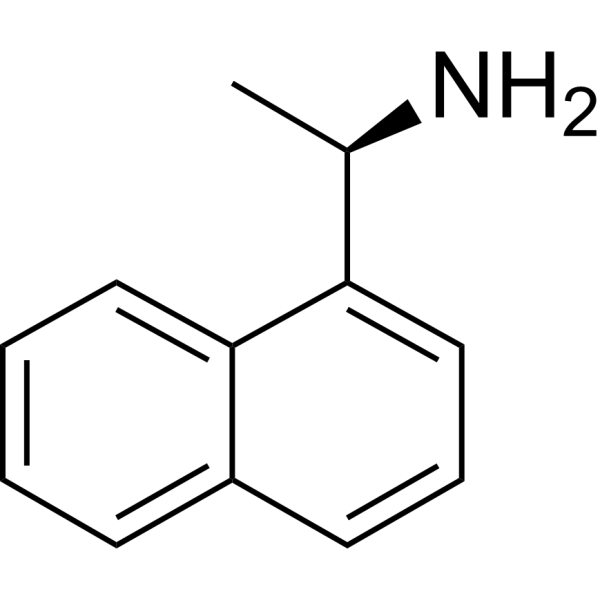
    (+)-1-(1-Naphthyl)ethylamine ((+)-1-(1-NEA)) is a chiral modifier used to introduce enantioselectivity in catalytic hydrogenation reactions. 1-NEA can undergo H-D exchange with D2 in solution to form N?D bonds. That is, 1-NEA can complete Pt surface adsorption and protonation through amine N atoms, indicating that NEA molecules have the potential to impart enantioselectivity to Pt hydrogenation catalysts .
    (+)-1-(1-Naphthyl)ethylamine
  • HY-30014
    4-Bromo-7-azaindole
    1 Publications Verification

    Drug Intermediate Others
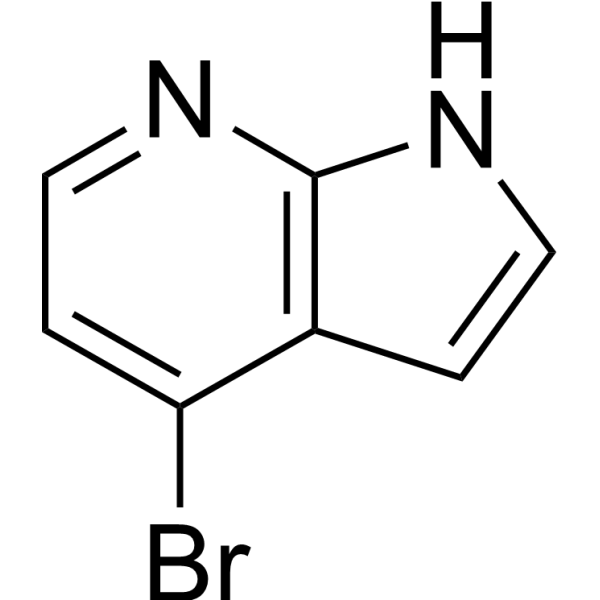
    4-Bromo-7-azaindole is a brominated derivative of 7-azaindole. 4-Bromo-7-azaindole serves as a substrate for palladium-catalyzed C-N and C-O cross-coupling reactions, reacting with amides, amines, amino acid esters and phenols .
    4-Bromo-7-azaindole
  • HY-W010283

    Biochemical Assay Reagents Others
    2,3-Dimethylindol is an organic liquid hydrogen carrier (LOHC). 2,3-Dimethylindol enables reversible hydrogen storage and release via catalytic hydrogenation/dehydrogenation reactions. 2,3-Dimethylindol is promising for research of clean energy storage .
    2,3-Dimethylindole
  • HY-W015003

    N-Ethylcarbazole

    Biochemical Assay Reagents Others
    9-Ethylcarbazole (N-Ethylcarbazole) serves as a hydrogen storage material. The introduction of nitrogen (N) into 9-ethylcarbazole can reduce the endothermic nature of the reaction and decrease the dehydrogenation temperature, thereby facilitating the process of hydrogen storage and release .
    9-Ethylcarbazole
  • HY-W111522

    di-Sodium hydrogen phosphite, 98%

    Biochemical Assay Reagents Others
    Sodium phosphite dibasic pentahydrate, 98% (di-Sodium hydrogen phosphite, 98%) is an inorganic phosphorus source and an alkali metal salt of phosphorous acid. Sodium phosphite dibasic pentahydrate, 98% acts as a catalyst for the butanetetracarboxylic acid-based crosslinking reaction of cotton cellulose .
    Sodium phosphite dibasic pentahydrate, 98%
  • HY-W099641

    Biochemical Assay Reagents Others
    Methyltrioctylammonium hydrogen sulfate is a quaternary ammonium salt that is mainly used as an extraction solvent and a phase transfer catalyst in various chemical reactions. It is also used as an electrolyte in electrochemical devices such as batteries and fuel cells, and as a building block for the synthesis of pharmaceuticals and agrochemicals. MTOAHS are multifunctional compounds with many potential industrial applications due to their reactivity, stability, and ability to selectively extract certain compounds from mixtures.
    Methyltrioctylammonium hydrogen sulfate
  • HY-Y0396

    Biochemical Assay Reagents Survivin Bcl-2 Family Caspase Apoptosis mTOR Akt Cancer
    N-Hydroxyphthalimide is a blocking agent and catalyst. N-Hydroxyphthalimide promotes oxidation reactions by generating PINO free radicals and activating hydrogen atom transfer processes. N-Hydroxyphthalimide reduces the expression of anti-apoptotic proteins Survivin and Bcl-xL and activates caspase 9 and caspase 3. N-Hydroxyphthalimide induces Apoptosis. N-Hydroxyphthalimide inhibits the phosphorylation of mTOR (Ser2448, Ser2481) and Akt (Ser473). N-Hydroxyphthalimide has anticancer effects against breast and colon cancer .
    N-Hydroxyphthalimide
  • HY-W007345

    4-Fluoro-2-hydroxyaniline

    Biochemical Assay Reagents Others
    2-Amino-5-fluorophenol is an isomer of aminofluorophenol and also a HONO generator. 2-Amino-5-fluorophenol reacts with nitrogen dioxide (NO2) via two pathways to form nitrous acid (HONO): hydrogen abstraction from the hydroxyl group and hydrogen abstraction from the amino group, with both the amino and hydroxyl groups participating in the reaction in the transition state .
    2-Amino-5-fluorophenol
  • HY-W787537

    LBB

    Biochemical Assay Reagents Others
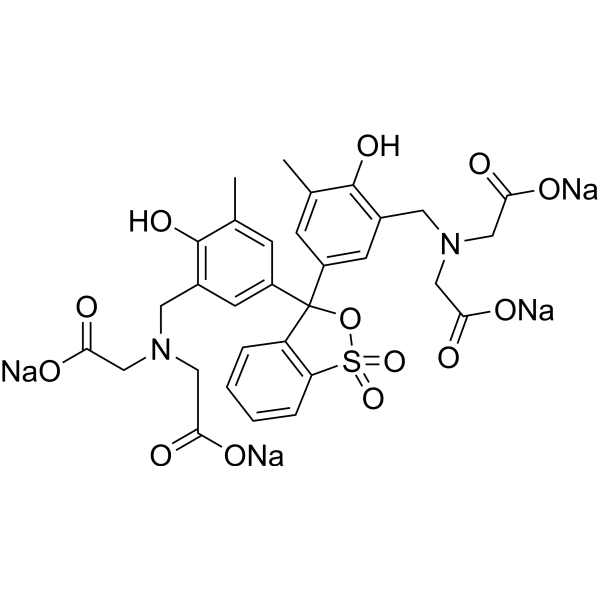
    Leucoberbelin blue I (LBB) is a leuco base that is oxidized by manganese through a hydrogen atom transfer reaction forming a colored complex. Leucoberbelin blue I can be used to quantify or confirm the Mn (II) oxides formation .
    Leucoberbelin blue I
  • HY-W027631

    Fluorescent Dye Infection
    cis-2-Butene-1,4-diol, an industrial product, can be used for the synthesis of antiviral product oxetanocin A. cis-2-Butene-1,4-diol is a probe for studying isomerization versus hydrogenation and hydrogenolysis reactions .
    cis-2-Butene-1,4-diol
  • HY-W035155

    Drug Intermediate Endogenous Metabolite
    (1,5-Cyclooctadiene)bis(methyldiphenylphosphine)iridium(I) hexafluorophosphate is a highly efficient catalyst with excellent hydrogenation activity. It can catalyze the reaction of hydrogen and organic substrates in various chemical reactions. This compound is often used to synthesize important chemical intermediates and compounds.
    (1,5-Cyclooctadiene)bis(methyldiphenylphosphine)iridium(I) hexafluorophosphate
  • HY-N10516

    Bacterial Others
    Bacteriopheophytin, a photosynthetic pigment, is a bacterial demagnetised chlorophyll composed of bacterial chlorophyll in which two hydrogen atoms replace the magnesium center. Bacteriopheophytin acts as an electron acceptor in the purple bacterial reaction center (RC) and is involved in electron transfer .
    Bacteriopheophytin
  • HY-127052

    Octadecanonitrile

    Biochemical Assay Reagents Others
    Stearonitrile is a stearic nitrile that can undergo hydrogenation reactions .
    Stearonitrile
  • HY-114541

    Fluorescent Dye Others
    Coumarin-7-pinacolboronate is a fluorescent probe. Taking hydrogen peroxide for instance, Coumarin-7-pinacolboronate and HOO- undergo a nucleophilic reaction to produce INT1. The chemical reaction mechanisms are nearly identical for the reactions of Coumarin-7-pinacolboronate with hydrogen peroxide, hypochlorous acid, peroxynitrite, and tyrosine hydroperoxide, respectively .
    Coumarin-7-pinacolboronate
  • HY-W036734

    Biochemical Assay Reagents Others
    Tetrabutylammonium (hydrogen difluoride) is a quaternary ammonium salt containing fluoride ions. It is a highly active and effective reagent, often used in organic synthesis reactions, especially for the modification of organic molecules with fluorine atoms. Tetrabutylammonium (hydrogen difluoride) is also used as a catalyst for various chemical reactions such as esterification and transesterification. Additionally, it is used in the production of specialty chemicals such as surfactants and detergents.
    Tetrabutylammonium hydrogen difluoride
  • HY-W074081

    Biochemical Assay Reagents Endogenous Metabolite
    (CAAC-Cy)Rh(COD)Cl is a rhodium-based catalyst with significant hydrogenation activity. (CAAC-Cy)Rh(COD)Cl is widely used in organic synthesis to catalyze different types of reactions. (CAAC-Cy)Rh(COD)Cl is highly efficient in promoting hydrogenation reactions. (CAAC-Cy)Rh(COD)Cl can effectively catalyze the conversion of certain unsaturated compounds.
    (CAAC-Cy)Rh(COD)Cl
  • HY-W455884

    Biochemical Assay Reagents Others
    3,5-Dichloro-2-hydroxybenzenesulfonic acid is used in conjunction with Ampyrone (HY-B1398) (4-AAP) and hydrogen peroxide (H2O2) for chromogenic quantification of peroxidase in coupled enzymatic reactions. 3,5-Dichloro-2-hydroxybenzenesulfonic acid is used to measure hydrogen peroxide production in conjunction with peroxidase .
    3,5-Dichloro-2-hydroxybenzenesulfonic acid
  • HY-W008658

    Biochemical Assay Reagents Endogenous Metabolite
    [1,4-Bis(diphenylphosphino)butane](norbornadiene)rhodium tetrafluoroborate is a highly efficient and selective transition metal catalyst that can catalyze a variety of reactions, including cross-coupling reactions and hydrogenation reactions. This compound is widely used in organic synthesis and helps to promote the development of new compounds and materials. Through its catalytic activity, [1,4-Bis(diphenylphosphino)butane](norbornadiene)rhodium tetrafluoroborate offers the potential to optimize reaction conditions and improve yields.
    [1,4-Bis(diphenylphosphino)butane](norbornadiene)rhodium tetrafluoroborate
  • HY-W034154

    Tetrakis(triphenylphosphine)ruthenium dihydride

    Drug Intermediate Endogenous Metabolite
    Dihydridotetrakis(triphenylphosphine)ruthenium(II) (Tetrakis(triphenylphosphine)ruthenium dihydride) is a catalyst with good catalytic activity. Dihydridotetrakis(triphenylphosphine)ruthenium(II) can be used in organic synthesis reactions, especially in hydrogenation and dehydrogenation reactions. Dihydridotetrakis(triphenylphosphine)ruthenium(II) has received extensive attention in the study of metal catalysts, and its high efficiency makes it an ideal research object.
    Dihydridotetrakis(triphenylphosphine)ruthenium(II)
  • HY-W021079

    2,4-Dimethylpenta-2,3-diene; 2,4-Dimethyl-2,3-pentadiene; 1,1,3,3-Tetramethylallene

    Biochemical Assay Reagents Others
    Tetramethylallene (2,4-Dimethylpenta-2,3-diene) is a methylated analogue of allen that can be used as a hydrogen-atom acceptor in reactions with HMn(CO)5 and HCo(CO)4 .
    Tetramethylallene
  • HY-W010685

    [Rh(dppb)(COD)]BF4

    Biochemical Assay Reagents Endogenous Metabolite Others
    [1,4-Bis(diphenylphosphino)butane](1,5-cyclooctadiene)rhodium(I) tetrafluoroborate ([Rh(dppb)(COD)]BF4) serves as a rhodium-based catalyst that facilitates regioselective hydrogenation and enantioselective reductive amination reactions.
    [1,4-BIs(diphenylphosphino)butane](1,5-cyclooctadiene)rhodium(I) tetrafluoroborate
  • HY-145538

    5'-Deoxyguanylic acid disodium hydrate

    DNA/RNA Synthesis Others
    2'-Deoxyguanosine 5'-monophosphate (5'-Deoxyguanylic acid; dGMP) disodium hydrate is an oxidizable target of the photosensitizer pterin (PT) and can be used to evaluate the photosensitizing properties of biopterins (such as Bip, Fop and Cap) . Pterin causes a photosensitive reaction of dGMP under UV-A radiation, causing damage to DNA molecules. There are two main mechanisms for the photosensitive oxidation of purine nucleotides by pterin in vitro: one is the hydrogen abstraction reaction of electron transfer from dGMP to the triplet excited state of pterin (type I mechanism), and the other is the interaction between dGMP and pterin. The reaction produces singlet molecular oxygen (1O2) (Type II mechanism) .
    2'-Deoxyguanosine 5'-monophosphate disodium hydrate
  • HY-W129533

    Biochemical Assay Reagents Others
    tert-Butyl 1H-indol-4-ylcarbamate is a nucleophilic reagent. tert-Butyl 1H-indol-4-ylcarbamate induces the formation of the stable triple hydrogen-bonded complex A-TS-Re. tert-Butyl 1H-indol-4-ylcarbamate undergoes Friedel-Crafts reactions with β,γ-unsaturated α-ketiminoesters .
    tert-Butyl 1H-indol-4-ylcarbamate
  • HY-123189

    Dopamine Receptor Neurological Disease
    LY 171859 is a D2 receptor agonist with significant reductase activity. LY 171859 exhibits enzymatic activity in the cytoplasm of liver, lung, and kidney, and also contains significant reductase activity in rat and human blood. LY 171859 has higher hepatic reductase activity in guinea pigs, followed by hamsters, rabbits, rats, and mice. The substrate of LY 171859 shows an apparent Km of 5.6 μM. The reduction reaction of LY 171859 is NADPH-dependent with an apparent Km of 14.8 μM. Only the A-side hydrogen of NADPH is incorporated in the reduction product of LY 171859. The reaction of LY 171859 is inhibited by cyanide and thiol reagents, and phenobarbital does not induce its activity in rats .
    LY 171859
  • HY-W016618R

    Ethyl benzoylformate (Standard); Phenylglyoxylic acid ethyl ester (Standard)

    Drug Intermediate Reference Standards Biochemical Assay Reagents Carboxylesterase (CES) Others
    Ethyl phenylglyoxylate (Ethyl benzoylformate) (Standard) is the analytical standard of Ethyl phenylglyoxylate (HY-W016618). This product is intended for research and analytical applications. Ethyl phenylglyoxylate (Ethyl benzoylformate), the ethyl ester of phenylglyoxylic acid, is used as a synthetic reagent. Ethyl phenylglyoxylate is also a poor substrate but a potent inhibitor of chicken liver carboxylesterase. Additionally, Ethyl phenylglyoxylate exhibits photoreactivity, where its excited triplet carbonyl can initiate intermolecular hydrogen abstraction, radical coupling and cross-linking reactions .
    Ethyl phenylglyoxylate (Standard)
  • HY-W701476

    Ethyl benzoylformate-d5; Phenylglyoxylic acid ethyl ester-d5

    Isotope-Labeled Compounds Biochemical Assay Reagents Drug Intermediate Carboxylesterase (CES) Others
    Ethyl phenylglyoxylate-d5 (Ethyl benzoylformate-d5; Phenylglyoxylic acid ethyl ester-d5) is the deuterium labeled Ethyl phenylglyoxylate (HY-W016618). Ethyl phenylglyoxylate (Ethyl benzoylformate), the ethyl ester of phenylglyoxylic acid, is used as a synthetic reagent. Ethyl phenylglyoxylate is also a poor substrate but a potent inhibitor of chicken liver carboxylesterase. Additionally, Ethyl phenylglyoxylate exhibits photoreactivity, where its excited triplet carbonyl can initiate intermolecular hydrogen abstraction, radical coupling and cross-linking reactions .
    Ethyl phenylglyoxylate-d5
  • HY-Y0396R

    Biochemical Assay Reagents Reference Standards Survivin Bcl-2 Family Caspase Apoptosis mTOR Akt Others
    N-Hydroxyphthalimide (Standard) is the analytical standard of N-Hydroxyphthalimide (HY-Y0396). This product is intended for research and analytical applications. N-Hydroxyphthalimide is a blocking agent and catalyst. N-Hydroxyphthalimide promotes oxidation reactions by generating PINO free radicals and activating hydrogen atom transfer processes. N-Hydroxyphthalimide reduces the expression of anti-apoptotic proteins Survivin and Bcl-xL and activates caspase 9 and caspase 3. N-Hydroxyphthalimide induces Apoptosis. N-Hydroxyphthalimide inhibits the phosphorylation of mTOR (Ser2448, Ser2481) and Akt (Ser473). N-Hydroxyphthalimide has anticancer effects against breast and colon cancer .
    N-Hydroxyphthalimide (Standard)
  • HY-124533

    Biochemical Assay Reagents Others
    Trimethylolmelamine is a bioactive chemical. The hydroxymethyl of Trimethylolmelamine plays an important role in atomically dispersing Cu atoms in carbon nitride in which the melem ring not only stabilizes Cu sites by quaternary coordination way but also provides high reactivity and selectivity for the hydrogenation reaction .
    Trimethylolmelamine
  • HY-E71252

    Biochemical Assay Reagents Others
    α-Seco-amyrin synthase (EC 5.4.99.52) requires Mg2+. Mn2+ is less effective. The enzyme will also use (3R)-linalyl diphosphate. The reaction involves a 1,2-hydride shift. The 1-pro-S hydrogen of geranyl diphosphate is lost.
    α-Terpinene synthase
  • HY-E71347

    Biochemical Assay Reagents Others
    γ-Terpinene synthase (EC 4.2.3.114) requires Mg2+. Mn2+ less effective. The reaction involves a 1,2-hydride shift. The 5-pro-S hydrogen of geranyl diphosphate is lost. Traces of several other monoterpenoids are formed in addition to γ-Terpinene.
    γ-Terpinene synthase
  • HY-W108862

    Bacterial Infection
    3,3'-Methylenebis[5-methyloxazolidine] is a bisoxazolidine-based hydrogen sulfide scavenger and fungicide derived from monoisopropanolamine (MIPA). 3,3'-Methylenebis[5-methyloxazolidine] exists as a mixture of structural isomers. 3,3'-Methylenebis[5-methyloxazolidine] is oil-soluble and serves as an oil-soluble alternative to hydrated hexahydrotriazine-based scavengers. 3,3'-Methylenebis[5-methyloxazolidine] can scavenge hydrogen sulfide and methanethiol via chemical reactions, and its scavenging efficiency increases after hydrolysis to MIPA-triazine in water .
    3,3'-Methylenebis[5-methyloxazolidine]
  • HY-E70519B

    Biochemical Assay Reagents Metabolic Disease
    Tyramine oxidase, Arthrobacter sp. (EC 1.4.3.6) is a class of enzymes that catalyze the oxidation of various biogenic amines, including many neurotransmitters, histamine, and exogenous amines. Tyramine oxidase, Arthrobacter sp. (EC 1.4.3.6) catalyzes the oxidation of primary amines to aldehydes, releasing ammonia and hydrogen peroxide. Each subunit of this reaction requires a copper ion, with topiramate as a cofactor.
    Tyramine Oxidase, Arthrobacter sp.
  • HY-W019724R

    Reference Standards Drug Intermediate Reactive Oxygen Species (ROS) Others
    2,2-Dihydroxyacetic acid (Standard) is the analytical standard of 2,2-Dihydroxyacetic acid (HY-W019724). This product is intended for research and analytical applications. 2,2-Dihydroxyacetic acid is a key intermediate used in the synthesis of 3-aminocoumarone derivatives, which exhibit significant activity in chemiluminescence reactions and can be used for detecting hydrogen peroxide and evaluating urease activity .
    2,2-Dihydroxyacetic acid (Standard)
  • HY-W800833

    Biochemical Assay Reagents Others
    Benzyl N-[2-(prop-2-enamido)ethyl]carbamate is a short aliphatic linker featuring a Cbz-protected amine and an acrylamide. Acrylamide is a Michael acceptor which is a good Michael acceptor which can be used in thiol-based bioconjugation or polymerization. Meanwhile, the Cbz protecting group can be removed using Pd-C hydrogenation to reveal a free amine that can participate in a wide variety of reactions such as couplings or reductive amination.
    Benzyl N-[2-(prop-2-enamido)ethyl]carbamate

Inquiry Online

Your information is safe with us. * Required Fields.

Salutation


Country or Region *

Applicant Name *


Organization Name *

Department *


Email Address *


Product Name *

Cat. No.


Requested quantity *

Phone Number *


Remarks

Inquiry Online

Inquiry Information

Product Name:
Cat. No.:
Quantity:
MCE Japan Authorized Agent:

