7 Results for "

hydrophobic cleft

" in MedChemExpress (MCE) Product Catalog:
Products (7)

7 Results for "hydrophobic cleft" in MCE Product Catalog:

1
1 Cited Publications
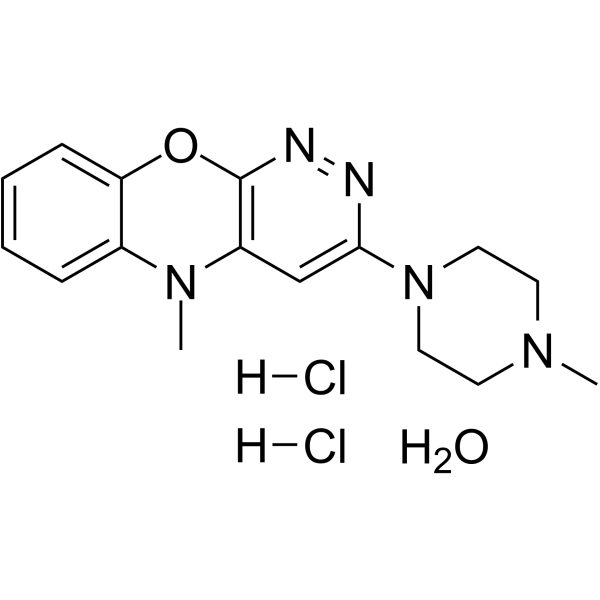
Cat. No.: HY-A0022A
CAS No.: 63302-99-8
Synonyms: Azafen monohydrate; Pipofezin dihydrochloride monohydrate; Pipofezine dihydrochloride monohydrate
Research Areas:  

Neurological Disease

Azaphen dihydrochloride monohydrate is an orally active tricyclic antidepressant that inhibits the reuptake of serotonin and monoamines, regulates the 5-HT2c receptor, and exerts sedative, antidepressant and anxiolytic effects. Azaphen dihydrochloride monohydrate increases the bioavailability of serotonin in the synaptic cleft, does not block muscarinic receptors or affect monoamine oxidase activity, and binds to the human serotonin transporter via salt bridges, π-stacking, π-cation and hydrophobic interactions. Azaphen dihydrochloride monohydrate can be used in studies related to depression .
loading...
    loading...
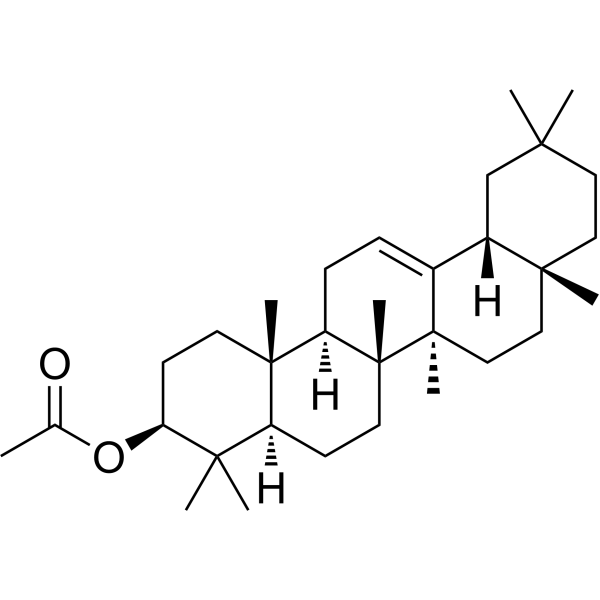
Cat. No.: HY-N2923
CAS No.: 1616-93-9
β-Amyrin acetate is a triterpenoid with potent anti-inflammatory, antifungal, anti-diabetic, anti-hyperlipidemic activities. β-Amyrin acetate can inhibit HMG-CoA reductase activity by locating in the hydrophobic binding cleft of HMG CoA reductase .
loading...
    loading...
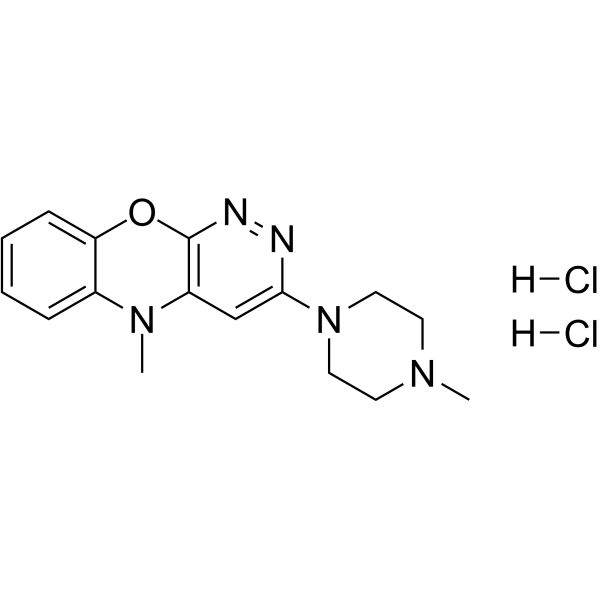
Cat. No.: HY-A0022
CAS No.: 24853-80-3
Synonyms: Azafen; Pipofezin hydrochloride; Pipofezine hydrochloride
Azaphen (Azafen) is an orally active tricyclic antidepressant that inhibits the reuptake of serotonin and monoamines, regulates the 5-HT2c receptor, and exerts sedative, antidepressant and anxiolytic effects. Azaphen increases the bioavailability of serotonin in the synaptic cleft, does not block muscarinic receptors or affect monoamine oxidase activity, and binds to the human serotonin transporter via salt bridges, π-stacking, π-cation and hydrophobic interactions. Azaphen can be used in studies related to depression .
loading...
    loading...
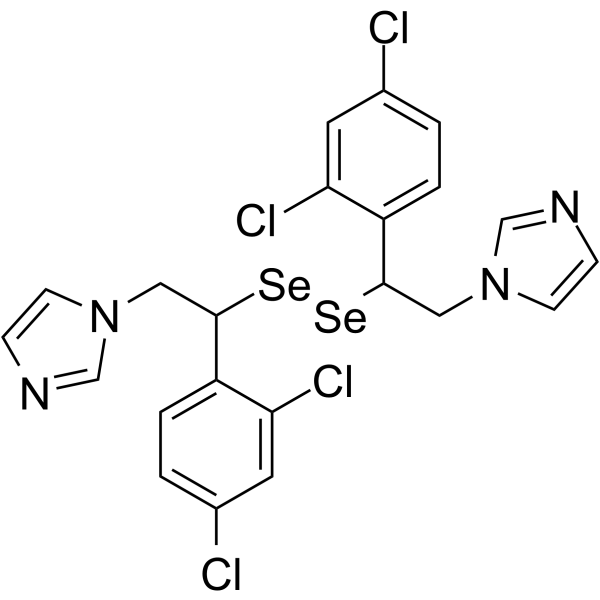
Cat. No.: HY-151439
CAS No.: 3033703-21-5
Target:  

Fungal

Research Areas:  

Infection

Antifungal agent 41 (compound B01) is an antifungal agent. Antifungal agent 41 shows inhibitory effect on Candida albicans in virto and vivo. Antifungal agent 41 can be used for the research of invasive fungal infections .
loading...
    loading...
Cat. No.: HY-I0135
CAS No.: 24886-52-0
Synonyms: Azafen free base; Pipofezin; Pipofezine
Research Areas:  

Neurological Disease

Azaphen free base (Azafen free base) is an orally active tricyclic antidepressant that inhibits the reuptake of serotonin and monoamines, regulates the 5-HT2c receptor, and exerts sedative, antidepressant and anxiolytic effects. Azaphen free base increases the bioavailability of serotonin in the synaptic cleft, does not block muscarinic receptors or affect monoamine oxidase activity, and binds to the human serotonin transporter via salt bridges, π-stacking, π-cation and hydrophobic interactions. Azaphen free base can be used in studies related to depression .
loading...
    loading...
Cat. No.: HY-L942
1,626 compounds

Unlike highly conserved orthosteric sites, allosteric sites exhibit low conservation, high hydrophobicity, weak polarity, confined geometry, and dynamic cryptic properties. Rather than rigid keyhole-like cavities, they typically appear as flexible grooves, subunit interface clefts, or shallow depressions formed by protein conformational changes.

Based on the dynamic, hydrophobic, and elongated nature of allosteric pockets, MCE has carried out targeted fragment modification and screening under strict physicochemical criteria: MW 120–280 Da, HBD ≤ 2, HBA ≤ 3, PSA 30–80 Ų, rotatable bonds ≤ 2, cLogP 1–3.5. High 3D diversity was further ensured by PMI analysis, yielding fragments with excellent shape complementarity to allosteric pockets.

This library contains 1,800 structurally diverse, drug-like fragments, this library supports allosteric drug development and pocket optimization. It significantly improves screening hit rates and enables efficient, precise early-stage R&D of allosteric drugs.

Cat. No.: HY-187623
CAS No.: 149607-21-6
Target:  

HIV Protease

Research Areas:  

Inflammation/Immunology

U 92163 is an HIV-2 protease inhibitor. It is a synthetic peptidomimetic transition-state analog. U 92163 binds in an extended conformation along the length of the enzyme's binding cleft, and forms hydrogen bonds with the catalytic aspartate pair and other protease residues to block enzyme activity. U 92163 can be used in research on acquired immunodeficiency syndrome (AIDS) .
loading...
    loading...

