17 Results for "

inflammatory/autoimmune conditions

" in MedChemExpress (MCE) Product Catalog:
Products (17)

17 Results for "inflammatory/autoimmune conditions" in MCE Product Catalog:

3
3 Cited Publications
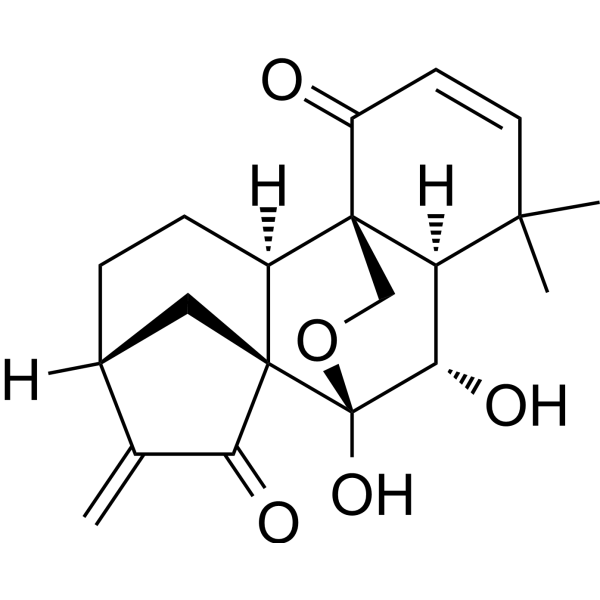
Cat. No.: HY-N2303
CAS No.: 84745-95-9
Eriocalyxin B is a diterpenoid compound that can be isolated from Chinese herb Isodon eriocalyx. Eriocalyxin B exhibits multiple activities, such as anti-cancer, anti-inflammatory, and inhibition of adipogenesis. Eriocalyxin B is capable of inducing apoptosis and autophagy in tumor cells. Eriocalyxin B can be used in the research of cancers, autoimmune diseases, and other conditions .
loading...
    loading...
2
2 Cited Publications
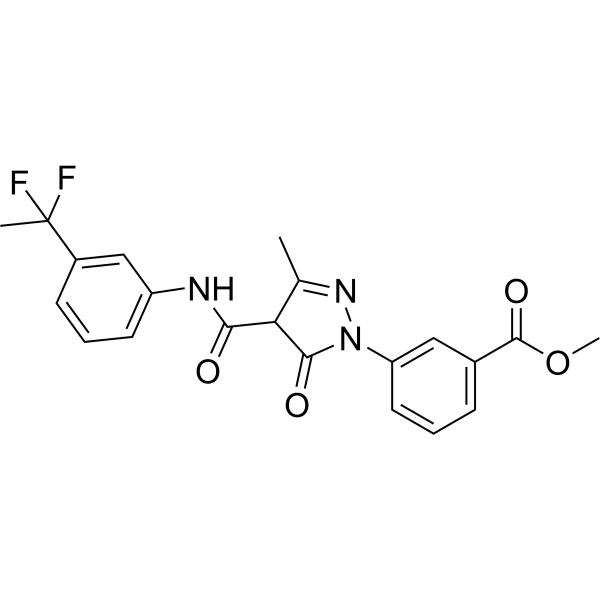
Cat. No.: HY-148104
CAS No.: 2332820-04-7
Purity:  99.49%
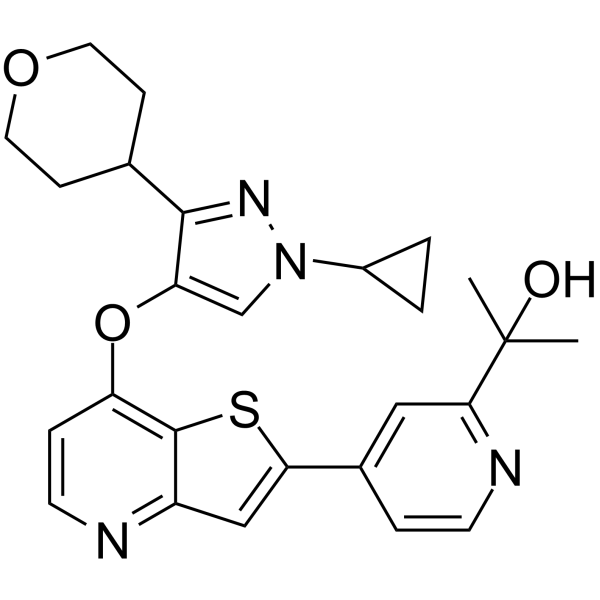
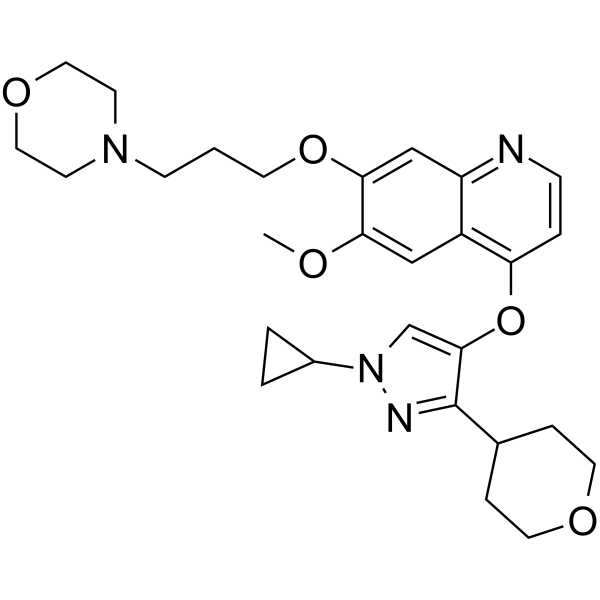
ACSS2-IN-2 is an acyl-CoA synthetase short-chain family member 2 (ACSS2) inhibitor. ACSS2-IN-2 can inhibit ACSS2 activity with an IC50 value of 3.8 nM. ACSS2-IN-2 can be used for the research of several diseases, such as viral infection, metabolic disorders, neuropsychiatric diseases, inflammatory/autoimmune conditions and cancer .
loading...
    loading...
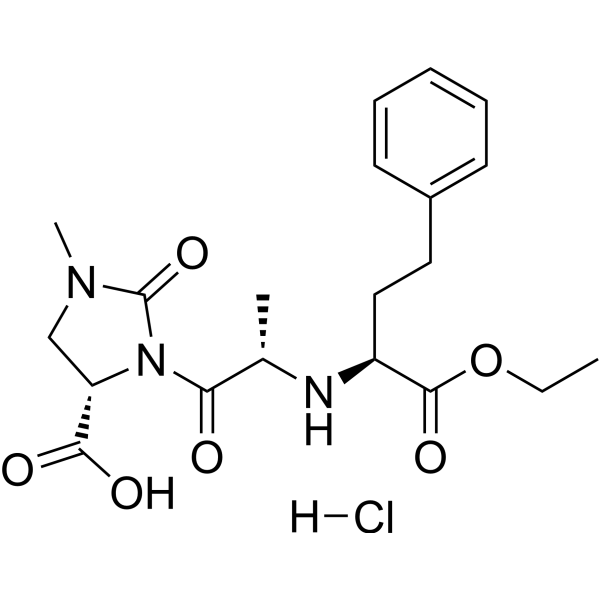
Cat. No.: HY-B1451
CAS No.: 89396-94-1
Synonyms: TA-6366
Imidapril hydrochloride (TA-6366) is an orally active dual inhibitor of angiotensin-converting enzyme (ACE) and MMP-9. Imidapril hydrochloride inhibits lipopolysaccharide-induced phosphorylation of c-Jun, MKK4 and JNK in monocytes, and downregulates the production of specific inflammatory factors such as TNF-α and IP-10, thereby exerting anti-inflammatory activity. Imidapril hydrochloride also effectively ameliorates mesangial expansion and reduces urinary albumin excretion by inhibiting angiotensin AngII production, lowering glomerular pressure and oxidative stress, thus delaying disease progression. Imidapril hydrochloride can also directly bind to the active site of MMP-9 to inhibit gelatinase activity, and suppress the enlargement of cerebral aneurysms without altering systemic blood pressure. Imidapril hydrochloride is widely applicable to related studies on autoimmune glomerulonephritis, diabetic nephropathy, cerebral aneurysms and other conditions .
loading...
    loading...
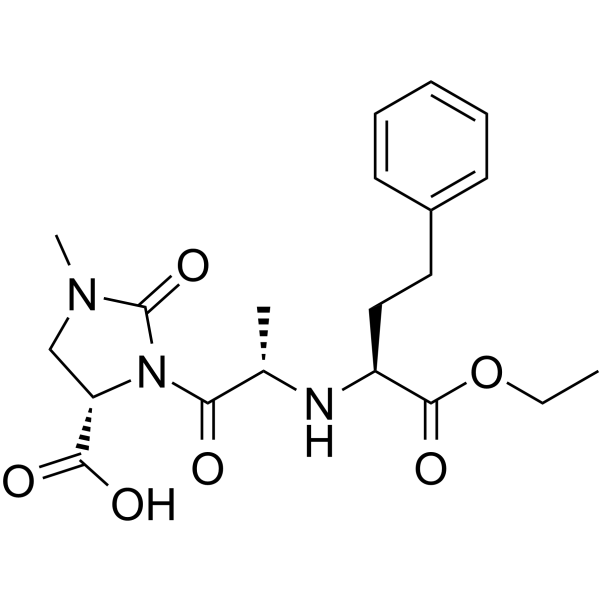
Cat. No.: HY-B1451A
CAS No.: 89371-37-9
Synonyms: TA-6366 free base
Imidapril (TA-6366 free base) is an orally active dual inhibitor of angiotensin-converting enzyme (ACE) and MMP-9. Imidapril inhibits lipopolysaccharide-induced phosphorylation of c-Jun, MKK4 and JNK in monocytes, and downregulates the production of specific inflammatory factors such as TNF-α and IP-10, thereby exerting anti-inflammatory activity. Imidapril also effectively ameliorates mesangial expansion and reduces urinary albumin excretion by inhibiting angiotensin AngII production, lowering glomerular pressure and oxidative stress, thus delaying disease progression. Imidapril can also directly bind to the active site of MMP-9 to inhibit gelatinase activity, and suppress the enlargement of cerebral aneurysms without altering systemic blood pressure. Imidapril is widely applicable to related studies on autoimmune glomerulonephritis, diabetic nephropathy, cerebral aneurysms and other conditions .
loading...
    loading...
Cat. No.: HY-173298
CAS No.: 2870691-38-4
Target:  

PDHK

Research Areas:  

Inflammation/Immunology Cancer

PDHK1-IN-2 (Compound 24) is an ATP-competitive dual inhibitor of pyruvate dehydrogenase kinases 1/2 (PDHK1/2), with an IC50 of 0.007 μM for PDHK1 and an IC50 of 0.015 μM for PDHK2. PDHK1-IN-2 can regulate immune cell metabolism and correct mitochondrial dysfunction, and is expected to be used in the research of autoimmune diseases, inflammatory diseases, cancers, and other conditions .
loading...
    loading...
Cat. No.: HY-120214
CAS No.: 1429038-15-2
Target:  

Syk RET

Research Areas:  

Inflammation/Immunology

TAS05567 is a potent, highly selective, ATP-competitive and orally active Syk inhibitor with an IC50 of 0.37 nM. In a panel of 192 kinases, TAS05567 only shows >70% inhibition of Syk and 4 other kinases (FLT3, JAK2, KDR and RET with IC50s of 10 nM, 4.8 nM, 600 nM and 29 nM, respectively). TAS05567 can be used for humoral immune-mediated inflammatory conditions such as autoimmune and allergic diseases .
loading...
    loading...
Cat. No.: HY-142949
CAS No.: 2657720-07-3
Target:  

TGF-β Receptor

Research Areas:  

Inflammation/Immunology Cancer

ALK5-IN-7 is a potent inhibitor of ALK5. Transforming growth factor beta (TGF-β) is a multifunctional cytokine that is involved in regulating cell proliferation, differentiation and apoptosis through complex receptor signaling pathways on the cell surface in an autocrine, paracrine and endocrine manner. ALK5-IN-7 has the potential for the research of TGF-β-related diseases and conditions, including but not limited to tumors, fibrotic diseases, inflammatory diseases, autoimmune diseases, etc (extracted from patent WO2021129621A1, compound 4) .
loading...
    loading...
Cat. No.: HY-142950
CAS No.: 2657720-04-0
Target:  

TGF-β Receptor

Research Areas:  

Inflammation/Immunology Cancer

ALK5-IN-6 is a potent inhibitor of ALK5. Transforming growth factor beta (TGF-β) is a multifunctional cytokine that is involved in regulating cell proliferation, differentiation and apoptosis through complex receptor signaling pathways on the cell surface in an autocrine, paracrine and endocrine manner. ALK5-IN-6 has the potential for the research of TGF-β-related diseases and conditions, including but not limited to tumors, fibrotic diseases, inflammatory diseases, autoimmune diseases, etc (extracted from patent WO2021129621A1, compound 1) .
loading...
    loading...
Cat. No.: HY-B1451R
CAS No.: 89396-94-1
Synonyms: TA-6366 (Standard)
Imidapril (hydrochloride) (Standard) is the analytical standard of Imidapril (hydrochloride). This product is intended for research and analytical applications. Imidapril hydrochloride (TA-6366) is an orally active dual inhibitor of angiotensin-converting enzyme (ACE) and MMP-9. Imidapril hydrochloride inhibits lipopolysaccharide-induced phosphorylation of c-Jun, MKK4 and JNK in monocytes, and downregulates the production of specific inflammatory factors such as TNF-α and IP-10, thereby exerting anti-inflammatory activity. Imidapril hydrochloride also effectively ameliorates mesangial expansion and reduces urinary albumin excretion by inhibiting angiotensin AngII production, lowering glomerular pressure and oxidative stress, thus delaying disease progression. Imidapril hydrochloride can also directly bind to the active site of MMP-9 to inhibit gelatinase activity, and suppress the enlargement of cerebral aneurysms without altering systemic blood pressure. Imidapril hydrochloride is widely applicable to related studies on autoimmune glomerulonephritis, diabetic nephropathy, cerebral aneurysms and other conditions .
loading...
    loading...
Cat. No.: HY-B1451S
CAS No.: 1356017-30-5
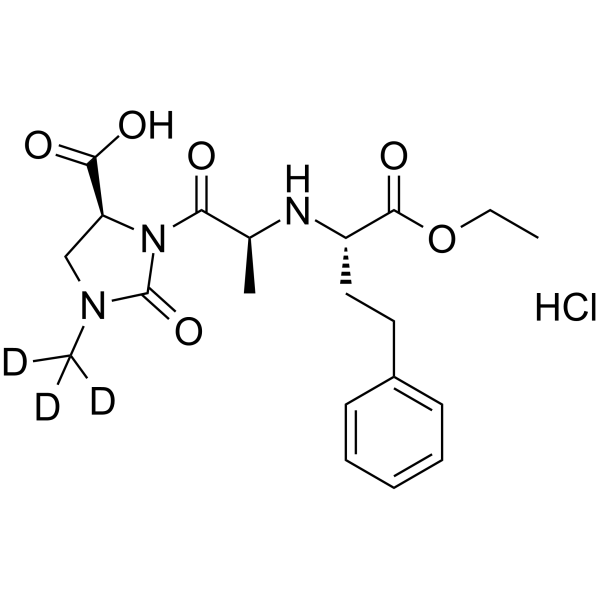
Imidapril-d3 hydrochloride (TA-6366-d3) is the deuterium labeled Imidapril hydrochloride. Imidapril hydrochloride (TA-6366) is an orally active dual inhibitor of angiotensin-converting enzyme (ACE) and MMP-9. Imidapril hydrochloride inhibits lipopolysaccharide-induced phosphorylation of c-Jun, MKK4 and JNK in monocytes, and downregulates the production of specific inflammatory factors such as TNF-α and IP-10, thereby exerting anti-inflammatory activity. Imidapril hydrochloride also effectively ameliorates mesangial expansion and reduces urinary albumin excretion by inhibiting angiotensin AngII production, lowering glomerular pressure and oxidative stress, thus delaying disease progression. Imidapril hydrochloride can also directly bind to the active site of MMP-9 to inhibit gelatinase activity, and suppress the enlargement of cerebral aneurysms without altering systemic blood pressure. Imidapril hydrochloride is widely applicable to related studies on autoimmune glomerulonephritis, diabetic nephropathy, cerebral aneurysms and other conditions .
loading...
    loading...
Cat. No.: HY-W678610
CAS No.: 136715-68-9
Target:  

14-3-3 Protein

Research Areas:  

Inflammation/Immunology

14-3-3γ/SLP76 degrader-1 is a stabiliser of the 14-3-3γ/phosphorylated SLP76 protein-protein interaction. 14-3-3γ/SLP76 degrader-1 lacks stabilising activity on the unrelated IL17/IL17R protein-protein interaction. 14-3-3γ/SLP76 degrader-1 lacks stabilising activity on the 14-3-3ζ/p27 protein-protein interaction. 14-3-3γ/SLP76 degrader-1 can be used for the research of autoimmune and inflammatory conditions .
loading...
    loading...
Cat. No.: HY-184876
CAS No.: 2891663-21-9
Target:  

ROR

Research Areas:  

Inflammation/Immunology Cancer

RORγt inverse agonist 38 (C102) is a RORγt inverse agonist. RORγt inverse agonist 38 can be used for the research of psoriasis, autoimmune thyroiditis, inflammatory bowel disease, cancer, and other conditions .
loading...
    loading...
Cat. No.: HY-119050
CAS No.: 749860-43-3
Target:  

CCR

Research Areas:  

Inflammation/Immunology

Anti-inflammatory agent 87 (compound 72) is a potential anti-inflammatory agent, whose precursor is an inhibitor targeting the binding of thymus and activation-regulated chemokine (TARC/CCL17) to Hut78 cells. Anti-inflammatory agent 87 can be used in the research of allergic diseases, autoimmune diseases, transplant rejection and other conditions .
loading...
    loading...
Cat. No.: HY-187263S
[U- 15N]-CRP is the 15N-labeled CRP. C-reactive protein (CRP) is a crucial biomarker reflecting inflammatory status and is associated with conditions such as infections, cardiovascular diseases, and autoimmune disorders. This isotope can be used in NMR studies to investigate disease mechanisms and in mass spectrometry analysis.
loading...
    loading...
Cat. No.: HY-184095
CAS No.: 3047739-67-0
Synonyms: Iptocigistatum; VENT-03
Research Areas:  

Inflammation/Immunology

Iptocigistat (Iptocigistatum) is a cyclic GMP-AMP synthase (cGAS) inhibitor. Iptocigistat prevents excessive immune responses. Iptocigistat can be used to study inflammation-related autoimmune diseases .
loading...
    loading...
Cat. No.: HY-184936
Research Areas:  

Inflammation/Immunology

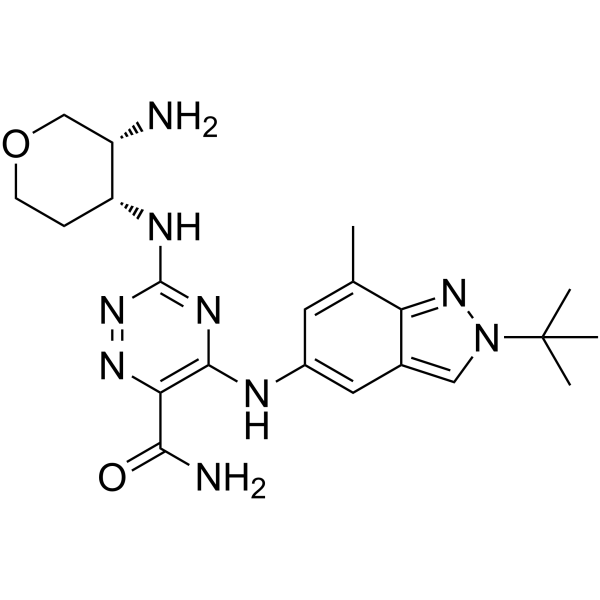
p38α-IN-14 is a selective p38α inhibitor with an IC50 of 65 nM. p38α-IN-14 exhibits only weak inhibitory activity against hERG channels, with an IC50 > 30 μM. p38α-IN-14 can be used in the research of chronic inflammatory and autoimmune diseases, including rheumatoid arthritis, psoriasis and inflammatory bowel disease .
loading...
    loading...
Cat. No.: HY-L237
338 compounds

Pattern Recognition Receptors (PRRs) are a crucial class of protein molecules expressed in cells of the innate immune system. The core function of Pattern Recognition Receptors is to recognize Pathogen-Associated Molecular Patterns (PAMPs) and Damage-Associated Molecular Patterns (DAMPs). Upon recognizing and binding to PAMPs or DAMPs, PRRs rapidly initiate intracellular signaling pathways (such as the NF-κB, IRF, and inflammasome pathways). This triggers the production of inflammatory factors, chemokines, and type I interferons, thereby initiating inflammatory responses to eliminate pathogens or repair damage. PRRs represent the body's first line of defense against infection, and the rapidity and broad specificity of their response are crucial for host survival. However, aberrant activation of PRR signaling is also a cause of many chronic inflammatory diseases, autoimmune disorders, and neurodegenerative diseases. Therefore, precisely regulating PRR activity has become a key therapeutic strategy for these conditions.

MCE has cataloged 338 inhibitors targeting key PRRs, such as NLRs, TLRs, C-type Lectin Receptors (CLRs), and cGAS, to support drug discovery efforts for chronic inflammatory diseases.

  • 1

