1. Search Result
Search Result
Results for "

influenza virus entry

" in MedChemExpress (MCE) Product Catalog:

19

Inhibitors & Agonists

2

Natural
Products

2

Isotope-Labeled Compounds

Targets Recommended:
Cat. No. Product Name Target Research Areas Chemical Structure
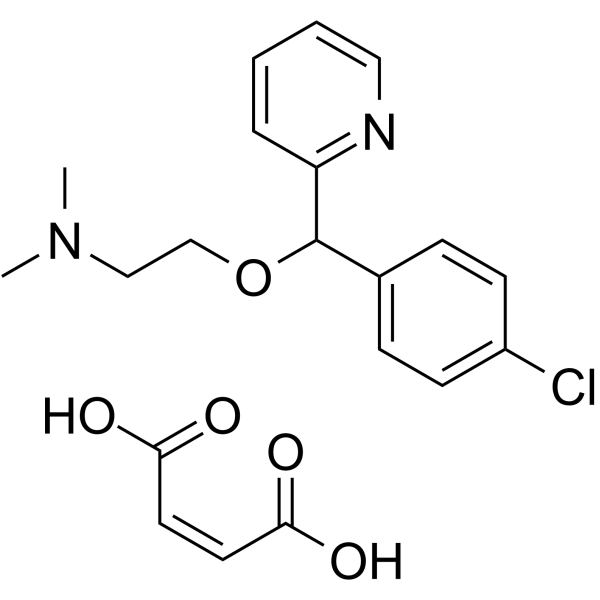
  • HY-B1589A
    Carbinoxamine maleate salt
    1 Publications Verification

    Histamine Receptor Influenza Virus Infection Inflammation/Immunology
    Carbinoxamine maleate salt is a blood-brain barrier-permeable histamine H1 receptor antagonist. Carbinoxamine maleate salt blocks the action of histamine on H1 receptors, reducing symptoms such as sneezing, rhinitis, rhinorrhea, erythema, pruritus and urticaria. Carbinoxamine maleate salt inhibits influenza virus entry into cells via endocytosis, targets the early stage of the viral life cycle, and simultaneously reduces viral replication levels in the lungs, alleviating pathological damage and inflammatory responses in lung tissues. Carbinoxamine maleate salt can be used in research on allergic rhinitis, influenza, etc.
    Carbinoxamine maleate salt
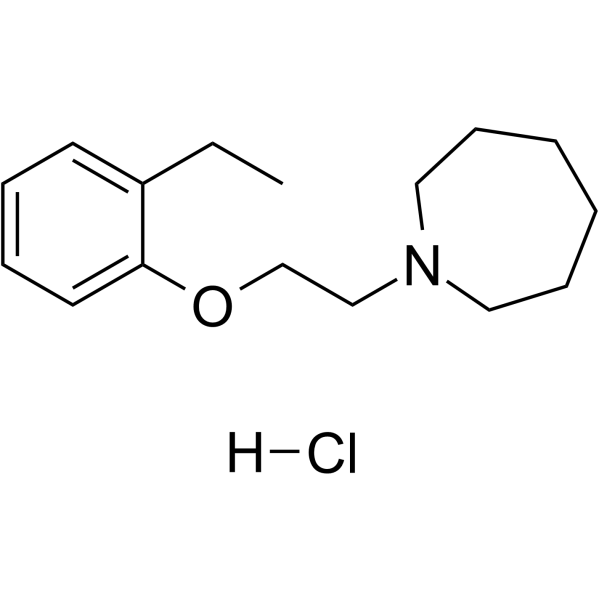
  • HY-130178

    Endogenous Metabolite Infection
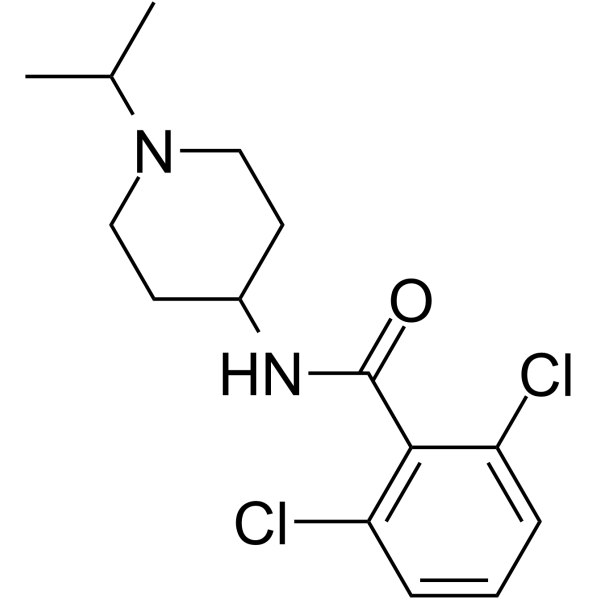
    CL-385319 is an N-substituted piperidine compound with inhibitory activity against H5N1 avian influenza A virus infection. CL-385319 exhibited an IC50 of 27.03±2.54 μM against infection of highly pathogenic H5N1 virus in Madin-Darby canine kidney cells (MDCK). CL-385319 had low cytotoxicity with a CC50 of 1.48 mM and was able to inhibit the entry of pseudoviruses carrying H5N1 strains from different sources, but had no inhibitory effect on the entry of VSV-G pseudotyped particles. Pseudoviruses with the M24A mutation in HA1 or the F110S mutation in HA2 were resistant to CL-385319, indicating that these two residues in the cavity region may be critical for the binding of CL-385319 .
    CL-385319
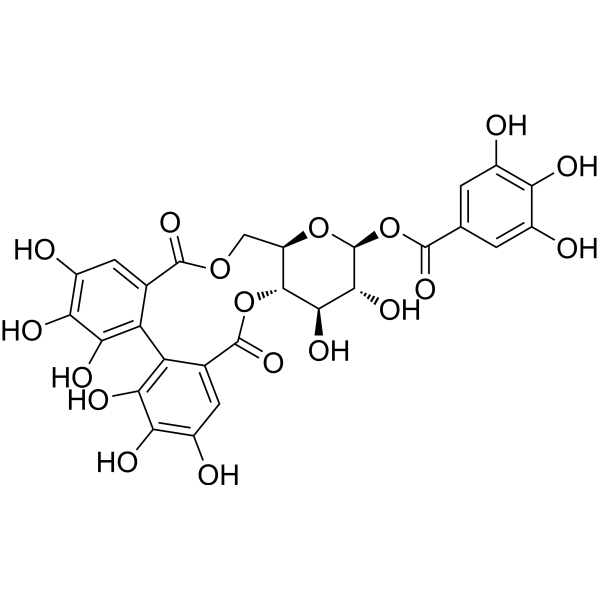
  • HY-135319

    Bacterial Antibiotic ERK JNK NF-κB ROR Apoptosis Caspase GSK-3 Akt PI3K Infection Metabolic Disease Inflammation/Immunology Cancer
    Strictinin is an orally active phenolic compound. Strictinin reduces xanthine oxidase activity, uric acid production, and the activation of ERK1/2, JNK, NF-κB, and NLRP3 inflammasome components in hepatocytes treated with Xanthine (HY-W017389). Strictinin decreases elevated serum uric acid levels and enhanced xanthine oxidase activity in mice treated with potassium oxonate. Strictinin acts as a ROR1 inhibitor and exhibits anticancer activity against highly aggressive non-androgen-dependent prostate cancer. Strictinin induces cancer cell apoptosis (apoptosis), arrests cell cycle, and inhibits cancer cell migration, invasion, and epithelial-mesenchymal transition. Strictinin modulates gut microbiota, inhibits bacterial growth and biofilm formation, accelerates small intestinal transit, and blocks viral entry and replication. Strictinin can be used in research related to hyperuricemia, androgen receptor-negative non-androgen-dependent prostate cancer, triple-negative breast cancer, bacterial infections, constipation, coronavirus infections, dental caries, and infections caused by influenza A, influenza B, and human parainfluenza virus type 1 .
    Strictinin
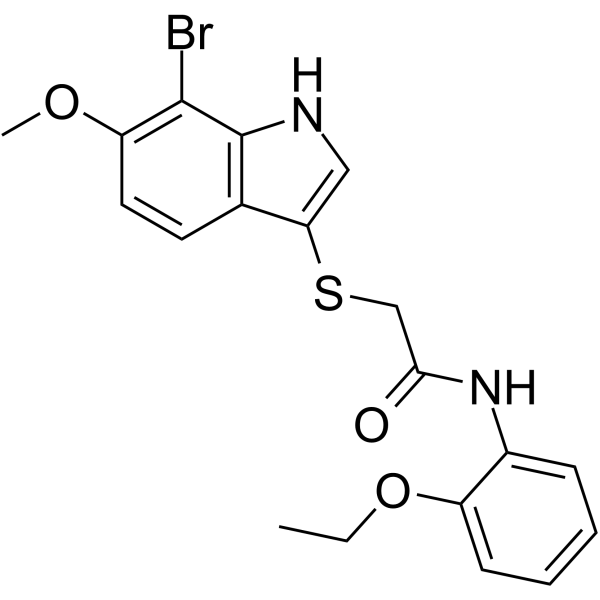
  • HY-131069A

    Influenza Virus Infection
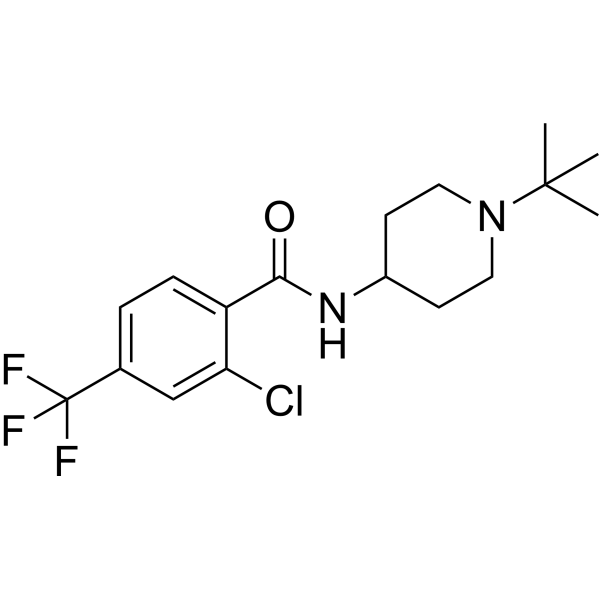
    MBX2329, a potent influenza virus inhibitor, specifically inhibits hemagglutinin (HA)-mediated viral entry with HIV/HA(H5) displaying IC90 of 8.6 μM. MBX2329 inhibits a wide spectrum of influenza A viruses, which includes the 2009 pandemic influenza virus A/H1N1/2009, highly pathogenic avian influenza (HPAI) virus A/H5N1, and oseltamivir-resistant A/H1N1 strains .
    MBX2329
  • HY-143494

    RSV Influenza Virus Infection
    RSV/IAV-IN-3 (compound 14'i) is a dual inhibitor of respiratory syncytial virus (RSV) and influenza A virus (IAV) with EC50 values of 2.92 µM and 1.90 µM,respectively. RSV/IAV-IN-3 has antiviral effect against H1N1 and H3N2 with EC50 values of 3.25 µM and 1.50 µM in MDCK cells, respectively. RSV/IAV-IN-3 significantly inhibits the activity of luciferase in a dose-dependent manner, with an EC50 of 3.89 µM. RSV/IAV-IN-3 inhibits IAV infectivity and RdRp activity. RSV/IAV-IN-3 inhibits IAV and RSV replication at the post-entry stage .
    RSV/IAV-IN-3
  • HY-177332

    TAM Receptor SARS-CoV Akt Infection Cancer
    SLC-391 is an orally active AXL kinase inhibitor with an IC50 of 9.6 nM against AXL kinase. SLC-391 inhibits Gas6-induced AXL-dependent phosphorylation of Akt. SLC-391 inhibits SARS-CoV-2 infection, entry and replication in cells. SLC-391 suppresses cancer cell proliferation. SLC-391 inhibits tumor growth in mouse solid tumor xenograft models. SLC-391 can be used for the research of COVID-19, influenza virus infection, triple-negative breast cancer, chronic myeloid leukemia and non-small cell lung cancer .
    SLC-391
  • HY-131059

    Influenza Virus Infection
    CBS1117 is a virus entry inhibitor with an IC50 of 70 nM for influenza A virus, A/Puerto Rico/8/34 (H1N1). CBS1117 interferes with the hemagglutinin (HA)-mediated fusion process .
    CBS1117
  • HY-161902

    Ser/Thr Protease Influenza Virus SARS-CoV Infection
    MI-1904 is the inhibitor for matriptase/TMPRSS2, that exhibits antiviral activity against influenza virus H1N1 and H9N2. MI-1904 blocks the cleavage of glycoproteins on the viral surface, prevents the virus from binding to host cell receptors, and thus inhibits the entry and replication of the virus .
    MI-1904
  • HY-N17236

    β-glucuronidase Influenza Virus RSV Infection
    Foryshiyanine A is a triterpenoid alkaloid. Foryshiyanine A possesses anti-inflammatory activity, inhibiting the release of β-glucuronidase from rat polymorphonuclear leukocytes. Foryshiyanine A exhibits antiviral activity, with an EC50 of 4.5 μM against respiratory syncytial virus (RSV) and an IC50 of 7.3 μM against influenza A virus (H1N1). Foryshiyanine A reduces viral load by disrupting viral replication and entry. Foryshiyanine A may be used for the researches of inflammation and infection .
    Forsyshiyanine A
  • HY-157249

    Influenza Virus Infection
    Antiviral agent 43 (compound 16) is a potent and orally active influenza A viruses entry inhibitor. Antiviral agent 43 inhibits replications of influenza A strains VH04-H5N1 and PR8-H1N1 with EC50s of 240 nM and 72 nM, respectively .
    Antiviral agent 43
  • HY-158097

    Influenza Virus Infection
    IAV-IN-2 (Compound MC-22) inhibits for Influenza A Virus (IAV) through blocking the entry of IAV into host cell via clathrin-mediated endocytosis (CME) .
    IAV-IN-2
  • HY-B1589

    Histamine Receptor Infection Inflammation/Immunology
    (±)-Carbinoxamine is a blood-brain barrier-permeable histamine H1 receptor antagonist. (±)-Carbinoxamine blocks the action of histamine on H1 receptors, reducing symptoms such as sneezing, rhinitis, rhinorrhea, erythema, pruritus and urticaria. (±)-Carbinoxamine inhibits influenza virus entry into cells via endocytosis, targets the early stage of the viral life cycle, and simultaneously reduces viral replication levels in the lungs, alleviating pathological damage and inflammatory responses in lung tissues. (±)-Carbinoxamine can be used in research on allergic rhinitis, influenza, etc.
    (±)-Carbinoxamine
  • HY-B1589AS

    Isotope-Labeled Compounds Histamine Receptor Influenza Virus Neurological Disease Endocrinology
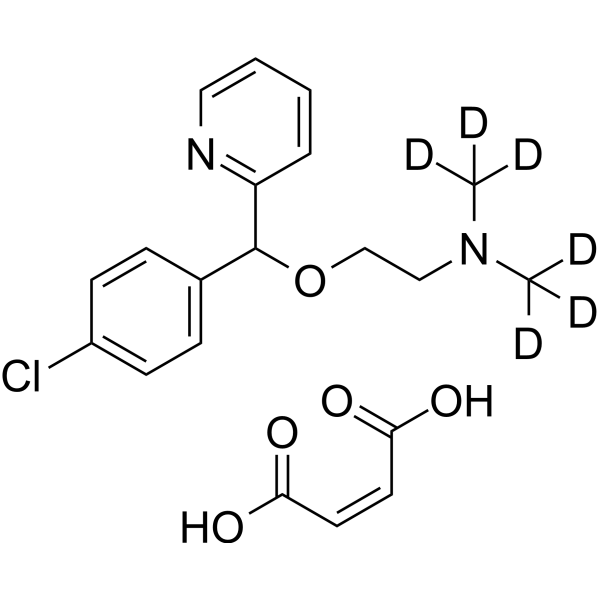
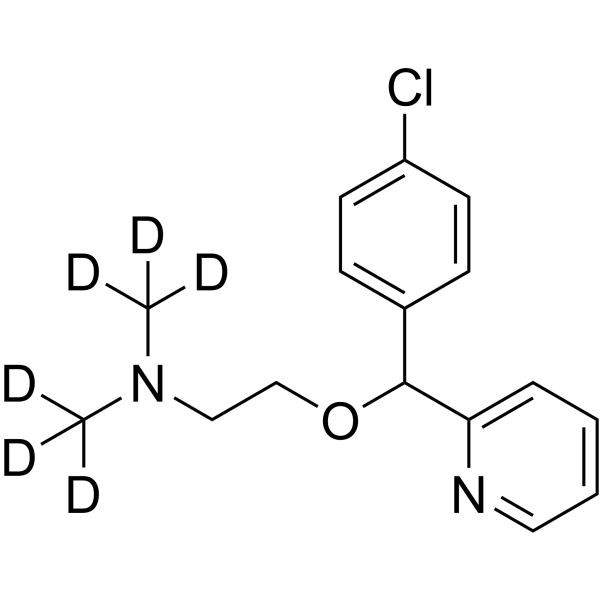
    Carbinoxamine-d6 (maleate) is the deuterium labeled Carbinoxamine maleate salt. Carbinoxamine maleate salt is a blood-brain barrier-permeable histamine H1 receptor antagonist. Carbinoxamine maleate salt blocks the action of histamine on H1 receptors, reducing symptoms such as sneezing, rhinitis, rhinorrhea, erythema, pruritus and urticaria. Carbinoxamine maleate salt inhibits influenza virus entry into cells via endocytosis, targets the early stage of the viral life cycle, and simultaneously reduces viral replication levels in the lungs, alleviating pathological damage and inflammatory responses in lung tissues. Carbinoxamine maleate salt can be used in research on allergic rhinitis, influenza, etc.
    Carbinoxamine-d6 maleate
  • HY-B1589AR

    Reference Standards Histamine Receptor Influenza Virus Infection Inflammation/Immunology
    Carbinoxamine maleate salt (Standard) is the analytical standard of Carbinoxamine maleate salt (HY-B1589A). This product is intended for research and analytical applications. Carbinoxamine maleate salt is a blood-brain barrier-permeable histamine H1 receptor antagonist. Carbinoxamine maleate salt blocks the action of histamine on H1 receptors, reducing symptoms such as sneezing, rhinitis, rhinorrhea, erythema, pruritus and urticaria. Carbinoxamine maleate salt inhibits influenza virus entry into cells via endocytosis, targets the early stage of the viral life cycle, and simultaneously reduces viral replication levels in the lungs, alleviating pathological damage and inflammatory responses in lung tissues. Carbinoxamine maleate salt can be used in research on allergic rhinitis, influenza, etc.
    Carbinoxamine maleate salt (Standard)
  • HY-182895

    Influenza Virus Infection
    Influenza A virus-IN-19 (Compound (S)-63) is an orally active, selective Influenza A virus inhibitor with an EC50 of 0.44 μM. Influenza A virus-IN-19 exhibits moderate binding affinity to Hemagglutinin, with a Kd of 5.66 μM. Influenza A virus-IN-19 inhibits trypsin-mediated cleavage of HA0, blocks the early viral entry process, and suppresses the replication of Influenza A virus. Influenza A virus-IN-19 improves the survival rate of mice in lethal influenza models. Influenza A virus-IN-19 can be used in studies related to Influenza A virus infection .
    Influenza A virus-IN-19
  • HY-175808

    Influenza Virus Infection
    VF-57a (Compound 23) is an Influenza A virus (IAV) fusion inhibitor. VF-57 has potent antiviral activities against authentic A/H1N1 virus with EC50s of 0.92 and 0.31 μM for the A/H1N1 PR8 and A/H1N1 Virg09 strains, respectively. VF-57 significantly inhibits HA-mediated cell entry of A/H1N1- and A/H5N1-pseudoviruses, prevents the HA refolding at pH 5.2. VF-57a can be used for IAV infections research .
    VF-57a
  • HY-183929

    Influenza Virus Infection
    Antiviral agent 87 is a potent antiviral agent with low cytotoxicity in host cells. Antiviral agent 87 stabilizes prefusion HA conformation, blocks viral membrane fusion and host cell entry, and inhibits entry and replication of diverse influenza A virus subtypes. Antiviral agent 87 can be used for the research of influenza A virus infection .
    Antiviral agent 87
  • HY-B1589S

    Isotope-Labeled Compounds Histamine Receptor Influenza Virus Infection Inflammation/Immunology
    (±)-Carbinoxamine-d6 is the deuterium labeled (±)-Carbinoxamine (HY-B1589) . (±)-Carbinoxamine is a blood-brain barrier-permeable histamine H1 receptor antagonist. (±)-Carbinoxamine blocks the action of histamine on H1 receptors, reducing symptoms such as sneezing, rhinitis, rhinorrhea, erythema, pruritus and urticaria. (±)-Carbinoxamine inhibits influenza virus entry into cells via endocytosis, targets the early stage of the viral life cycle, and simultaneously reduces viral replication levels in the lungs, alleviating pathological damage and inflammatory responses in lung tissues. (±)-Carbinoxamine can be used in research on allergic rhinitis, influenza, etc.
    (±)-Carbinoxamine-d6
  • HY-181785

    Influenza Virus Infection
    Influenza A virus-IN-18 (Compound C2e) is an orally active inhibitor of Influenza A virus (IC50: 2.5 μM against PR8/H1N1; 6.42 μM against H3N2). Influenza A virus-IN-18 binds directly to the H1N1/PR8 HA protein with high affinity, with a KD of 0.25 μM. Influenza A virus-IN-18 is applicable to research related to Influenza A virus infection .
    Influenza A virus-IN-18

Inquiry Online

Your information is safe with us. * Required Fields.

Salutation


Country or Region *

Applicant Name *


Organization Name *

Department *


Email Address *


Product Name *

Cat. No.


Requested quantity *

Phone Number *


Remarks

Inquiry Online

Inquiry Information

Product Name:
Cat. No.:
Quantity:
MCE Japan Authorized Agent:

