


9 Results for "

metabolic acidosis

" in MedChemExpress (MCE) Product Catalog:
Products (9)

9 Results for "metabolic acidosis" in MCE Product Catalog:

62
62 Publications Verification
Cat. No.: HY-Y1269
CAS No.: 12125-02-9
Ammonium chloride, as a heteropolar compound with pH value regulation, can cause intracellular alkalization and metabolic acidosis thus effecting enzymatic activity and influencing the process of biological system. Ammonium chloride is an autophagy inhibitor. Ammonium chloride is also a lysosome inhibitor .
loading...
    loading...
62
62 Publications Verification
Cat. No.: HY-Y1269C
CAS No.: 12125-02-9
Synonyms: Salmiac, for cell culture
Ammonium chloride, for cell culture (Salmiac, for cell culture) is a reagent that can be used in cell culture to provide a source of nitrogen. Ammonium chloride can be used as a heteropolar compound to regulate pH value, which can cause intracellular alkalination and metabolic acidosis, thus affecting the activity of enzymes and affecting the process of biological systems. Ammonium chloride acts as an autophagy inhibitor.Ammonium chloride is also a lysosome inhibitor.
loading...
    loading...
Cat. No.: HY-Y1269S
CAS No.: 39466-62-1
Research Areas:  

Cancer

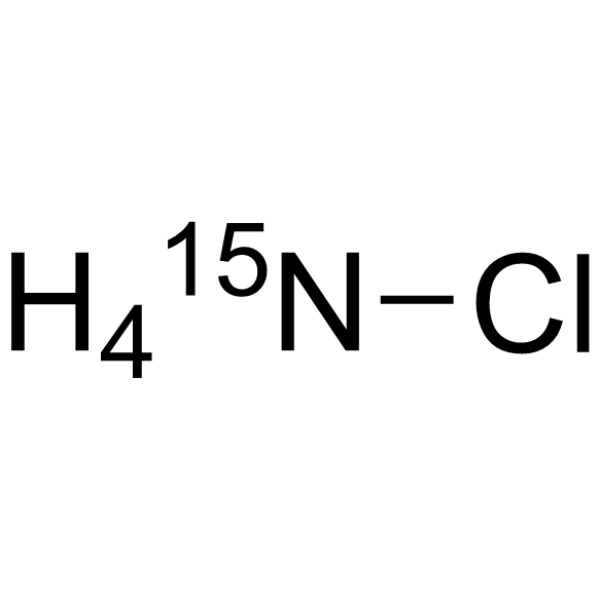
Ammonium chloride- 15N is the 15N labeled Ammonium chloride (HY-Y1269). Ammonium chloride, as a heteropolar compound with pH value regulation, can cause intracellular alkalization and metabolic acidosis thus effecting enzymatic activity and influencing the process of biological system. Ammonium chloride is an autophagy inhibitor. Ammonium chloride is also a lysosome inhibitor .
loading...
    loading...
Cat. No.: HY-111095B
CAS No.: 920-49-0
Purity:  ≥98.0%
Synonyms: (R)-2-Hydroxypropionic acid sodium
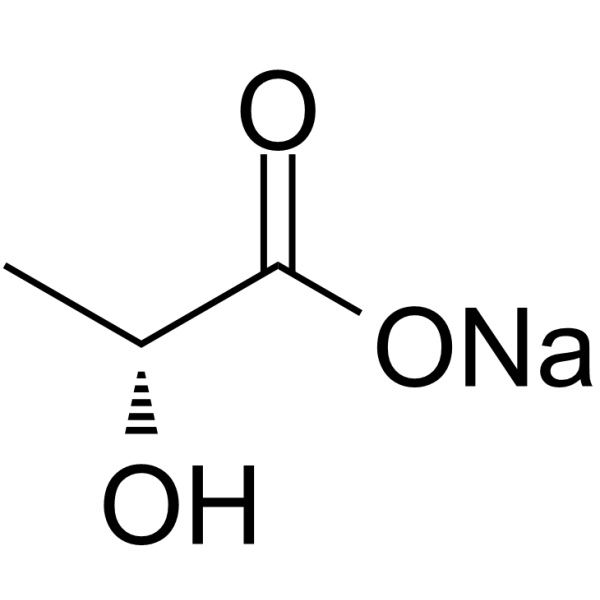
D-(-)-Lactic acid ((R)-2-Hydroxypropionic acid) sodium is an orally active, toxic optical isomer of Lactic acid (HY-B2227), mainly derived from overproduction by intestinal bacteria or exogenous intake. D-(-)-Lactic acid sodium can induce intoxication, characterized by severe metabolic acidosis accompanied by neurological symptoms .
loading...
    loading...
Cat. No.: HY-Y1269AS
CAS No.: 12015-14-4
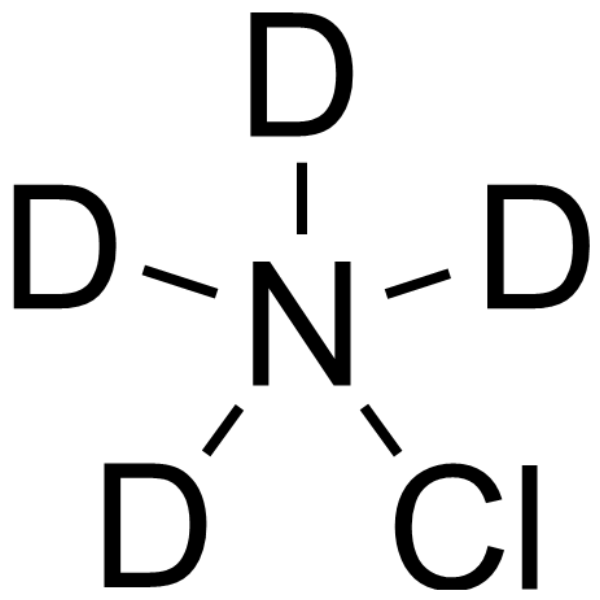
Ammonium chloride-d4 is the deuterium labeled Ammonium chloride. Ammonium chloride, as a heteropolar compound with pH value regulation, can cause intracellular alkalization and metabolic acidosis thus effecting enzymatic activity and influencing the process of biological system. Ammonium chloride is an autophagy inhibitor. Ammonium chloride is also a lysosome inhibitor .
loading...
    loading...
Cat. No.: HY-Y1269I
CAS No.: 12125-02-9
Synonyms: Salmiac (Pharmaceutical primary standard, USP)
Ammonium chloride United States Pharmacopeia (USP) Reference Standard (Salmiac, Pharmaceutical primary standard, USP) is a reagent that can be used in cell culture to provide a source of nitrogen. Ammonium chloride can be used as a heteropolar compound to regulate pH value, which can cause intracellular alkalination and metabolic acidosis, thus affecting the activity of enzymes and affecting the process of biological systems. Ammonium chloride is also a lysosome inhibitor .
loading...
    loading...
Cat. No.: HY-111095BR
CAS No.: 920-49-0
Synonyms: (R)-2-Hydroxypropionic acid sodium (Standard)
D-(-)-Lactic acid ((R)-2-Hydroxypropionic acid) sodium (Standard) is the analytical standard of Malvidin-3-glucoside sodium. This product is intended for research and analytical applications. D-(-)-Lactic acid sodium is an orally active, toxic optical isomer of Lactic acid (HY-B2227), mainly derived from overproduction by intestinal bacteria or exogenous intake. D-(-)-Lactic acid sodium can induce intoxication, characterized by severe metabolic acidosis accompanied by neurological symptoms .
loading...
    loading...
Cat. No.: HY-FL0002
Synonyms: Bicarbonate Ringer's solution
Target:  

Collagen HSP

Research Areas:  

Inflammation/Immunology

Sodium bicarbonate ringer's solution is a solution containing sodium bicarbonate and electrolytes such as sodium, magnesium, potassium, calcium and chloride, which can be used as a cell integrity protectant. It is used to replenish and correct extracellular fluid and to treat metabolic acidosis.
loading...
    loading...
Cat. No.: HY-L204
582 compounds

Lactic acid metabolism is one of the key metabolic pathways within living organisms. It plays a crucial role not only in cellular energy conversion but is also closely related to a variety of physiological and pathological processes. The production and clearance of lactic acid are important indicators of cellular metabolic balance, and its abnormal regulation may lead to conditions such as lactic acidosis, muscle fatigue, and hereditary metabolic diseases. Moreover, lactic acid is closely related to the malignancy of tumors and is considered a biomarker for malignant tumors and poor prognosis. Lactic acid can serve as a metabolic substrate to support the metabolic needs of tumor cells under hypoxic conditions, and it can also cause acidification of the tumor microenvironment, suppress immune cell function to promote immune evasion, and induce drug resistance in tumor cells. Currently, targeting lactic acid-lactylation and its related metabolic pathways has become a new research avenue for cancer treatment. In-depth exploration of the molecular mechanisms of lactic acid metabolism can help in screening lead compounds that regulate the lactic acid metabolism.

MCE contains 582 small molecule compounds targeting enzymes involved in lactic acid metabolism. This library is of significant value for researching the role of lactate metabolism in the mechanisms of diseases.

