
1. Search Result
Search Result
Results for "

mouse splenocytes

" in MedChemExpress (MCE) Product Catalog:

20

Inhibitors & Agonists

1

Biochemical Assay Reagents

2

Peptides

3

Inhibitory Antibodies

1

Click Chemistry

2

Oligonucleotides

Cat. No. Product Name Target Research Areas Chemical Structure
  • HY-P99248

    Risankizumab rzaa; BI 655066; ABBV-066

    Interleukin Related Inflammation/Immunology
    Risankizumab (BI 655066) is a humanised IgG monoclonal antibody, targeting IL-23 p19 subunit (Kd <10 pM) and inhibiting IL-17 production induced by human IL-23 in mouse splenocytes (IC50 = 2 pM). Risankizumab can be used to research immunological and inflammatory disorders such as psoriasis vulgaris, psoriatic arthritis, generalized pustular psoriasis and erythrodermic psoriasis .
    Risankizumab
  • HY-150724
    ODN 1018
    2 Publications Verification

    1018 ISS

    Toll-like Receptor (TLR) Inflammation/Immunology
    ODN 1018 (1018 ISS) is a TLR9 agonist and immune modulator. ODN 1018 exhibits adjuvant activity and augments CD8+ T cell responses with LNP-encapsulated OVA peptides. ODN 1018 triggers sustained suppression of allergic airway inflammation. ODN 1018 can be used for the research of allergic asthma and systemic lupus erythematosus .
    ODN 1018
  • HY-162874

    STING IFNAR Cancer
    diABZI-V/C-DBCO is a STING agonist with an EC50 of 1.47 nM. diABZI-V/C-DBCO activates the STING pathway, induces the production of IFN-I, and stimulates the secretion of IFN-β. diABZI-V/C-DBCO serves as a substrate for cathepsin B, and releases active diABZI-amine via cathepsin B-mediated cleavage. In an orthotopic mouse model of breast cancer, diABZI-V/C-DBCO increases serum IFN-β levels and the frequency of granzyme B + CD8 + T cells. diABZI-V/C-DBCO is applicable to research related to triple-negative breast cancer .
    diABZI-V/C-DBCO
  • HY-P1907

    HPV Cancer
    Human Papillomavirus (HPV) E7 protein (49-57) is a cytotoxic T lymphocyte (CTL) epitope peptide derived from HPV16 E7 protein (sequence: RAHYNIVTF). Human Papillomavirus (HPV) E7 protein (49-57) induces E749-57-specific CTL responses. Human Papillomavirus (HPV) E7 protein (49-57) can be used for the research of cervical cancer .
    Human Papillomavirus (HPV) E7 protein (49-57)
  • HY-165613

    Dipalmitoyl-S-glyceryl-cysteine; S-[2,3-Bis(palmitoyloxy)propyl]cysteine

    Toll-like Receptor (TLR) Influenza Virus NF-κB Infection Inflammation/Immunology
    Pam2Cys (Dipalmitoyl-S-glyceryl-cysteine; S-[2,3-Bis(palmitoyloxy)propyl]cysteine) is a TLR2 agonist and immunostimulant. Pam2Cys binds to TLR2 to activate dendritic cells and trigger the TLR2-dependent NF-κB signaling pathway. Pam2Cys also induces dendritic cell maturation by upregulating the expression of cell surface MHC II molecules. Pam2Cys activates innate immune signaling pathways, drives pro-inflammatory and antimicrobial responses, enhances the expression of macrophage activation markers, increases phagocytic activity, induces the release of IL-12 and pro-inflammatory cytokines, and polarizes macrophages into a pro-inflammatory, antimicrobial phenotype without interfering with IL-10-induced macrophage polarization. Pam2Cys also serves as the lipid moiety in synthetic lipopeptide vaccines and possesses self-adjuvant properties. Pam2Cys enhances the immunogenicity of conjugated peptide segments and induces cellular and humoral immune responses. However, it does not activate CD4 T cells in mouse splenocyte cultures when used alone. Pam2Cys activates pulmonary TLR2 signaling pathways, triggers innate immune responses, recruits neutrophils and macrophages, induces the secretion of various cytokines, alleviates symptoms and damages associated with influenza A virus infection in mice without impairing adaptive immunity. Pam2Cys can be used in studies related to tuberculosis and influenza A virus infection .
    Pam2Cys
  • HY-150750A

    Toll-like Receptor (TLR) Apoptosis Interleukin Related TNF Receptor IFNAR Inflammation/Immunology Cancer
    ODN M362 sodium is a TLR9 agonist that acts as a vaccine adjuvant. ODN M362 sodium activates mouse splenocytes, induces apoptosis in human hepatocellular carcinoma cells, upregulates proinflammatory cytokines in human hepatocellular carcinoma cells, and inhibits the proliferation of human hepatocellular carcinoma cells. ODN M362 sodium upregulates the expression of TLR9/TLR6, activates downstream signaling pathways via IRAK4 and IRF7, and strongly amplifies antigen-specific cellular immune responses to participate in innate immune activation. ODN M362 sodium can be used in research related to hepatocellular carcinoma and breast cancer .
    ODN M362 sodium
  • HY-P99976

    CD19 Inflammation/Immunology
    Anti-Mouse CD19 Antibody (1D3) is an IgG2a antibody inhibitor targeting mouse CD19. Anti-Mouse CD19 Antibody (1D3) reduces CD19 expression levels on the surface of B cells. Anti-Mouse CD19 Antibody (1D3) inhibits the replication of peritoneal B-1a cells .
    Anti-Mouse CD19 Antibody (1D3)
  • HY-P4846
    Ac-Pro-Gly-Pro-OH
    2 Publications Verification

    CXCR Apoptosis IFNAR TNF Receptor Interleukin Related Infection Inflammation/Immunology
    Ac-Pro-Gly-Pro-OH is an endogenous degradation product of extracellular collagen and acts as a CXCR2 agonist . Ac-Pro-Gly-Pro-OH exerts bactericidal activity by generating hydrogen peroxide, inhibits pulmonary inflammation, and reduces immune cell apoptosis (apoptosis). Ac-Pro-Gly-Pro-OH promotes the production of IFN-γ and inhibits the production of TNF-α and IL-6 in leukocytes. Ac-Pro-Gly-Pro-OH increases the survival rate of mice in sepsis models, enhances the bactericidal activity of neutrophils, acts as a neutrophil chemoattractant, induces neutrophil polarization, and regulates inflammatory and repair processes. Ac-Pro-Gly-Pro-OH induces chronic inflammation and tissue remodeling through sustained action. Ac-Pro-Gly-Pro-OH is released via alkaline hydrolysis of corneal proteins in alkali-injured eyes, thereby driving the early infiltration of neutrophils into the cornea. Ac-Pro-Gly-Pro-OH is applicable to research related to sepsis, chronic obstructive pulmonary disease, cystic fibrosis, bronchiolitis obliterans syndrome, severe asthma, idiopathic pulmonary fibrosis, and corneal ulcer .
    Ac-Pro-Gly-Pro-OH
  • HY-103637

    VTP-43742

    ROR Inflammation/Immunology
    Vimirogant (VTP-43742) is a potent, selective, and orally active RORγt inhibitor (Ki=3.5 nM; IC50=17 nM). Vimirogant exhibits >1000-fold selectivity versus the RORα and RORβ isotypes. Vimirogant inhibits Th17 differentiation and IL-17A secretion from mouse splenocytes (IC50=57 nM) without affecting Th1, Th2, or Treg cell differentiation. Vimirogant has the potential for autoimmune disorders research .
    Vimirogant
  • HY-P991112

    Transmembrane Glycoprotein Infection
    Anti-Mouse CD8α Antibody (YTS169.4) is an IgG2 monoclonal antibody targeting mouse CD8α. Anti-Mouse CD8α Antibody (YTS169.4) rapidly depletes or downregulates CD8 + T cells in the spleens of Biozzi AB/H mice. Anti-Mouse CD8α Antibody (YTS169.4) is applicable to research related to hepatitis B virus infection . Recommended isotype control: Rat IgG2b kappa, Isotype Control (HY-P990682).
    Anti-Mouse CD8α Antibody (YTS169.4)
  • HY-W144308

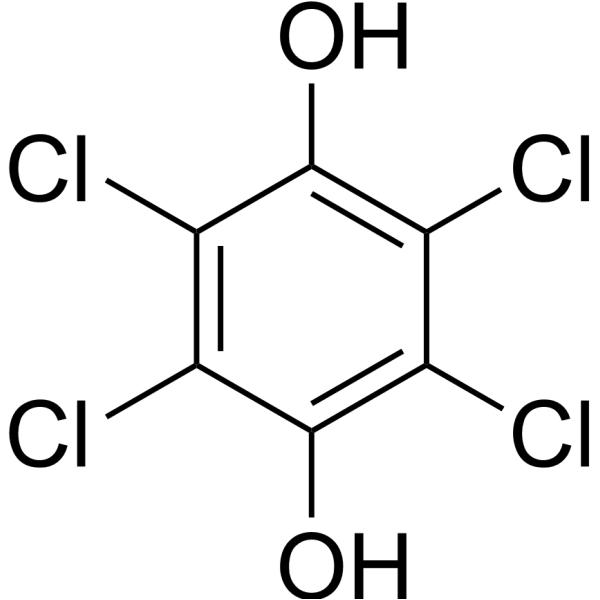
    TCHQ; Tetrachloroquinol

    Drug Metabolite Necroptosis Reactive Oxygen Species (ROS) Apoptosis Metabolic Disease Cancer
    Tetrachlorohydroquinone (TCHQ) is a metabolite of Pentachlorophenol. Tetrachlorohydroquinone induces reactive oxidant stress (ROS), inhibits apoptosis and induces necrosis in primary mouse splenocytes. Tetrachlorohydroquinone increases DNA lesions and induces oxidative stress in rodents .
    Tetrachlorohydroquinone
  • HY-103637A
    Vimirogant hydrochloride
    1 Publications Verification

    VTP-43742 hydrochloride

    ROR Inflammation/Immunology
    Vimirogant (VTP-43742) hydrochloride is a potent, selective, and orally active RORγt inhibitor (Ki=3.5 nM; IC50=17 nM). Vimirogant hydrochloride exhibits >1000-fold selectivity versus the RORα and RORβ isotypes. Vimirogant hydrochloride inhibits Th17 differentiation and IL-17A secretion from mouse splenocytes (IC50=57 nM) without affecting Th1, Th2, or Treg cell differentiation. Vimirogant hydrochloride has the potential for autoimmune disorders research .
    Vimirogant hydrochloride
  • HY-NP0144

    WGA (Fluorescein)

    Fluorescent Dye Others
    Succinylated Wheat Germ Agglutinin (Fluorescein) (WGA (Fluorescein)) is a fluorescent lectin that acts as a probe to specifically bind biomolecules. Succinylated Wheat Germ Agglutinin (Fluorescein) binds to cell surface glycoconjugates containing N-acetylglucosamine. Succinylated Wheat Germ Agglutinin (Fluorescein) is a selective agglutinating agent targeting specific red blood cells, thymocytes, splenocytes and lymphocytes. Succinylated Wheat Germ Agglutinin (Fluorescein) binds to fibroblasts and lymphocytes via dual binding sites in a temperature-dependent, saturable manner. Succinylated Wheat Germ Agglutinin (Fluorescein) can be used for quantitative studies of cell surface receptor glycoconjugates (Ex=495 nm, Em=515 nm) .
    Succinylated Wheat Germ Agglutinin (Fluorescein)
  • HY-135766

    (+)-Colletodiol

    Influenza Virus Infection
    Colletodiol is a fungal metabolite that has been found in D. grovesii and has immunosuppressant and antiviral activities. It inhibits concanavalin A- or LPS-induced proliferation of isolated mouse splenocytes (IC50s=12 and 5 μg/mL, respectively).1 Colletodiol inhibits influenza A viral replication in HeLa-IAV-Luc cells.
    Colletodiol
  • HY-W144308R

    TCHQ (Standard); Tetrachloroquinol (Standard)

    Drug Metabolite Reactive Oxygen Species (ROS) Reference Standards Necroptosis Apoptosis Metabolic Disease Cancer
    Tetrachlorohydroquinone (Standard) is the analytical standard of Tetrachlorohydroquinone (HY-W144308). This product is intended for research and analytical applications. Tetrachlorohydroquinone (TCHQ) is a metabolite of Pentachlorophenol. Tetrachlorohydroquinone induces reactive oxidant stress (ROS), inhibits apoptosis and induces necrosis in primary mouse splenocytes. Tetrachlorohydroquinone increases DNA lesions and induces oxidative stress in rodents .
    Tetrachlorohydroquinone (Standard)
  • HY-185098

    PD-1/PD-L1 Transmembrane Glycoprotein Cancer
    PD1-PDL1-IN-4 (compound 19) is a potent and orally active PD1-PDL1 inhibitor that modulates TIGIT and PD-1 signalling pathways. PD1-PDL1-IN-4 can rescue CD8 + T cell and mouse splenocyte proliferation. PD1-PDL1-IN-4 inhibits tumor growth in a CT26 syngeneic colon adenocarcinoma mouse model. PD1-PDL1-IN-4 can be used for research on colon cancer .
    PD1-PDL1-IN-4
  • HY-150095A

    IFNAR Inflammation/Immunology
    YE6144 free base is a selective prototypical interferon regulatory factor 5 (IRF5) inhibitor. YE6144 free base suppresses the disease course and is especially effective in remission maintenance in a mouse model of systemic lupus erythematosus (SLE). YE6144 free base can be used for SLE research .
    YE6144 free base
  • HY-182644

    Toll-like Receptor (TLR) NF-κB TNF Receptor Interleukin Related Cancer
    SMU-Z1 is a TLR1/2 heterodimer agonist with an EC50 of 4.88 nM. SMU-Z1 activates the NF-κB pathway, triggers pro-inflammatory cytokine production, and induces the generation of TNF-α, IL-1β, IL-6 and NO. SMU-Z1 promotes splenocyte proliferation and upregulates the expression of CD8 +T cells, NK cells and dendritic cells. SMU-Z1 exhibits significant anti-tumor effects in mouse leukemia models. SMU-Z1 can be used for leukemia-related research .
    SMU-Z1
  • HY-181739

    CD1 Cancer
    GCB-27a is a CD1d-binding immunostimulant and antitumor agent. GCB-27a binds to CD1d to form a stable complex and presents it to NKT cells, enhancing hydrophobic interactions within the A' pocket of CD1d through branched-chain conformation restriction. GCB-27a induces a Th1-biased immune response, drives IFN−γ production and limits IL-4 levels. GCB-27a is applicable to research related to melanoma lung metastasis .
    GCB-27a
  • HY-181740

    CD1 Cancer
    GCB-27b is an immunostimulant that binds to CD1d. GCB-27b forms a stable and long-lasting complex with CD1d, which is presented to the TCR of NKT cells to drive immune responses. GCB-27b induces a Th1-skewed immune response in *Mus musculus*, resulting in high expression of IFN−γ with restricted IL-4 levels. GCB-27b is applicable to research related to lung metastasis of melanoma .
    GCB-27b

Inquiry Online

Your information is safe with us. * Required Fields.

Salutation


Country or Region *

Applicant Name *


Organization Name *

Department *


Email Address *


Product Name *

Cat. No.


Requested quantity *

Phone Number *


Remarks

Inquiry Online

Inquiry Information

Product Name:
Cat. No.:
Quantity:
MCE Japan Authorized Agent:

