1. Search Result
Search Result
Results for "

muscle strips

" in MedChemExpress (MCE) Product Catalog:

14

Inhibitors & Agonists

2

Peptides

3

Natural
Products

Cat. No. Product Name Target Research Areas Chemical Structure
  • HY-15259
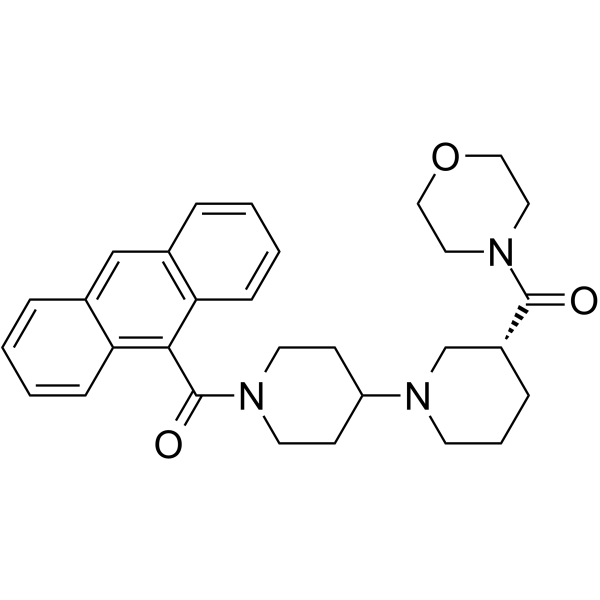
    CP-640186
    Maximum Cited Publications
    10 Publications Verification

    Acetyl-CoA Carboxylase Metabolic Disease
    CP-640186 is an orally active and cell-permeable Acetyl-CoA carboxylase (ACC) inhibitor with IC50s of 53 nM and 61 nM for rat liver ACC1 and rat skeletal muscle ACC2 respectively. Acetyl-CoA carboxylase (ACC) is a key enzyme of fatty acid metabolism that enables the synthesis of malonyl-CoA. CP-640186 can also stimulate muscle fatty acid oxidation .
    CP-640186
  • HY-114367
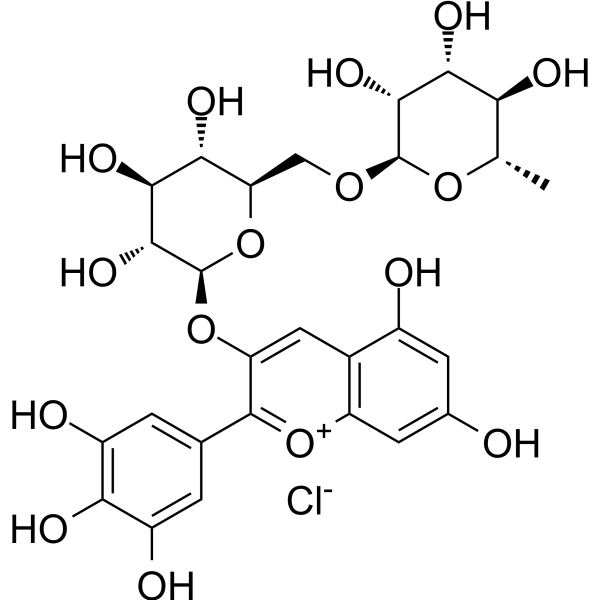
    Delphinidin 3-rutinoside chloride
    1 Publications Verification

    Delphinidin 3-O-rutinoside chloride

    Endothelin Receptor NO Synthase Myosin GLP Receptor Neurological Disease Metabolic Disease
    Delphinidin 3-rutinoside chloride is an anthocyanin component. Delphinidin 3-rutinoside chloride is isolable from the fruits of blackcurrant Ribes nigrum L. Delphinidin 3-rutinoside chloride activates the ETB receptor and stimulates the NO/cGMP pathway. Delphinidin 3-rutinoside chloride increases cyclic guanosine monophosphate production and reduces the phosphorylation level of Myosin regulatory light chain. Delphinidin 3-rutinoside chloride stimulates GLP-1 secretion. It significantly induces relaxation of bovine ciliary muscle strips contracted by ET-1 and inhibits ET-1-induced contraction of bovine ciliary muscle strips. Delphinidin 3-rutinoside chloride is applicable to research related to type 2 diabetes .
    Delphinidin 3-rutinoside chloride
  • HY-15259A
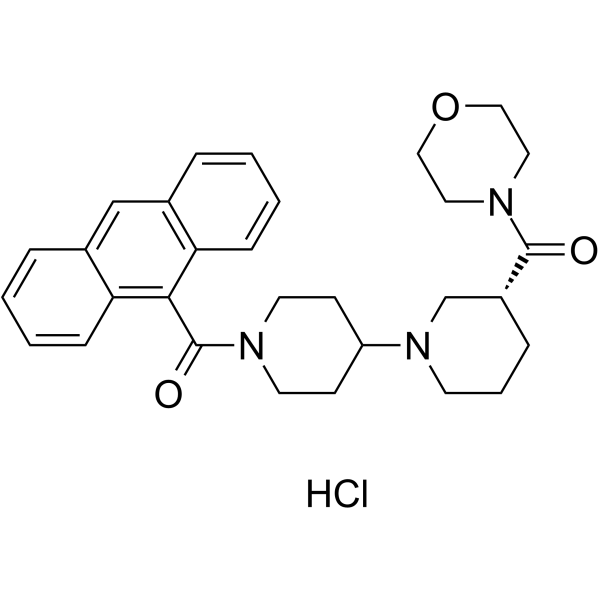
    CP-640186 hydrochloride
    Maximum Cited Publications
    10 Publications Verification

    Acetyl-CoA Carboxylase Metabolic Disease
    CP-640186 hydrochloride is an orally active and cell-permeable Acetyl-CoA carboxylase (ACC) inhibitor with IC50s of 53 nM and 61 nM for rat liver ACC1 and rat skeletal muscle ACC2 respectively. Acetyl-CoA carboxylase (ACC) is a key enzyme of fatty acid metabolism that enables the synthesis of malonyl-CoA. CP-640186 hydrochloride can also stimulate muscle fatty acid oxidation .
    CP-640186 hydrochloride
  • HY-59132

    Drug Intermediate Others
    2-Amino-1-phenylethanol is a pharmaceutical intermediate that can be used for the synthesis of antimalarial agents and β2-adrenergic receptor agonists .
    2-Amino-1-phenylethanol
  • HY-137325A

    Calcium Channel Metabolic Disease
    2-Chloro-ATP sodium (2-Chloro ATP) is an adenine nucleotide and an analog of ATP. It is an antagonist of the purinergic P2Y1 receptor and inhibits intracellular calcium mobilization induced by ADP (HY-W010918) in Jurkat cells expressing the human receptor (Ki=2.3 μM). 2-Chloro-ATP sodium is an agonist of the purinergic P2X receptor and induces inward currents in HEK293 cells expressing human bladder smooth muscle or rat PC12 forms of the receptor (EC50=0.5 and 2.5 μM). 2-Chloro-ATP sodium induces relaxation of precontracted guinea pig cecal strips in a concentration-dependent manner. 2-Chloro-ATP sodium has been used to study the substrate specificity of cyclic nucleotide-dependent protein kinases such as protein kinase A (PKA) and PKG.
    2-Chloro-ATP sodium
  • HY-123468

    Cyclic GMP-AMP Synthase PKA ERK Tyrosine Hydroxylase Calcium Channel Cardiovascular Disease Metabolic Disease
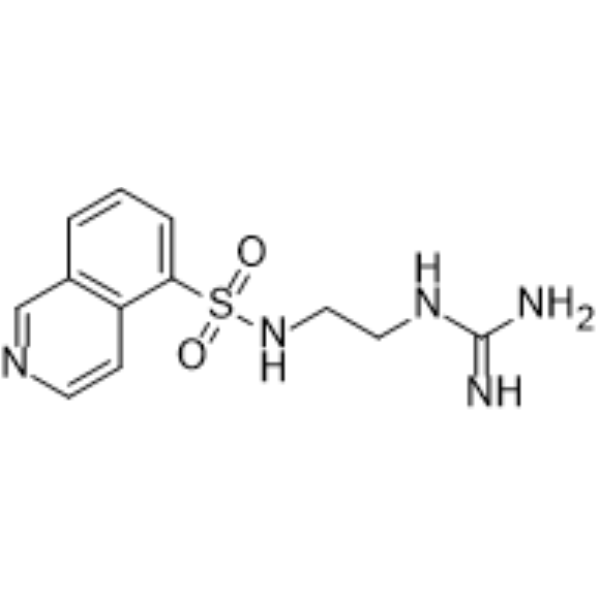
    HA-1004 is a selective inhibitor of PKA, which can inhibit lipolysis and induce vascular relaxation. HA-1004 is also a dual inhibitor of cyclic GMP-dependent protein kinase and cyclic AMP-dependent protein, and is involved in smooth muscle, second messenger, cyclic AMP and cyclic GMP regulation mechanisms. HA-1004 is an antagonist for calcium, that can be used as a vasodilator to inhibit the contraction of rabbit aortic strips, or to antagonize ERK and tyrosine hydroxylase (TH) phosphorylation in morphine abstinence rat models .
    HA-1004
  • HY-N3198A
    Sophoramine
    1 Publications Verification

    (-)-Sophoramine

    Adrenergic Receptor Cardiovascular Disease
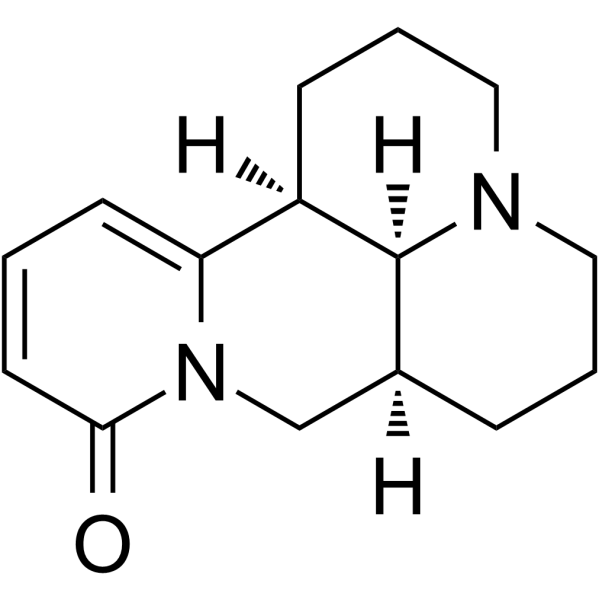
    Sophoramine ((-)-Sophoramine) is a prejunctional α2-adrenoceptor inhibitor that can be found in the seeds of Sophora alopecuroides. Sophoramine inhibits prejunctional α2-adrenoceptors to facilitate norepinephrine release from adrenergic nerves. Sophoramine shows cytotoxic activity against human cancer cells, positive inotropic activity, and activity in rodent arrhythmia models. Sophoramine can be used for the research of arrhythmias .
    Sophoramine
  • HY-P3853

    Neurokinin Receptor Neurological Disease
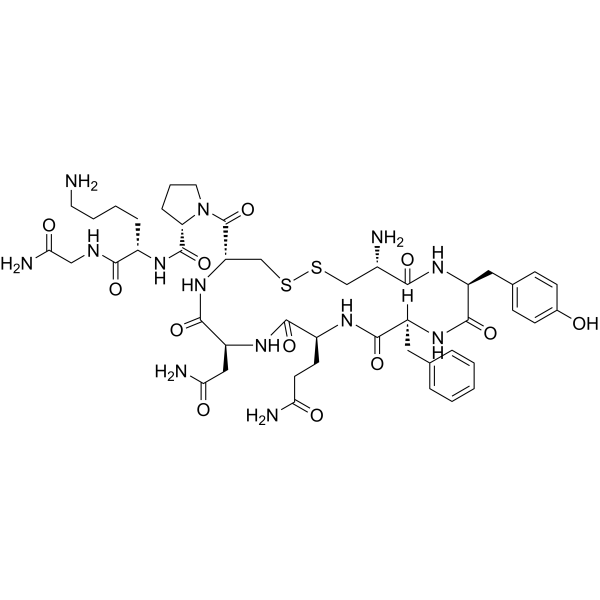
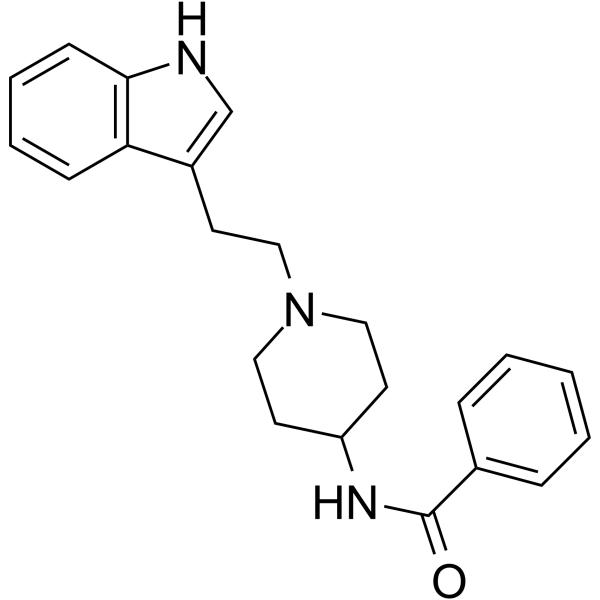
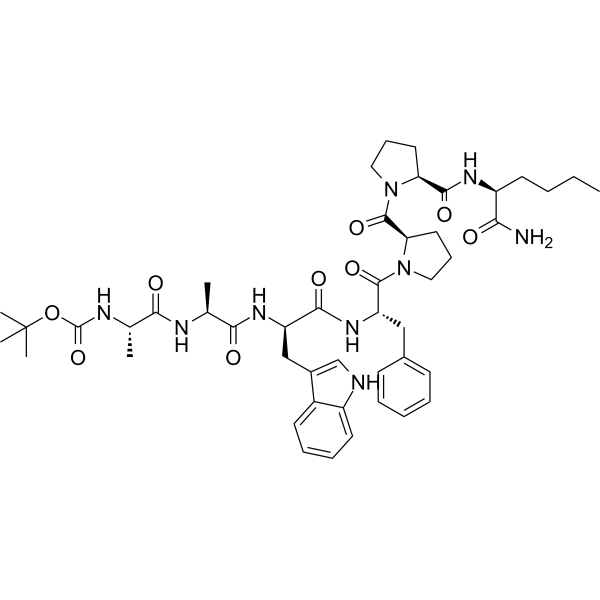
    GR 87389 is a potent NK2 receptor antagonist. GR 87389 antagonized GA 64349-induced smooth muscle strips contractions in a competitive manner in the human detrusor, prostate and prostatic urethra .
    GR 87389
  • HY-112348

    Cyclic GMP-AMP Synthase PKA ERK Calcium Channel Cardiovascular Disease Metabolic Disease
    HA-1004 hydrochloride is a selective inhibitor of PKA, which can inhibit lipolysis and induce vascular relaxation. HA-1004 hydrochloride is also a dual inhibitor of cyclic GMP-dependent protein kinase and cyclic AMP-dependent protein (Cyclic GMP-AMP Synthase), and is involved in smooth muscle, second messenger, cyclic AMP and cyclic GMP regulation mechanisms. HA-1004 hydrochloride an antagonist for calcium, that can be used as a vasodilator to inhibit the contraction of rabbit aortic strips, or to antagonize ERK and tyrosine hydroxylase (TH) phosphorylation in morphine abstinence rat models .
    HA-1004 hydrochloride
  • HY-P2436

    Neurokinin Receptor Neurological Disease
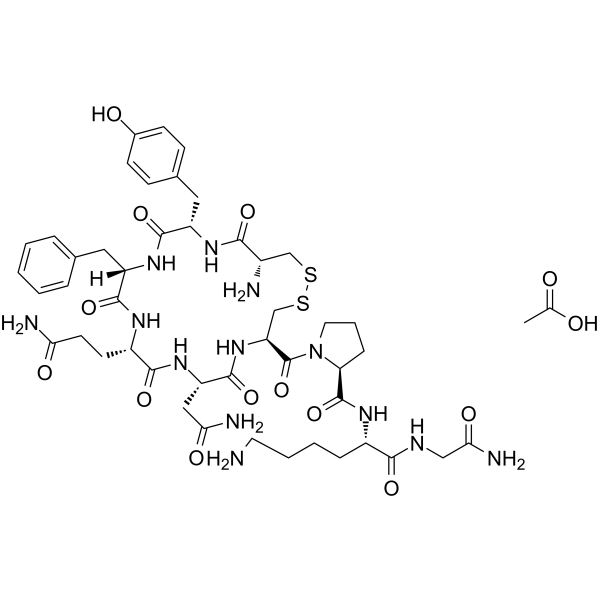
    L-659837 is a NK2 receptor antagonist, and can antagonize GR 64349 (HY-P1278)-induced contraction. L-659837 can be used for study of urinary bladder disorders .
    L-659837
  • HY-115381

    Endogenous Metabolite Cardiovascular Disease
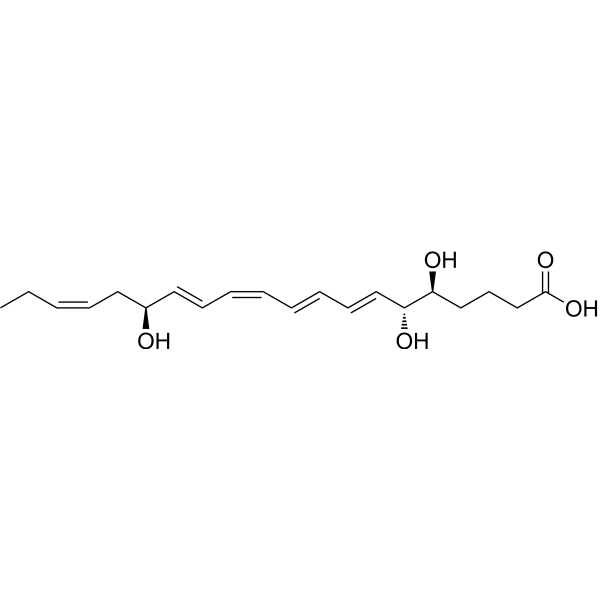
    Lipoxin A5 is an eicosapentaenoic acid derived from pig white blood cells. Lipoxin A5 slowly contracted the guinea pig lung parenchymal strips with a contractile force similar to that of LXA4 and LXB4.2, but LXA5 did not have the vasodilating effect on the aortic smooth muscle shown by LXA4 and LXB4.2 .
    Lipoxin A5
  • HY-123468A

    Cyclic GMP-AMP Synthase PKA ERK Calcium Channel Cardiovascular Disease Metabolic Disease
    HA-1004 dihydrochloride is a selective inhibitor of PKA, which can inhibit lipolysis and induce vascular relaxation. HA-1004 dihydrochloride is also a dual inhibitor of cyclic GMP-dependent protein kinase and cyclic AMP-dependent protein, and is involved in smooth muscle, second messenger, cyclic AMP and cyclic GMP regulation mechanisms. HA-1004 dihydrochloride is an antagonist for calcium, that can be used as a vasodilator to inhibit the contraction of rabbit aortic strips, or to antagonize ERK and tyrosine hydroxylase (TH) phosphorylation in morphine abstinence rat models .
    HA-1004 dihydrochloride
  • HY-182613

    Cardiovascular Disease
    NSC-2888 is a Rho kinase II (ROCK-II) inhibitor with an IC50 of 8.4 nM against human targets. NSC-2888 inhibits enzymatic activity by binding to active site amino acids via hydrogen bonds and hydrophobic interactions. NSC-2888 induces relaxation of pre-contracted rat aortic strips. NSC-2888 can be used in research related to hypertension .
    NSC-2888
  • HY-W411193

    Calcium Channel Cardiovascular Disease
    Pincainide is a calcium channel inhibitor. Pincainide inhibits voltage-gated calcium channel-mediated calcium influx in smooth muscle. Pincainide inhibits norepinephrine- and high potassium-induced contractile responses. Pincainide can be used in the research of heart diseases .
    Pincainide

Inquiry Online

Your information is safe with us. * Required Fields.

Salutation


Country or Region *

Applicant Name *


Organization Name *

Department *


Email Address *


Product Name *

Cat. No.


Requested quantity *

Phone Number *


Remarks

Inquiry Online

Inquiry Information

Product Name:
Cat. No.:
Quantity:
MCE Japan Authorized Agent:

