

1. Search Result
Search Result
Results for "

myeloid leukaemia

" in MedChemExpress (MCE) Product Catalog:

32

Inhibitors & Agonists

1

Peptides

5

Inhibitory Antibodies

3

Natural
Products

Targets Recommended:
Art. -Nr. Produktname Target Forschungsgebiete Chemical Structure
  • HY-134836
    STM2457
    100+ Cited Publications

    Apoptosis METTL3 Cancer
    STM2457 is a first-in-class, highly potent, selective and orally active METTL3 inhibitor with an IC50 of 16.9 nM. STM2457 can be used for the research of acute myeloid leukaemia (AML) .
    STM2457
  • HY-P99521

    XmAb14045

    CD3 Inflammation/Immunology Cancer
    Vibecotamab (XmAb14045) is a potent bispecific antibody targeting both CD123 and CD3. Vibecotamab targets T cell-mediated killing of CD123-expressing cells, regardless of T cell antigen specificity. Vibecotamab is a full length immunoglobulin molecule. Vibecotamab can be studied in research for diseases such as Myelodysplastic syndrome and acute myeloid leukemia. Recommend Isotype Control: half-IG G1-kappa/(scFv-heavy-lambda)-h-CH2-CH3 .
    Vibecotamab
  • HY-108894

    Ferroptosis Reactive Oxygen Species (ROS) Cardiovascular Disease Inflammation/Immunology Cancer
    Ferumoxytol is an FDA-approved ultrasmall superparamagnetic iron oxide preparation and iron replacement agent that exerts selective activity against leukemia cells with low ferroportin expression. Ferumoxytol increases intracellular iron levels, induces reactive oxygen species (ROS) production via the Fenton reaction, and triggers oxidative stress and cell death. Ferumoxytol reduces disease burden in mouse models and patient-derived leukemia models. As an MRI contrast agent, Ferumoxytol enables imaging of vascular lesions, tumors and lymph nodes. Ferumoxytol can be used in research related to acute myeloid leukemia and blast-phase chronic myeloid leukemia .
    Ferumoxytol
  • HY-157334
    DEG-77
    1 Publications Verification

    Molecular Glues Casein Kinase IKZF Family Bcl-2 Family CDK Apoptosis Cancer
    DEG-77 is a molecular glue targeting IKZF2 and CK1α, with DC50 values of 15.3 nM and 10 nM, respectively. DEG-77 exhibits significant anti-tumor activity, inducing increased transcriptional levels of the pro-apoptotic protein Bax and the cell cycle arrest protein p21. DEG-77 is applicable to the research of acute myeloid leukemia (AmL), diffuse large B-cell lymphoma and ovarian cancer.
    DEG-77
  • HY-P99390

    MCLA 117

    CD3 Interleukin Related IFNAR TNF Receptor Inflammation/Immunology Cancer
    Tepoditamab (MCLA-117) is a full-length human IgG1 bispecific monoclonal antibody that binds to CLEC12A of myeloid cells and CD3 of cytotoxic T cells. Among others, CLEC12A is a myeloid differentiation antigen. Tepoditamab kills AML leukaemia mother cells and AML leukaemia stem cells, induces T cell-mediated proliferative lysis of AML cells. Tepoditamab induces upto 30-fold T-cell expansion. Tepoditamab results in moderate to strong cytokine (IFNγ, IL-6, IL-8, IL-10, and TNFα) and IFNγ release in human whole blood and PBMC, respectively. Tepoditamab can be used in acute myeloid leukaemia (AML) research .
    Tepoditamab
  • HY-155219

    Methylenetetrahydrofolate Dehydrogenase (MTHFD) Apoptosis DNA/RNA Synthesis Cancer
    TH9028 is an inhibitor of MTHFD1, MTHFD2 and MTHFD2L, with IC50 values of 0.5 nM, 11 nM and 27 nM, respectively. TH9028 reduces replication fork speed, induces replication stress, triggers S-phase arrest, initiates apoptosis, impairs thymidine production, and causes erroneous uracil incorporation into DNA. TH9028 can be used in research related to acute myeloid leukemia .
    TH9028
  • HY-117664

    DNA/RNA Synthesis Cancer
    PNR-7-02 is a dual Rev1 and human DNA polymerase η (hpol η) inhibitor, with an IC50 value of 8 μM against hpol η. PNR-7-02 binds to hpol η to disrupt the orientation of template DNA and block the catalytic function of hpol η. When used in combination with Cisplatin (HY-17394), PNR-7-02 induces DNA damage and replication stress in cells with intact hpol η function. PNR-7-02 can be used in mechanism studies related to chronic myeloid leukemia and ovarian cancer .
    PNR-7-02
  • HY-122623A

    Apoptosis Cancer
    DB818 dihydrochloride is the dihydrochloride salt form of DB818 (HY-122623). DB818 dihydrochloride is an inhibitor for Homeobox A9 (HOXA9). DB818 dihydrochloride reduces the formation of HOXA9-DNA complexes, inhibits the growth and induces apoptosis in AML cell lines OCI/AML3, MV4-11, and THP-1 .
    DB818 dihydrochloride
  • HY-157327

    Bcr-Abl Cancer
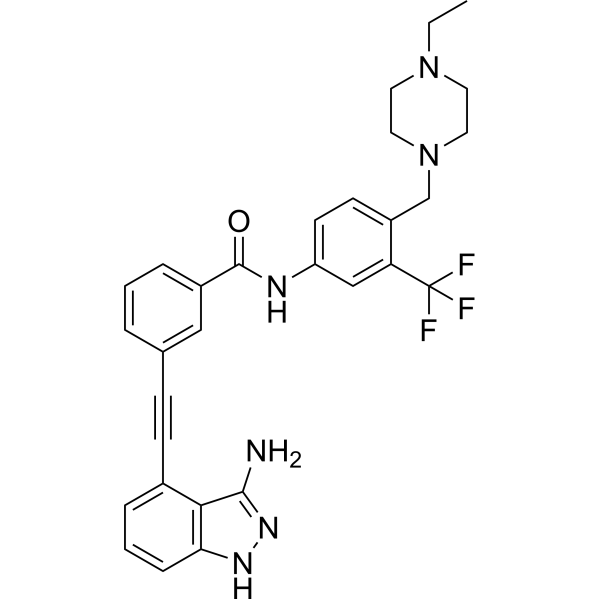
    AKE-72 (compound 5) is a potent inhibitor of Pan-BCR-ABL. AKE-72 inhibits BCR-ABL WT, BCR-ABL T315, BCR-ABL E255K, BCR-ABL F3171, BCR-ABL H396P and BCR-ABL Q252H with IC50s of < 0.5, 9, 8.98, 3.12, < 1.0 and 3.88 nM, respectively. AKE-72 has anti-leukemic activity against K-562 cell line .
    AKE-72
  • HY-116894

    Apoptosis Cancer
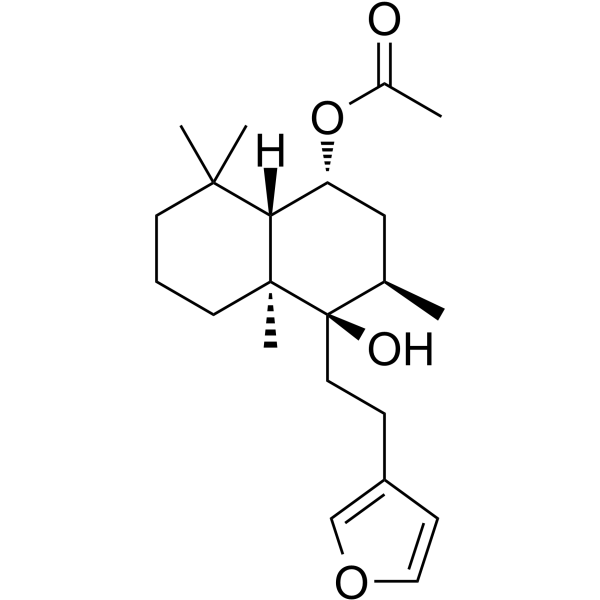
    Rotundifuran, a labdane type diterpene, is isolated from Vitex rotundifolia. Rotundifuran can inhibit the cell cycle progression and induce apoptosis in human myeloid leukaemia cells .
    Rotundifuran
  • HY-10226

    R306465

    Apoptosis HDAC Cancer
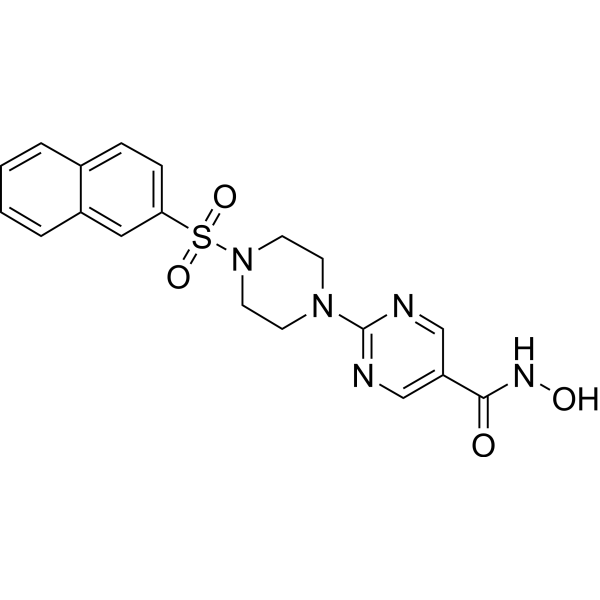
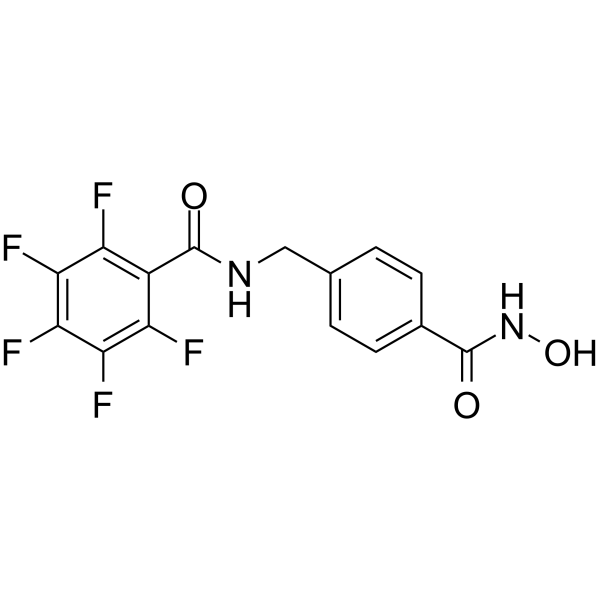
    JNJ-16241199 (R306465) is an orally active, selectivehydroxamate-based histone deacetylase (HDAC) inhibitor, with theIC50of 3.3 nM and 23 nM for HDAC1and HDAC8, respectively.JNJ-16241199induces histone 3 acetylation and strongly increases the expression of p21 waf1, cip1 in A2780 ovarian carcinoma cells.JNJ-16241199 inducescell apoptosisand shows anticancer activityin a broad spectrum of human malignancies. JNJ-16241199 can be used for cancer study .
    JNJ-16241199
  • HY-E70634

    Bcr-Abl Cancer
    The emergence of mutations in the BCR::ABL1 kinase domain (KD) impairs Imatinib Mesylate (HY-50946) binding capacity, thus contributing to Imatinib Mesylate resistance. Identification of these mutations is important for treatment decisions and precision medicine in chronic myeloid leukaemia (CML). ABL1 E255K Recombinant Human Active Protein Kinase is a recombinant ABL1 E255K protein that can be used to study ABL1 E255K-related functions .
    ABL1 E255K Recombinant Human Active Protein Kinase
  • HY-P991560

    CD47 Cancer
    TQB-2928 is a monoclonal antibody against CD47, which can be used in the study of cancer.
    TQB-2928
  • HY-157404

    Pim Cancer
    Pim-1/2 kinase inhibitor 2 (compound 5b) is a competitive PIM-1 and PIM-2 kinase inhibitor with IC50s of 1.31 μM and 0.67 μM, respectively. Pim-1/2 kinase inhibitor 2 shows in-vitro low cytotoxicity against normal human lung fibroblast Wi-38 cell line and potent in-vitro anticancer activity against myeloid leukaemia (NFS-60), liver (HepG-2), prostate (PC-3), and colon (Caco-2) cancer cell lines .
    Pim-1/2 kinase inhibitor 2
  • HY-150586

    HDAC Apoptosis Cancer
    PTG-0861 is a selective histone deacetylase 6 (HDAC6) inhibitor with the IC50 value of 5.92 nM. PTG-0861 induces apoptosis and can be used in the study of acute myeloid leukemia, multiple myeloma and other hematological cancers .
    PTG-0861
  • HY-P991247

    MHC Cancer
    Anti-HLA-A2 (Hu8F4) is a human monoclonal antibody (mAb) targeting HLA-A2. Anti-HLA-A2 (Hu8F4) can be used in Acute myeloid leukaemia research. Recommended isotype control: Human IgG1 kappa, Isotype Control (HY-P99001) .
    Anti-HLA-A2 (Hu8F4)
  • HY-149030

    Dihydroorotate Dehydrogenase Cancer
    DHODH-IN-21 (compound 19) is an orally active selective dihydroorotate dehydrogenase (DHODH) inhibitor with an IC50 value of 1.1 nM. DHODH-IN-21 has anticancer activity and can be used in studies of acute myeloid leukaemia (AML) .
    DHODH-IN-21
  • HY-P991425

    Transmembrane Glycoprotein Cancer
    AT-1413 is a human monoclonal antibody (mAb) targeting CD43. AT-1413 induces antibody-dependent cell-mediated cytotoxicity (ADCC) in melanoma cell lines and acute myeloid leukemia (AML) cells. AT-1413 has antitumor activity in AML mouse models. AT-1413 can be used in Acute myeloid leukaemia, Breast cancer, Malignant melanoma and Myelodysplastic syndromes research. Recommended isotype control: Human IgG1 kappa, Isotype Control (HY-P99001) .
    AT-1413
  • HY-N10079

    Jatrophan

    SHP2 Cancer
    Suchilactone (Jatrophan) is a lignan extracted from Monsonia angustifolia E.Mey. Suchilactone binds to SHP2 and inhibits SHP2 activation, thereby inhibiting ERK-mediated cell proliferation. Suchilactone can be ued in acute myeloid leukaemia (AML) .
    Suchilactone
  • HY-E70639

    Bcr-Abl Cancer
    The emergence of mutations in the BCR::ABL1 kinase domain (KD) impairs Imatinib Mesylate (HY-50946) binding capacity, thus contributing to Imatinib Mesylate resistance. Identification of these mutations is important for treatment decisions and precision medicine in chronic myeloid leukaemia (CML). ABL1 Q252H Recombinant Human Active Protein Kinase is a recombinant ABL1 Q252H protein that can be used to study ABL1 Q252H-related functions .
    ABL1 Q252H Recombinant Human Active Protein Kinase
  • HY-E70640

    Bcr-Abl Cancer
    The emergence of mutations in the BCR::ABL1 kinase domain (KD) impairs Imatinib Mesylate (HY-50946) binding capacity, thus contributing to Imatinib Mesylate resistance. Identification of these mutations is important for treatment decisions and precision medicine in chronic myeloid leukaemia (CML). ABL1 T315I Recombinant Human Active Protein Kinase is a recombinant ABL1 T315I protein that can be used to study ABL1 T315I-related functions .
    ABL1 T315I Recombinant Human Active Protein Kinase
  • HY-E70638

    Bcr-Abl Cancer
    The emergence of mutations in the BCR::ABL1 kinase domain (KD) impairs Imatinib Mesylate (HY-50946) binding capacity, thus contributing to Imatinib Mesylate resistance. Identification of these mutations is important for treatment decisions and precision medicine in chronic myeloid leukaemia (CML). ABL1 M351T Recombinant Human Active Protein Kinase is a recombinant ABL1 M351T protein that can be used to study ABL1 M351T-related functions .
    ABL1 M351T Recombinant Human Active Protein Kinase
  • HY-150562

    CDK Cancer
    CDK9-IN-19 is a highly potent and selective CDK9 inhibitor with an IC50 value of 2.0 nM. CDK9-IN-19 has excellent cellular antiproliferative activity, moderate pharmacokinetic property and low hERG inhibition. CDK9-IN-19 significantly induces tumour growth inhibition in an MV4-11 xenograft mice model. CDK9-IN-19 can be used for researching acute myeloid leukaemia (AML) .
    CDK9-IN-19
  • HY-E70635

    Bcr-Abl Cancer
    The emergence of mutations in the BCR::ABL1 kinase domain (KD) impairs Imatinib Mesylate (HY-50946) binding capacity, thus contributing to Imatinib Mesylate resistance. Identification of these mutations is important for treatment decisions and precision medicine in chronic myeloid leukaemia (CML). ABL1 F317I Recombinant Human Active Protein Kinase is a recombinant ABL1 F317I protein that can be used to study ABL1 F317I-related functions .
    ABL1 F317I Recombinant Human Active Protein Kinase
  • HY-E70641

    Bcr-Abl Cancer
    The emergence of mutations in the BCR::ABL1 kinase domain (KD) impairs Imatinib Mesylate (HY-50946) binding capacity, thus contributing to Imatinib Mesylate resistance. Identification of these mutations is important for treatment decisions and precision medicine in chronic myeloid leukaemia (CML). ABL1 Y253F Recombinant Human Active Protein Kinase is a recombinant ABL1 Y253F protein that can be used to study ABL1 Y253F-related functions .
    ABL1 Y253F Recombinant Human Active Protein Kinase
  • HY-E70636

    Bcr-Abl Cancer
    The emergence of mutations in the BCR::ABL1 kinase domain (KD) impairs Imatinib Mesylate (HY-50946) binding capacity, thus contributing to Imatinib Mesylate resistance. Identification of these mutations is important for treatment decisions and precision medicine in chronic myeloid leukaemia (CML). ABL1 G250E Recombinant Human Active Protein Kinase is a recombinant ABL1 G250E protein that can be used to study ABL1 G250E-related functions .
    ABL1 G250E Recombinant Human Active Protein Kinase
  • HY-E70637

    Bcr-Abl Cancer
    The emergence of mutations in the BCR::ABL1 kinase domain (KD) impairs Imatinib Mesylate (HY-50946) binding capacity, thus contributing to Imatinib Mesylate resistance. Identification of these mutations is important for treatment decisions and precision medicine in chronic myeloid leukaemia (CML). ABL1 H396P Recombinant Human Active Protein Kinase is a recombinant ABL1 H396P protein that can be used to study ABL1 H396P-related functions .
    ABL1 H396P Recombinant Human Active Protein Kinase
  • HY-N3210

    Others Cancer
    Nb-Demethylechitamine is an alkaloid isolated from the methanol extract of Alstonia rostrata twigs. Nb-Demethylechitamine has in vitro cytotoxic activity against several human cancer cell lines, including human myeloid leukemia HL-60, liver cancer SMMC-7721, lung cancer A-549, breast cancer MCF-7, and colon cancer SW480 cells .
    Nb-Demethylechitamine
  • HY-182766

    Molecular Glues Epigenetic Reader Domain Cancer
    AMX-883 a selective and orally active BRD9 molecular glue degrader that drives differentiation in acute myeloid leukaemia. AMX-883 shows selectivity over all other bromodomain containing proteins and proteome wide. AMX-883 does not employ the commonly used E3 ligases (cereblon, VHL) but instead drives degradation via DCAF16 as a targeted glue. AMX-883 can be used for the study of acute myeloid leukaemia (AML) .
    AMX-883
  • HY-10226R

    R306465 (Standard)

    Reference Standards Apoptosis HDAC Cancer
    JNJ-16241199 (Standard) is the analytical standard of JNJ-16241199 (HY-10226). This product is intended for research and analytical applications. JNJ-16241199 (R306465) is an orally active, selectivehydroxamate-based histone deacetylase (HDAC) inhibitor, with theIC50of 3.3 nM and 23 nM for HDAC1and HDAC8, respectively.JNJ-16241199induces histone 3 acetylation and strongly increases the expression of p21waf1, cip1 in A2780 ovarian carcinoma cells.JNJ-16241199 inducescell apoptosisand shows anticancer activityin a broad spectrum of human malignancies. JNJ-16241199 can be used for cancer study .
    JNJ-16241199 (Standard)
  • HY-138195

    DNA/RNA Synthesis Apoptosis FAK Src MMP Autophagy Cancer
    NEO212 is an orally active, blood-brain barrier permeable conjugate of Temozolomide (TMZ) (HY-17364) and Perillyl Alcohol (POH) (HY-N7000), with potent anticancer activity. NEO212 overcomes classical TMZ resistance and DNA alkylation by depleting MGMT. By inhibiting the FAK/Src signaling pathway, NEO212 reduces the production of MMP2 and MMP9, induces mesenchymal-epithelial transition, and inhibits the migration, invasion and tumor progression of glioma stem cells. NEO212 disrupts autophagy flux to enhance mitochondrial apoptosis; it induces differentiation of acute myeloid leukemia (AML) cells into macrophages and proliferation arrest .
    NEO212
  • HY-165532

    SGX70393

    Bcr-Abl Cancer
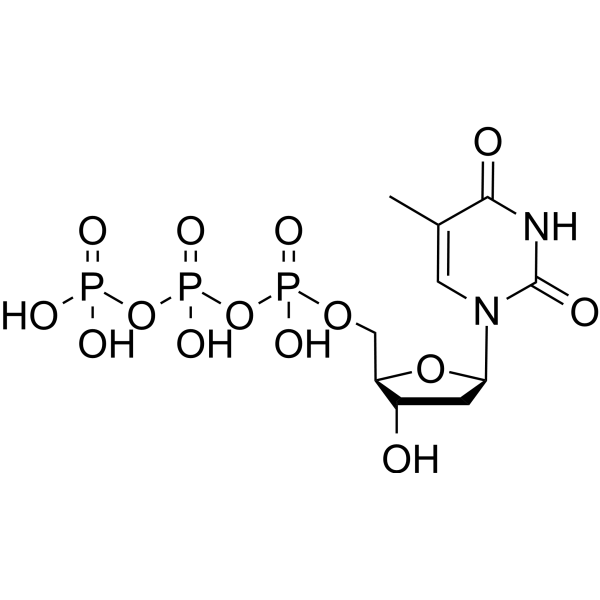
    SGX393 (SGX70393) is a Bcr-Abl kinase inhibitor. SGX393 binds to the active conformation of the kinase domains of both wild-type and T315I mutant Bcr-Abl, thereby inhibiting kinase activity. SGX393 exhibits antiproliferative effects in cells expressing wild-type or T315I mutant Bcr-Abl, and suppresses T315I-driven tumor growth. SGX393 can be used for the research of chronic myeloid leukemia .
    SGX393

Online-Anfrage

Your information is safe with us. * Required Fields.

Anrede


Country or Region *

Name des Antragstellers *


Name der Organisation *

Department *


E-Mail-Addresse *


Produktname *

Art. -Nr.


Requested quantity *

Telefonnummer *


Bemerkungen

Online-Anfrage

Inquiry Information

Produktname:
Art. -Nr.:
Menge:
MCE Japan Authorized Agent:

