1. Search Result
Search Result
Pathways Recommended: Stem Cell/Wnt Cell Cycle/DNA Damage
Results for "

neural progenitor cells

" in MedChemExpress (MCE) Product Catalog:

22

Inhibitors & Agonists

2

Fluorescent Dyes

1

Biochemical Assay Reagents

2

Peptides

3

Natural
Products

1

GMP Molecules

Cat. No. Product Name Target Research Areas Chemical Structure
  • HY-12273
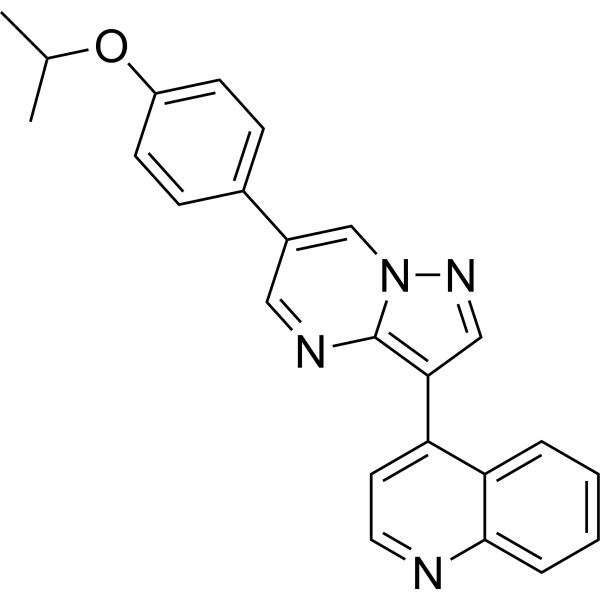
    DMH-1
    Maximum Cited Publications
    15 Publications Verification

    TGF-β Receptor Organoid Microtubule/Tubulin Cardiovascular Disease Neurological Disease
    DMH-1 is a selective BMP inhibitor. DMH-1 upregulates the expression of SOX1. DMH-1 increases cardiomyocyte progenitor cells and promotes the differentiation of mouse embryonic stem cells into cardiomyocytes. DMH-1 induces the differentiation of hiPSC-derived neural progenitor cells into β3-tubulin-positive neurons .
    DMH-1
  • HY-112680A

    G-quadruplex Neurological Disease
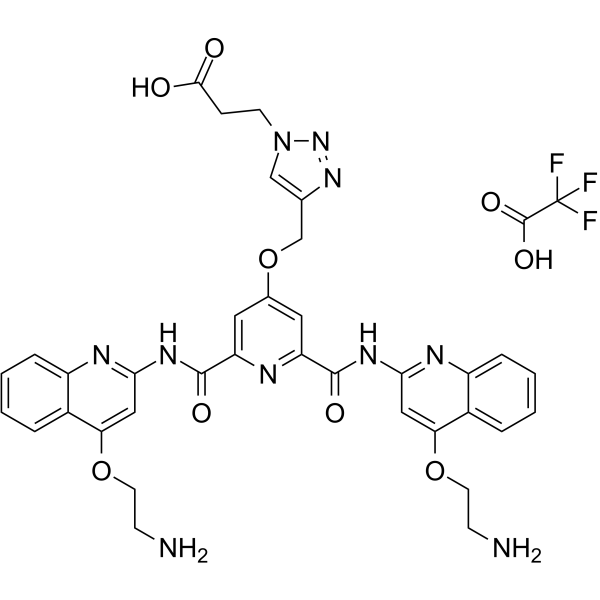
    Carboxy pyridostatin trifluoroacetate salt is a G-quadruplex ligand. Carboxy pyridostatin trifluoroacetate salt has a highly molecular specificity to RNA on DNA G4s and reduces ATF-5 protein. Carboxy pyridostatin trifluoroacetate salt reduces cell proliferation and hinders stress granule (SG) formation .
    Carboxy pyridostatin trifluoroacetate salt
  • HY-108476
    INDY
    2 Publications Verification

    DYRK Cancer
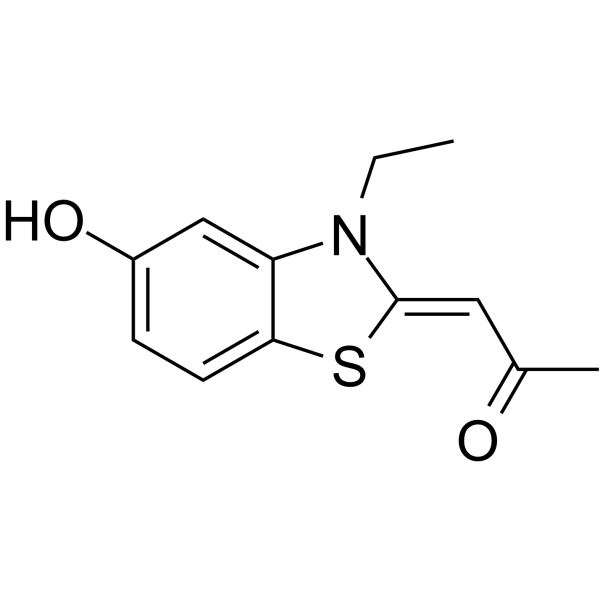
    INDY is a potent and ATP-competitive Dyrk1A and Dyrk1B inhibitor with IC50s of 0.24 μM and 0.23 μM, respectively. INDY binds in the ATP pocket of the enzyme and has a Ki value of 0.18 μM for Dyrk1A. INDY sharply reduces the self-renewal capacity of normal and tumorigenic cells in primary Glioblastoma (GBM) cell lines and neural progenitor cells .
    INDY
  • HY-W018555

    Endogenous Metabolite Bacterial Infection Neurological Disease
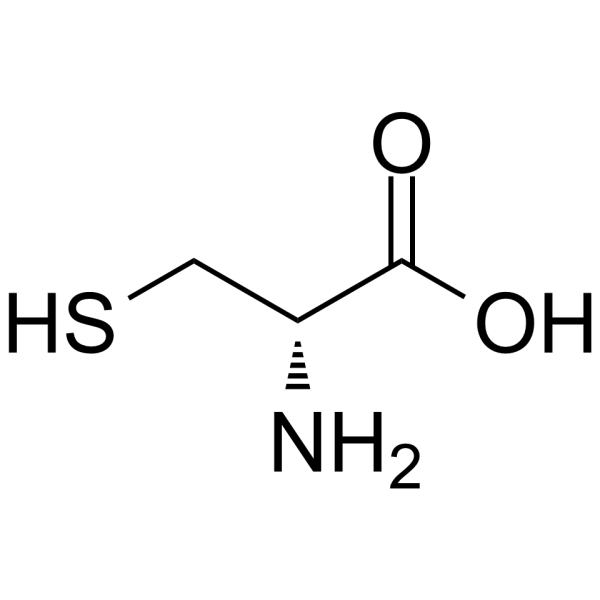
    D-Cysteine, the D-isomer of cysteine, is an orally active antibacterial agent and a regulator of neural progenitor cell proliferation. D-Cysteine can inhibit Escherichia coli, Streptococcus mutans, and Streptococcus sanguinis. The no-observed-adverse-effect level of D-Cysteine in rats should be less than 500 mg/kg/day .
    D-Cysteine
  • HY-P0204A

    Endothelin 3 (Rat,Human) TFA

    Endothelin Receptor Integrin Neurological Disease
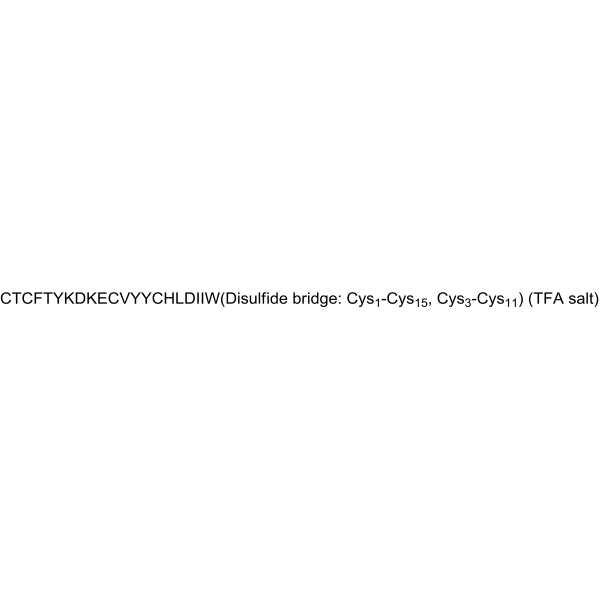
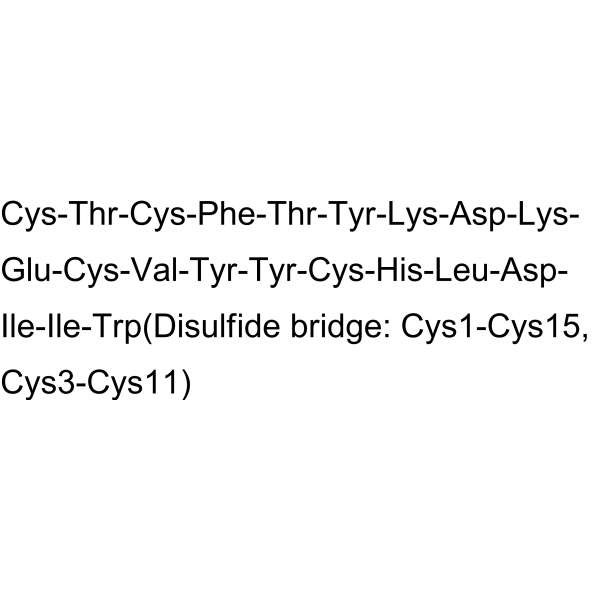
    Endothelin-3, human, mouse, rabbit, rat TFA (Endothelin 3 (Rat,Human) TFA) is an adhesion stimulant. Endothelin-3, human, mouse, rabbit, rat TFA stimulates the adhesion of enteric neural crest cells to various ECM components. Endothelin-3, human, mouse, rabbit, rat TFA plays an important role in the maintenance and self-renewal of intestinal progenitor cells, participates in the migration of enteric neural crest cells, and helps maintain a suitable environment for the colonization of enteric neural crest cells. Endothelin-3, human, mouse, rabbit, rat TFA acts synergistically with the β1-integrin signaling pathway during enteric nervous system development. Endothelin-3, human, mouse, rabbit, rat TFA can be used in studies related to distal aganglionosis .
    Endothelin-3, human, mouse, rabbit, rat TFA
  • HY-103361
    SB297006
    1 Publications Verification

    CCR Neurological Disease Endocrinology
    SB297006 is a CCR3 antagonist, which significantly inhibits proliferation and neurosphere formation in CCL11-treated neural progenitor cells.
    SB297006
  • HY-10591
    Neuropathiazol
    1 Publications Verification

    TGF-β Receptor Neurological Disease
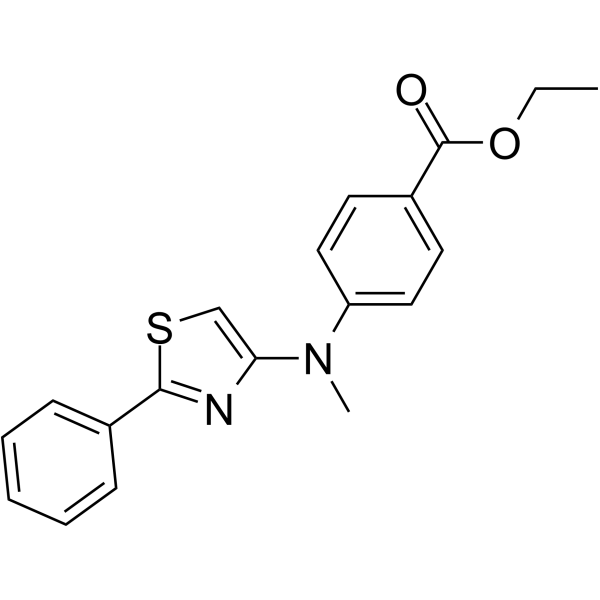
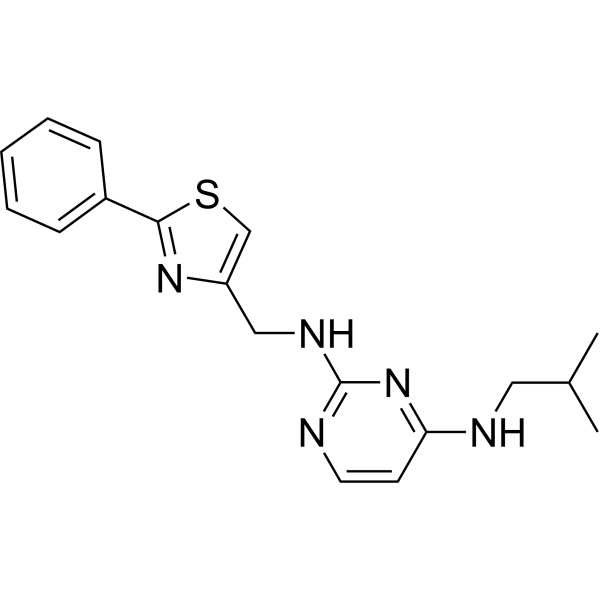
    Neuropathiazol, a neuronal differentiation inducer, selectively induces neuronal differentiation of multipotent hippocampal neural progenitor cells .
    Neuropathiazol
  • HY-P0204
    Endothelin-3, human, mouse, rabbit, rat
    1 Publications Verification

    Endothelin 3 (Rat,Human)

    Endothelin Receptor Integrin Neurological Disease
    Endothelin-3, human, mouse, rabbit, rat (Endothelin 3 (Rat,Human)) is an adhesion stimulant. Endothelin-3, human, mouse, rabbit, rat stimulates the adhesion of enteric neural crest cells to various ECM components. Endothelin-3, human, mouse, rabbit, rat plays an important role in the maintenance and self-renewal of intestinal progenitor cells, participates in the migration of enteric neural crest cells, and helps maintain a suitable environment for the colonization of enteric neural crest cells. Endothelin-3, human, mouse, rabbit, rat acts synergistically with the β1-integrin signaling pathway during enteric nervous system development. Endothelin-3, human, mouse, rabbit, rat can be used in studies related to distal aganglionosis .
    Endothelin-3, human, mouse, rabbit, rat
  • HY-112680

    G-quadruplex Neurological Disease
    Carboxypyridostatin is a G-quadruplex ligand. Carboxypyridostatin has a highly molecular specificity to RNA on DNA G4s and reduces ATF-5 protein. Carboxypyridostatin reduces cell proliferation and hinders stress granule (SG) formation .
    Carboxypyridostatin
  • HY-12273G

    Organoid TGF-β Receptor Microtubule/Tubulin Cardiovascular Disease Neurological Disease
    DMH-1 (GMP) is GMP grade DMH-1 (HY-12273). DMH-1 (GMP) is a selective BMP inhibitor. DMH-1 (GMP) upregulates the expression of SOX1. DMH-1 (GMP) increases cardiomyocyte progenitor cells and promotes the differentiation of mouse embryonic stem cells into cardiomyocytes. DMH-1 (GMP) induces the differentiation of hiPSC-derived neural progenitor cells into β3-tubulin-positive neurons .
    DMH-1
  • HY-N10631

    Endogenous Metabolite Infection Inflammation/Immunology Cancer
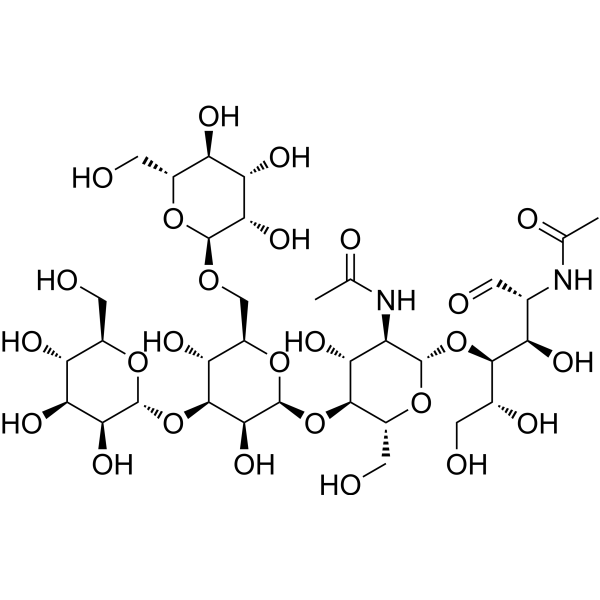
    Paucimannose is a mannosidic N-glycan epitope. It acts as a carcinoembryonic antigen, and a marker for cancer, stem cell properties and inflammation. Paucimannose mainly exists in plants and invertebrates. It consists of oligomannose-type N-glycans that preferentially bind to mannose-binding lectin. Paucimannose localizes on the surface of resting cells and translocates upon cell activation. It can be used in studies related to Pseudomonas aeruginosa infection, cancer and pancreatitis .
    Paucimannose
  • HY-113845
    (+)-Intermedine
    1 Publications Verification

    Others Neurological Disease
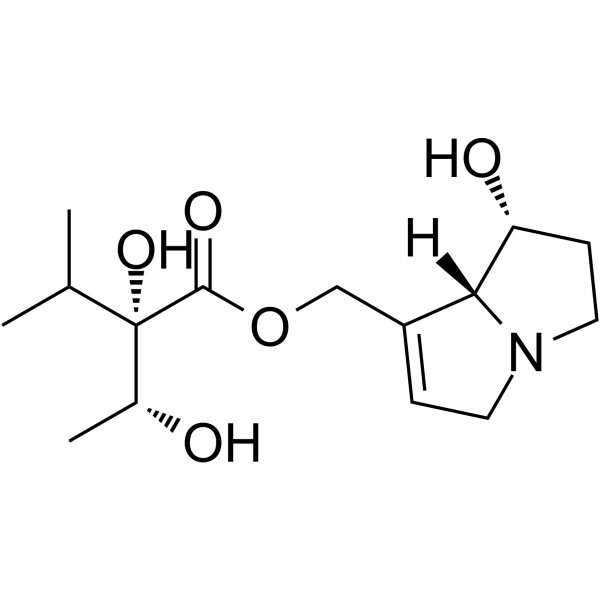
    (+)-Intermedine, a pyrrolizidine alkaloid (PA), exhibits significant cytotoxicity in neural progenitor cells (NPCs) .
    (+)-Intermedine
  • HY-178048

    Autophagy Neurological Disease
    Neuroprotective agent 13 is a brain-penetrant 1H-benzo[d]imidazoles compound with neuroprotective effect. Neuroprotective agent 13 can activate autophagy and clear SCMAS accumulation from iPSC-derived neural progenitor cells. Neuroprotective agent 13 can be used for the research of neurological disease, such as neuronal ceroid lipofuscinoses (NCLs) .
    Neuroprotective agent 13
  • HY-10396A

    (2R,3S)-PF 03491390; (2R,3S)-IDN-6556

    Caspase Flavivirus Infection Neurological Disease Cancer
    (2R,3S)-Emricasan ((2R,3S)-PF 03491390) is an isomer of Emricasan (HY-10396). Emricasan is an orally active and irreversible pan-caspase inhibitor. Emricasan inhibits Zika virus (ZIKV)-induced increases in caspase-3 activity and protected human cortical neural progenitors .
    (2R,3S)-Emricasan
  • HY-10996

    HSP Microtubule/Tubulin Aurora Kinase Polo-like Kinase (PLK) Autophagy Apoptosis Neurological Disease Cancer
    KHS101 is a blood-brain barrier-penetrant anticancer agent that primarily functions by inhibiting HSPD1 (IC50 = 14.4 μM) and TACC3 across different cellular backgrounds. KHS101 promotes the aggregation of HSPD1 with client proteins, destabilizes TACC3, and reduces the levels of TACC3, Aurora A and PLK1. KHS101 induces autophagy, apoptosis, cell cycle exit and neuronal differentiation; it suppresses cancer cell growth, motility, EMT and stemness; it also impairs mitochondrial bioenergetics and glycolysis in glioblastoma cells. KHS101 can be used in research related to glioblastoma multiforme and breast cancer .
    KHS101
  • HY-178052

    Autophagy Neurological Disease
    Neuroprotective agent 14 is a brain-penetrant 1H-benzo[d]imidazoles compound with neuroprotective effect. Neuroprotective agent 14 can activate autophagy and clear SCMAS accumulation from iPSC-derived neural progenitor cells. Neuroprotective agent 14 can be used for the research of neurological disease, such as neuronal ceroid lipofuscinoses (NCLs) .
    Neuroprotective agent 14
  • HY-W018555R

    Reference Standards Endogenous Metabolite Bacterial Infection Neurological Disease
    D-Cysteine (Standard) is the analytical standard of D-Cysteine. This product is intended for research and analytical applications. D-Cysteine, the D-isomer of cysteine, is an orally active antibacterial agent and a regulator of neural progenitor cell proliferation. D-Cysteine can inhibit Escherichia coli, Streptococcus mutans, and Streptococcus sanguinis. The no-observed-adverse-effect level of D-Cysteine in rats should be less than 500 mg/kg/day[1][2][3][4].
    D-Cysteine (Standard)
  • HY-174987

    mGluR Steroid Sulfatase Neurological Disease
    mGluR1 activator-1 is a stable Vitamin K (HY-B2172) analogue and a mGluR1 activator that can penetrate the blood-brain barrier. mGluR1 activator-1 exhibits strong transcriptional activation via steroid and xenobiotic receptor as well as retinoic acid receptor. mGluR1 activator-1 induces neuronal differentiation in mouse neural progenitor cells. mGluR1 activator-1 can be used for the study of neurodegenerative disease such as Alzheimer’s .
    mGluR1 activator-1
  • HY-D3179

    Fluorescent Dye BCRP Neurological Disease
    CDg13 is a fluorescent probe that specifically detects living neural stem/progenitor cells. CDg13 localizes to the endoplasmic reticulum via its dihexyl moiety, with no interaction with endoplasmic reticulum biomolecules. CDg13 undergoes selective efflux by active ABCG2 transporters, with increased intracellular accumulation following ABCG2 inhibition or knockdown. CDg13 isolates and enriches self-renewable neural stem/progenitor cells from embryonic mouse brain tissue, stains neural stem/progenitor cells brightly, and sorts ABCG2low cell populations from heterogeneous populations . (Ex/Em = 520/553 nm)
    CDg13
  • HY-10591R

    TGF-β Receptor Reference Standards Neurological Disease
    Neuropathiazol (Standard) is the analytical standard of Neuropathiazol (HY-10591). This product is intended for research and analytical applications. Neuropathiazol, a neuronal differentiation inducer, selectively induces neuronal differentiation of multipotent hippocampal neural progenitor cells .
    Neuropathiazol (Standard)
  • HY-19073

    Others Neurological Disease
    TS-80 hydrochloride is a MEF2 transcriptional activator with a qAC50 greater than 4.970 μM. TS-80 hydrochloride can be used for the research of neurological disorders .
    TS-80 hydrochloride
  • HY-108476R

    Reference Standards DYRK Cancer
    INDY (Standard) is the analytical standard of INDY (HY-108476). This product is intended for research and analytical applications. INDY is a potent and ATP-competitive Dyrk1A and Dyrk1B inhibitor with IC50s of 0.24 μM and 0.23 μM, respectively. INDY binds in the ATP pocket of the enzyme and has a Ki value of 0.18 μM for Dyrk1A. INDY sharply reduces the self-renewal capacity of normal and tumorigenic cells in primary Glioblastoma (GBM) cell lines and neural progenitor cells .
    INDY (Standard)

Inquiry Online

Your information is safe with us. * Required Fields.

Salutation


Country or Region *

Applicant Name *


Organization Name *

Department *


Email Address *


Product Name *

Cat. No.


Requested quantity *

Phone Number *


Remarks

Inquiry Online

Inquiry Information

Product Name:
Cat. No.:
Quantity:
MCE Japan Authorized Agent:

