

68 Results for "

organelles

" in MedChemExpress (MCE) Product Catalog:
Products (68)

68 Results for "organelles" in MCE Product Catalog:

126
126 Publications Verification
Cat. No.: HY-D1048
CAS No.: 100068-60-8
Synonyms: Cy7 DiC18
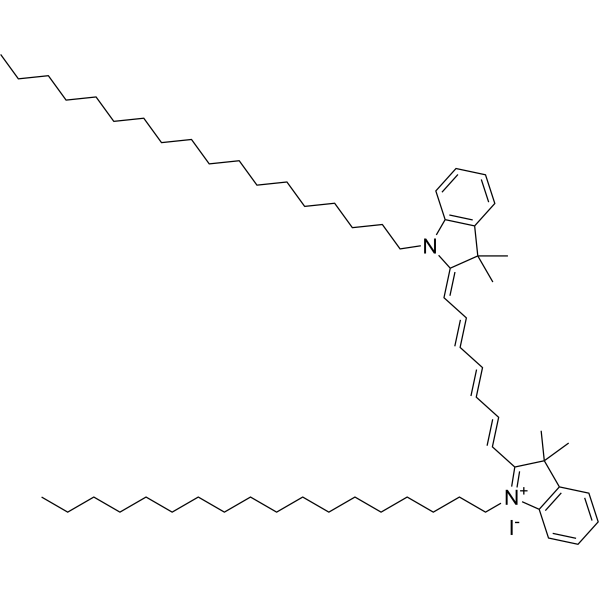
DiR is a long-chain carbocyanine dye. Carbocyanine dyes are widely used as Di to label cells, organelles, liposomes, viruses and lipoproteins .
loading...
    loading...
66
66 Cited Publications
Cat. No.: HY-D0083
CAS No.: 41085-99-8
Synonyms: DiIC18(3)
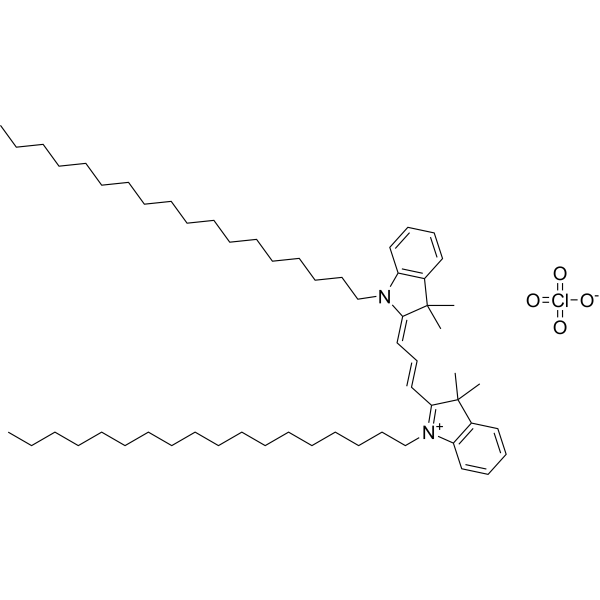
DiI is a long-chain carbocyanine dye. Carbocyanine dyes are widely used as Di to label cells, organelles, liposomes, viruses and lipoproteins .
loading...
    loading...
46
46 Cited Publications
Cat. No.: HY-D1028
CAS No.: 127274-91-3
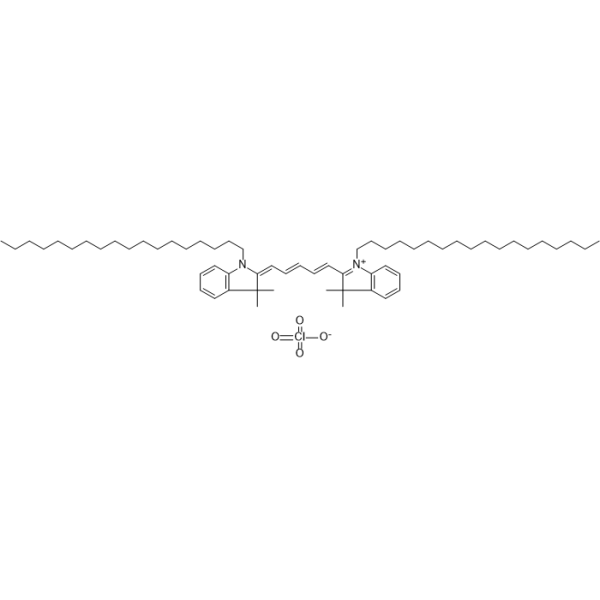
DiD is a long-chain carbocyanine dye. Carbocyanine dyes are widely used as Di to label cells, organelles, liposomes, viruses and lipoproteins (Ex/Em = 633/665 nm) .
loading...
    loading...
31
31 Cited Publications
Cat. No.: HY-D0969
CAS No.: 34215-57-1
Synonyms: DiOC18(3); 3,3'-Dioctadecyloxacarbocyanine perchlorate
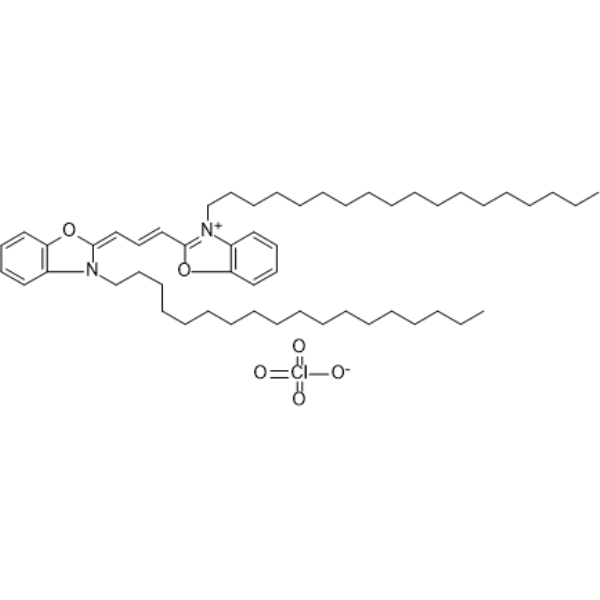
DiO is a long-chain carbocyanine dye. Carbocyanine dyes are widely used as Di to label cells, organelles, liposomes, viruses and lipoproteins .
loading...
    loading...
28
28 Cited Publications
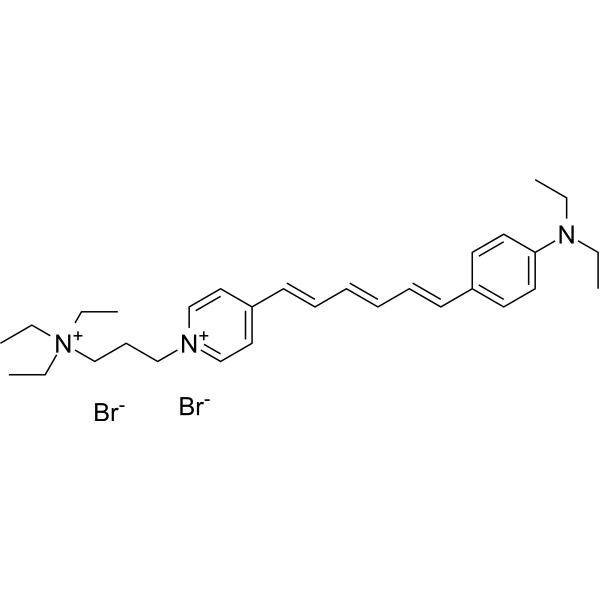
Cat. No.: HY-103466
CAS No.: 162112-35-8
Purity:  99.94%
FM4-64 is a very lipophilic, water-soluble styrene dyes, can specifically bind to cell membranes and inner membrane organelles to produce fluorescence. FM4-64 is widely used in endocytic and exospic membrane structure markers.
loading...
    loading...
22
22 Cited Publications
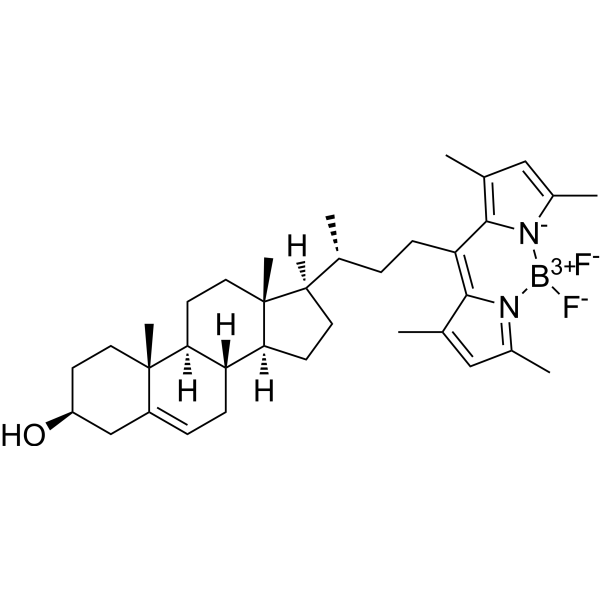
Cat. No.: HY-125746
CAS No.: 878557-19-8
Purity:  99.77%
Target:  

Fluorescent Dye

Research Areas:  

Metabolic Disease

BODIPY-cholesterol is an intrinsically lipophilic, and cell-permeable analog of cholesterol with a fluorescent BODIPY group. BODIPY-cholesterol can be used to monitor sterol uptake and inter-organelle sterol flux in cells. (Excitation/Emission: 505/515 nm) .
loading...
    loading...
18
18 Cited Publications
Cat. No.: HY-D1300
CAS No.: 231946-72-8
Synonyms: LysoTracker Red DND-99
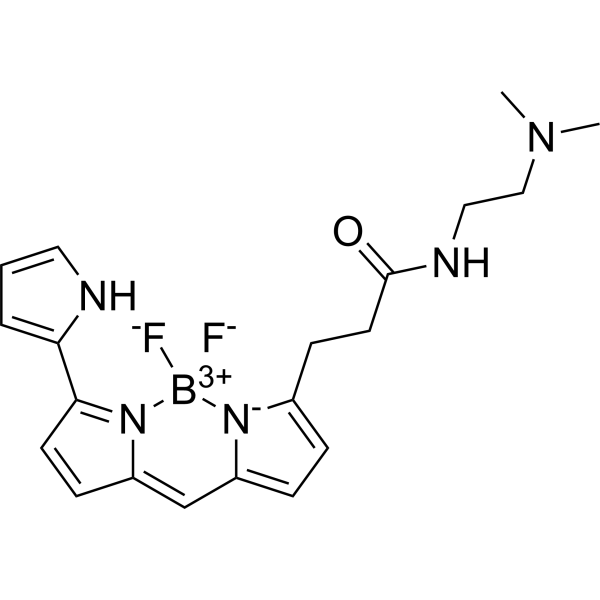
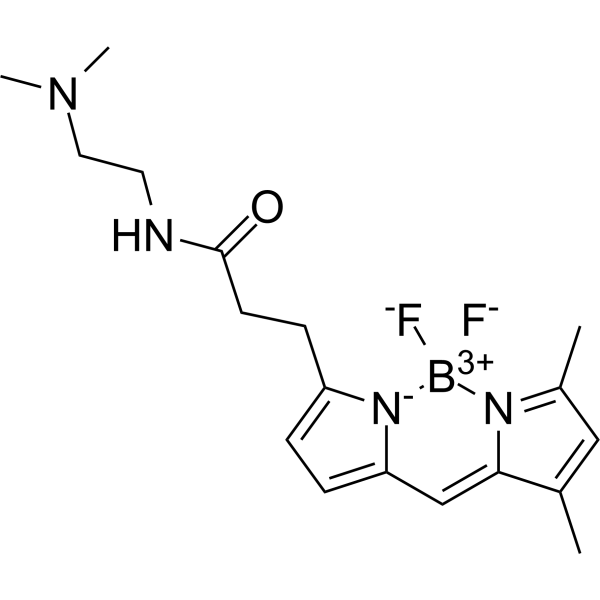
LysoTracker Red is a Red fluorescently labeled lysosomal probe with a maximum excitation/emission wavelength of 577/590 nm. The structure is composed of a fluorescein group and linked weak bases, which can freely cross the cell membrane and gather on spherical organelles. It is suitable for observing the internal biosynthesis and related pathogenesis of lysosomes .
loading...
    loading...
8
8 Cited Publications
Cat. No.: HY-D1434
CAS No.: 149838-22-2
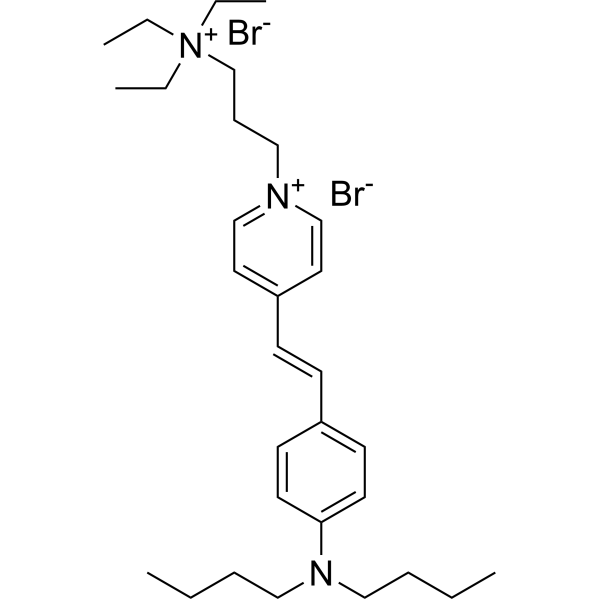
FM1-43 is a very lipophilic, water-soluble styrene dyes, can specifically bind to cell membranes and inner membrane organelles to produce fluorescence. FM1-43 is widely used in endocytic and exospic membrane structure markers.
loading...
    loading...
7
7 Cited Publications
Cat. No.: HY-N7038
CAS No.: 9008-97-3
Synonyms: PHA-M
Phytohemagglutinin (PHA-M), the major seed lectin of the common bean, Phaseolus vulgaris, is a T-cell activator. Phytohemagglutinin stimulates human mononuclear leukocytes, inducing the expression of ChAT mRNA and potentiating ACh synthesis. Phytohemagglutinin induces dose- and time-dependent toxicity in THP-1 monocytes/macrophages, alters cellular morphology, causes organelle dysfunction, and increases the expression of NF-κB, COX2, IL-1β .
loading...
    loading...
4
4 Cited Publications
Cat. No.: HY-D0971
CAS No.: 92-32-0
Synonyms: Pyronine G; C.I. 45005
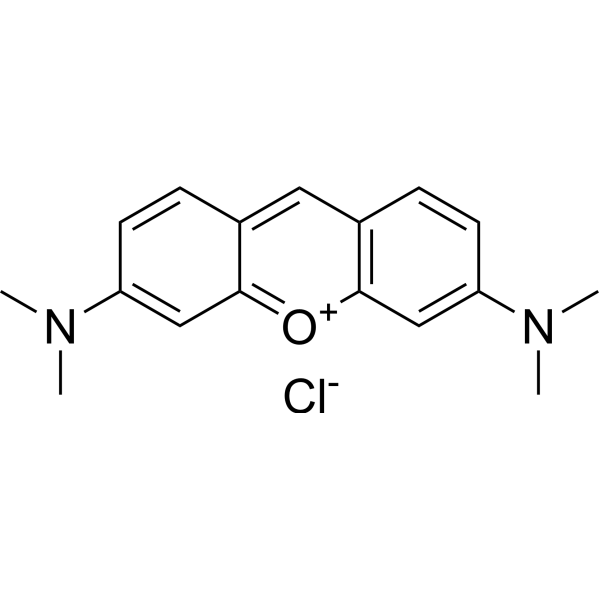
Pyronin Y (Pyronine G) is a cationic dye that intercalates RNA and has been used to target cell structures including RNA, DNA and organelles. Pyronin Y forms fluorescent complexes with double-stranded nucleic acids (especially RNA) enabling semi-quantitative analysis of cellular RNA. Pyronin Y can be used to identify specific RNA subspecies of ribonuclear proteins complexes in live cells .
loading...
    loading...
3
3 Cited Publications
Cat. No.: HY-D1296
CAS No.: 220524-71-0
Green DND-26 is a green fluorescently labeled lysosomal probe with a maximum excitation/emission wavelength of 504/511 nm. The structure is composed of a fluorescein group and linked weak bases, which can freely cross the cell membrane and generally gather on spherical organelles. Green DND-26 is suitable for observing the internal biosynthesis and related pathogenesis of lysosomes .
loading...
    loading...
2
2 Cited Publications
Cat. No.: HY-131960
CAS No.: 26873-85-8
Purity:  ≥98.0%
Research Areas:  

Others

Polysucrose 400 is a synthetic polymer of sucrose, can be used for cells and organelles isolation .
loading...
    loading...
1
1 Cited Publications
Cat. No.: HY-D1445
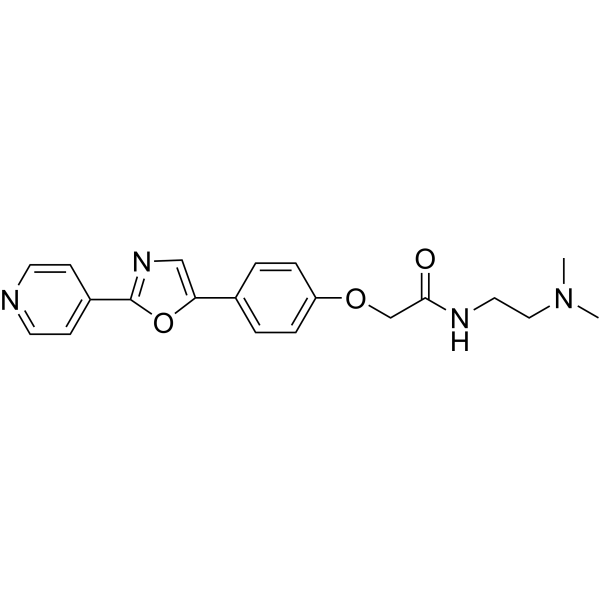
PDMPO, a lysosome pH indicator, is an excellent fluorescent acidotropic reagent for fluorescence imaging. PDMPO is a potent tool with which to study acidic organelles of live cells. PDMPO exhibits pH-dependent dual-excitation and dual-emission spectral peaks. PDMPO produces a blue fluorescence in weakly acidic organelles and shifts to yellow in more acidic lysosomes. (Abs=329 nm; Em=440/540 nm) .
loading...
    loading...
1
1 Cited Publications
Cat. No.: HY-W016647
CAS No.: 4289-98-9
Synonyms: N-Formylmethionine
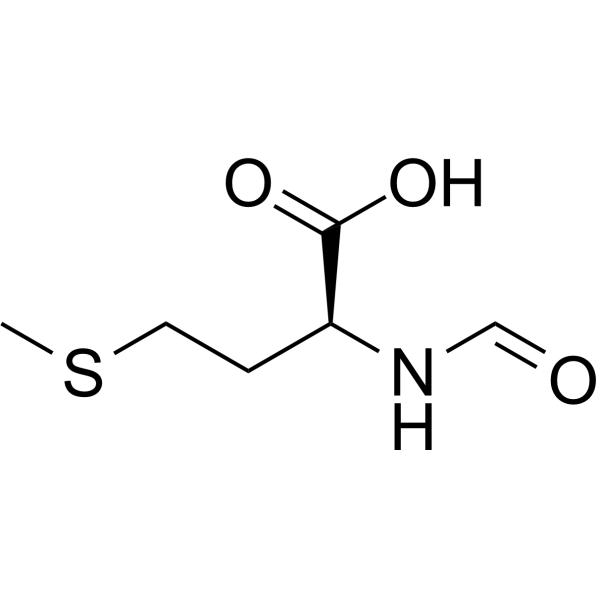
For-Met-OH (N-Formylmethionine) can be involved in the translation process of bacteria, chloroplasts, and mitochondria. For-Met-OH plays different roles in different species and organelles, such as promoting the formation of protein complexes in mitochondria and acting as a degradation signal in bacteria and yeast. The level of For-Met-OH is closely related to certain diseases, for example, For-Met-OH is a potential biomarker for metabolic disorders and poor prognosis in critically ill patients .
loading...
    loading...
1
1 Cited Publications
Cat. No.: HY-118667
CAS No.: 516-85-8
Purity:  ≥99.0%
Target:  

Fluorescent Dye

Research Areas:  

Others

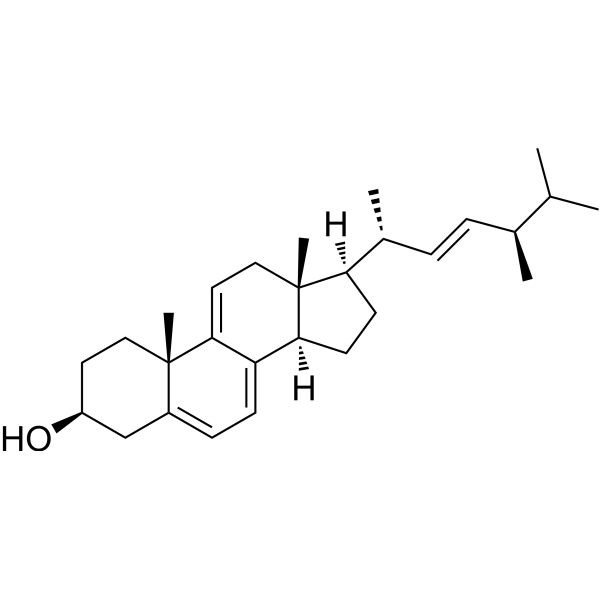
Dehydroergosterol is a fluorescent cholesterol analog (Ex/Em = 325/375 nm) used in cholesterol transport, membrane structure research, and live-cell imaging. Unlike cholesterol, Dehydroergosterol contains three additional double bonds, an extra methyl group, and an ergosterol side chain, forming a conjugated system that produces intrinsic fluorescence. In its monomeric form, Dehydroergosterol exhibits excitation peaks at 310-311, 324, and 338-340 nm, as well as emission peaks at 354, 371-375, 390-394, and 414 nm; in its microcrystalline form, Dehydroergosterol shows enhanced excimer emission around 404 and 426 nm. Dehydroergosterol mimics the properties of cholesterol, integrates into membranes and lipoproteins, and localizes to organelles .
loading...
    loading...
Cat. No.: HY-DY1040
CAS No.: 231946-72-8
LysoTracker Red (solution) is a Red fluorescently labeled lysosomal probe with a maximum excitation/emission wavelength of 577/590 nm. The structure is composed of a fluorescein group and linked weak bases, which can freely cross the cell membrane and gather on spherical organelles. It is suitable for observing the internal biosynthesis and related pathogenesis of lysosomes .
Solvent and concentration: DMSO: 1 mM
loading...
    loading...
Cat. No.: HY-W011063
CAS No.: 21438-66-4
Target:  

Cathepsin

Research Areas:  

Metabolic Disease

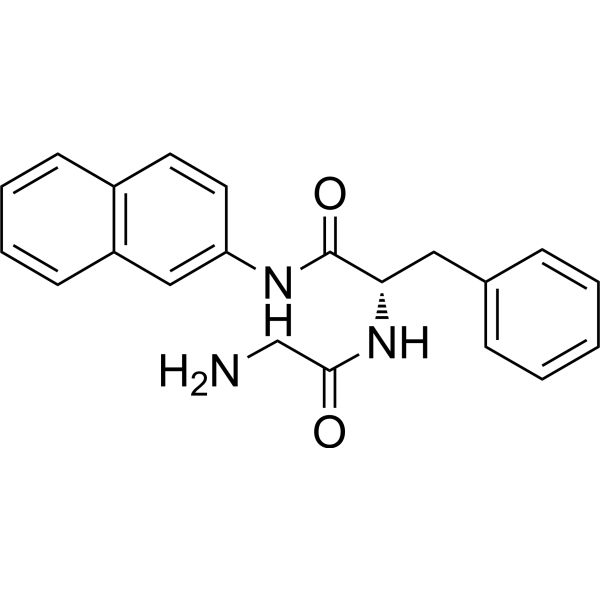
Gly-Phe-β-naphthylamide is a substrate of Cathepsin C (HY-P2922) and belongs to the lysosomal agonist. Gly-Phe-β-naphthylamide can freely pass through the cell membrane and organelle membrane. Gly-Phe-β-naphthylamide will be specifically hydrolyzed by Cathepsin C, ultimately leading to a permeability lysis when it enters the acidic compartment. Gly-Phe-β-naphthylamide can be used to study lysosomal hydrolysis, lysosomal membrane permeability, and the function of cathepsin C .
loading...
    loading...
Cat. No.: HY-D1736
CAS No.: 158757-82-5
BODIPY FL-C16 is a BODIPY-labeled analog of Palmitic acid (HY-N0830), which serves as a fluorescent lipid tracer. BODIPY FL-C16 also acts as a ligand for liver fatty acid-binding protein (L-FABP) and intestinal fatty acid-binding protein (I-FABP) , with Kd values of 270 nM and 330 nM, respectively. BODIPY FL-C16 is rapidly taken up by cells, and after metabolic conversion to phospholipids, it is incorporated into the membrane structures of intracellular organelles and extracellular vesicles .
loading...
    loading...
Cat. No.: HY-109076
CAS No.: 943001-56-7
Purity:  95.89%
Synonyms: EBC-46
Target:  

PKC Caspase

Research Areas:  

Cancer

Tigilanol tiglate (EBC-46) is a protein kinase C (PKC)/C1 domain activator. Tigilanol tiglate is associated with mitochondrial/endoplasmic reticulum (ER) dysfunction, leading to activation of the unfolded protein response (UPRmt/ER) and subsequent induction of ATP depletion, organelles expansion, Caspase activation, gasdermin E cleavage, and terminal necrosis. Tigilanol tiglate, as a small anti-tumor molecule with immunomodulatory effects, can be used in the study of head and neck squamous cell carcinoma and soft tissue sarcoma .
loading...
    loading...
Cat. No.: HY-DY1012
CAS No.: 41085-99-8
DiI (solution) is a long-chain carbocyanine dye. Carbocyanine dyes are widely used as Di to label cells, organelles, liposomes, viruses and lipoproteins .
Solvent and concentration: DMSO: 5 mM
loading...
    loading...

