Search Result
Results for "
parasites
" in MedChemExpress (MCE) Product Catalog:
2
Biochemical Assay Reagents
15
Isotope-Labeled Compounds
| Cat. No. |
Product Name |
Target |
Research Areas |
Chemical Structure |
-
- HY-18062
-
|
Pirimecidan; Pirimetamin; RP 4753
|
Antifolate
Parasite
|
Infection
Cancer
|
|
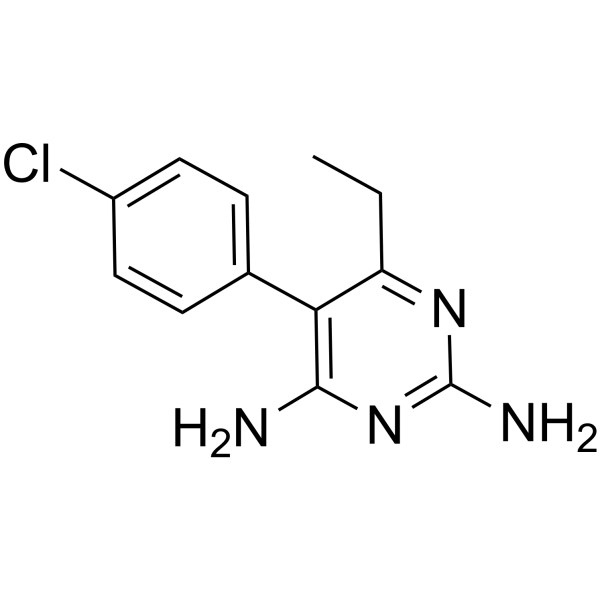
Pyrimethamine (Pirimecidan) is a potent, orally active dihydrofolate reductase (DHFR) inhibitor. Pyrimethamine is an antimalarial agent. Pyrimethamine affects the nucleoprotein metabolism of malarial parasites by interference in the folic–folinic acid systems and affects cell division by inhibiting the conversion of dihydrofolate to tetrahydrofolate .
|
-
-
- HY-143218
-
|
Tetraphenylethene maleimide
|
Huntingtin
Parasite
|
Infection
Neurological Disease
|
|
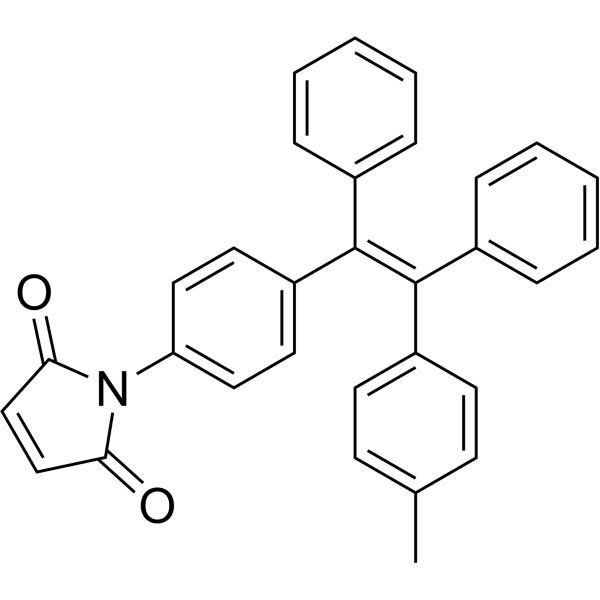
TPE-MI (Tetraphenylethene maleimide) is a thiol probe for measuring unfolded protein load and proteostasis in cells (the excitation wavelength is 350 nm and the emission wavelength is 470 nm). TPE-MI can report imbalances in proteostasis in induced pluripotent stem cell models of Huntington disease, as well as cells transfected with mutant Huntington exon 1 before the formation of visible aggregates. TPE-MI also detects protein damage following dihydroartemisinin research of the malaria parasites Plasmodium falciparum .
|
-
-
- HY-B0294
-
|
|
Parasite
Microtubule/Tubulin
STAT
MDM-2/p53
Apoptosis
Autophagy
|
Infection
Cancer
|
|
Flubendazole is an anthelmintic drug based on altering microtubule structure, inhibition of tubulin polymerization and disruption of microtubule function. Flubendazole induces apoptosis in human colorectal cancer (CRC) by blocking the STAT3 signaling axis and activation of autophagy. Flubendazole induces P53 expression and reduced Cyclin B1 and p-cdc2 expression. Flubendazole is an antitumor agent. Flubendazole can be used for worm and intestinal parasites .
|
-
-
- HY-B0148
-
|
Risedronate
|
Parasite
Apoptosis
|
Infection
Metabolic Disease
Cancer
|
|
Risedronic acid (Risedronate) is a bisphosphonate and potent antiresorptive agent. Risedronic acid induces Apoptosis. Risedronic acid inhibits the transfer of farnesyl pyrophosphate groups to parasite proteins. Risedronic acid inhibits osteoclast-mediated bone resorption and alters bone metabolism. Risedronic acid inhibits blood-stage Plasmodium falciparum (IC50 of 20.3 μM) .
|
-
-
- HY-103397
-
|
|
Antibiotic
DNA Methyltransferase
Parasite
|
Infection
Cancer
|
|
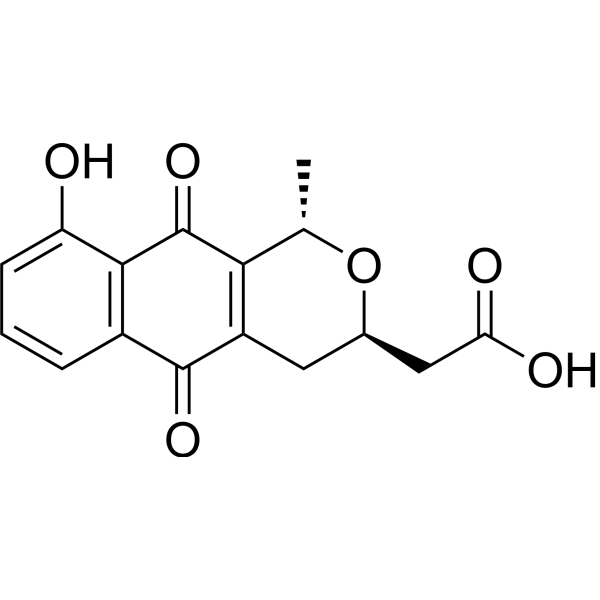
Nanaomycin A is the first selective DNMT3B inhibitor with an IC50 of 500 nM. Nanaomycin A, a quinone antibiotics, reactivates silenced tumor suppressor genes in human cancer cells . Nanaomycin A inhibits in vitro growth of the human malaria parasite Plasmodium falciparum with an IC80 value of 33.1 nM .
|
-
-
- HY-141519
-
|
|
Parasite
|
Infection
|
|
PI-55 is a specific cytokinin receptor inhibitor. PI-55 is structurally related to 6-benzylaminopurine (BAP) and was shown to inhibit competitively BAP binding on Arabidopsis-specific receptors CRE1/AHK4 and AHK3. PI-55 inhibits cytokinins induced haustorium formation and increased parasite aggressiveness .
|
-
-
- HY-B0175
-
-
-
- HY-107496
-
|
|
Parasite
Antibiotic
|
Infection
|
|
Imidocarb dipropionate is a potent antiprotozoal agent. Imidocarb dipropionate is active against the parasite B. bovis with an IC50 of 87 μg/mL .
|
-
-
- HY-151561
-
|
|
Parasite
|
Infection
|
|
WM382 is an orally active and potent dual plasmepsin IX/X (PMIX/X) inhibitor with IC50 values of 1.4 nM and 0.03 nM, respectively. WM382 has robust in vivo efficacy at multiple stages of the malaria parasite life cycle and an excellent resistance profile .
|
-
-
- HY-17592A
-
|
|
Parasite
|
Infection
|
|
Bithionol sulfoxide is an anti-infection agent for parasites. Bithionol sulfoxide has mutagenic activity. Bithionol sulfoxide can be used in the research of parasite infection, such as paragonimiasis, flukes andcestodes infection .
|
-
-
- HY-101397
-
-
-
- HY-116392B
-
|
|
Glucosylceramide Synthase (GCS)
Parasite
|
Infection
Endocrinology
Cancer
|
|
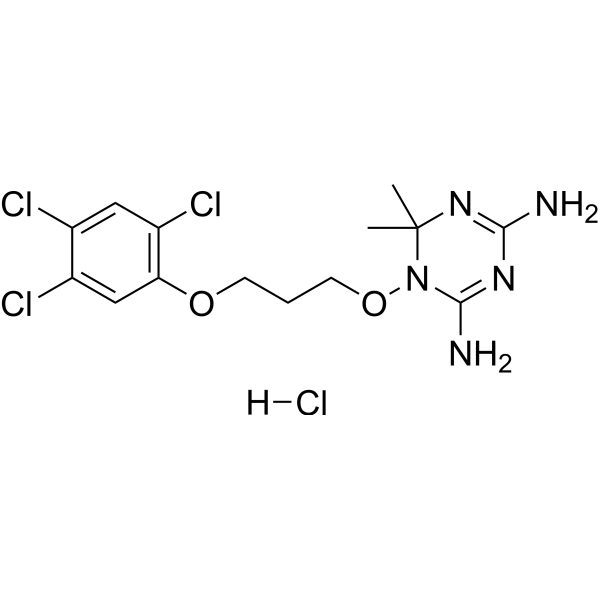
DL-threo-PDMP hydrochloride is a competitive glucosylceramide synthase (GCS) inhibitor and antimalarial agent. DL-threo-PDMP hydrochloride competitively inhibits the activity of GCS. DL-threo-PDMP hydrochloride restores cisplatin sensitivity in cisplatin-resistant testicular germ cell tumor cells. DL-threo-PDMP hydrochloride blocks the growth of ring-stage Plasmodium falciparum parasites .
|
-
-
- HY-108024A
-
|
KAF156 hydrochloride; GNF156 hydrochloride
|
Parasite
|
Infection
|
|
Ganaplacide (KAF156) hydrochloride is a first-in-class, orally active imidazolopiperazine antimalarial agent. Ganaplacide hydrochloride is active against a broad range of Plasmodium species, including drug-resistant parasites. Ganaplacide hydrochloride is parasiticidal against both asexual and sexual blood stages as well as the liver stages of the parasite .
|
-
-
- HY-135611
-
|
|
Parasite
Antibiotic
|
Infection
|
|
Imidocarb is a potent antiprotozoal agent. Imidocarb is active against the parasite B. bovis with an IC50 of 87 μg/mL .
|
-
-
- HY-176707
-
|
|
Parasite
|
Infection
|
|
GSK2181306A is a pan-FIKK inhibitor with an EC50 value of 0.16 μM for parasite growth inhibition. GSK2181306A can be used to study Plasmodium infection .
|
-
-
- HY-W013111
-
|
dGDP trisodium; 2'-Deoxyguanosine-5'-diphosphate trisodium
|
Nucleoside Antimetabolite/Analog
Parasite
|
Infection
|
|
2′-Deoxy-GDP (dGDP) trisodium, a guanosine monophosphate (GMP) analogue, is a hypoxanthine phosphoribosyltransferase (HGPRT) inhibitor with an IC50 of 12.5 μM. HGPRT is a central enzyme in the purine recycling pathway of all protozoan parasites .
|
-
-
- HY-120060
-
|
|
Parasite
|
Infection
|
|
GNF6702 is a selective inhibitor of the kinetoplastid proteasome. GNF6702 clears parasites in murine models of leishmaniasis, Chagas disease, and human African trypanosomiasis .
|
-
-
- HY-136637
-
|
|
Phosphodiesterase (PDE)
Parasite
|
Infection
|
|
NPD-001 is a potent Trypanosoma brucei phosphodiesterases 1/2 (TbrPDEB1/2) inhibitor, with IC50 values of 4 and 3 nM, respectively. NPD-001 also inhibits hPDE4. NPD-001 can increase cAMP levels in parasites, prevent cytokinesis, and cause the parasites to form multinucleated, multi-flagellated cells that eventually lyse. NPD-001 can be used for the research of infection .
|
-
-
- HY-12607
-
|
|
Parasite
|
Infection
|
|
ML251, a potent nanomolar T. brucei and T. cruzi phosphofructokinase (PFK) inhibitor, inhibits T. brucei PFK (IC50=0.37 μM) and T. cruzi PFK (IC50=0.13 μM). ML251 can be used for the research of parasite .
|
-
-
- HY-101725
-
|
Ro 11-3128; Ro 11-3128/002
|
Parasite
|
Infection
Neurological Disease
|
|
Meclonazepam (Ro 11-3128) is a benzodiazepine compound with anxiolytic effect . Meclonazepam is active against immature S. mansoni. Meclonazepam (30 μM) eliminates 100% of immature parasites. Meclonazepam has a anti-schistosomal effect .
|
-
-
- HY-117015
-
|
|
Parasite
|
Infection
|
|
Purfalcamine is an orally active, selective Plasmodium falciparum calcium-dependent protein kinase 1 (PfCDPK1) inhibitor with an IC50 of 17 nM and an EC50 of 230 nM. Purfalcamine has antimalarial activity and causes malaria parasites developmental arrest at the schizont stage .
|
-
-
- HY-129959
-
|
AlClPc
|
Environmental Pollutants
Parasite
MOFs
|
Infection
|
|
Aluminum phthalocyanine chloride is a photosensitizer that effectively inhibits the parasite Leishmania amazonensis (the causative agent of cutaneous leishmaniasis) by light-mediated cytolysis. Aluminum phthalocyanine chloride causes parasite morphology and cytolysis of isolated amasilians, while higher photosensitizer concentrations and light intensities are required to induce lysis of mammalian cells. Aluminum phthalocyanine chloride lyses parasites within infected J774 macrophages and can be used to further investigate the study of leishmaniasis .
|
-
-
- HY-W765152
-
|
22,23-Dihydro avermectin B1a; epi-Dihydro avermectin B1a
|
Parasite
|
Infection
|
|
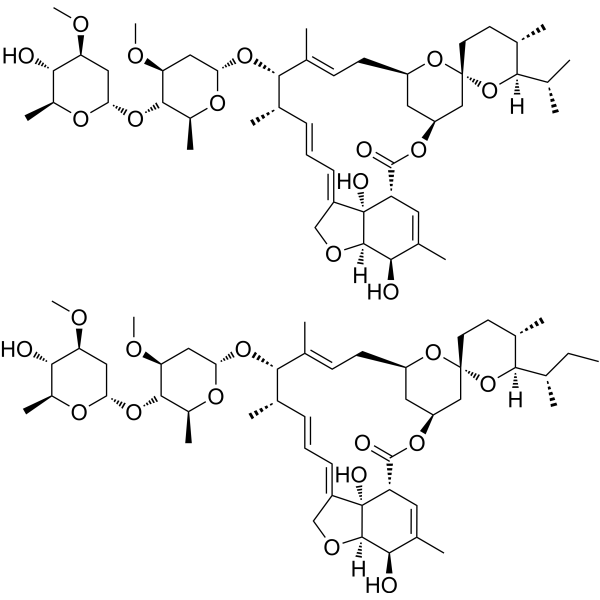
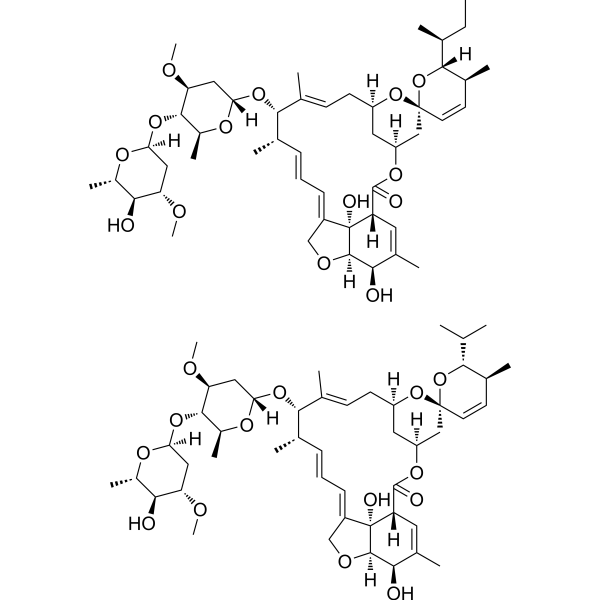
epi-Ivermectin B1a is a key related substance of Ivermectin (HY-15310), primarily existing as a process-related impurity or potential degradation product in ivermectin-based antiparasitic formulations. epi-Ivermectin B1a can be used for the study of internal/external parasites in cattle .
|
-
-
- HY-170780
-
|
|
Parasite
Dihydroorotate Dehydrogenase
|
Infection
|
|
DSM1465 (Compound 82) is a potent, selective inhibitor of P. falciparum dihydroorotate dehydrogenase (PfDHODH) with an IC50 value of 15 nM, inhibits P. falciparum 3D7 (Pf3D7) parasites with an EC50 value of 1.4 nM. DSM1465 shows potent in vivo activity in the humanized P. falciparum mouse model .
|
-
-
- HY-138075
-
|
|
Antibiotic
Bacterial
Parasite
|
Infection
|
|
Obafluorin is a β-lactone antibiotic. Obafluorin inhibits threonyl-tRNA synthetase (PfThrRS) with an IC50 of 4.3 nM. Obafluorin inhibits the aminoacylation activity of EcThrRS and ObaO. Obafluorin exhibits Fe 3+-enhanced antibacterial activity. Obafluorin can be used in studies related to infections caused by bacterial and parasites such as Plasmodium .
|
-
-
- HY-N10928
-
|
|
Parasite
|
Infection
|
|
Lettowienolide, a geranylbenzoquinonoid, exhibits mild in vitro activity against the Plasmodium falciparum malaria parasite (IC50~20 μg/mL) .
|
-
-
- HY-132170
-
|
|
Dihydroorotate Dehydrogenase
Parasite
|
Infection
|
|
DSM502 is a pyrrole-based Dihydroorotate Dehydrogenase (DHODH) inhibitor. DSM502 exhibits nanomolar potency againsts Plasmodium DHODH and Plasmodium parasites, with no inhibition of mammalian DHODHs .
|
-
-
- HY-N10096
-
|
|
Parasite
|
Infection
|
|
Epoxyazadiradione is a limonoid purified from neem (Azadirachta indica) fruits. Epoxyazadiradione inhibits the tautomerase activity of MIF of both human (huMIF) and malaria parasites (Plasmodium falciparum (PfMIF) and Plasmodium yoelii (PyMIF)) non-competitively in a reversible fashion (Ki, 2.11-5.23 μM). Epoxyazadiradione has the potential against proinflammatory reactions induced by MIF of both malaria parasites and human .
|
-
-
- HY-W049875
-
|
|
Parasite
|
Infection
|
|
Nitroxynil, anthelmintic agent, is active against parasites in both adult and immature stages. Nitroxynil is widely used for the research of infection of Fasciola hepatica .
|
-
-
- HY-132171A
-
|
|
Dihydroorotate Dehydrogenase
Parasite
|
Infection
|
|
DSM705 hydrochloride, an orally active antimalarial compound, is a pyrrole-based Dihydroorotate Dehydrogenase (DHODH) inhibitor. DSM705 hydrochloride exhibits nanomolar potency against Plasmodium DHODH and Plasmodium parasites (IC50=95, 52 nM for P. falciparum and P. vivax DHODH, respectively), with no inhibition of mammalian DHODHs .
|
-
-
- HY-151485
-
|
|
Parasite
|
Infection
|
|
Anti-infective agent 5 (compound 74) is an orally active inhibitor of Trypanosoma cruzi with an IC50 value of 0.10 μM. Anti-infective agent 5 effectively reduces parasite burden in vivo. Anti-infective agent 5 can be used for the research of infection .
|
-
-
- HY-136307S
-
|
|
Isotope-Labeled Compounds
Parasite
|
Infection
|
|
Tizoxanide-d4 glucuronide is the deuterium labeled Tizoxanide glucuronide. Tizoxanide glucuronide is the metabolite of Nitazoxanide (HY-B0217) and is cell-permeable to inhibit asexual and sexual stages development of parasite C. parvum .
|
-
-
- HY-W973644
-
|
|
Mitochondrial Metabolism
Parasite
|
Infection
|
|
LY-266500 is a succinyl CoA synthetase (SCS) specific inhibitor. LY-266500 has inhibitory effects on various parasites, such as Trypanosoma brucei brucei (IC50 =0.6 μM) and Leishmania donovani (IC50 =2.86 μM). LY-266500 can be used for research on parasitic infections .
|
-
-
- HY-18062R
-
|
Pirimecidan (Standard); Pirimetamin (Standard); RP 4753 (Standard)
|
Reference Standards
Antifolate
Parasite
|
Infection
|
|
Pyrimethamine (Standard) is the analytical standard of Pyrimethamine. This product is intended for research and analytical applications. Pyrimethamine (Pirimecidan) is a potent, orally active dihydrofolate reductase (DHFR) inhibitor. Pyrimethamine is an antimalarial agent. Pyrimethamine affects the nucleoprotein metabolism of malarial parasites by interference in the folic–folinic acid systems and affects cell division by inhibiting the conversion of dihydrofolate to tetrahydrofolate .
|
-
-
- HY-B0294R
-
|
|
Reference Standards
Parasite
Microtubule/Tubulin
STAT
MDM-2/p53
Apoptosis
Autophagy
|
Infection
Cancer
|
|
Flubendazole (Standard) is the analytical standard of Flubendazole. This product is intended for research and analytical applications. Flubendazole is an anthelmintic drug based on altering microtubule structure, inhibition of tubulin polymerization and disruption of microtubule function. Flubendazole induces apoptosis in human colorectal cancer (CRC) by blocking the STAT3 signaling axis and activation of autophagy. Flubendazole induces P53 expression and reduced Cyclin B1 and p-cdc2 expression. Flubendazole is an antitumor agent. Flubendazole can be used for worm and intestinal parasites .
|
-
-
- HY-108387
-
|
|
Parasite
|
Infection
|
|
Morantel citrate is a veterinary anthelmintic agent that inhibits parasitic infections in cattle, sheep and goats. Morantel citrate paralyzes the nervous system of the parasite, helping the animal expel the dead parasite from the body .
|
-
-
- HY-108024
-
|
KAF156; GNF156
|
Parasite
|
Infection
|
|
Ganaplacide (KAF156) is a first-in-class,
orally active imidazolopiperazine antimalarial agent.
Ganaplacide is active against a broad range of Plasmodium
species, including drug-resistant parasites. Ganaplacide is parasiticidal
against both asexual and sexual blood stages as well as the liver stages of the
parasite .
|
-
-
- HY-14830
-
|
Albitiazolium bromide
|
Parasite
|
Infection
|
|
SAR 97276 (Albitiazolium bromide) is an antimalarial agent. SAR 97276 interfers with the phospholipid metabolism of malarial parasites, especially the biosynthesis of phosphatidylcholine (PC). SAR 97276 enters erythrocytes through the new permeability pathways (NPP) of infected erythrocytes, and is transported into the malarial parasite by a poly-specific cation carrier .
|
-
-
- HY-P3425
-
|
|
Parasite
|
Infection
|
|
AGPV, a tetrapeptide, has the potential for prevention of schistosome parasite infection research .
|
-
-
- HY-132171
-
|
|
Dihydroorotate Dehydrogenase
Parasite
|
Infection
|
|
DSM705 is a pyrrole-based Dihydroorotate Dehydrogenase (DHODH) inhibitor. DSM705 exhibits nanomolar potency against Plasmodium DHODH and Plasmodium parasites, with no inhibition of mammalian DHODHs. DSM705 is a potent antimalarial compound .
|
-
-
- HY-107496R
-
|
|
Reference Standards
Parasite
Antibiotic
|
Infection
|
|
Imidocarb (dipropionate) (Standard) is the analytical standard of Imidocarb (dipropionate). This product is intended for research and analytical applications. Imidocarb dipropionate is a potent antiprotozoal agent. Imidocarb dipropionate is active against the parasite B. bovis with an IC50 of 87 μg/mL .
|
-
-
- HY-174342
-
|
|
Cytochrome P450
Parasite
|
Infection
|
|
ELQ-453 is an inhibitor targeting the Qo site of the Plasmodium falciparum cytochrome bc1 complex (CytB) with an IC50 value of 0.57 nM. ELQ-453 blocks the mitochondrial function of the parasite, and suppresses Plasmodium infection in mosquitoes. ELQ-453 is promising for research of malaria .
|
-
-
- HY-175345
-
|
|
Parasite
|
Infection
|
|
CYP3A4-IN-5 (Compound 5p) is a potent Leishmania major pteridine reductase 1 (Lm PTR1) inhibitor (IC50=12.77 µM). CYP3A4-IN-5 is promising for research of parasite infection .
|
-
-
- HY-103397R
-
|
|
Antibiotic
Reference Standards
DNA Methyltransferase
Parasite
|
Infection
Cancer
|
|
Nanaomycin A (Standard) is the analytical standard of Nanaomycin A. This product is intended for research and analytical applications. Nanaomycin A is the first selective DNMT3B inhibitor with an IC50 of 500 nM. Nanaomycin A, a quinone antibiotics, reactivates silenced tumor suppressor genes in human cancer cells[1]. Nanaomycin A inhibits in vitro growth of the human malaria parasite Plasmodium falciparum with an IC80 value of 33.1 nM[2].
|
-
-
- HY-121493
-
-
-
- HY-W104379
-
|
|
Parasite
|
Infection
|
|
Arprinocid is a purine analog with activity against murine Toxoplasma gondii .
|
-
-
- HY-P3451
-
-
-
- HY-N15321
-
|
|
Parasite
|
Infection
Inflammation/Immunology
|
|
Norselic acid B is a natural compound that can be isolated from the sponge Crella sp. collected in Antarctica. T. Norselic acid B is active against the Leishmania parasite .
|
-
-
- HY-155549
-
|
|
Parasite
|
Infection
|
|
Antileishmanial agent-20 is selective towards Leishmania parasite. Antileishmanial agent-20 has IC50 value of 2.8 μM and 0.2 μM for L. infantum and L. braziliensis, respectively. Antileishmanial agent-20 can be used for parasites research .
|
-
-
- HY-172131
-
|
|
Parasite
|
Infection
|
|
Emoquine-1 is an orally active and potent antimalarial drug. Emoquine-1 is efficient against multidrug-resistant Plasmodium parasites, including the Artemisinin-resistant quiescent stage. Emoquine-1 is active against proliferative P. falciparum with IC50 values of 20-55 nM. Emoquine-1 is a candidate to fight Plasmodium parasites resistant to artemisinin-based combination therapies (ACTs) with a capacity to eliminate persistent parasites .
|
-
- HY-P3425A
-
|
|
Parasite
|
Infection
|
|
AGPV TFA, a tetrapeptide, has the potential for prevention of schistosome parasite infection research .
|
-
- HY-145327
-
|
|
Na+/K+ ATPase
Parasite
|
Infection
|
|
Antimalarial agent 7 is a potent inhibitor of PfATP4. PfATP4 is an essential ion pump on the parasite surface. Antimalarial agent 7 has the potential for the research of human malaria parasite, Plasmodium falciparum .
|
-
- HY-135611A
-
|
|
Parasite
Antibiotic
|
Infection
|
|
Imidocarb dihydrochloride monohydrate is a potent antiprotozoal agent. Imidocarb dihydrochloride monohydrate is active against the parasite B. bovis with an IC50 of 87 μg/mL .
|
-
- HY-N8513
-
|
|
Parasite
|
Infection
|
|
Brevicompanine B, a diketopiperazine alkaloid, is an antiplasmodial agent. Brevicompanine B is active against the malaria parasite Plasmodium falciparum 3D7 IC50 of 35 mg/mL .
|
-
- HY-156028
-
|
|
Parasite
|
Infection
|
|
FIKK9.1-IN-1 (Compound 1) is a FIKK9.1 inhibitor. FIKK9.1-IN-1 interacts with the ATP?binding residues in FIKK9.1. FIKK9.1-IN-1 is an antimalarial agent (IC50: 2.68 μg/mL) and disrupts the parasite life cycle and leads to the death of parasites .
|
-
- HY-168184
-
|
|
Parasite
|
Infection
|
|
WJM280 is an orally active antimalarial agent, with an EC50 of 0.04 μM for P. falciparum 3D7 parasites .
|
-
- HY-149722
-
|
|
Parasite
|
Infection
|
|
Antiparasitic agent-20 (Compound 1p) is a parasite inhibitor with broad antiparasitic activity. Antiparasitic agent-20 has inhibitory effects on T. brucei and T. cruzi with EC50 values of 0.09 μM and 14.1 μM respectively .
|
-
- HY-168538
-
|
|
Paraptosis
|
Infection
|
|
Antitrypanosomal agent 21 (Compound C-1) is a trypanosoma brucei inhibitor. Antitrypanosomal agent 21 decreases the level of D6XM23 in parasite lysates .
|
-
- HY-N10624
-
|
|
Parasite
|
Infection
|
|
Koshidacin B is an antiplasmodial cyclic tetrapeptide with antiplasmodial activity against P. falciparum FCR3 and K1 strain with IC50 values of 0.89 and 0.83 μM, respectively. Koshidacin B suppresses malaria parasites in vivo, it can be used for the research of parasites infection .
|
-
- HY-145912
-
-
- HY-170777
-
|
|
Parasite
|
Infection
|
|
SLU-10906 (Compound 63) is an orally active and potent Cryptosporidium inhibitor. SLU-10906 is active against the parasite in a cell-based infection model (EC50= 0.19 μM) and non-cytotoxic. SLU-10906 is promising for research of cryptosporidiosis .
|
-
- HY-179118
-
|
|
Parasite
|
Infection
|
|
Antimalarial agent 53 (compound 31) is an antimalarial agent. Antimalarial agent 53 blocks protein synthesis by inhibiting the cytoplasmic ribosomes of malaria parasites, exhibiting potent antimalarial activity (IC50 = 3.9 nM) and good selectivity. Antimalarial agent 53 has no cross resistance and good safety. Antimalarial agent 53 can be used for research on malaria .
|
-
- HY-158060
-
|
|
Autophagy
Parasite
|
Infection
|
|
MC2646 is a potent anti-parasite agent. MC2646 induces autophagic. MC2646 activates the AMPK/TFEB pathway .
|
-
- HY-W049875R
-
|
|
Reference Standards
Parasite
|
Infection
|
|
Nitroxynil (Standard) is the analytical standard of Nitroxynil. This product is intended for research and analytical applications. Nitroxynil, anthelmintic agent, is active against parasites in both adult and immature stages. Nitroxynil is widely used for the research of infection of Fasciola hepatica .
|
-
- HY-106585
-
|
|
Parasite
|
Infection
|
|
Cyclobendazole is a benzimidazole derivative against protozoan parasites. Cyclobendazole shows in vitro activities against Trichomonas vaginalis (30236) and Giardia lamblia (wt), with IC50 values of 1.1 and 0.047 μg/mL, respectively .
|
-
- HY-151133
-
|
|
Parasite
|
Infection
|
|
Antiparasitic agent-9 (compound 47) is an orally active and potent antiparasitic agent. Antiparasitic agent-9 shows antiparasitic activity against the human parasite .
|
-
- HY-N10197
-
|
|
Parasite
Endogenous Metabolite
|
Infection
|
|
Pulixin prevents FREP1 from binding to P. falciparum-infected cell lysate. Pulixin blocks the transmission of the parasite to mosquitoes with an EC50 of 11 µM. Pulixin also inhibits the proliferation of asexual-stage P. falciparum with an EC50 of 47 nM .
|
-
- HY-D1532
-
|
|
Parasite
|
Others
|
|
DABCYL-Glu-Arg-Nle-Phe-Leu-Ser-Phe-Pro-EDANS is a fluorescent dye, and can be applied in a fluorogenic substrate for an aspartyl proteinase from human malaria parasite .
|
-
- HY-151484
-
|
|
Parasite
|
Infection
|
|
Anti-infective agent 4 (compound 73) is an orally active inhibitor of Trypanosoma cruzi with an IC50 value of 0.016 μM. Anti-infective agent 4 effectively reduces parasite burden in vivo. Anti-infective agent 4 can be used for the research of infection .
|
-
- HY-N8521
-
|
|
TMV
Parasite
|
Infection
|
|
6-O-Methacrylate, a trilobolide, is isolated from the leaves of Wedelia trilobata. 6-O-Methacrylate displays marked antimalarial activity, with IC50 of 8.9 μg/mL against P. falciparum parasite. 6-O-Methacrylate also has anti-tobacco mosaic virus (TMV) activity .
|
-
- HY-169194
-
|
|
Parasite
|
Infection
|
|
Antimalarial agent 44 (Compound 3) is an antimalarial agent against parasite. Antimalarial agent 44 has a good permeability across MDCK-MDR1 cell monolayers and a high clearance by mouse liver microsomes .
|
-
- HY-116736
-
|
|
Dihydroorotate Dehydrogenase
Parasite
|
Infection
|
|
BRD7539 is a PfDHODH inhibitor (IC50 = 0.033 μM). BRD7539 has potent activity against both multidrug-resistant asexual blood-stage (P. falciparum, Dd2 strain, EC50 = 0.010 μM) and liver-stage (P. berghei, EC50 = 0.015 μM) parasites .
|
-
- HY-148178
-
|
|
Parasite
|
Infection
|
|
MMV688533 is an antimalarial agent. MMV688533 interferes with intracellular trafficking, lipid utilization, and endocytosis pathways in Plasmodium falciparum. MMV688533 rapidly kills asexual blood-stage Plasmodium falciparum and Plasmodium vivax parasites in vitro and reduces parasitemia in a Plasmodium falciparum NSG mouse model. MMV688533 can be used for the research of malaria .
|
-
- HY-123251
-
|
|
Parasite
|
Infection
|
|
DB-766 is an anti-parasite and antileishmanial agent, and is active against T. cruzi. DB-766 effectively reduces the parasite load in the blood and cardiac tissue .
|
-
- HY-163482
-
|
|
Parasite
|
Infection
|
|
ELQ-596 is a quinolone derivative, that exhibits antimicrobial activity against several protozoan parasites, including the intraerythrocytic parasites Plasmodium and Babesia. ELQ-596 attenuates babesiosis in immunosuppressed mice .
|
-
- HY-163484
-
|
|
Parasite
|
Infection
|
|
ELQ-650 is a quinolone derivative, that exhibits antimicrobial activity against several protozoan parasites, including the intraerythrocytic parasites Plasmodium and Babesia. ELQ-650 attenuates babesiosis in immunosuppressed mice .
|
-
- HY-P990804
-
|
|
Transmembrane Glycoprotein
|
Infection
Inflammation/Immunology
Cancer
|
|
Anti-Mouse NKG2D/CD314 Antibody (HMG2D) is an Armenian hamster-derived IgG antibody inhibitor, targeting to mouse NKG2D/CD314. Anti-Mouse NKG2D/CD314 Antibody (HMG2D) can block NKG2D. Anti-Mouse NKG2D/CD314 Antibody (HMG2D) can be used for the researches of cancer, infection, inflammation and immunology, such as B16F10 tumor, colitis and L. major parasites and lymphocytic choriomeningitis virus (LCMV) co-infection .
|
-
- HY-150066
-
|
|
Parasite
|
Infection
Inflammation/Immunology
|
|
Antimalarial agent 16 (Compound 4h) is a parasite inhibitor. Antimalarial agent 16 shows antimalarial activity, and can inhibit P. falciparum parasite growth (IC50=2.0 nM) .
|
-
- HY-150065
-
|
|
Parasite
|
Infection
Inflammation/Immunology
|
|
Antimalarial agent 15 (Compound 4e) is a parasite inhibitor. Antimalarial agent 15 shows antimalarial activity, and can inhibit P. falciparum 3D7 parasite growth (IC50=20 nM) .
|
-
- HY-U00295
-
|
Melarsonic acid
|
Parasite
|
Infection
|
|
Melarsonyl (Melarsonic acid) is an anthelmintic agent which can inhibit parasite potently.
|
-
- HY-116724
-
|
|
Parasite
|
Infection
|
|
Robenidine is a coccidiostat agent that can be used for the research of coccidiosis caused by parasites in the Eimeria genus .
|
-
- HY-U00295A
-
|
Melarsonic acid dipotassium
|
Parasite
|
Infection
|
|
Melarsonyl dipotassium (Melarsonic acid dipotassium) is an anthelmintic agent which can inhibit parasite potently .
|
-
- HY-144297
-
|
|
HDAC
Parasite
|
Infection
|
|
HDAC1-IN-3 is a potent Pf HDAC1 inhibitor. HDAC1-IN-3 shows antimalarial activity in wild-type and multidrug-resistant parasite strains. HDAC1-IN-3 shows a significant in vivo killing effect against all life cycles of parasites .
|
-
- HY-173567
-
|
|
Parasite
|
Infection
|
|
WJM664 is a potent Plasmodium falciparum PfATP4 inhibitor. WJM664 shows strong activity against malaria parasites. WJM664 blocks gamete development and transmission to mosquitoes by inhibiting PfATP4-mediated Na +-dependent ATPase activity, and acts on multiple stages of the malaria parasite life cycle .
|
-
- HY-132930
-
|
|
Parasite
|
Infection
|
|
TCMDC-136230 is a novel disruptor of the malaria parasite calcium dynamics but minimally inhibits heme crystallization.
|
-
- HY-132929
-
|
|
Parasite
|
Infection
|
|
TCMDC-125431 is a novel disruptor of the malaria parasite calcium dynamics but minimally inhibits heme crystallization.
|
-
- HY-126295
-
|
|
Parasite
|
Infection
|
|
Anti-parasitic agent 3 is an anti-parasitic agent which active against agent resistant parasites.
|
-
- HY-126032
-
|
|
Parasite
|
Infection
|
|
Morantel is an antinematodal agent. Morantel exhibits neuromuscular blocking properties .
|
-
- HY-121157
-
-
- HY-121157R
-
|
|
Parasite
Reference Standards
|
Infection
|
|
Chlorfenson (Standard) is the analytical standard of Chlorfenson. This product is intended for research and analytical applications. Chlorfenson is an acaricide .
|
-
- HY-13837
-
|
|
Parasite
|
Infection
|
|
P4Q-391 is a Plasmodium cytochrome bc1 complex inhibitor with antimalarial activity. P4Q-391 is promising for research of parasites .
|
-
- HY-182683
-
|
|
Parasite
TrxR
Reactive Oxygen Species (ROS)
|
Infection
|
|
MMV085203 is a potent Plasmodium falciparum inhibitor, with a PfTrxR EC50 of 900 nM. MMV085203 exerts potent antimalarial activity against both blood‑stage and sexual‑stage Plasmodium falciparum parasites, with superior efficacy toward clinical isolates of high clonal diversity. MMV085203 modulates parasite redox homeostasis, induces ROS production, and elevates mitochondrial TCA cycle intermediates. MMV085203 can be used for the research of malaria .
|
-
- HY-101725R
-
|
Ro 11-3128 (Standard); Ro 11-3128/002 (Standard)
|
Reference Standards
Parasite
|
Infection
Neurological Disease
|
|
Meclonazepam (Standard) (Ro 11-3128 (Standard)) is the analytical standard of Meclonazepam (HY-101725). This product is intended for research and analytical applications. Meclonazepam (Ro 11-3128) is a benzodiazepine compound with anxiolytic effect . Meclonazepam is active against immature S. mansoni. Meclonazepam (30 μM) eliminates 100% of immature parasites. Meclonazepam has a anti-schistosomal effect .
|
-
- HY-168959
-
|
|
Parasite
|
Infection
|
|
Antiparasitic agent-25 (Compounds 11) is an orally active antiparasitic agent. Antiparasitic agent-25 inhibits both parasite invasion and replication ability and has irreversible action against Toxoplasma gondii, significantly reducing the replication rate of Toxoplasma gondii with an IC50 value of 6.33 μM, and demonstrates low cytotoxicity with a CC50 value of 285 μM .
|
-
- HY-180945
-
|
|
Paraptosis
|
Infection
|
|
Antimalarial agent 54 (Compound 23) is a potent antimalarial agent that mainly kills the late-stage trophozoites of the malaria parasite. Antimalarial agent 54 can inhibit the formation of hemozoin in the malaria parasite, resulting in the accumulation of free hemoglobin within the malaria parasite. Antimalarial agent 54 shows IC50 values of 0.14 and 0.19 μM against P. falciparum NF54 and Dd2 parasite. Antimalarial agent 54 can be used for research of malaria .
|
-
- HY-171215
-
|
|
Parasite
Aminoacyl-tRNA Synthetase
|
Infection
|
|
ML901 is an antimalarial agent with an IC50 value of 2 nM against the malaria parasite. ML901 specifically inhibits the tyrosine tRNA synthetase of the malaria parasite (PfYRS) through "receptor hijacking". ML901 exhibits full life-cycle killing activity in the malaria mouse model. ML901 can be used for studying malaria parasite infection .
|
-
- HY-183238
-
|
|
Parasite
|
Infection
|
|
Antimalarial agent 61 is an antimalarial agent. Antimalarial agent 61 disrupts hemoglobin breakdown in Plasmodium falciparum asexual blood stage trophozoites. Antimalarial agent 61 exerts antiplasmodial activity against Chloroquine (HY-17589A)-sensitive Plasmodium falciparum parasites. Antimalarial agent 61 can be used for the research of malaria .
|
-
- HY-182309
-
|
|
DNA Methyltransferase
Parasite
|
Infection
|
|
SC83288 is a Plasmodium falciparum PfDNMT2 inhibitor with an IC50 of 7 μM. SC83288 disrupts the epigenetic regulation of malaria parasites, blocks DNA replication and nuclear division, arrests the development of the asexual blood stage, induces the formation of pyknotic morphology in malaria parasites, and does not affect cytokinesis after nuclear division or parasite egress. SC83288 is applicable to malaria-related research .
|
-
- HY-183262
-
|
|
Parasite
Reactive Oxygen Species (ROS)
|
Infection
|
|
Antileishmanial agent-40 is an orally active and selective antileishmanial agent. Antileishmanial agent-40 elevates intracellular reactive oxygen species (ROS) levels in Leishmania donovani promastigotes. Antileishmanial agent-40 induces cell cycle arrest at the sub-G0/G1 phase in Leishmania donovani promastigotes, indicative of programmed-like parasite death. Antileishmanial agent-40 can be used for the research of leishmaniasis .
|
-
- HY-181108
-
|
|
PDGFR
Parasite
|
Infection
|
|
GSK190937 is a type II platelet-derived growth factor receptor alpha (PDGFRA) human kinase inhibitor with antimalarial activity. GSK190937 can inhibit the formation of hemozoin in the malaria parasite, resulting in the accumulation of free hemoglobin within the malaria parasite. GSK190937 shows IC50 values of 0.22, 0.59 and 0.25 μM against P. falciparum NF54, K1 and Dd2 parasite. GSK190937 shows an IC50 of 25 μM for CHO cells. GSK190937 can be used for research of malaria .
|
-
- HY-W019773
-
|
|
Parasite
Drug Metabolite
|
Infection
|
|
Albendazole sulfone is a metabolite of Albendazole, and exhibits anti-parasite effect against Echinococcus multilocularis Metacestodes .
|
-
- HY-181010
-
|
|
HDAC
Parasite
|
Infection
|
|
HDAC1-IN-12 is a Plasmodium falciparum HDAC1 (PfHDAC1) inhibitor with an IC50 of 4.1 nM against Pf3D7. HDAC1-IN-12 inhibits PfHDAC1, upregulates histone H3 acetylation in P. falciparum parasites, downregulates malaria invasion-related gene expression, and exhibits favorable safety profiles, improved physicochemical properties, and potent in vivo antimalarial activity. HDAC1-IN-12 can be used for the research of malaria .
|
-
- HY-161905
-
|
|
Parasite
|
Infection
|
|
ML471 is an oral active parasite tyrosyl-tRNA synthetase (PfTyrRS) inhibitor and can be used for study of malaria .
|
-
- HY-13832
-
|
Atavaquone
|
Parasite
Cytochrome P450
Antibiotic
Bacterial
|
Infection
Cancer
|
|
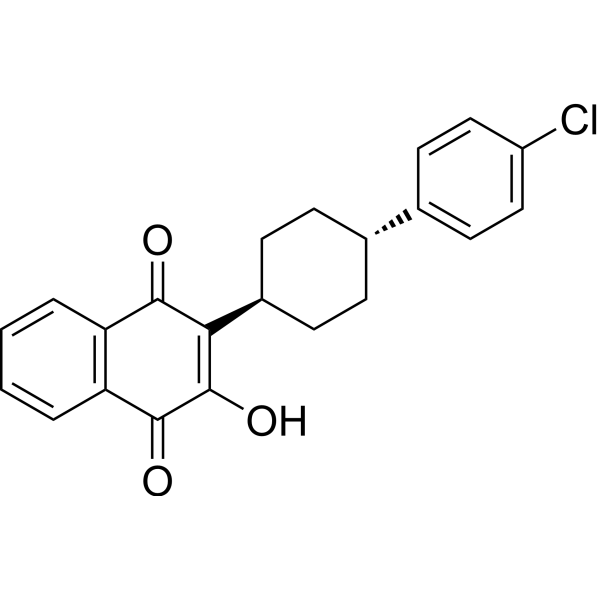
Atovaquone (Atavaquone) is a potent, selective and orally active inhibitor of the parasite’s mitochondrial cytochrome bc1 complex. Atovaquone is against human and P. falciparum cytochrome bc1 activity with IC50 values of 460 nM and 2.0 nM, respectively. Atovaquone is an antimalarial agent and has the potential for the investigation of neumocystis pneumonia, toxoplasmosis, malaria, and babesia .
|
-
- HY-12785
-
|
Ricobendazole; Albendazole oxide
|
Parasite
|
Infection
|
|
Albendazole sulfoxide (Ricobendazole), the main active metabolite of Albendazole, exhibits anti-parasite effect against Echinococcus multilocularis Metacestodes .
|
-
- HY-113715
-
|
BAY 9015; Menichlopholan; Menichlofolan; Bilevon
|
Environmental Pollutants
Parasite
|
Infection
|
|
Niclofolan (BAY 9015) is an orally active anthelmintic agent. Niclofolan can be used in the research of parasite infection .
|
-
- HY-108024AR
-
|
KAF156 hydrochloride (Standard); GNF156 hydrochloride (Standard)
|
Reference Standards
Parasite
|
Infection
|
|
Ganaplacide hydrochloride (Standard) is the analytical standard of Ganaplacide (hydrochloride) (HY-108024A). This product is intended for research and analytical applications. Ganaplacide (KAF156) hydrochloride is a first-in-class, orally active imidazolopiperazine antimalarial agent. Ganaplacide hydrochloride is active against a broad range of Plasmodium species, including drug-resistant parasites. Ganaplacide hydrochloride is parasiticidal against both asexual and sexual blood stages as well as the liver stages of the parasite .
|
-
- HY-B0291R
-
|
|
Reference Standards
Parasite
|
Infection
|
|
Oxfendazole (Standard) is the analytical standard of Oxfendazole. This product is intended for research and analytical applications. Oxfendazole is the sulfoxide form of fenbendazole, which fights parasites.
|
-
- HY-B0175S
-
|
BAY-i 9142-d3
|
Isotope-Labeled Compounds
|
Infection
|
|
Toltrazuril-d3 is deuterated labeled Toltrazuril. Toltrazuril (BAY-i 9142) is an antiprotozoal agent that acts upon Coccidia parasites.
|
-
- HY-12610
-
|
|
Parasite
|
Cancer
|
|
Carbonic anhydrase inhibitor 27 (compund 5g) is an antitrypanosomal agent that reduces parasites in the bloodstream and improves survival of infected mice .
|
-
- HY-159603
-
|
|
Parasite
Na+/K+ ATPase
|
Infection
|
|
S-WJM992 (compound 10ahb) is an antiparasitic agent that inhibits ATPase activity under high [Na+] conditions. S-WJM992 also has significant inhibitory effects on parasites that have developed PfATP4 inhibitor-resistance. S-WJM992 is a potential transmission blocker that effectively inhibits gamete development and prevents parasite transmission to mosquitoes via blood feeding .
|
-
- HY-N0841
-
|
Dihydrobrusatol; NSC310616
|
Parasite
NF-κB
p38 MAPK
Phosphatase
Apoptosis
|
Infection
Cancer
|
|
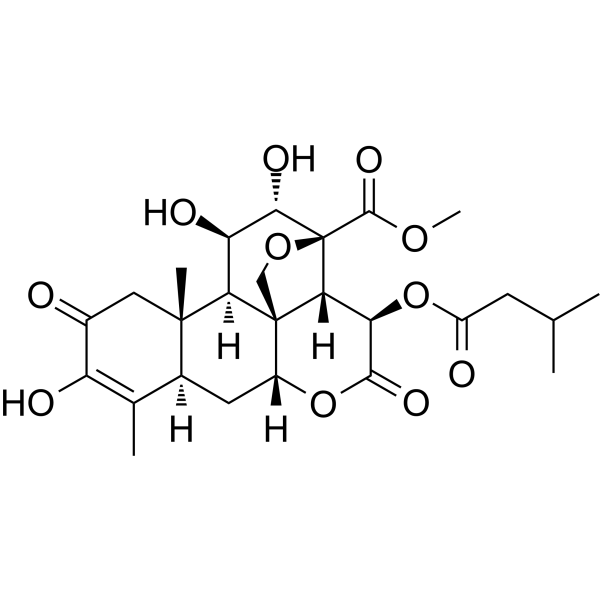
Bruceine A (Dihydrobrusatol) is a natural quassinoid. Bruceine A is an inhibitor of parasites, NF-κB, and PFKFB4 (Kd: 44 nM). Bruceine A is an activator of P38α MAPK. Bruceine A has antiparasitic activity. Bruceine A has antitumor activity and inhibits cancer cell migration. Bruceine A blocks the cell cycle and induces apoptosis. Bruceine A can be used in parasites, pancreatic cancer, and breast cancer research .
|
-
- HY-116387
-
WR99210
4 Publications Verification
BRL 6231 free base
|
Dihydrofolate reductase (DHFR)
Parasite
|
Infection
|
|
WR99210 is an orally active and low-toxicity dihydrofolate reductase (DHFR) inhibitor (IC50<0.075 nM). WR99210 shows good antiparasitic activity and is effective against P. falciparum and P. falciparum strains (including Pyrimethamine< (HY-18062)-resistant P. falciparum strains) as well as T. gondii .
|
-
- HY-116387A
-
|
BRL 6231
|
Dihydrofolate reductase (DHFR)
Parasite
|
Infection
|
|
WR99210 hydrochloride is an orally active and low-toxicity dihydrofolate reductase (DHFR) inhibitor (IC50<0.075 nM). WR99210 hydrochloride shows good antiparasitic activity and is effective against P. falciparum and P. falciparum strains as well as T. gondii .
|
-
- HY-N12538
-
|
|
Parasite
|
Infection
|
|
trans-Cinnamic anhydride is a Parasite inhibitor tnat can be isolated from Cinnamomum zeylanicum and exhibits moderate activity against Plasmodium falciparum .
|
-
- HY-N15244
-
|
|
Phytohormone
|
Others
|
|
(+)-Strigone is a phytohormone that can be isolated from Houttuynia cordata. (+)-Strigoneis is the germination stimulant for plants, which induces seed germination of root parasites .
|
-
- HY-B0291
-
|
|
Parasite
|
Infection
Cancer
|
|
Oxfendazole is a sulfoxide form of fenbendazole that is effective when taken orally. Oxfendazole fights parasites and has tumor-promoting activity .
|
-
- HY-151568
-
|
|
Parasite
|
Infection
|
|
UCB7362 is an orally active and potent antimalarial plasmepsin X (PMX) inhibitor, with an IC50 of 7 nM. UCB7362 inhibits parasite growth .
|
-
- HY-13832S2
-
|
Atavaquone-d5
|
Isotope-Labeled Compounds
Parasite
Cytochrome P450
Antibiotic
|
Infection
|
|
Atovaquone-d5 is the deuterium labeled Atovaquone. Atovaquone (Atavaquone) is a potent, selective and orally active inhibitor of the parasite’s mitochondrial cytochrome?bc1?complex. Atovaquone is against human and ?P. falciparum?cytochrome?bc1?activity with IC50 values of 460 nM and 2.0 nM, respectively. Atovaquone is an antimalarial agent and has the potential for the investigation of neumocystis pneumonia, toxoplasmosis, malaria, and babesia .
|
-
- HY-155688
-
|
|
Parasite
|
Infection
|
|
Antimalarial agent 29 (compound 16) is an antimalarial agent that inhibits P. berghei liver stage parasite load with an EC50 of 5.2 μM .
|
-
- HY-N15245
-
|
|
Phytohormone
|
Others
|
|
(+)-Sorgomol is the plants hormone that can be isolated from Sorghum bicolor. (+)-Sorgomol is the germination stimulant for plants, which induces seed germination of root parasites .
|
-
- HY-B1437
-
|
Stovarsol; Acetarsone
|
Parasite
|
Infection
|
|
Acetarsol (Stovarsol) is a potent and orally active anti-infective agent. Acetarsol shows anti-parasite activity. Acetarsol has the potential for the research of proctitis .
|
-
- HY-155689
-
|
|
Parasite
|
Infection
|
|
Antimalarial agent 30 (compound 11) is an antimalarial agent that inhibits P. berghei liver stage parasite load with an EC50 of 5.2 μM .
|
-
- HY-14989
-
SQ109
4 Publications Verification
NSC 722041
|
Parasite
Bacterial
Antibiotic
|
Infection
|
|
SQ109 is a potent inhibitor of the trypomastigote form of the parasite, with IC50 for cell killing of 50±8 nM. SQ109, targets MmpL3, is an antitubercular agent.
|
-
- HY-N9179
-
|
|
Parasite
|
Infection
|
|
3′,4′,5′,5,6,7-Hexamethoxyflavone is a flavonoid with antiprotozoal activity. 3′,4′,5′,5,6,7-Hexamethoxyflavone inhibits trypanosoma bruceirhodesiense with IC50 of 21.3 μM (8.58 g/mL) .
|
-
- HY-17598S
-
-
- HY-175506
-
|
|
Parasite
Calcium Channel
|
Infection
|
|
RyRs activator 6 (compound C3) is a ryanodine receptor (RyRs) activator that activates calcium release in insect neurons. RyRs activator 6 has insecticidal activity .
|
-
- HY-172098
-
|
|
Parasite
|
Infection
|
|
CpNMT-IN-1 (Compound 11e) is an against N-myristoyltransferase of C. parvum (CpNMT) inhibitor with an IC50 value of 2.5 μM. CpNMT-IN-1 also inhibits the growth of C. parvum with an EC50 value of 6.9 μM .
|
-
- HY-137445
-
|
|
Parasite
|
Infection
|
|
Modoflaner is an isophenylamide insecticide. Modoflaner may act through allosteric regulation of gamma-aminobutyric acid-gated chloride channels .
|
-
- HY-115971
-
-
- HY-111817
-
|
|
Parasite
|
Infection
|
|
ACT-451840 is an orally active, potent and low-toxicity compound, showing activity against sensitive and resistant plasmodium falciparum strains. ACT-451840 targets all asexual blood stages of the parasite, has a rapid onset of action. ACT-451840 behaves in a way similar to artemisinin derivatives, with very rapid onset of action and elimination of parasite. ACT-451840 can be used for the research of malarial .
|
-
- HY-13832S3
-
|
cis-Atavaquone-d4
|
Isotope-Labeled Compounds
Parasite
Cytochrome P450
Antibiotic
|
Infection
|
|
cis-Atovaquone-d4 is deuterium labeled Atovaquone. Atovaquone (Atavaquone) is a potent, selective and orally active inhibitor of the parasite’s mitochondrial cytochrome bc1 complex. Atovaquone is against human and P. falciparum cytochrome bc1 activity with IC50 values of 460 nM and 2.0 nM, respectively. Atovaquone is an antimalarial agent and has the potential for the investigation of neumocystis pneumonia, toxoplasmosis, malaria, and babesia[1][2].
|
-
- HY-B0175R
-
|
BAY-i 9142 (Standard)
|
Reference Standards
Parasite
Antibiotic
|
Infection
|
|
Toltrazuril (Standard) is the analytical standard of Toltrazuril. This product is intended for research and analytical applications. Toltrazuril (BAY-i 9142) is an antiprotozoal agent that acts upon Coccidia parasites.
|
-
- HY-116535A
-
|
|
Parasite
|
Infection
|
|
DL-threo-PPMP hydrochloride is an inhibitor of sphingosine synthetase in Plasmodium falciparum. DL-threo-PPMP hydrochloride inhibits the activity of sphingosine synthetase (sphingosine synthetase) by binding to a substrate that mimics sphingosine. This inhibition leads to a rapid decline in sensitive sphingomyelin synthase (SSS) activity, selectively disrupting the interconnected tubular network of TVM in the cytoplasm of the host cell, and this inhibition also blocks the proliferation of the parasite. DL-threo-PPMP hydrochloride can be used in the study of malaria parasite biology and the search for new antimalarial strategies .
|
-
- HY-13832R
-
|
Atavaquone (Standard)
|
Reference Standards
Parasite
Cytochrome P450
Antibiotic
Bacterial
|
Infection
Cancer
|
|
Atovaquone (Standard) is the analytical standard of Atovaquone. This product is intended for research and analytical applications. Atovaquone (Atavaquone) is a potent, selective and orally active inhibitor of the parasite’s mitochondrial cytochrome bc1 complex. Atovaquone is against human and P. falciparum cytochrome bc1 activity with IC50 values of 460 nM and 2.0 nM, respectively. Atovaquone is an antimalarial agent and has the potential for the investigation of neumocystis pneumonia, toxoplasmosis, malaria, and babesia .
|
-
- HY-171190
-
|
|
Parasite
|
Infection
|
|
ELQ-316 is an endochinlike quinolone compound and an anti-parasite agent. ELQ-316 demonstrates a great efficacy against acute and chronic experimental toxoplasmosis .
|
-
- HY-W019773S1
-
-
- HY-N9320
-
|
|
Parasite
|
Infection
|
|
13,21-Dihydroeurycomanone, a natural compound isolated from Eurycoma longifolia root, possesses anti-parasite activity for Plasmodium falciparum and Toxoplasma gondii .
|
-
- HY-164109
-
|
|
Parasite
|
Infection
Cancer
|
|
Tafuramycin A, a Duocarmycin derivative, is a potent anticancer and parasite attenuating agent. Tafuramycin A can be used for triple-negative breast cancer (TNBC) and malaria infection research .
|
-
- HY-139587
-
|
ML-878
|
Parasite
Chloride Channel
|
Infection
|
|
Umifoxolaner (ML-878), a γ-aminobutyric acid (GABA) regulated chloride channels antagonist, is a potent insecticide, and acaricide. Umifoxolaner can be uesd for parasite infection research .
|
-
- HY-129616
-
|
|
Parasite
|
Infection
|
|
TachypleginA-2 is a small-molecule inhibitor of parasite motility and invasion. TachypleginA-2 reproducibly induces the TgMLC1 (an essential light chain) mobility shift .
|
-
- HY-W019773S
-
-
- HY-W001119
-
|
|
Parasite
|
Infection
|
|
6-Hydroxyindazole is an anti-parasite agent with an EC50 of 128.9 μM against intracellular amastigotes of Leishmania amazonensis. 6-Hydroxyindazole can be used in the research of leishmaniasis .
|
-
- HY-N2656
-
|
|
Parasite
|
Infection
|
|
5,7,8-Trimethoxycoumarin is an anti-parasite agent with IC50s of 25.5 μM and 57.7 μM against Trypanosoma cruzi and L. amazonensis, respectively .
|
-
- HY-N9991
-
|
|
Parasite
|
Others
|
|
5-Hydroxy-3,7-dimethoxyflavone (compound 1) can be isolated from Kaempferia parviflora, but has no significant toxicity to malaria parasites, fungi, and bacteria .
|
-
- HY-123915
-
|
|
Parasite
|
Infection
|
|
Antimalarial agent 20 (Compound 49c) is an antimalarial agent with an IC50 of 0.6 nM against P. falciparum NF54 parasite strain in the NF54 albumax assay .
|
-
- HY-121241
-
|
|
Parasite
|
Infection
|
|
Dehydroemetine is an orally active antiparasitic agent. Dehydroemetine can inhibit parasites such as Entamoeba histolytica, and it can also be used in the research of parasitic diseases like visceral leishmaniasis .
|
-
- HY-118537
-
|
|
Parasite
|
Infection
|
|
ICI 56780 is an antimalarial agent, that exhibits etiological prevention and blood schizonticidal activity in rodent malaria models. ICI 56780 develops parasite resistance in P. berghei infected mice .
|
-
- HY-114909
-
|
|
Parasite
|
Infection
|
|
TachypleginA can inhibit the motility of T. gondii by binding directly and covalently to C58 of TgMLC1,thereby causing a decrease in the activity of the parasite's myosin motor .
|
-
- HY-151151
-
|
|
Parasite
|
Infection
|
|
Trypanothione synthetase-IN-3 is a noncompetitive mixed hyperbolic Trypanothione synthetase (TryS) inhibitor (Ki: 0.8 μM). Trypanothione synthetase-IN-3 can be used in the study of parasites, such as L. infantum .
|
-
- HY-B0529A
-
|
Sodium azlocillin
|
Bacterial
Parasite
Antibiotic
|
Infection
|
|
Azlocillin sodium salt (Sodium azlocillin), a semisynthetic penicillin, is a broad spectrum β-lactam antibiotic. Azlocillin sodium salt shows antipseudomonal activity, and also potent against the malarial parasite Plasmodium falciparum .
|
-
- HY-169790
-
|
|
Dihydrofolate reductase (DHFR)
Parasite
Fungal
|
Infection
|
|
Phomarin is an inhibitor for dihydrofolate reductase (DHFR). Phomarin exhibits activity against Plasmodium parasites and fungi including Mycrobotryum violaceum and Botrytis cinerea. Phomarin can be used for the research of malaria and fungal infections .
|
-
- HY-134199
-
|
|
N-myristoyltransferase
Parasite
|
Infection
|
|
IMP-1002 is a Plasmodium N-myristoyltransferase (NMT) inhibitor. IMP-1002 inhibits myristoylation activity, blocks parasite development. IMP-1002 can be used for the research of malaria .
|
-
- HY-120924
-
-
- HY-123601
-
|
|
Parasite
|
Infection
|
|
DHQZ 36 is a potent inhibitor of retrograde trafficking. DHQZ 36 inhibits Leishmania amazonensis infection in macrophages with an EC50 of 13.63 μM. DHQZ 36 has potent anti-parasite activity .
|
-
- HY-D0008
-
|
|
Bacterial
Fungal
Parasite
|
Infection
|
|
Brilliant green is a cationic dye used to color silk and wool. Brilliant green inhibits propagation of mold, intestinal parasites and fungus. Brilliant green is effective against Gram-positive bacteria .
|
-
- HY-B0223S2
-
|
SKF-62979-d7
|
Isotope-Labeled Compounds
Parasite
Antibiotic
|
Infection
|
|
Albendazole-d7 is the deuterium labeled Albendazole. Albendazole is a broad-spectrum parasiticide with high effectiveness and low host toxicity. Albendazole is used for the research gastrointestinal parasites in humans and animals .
|
-
- HY-113752
-
|
|
Parasite
|
Infection
|
|
MMV019313 is a potent, non-bisphosphonate inhibitor of farnesyl/geranylgeranyl diphosphate synthase (FPPS/GGPPS) with an IC50 of 0.82 µM. MMV019313 has activity against P. falciparum (Parasite) .
|
-
- HY-12785S1
-
|
Ricobendazole-d7; Albendazole oxide-d7
|
Isotope-Labeled Compounds
Parasite
|
Infection
|
|
Albendazole sulfoxide-d7 is the deuterium labeled Albendazole sulfoxide. Albendazole sulfoxide (Ricobendazole), the main active metabolite of Albendazole, exhibits anti-parasite effect against Echinococcus multilocularis Metacestodes .
|
-
- HY-135611R
-
|
|
Reference Standards
Parasite
Antibiotic
|
Infection
|
|
Pargyline (hydrochloride) (Standard) is the analytical standard of Pargyline (hydrochloride). This product is intended for research and analytical applications. Pargyline hydrochloride is an irreversible monoamine oxidase (MAO) inhibitor with Kis of 13 μM and 0.5 μM for MAO-A and MAO-B, respectively. Pargyline hydrochloride has antihypertensive and anticancer activities . Pargyline (hydrochloride) is a click chemistry reagent, it contains an Alkyne group and can undergo copper-catalyzed azide-alkyne cycloaddition (CuAAc) with molecules containing Azide groups.
|
-
- HY-117375
-
|
|
Parasite
|
Infection
|
|
Brotianide is a potent anti-parasitic agent. Brotianide can be used to study liver fluke and gastric fluke infestations .
|
-
- HY-108938
-
|
|
Cytochrome P450
Fungal
Parasite
|
Infection
|
|
SDZ285428 is a CYP51 inhibitor. SDZ285428 inhibits Trypanosoma cruzi (TC) CYP51 with I/E2 <1 (5 min) and I/E2=9 (1 h). SDZ285428 inhibits Trypanosoma brucei (TB) CYP51 with I/E2 <1 (5 min) and I/E2=35 (1 h) .
|
-
- HY-W588212
-
|
trans-NRDC-143
|
Parasite
|
Neurological Disease
|
|
trans-Permethrin is a transconfiguration of Permethrin (HY-B0887). Permethrin is an insecticide and neurotoxin .
|
-
- HY-W019773R
-
|
|
Reference Standards
Parasite
Drug Metabolite
|
Infection
|
|
Albendazole sulfone (Standard) is the analytical standard of Albendazole sulfone. This product is intended for research and analytical applications. Albendazole sulfone is a metabolite of Albendazole, and exhibits anti-parasite effect against Echinococcus multilocularis Metacestodes .
|
-
- HY-161299
-
|
|
Parasite
|
Infection
|
|
LAPTc-IN-1 (compound 4) is a competitive inhibitor targeting acidic M17 leucinopeptidase (LAPTc) with Ki=0.27 μM. LAPTc-IN-1 is a potential antagonist of the parasite Trypanosoma cruzi .
|
-
- HY-118621
-
|
|
Elastase
Parasite
|
Infection
|
|
JCP174 is an inhibitor of palmitoyl protein thioesterase-1 (TgPPT1), a depalmitoylase in the parasite T. gondii . JCP174 is also an inhibitor of porcine pancreatic elastase and human leukocyte elastase .
|
-
- HY-160611
-
|
|
Bacterial
|
Infection
|
|
TgENR-IN-1 (Compound 5a) is an inhibitor for Toxoplasma gondii enoyl reductase (TgENR), which inhibits 25% TgENR at 1 μM. TgENR-IN-1 exhibits toxicity with an IC50 of >10 μM in parasite tissue .
|
-
- HY-147198
-
|
|
Parasite
|
Infection
|
|
Antimalarial agent 13 (Compound 1) is a potent antimalarial agent. Antimalarial agent 13 shows inhibition with EC50 values of 124 nM and 2.5 μM against P. falciparum parasite and HepG2, respectively .
|
-
- HY-119819
-
|
|
Bacterial
Parasite
Antibiotic
|
Infection
|
|
Psicofuramine a nucleoside antibiotic and has the inhibition of xanthosine 5'-phosphate aminase. Psicofuranine also specifically inhibits GMP synthase, and interrupts parasite growth. Psicofuranine exhibits a dose-dependent inhibition of P. falciparum growth .
|
-
- HY-12785R
-
|
Ricobendazole (Standard); Albendazole oxide (Standard)
|
Reference Standards
Parasite
|
Infection
|
|
Albendazole sulfoxide (Standard) is the analytical standard of Albendazole sulfoxide. This product is intended for research and analytical applications. Albendazole sulfoxide (Ricobendazole), the main active metabolite of Albendazole, exhibits anti-parasite effect against Echinococcus multilocularis Metacestodes .
|
-
- HY-128337
-
|
|
Parasite
|
Infection
|
|
AN7973 is the 6-carboxamide benzoxaborole, blocks intracellular parasite development and inhibits Cryptosporidium growth. AN7973 is orally active, possesses favorable safety, stability, and PK parameters, and is an exciting agent candidate for treating cryptosporidiosis.
|
-
- HY-100184
-
DSM265
2 Publications Verification
|
Dihydroorotate Dehydrogenase
Parasite
|
Infection
|
|
DSM265 is a long-duration inhibitor of P. falciparum dihydroorotate dehydrogenase (PfDHODH) with an IC50 of 8.9 nM. DSM265 can also inhibit the growth of Pf3D7 parasites with an EC50 of 4.3 nM .
|
-
- HY-136438
-
-
- HY-B0621
-
|
CGA89317
|
Parasite
Caspase
Bcl-2 Family
PARP
Pyroptosis
|
Infection
|
|
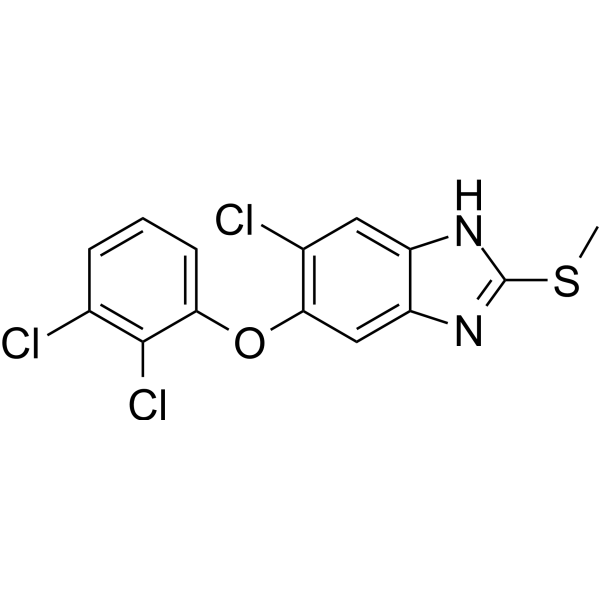
Triclabendazole is an orally active parasite inhibitor. Triclabendazole has anti-Leishmania activity and induces gasdermin E (GSDME)-dependent pyroptosis by caspase-3 activation. Triclabendazole can be used for the research of fasciola hepatica .
|
-
- HY-N11550
-
|
|
Parasite
|
Infection
|
|
Salviandulin E is a diterpenoid compound that can be isolated from Salvia leucantha CAV.. Salviandulin E shows antitrypanosomal activity against T. b. brucei GUTat 3.1 parasites with an IC50 value of 0.72 µg/mL .
|
-
- HY-162066
-
|
|
Parasite
|
Infection
|
|
DNDI-6174 is an orally active Leishmania cytochrome b (Qi site of cytochrome bc1 complex/complex III) inhibitor. DNDI-6174 binds to the Qi site of Leishmania cytochrome b, inhibits cytochrome bc1 complex activity in the parasite's electron transport chain across promastigote and axenic amastigote stages. DNDI-6174 reduces parasite burden in rodent models, inhibits growth of various Leishmania species, drug-resistant clinical isolates, and Trypanosoma cruzi, with marginal activity against Trypanosoma brucei. DNDI-6174 can be used for the research of visceral leishmaniasis, cutaneous leishmaniasis .
|
-
- HY-125084
-
|
|
Parasite
|
Infection
|
|
NEU617 is an anti-parasite agent. NEU617 inhibits the proliferation for the HAT (human African trypanosomiasis) pathogen (EC50: 42 nM for Trypanosoma brucei, 1.8 μM for T. cruzi). NEU617 is a derivative of Lapatinib (HY-50898) .
|
-
- HY-153238
-
|
|
Parasite
|
Infection
|
|
AN15368 is an orally active small-molecule precursor that can be activated by parasite carboxypeptidase to produce a compound that targets the messenger RNA processing pathway in T. cruzi. cruzi. AN15368 has the potential to prevent and research Chagas disease potential .
|
-
- HY-163727
-
|
|
Parasite
|
Infection
|
|
MMV1557817 is an orally active and potent antimalarial compound. MMV1557817 is a selective, nanomolar inhibitor of both Plasmodium falciparum and Plasmodium vivax aminopeptidases M1 and M17, leading to inhibition of end-stage hemoglobin digestion in asexual parasites .
|
-
- HY-132931
-
|
|
Parasite
|
Infection
|
|
TCMDC-125457 is potent in inducing calcium redistribution but minimally inhibits heme crystallization. TCMDC-125457 demonstrated high efficacy when pulsed in a single-dose combination with artesunate against tightly synchronized artemisinin-resistant ring-stage parasites.
|
-
- HY-121556
-
|
|
Reactive Oxygen Species (ROS)
Parasite
|
Infection
|
|
Rufigallol is one of the earliest systems reported to form columnar mesophases. Rufigallol is also an oxidant agent. Rufigallol acts in a pro-oxidant fashion to produce oxygen radicals inside parasitized erythrocytes. Rufigallol has vitamin K activity and antimalarial activity .
|
-
- HY-14989R
-
|
NSC 722041 (Standard)
|
Reference Standards
Parasite
Bacterial
Antibiotic
|
Infection
|
|
SQ109 (Standard) is the analytical standard of SQ109. This product is intended for research and analytical applications. SQ109 is a potent inhibitor of the trypomastigote form of the parasite, with IC50 for cell killing of 50±8 nM. SQ109, targets MmpL3, is an antitubercular agent.
|
-
- HY-148315
-
|
|
GLUT
|
Infection
|
|
GLUT1-IN-2 (compound 17) is a GLUT1 inhibitor with an IC50 value of 12 μM. GLUT1-IN-2 shows inhibitory effect to Plasmodium falciparum hexose transporter PfHT with an IC50 value of 13 μM. GLUT1-IN-2 can be used for the research of infection .
|
-
- HY-P990212
-
|
|
Interleukin Related
STAT
|
Infection
Inflammation/Immunology
|
|
Anti-Mouse IL-6 Antibody (MP5-20F3) is an anti-mouse IL-6 IgG1 monoclonal antibody. Anti-Mouse IL-6 Antibody (MP5-20F3) reshapes the tumor microenvironment by blocking IL-6. Anti-Mouse IL-6 Antibody (MP5-20F3) can inhibit the STAT3 pathway and enhance T cell infiltration. Anti-Mouse IL-6 Antibody (MP5-20F3) can be used for researches on inflammation and infection conditions such as malignant pleural effusion (MPE) .
|
-
- HY-114219
-
|
|
Fungal
Parasite
|
Infection
|
|
Oleylphosphocholine is an orally active antifungal and antiparasitic agent. Oleylphosphocholine is promising for research of invasive fungal diseases (e.g., aspergillosis) and visceral leishmaniasis .
|
-
- HY-173461
-
|
|
Parasite
|
Infection
|
|
Anti-Trypanosoma cruzi agent-7 (compound 1) is a potent Trypanosoma cruzi inhibitor with an EC50 of 1.26 µM. Anti-Trypanosoma cruzi agent-7 can be used in the study of Chagas disease .
|
-
- HY-158690
-
|
|
Aminopeptidase
Parasite
|
Infection
|
|
DDD00057570 is a selective M17 leucyl-aminopeptidase (LAP) inhibitor. DDD00057570 inhibits L. major and L. donovani intracellular amastigotes in vitro growth .
|
-
- HY-144294
-
|
|
Parasite
|
Infection
|
|
Purine phosphoribosyltransferase-IN-1 (Compound (S,R)-48) is a potent inhibitor of the Plasmodium falciparum (Pf), P. vivax (Pv) and Trypanosoma brucei (Tbr) 6-oxopurine purine phosphoribosyltransferases (PRTs), with Ki values of 50, 20, and 2 nM, respectively .
|
-
- HY-B0887C
-
|
1R-cis-NRDC-143
|
Parasite
|
Infection
|
|
1R-cis-Permethrin is an insecticide and neurotoxin. 1R-cis-Permethrin affects neuron membranes by prolonging sodium channel activation .
|
-
- HY-12912
-
|
|
PI4K
Parasite
|
Infection
|
|
KDU691, an imidazopyrazine with potent anti-parasitic activity against blood stage schizonts, gametocytes and liver stages, is a Plasmodium PI4K inhibitor. KDU691 selectively inhibits dihydroartemisinin-pretreated Plasmodium falciparum ring-stage parasites .
|
-
- HY-169233
-
|
|
Parasite
|
Infection
|
|
MED6-189, a kalihinol analog, disrupts apicoplast function and vesicular trafficking in P. falciparum malaria (IC50 < 50 nM). MED6-189 targets the apicoplast, a nonphotosynthetic plastid found in most Apicomplexa parasites that is crucial for the synthesis of isoprenoids .
|
-
- HY-141837
-
|
|
Parasite
|
Infection
|
|
MMV674850 is potent against asexual stage parasites at 2.7 and 4.5 nM and preferentially targets early-stage gametocytes (early-stage gametocyte: IC50 4.5 ± 3.6 nM; late-stage gametocyte: IC50 28.7 ± 0.2 nM).
|
-
- HY-149079
-
|
|
Parasite
Necroptosis
|
Infection
|
|
Antiparasitic agent-15, a pyridine-thiazolidinone, has anti-Trypanosoma cruzi and leishmanicidal activities. Antiparasitic agent-15 has IC50s of 0.9 μM and 0.64 μM against trypomastigote and amastigote forms of T. cruzi. Antiparasitic agent-15 has IC50s of 42.2 μM and 9.58 μM against trypomastigote and amastigote forms of L. amazonensis. Antiparasitic agent-15 induces parasite cell death through necrosis induction. Antiparasitic agent-15 induces morphological changes such as shortening, retraction and curvature of the parasite body and leakage of internal content with T. cruzi trypomastigotes .
|
-
- HY-149080
-
|
|
Parasite
Necroptosis
|
Infection
|
|
Antiparasitic agent-16, a pyridine-thiazolidinone, has anti-Trypanosoma cruzi and leishmanicidal activities. Antiparasitic agent-16 has IC50s of 1.0 μM and 0.6 μM against trypomastigote and amastigote forms of T. cruzi. Antiparasitic agent-16 has IC50s of 150.2 μM and 16.75 μM against trypomastigote and amastigote forms of L. amazonensis. Antiparasitic agent-16 induces parasite cell death through necrosis induction. Antiparasitic agent-16 induces morphological changes such as shortening, retraction and curvature of the parasite body and leakage of internal content with T. cruzi trypomastigotes .
|
-
- HY-A0148B
-
|
(-)-SKF-102886 free base; (-)-WR-171669
|
Parasite
|
Infection
|
|
(-)-Halofantrine ((-)-SKF-102886 free base; (-)-WR-171669) is an inhibitor of the malignant malaria parasite (P. falciparum) and targets multidrug-resistant P. falciparum. The pharmacokinetic parameters of (-)-Halofantrine in rats vary depending on the route of administration, distinguishing it from other isomers .
|
-
- HY-12641A
-
|
|
nAChR
Parasite
Antibiotic
|
Infection
|
|
Pyrantel is an orally active anthelmintic and an agonist of the nicotinic acetylcholine receptor (nAChR). Pyrantel can cause spasmodic muscle paralysis in parasites. Pyrantel can be used in the study of parasitic infections such as ascariasis, hookworm infections, intestinal worms (pinworm infections), trichinosis and trichinosis .
|
-
- HY-179656
-
|
|
Parasite
Guanylate Cyclase
Nucleoside Antimetabolite/Analog
|
Infection
|
|
UA2239 is an antimalarial agent and acyclic nucleoside phosphonate. UA2239 disrupts the essential cGMP-dependent egress pathway by decreasing cGMP levels. UA2239 targets guanylyl cyclase α. UA2239 demonstrates rapid and irreversible inhibitory effects on Plasmodium parasites .
|
-
- HY-162161
-
|
|
Fluorescent Dye
Microtubule/Tubulin
|
Cancer
|
|
Flutax-2 is an active fluorescent derivative of Paclitaxel (HY-B0015) that binds to polymerized αβ-tubulin dimers. Flutax-2 is applicable for imaging microtubules in live cells, isolated cytoskeletons and parasites (Ex/Em=496/526 nm) .
|
-
- HY-B0529AR
-
|
Sodium azlocillin (Standard)
|
Reference Standards
Bacterial
Parasite
Antibiotic
|
Infection
|
|
Azlocillin (sodium salt) (Standard) is the analytical standard of Azlocillin (sodium salt). This product is intended for research and analytical applications. Azlocillin sodium salt (Sodium azlocillin), a semisynthetic penicillin, is a broad spectrum β-lactam antibiotic. Azlocillin sodium salt shows antipseudomonal activity, and also potent against the malarial parasite Plasmodium falciparum .
|
-
- HY-15537
-
|
|
Parasite
Bacterial
|
Infection
|
|
Tilbroquinol is an orally active halogenated hydroxyquinoline antiprotozoal agent, mainly used for anti-amoebic infections . Tilbroquinol targets intestinal protozoa and Entamoeba histolytica to eliminate parasites in the intestinal lumen. Tilbroquinol can be used in research related to intestinal infections, intestinal amoebiasis and hepatic amoebiasis .
|
-
- HY-149093
-
|
|
Parasite
|
Infection
|
|
Antileishmanial agent-14 is a sulfuretin analog with potential activity against the parasite Leishmania donovani promastigotes (IC50=4.1 μM). Antileishmanial agent-14 also inhibits infection by L. donovani amastigotes (IC50=11.1 μM) .
|
-
- HY-117897
-
CK-2-68
1 Publications Verification
|
Parasite
|
Infection
|
|
CK-2-68 is an inhibitor for complex III in protozoan mitochondrial respiratory chain, by targeting the alternative NADH dehydrogenase (NDH2) of the malarial parasite Plasmodium. CK-2-68 exhibits antimalaria efficacy, that inhibits Plasmodium falciparum infected erythrocytes with an IC50 of 40 nM .
|
-
- HY-113648
-
|
|
HBV
|
Infection
|
|
LP10 is a non-azole CYP51 inhibitor with activity against Trypanosoma cruzi infection. Treatment with LP10 blocks the 14α-demethylation step, leading to disruption of the parasite cell membrane and ultimately triggering the death of important clinically relevant amoeba stages .
|
-
- HY-175741
-
|
|
Parasite
Topoisomerase
|
Infection
|
|
IID432 is a Trypanosoma cruzi Topoisomerase II inhibitor with an EC50 of 8 nM for Trypanosoma cruzi. IID432, a single dose of 25 mg/kg, can achieve relapse-free parasite clearance in mouse models of chronic Chagas disease. IID432 can be used for Chagas disease research .
|
-
- HY-N8181
-
|
|
Parasite
|
Infection
|
|
1,3-Linolein-2-Olein, a triglyceride, is an antileishmanial agent. 1,3-Linolein-2-Olein inhibits promatigotes of the parasite (IC50=0.079 ug/ml) and inhibits the growth of amastigotes (IC50= 40.03 ug/ml) .
|
-
- HY-12641
-
|
|
Parasite
nAChR
Antibiotic
|
Infection
|
|
Pyrantel tartrate is an orally active anthelmintic and an agonist of the nicotinic acetylcholine receptor (nAChR). Pyrantel tartrate can cause spasmodic muscle paralysis in parasites. Pyrantel tartrate can be used in the study of parasitic infections such as ascariasis, hookworm infections, intestinal worms (pinworm infections), trichinosis and trichinosis .
|
-
- HY-135625
-
|
|
Parasite
|
Infection
|
|
BPH-1218 is an inhibitor of squalene synthase (SQS), with the IC50 of 31 nM and 64 nM for TcSQS and HsSQS, respectively, that can be used as an anti-infective agent .
|
-
- HY-107034
-
|
349C59
|
Parasite
|
Infection
|
|
Moxipraquine is a potent insecticide against Trypanosoma cruzi. Moxipraquine effectively inhibits Leishmania major, L. mexicana mexicana and L. brasiliensis panamensis but not L.b. brasiliensis .
|
-
- HY-124901R
-
|
|
Reference Standards
Parasite
|
Infection
|
|
Tetrasul (Standard) is the analytical standard of Tetrasul. This product is intended for research and analytical applications. Tetrasul is an acaricide. Tetrasul inhibits Tetranychus urticae and aphids on hops. Tetrasul has also been used in research of erythematous (type one) rosacea .
|
-
- HY-D0143B
-
|
|
Parasite
Potassium Channel
|
Infection
|
|
Quinine hemisulfate hydrate, an alkaloid derived from the bark of the cinchona tree, acts as an anti-malaria agent. Quinine hemisulfate hydrate is a potassium channel inhibitor that inhibits WT mouse Slo3 (KCa5.1) channel currents evoked by voltage pulses to +100 mV, with an IC50 of 169 μM .
|
-
- HY-124901
-
|
|
Parasite
|
Infection
|
|
Tetrasul is an acaricide. Tetrasul inhibits Tetranychus urticae and aphids on hops. Tetrasul has also been used in research of erythematous (type one) rosacea .
|
-
- HY-148968
-
|
Carbathion
|
Fungal
|
Infection
|
|
Metham sodium (Carbathion) is a broad-spectrum soil microbial suppressant. Metham sodium controls soil-borne pests and weeds. Metham sodium inhibits weed seeds, plant-parasitic nematodes, plant pathogenic fungi and soil insects .
|
-
- HY-110082
-
|
|
Flavivirus
Dengue Virus
Parasite
Potassium Channel
|
Infection
|
|
Quinine (hydrochloride) is an alkaloid derived from the bark of the cinchona tree, acts as an anti-malaria agent. Quinine (hydrochloride) is a potassium channel inhibitor that inhibits WT mouse Slo3 (KCa5.1) channel currents evoked by voltage pulses to +100 mV with an IC50 of 169 μM .
|
-
- HY-D0143R
-
|
|
Dengue Virus
Flavivirus
Reference Standards
Parasite
Potassium Channel
|
Infection
|
|
Quinine (Standard) is the analytical standard of Quinine. This product is intended for research and analytical applications. Quinine is an alkaloid derived from the bark of the cinchona tree, acts as an anti-malaria agent. Quinine is a potassium channel inhibitor that inhibits WT mouse Slo3 (KCa5.1) channel currents evoked by voltage pulses to +100 mV with an IC50 of 169 μM .
|
-
- HY-119815
-
|
|
Bacterial
|
Infection
|
|
Tenonitrozole exhibits antibacterial activity through inhibition of pyruvate-ferredoxin oxidoreductase (PFOR). Tenonitrozole inhibits H. pylori and C. jejuni with MICs of 0.7 μM and 5.9 μM .
|
-
- HY-D0143
-
|
|
Flavivirus
Dengue Virus
Parasite
Potassium Channel
|
Infection
|
|
Quinine is an alkaloid derived from the bark of the cinchona tree, acts as an anti-malaria agent. Quinine is a potassium channel inhibitor that inhibits WT mouse Slo3 (KCa5.1) channel currents evoked by voltage pulses to +100 mV with an IC50 of 169 μM .
|
-
- HY-114800
-
|
RG4; SOP
|
Parasite
|
Others
|
|
Soporidine is an antagonist of germination of the parasitic plant Striga hermonthica. Soporidine specifically inhibits a S. hermonthica strigolactone receptor and inhibits the parasite's germination . Soporidine is a click chemistry reagent, it contains an Alkyne group and can undergo copper-catalyzed azide-alkyne cycloaddition (CuAAc) with molecules containing Azide groups.
|
-
- HY-109706
-
|
|
Bacterial
Fungal
|
Infection
|
|
(Rac)-CPI-098 shows antibacterial activity. (Rac)-CPI-098 exhibits superior anti-fungal activity against Monascus ruber, better activity against Aspergillus fumigates, good activity against Aspergillus niger and Aspergillus parasites and moderate activity against Candida albicans .
|
-
- HY-170963
-
|
|
Parasite
|
Infection
|
|
LASSBio-1985 is an NHLd inhibitor (nucleoside hydrolase from Leishmania donovani), with a Ki of 79 μM and an IC50 of 84.6 μM. LASSBio-1985 exhibits selective toxicity against Leishmania parasites, with no toxicity to mammalian cells, making it a promising candidate for research in the field of anti-infective therapies .
|
-
- HY-12640
-
|
Pyrantel embonate
|
Parasite
nAChR
Antibiotic
|
Infection
|
|
Pyrantel pamoate (Pyrantel embonate) is an orally active anthelmintic and an agonist of the nicotinic acetylcholine receptor (nAChR). Pyrantel pamoate can cause spasmodic muscle paralysis in parasites. Pyrantel pamoate can be used in the study of parasitic infections such as ascariasis, hookworm infections, intestinal worms (pinworm infections), trichinosis and trichinosis .
|
-
- HY-126937
-
|
|
Parasite
SARS-CoV
|
Infection
|
|
Ivermectin B1a, a derivative of Avermectin B1a (HY-15308), is a main component of Ivermectin (HY-15310) . Ivermectin (MK-933) is a broad-spectrum anti-parasite agent. Ivermectin is a candidate therapeutic against SARS-CoV-2/COVID-19 .
|
-
- HY-117684
-
|
DDD107498; DDD-498; M5717
|
Parasite
CaMK
|
Infection
|
|
Cabamiquine (DDD107498) is a potent and orally active antimalarial agent, inhibits multiple life-cycle stages of the parasite, with an EC50 of 1 nM against P. falciparum 3D7. Cabamiquine inhibits protein synthesis by targeting eEF2/CaMKIII, with an EC50 of 2 nM for WT-PfeEF2 .
|
-
- HY-B0621R
-
|
CGA89317 (Standard)
|
Reference Standards
Parasite
Caspase
Bcl-2 Family
PARP
Pyroptosis
|
Infection
|
|
Triclabendazole (Standard) is the analytical standard of Triclabendazole. This product is intended for research and analytical applications. Triclabendazole is an orally active parasite inhibitor. Triclabendazole has anti-Leishmania activity and induces gasdermin E (GSDME)-dependent pyroptosis by caspase-3 activation. Triclabendazole can be used for the research of fasciola hepatica .
|
-
- HY-119046
-
|
|
HSP
Parasite
|
Infection
|
|
SNX-0723 is a potent Hsp90 Inhibitor with anti-Plasmodium activity. SNX-0723 shows high binding affinity for HsHsp90 and PfHsp90 with Kis of 4.4 and 47 nM, respectively. SNX-0723 inhibits liver-stage P. berghei ANKA parasites with the EC50 of 3.3 μM .
|
-
- HY-N2927
-
|
β-Costic acid
|
Parasite
|
Infection
|
|
Costic acid (β-Costic acid) is a natural product, that can be isolated from Dittrichia viscosa. Costic acid exhibits potent in vivo acaricidal activity against the parasite. Costic acid is not toxic for human umbilical vein endothelial cells (HUVEC) at concentrations of up to 230 μM. Costic acid can be used for the research of varroosis in honey bee colonies .
|
-
- HY-148035
-
|
|
Parasite
|
Infection
|
|
Plm IV inhibitor-2 (compound 3) is a potent digestive vacuole plasmepsins IV (Plm IV) inhibitor with IC50 values of 24 nM, 70 nM and 0.3 μM for Plm IV, II and I, respectively. Plm IV inhibitor-2 can be used to research malaria caused by Plasmodium parasites .
|
-
- HY-151195
-
|
|
Proteasome
Parasite
|
Infection
|
|
20S Proteasome-IN-4 (Compound 7) is a brain-penetrant, parasite-selective, orally active 20S proteasome inhibitor with an IC50 of 6.3 nM against T. b. brucei 20S proteasome. 20S Proteasome-IN-4 can be used for the research of human African trypanosomiasis (HAT) .
|
-
- HY-N6950
-
|
|
PI3K
Akt
mTOR
Parasite
Apoptosis
|
Infection
Cancer
|
|
Hederacolchiside A1, isolated from Pulsatilla chinensis, suppresses proliferation of tumor cells by inducing apoptosis through modulating PI3K/Akt/mTOR signaling pathway . Hederacolchiside A1 has antischistosomal activity, affecting parasite viability both in vivo and in vitro .
|
-
- HY-136438R
-
|
|
Reference Standards
Endogenous Metabolite
Parasite
|
Metabolic Disease
Inflammation/Immunology
|
|
Toltrazuril sulfoxide (Standard) is the analytical standard of Toltrazuril sulfoxide. This product is intended for research and analytical applications. Toltrazuril sulfoxide is a short-lived intermediary metabolite of Toltrazuril (HY-B0175), and then can be metabolized to the reactive toltrazuril sulfone (TZR-SO2) in vivo. Toltrazuril is an antiprotozoal agent that acts upon Coccidia parasites .
|
-
- HY-141836
-
|
|
Parasite
|
Infection
|
|
MMV666810, a 2-aminopyrazine similar to MMV390048, is potent against asexual parasites at 5.94 nM, but against gametocytes, it has a 3.3-fold selectivity to late-stage gametocytes compared to earlier stages (early-stage gametocyte: IC50 603 ± 88 nM; late-stage gametocyte: IC50 179 ± 8 nM).
|
-
- HY-117684A
-
|
DDD107498 succinate; DDD-498 succinate; M5717 succinate
|
Parasite
CaMK
|
Infection
|
|
Cabamiquine (DDD107498) succinate is a potent and orally active antimalarial agent, inhibits multiple life-cycle stages of the parasite, with an EC50 of 1 nM against P. falciparum 3D7. Cabamiquine succinate inhibits protein synthesis by targeting eEF2/CaMKIII, with an EC50 of 2 nM for WT-PfeEF2 .
|
-
- HY-B0621S
-
|
CGA89317-d3
|
Parasite
Microtubule/Tubulin
Isotope-Labeled Compounds
|
Others
|
|
Triclabendazole-d3 is the deuterium labeled Triclabendazole (HY-B0621). Triclabendazole is an orally active parasite inhibitor. Triclabendazole has anti-Leishmania activity and induces gasdermin E (GSDME)-dependent pyroptosis by caspase-3 activation. Triclabendazole can be used for the research of fasciola hepatica .
|
-
- HY-111759
-
|
7-CN-7-C-Ino
|
PKA
Parasite
|
Infection
|
|
Jaspamycin (7-CN-7-C-Ino) is a potent activator of PKA, binding to the R site (PKAR), with an EC50 of 6.5 nM and Kd of 8 nM in Trypanosoma brucei. Jaspamycin (7-CN-7-C-Ino) does not bind with purified human PKARIα. Anti-parasite activity .
|
-
- HY-182685
-
|
|
Acetyl-CoA synthetase
Parasite
|
Infection
|
|
MMV693183 is an orally active inhibitor of Plasmodium falciparum acetyl-CoA synthetase (AcAS), with an IC50 of 300 nM against Plasmodium falciparum. MMV693183 exhibits potent inhibitory activity against clinical isolates of malaria parasites, including Artemisinin (HY-B0094)-resistant strains. MMV693183 is metabolized in vivo into the active antimetabolite CoA-MMV693183, which exerts effects of killing asexual blood-stage parasites and blocking transmission to Anopheles mosquitoes by binding to and inhibiting the function of acetyl-CoA synthetase, thereby reducing the levels of acetyl-CoA and 4'-phosphopantetheine. In humanized mouse models, MMV693183 shows favorable in vivo efficacy, drug-like properties, and no significant cytotoxicity or off-target activity against human cells. MMV693183 is widely used in malaria-related research as a parasiticide and metabolic disruptor .
|
-
- HY-103353
-
|
|
Cathepsin
Parasite
|
Infection
Cancer
|
|
SID 26681509 is a potent, reversible, competitive, and selective inhibitor of human cathepsin L with an IC50 of 56 nM. SID 26681509 inhibits in vitro propagation of malaria parasite Plasmodium falciparum and inhibits Leishmania major with IC50s of 15.4 μM and 12.5 μM, respectively. SID 26681509 shows no inhibitory activity against cathepsin G .
|
-
- HY-B0777
-
|
CL301423
|
Antibiotic
BCRP
P-glycoprotein
Parasite
|
Infection
Neurological Disease
|
|
Moxidectin (CL301423) is an orally active and brain-penetrant macrolide (ML) anthelmintic for the prevention and control of heartworms and roundworms. Moxidectin is also a substrate of BCRP and P-glycoprotein (P-gp) in vivo, and is secreted into breast milk and effluxed from the host and parasite mediated by Bcrp1 and P-gp. This may be related to the presence of chemical residues in milk .
|
-
- HY-129476
-
|
|
Parasite
Endogenous Metabolite
|
Infection
Cancer
|
|
L-Canaline is a nonprotein amino acid stored in many leguminous plants. L-Canaline is a cytotoxic metabolite catalyzed by L-canavanine and its arginase. L-Canaline is a potent and irreversible inhibitor of ornithine aminotransferase. L-Canaline inhibits the growth of the malaria parasite Plasmodium falciparum with an IC50 of 297 nM. L-Canaline has anticancer and antiproliferative effects .
|
-
- HY-124801
-
ABMA
1 Publications Verification
|
Flavivirus
Dengue Virus
Bacterial
Parasite
|
Infection
|
|
ABMA is a broad-spectrum inhibitor of intracellular toxins and pathogens. ABMA efficiently protects cells against various toxins and pathogens including viruses, intracellular bacteria and parasite. ABMA selectively acts at host cell late endosomes rather than targeting toxin or pathogen itself. ABMA has broad-spectrum anti-infection activity .
|
-
- HY-W071746
-
|
Linoelaidic acid
|
Endogenous Metabolite
Parasite
Apoptosis
|
Infection
Inflammation/Immunology
|
|
Linolelaidic acid (Linoelaidic acid) is an omega-6 trans fatty acid (TFA) that is an essential nutrient with oral activity. Linolelaidic acid can be added to enteral nutrition (oral), parenteral nutrition (intravenous), and infant formula. Linolelaidic acid has anti-inflammatory and anti-parasitic ((Parasite)) activities, and can induce Apoptosis. Linolelaidic acid is useful for research in infections .
|
-
- HY-B1916
-
|
Spiramycin B; Spiramycin II; Foromacidin B
|
Antibiotic
Bacterial
Parasite
|
Infection
|
|
Acetylspiramycin (Spiramycin B) is an effective oral macrolide antibiotic produced by Streptomyces, It can inhibit the splenic lymphocyte transformation induced by phytohemagglutinin (PHA), LPS (HY-D1056) and antigen, reduce the procoagulant activity of macrophages, have good antibacterial effect on gram-positive bacteria, and is also an effective antigenic insect agent, which can be used to fight parasitic infection .
|
-
- HY-149960
-
|
|
Parasite
|
Infection
|
|
Antiparasitic agent-17 (compound 5u) is an orally active antiparasitic agent. Antiparasitic agent-17 inhibits Chloroquine sensitive (Pf3D7) and Chloroquine resistant (PfK1) strain with IC50s of 0.96 μM and 1.67 μM, respectively .
|
-
- HY-B1916R
-
|
Spiramycin B (Standard); Spiramycin II (Standard); Foromacidin B (Standard)
|
Reference Standards
Antibiotic
Bacterial
Parasite
|
Infection
|
|
Acetylspiramycin (Standard) is the analytical standard of Acetylspiramycin. This product is intended for research and analytical applications. Acetylspiramycin (Spiramycin B) is an effective oral macrolide antibiotic produced by Streptomyces, It can inhibit the splenic lymphocyte transformation induced by phytohemagglutinin (PHA), LPS (HY-D1056) and antigen, reduce the procoagulant activity of macrophages, have good antibacterial effect on gram-positive bacteria, and is also an effective antigenic insect agent, which can be used to fight parasitic infection[1][2][3][4].
|
-
- HY-N8707
-
|
|
Parasite
HDAC
NF-κB
|
Infection
Inflammation/Immunology
Cancer
|
|
Homobutein a natural chalcones (can be found in many medicinal plants, fruits, vegetables, spices and nuts), is a potent HDACs/NF-κB dual inhibitor with IC50s of 190 and 38 μM, respectively. Homobutein also a chelator of iron (II and III) cations, shows various activities, including anticancer, anti-inflammatory, antiparasite and antioxidation .
|
-
- HY-103353A
-
|
|
Cathepsin
Parasite
|
Infection
Cancer
|
|
SID 26681509 quarterhydrate is a potent, reversible, competitive, and selective inhibitor of human cathepsin L with an IC50 of 56 nM. SID 26681509 quarterhydrate inhibits in vitro propagation of malaria parasite Plasmodium falciparum and inhibits Leishmania major with IC50s of 15.4 μM and 12.5 μM, respectively. SID 26681509 quarterhydrate shows no inhibitory activity against cathepsin G .
|
-
- HY-136750
-
|
Calpain Inhibitor IV
|
Apoptosis
Proteasome
Parasite
|
Cancer
|
|
Z-LLY-FMK (Calpain Inhibitor IV) is a calpain inhibitor, involved in apoptosis of many cell systems. Z-LLY-FMK inhibits the intestine apoptosis after common bile duct ligation. Z-LLY-FMK reduces parasite burden in mice challenged with Taenia crassiceps cysts. Z-LLY-FMK can be used for the study of cysticercosis .
|
-
- HY-165555
-
|
|
Parasite
|
Infection
|
|
MMV665917 is an orally active piperazine derivative with anti-Cryptosporidium parvum activity with an EC90 of 15 μM. MMV665917 significantly reduces the parasite load in a porcine model infected with C. hominis, decreases ovarian excretion, alleviates diarrhea symptoms and reduces intestinal mucosal damage. MMV665917 can be used for research on Cryptosporidium parvum disease .
|
-
- HY-162522
-
|
|
Parasite
|
Others
|
|
SL-IN-1 (Compound C6) is an inhibitor for plant hormone steroid lactones receptor (SL receptor). SL-IN-1 promotes rice tillering, inhibits the germination of the root parasite P. aegyptiaca seeds (IC50 is 82.8 µM), delays dark-induced senescence of rice leaves, and protects the leaf membrane from lipid peroxidation .
|
-
- HY-183747
-
|
|
Parasite
|
Infection
|
|
Antitrypanosomal agent 32 is a antitrypanosomal agent with nanomolar potency against multiple Trypanosoma cruzi strains, including CL-Brener, Y, Dm28c-Luc and Tulahuen. Antitrypanosomal agent 32 sustains inhibition of parasite growth after washing and reduces parasitemia levels in BALB/c mice. Antitrypanosomal agent 32 can be used for the research of trypanosome infection .
|
-
- HY-B0119
-
|
Risedronate sodium
|
Parasite
Apoptosis
|
Infection
Metabolic Disease
Cancer
|
|
Risedronic acid (Risedronate) sodium, a bisphosphonate, is a potent anti-resorption agent that inhibits osteoclast-mediated bone resorption and changes the bone metabolism. Risedronic acid sodium suppresses osteoblast differentiation and induced caspase- and isoprenoid depletion-dependent apoptosis. Risedronic acid sodium inhibits blood stages of Plasmodium falciparum (IC50 of 20.3 μM). Risedronic acid sodium inhibits the transfer of the farnesyl pyrophosphate group to parasite proteins .
|
-
- HY-N1074
-
|
Scandenolone
|
Parasite
PKA
|
Infection
Inflammation/Immunology
|
|
Warangalone is an anti-malarial compound which can inhibit the growth of both strains of parasite 3D7 (chloroquine sensitive) and K1 (chloroquine resistant) with IC50s of 4.8 μg/mL and 3.7 μg/mL, respectively. Warangalone can also inhibit cyclic AMP-dependent protein kinase catalytic subunit (cAK) with an IC50 of 3.5 μM.
|
-
- HY-N11409A
-
|
|
Herbicide
|
Others
|
|
Shikimate-3-phosphate lithium is the salt form of Shikimate-3-phosphate. Shikimate-3-phosphate lithium is a central microbial, parasite and plant metabolite, as a product of the shikimate kinase-catalysed reaction. Shikimate-3-phosphate lithium serves as an enzyme substrate for 5-enolpyruvoyl-shikimate 3-phosphate synthase, which is a target of anti-infectives and of herbicides .
|
-
- HY-12641R
-
|
|
Reference Standards
Parasite
nAChR
Antibiotic
|
Infection
|
|
Pyrantel (tartrate) (Standard) is the analytical standard of Pyrantel (tartrate). This product is intended for research and analytical applications. Pyrantel tartrate is an orally active anthelmintic and an agonist of the nicotinic acetylcholine receptor (nAChR). Pyrantel tartrate can cause spasmodic muscle paralysis in parasites. Pyrantel tartrate can be used in the study of parasitic infections such as ascariasis, hookworm infections, intestinal worms (pinworm infections), trichinosis and trichinosis .
|
-
- HY-153612
-
|
|
GLUT
Parasite
|
Infection
Inflammation/Immunology
|
|
MMV009085 is a potent PfHT1 (Plasmodium falciparum hexose transporter)-specific inhibitor and a potential anti-malarial agent . MMV009085 is also a human glucose transporter inhibitor, it has high potency in inhibiting both glucose uptake (IC50: 2.6 μM in glucose uptake assay) and growth of the parasites (EC50: 1.23±0.04 μM against 3D7) .
|
-
- HY-B0537A
-
|
MP-601205 dihydrochloride
|
Parasite
Fungal
Phosphatase
Bacterial
Antibiotic
|
Infection
Cancer
|
|
Pentamidine dihydrochloride (MP-601205 dihydrochloride) is an antimicrobial agent and interferes with DNA biosynthetics. Pentamidine dihydrochloride inhibits parasite Leishmania infantum with an IC50 of 2.5 μM. Pentamidine dihydrochloride is a potent and selective protein tyrosine phosphatases (PTPases) and phosphatase of regenerating liver (PRL) inhibitor. Pentamidine dihydrochloride has the potential for Gambian trypanosomiasis, antimony-resistant leishmaniasis, and Pneumocystis carinii pneumonia treatment. Antitumor and antibacterial activities .
|
-
- HY-175246
-
|
|
Parasite
|
Infection
|
|
Antitoxoplasmal agent-1 (Compound 4) is an antiparasitic agent. Antitoxoplasmal agent-1 has strong activity and selectivity against T. gondii, with an IC50 of 3.1 μM. Antitoxoplasmal agent-1 also has certain activity against L. major amastigotes, with an EC50 of 23.3 μM. Antitoxoplasmal agent-1 can be used in the research of parasite-related diseases .
|
-
- HY-B0537
-
|
MP-601205
|
Parasite
Fungal
Phosphatase
Bacterial
Antibiotic
|
Infection
Cancer
|
|
Pentamidine (MP-601205) is an antimicrobial agent and interferes with DNA biosynthetics. Pentamidine inhibits parasite Leishmania infantum with an IC50 of 2.5 μM. Pentamidine is a potent and selective protein tyrosine phosphatases (PTPases) and phosphatase of regenerating liver (PRL) inhibitor. Pentamidine has the potential for Gambian trypanosomiasis, antimony-resistant leishmaniasis, and Pneumocystis carinii pneumonia treatment. Antitumor and antibacterial activities .
|
-
- HY-16121
-
|
|
Cathepsin
|
Others
|
|
CAA-0225 is a tissue protease L inhibitor that inhibits rat liver tissue protease L with a IC50 value of 1.9 nM. CAA-0225 can participate in the degradation of autophagosome membrane markers LC3-II and GABARAP (HY-P72639), improve cardiac function in mice with reperfusion injury, and kill and eliminate Trypanosoma brucei parasites [1][2][3].
|
-
- HY-N12788
-
|
|
Parasite
|
Infection
|
|
T-Cadinol is a sesquiterpene isolated from C. sylvestris that exhibits anti-Trypanosoma cruzi activity, with IC50 values of 18.2 μM and 15.8 μM against trypomastigote and amastigote forms, respectively. T-Cadinol can induce mitochondrial damage in parasites, leading to membrane hyperpolarization and decreased levels of reactive oxygen species. T-Cadinol can be used for the research of Chagas disease .
|
-
- HY-B1212
-
|
Dibromohydroxyquinoline; 5,7-Dibromo-8-hydroxyquinoline
|
Parasite
Influenza Virus
|
Infection
|
|
Broxyquinoline (Dibromohydroxyquinoline) is an effective inhibitor of severe fever with thrombocytopenia syndrome virus (SFTSV) with an IC50 of 5.8 µM. Additionally, Broxyquinoline is an inhibitor of CpACBP1 with an IC50 of 64.9 μM. CpACBP1 is a fatty acyl-CoA binding protein of Cryptosporidium parvum, thus Broxyquinoline has the potential to inhibit parasite growth. Broxyquinoline shows promise for research in the field of infectious diseases .
|
-
- HY-145812
-
|
|
Parasite
|
Infection
|
|
CRK12-IN-1 is a potent CRK12 inhibitor. CRK12-IN-1 is extremely potent against T.b. brucei and rapidly cytocidal, as well as equally potent against T. congolense and T. vivax (EC50 of 1.3 and 18 nM, respectively) .
|
-
- HY-N10441
-
|
|
Parasite
|
Infection
|
|
3β-Hydroxy-hop-22(29)-ene (compound 3) is a potent antiparasitic agent. 3β-Hydroxy-hop-22(29)-ene shows moderate activity against Trypanosoma cruzi and Leishmania mexicana .
|
-
- HY-13836
-
|
|
Parasite
|
Infection
|
|
ELQ-300 is a potent and orally bioavailable antimalarial agent, acts as an inhibitor of the reductive (Qi) site of the cytochrome bc1 complex (cyt bc1). ELQ-300 inhibits growth of P. falciparum Dd2, Tm90-C2B, and D1 with IC50 values of 6.6, 4.6 and 160 nM, respectively. ELQ-300 can be used for the research of antimalarial .
|
-
- HY-151149
-
|
|
Parasite
|
Infection
|
|
Trypanothione synthetase-IN-4 is a L. infantum trypanothione synthetase (TryS) inhibitor, and the activity is dependent on the concentration of the polyamine substrate. Trypanothione synthetase-IN-4 has potent antileishmanicidal activity with an EC50 value of 0.6 μM and a selectivity index of 35. Trypanothione synthetase-IN-4 can be used for the research of leishmaniasis .
|
-
- HY-W078844
-
|
|
Dihydroorotate Dehydrogenase
Parasite
|
Infection
|
|
PfDHODH-IN-2, a dihydrothiophenone derivative (Compound 11), is a potent Plasmodium falciparum dihydroorotate dehydrogenase (PfDHODH) inhibitor with an IC50 of 1.11 µM. PfDHODH-IN-2 acts as an antimalarial agent and can be used for the research of malaria .
|
-
- HY-179584
-
|
|
Parasite
|
Infection
|
|
Antileishmanial agent-38 (compound 197) is a host-directed small molecule antileishmanial agent exhibiting potent broad-spectrum activity against Leishmania spp. Antileishmanial agent-38 inhibits intracellular parasites primarily by targeting the host protein lysozyme, while also displaying direct activity against extracellular L. donovani promastigotes. Antileishmanial agent-38 can be used for leishmaniasis research .
|
-
- HY-12640R
-
|
Pyrantel embonate (Standard)
|
Reference Standards
Parasite
nAChR
Antibiotic
|
Infection
|
|
Pyrantel (pamoate) (Standard) is the analytical standard of Pyrantel (pamoate). This product is intended for research and analytical applications. Pyrantel pamoate (Pyrantel embonate) is an orally active anthelmintic and an agonist of the nicotinic acetylcholine receptor (nAChR). Pyrantel pamoate can cause spasmodic muscle paralysis in parasites. Pyrantel pamoate can be used in the study of parasitic infections such as ascariasis, hookworm infections, intestinal worms (pinworm infections), trichinosis and trichinosis .
|
-
- HY-125159
-
|
PF-00520904
|
Parasite
nAChR
|
Infection
|
|
Derquantel, a spirocyclic anthelmintic, is a competitive, orally active nicotinic acetylcholine receptor (nAChR) antagonist. Derquantel inhibits ACh-induced depolarization with an IC50 of 0.22 μM. By selectively antagonizing nAChRs on the somatic muscles of nematodes, Derquantel causes flaccid paralysis of muscles, thereby dislodging parasites from the host's gastrointestinal tract. Derquantel is applicable to research related to Haemonchus contortus infection and Ascaris suum infection .
|
-
- HY-179463
-
|
|
Parasite
|
Infection
|
|
BKI 1708 is a potent and orally active calcium-dependent protein kinase 1 (CDPK1) inhibitor (IC50 = 0.7 nM). BKI 1708 exhibits potent activity against Neospora (IC50 = 481 nM) and Toxoplasma (IC50 = 122 nM). BKI-1708 induces the formation of multinucleated complexes. BKI-1708 efficiently inhibits vertical transmission of both parasites and increases pup survival in mice .
|
-
- HY-P5344
-
|
Fluorigenic PEXEL peptide
|
Parasite
|
Others
|
|
Dabcyl-LNKRLLHETQ-Edans (Fluorigenic PEXEL peptide) is a biological active peptide. (This FRET substrate peptide for Plasmepsin V (PMV) is derived from the conserved Plasmodium Export Element (PEXEL) motif of Histidine-Rich Protein II (HRPII). PMV is an ER aspartic protease that recognizes and cleaves the RXL sequence within the PEXEL motif of proteins exported by human malaria parasite Plasmodium falciparum, allowing them to translocate into host erythrocytes.)
|
-
- HY-15308B
-
|
|
Parasite
Chloride Channel
|
Neurological Disease
|
|
Δ²-Avermectin B₁ₐ (Compound 3) is an antiparasitic agent targeting glutamate-gated chloride channels (GluCls) in the neuromuscular system of invertebrates. Δ²-Avermectin B₁ₐ enhances chloride ion influx, leading to hyperpolarization of the neuromuscular cell membrane, inhibition of neural signal transmission, and ultimately paralysis and death of parasites. Δ²-Avermectin B₁ₐ is promising for research of agricultural pests .
|
-
- HY-B0777R
-
|
CL301423 (Standard)
|
Antibiotic
BCRP
P-glycoprotein
Parasite
Reference Standards
|
Infection
|
|
Moxidectin (Standard) is the analytical standard of Moxidectin. This product is intended for research and analytical applications. Moxidectin (CL301423) is an orally active macrolide (ML) anthelmintic for the prevention and control of heartworms and roundworms. Moxidectin is also a substrate of BCRP and P-glycoprotein (P-gp) in vivo, and is secreted into breast milk and effluxed from the host and parasite mediated by Bcrp1 and P-gp. This may be related to the presence of chemical residues in milk .
|
-
- HY-146166
-
|
|
Parasite
Reactive Oxygen Species (ROS)
|
Infection
Inflammation/Immunology
|
|
PT4 is a therapeutic agent against Cutaneous leishmaniasis (CL). PT4 is effective against both species of Leishmania, with IC50s of 125.18 and 233.18 μM for L. amazonensis and L. braziliensis, respectively. PT4 decreases of mitochondrial membrane potential and increases production of reactive oxygen species, which leads to parasite death. PT4 has a potent in vivo anti-inflammatory activity .
|
-
- HY-B0223
-
-
- HY-A0130
-
|
Sulfametopyrazine; AS-18908
|
Parasite
|
Infection
|
|
Sulfalene (Sulfametopyrazine; AS-18908) is an orally active antimalarial agent. Sulfalene competes for para-aminobenzoic acid binding in plasmodial folic acid synthesis. Sulfalene, combined with Trimethoprim (HY-B0510), clears parasites, resolves fever, and resists induced resistance against drug-sensitive and drug-resistant Plasmodium falciparum. Sulfalene can be used for the research of acute falciparum malaria and Schistosoma mansoni infection .
|
-
- HY-P2209
-
|
Daechuine S27; N-Demethylamphibine H
|
Parasite
Phosphodiesterase (PDE)
|
Infection
|
|
Nummularine B (Daechuine S27; N-Demethylamphibine H) is an anti-parasite agent. Nummularine B inhibits calmodulin-dependent phosphodiesterase activity with an IC50 of 16.8 μM. Nummularine B inhibits the growth of Plasmodium and Leishmania donovani in vitro. Nummularine B inhibits the calmodulin-dependent activity of actomyosin Ca 2+-ATPase. Nummularine B is applicable to research related to malaria and visceral leishmaniasis .
|
-
- HY-B0537C
-
|
MP-601205 dimesylate
|
Antibiotic
Parasite
Fungal
Phosphatase
Bacterial
|
Infection
Cancer
|
|
Pentamidine (MP-601205) dimesylate is an antimicrobial agent and interferes with DNA biosynthetics. Pentamidine dimesylate inhibits parasite Leishmania infantum with an IC50 of 2.5 μM. Pentamidine dimesylate is a potent and selective protein tyrosine phosphatases (PTPases) and phosphatase of regenerating liver (PRL) inhibitor. Pentamidine dimesylate has the potential for Gambian trypanosomiasis, antimony-resistant leishmaniasis, and Pneumocystis carinii pneumonia treatment. Antitumor and antibacterial activities .
|
-
- HY-B0148R
-
|
Risedronate (Standard)
|
Parasite
Reference Standards
Apoptosis
|
Infection
Metabolic Disease
Cancer
|
|
Risedronic acid (Standard) (Risedronate (Standard)) is the analytical standard of Risedronic acid (HY-B0148). This product is intended for research and analytical applications. Risedronic acid (Risedronate) is a bisphosphonate and potent antiresorptive agent. Risedronic acid induces Apoptosis. Risedronic acid inhibits the transfer of farnesyl pyrophosphate groups to parasite proteins. Risedronic acid inhibits osteoclast-mediated bone resorption and alters bone metabolism. Risedronic acid inhibits blood-stage Plasmodium falciparum (IC50 of 20.3 μM).
|
-
- HY-W197328
-
|
|
Parasite
|
Infection
|
|
Isonicotinaldehyde 2-pyridin is an antileishmanial agent that is effective against the promastigotes of L. amazonensis and L. braziliensis. Isonicotinaldehyde 2-pyridin has no significant toxic effects on mouse macrophages. The biological activity of Isonicotinaldehyde 2-pyridin is closely related to increasing reactive oxygen species (ROS) and interfering with parasite mitochondrial function. Isonicotinaldehyde 2-pyridin showed its effects on L. amazonensis in preliminary studies on its pharmacological mechanism of action .
|
-
- HY-159479
-
|
|
Parasite
|
Infection
|
|
PfSUB1-IN-1 (compound 4c) is a plasmodium falciparum subtilisin-like serine protease 1 (PfSUB1) Inhibitor (IC50: 15 nM). PfSUB1 is an antimalarial target. PfSUB1-IN-1 inhibits the growth of a genetically modified P. falciparum line expressing reduced levels of PfSUB1 13-fold more efficiently compared to a wild-type parasite line .
|
-
- HY-N10534
-
|
Lewis X
|
Parasite
|
Infection
Inflammation/Immunology
Cancer
|
|
Lewis X trisaccharide (Lewis X, Le x) is a potent TH2 regulator, antagonizes LPS-induced IL-12 immune expression. Lewis X trisaccharide is a human histo-blood group antigen, plays an key role in cell-cell adhesion, and servers as a tumor marker. Lewis X trisaccharide is highly expressed in the outer membrane of the parasite, can be used for the immunology research of schistosomiasis .
|
-
- HY-W071746R
-
|
Linoelaidic acid (Standard)
|
Reference Standards
Endogenous Metabolite
Parasite
Apoptosis
|
Infection
Inflammation/Immunology
|
|
Linolelaidic acid (Standard) is the analytical standard of Linolelaidic acid. This product is intended for research and analytical applications. Linolelaidic acid (Linoelaidic acid) is an omega-6 trans fatty acid (TFA) that is an essential nutrient with oral activity. Linolelaidic acid can be added to enteral nutrition (oral), parenteral nutrition (intravenous), and infant formula. Linolelaidic acid has anti-inflammatory and anti-parasitic ((Parasite)) activities, and can induce Apoptosis. Linolelaidic acid is useful for research in infections[1][2][3].
|
-
- HY-B0537B
-
|
MP-601205 isethionate
|
Parasite
Fungal
Phosphatase
Bacterial
Antibiotic
|
Infection
Cancer
|
|
Pentamidine isethionate (MP-601205 isethionate) is an antimicrobial agent and interferes with DNA biosynthetics. Pentamidine isethionate inhibits parasite Leishmania infantum with an IC50 of 2.5 μM. Pentamidine isethionate is a potent and selective protein tyrosine phosphatases (PTPases) and phosphatase of regenerating liver (PRL) inhibitor. Pentamidine isethionate has the potential for Gambian trypanosomiasis, antimony-resistant leishmaniasis, and Pneumocystis carinii pneumonia treatment. Antitumor and antibacterial activities .
|
-
- HY-121495
-
|
|
Parasite
|
Infection
|
|
BKI-1369 is a bumped kinase inhibitor (BKI). BKI-1369 increases human Ether-a-go-go-related gene (hERG)-inhibitory activity with an IC50 of 1.52 μM. BKI-1369 reduces the parasite burden and diseases severity in the gnotobiotic pig model. BKI-1369 has been well characterized for potency, stability, metabolism, toxicity, pharmacokinetics and is potent against C. parvum in infected mice and calves .
|
-
- HY-W714214
-
|
|
Herbicide
Microtubule/Tubulin
PI3K
Akt
Apoptosis
Autophagy
Reactive Oxygen Species (ROS)
NF-κB
p38 MAPK
|
Infection
|
|
Ethalfluralin is a dinitroaniline herbicide and microtubule inhibitor. Ethalfluralin blocks nuclear division and cytokinesis of parasites by inhibiting intranuclear spindle formation. Ethalfluralin activates the phosphorylation levels of NF-κB and P38 MAPK, inhibits the PI3K/AKT signaling pathway, impairs mitochondrial function, and induces apoptosis, endoplasmic reticulum stress, autophagy, and ROS production. Ethalfluralin is applicable to research related to toxoplasmosis .
|
-
- HY-N6950R
-
|
|
Reference Standards
PI3K
Akt
mTOR
Parasite
Apoptosis
|
Infection
Cancer
|
|
Hederacolchiside A1 (Standard) is the analytical standard of Hederacolchiside A1. This product is intended for research and analytical applications. Hederacolchiside A1, isolated from Pulsatilla chinensis, suppresses proliferation of tumor cells by inducing apoptosis through modulating PI3K/Akt/mTOR signaling pathway . Hederacolchiside A1 has antischistosomal activity, affecting parasite viability both in vivo and in vitro .
|
-
- HY-126323
-
|
|
Parasite
|
Infection
|
|
TCMDC-135051 is a highly selective and potent protein kinase PfCLK3 inhibitor with low off-target toxicity. TCMDC-135051 prevents trophozoite-to-schizont transition, disrupts transcription and reduces transmission to the mosquito vector. TCMDC-135051 has antiparasiticidal activity (EC50=320 nM) .
|
-
- HY-DY1024
-
|
|
Huntingtin
Parasite
|
Infection
Neurological Disease
|
TPE-MI (Tetraphenylethene maleimide) (solution) is a thiol probe for measuring unfolded protein load and proteostasis in cells (the excitation wavelength is 350 nm and the emission wavelength is 470 nm). TPE-MI can report imbalances in proteostasis in induced pluripotent stem cell models of Huntington disease, as well as cells transfected with mutant Huntington exon 1 before the formation of visible aggregates. TPE-MI also detects protein damage following dihydroartemisinin research of the malaria parasitesPlasmodium falciparum . Solvent and concentration: DMSO: 10 mM
|
-
- HY-147535
-
|
|
Parasite
|
Infection
|
|
Antileishmanial agent-7 (compound 23) is a potent antileishmanial agent. Antileishmanial agent-7 shows antileishmanial activity against Leishmania donovani and L-6, with IC50 values of 6.89 and 259 μM, respectively .
|
-
- HY-126323B
-
|
|
Parasite
|
Infection
|
|
TCMDC-135051 hydrochloride is a highly selective and potent protein kinase PfCLK3 inhibitor with low off-target toxicity. TCMDC-135051 hydrochloride prevents trophozoite-to-schizont transition, disrupts transcription and reduces transmission to the mosquito vector. TCMDC-135051 hydrochloride has antiparasiticidal activity (EC50=320 nM) .
|
-
- HY-147534
-
|
|
Parasite
|
Infection
|
|
Antileishmanial agent-6 (compound 8m) is a potent antileishmanial agent. Antileishmanial agent-6 shows antileishmanial and cytotoxic activity against Leishmania donovani and L-6, with IC50 values of 0.54 and 10.2 μM, respectively .
|
-
- HY-126323A
-
|
|
Parasite
|
Infection
|
|
TCMDC-135051 TFA is a highly selective and potent protein kinase PfCLK3 inhibitor with low off-target toxicity. TCMDC-135051 TFA prevents trophozoite-to-schizont transition, disrupts transcription and reduces transmission to the mosquito vector. TCMDC-135051 TFA has antiparasiticidal activity (EC50=320 nM) .
|
-
- HY-N16392
-
|
|
Endogenous Metabolite
|
Infection
|
|
14-epi-Berkeleylactone F (Compound 8) is a C-14 epimer of Berkeleylactone F (HY-N8386). 14-epi-Berkeleylactone F can be isolated from Penicillium turbatum NRRL 5630. 14-epi-Berkeleylactone F has no significant biological activity against bacterium (Staphylococcus aureus, Bacillus subtilis and E. coli), fungi Candida albicans, the parasite Giardia duodenalis and NS-1 murine myeloma cells .
|
-
- HY-B0537R
-
|
MP-601205 (Standard)
|
Reference Standards
Parasite
Fungal
Phosphatase
Bacterial
Antibiotic
|
Infection
Cancer
|
|
Pentamidine (Standard) is the analytical standard of Pentamidine. This product is intended for research and analytical applications. Pentamidine (MP-601205) is an antimicrobial agent and interferes with DNA biosynthetics. Pentamidine inhibits parasite Leishmania infantum with an IC50 of 2.5 μM. Pentamidine is a potent and selective protein tyrosine phosphatases (PTPases) and phosphatase of regenerating liver (PRL) inhibitor. Pentamidine has the potential for Gambian trypanosomiasis, antimony-resistant leishmaniasis, and Pneumocystis carinii pneumonia treatment. Antitumor and antibacterial activities .
|
-
- HY-B0148S
-
|
Risedronate-d4
|
Isotope-Labeled Compounds
Parasite
Apoptosis
|
Infection
Metabolic Disease
Cancer
|
|
Risedronic acid-d4 (Risedronate-d4) is the deuterium labeled Risedronic acid (HY-B0148). Risedronic acid (Risedronate) is a bisphosphonate and potent antiresorptive agent. Risedronic acid induces Apoptosis. Risedronic acid inhibits the transfer of farnesyl pyrophosphate groups to parasite proteins. Risedronic acid inhibits osteoclast-mediated bone resorption and alters bone metabolism. Risedronic acid inhibits blood-stage Plasmodium falciparum (IC50 of 20.3 μM) .
|
-
- HY-B0537AS
-
|
MP-601205-d4 dihydrochloride
|
Isotope-Labeled Compounds
Parasite
Fungal
Phosphatase
Bacterial
Antibiotic
|
Infection
Cancer
|
|
Pentamidine-d4 (dihydrochloride) is the deuterium labeled Pentamidine dihydrochloride. Pentamidine dihydrochloride (MP-601205 dihydrochloride) is an antimicrobial agent and interferes with DNA biosynthetics. Pentamidine dihydrochloride inhibits parasite Leishmania infantum with an IC50 of 2.5 μM. Pentamidine dihydrochloride is a potent and selective protein tyrosine phosphatases (PTPases) and phosphatase of regenerating liver (PRL) inhibitor. Pentamidine dihydrochloride has the potential for Gambian trypanosomiasis, antimony-resistant leishmaniasis, and Pneumocystis carinii pneumonia treatment. Antitumor and antibacterial activities .
|
-
- HY-126250
-
|
|
Phosphodiesterase (PDE)
Parasite
|
Infection
Inflammation/Immunology
|
|
NPD1335 is a Trypanosoma brucei phosphodiesterase B1 (TbrPDEB1) inhibitor with submicromolar activities against T. brucei parasites. NPD1335 displays a greatly improved cytotoxicity profile. NPD1335 increases intracellular cAMP levels and results in the distortion of the cell cycle and cell death . NPD-1335 is a click chemistry reagent, it contains an Alkyne group and can undergo copper-catalyzed azide-alkyne cycloaddition (CuAAc) with molecules containing Azide groups.
|
-
- HY-159963
-
|
|
Parasite
|
Infection
|
|
PfCLK3-IN-1 (Compound 4) is a covalent inhibitor for Plasmodium falciparum CLK3 (Pf CLK3) under alkaline conditions with an pEC50 of 7.1. PfCLK3-IN-1 reduces mature gametocytes in sexual stage parasites, and prevents transmission. PfCLK3-IN-1 inhibits P. falciparum Dd2-B2 clone with an IC50 of 239.5 nM .
|
-
- HY-126937S
-
|
|
Isotope-Labeled Compounds
Parasite
SARS-CoV
|
Infection
|
|
Ivermectin B1a-d2-1 is the deuterium labeled Ivermectin B1a (HY-126937). Ivermectin B1a, a derivative of Avermectin B1a (HY-15308), is a main component of Ivermectin (HY-15310) . Ivermectin (MK-933) is a broad-spectrum anti-parasite agent. Ivermectin is a candidate therapeutic against SARS-CoV-2/COVID-19 .
|
-
- HY-B0777S
-
|
CL-301423-d3
|
Isotope-Labeled Compounds
BCRP
Parasite
Antibiotic
P-glycoprotein
|
Infection
|
|
Moxidectin-d3 (CL-301423-d3) is deuterium labeled Moxidectin. Moxidectin (CL301423) is an orally active macrolide (ML) anthelmintic for the prevention and control of heartworms and roundworms. Moxidectin is also a substrate of BCRP and P-glycoprotein (P-gp) in vivo, and is secreted into breast milk and effluxed from the host and parasite mediated by Bcrp1 and P-gp. This may be related to the presence of chemical residues in milk .
|
-
- HY-155054
-
|
|
Parasite
|
Infection
|
|
Cysteine protease inhibitor-3 (Compound 15) is a Cysteine protease inhibitor. Cysteine protease inhibitor-3 inhibits Pf3D7, PfW2, PfFP2 and PfFP3 with IC50s of 0.74 μM, 1.05 μM, 3.5 μM, and 4.9 μM, respectively. Cysteine protease inhibitor-3 has anti-plasmodial efficacy against both drug-sensitive and drug-resistant parasites .
|
-
- HY-171956
-
|
|
Proteasome
Parasite
|
Infection
|
|
Carmaphycin-17 (CP-17) is a selective 20S proteasome inhibitor with an EC50 of 217 ?nM. Carmaphycin-17 has potent antimicrobial activity against Trichomonas vaginalis. Carmaphycin-17 overcomes Metronidazole (HY-B0318) resistance and significantly reduces parasite burden upon topical treatment without any apparent adverse effects in vaginal trichomonad infection mice model. Carmaphycin-17 can be used for sexually transmitted disease like trichomoniasis research .
|
-
- HY-A0130R
-
|
Sulfametopyrazine (Standard); AS-18908 (Standard)
|
Reference Standards
Parasite
|
Infection
|
|
Sulfalene (Standard) is the analytical standard of Sulfalene. This product is intended for research and analytical applications. Sulfalene (Sulfametopyrazine; AS-18908) is an orally active antimalarial agent. Sulfalene competes for para-aminobenzoic acid binding in plasmodial folic acid synthesis. Sulfalene, combined with Trimethoprim (HY-B0510), clears parasites, resolves fever, and resists induced resistance against drug-sensitive and drug-resistant Plasmodium falciparum. Sulfalene can be used for the research of acute falciparum malaria and Schistosoma mansoni infection .
|
-
- HY-124623
-
|
|
Parasite
|
Infection
|
|
DNDI-8219 (compound 58) is a potent selective and orally active trypanocidal agent, possessing inhibitory activity against Trypanosoma cruzi (T. cruzi) with an IC50 of 0.4 μM. DNDI-8219 has low cytotoxicity (L6 cells IC50 > 100 μM). DNDI-8219 can effectively cure chronic T. cruzi infection and markedly reduce parasite burdens in mouse model. DNDI-8219 has good solubility, metabolic stability and safety.
|
-
- HY-178728
-
|
|
PROTACs
Parasite
Dihydrofolate reductase (DHFR)
|
Infection
|
|
BION106 is a dihydrofolate reductasethymidylate synthase (DHFR-TS) PROTAC degrader. BION106 exhibits extremely strong anti-malarial activity with a Ki and toxicity of 2.68 nM and 0.2 μM against Plasmodium falciparum, and > 100 μM and 44.2 μM in mammalian cells. BION106 can be used for the study of antimalarial parasites (Blue: Idasanutlin ligand (HY-15676); Pink: DHFR-TS ligand (HY-153007); Black: Linker (HY-W021401)) .
|
-
- HY-B0223R
-
-
- HY-111027
-
|
|
Apoptosis
|
Infection
|
|
HDAC8-IN-13 is a novel histone deacetylase 8 (HDAC8) inhibitor with antiparasitic activity. HDAC8-IN-13 can effectively inhibit the acetyl-L-lysine deacetylase activity of schistosomes, affecting the parasite's infectivity. HDAC8-IN-13 can induce apoptosis and cause the death of schistosome cells. Through a specific structural basis design, HDAC8-IN-13 exhibits reduced affinity for human HDACs, thereby enhancing its selectivity .
|
-
- HY-17656
-
|
|
Parasite
|
Infection
|
|
C3361 is a moderate specific Plasmodium falciparum hexose transporter 1 (PfHT1) and Plasmodium berghei hexose transporter 1 (PbHT1) inhibitor with Ki values of 8.6 and 9.4 μM. C3361 inhibits TgGT1 with a Ki of 82 μM. C3361 attenuates hepatic (IC50 = 15 μM) and ookinete development of P. berghei. C3361 can suppress the growth of blood-stage parasites. C3361 can be used for the research of infection, such as malaria .
|
-
- HY-128398
-
|
|
Parasite
|
Infection
|
|
CpCDPK1/TgCDPK1-IN-2 (Compound 7r) is a CpCDPK1 and TgCDPK1 inhibitor with IC50 values of 12 and 5 nM, respectively. CpCDPK1/TgCDPK1-IN-2 can be used in the research of apicomplexan protozoa-related diseases, such as the research of T. gondii, C. parvum and C. hominus infection .
|
-
- HY-15311R
-
|
Abamectin (Standard); Avermectin B1a-Avermectin B1b mixt. (Standard)
|
Reference Standards
Parasite
Autophagy
Apoptosis
Reactive Oxygen Species (ROS)
Antibiotic
|
Infection
Inflammation/Immunology
|
|
Avermectin B1 (Standard) is the analytical standard of Avermectin B1. This product is intended for research and analytical applications. Avermectin B1 (Abamectin) is a mixture of two similar segments of avermectin. Avermectin B1 is an orally anti-infection agent, which can be used in the research of parasitic worms, insect pests, agriculture and animal husbandry. Avermectin B1 can also induce the production of ROS and induces cytotoxicity, apoptosis and autophagy .
|
-
- HY-15311
-
-
- HY-128399
-
|
|
Parasite
|
Infection
|
|
CpCDPK1/TgCDPK1-IN-3 (Compound 20) is a CpCDPK1 and TgCDPK1 inhibitor with IC50 values of 0.003 and 0.0036 µM, respectively. CpCDPK1/TgCDPK1-IN-3 can be used in the research of apicomplexan protozoa-related diseases, such as the research of T. gondii, C. parvum and C. hominus infection .
|
-
- HY-144296
-
|
|
Parasite
|
Infection
|
|
Purine phosphoribosyltransferase-IN-2 is a potent inhibitor of the Plasmodium falciparum ((Pf)), Plasmodium vivax ((Pv)) and Trypanosoma brucei ((Tbr)) 6-oxopurine phosphoribosyltransferase (PRT), with Kis of 30, 20 and 2 nM, respectively .
|
-
- HY-156685
-
|
|
PI4K
Parasite
|
Infection
Metabolic Disease
Cancer
|
EDI048 is an orally active, gut-restricted parasiticidal agent. EDI048 specifically binds to the ATP-binding site of Cryptosporidium phosphatidylinositol 4-kinase (CpPI (4) K), blocks parasite membrane biogenesis, arrests the pathogen at the schizont stage, and thus irreversibly clears the infection. EDI048 is rapidly converted to an inactive carboxylic acid metabolite via hepatic first-pass metabolism, with extremely low systemic exposure, good safety profile, and no cardiotoxicity, genotoxicity or off-target effects. EDI048 is used in studies of intestinal cryptosporidiosis in children .
|
-
- HY-125728
-
|
|
Bacterial
Parasite
HCV
|
Infection
|
|
Micrococcin P1 is a macrocyclic peptide antibiotic and is a potent hepatitis C virus (HCV) inhibitor with an EC50 range of 0.1-0.5 μM . Micrococcin P1 has in vitro antibacterial activity against Gram-positive bacterial strains. The MIC values of Micrococcin P1 against S. aureus 1974149, E. faecalis 1674621 and S. pyogenes 1744264 are 2 μg/mL, 1 μg/mL and 1 μg/mL, respectively . Micrococcin P1 is also a potent inhibitor of the malaria parasite Plasmodium falciparum .
|
-
- HY-155520
-
|
|
Parasite
|
Infection
|
|
Antileishmanial agent-19 (Compound F27) is an antileishmanial agent, with a IC50 of 3.39 μM for L. donovani promastigotes. Antileishmanial agent-19 inhibits Leishmania prolyl-tRNA synthetase. Antileishmanial agent-19 inhibits host PI3K/Akt/CREB axis-mediated IL-10 secretion. Antileishmanial agent-19 induces autophagy-mediated apoptosis in L. donovani promastigotes. Antileishmanial agent-19 reduces parasite burden in L.d-infected animals .
|
-
- HY-178456
-
|
|
Parasite
Reactive Oxygen Species (ROS)
Apoptosis
|
Infection
|
|
Antileishmanial agent-36 (compound 4f) is an indole-dihydropyrimidinone derivative with anti-leishmanial activity. Antileishmanial agent-36 induces reactive oxygen species (ROS)-mediated mitochondrial dysfunction and apoptosis. Antileishmanial agent-36 exhibits potent activity against L. donovani (IC50 =4.54 μM) with low cytotoxicity against J774.1 macrophage. Antileishmanial agent-36 clears the parasite burden in a visceral leishmaniasis (VL) model. Antileishmanial agent-36 can be used for VL research .
|
-
- HY-W677714
-
|
|
Succinate Dehydrogenase
Parasite
|
Infection
|
|
SDH-IN-43 (Compound i-19) is a succinate dehydrogenase (SDH) inhibitor. SDH-IN-43 shows potent inhibitory activity against caenorhabditis elegans wirh an IC50 of 6.67 μM. SDH-IN-43 can significantly reduce caenorhabditis elegans reproductive ability and movement ability, and is also effective against drug-resistant strains of Levamisole (HY-A0106), Benzimidazole (HY-Y1825), and Ivermectin (HY-15310). SDH-IN-43 can be used for the research of parasite infection .
|
-
- HY-B0537BR
-
|
MP-601205 isethionate (Standard)
|
Reference Standards
Parasite
Fungal
Phosphatase
Bacterial
Antibiotic
|
Infection
Cancer
|
|
Pentamidine (isethionate) (Standard) is the analytical standard of Pentamidine (isethionate). This product is intended for research and analytical applications. Pentamidine isethionate (MP-601205 isethionate) is an antimicrobial agent and interferes with DNA biosynthetics. Pentamidine isethionate inhibits parasite Leishmania infantum with an IC50 of 2.5 μM. Pentamidine isethionate is a potent and selective protein tyrosine phosphatases (PTPases) and phosphatase of regenerating liver (PRL) inhibitor. Pentamidine isethionate has the potential for Gambian trypanosomiasis, antimony-resistant leishmaniasis, and Pneumocystis carinii pneumonia treatment. Antitumor and antibacterial activities .
|
-
- HY-108251
-
|
DAMPA
|
Antifolate
Drug Metabolite
Dihydrofolate reductase (DHFR)
Parasite
|
Infection
Inflammation/Immunology
|
|
Methotrexate metabolite (DAMPA) is an active metabolite of Methotrexate. Methotrexate is a Folic acid (HY-16637) antagonist, widely used as an immunosuppressant. Methotrexate metabolite is an antimalarial agent that inhibits parasite growth under physiological folic acid conditions, with IC50 values of 446 nM and 812 nM against folic acid-sensitive strains and highly resistant strains, respectively. Methotrexate metabolite exhibits pharmacokinetic characteristics of rapid clearance and extensive metabolism, with a mean clearance rate of 1.9 l/kg/h and a mean terminal half-life of 51 minutes. Methotrexate metabolite is promising for research in the field of inflammation .
|
-
- HY-179710
-
|
|
Parasite
Reactive Oxygen Species (ROS)
DNA/RNA Synthesis
Apoptosis
|
Infection
|
|
SET-12 is an antiparasitic agent with high activity and selectivity against the Leishmania amazonensis. SET-12 exhibits excellent activity against the pre-flagellated form of the Leishmania amazonensis, with an IC₅₀ of 10.89 μM and a selectivity index (SI) of up to 12.1. SET-12 is also effective against the non-flagellated form within cells, with an IC₅₀ of 3.81 μM and a further increased selectivity index (SI) to 34.5. SET-12 causes signs of parasite cell apoptosis, including mitochondrial damage and accumulation of ROS .
|
-
- HY-B0223S4
-
|
SKF-62979-d3-1
|
Reactive Oxygen Species (ROS)
|
Cancer
|
|
Albendazole-d3-1 (SKF-62979-d3-1) is the deuterium labeled Albendazole (HY-B0223). Albendazole (SKF-62979) is an orally active and broad-spectrum parasiticide with high effectiveness and low host toxicity, is used for the research of gastrointestinal parasites in humans and animals. Albendazole induces apoptosis and autophagy in cancer cells. Albendazole also inhibits tubulin polymerization and HIF-1α, VEGF expression, has antioxidant activity, and inhibits the glycolytic process in cancer cells .
|
-
- HY-B1036
-
|
|
Parasite
|
Infection
|
|
Decoquinate is an orally active, selective inhibitor of the mitochondrial bc1 complex, targeting Eimeria spp. sporozoites and first generation schizonts, and Plasmodium spp. Decoquinate inhibits electron transfer by competitively binding to the mitochondrial cytochrome b system, blocking the parasite's energy metabolism, thereby inhibiting its development and reproduction. Decoquinate has significant anticoccidial activity, preventing intestinal damage and improving host growth performance, and also has inhibitory effects on the liver and blood stages of Plasmodium. Decoquinate is mainly used in veterinary research to prevent and treat coccidiosis in ruminants and poultry .
|
-
- HY-161984
-
|
|
HDAC
|
Infection
Others
|
|
HDAC-IN-76 (compound 6i) is a histone deacetylase (HDAC) inhibitor. HDAC-IN-76 IC50 values of 30 nM and 98 nM for Pf3D7 (chloroquine (HY-17589A) drug-susceptible strain) and PfDd2 (chloroquine (HY-17589A) drug-resistant strain), has a highly potent antimalarial activity against asexual blood-stage Plasmodium, respectively, and exhibits selective inhibition against parasites, with IC50 values of 7 nM and 9 nM for human HDAC1 and HDAC6, respectively, while inhibiting PfHDAC1 .
|
-
- HY-127102
-
|
DDD01305143
|
Parasite
Proteasome
|
Infection
|
|
GSK3494245 (DDD01305143) is a potent, orally active, and selective inhibitor of the chymotrypsin-like activity of the parasite proteasome binding in a site sandwiched between the β4 and β5 subunits (IC50=0.16 μM for WT L. donovani proteasomes). GSK3494245 moderately inhibits chymotrypsin-like activity of human proteasome (IC50: purified 26S=13 µM; enriched THP-1 extracts IC50=40µM). GSK3494245 exhibits attractive biological and biosafety properties .
|
-
- HY-178064
-
|
|
Parasite
Mitochondrial Metabolism
|
Infection
|
|
Antiparasitic agent-29 (Compound 5) is a Trypanosome alternative oxidase (TAO) inhibitor with an IC50 of 1.3 nM in Trypanosoma brucei. Antiparasitic agent-29 has a broad-spectrum antiparasitic activity against Trypanosoma and Leishmania spp. Antiparasitic agent-29 accumulates in parasite mitochondria, selectively disrupting its energy metabolism and has potent membrane-perturbing activity with no cross-resistance. Antiparasitic agent-29 shows low ecotoxicity in zebrafish and Daphnia magna models. Antiparasitic agent-29 can be used for parasitic diseases like surra and dourine research .
|
-
- HY-121473
-
|
|
Antibiotic
Bacterial
Fungal
Parasite
|
Infection
|
|
Aklavin is a structural analog of Aclacinomycin A (HY-N2306) produced by Streptomyces strain A 1165. Aklavin possesses Z-DNA-inducing and stabilizing activities, along with antibiotic, anti-phage and broad-spectrum antimicrobial activities. Aklavin inhibits the proliferation of various viruses (such as influenza virus and poliovirus) and interferes with their nucleoprotein synthesis, while also exhibiting inhibitory effects on staphylococci, mycobacteria and specific fungi. Aklavin blocks phage-induced bacterial lysis by regulating host-parasite interactions. Aklavin shows specific toxicity to fertilized eggs and mice, and does not alter the splicing of the SMN2 gene .
|
-
- HY-18746
-
|
|
Parasite
PI4K
|
Infection
|
|
KAI-407 is an orally active inhibitor of Plasmodium PI4K kinase, which can broadly inhibit multiple stages of the parasite lifecycle. KAI-407 exhibits EC50s of for the blood stage of malignant Plasmodium of 81 nM; for the liver schizonts of P. yoelii of 88 nM; and IC50s for the liver schizonts and dormant bodies of P. cynomolgi of 0.64 μM and 0.69 μM respectively. KAI-407 can prevent Plasmodium berghei infection 100%. KAI-407 can be used for the study of vivax malaria .
|
-
- HY-174343
-
|
|
Parasite
|
Infection
|
|
ELQ-121 is a potent inhibitor of the ubiquinol-oxidation (QO)-site of parasites. ELQ-121 has IC50 of 0.05 nM against chloroquine sensitive and multidrug resistant P. falciparum in vitro. ELQ-121 inhibits T. gondii and N. caninum with IC50 below 1 nM in vitro. ELQ-121 suppresses B. besnoiti tachyzoite proliferation with an IC50 of 0.49 nM and induces mitochondrial disruption. ELQ-121 can form polyethylene glycol carbonate ester prodrug which demonstrates in vivo efficacy against P. yoelii in mice. ELQ-121 is suitable for antimalarial research .
|
-
- HY-D0952
-
|
|
Parasite
|
Others
|
|
Acridine Orange base is a cell-permeable fluorescent dye that stains organisms (bacteria, parasites, viruses, etc.) bright orange and, when used under appropriate conditions (pH=3.5, Ex=460 nm), distinguishes human cells in green for detection by fluorescence microscopy. Acridine Orange base fluoresces green when bound to dsDNA (Ex=488, Em=520-524) and red when bound to ssDNA (Ex=457, Em=630-644) or ssRNA (Ex=457, Em=630-644), also can be used in cell cycle assays .
|
-
- HY-136065
-
|
|
PTEN
Phosphatase
Parasite
Apoptosis
|
Infection
Metabolic Disease
Inflammation/Immunology
Cancer
|
|
bpV(phen), a insulin-mimetic agent, is a potent protein tyrosine phosphatase (PTP) and PTEN inhibitor with IC50s of 38 nM, 343 nM and 920 nM for PTEN, PTP-β and PTP-1B, respectively. bpV(phen) inhibits proliferation of the protozoan parasite Leishmania in vitro. bpV(phen) strongly induces the secretion of a large number of chemokines and pro-inflammatory cytokines, and it activates a Th1-type pathway (IL-12, IFNγ). bpV(phen) can also induce cell apoptosis, and has anti-angiogenic and anti-tumor activity .
|
-
- HY-146489
-
|
|
Bacterial
Parasite
|
Infection
|
|
Anti-infective agent 3 (compound 3l) shows antiparasitic activity against P. falciparum and T. brucei rhodesiense, with IC50 values of 0.47 and 0.13 μM, respectively. Anti-infective agent 3 shows antimycobacterial activity against Mycobacterium smegmatis with a MIC of 4 μg/mL .
|
-
- HY-12687
-
|
TIZ
|
Bacterial
HIV
Autophagy
Parasite
IKK
Influenza Virus
|
Infection
Cancer
|
|
Tizoxanide (TIZ) is the active metabolite of Nitazoxanide, which is a thiazolide anti-infective compound against anaerobic bacteria, protozoa, and a range of viruses. Tizoxanide (TIZ) has anti-HIV-1 activities and potent inhibition of both HBV and HCV replication with values EC50 of 0.46μM and 0.15 μM, respectively. Tizoxanide also exerts anti-inflammatory effects by inhibiting the production of pro-inflammatory cytokines and suppressing of the activation of the NF-κB and the MAPK signaling pathways in LPS-treated macrophage cells .
|
-
- HY-122818
-
|
Bisperoxovanadium(phen) trihydrate
|
PTEN
Phosphatase
Parasite
Apoptosis
|
Infection
Metabolic Disease
Inflammation/Immunology
Cancer
|
|
BpV(phen) trihydrate, a insulin-mimetic agent, is a potent protein tyrosine phosphatase (PTP) and PTEN inhibitor with IC50s of 38 nM, 343 nM and 920 nM for PTEN, PTP-β and PTP-1B, respectively. BpV(phen) trihydrate inhibits proliferation of the protozoan parasite Leishmania in vitro. bpV(phen) trihydrate strongly induces the secretion of a large number of chemokines and pro-inflammatory cytokines, and it activates a Th1-type pathway (IL-12, IFNγ). BpV(phen) trihydrate can also induce cell apoptosis, and has anti-angiogenic and anti-tumor activity .
|
-
- HY-155846
-
|
|
Parasite
Bacterial
|
Infection
|
|
Antileishmanial agent-22 (compound 15b) is a parasite inhibitor and an antibacterial agent, with antileishmanial, antimalarial, and anti-tubercular activities. Antileishmanial agent-22 inhibits leishmanial (IC50=0.408 μM) based on antifolate mechanism. And, Antileishmanial agent-22 inhibits Folic acid and Folinic acid at 100 μM with inhibitory rates of 88% and 94%, respectively. Antileishmanial agent-22 inhibits P. berghei in vivo and in vitro, with 96.67% suppression under 48.4 μM/kg/day and 0.038 μM (IC50), respectively. Moreover, Antileishmanial agent-22 inhibits M. tuberculosis with MIC of 28.44 μM .
|
-
- HY-151574
-
|
|
Ser/Thr Kinase
Parasite
GSK-3
|
Infection
|
|
PfGSK3/PfPK6-IN-1 is a dual Plasmodium serine/threonine kinase inhibitor, with an IC50 of 97 nM against PfGSK3 and 8 nM against PfPK6 of Plasmodium falciparum. PfGSK3/PfPK6-IN-1 inhibits the proliferation of blood-stage parasites of Plasmodium falciparum 3D7. PfGSK3/PfPK6-IN-1 shows low cytotoxicity to hepatocytes at a concentration of 200 nM, and reduces cell viability at a concentration of 2 μM. PfGSK3/PfPK6-IN-1 is applicable to malaria-related research .
|
-
- HY-126914
-
|
|
Parasite
|
Infection
|
|
Diacetylcercosporin is a perylenequinone produced by Cercospora and Septoria that has diverse biological activities. Diacetylcercosporin inhibits the growth of P. falciparum strains that are sensitive and resistant to chloroquine (IC50s=2.75 and 1.94 μM for D6 and W2 clones, respectively) and L. donovani parasites (IC50=3.1 μM) in vitro. Diacetylcercosporin exhibits cytotoxicity against SK-MEL, KB, BT549, and SKOV3 human cancer cell lines (IC50s=4.8-8.7 μM). Diacetylcercosporin is also a phytotoxin that inhibits the growth of lettuce and bentgrass at a concentration of 1.62 mM.
|
-
- HY-146488
-
|
|
Parasite
Bacterial
|
Infection
|
|
Anti-infective agent 2 (compound 3k) shows antiparasitic activity against P. falciparum and T. brucei rhodesiense, with IC50 values of 0.07 and 2.20 μM, respectively. Anti-infective agent 2 shows antimycobacterial activity against Mycobacterium smegmatis with a MIC of 32 μg/mL .
|
-
- HY-146487
-
|
|
Bacterial
Parasite
|
Infection
|
|
Anti-infective agent 1 (compound 3a) is a potent and selective antiprotozoal and antimycobacterial agent. Anti-infective agent 1 shows antiparasitic activity against P. falciparum and T. brucei rhodesiense, with IC50 values of 10.95 and 0.06 μM, respectively. Anti-infective agent 1 shows antimycobacterial activity against Mycobacterium smegmatis with a MIC of 8 μg/mL .
|
-
- HY-15310
-
Ivermectin
Maximum Cited Publications
48 Publications Verification
MK-933; CD-5024; K-237
|
Environmental Pollutants
Antibiotic
Mitophagy
Bacterial
Parasite
Autophagy
Flavivirus
HSV
HIV
SARS-CoV
Dengue Virus
|
Infection
Cancer
|
|
Ivermectin (MK-933) is a broad-spectrum anti-parasite agent. Ivermectin (MK-933) is a specific inhibitor of Impα/β1-mediated nuclear import and has potent antiviral activity towards both HIV-1 and dengue virus. It is a positive allosteric effector of P2X4 and the α7 neuronal nicotinic acetylcholine receptor (nAChRs). Ivermectin also inhibits bovine herpesvirus1 (BoHV-1) replication and inhibits BoHV-1 DNA polymerase nuclear import . Ivermectin is a candidate therapeutic against SARS-CoV-2/COVID-19 .
|
-
- HY-N3980
-
Guaiol
1 Publications Verification
Champacol; Guaiac alcohol
|
Autophagy
RAD51
|
Infection
Cardiovascular Disease
Inflammation/Immunology
Cancer
|
|
Guaiol is a sesquiterpenoid alcohol with oral activity found in various traditional Chinese medicines, exhibiting biological activities such as anti-proliferative, autophagy-promoting, insecticidal, anti-anxiety, anti-inflammatory, diuretic, and blood pressure-lowering effects. Guaiol induces apoptosis in non-small cell lung cancer cells by regulating the stability of RAD51 through autophagy modulation. Guaiol can also act directly on parasites, inhibiting their growth by affecting the kinetoplast, mitochondrial matrix and plasma membrane of the promastigotes. Guaiol kills amastigotes at an IC50 of 0.01 µg/mL. Guaiol can be used in research related to cancer, infections, cardiovascular diseases, and inflammatory conditions [4]
|
-
- HY-N0281
-
|
7,8-Dihydroxycoumarin
|
EGFR
PKA
PKC
Autophagy
Apoptosis
AMPK
Akt
mTOR
Reactive Oxygen Species (ROS)
Caspase
Bcl-2 Family
PARP
Parasite
|
Cardiovascular Disease
Inflammation/Immunology
Cancer
|
|
Daphnetin (7,8-dihydroxycoumarin), one coumarin derivative can be found in plants of the Genus Daphne, is a potent, oral active protein kinase inhibitor, with IC50s of 7.67 μM, 9.33 μM and 25.01 μM for EGFR, PKA and PKC in vitro, respectively. Daphnetin triggers ROS-induced cell apoptosis and induces cytoprotective autophagy by modulating the AMPK/Akt/mTOR pathway. Daphnetin has anti-inflammation activitity and inhibits TNF-α, IL-1β, ROS, and MDA production. Daphnetin has schizontocidal activity against malaria parasites. Daphnetin can be used for rheumatoid arthritis , cancer and anti-malarian research .
|
-
- HY-N3980R
-
|
Champacol (Standard); Guaiac alcohol (Standard)
|
Reference Standards
Autophagy
RAD51
|
Infection
Cardiovascular Disease
Inflammation/Immunology
Cancer
|
|
Guaiol (Standard) is the analytical standard of Guaiol. This product is intended for research and analytical applications. Guaiol is a sesquiterpenoid alcohol with oral activity found in various traditional Chinese medicines, exhibiting biological activities such as anti-proliferative, autophagy-promoting, insecticidal, anti-anxiety, anti-inflammatory, diuretic, and blood pressure-lowering effects. Guaiol induces apoptosis in non-small cell lung cancer cells by regulating the stability of RAD51 through autophagy modulation. Guaiol can also act directly on parasites, inhibiting their growth by affecting the kinetoplast, mitochondrial matrix and plasma membrane of the promastigotes. Guaiol kills amastigotes at an IC50 of 0.01 µg/mL. Guaiol can be used in research related to cancer, infections, cardiovascular diseases, and inflammatory conditions [4]
|
-
- HY-N0281R
-
|
7,8-Dihydroxycoumarin (Standard)
|
Reference Standards
EGFR
PKA
PKC
Autophagy
Apoptosis
AMPK
Akt
mTOR
Reactive Oxygen Species (ROS)
Caspase
Bcl-2 Family
PARP
Parasite
|
Inflammation/Immunology
Cancer
|
|
Daphnetin (Standard) is the analytical standard of Daphnetin. This product is intended for research and analytical applications. Daphnetin (7,8-dihydroxycoumarin), one coumarin derivative can be found in plants of the Genus Daphne, is a potent, oral active protein kinase inhibitor, with IC50s of 7.67 μM, 9.33 μM and 25.01 μM for EGFR, PKA and PKC in vitro, respectively. Daphnetin triggers ROS-induced cell apoptosis and induces cytoprotective autophagy by modulating the AMPK/Akt/mTOR pathway. Daphnetin has anti-inflammation activitity and inhibits TNF-α, IL-1 , ROS, and MDA production. Daphnetin has schizontocidal activity against malaria parasites. Daphnetin can be used for rheumatoid arthritis , cancer and anti-malarian research .
|
-
- HY-P0263A
-
|
|
Bacterial
Fungal
|
Infection
|
|
Dermaseptin TFA, a peptide isolated from frog skin, exhibits potent antimicrobial activity against bacteria, fungi, and protozoa at micromolar concentration .
|
-
- HY-181821
-
|
|
Parasite
Na+/K+ ATPase
|
Infection
|
|
MMV1581361 is a PfATP4 inhibitor and an orally active, transmission-blocking agent with nanomolar activity against Plasmodium falciparum blood-stage isolates. MMV1581361 disrupts sodium ion (Na +) homeostasis in Plasmodium falciparum. MMV1581361 inhibits male gamete exflagellation, reduces oocyst intensity, and blocks transmission of Plasmodium falciparum. MMV1581361 demonstrates efficacy in the humanized Plasmodium falciparum NOD scid IL2Rγ null mouse model. MMV1581361 can be used for the research of malaria .
|
-
- HY-185309
-
|
|
Topoisomerase
Parasite
|
Infection
|
|
Anti-Trypanosoma cruzi agent-9 is a topoisomerase II inhibitor. Anti-Trypanosoma cruzi agent-9 inhibits the growth of Trypanosoma cruzi and Leishmania donovani .
|
-
- HY-183290
-
|
|
Parasite
Reactive Oxygen Species (ROS)
|
Infection
|
|
Antileishmanial agent-41 (Compound 20k) is a selective Antileishmanial agent with a IC50 of 1.51 μg/mL against Leishmania donovani. Antileishmanial agent-41 increases ROS levels. Antileishmanial agent-41 can be used for the research of leishmaniasis .
|
-
- HY-136783
-
|
|
Parasite
|
Infection
|
|
G6PD-IN-2 is a Plasmodium falciparum glucose-6-phosphate dehydrogenase (G6PD) inhibitor with an IC50 value of 0.2 μM. G6PD-IN-2 exerts weak inhibitory activity on Plasmodium falciparum glucose-6-phosphate dehydrogenase-6-phosphogluconolactonase (PfGluPho) with an IC50 value of 22.0 μM. G6PD-IN-2 inhibits growth of Plasmodium falciparum 3D7 strain and exhibits low cytotoxicity in hepatocytes. G6PD-IN-2 can be used for the research of malaria .
|
-
-
-
HY-L002
-
|
|
4,238 compounds
|
|
An infection occurs when another organism enters a person’s body and causes disease. The organisms that cause infections are very diverse and can include things like viruses, bacteria, fungi, and parasites. The immune system is an effective barrier against infectious agents.
MCE provides a unique collection of 4,238 anti-infective compounds with anti-bacterial, anti-viral, anti-fungal and anti-parasite activities that can be used for drug screening and other research in anti-microbial area.
|
-
-
HY-L082
-
|
|
637 compounds
|
|
A parasite is an organism that lives on or in a host organism and gets its food from or at the expense of its host. Parasites of humans include protozoans, helminths, and ecto-parasites (organisms that live on the external surface of a host). They are responsible for many diseases and are transmitted to their hosts most often through the ingestion of contaminated food, water or through the bite of an arthropod (e.g., a fly or tick), which can act as an intermediate host and as a vector. Parasitic diseases of humans are a major global health problem causing significant morbidity and mortality, especially in developing countries. Each year there are hundreds of millions of people infected with disease-causing parasites, particularly in tropical and subtropical regions of the world, resulting in an estimated one million deaths. Therefore, there is a dire need of novel anti-parasitic drugs.
MCE has a unique collection of 637 compounds with validated anti-parasitic activity which offer researchers an opportunity to screen novel anti-parasitic targets.
|
| Cat. No. |
Product Name |
Type |
-
- HY-143218
-
|
Tetraphenylethene maleimide
|
Fluorescent Dye
|
|
TPE-MI (Tetraphenylethene maleimide) is a thiol probe for measuring unfolded protein load and proteostasis in cells (the excitation wavelength is 350 nm and the emission wavelength is 470 nm). TPE-MI can report imbalances in proteostasis in induced pluripotent stem cell models of Huntington disease, as well as cells transfected with mutant Huntington exon 1 before the formation of visible aggregates. TPE-MI also detects protein damage following dihydroartemisinin research of the malaria parasites Plasmodium falciparum .
|
-
- HY-D0952
-
|
|
Fluorescent Dye
|
|
Acridine Orange base is a cell-permeable fluorescent dye that stains organisms (bacteria, parasites, viruses, etc.) bright orange and, when used under appropriate conditions (pH=3.5, Ex=460 nm), distinguishes human cells in green for detection by fluorescence microscopy. Acridine Orange base fluoresces green when bound to dsDNA (Ex=488, Em=520-524) and red when bound to ssDNA (Ex=457, Em=630-644) or ssRNA (Ex=457, Em=630-644), also can be used in cell cycle assays .
|
-
- HY-129959
-
|
AlClPc
|
Fluorescent Dye
|
|
Aluminum phthalocyanine chloride is a photosensitizer that effectively inhibits the parasite Leishmania amazonensis (the causative agent of cutaneous leishmaniasis) by light-mediated cytolysis. Aluminum phthalocyanine chloride causes parasite morphology and cytolysis of isolated amasilians, while higher photosensitizer concentrations and light intensities are required to induce lysis of mammalian cells. Aluminum phthalocyanine chloride lyses parasites within infected J774 macrophages and can be used to further investigate the study of leishmaniasis .
|
-
- HY-DY1024
-
|
|
Fluorescent Dye
|
TPE-MI (Tetraphenylethene maleimide) (solution) is a thiol probe for measuring unfolded protein load and proteostasis in cells (the excitation wavelength is 350 nm and the emission wavelength is 470 nm). TPE-MI can report imbalances in proteostasis in induced pluripotent stem cell models of Huntington disease, as well as cells transfected with mutant Huntington exon 1 before the formation of visible aggregates. TPE-MI also detects protein damage following dihydroartemisinin research of the malaria parasitesPlasmodium falciparum . Solvent and concentration: DMSO: 10 mM
|
-
- HY-D1532
-
|
|
Fluorescent Dye
|
|
DABCYL-Glu-Arg-Nle-Phe-Leu-Ser-Phe-Pro-EDANS is a fluorescent dye, and can be applied in a fluorogenic substrate for an aspartyl proteinase from human malaria parasite .
|
| Cat. No. |
Product Name |
Type |
-
- HY-D0008
-
|
|
Biochemical Assay Reagents
|
|
Brilliant green is a cationic dye used to color silk and wool. Brilliant green inhibits propagation of mold, intestinal parasites and fungus. Brilliant green is effective against Gram-positive bacteria .
|
-
- HY-W104379
-
| Cat. No. |
Product Name |
Target |
Research Area |
-
- HY-P3425
-
|
|
Parasite
|
Infection
|
|
AGPV, a tetrapeptide, has the potential for prevention of schistosome parasite infection research .
|
-
- HY-P3451
-
-
- HY-P3425A
-
|
|
Parasite
|
Infection
|
|
AGPV TFA, a tetrapeptide, has the potential for prevention of schistosome parasite infection research .
|
-
- HY-D1532
-
|
|
Parasite
|
Others
|
|
DABCYL-Glu-Arg-Nle-Phe-Leu-Ser-Phe-Pro-EDANS is a fluorescent dye, and can be applied in a fluorogenic substrate for an aspartyl proteinase from human malaria parasite .
|
-
- HY-P5344
-
|
Fluorigenic PEXEL peptide
|
Parasite
|
Others
|
|
Dabcyl-LNKRLLHETQ-Edans (Fluorigenic PEXEL peptide) is a biological active peptide. (This FRET substrate peptide for Plasmepsin V (PMV) is derived from the conserved Plasmodium Export Element (PEXEL) motif of Histidine-Rich Protein II (HRPII). PMV is an ER aspartic protease that recognizes and cleaves the RXL sequence within the PEXEL motif of proteins exported by human malaria parasite Plasmodium falciparum, allowing them to translocate into host erythrocytes.)
|
-
- HY-P0263A
-
|
|
Bacterial
Fungal
|
Infection
|
|
Dermaseptin TFA, a peptide isolated from frog skin, exhibits potent antimicrobial activity against bacteria, fungi, and protozoa at micromolar concentration .
|
-
- HY-P2209
-
|
Daechuine S27; N-Demethylamphibine H
|
Parasite
Phosphodiesterase (PDE)
|
Infection
|
|
Nummularine B (Daechuine S27; N-Demethylamphibine H) is an anti-parasite agent. Nummularine B inhibits calmodulin-dependent phosphodiesterase activity with an IC50 of 16.8 μM. Nummularine B inhibits the growth of Plasmodium and Leishmania donovani in vitro. Nummularine B inhibits the calmodulin-dependent activity of actomyosin Ca 2+-ATPase. Nummularine B is applicable to research related to malaria and visceral leishmaniasis .
|
| Cat. No. |
Product Name |
Target |
Research Area |
Image |
-
- HY-P990212
-
|
|
Interleukin Related
STAT
|
Infection
Inflammation/Immunology
|
|
Anti-Mouse IL-6 Antibody (MP5-20F3) is an anti-mouse IL-6 IgG1 monoclonal antibody. Anti-Mouse IL-6 Antibody (MP5-20F3) reshapes the tumor microenvironment by blocking IL-6. Anti-Mouse IL-6 Antibody (MP5-20F3) can inhibit the STAT3 pathway and enhance T cell infiltration. Anti-Mouse IL-6 Antibody (MP5-20F3) can be used for researches on inflammation and infection conditions such as malignant pleural effusion (MPE) .
|
-
(5)
-
- HY-P990804
-
|
|
Transmembrane Glycoprotein
|
Infection
Inflammation/Immunology
Cancer
|
|
Anti-Mouse NKG2D/CD314 Antibody (HMG2D) is an Armenian hamster-derived IgG antibody inhibitor, targeting to mouse NKG2D/CD314. Anti-Mouse NKG2D/CD314 Antibody (HMG2D) can block NKG2D. Anti-Mouse NKG2D/CD314 Antibody (HMG2D) can be used for the researches of cancer, infection, inflammation and immunology, such as B16F10 tumor, colitis and L. major parasites and lymphocytic choriomeningitis virus (LCMV) co-infection .
|
-
(5)
| Cat. No. |
Product Name |
Category |
Target |
Chemical Structure |
-
- HY-15310
-
-
-
- HY-D0143
-
-
-
- HY-W071746
-
-
-
- HY-15311
-
-
-
- HY-N0281
-
|
7,8-Dihydroxycoumarin
|
Daphne
Classification of Application Fields
Thymelaeaceae
Coumarins
Phenols
Polyphenols
Phenylpropanoids
Plants
Disease Research Fields
Source Classification
Cancer
|
EGFR
PKA
PKC
Autophagy
Apoptosis
AMPK
Akt
mTOR
Reactive Oxygen Species (ROS)
Caspase
Bcl-2 Family
PARP
Parasite
|
|
Daphnetin (7,8-dihydroxycoumarin), one coumarin derivative can be found in plants of the Genus Daphne, is a potent, oral active protein kinase inhibitor, with IC50s of 7.67 μM, 9.33 μM and 25.01 μM for EGFR, PKA and PKC in vitro, respectively. Daphnetin triggers ROS-induced cell apoptosis and induces cytoprotective autophagy by modulating the AMPK/Akt/mTOR pathway. Daphnetin has anti-inflammation activitity and inhibits TNF-α, IL-1β, ROS, and MDA production. Daphnetin has schizontocidal activity against malaria parasites. Daphnetin can be used for rheumatoid arthritis , cancer and anti-malarian research .
|
-
-
- HY-N0841
-
-
-
- HY-N6950
-
-
-
- HY-N3980
-
Guaiol
1 Publications Verification
Champacol; Guaiac alcohol
|
Infection
Structural Classification
Classification of Application Fields
Terpenoids
Sesquiterpenes
Distemonanthus benthamianus Baill.
Plants
Compositae
Disease Research Fields
Source Classification
|
Autophagy
RAD51
|
|
Guaiol is a sesquiterpenoid alcohol with oral activity found in various traditional Chinese medicines, exhibiting biological activities such as anti-proliferative, autophagy-promoting, insecticidal, anti-anxiety, anti-inflammatory, diuretic, and blood pressure-lowering effects. Guaiol induces apoptosis in non-small cell lung cancer cells by regulating the stability of RAD51 through autophagy modulation. Guaiol can also act directly on parasites, inhibiting their growth by affecting the kinetoplast, mitochondrial matrix and plasma membrane of the promastigotes. Guaiol kills amastigotes at an IC50 of 0.01 µg/mL. Guaiol can be used in research related to cancer, infections, cardiovascular diseases, and inflammatory conditions [4]
|
-
-
- HY-101397
-
-
-
- HY-129476
-
-
-
- HY-169790
-
-
-
- HY-D0143B
-
-
-
- HY-N10534
-
-
-
- HY-111759
-
|
7-CN-7-C-Ino
|
Marine natural products
Source Classification
|
PKA
Parasite
|
|
Jaspamycin (7-CN-7-C-Ino) is a potent activator of PKA, binding to the R site (PKAR), with an EC50 of 6.5 nM and Kd of 8 nM in Trypanosoma brucei. Jaspamycin (7-CN-7-C-Ino) does not bind with purified human PKARIα. Anti-parasite activity .
|
-
-
- HY-N12788
-
|
|
Citrus × aurantium Natsudaidai
Terpenoids
Sesquiterpenes
Plants
Salicaceae
Source Classification
|
Parasite
|
|
T-Cadinol is a sesquiterpene isolated from C. sylvestris that exhibits anti-Trypanosoma cruzi activity, with IC50 values of 18.2 μM and 15.8 μM against trypomastigote and amastigote forms, respectively. T-Cadinol can induce mitochondrial damage in parasites, leading to membrane hyperpolarization and decreased levels of reactive oxygen species. T-Cadinol can be used for the research of Chagas disease .
|
-
-
- HY-N10928
-
-
-
- HY-N10096
-
-
-
- HY-N15245
-
-
-
- HY-N9320
-
-
-
- HY-N2656
-
-
-
- HY-N2927
-
|
β-Costic acid
|
Ketones, Aldehydes, Acids
Plants
Compositae
Source Classification
Desmodium sandwicense
|
Parasite
|
|
Costic acid (β-Costic acid) is a natural product, that can be isolated from Dittrichia viscosa. Costic acid exhibits potent in vivo acaricidal activity against the parasite. Costic acid is not toxic for human umbilical vein endothelial cells (HUVEC) at concentrations of up to 230 μM. Costic acid can be used for the research of varroosis in honey bee colonies .
|
-
-
- HY-N1074
-
-
-
- HY-W071746R
-
-
-
- HY-N16392
-
|
|
Natural Products
Microorganisms
Source Classification
|
Endogenous Metabolite
|
|
14-epi-Berkeleylactone F (Compound 8) is a C-14 epimer of Berkeleylactone F (HY-N8386). 14-epi-Berkeleylactone F can be isolated from Penicillium turbatum NRRL 5630. 14-epi-Berkeleylactone F has no significant biological activity against bacterium (Staphylococcus aureus, Bacillus subtilis and E. coli), fungi Candida albicans, the parasite Giardia duodenalis and NS-1 murine myeloma cells .
|
-
-
- HY-N9991
-
-
-
- HY-D0143R
-
-
-
- HY-N8707
-
-
-
- HY-N6950R
-
-
-
- HY-15311R
-
-
-
- HY-N0281R
-
|
7,8-Dihydroxycoumarin (Standard)
|
Structural Classification
Daphne
Thymelaeaceae
Coumarins
Phenols
Polyphenols
Phenylpropanoids
Plants
Source Classification
|
Reference Standards
EGFR
PKA
PKC
Autophagy
Apoptosis
AMPK
Akt
mTOR
Reactive Oxygen Species (ROS)
Caspase
Bcl-2 Family
PARP
Parasite
|
|
Daphnetin (Standard) is the analytical standard of Daphnetin. This product is intended for research and analytical applications. Daphnetin (7,8-dihydroxycoumarin), one coumarin derivative can be found in plants of the Genus Daphne, is a potent, oral active protein kinase inhibitor, with IC50s of 7.67 μM, 9.33 μM and 25.01 μM for EGFR, PKA and PKC in vitro, respectively. Daphnetin triggers ROS-induced cell apoptosis and induces cytoprotective autophagy by modulating the AMPK/Akt/mTOR pathway. Daphnetin has anti-inflammation activitity and inhibits TNF-α, IL-1 , ROS, and MDA production. Daphnetin has schizontocidal activity against malaria parasites. Daphnetin can be used for rheumatoid arthritis , cancer and anti-malarian research .
|
-
-
- HY-N15321
-
-
-
- HY-N8513
-
-
-
- HY-N10624
-
|
|
Natural Products
Microorganisms
|
Parasite
|
|
Koshidacin B is an antiplasmodial cyclic tetrapeptide with antiplasmodial activity against P. falciparum FCR3 and K1 strain with IC50 values of 0.89 and 0.83 μM, respectively. Koshidacin B suppresses malaria parasites in vivo, it can be used for the research of parasites infection .
|
-
-
- HY-N10197
-
-
-
- HY-N8521
-
-
-
- HY-N12538
-
-
-
- HY-N15244
-
-
-
- HY-N9179
-
|
|
Infection
Flavonoids
Classification of Application Fields
Flavones
Lupinus perennis L.
Plants
Compositae
Disease Research Fields
Source Classification
|
Parasite
|
|
3′,4′,5′,5,6,7-Hexamethoxyflavone is a flavonoid with antiprotozoal activity. 3′,4′,5′,5,6,7-Hexamethoxyflavone inhibits trypanosoma bruceirhodesiense with IC50 of 21.3 μM (8.58 g/mL) .
|
-
-
- HY-136438
-
-
-
- HY-N11550
-
-
-
- HY-N8181
-
-
-
- HY-136438R
-
-
-
- HY-N10441
-
-
-
- HY-N3980R
-
|
Champacol (Standard); Guaiac alcohol (Standard)
|
Structural Classification
Natural Products
Distemonanthus benthamianus Baill.
Plants
Compositae
Source Classification
|
Reference Standards
Autophagy
RAD51
|
|
Guaiol (Standard) is the analytical standard of Guaiol. This product is intended for research and analytical applications. Guaiol is a sesquiterpenoid alcohol with oral activity found in various traditional Chinese medicines, exhibiting biological activities such as anti-proliferative, autophagy-promoting, insecticidal, anti-anxiety, anti-inflammatory, diuretic, and blood pressure-lowering effects. Guaiol induces apoptosis in non-small cell lung cancer cells by regulating the stability of RAD51 through autophagy modulation. Guaiol can also act directly on parasites, inhibiting their growth by affecting the kinetoplast, mitochondrial matrix and plasma membrane of the promastigotes. Guaiol kills amastigotes at an IC50 of 0.01 µg/mL. Guaiol can be used in research related to cancer, infections, cardiovascular diseases, and inflammatory conditions [4]
|
-
-
- HY-P2209
-
-
| Cat. No. |
Product Name |
Chemical Structure |
-
- HY-B0777S
-
|
|
|
Moxidectin-d3 (CL-301423-d3) is deuterium labeled Moxidectin. Moxidectin (CL301423) is an orally active macrolide (ML) anthelmintic for the prevention and control of heartworms and roundworms. Moxidectin is also a substrate of BCRP and P-glycoprotein (P-gp) in vivo, and is secreted into breast milk and effluxed from the host and parasite mediated by Bcrp1 and P-gp. This may be related to the presence of chemical residues in milk .
|
-
-
- HY-B0537AS
-
|
|
|
Pentamidine-d4 (dihydrochloride) is the deuterium labeled Pentamidine dihydrochloride. Pentamidine dihydrochloride (MP-601205 dihydrochloride) is an antimicrobial agent and interferes with DNA biosynthetics. Pentamidine dihydrochloride inhibits parasite Leishmania infantum with an IC50 of 2.5 μM. Pentamidine dihydrochloride is a potent and selective protein tyrosine phosphatases (PTPases) and phosphatase of regenerating liver (PRL) inhibitor. Pentamidine dihydrochloride has the potential for Gambian trypanosomiasis, antimony-resistant leishmaniasis, and Pneumocystis carinii pneumonia treatment. Antitumor and antibacterial activities .
|
-
-
- HY-136307S
-
|
|
|
Tizoxanide-d4 glucuronide is the deuterium labeled Tizoxanide glucuronide. Tizoxanide glucuronide is the metabolite of Nitazoxanide (HY-B0217) and is cell-permeable to inhibit asexual and sexual stages development of parasite C. parvum .
|
-
-
- HY-B0148S
-
|
|
|
Risedronic acid-d4 (Risedronate-d4) is the deuterium labeled Risedronic acid (HY-B0148). Risedronic acid (Risedronate) is a bisphosphonate and potent antiresorptive agent. Risedronic acid induces Apoptosis. Risedronic acid inhibits the transfer of farnesyl pyrophosphate groups to parasite proteins. Risedronic acid inhibits osteoclast-mediated bone resorption and alters bone metabolism. Risedronic acid inhibits blood-stage Plasmodium falciparum (IC50 of 20.3 μM) .
|
-
-
- HY-B0223S2
-
|
|
|
Albendazole-d7 is the deuterium labeled Albendazole. Albendazole is a broad-spectrum parasiticide with high effectiveness and low host toxicity. Albendazole is used for the research gastrointestinal parasites in humans and animals .
|
-
-
- HY-12785S1
-
|
|
|
Albendazole sulfoxide-d7 is the deuterium labeled Albendazole sulfoxide. Albendazole sulfoxide (Ricobendazole), the main active metabolite of Albendazole, exhibits anti-parasite effect against Echinococcus multilocularis Metacestodes .
|
-
-
- HY-B0175S
-
|
|
|
Toltrazuril-d3 is deuterated labeled Toltrazuril. Toltrazuril (BAY-i 9142) is an antiprotozoal agent that acts upon Coccidia parasites.
|
-
-
- HY-13832S2
-
|
|
|
Atovaquone-d5 is the deuterium labeled Atovaquone. Atovaquone (Atavaquone) is a potent, selective and orally active inhibitor of the parasite’s mitochondrial cytochrome?bc1?complex. Atovaquone is against human and ?P. falciparum?cytochrome?bc1?activity with IC50 values of 460 nM and 2.0 nM, respectively. Atovaquone is an antimalarial agent and has the potential for the investigation of neumocystis pneumonia, toxoplasmosis, malaria, and babesia .
|
-
-
- HY-17598S
-
|
|
|
Rafoxanide 13C6 is a labeled Rafoxanide (HY-17598). Rafoxanide is a salicylanilide used as an antiparasitic agent .
|
-
-
- HY-13832S3
-
|
|
|
cis-Atovaquone-d4 is deuterium labeled Atovaquone. Atovaquone (Atavaquone) is a potent, selective and orally active inhibitor of the parasite’s mitochondrial cytochrome bc1 complex. Atovaquone is against human and P. falciparum cytochrome bc1 activity with IC50 values of 460 nM and 2.0 nM, respectively. Atovaquone is an antimalarial agent and has the potential for the investigation of neumocystis pneumonia, toxoplasmosis, malaria, and babesia[1][2].
|
-
-
- HY-W019773S1
-
|
|
|
Albendazole sulfone-d3 is the deuterium labeled Albendazole sulfone. Albendazole sulfone is a metabolite of Albendazole, and exhibits anti-parasite effect against Echinococcus multilocularis Metacestodes.
|
-
-
- HY-W019773S
-
|
|
|
Albendazole sulfone-d7 is the deuterium labeled Albendazole sulfone. Albendazole sulfone is a metabolite of Albendazole, and exhibits anti-parasite effect against Echinococcus multilocularis Metacestodes .
|
-
-
- HY-B0621S
-
|
|
|
Triclabendazole-d3 is the deuterium labeled Triclabendazole (HY-B0621). Triclabendazole is an orally active parasite inhibitor. Triclabendazole has anti-Leishmania activity and induces gasdermin E (GSDME)-dependent pyroptosis by caspase-3 activation. Triclabendazole can be used for the research of fasciola hepatica .
|
-
-
- HY-B0223S4
-
|
|
|
Albendazole-d3-1 (SKF-62979-d3-1) is the deuterium labeled Albendazole (HY-B0223). Albendazole (SKF-62979) is an orally active and broad-spectrum parasiticide with high effectiveness and low host toxicity, is used for the research of gastrointestinal parasites in humans and animals. Albendazole induces apoptosis and autophagy in cancer cells. Albendazole also inhibits tubulin polymerization and HIF-1α, VEGF expression, has antioxidant activity, and inhibits the glycolytic process in cancer cells .
|
-
-
- HY-126937S
-
|
|
|
Ivermectin B1a-d2-1 is the deuterium labeled Ivermectin B1a (HY-126937). Ivermectin B1a, a derivative of Avermectin B1a (HY-15308), is a main component of Ivermectin (HY-15310) . Ivermectin (MK-933) is a broad-spectrum anti-parasite agent. Ivermectin is a candidate therapeutic against SARS-CoV-2/COVID-19 .
|
-
Your information is safe with us. * Required Fields.
Inquiry Information
- Product Name:
- Cat. No.:
- Quantity:
- MCE Japan Authorized Agent:

