16 Results for "

peripheral arterial disease

" in MedChemExpress (MCE) Product Catalog:
Products (16)

16 Results for "peripheral arterial disease" in MCE Product Catalog:

12
12 Cited Publications
Cat. No.: HY-12882A
CAS No.: 23210-58-4
Purity:  99.95%
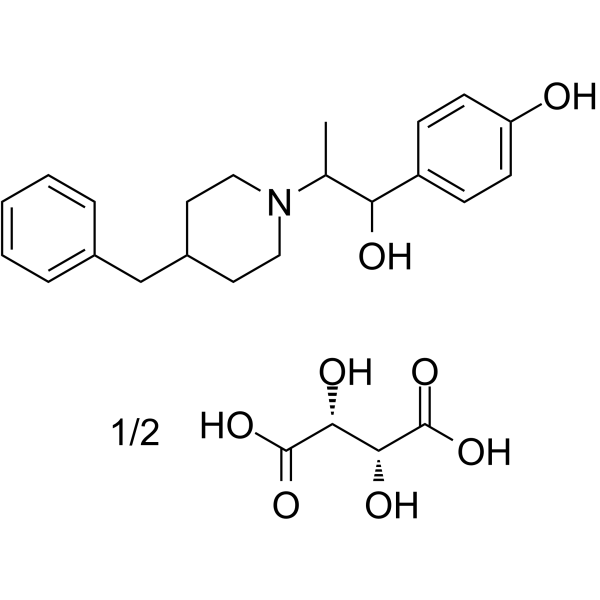
Synonyms: NP-120 tartrate; RC-61-91 tartrate
Ifenprodil (NP-120) tartrate, a cerebral vasodilator, is a noncompetitive NMDA receptor antagonist. Ifenprodil tartrate exerts high affinity at NR1A/NR2B receptors (IC50=0.34 μM) over 400-fold than at NR1A/NR2A receptors (IC50=146 μM) . Ifenprodil tartrate is an α1 adrenergic receptor antagonist. Ifenprodil tartrate inhibits GIRK (Kir3), reduces inward currents through the basal GIRK activity. Ifenprodil tartrate has reliable inhibitory effects against A/H1N1 strains (EC50 of 6.6 µM). Ifenprodil tartrate has neuroprotective, anticonvulsant and antinociceptive effects. Ifenprodil tartrate can be used for the study of cerebrovascular diseases and peripheral arterial obliterative disease .
loading...
    loading...
12
12 Cited Publications
Cat. No.: HY-12882
CAS No.: 23210-56-2
Purity:  99.94%
Synonyms: NP-120; RC-61-91
Ifenprodil (NP-120), a cerebral vasodilator, is a noncompetitive NMDA receptor antagonist. Ifenprodil exerts high affinity at NR1A/NR2B receptors (IC50=0.34 μM) over 400-fold than at NR1A/NR2A receptors (IC50=146 μM) . Ifenprodil is an α1 adrenergic receptor antagonist. Ifenprodil inhibits GIRK (Kir3), reduces inward currents through the basal GIRK activity. Ifenprodil has reliable inhibitory effects against A/H1N1 strains (EC50 of 6.6 µM). Ifenprodil has neuroprotective, anticonvulsant and antinociceptive effects. Ifenprodil can be used for the study of cerebrovascular diseases and peripheral arterial obliterative disease .
loading...
    loading...
Cat. No.: HY-100897
CAS No.: 57821-29-1
Target:  

Thrombin

Research Areas:  

Cardiovascular Disease

Sulodexide is a mixture of glycosaminoglycans available in soft capsule form for oral administration. It is composed of low molecular weight heparin (80%) and dermatan sulfate (20%). Sulodexide exhibits antithrombotic activity through interaction with antithrombin III (AT III) and heparin cofactor II (HC II), and inhibition of thrombin formation. Sulodexide exhibits profibrinolytic activity through release of tissue plasminogen activator (tPA). Sulodexide exhibits endothelial protective and anti-inflammatory effect, ameliorates chronic venous disease . Sulodexide is a glycosaminoglycan mixture available in soft gelatin capsule form for oral administration.
loading...
    loading...
Cat. No.: HY-B1107
CAS No.: 3200-06-4
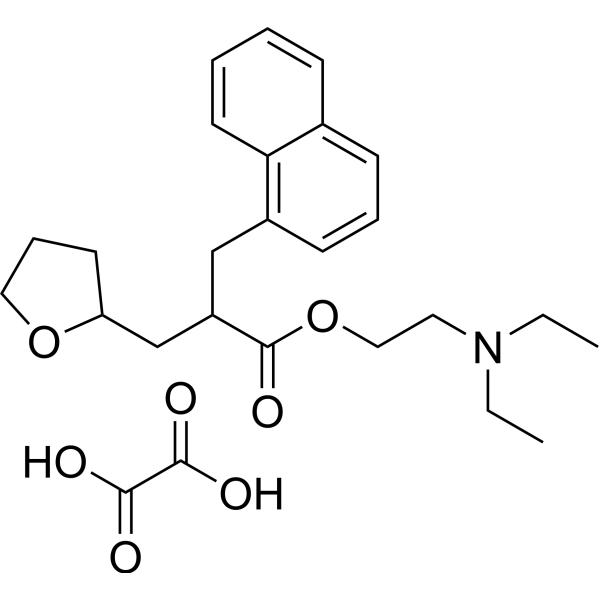
Synonyms: Nafronyl oxalate salt
Target:  

5-HT Receptor

Research Areas:  

Cardiovascular Disease

Naftidrofuryl oxalate (Nafronyl oxalate salt) is an orally active 5-HT2 receptor antagonist. Naftidrofuryl oxalate selectively blocks vascular and platelet 5-HT2 receptors, inhibiting Serotonin (HY-B1473A)-induced vasoconstriction, platelet aggregation, and vascular smooth muscle cell proliferation. Naftidrofuryl oxalate can be used for the research of intermittent claudication, peripheral occlusive arterial disease, and critical limb ischaemia .
loading...
    loading...
Cat. No.: HY-122365
CAS No.: 6556-11-2
Purity:  98.00%
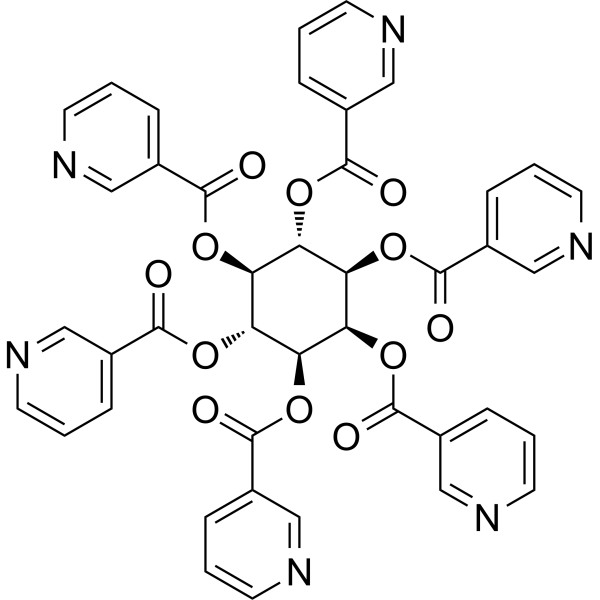
Synonyms: Inositol niacinate; Hexanicit
Inositol nicotinate (Hexanicit) has vasodilating effects and can be used in research on peripheral arterial disease, showing efficacy when taken orally. Inositol nicotinate does not significantly improve triglyceride levels in mice induced by biphenyl esters .
loading...
    loading...
Cat. No.: HY-100897A
CAS No.: 57821-29-1
Target:  

Thrombin

Research Areas:  

Cardiovascular Disease

Sulodexide solution is a mixture of glycosaminoglycans that can be administered by injection. It is composed of low molecular weight heparin (80%) and dermatan sulfate (20%). Sulodexide exhibits antithrombotic activity through interaction with antithrombin III (AT III) and heparin cofactor II (HC II), and inhibition of thrombin formation. Sulodexide exhibits profibrinolytic activity through release of tissue plasminogen activator (tPA). Sulodexide exhibits endothelial protective and anti-inflammatory effect, ameliorates chronic venous disease.
loading...
    loading...
Cat. No.: HY-122365R
CAS No.: 6556-11-2
Synonyms: Inositol niacinate (Standard); Hexanicit (Standard)
Inositol nicotinate (Standard) is the analytical standard of Inositol nicotinate. This product is intended for research and analytical applications. Inositol nicotinate, with vasodilatory effect, is used in the study of Peripheral arterial disease (PAD) .
loading...
    loading...
Cat. No.: HY-W153159
CAS No.: 13062-76-5
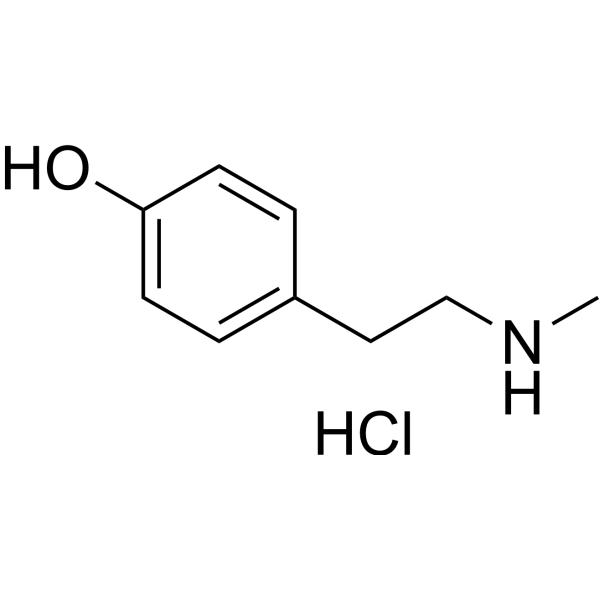
N-Methyltyramine hydrochloride is an orally active α2-adrenoreceptor antagonist with an IC50 value of 5.53 μM against rat targets. N-Methyltyramine hydrochloride blocks α2-adrenoreceptors, while inhibiting lipolysis, hyperactivity responses and small intestinal peristalsis in mice. N-Methyltyramine hydrochloride promotes gastrin release and pancreatic juice secretion, upregulates appetite, blood pressure, myocardial contraction frequency and contraction intensity, and increases renal blood flow, renal vascular resistance and mean peripheral arterial resistance. N-Methyltyramine hydrochloride relaxes mouse small intestinal smooth muscle and undergoes biotransformation in vivo to produce adrenaline. N-Methyltyramine hydrochloride can be used in studies related to gastrointestinal diseases .
loading...
    loading...
Cat. No.: HY-134092
CAS No.: 131391-65-6
Synonyms: N-Methyl-LTC4
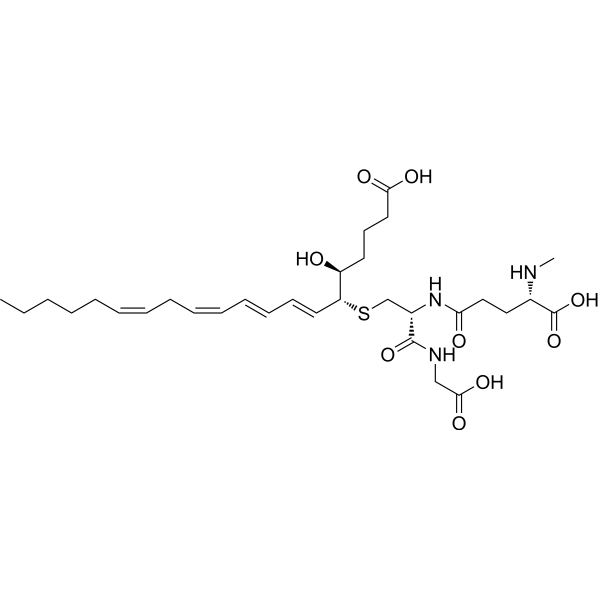
N-Methyl Leukotriene C4 (N-Methyl-LTC4) is a non-metabolizable LTC4 analog and a selective cysteinyl leukotriene receptor 2 (CysLT2) agonist, with an EC50 of 46.1 nM for mouse CysLT2 and an EC50 value of 122.3 nM for human CysLT2. N-Methyl Leukotriene C4 shows low potency against CysLT1. N-Methyl Leukotriene C4 activates human and mouse CysLT2 receptors, triggering calcium signaling, β-arrestin-2 binding to phosphorylated receptors, vascular leakage, hypotension, tachycardia, contraction of guinea pig ileum and trachea, mild bronchoconstriction, as well as hypertension associated with peripheral vasoconstriction. N-Methyl Leukotriene C4 can be used in research on asthma, rhinitis, sinusitis, cerebral inflammation and edema, pulmonary arterial hypertension, and cardiovascular diseases .
loading...
    loading...
Cat. No.: HY-W153897
CAS No.: 370-98-9
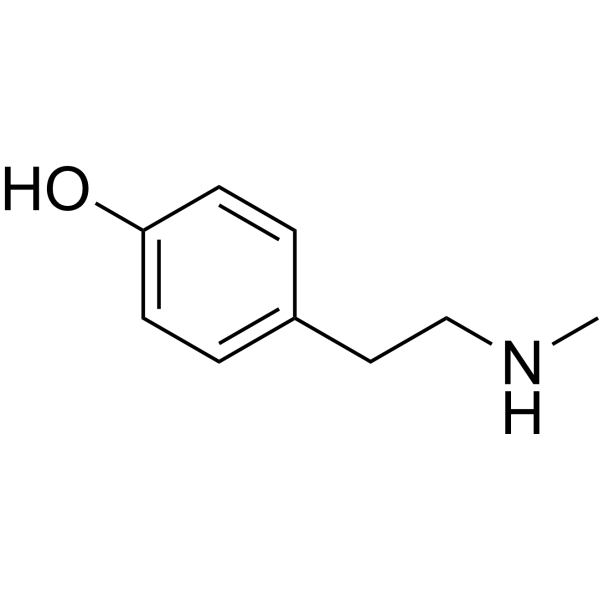
N-Methyltyramine is an orally active α2-adrenoreceptor antagonist with an IC50 value of 5.53 μM against rat targets. N-Methyltyramine blocks α2-adrenoreceptors, while inhibiting lipolysis, hyperactivity responses and small intestinal peristalsis in mice. N-Methyltyramine promotes gastrin release and pancreatic juice secretion, upregulates appetite, blood pressure, myocardial contraction frequency and contraction intensity, and increases renal blood flow, renal vascular resistance and mean peripheral arterial resistance. N-Methyltyramine relaxes mouse small intestinal smooth muscle and undergoes biotransformation in vivo to produce adrenaline. N-Methyltyramine can be used in studies related to gastrointestinal diseases .
loading...
    loading...
Cat. No.: HY-161718
CAS No.: 1784714-67-5
Target:  

Adenosine Receptor

Research Areas:  

Inflammation/Immunology

MRS8028 is an agonist for A3 adenosine receptor (A3AR), which binds hA3AR with Ki of 2.44 nM. MRS8028 is potential for ameliorating ischemia and inflammatory diseases .
loading...
    loading...
Cat. No.: HY-106904
CAS No.: 136033-49-3
Nexopamil is a calcium antagonist of Ca 2+ channel, 5HT2, 5HT1A, 5HT1C and dopamine D2 receptors. Nexopamil exhibits vasodilatory, cardioprotective, and platelet aggregation inhibiting effects. Nexopamil can be used for researches of stable or unstable angina and possibly of peripheral arterial occlusive disease .
loading...
    loading...
Cat. No.: HY-W153897R
CAS No.: 370-98-9
N-Methyltyramine (Standard) is the analytical standard of N-Methyltyramine (HY-W153897). This product is intended for research and analytical applications. N-Methyltyramine is an orally active α2-adrenoreceptor antagonist with an IC50 value of 5.53 μM against rat targets. N-Methyltyramine blocks α2-adrenoreceptors, while inhibiting lipolysis, hyperactivity responses and small intestinal peristalsis in mice. N-Methyltyramine promotes gastrin release and pancreatic juice secretion, upregulates appetite, blood pressure, myocardial contraction frequency and contraction intensity, and increases renal blood flow, renal vascular resistance and mean peripheral arterial resistance. N-Methyltyramine relaxes mouse small intestinal smooth muscle and undergoes biotransformation in vivo to produce adrenaline. N-Methyltyramine can be used in studies related to gastrointestinal diseases .
loading...
    loading...
Cat. No.: HY-L046
2,468 compounds

Cardiovascular diseases (CVDs) are a group of disorders of the heart and blood vessels which include coronary heart disease, cerebrovascular disease, peripheral arterial disease, rheumatic heart disease, etc. CVDs are the number 1 cause of death globally. Smoking, unhealthy nutrition, aging population, lack of physical activity, arterial hypertension, or diabetes can promote cardiovascular disease like myocardial infarction or stroke. It is multifactorial and encompasses a multitude of mechanisms, such as eNOS uncoupling, reactive oxygen species formation, chronic inflammatory disorders and abnormal calcium homeostasis. Antioxidant, anti-inflammatory and anti-diabetes agents may reduce the cardiovascular disease risk.

MCE supplies a unique collection of 2,468 compounds with confirmed anti-cardiovascular activity. These compounds mainly target metabolic enzyme, membrane transporter, ion channel, inflammation related signaling pathways. MCE Anti-Cardiovascular Disease Compound Library can be used for cardiovascular diseases related research and high throughput and high content screening for new drugs.

Cat. No.: HY-W153159R
CAS No.: 13062-76-5
N-Methyltyramine (hydrochloride) (Standard) is the analytical standard of N-Methyltyramine (hydrochloride) (HY-W153159). This product is intended for research and analytical applications. N-Methyltyramine hydrochloride is an orally active α2-adrenoreceptor antagonist with an IC50 value of 5.53 μM against rat targets. N-Methyltyramine hydrochloride blocks α2-adrenoreceptors, while inhibiting lipolysis, hyperactivity responses and small intestinal peristalsis in mice. N-Methyltyramine hydrochloride promotes gastrin release and pancreatic juice secretion, upregulates appetite, blood pressure, myocardial contraction frequency and contraction intensity, and increases renal blood flow, renal vascular resistance and mean peripheral arterial resistance. N-Methyltyramine hydrochloride relaxes mouse small intestinal smooth muscle and undergoes biotransformation in vivo to produce adrenaline. N-Methyltyramine hydrochloride can be used in studies related to gastrointestinal diseases .
loading...
    loading...
Cat. No.: HY-186050
CAS No.: 3105300-99-7
Target:  

Insulin Receptor

Research Areas:  

Metabolic Disease

GIPR antagonist 2 is a glucose-dependent insulinotropic polypeptide receptor (GIPR) antagonist with an IC50 of 7.2 nM in CHO-K1 cells. GIPR antagonist 2 can be used in research related to diseases such as obesity, type 2 diabetes, non-alcoholic fatty liver disease, and atherosclerosis .
loading...
    loading...
  • 1

