1446 Results for "

protein A G

" in MedChemExpress (MCE) Product Catalog:
Products (1446)

1446 Results for "protein A G" in MCE Product Catalog:

1434
1434 Publications Verification
Cat. No.: HY-K0202

MCE Protein A/G Magnetic Beads provide a fast and convenient method for Immunoprecipitation, Co-Immunoprecipitation and Chromatin Immunoprecipitation. The 1 mL volume is defined as the base specification. All larger sizes correspond to incremental volumes of this base.

loading...
    loading...
258
258 Cited Publications
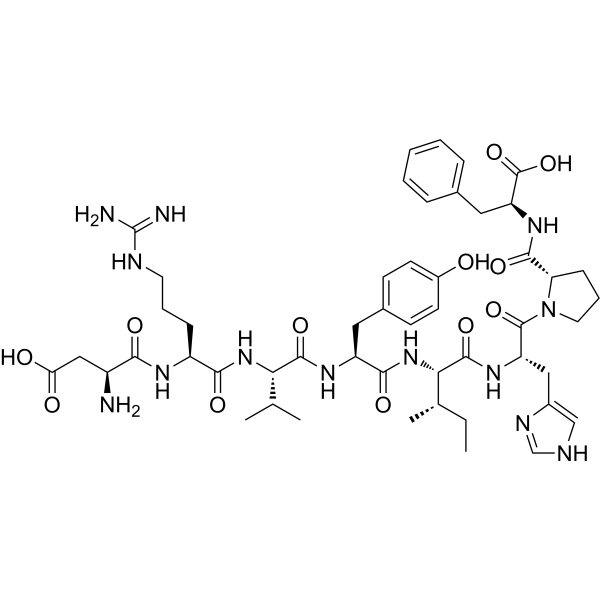
Cat. No.: HY-13948
CAS No.: 4474-91-3
Purity:  99.98%
Synonyms: Angiotensin II; Ang II; DRVYIHPF
Angiotensin II (Angiotensin II) is a vasoconstrictor and a major bioactive peptide of the renin/angiotensin system. Angiotensin II human plays a central role in regulating human blood pressure, which is mainly mediated by interactions between Angiotensin II and the G-protein-coupled receptors (GPCRs) Angiotensin II type 1 receptor (AT1R) and Angiotensin II type 2 receptor (AT2R). Angiotensin II human stimulates sympathetic nervous stimulation, increases aldosterone biosynthesis and renal actions. Angiotensin II human induces growth of vascular smooth muscle cells, increases collagen type I and III synthesis in fibroblasts, leading to thickening of the vascular wall and myocardium, and fibrosis. Angiotensin II human also induces apoptosis. Angiotensin II induces capillary formation from endothelial cells via the LOX-1 dependent redox-sensitive pathway .
loading...
    loading...
258
258 Cited Publications
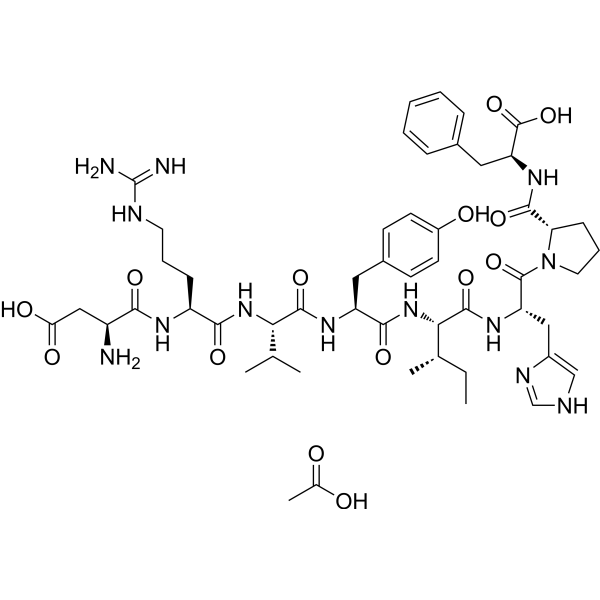
Cat. No.: HY-13948A
CAS No.: 68521-88-0
Purity:  99.62%
Synonyms: Angiotensin II acetate; Ang II acetate; DRVYIHPF acetate
Angiotensin II human (Angiotensin II) acetate is a vasoconstrictor and a major bioactive peptide of the renin/angiotensin system. Angiotensin II human acetate plays a central role in regulating human blood pressure, which is mainly mediated by interactions between Angiotensin II and the G-protein-coupled receptors (GPCRs) Angiotensin II type 1 receptor (AT1R) and Angiotensin II type 2 receptor (AT2R). Angiotensin II human acetate stimulates sympathetic nervous stimulation, increases aldosterone biosynthesis and renal actions. Angiotensin II human acetate induces growth of vascular smooth muscle cells, increases collagen type I and III synthesis in fibroblasts, leading to thickening of the vascular wall and myocardium, and fibrosis. Angiotensin II human acetate also induces apoptosis. Angiotensin II human acetate induces capillary formation from endothelial cells via the LOX-1 dependent redox-sensitive pathway .
loading...
    loading...
258
258 Cited Publications
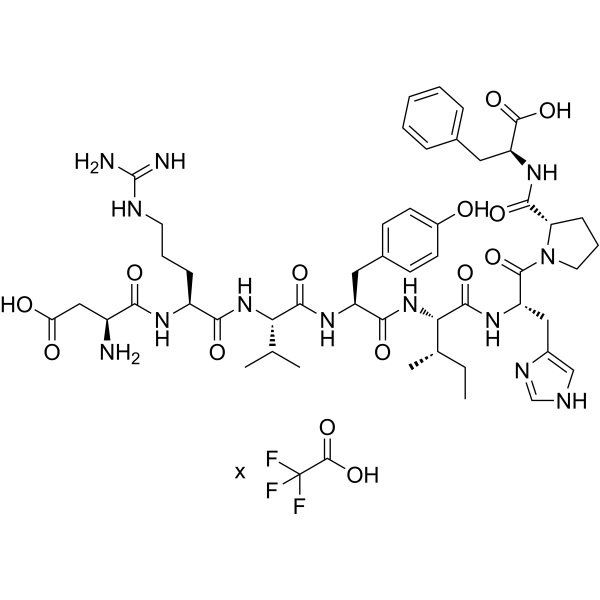
Cat. No.: HY-13948B
CAS No.: 2761969-44-0
Purity:  98.84%
Synonyms: Angiotensin II TFA; Ang II TFA; DRVYIHPF TFA
Angiotensin II human (Angiotensin II) TFA is a vasoconstrictor and a major bioactive peptide of the renin/angiotensin system. Angiotensin II human TFA plays a central role in regulating human blood pressure, which is mainly mediated by interactions between Angiotensin II and the G-protein-coupled receptors (GPCRs) Angiotensin II type 1 receptor (AT1R) and Angiotensin II type 2 receptor (AT2R). Angiotensin II human TFA stimulates sympathetic nervous stimulation, increases aldosterone biosynthesis and renal actions. Angiotensin II human TFA induces growth of vascular smooth muscle cells, increases collagen type I and III synthesis in fibroblasts, leading to thickening of the vascular wall and myocardium, and fibrosis. Angiotensin II human TFA also induces apoptosis. Angiotensin II human TFA induces capillary formation from endothelial cells via the LOX-1 dependent redox-sensitive pathway .
loading...
    loading...
180
180 Cited Publications
Cat. No.: HY-A0098
CAS No.: 11089-65-9
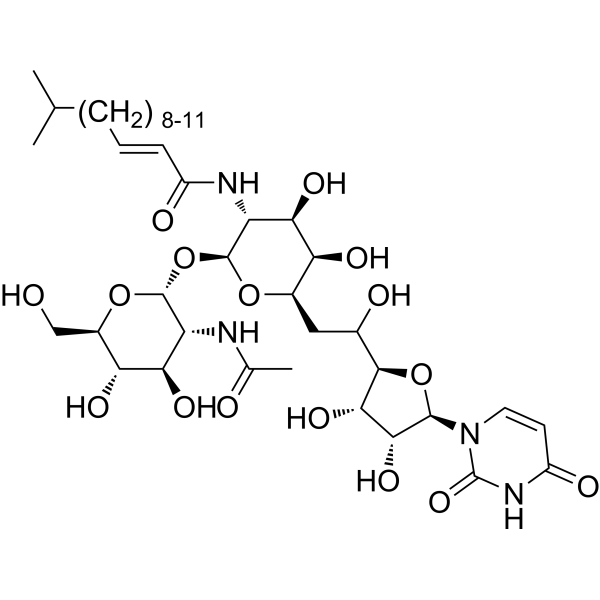
Tunicamycin is a mixture of homologous nucleoside antibiotic that inhibits N-linked glycosylation and blocks GlcNAc phosphotransferase (GPT). Tunicamycin causes accumulation of unfolded proteins in cell endoplasmic reticulum (ER) and induces ER stress, and causes blocking of DNA synthesis and cell cycle arrest in G1 phase. Tunicamycin inhibits gram-positive bacteria, yeasts, fungi, and viruses and has anti-cancer activity .Tunicamycin increases exosome release in cervical cancer cells .
loading...
    loading...
79
79 Cited Publications
Cat. No.: HY-114158
CAS No.: 9036-06-0
Synonyms: Pronase (Activity ≥ 7000 U/g)
Pronase E (Activity ≥ 7000 U/g) is a mixture of proteolytic enzymes that is obtained from Streptomyces griseus and could digest protein into individual amino acids .
loading...
    loading...
72
72 Cited Publications
Cat. No.: HY-13323
CAS No.: 1138549-36-6
Purity:  99.49%
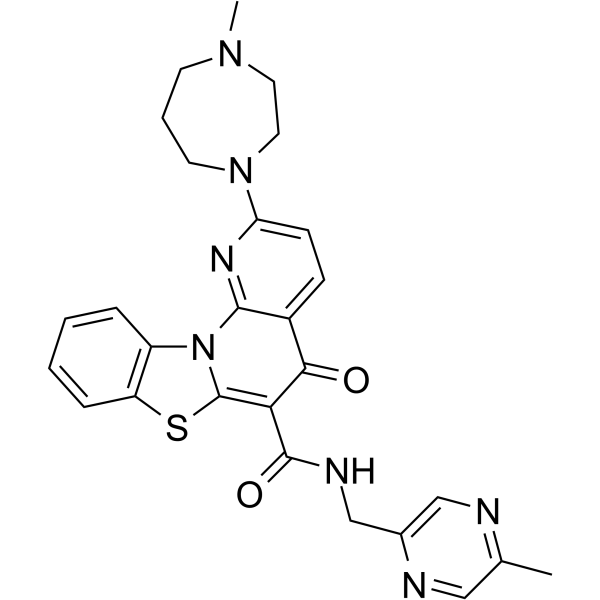
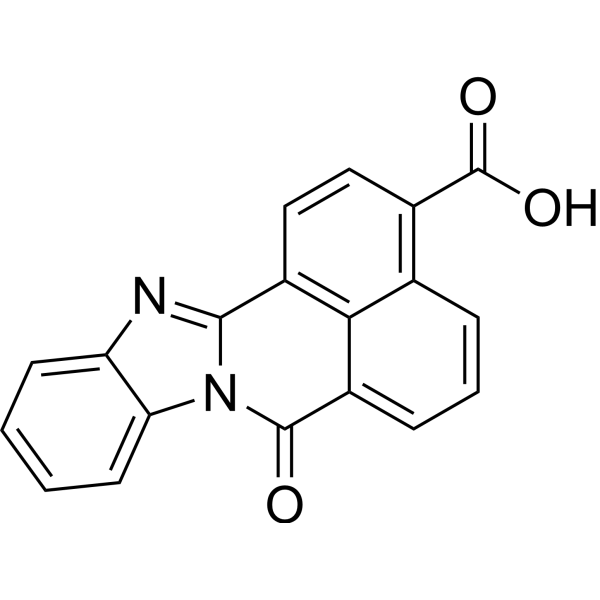
CX-5461 is a selective, orally active RNA polymerase I inhibitor. CX-5461 disrupts the formation of the SL1-rDNA complex, thereby blocking the transcription initiation of ribosomal RNA without altering the activity of RNA polymerase II, DNA replication, or protein translation processes. CX-5461 upregulates the expression of p21, MDM2, Sestrin1/2, and phosphorylated AMPKα, and reduces the level of phosphorylated Akt. CX-5461 induces G2/G2/M cell cycle arrest, Autophagy, Apoptosis, and cellular senescence, and activates CHK1, CHK2, and RPA. CX-5461 can be used in research related to osteosarcoma, cervical cancer, hematologic malignancies, high-grade serous ovarian cancer, and solid tumors .
loading...
    loading...
72
72 Cited Publications
Cat. No.: HY-13323A
Purity:  99.41%
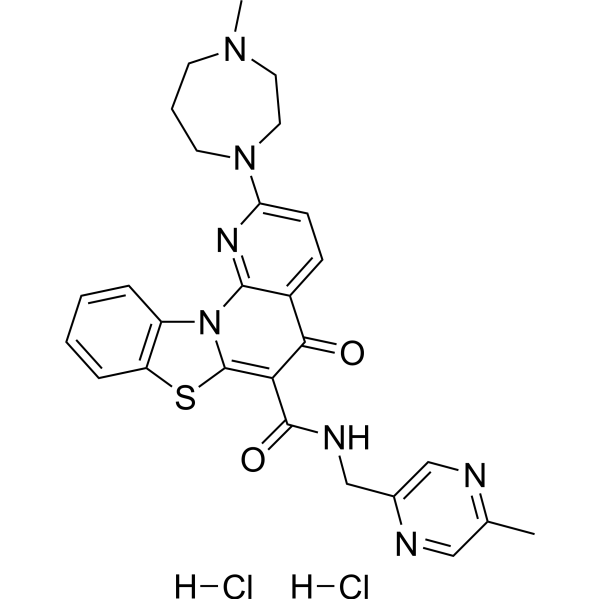
CX-5461 dihydrochloride is a selective, orally active RNA polymerase I inhibitor. CX-5461 dihydrochloride disrupts the formation of the SL1-rDNA complex, thereby blocking the transcription initiation of ribosomal RNA without altering the activity of RNA polymerase II, DNA replication, or protein translation processes. CX-5461 dihydrochloride upregulates the expression of p21, MDM2, Sestrin1/2, and phosphorylated AMPKα, and reduces the level of phosphorylated Akt. CX-5461 dihydrochloride induces G2/G2/M cell cycle arrest, Autophagy, Apoptosis, and cellular senescence, and activates CHK1, CHK2, and RPA. CX-5461 dihydrochloride can be used in research related to osteosarcoma, cervical cancer, hematologic malignancies, high-grade serous ovarian cancer, and solid tumors .
loading...
    loading...
71
71 Cited Publications
Cat. No.: HY-17561
CAS No.: 108321-42-2
Synonyms: Geneticin sulfate; Antibiotic G-418 sulfate
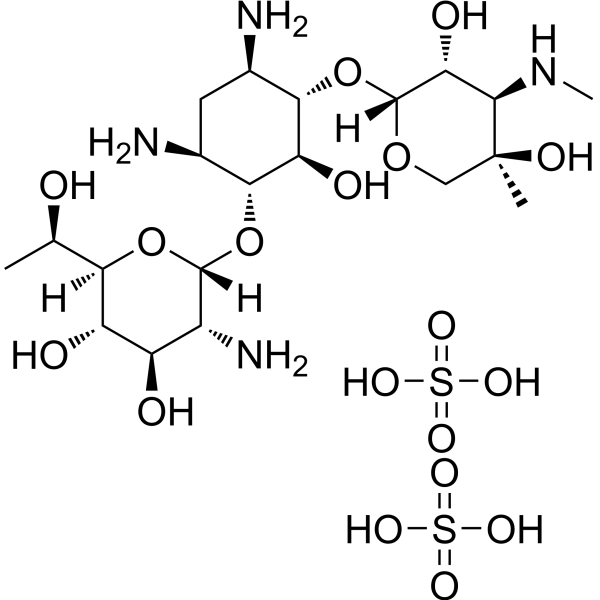
G-418 disulfate (Geneticin sulfate), is an aminoglycoside antibiotic, inhibits protein synthesis in eukaryotes and prokaryotes. G-418 disulfate is commonly used as a selective agent for eukaryotic cells .
loading...
    loading...
71
71 Cited Publications
Cat. No.: HY-108718
CAS No.: 49863-47-0
Synonyms: Geneticin; Antibiotic G-418
Research Areas:  

Infection

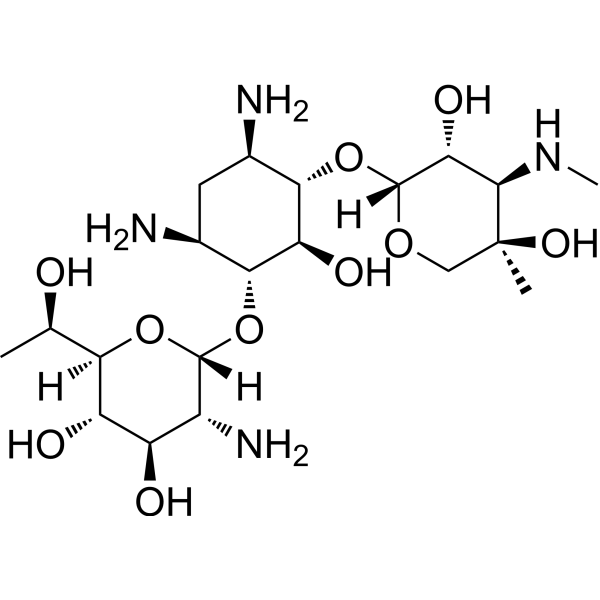
G-418 (Geneticin) is an aminoglycoside antibiotic with a structure similar to gentamicin. It is toxic to both eukaryotic and prokaryotic cells and works by interfering with protein synthesis .
loading...
    loading...
66
66 Cited Publications
Cat. No.: HY-K0204

Protein G Magnetic Beads provide a fast and convenient method for Immunoprecipitation and Co-Immunoprecipitation and Chromatin Immunoprecipitation. The 1 mL is defined as the base specification. All larger sizes correspond to incremental volumes of this base.

loading...
    loading...
64
64 Cited Publications
Cat. No.: HY-130149
CAS No.: 2326521-71-3
Purity:  99.81%
Synonyms: MRTX849
Target:  

Ras

Research Areas:  

Cancer

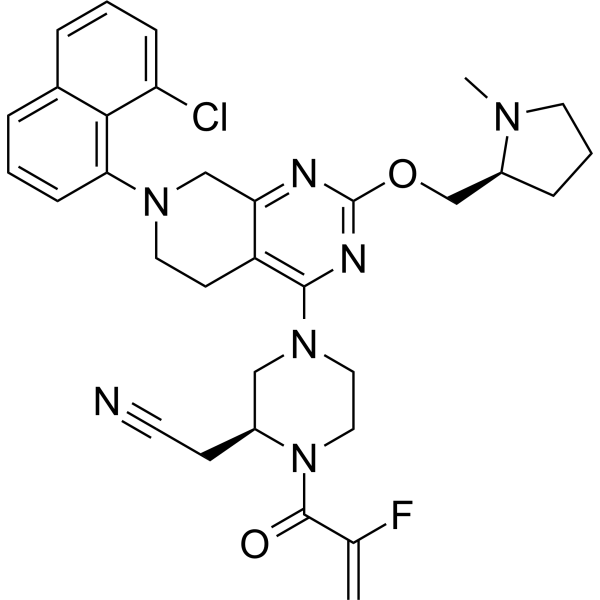
Adagrasib (MRTX849) is a potent, orally-available, and mutation-selective covalent inhibitor of KRAS G12C with potential antineoplastic activity. Adagrasib covalently binds to KRAS G12C at the cysteine at residue 12, locks the protein in its inactive GDP-bound conformation, and inhibits KRAS-dependent signal transduction .
loading...
    loading...
62
62 Cited Publications
Cat. No.: HY-134813
CAS No.: 2621928-55-8
Purity:  99.97%
Target:  

Ras

Research Areas:  

Cancer

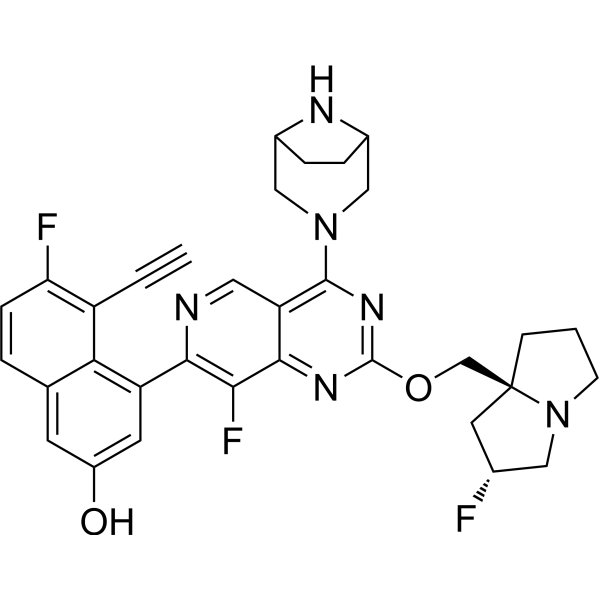
MRTX1133 is a noncovalent, potent, and selective alkyne-based KRAS G12D inhibitor. MRTX1133 optimally fills the switch II pocket and extends three substituents to favorably interact with the protein, resulting in an estimated KD against KRAS G12D of 0.2 pM. MRTX1133 prevents SOS1-catalyzed nucleotide exchange and/or formation of the KRAS G12D/GTP/RAF1 complex, thereby inhibiting mutant KRAS-dependent signal transduction. MRTX1133 selectively inhibits KRAS G12D mutant, but not KRAS wild-type, tumor cells. MRTX1133 has single digit nanomolar activity in cellular assays and marked in vivo efficacy in tumor models harboring KRAS G12D mutations .
loading...
    loading...
61
61 Cited Publications
Cat. No.: HY-134653
CAS No.: 168649-23-8
Purity:  99.51%
Research Areas:  

Cancer

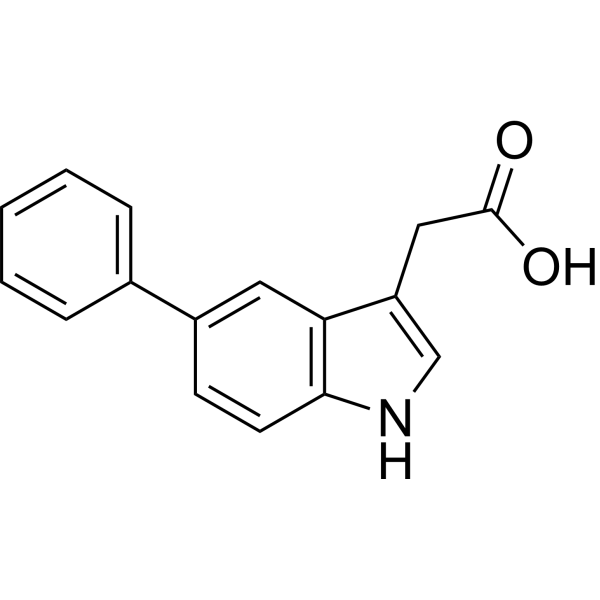
5-Ph-IAA is a derivative of IAA. 5-Ph-IAA, a ligand, establishes the auxin-inducible degron 2 (AID2) system together with an OsTIR1 (F74G) mutant. AID2 induces rapid and efficient depletion of mAID-fused proteins to study protein function in living cells, causing tumor suppression .
loading...
    loading...
56
56 Cited Publications
Cat. No.: HY-12588
CAS No.: 1009816-48-1
Purity:  99.99%
Target:  

OGA Autophagy

Research Areas:  

Cancer

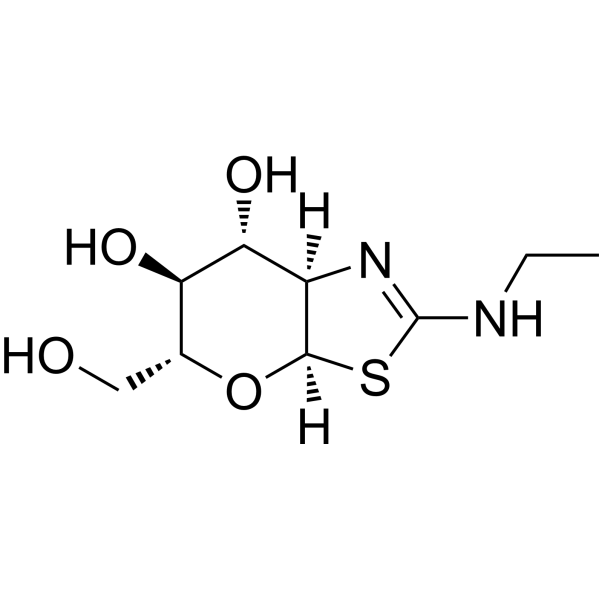
Thiamet G is a potent and selective inhibitor of O-GlcNAcase (OGA), which acts to remove O-GlcNAc from modified proteins, with Ki of 20 nM for human OGA.
loading...
    loading...
43
43 Cited Publications
Cat. No.: HY-103449
CAS No.: 1161002-05-6
Purity:  ≥99.0%
Target:  

Estrogen Receptor/ERR

Research Areas:  

Cancer

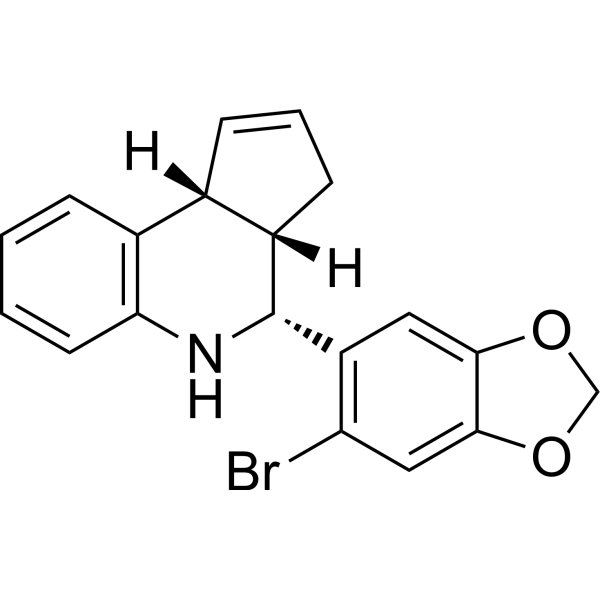
G15 is a high affinity and selective G-protein-coupled estrogen receptor (GPER/GPR30) antagonist with a Ki of 20 nM .
loading...
    loading...
43
43 Cited Publications
Cat. No.: HY-108635
CAS No.: 74389-68-7
Purity:  99.85%
Synonyms: PAF (C16)
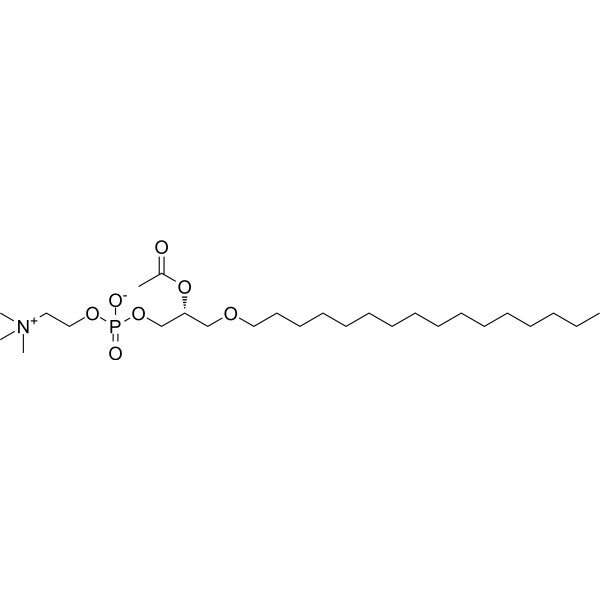
C16-PAF (PAF (C16)), a phospholipid mediator, is a platelet-activating factor and ligand for PAF G-protein-coupled receptor (PAFR). C16-PAF exhibits anti-apoptotic effect and inhibits caspase-dependent death by activating the PAFR. C16-PAF is a potent MAPK and MEK/ERK activator. C16-PAF induces increased vascular permeability .
loading...
    loading...
38
38 Cited Publications
Cat. No.: HY-19805
CAS No.: 52029-86-4
Target:  

CaMK AMPK Autophagy

Research Areas:  

Metabolic Disease

STO-609 is a selective and cell-permeable inhibitor of the Ca 2+/calmodulin-dependent protein kinase kinase (CaM-KK), with Ki values of 80 and 15 ng/mL for recombinant CaM-KKα and CaM-KKβ, respectively. STO-609 inhibits AMP-activated protein kinase kinase (AMPKK) activity in HeLa cell lysates with an IC50 ~0.02 g/ml.
loading...
    loading...
37
37 Cited Publications
Cat. No.: HY-K0230

MCE Protein A/G Agarose is an affinity chromatography medium for separation and purification of immunoglobulins.

loading...
    loading...
37
37 Cited Publications
Cat. No.: HY-16954
CAS No.: 1818885-28-7
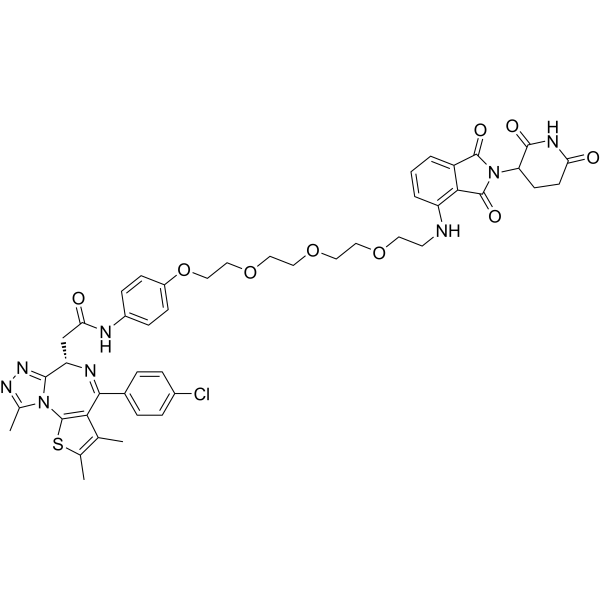
ARV-825 is a BET protein PROTAC degrader that recruits cereblon, and it targets BRD2, BRD3, and BRD4 for degradation via the ubiquitin-proteasome pathway. ARV-825 downregulates c-MYC, PLK1, MYCN, CDK4/6, JAK2, pSTAT3/5, PIM1, and Bcl-xL, upregulates p21 and p27, and modulates H3K27Ac-mediated transcription, the G2/M checkpoint, the Wnt/β-catenin pathway, and amino acid transport pathways. ARV-825 induces G1 phase cell cycle arrest, caspase 3/PARP-mediated apoptosis, DNA damage, and reactive oxygen species (ROS) production, reduces mitochondrial respiration, and simultaneously inhibits cell proliferation, clonogenic growth, and cell migration. ARV-825 is used in research on gastric cancer, leukemia, neuroblastoma, and cholangiocarcinoma .
loading...
    loading...

