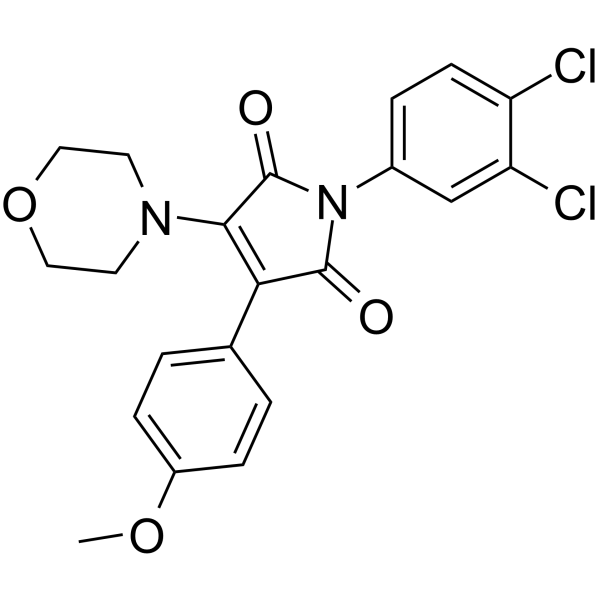
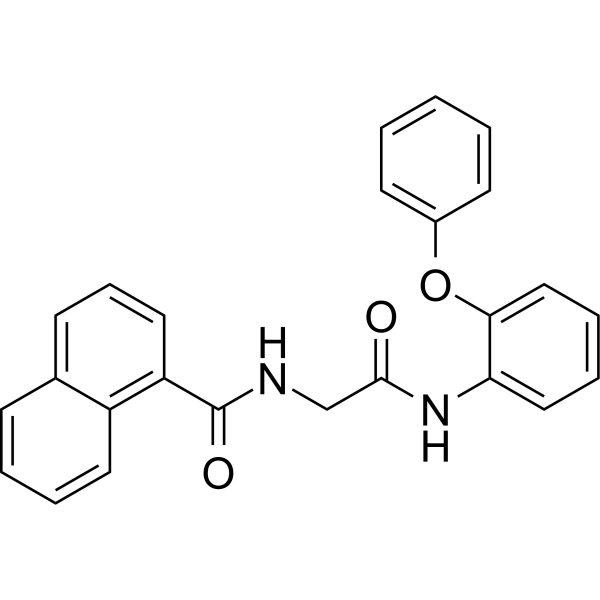
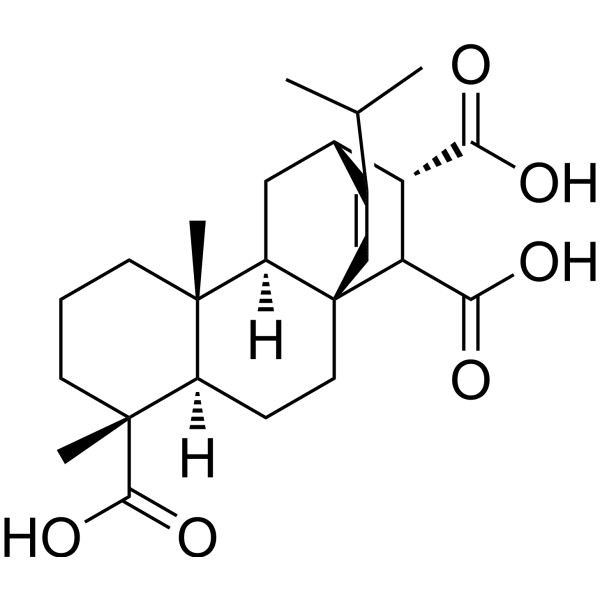
45 Results for "

recombination repair

" in MedChemExpress (MCE) Product Catalog:
Products (45)

45 Results for "recombination repair" in MCE Product Catalog:

6
6 Publications Verification
Cat. No.: HY-116770
CAS No.: 1558598-41-6
Purity:  99.91%
Target:  

Endonuclease

Research Areas:  

Cancer

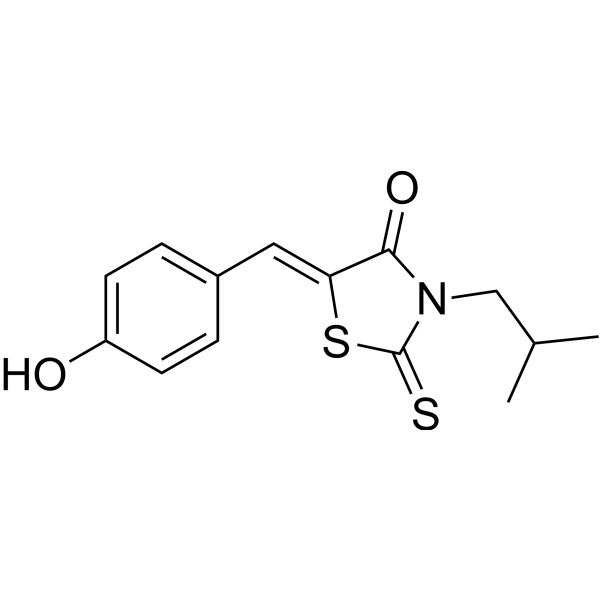
PFM01, N-alkylated Mirin derivative, is a MRE11 endonuclease inhibitor. PFM01 can regulate double-strand break repair (DSBR) by nonhomologous end-joining (NHEJ) versus homologous recombination (HR) .
loading...
    loading...
5
5 Cited Publications
Cat. No.: HY-114778
CAS No.: 1358715-18-0
Purity:  99.96%
Synonyms: SHR3162; Fuzuloparib
Target:  

PARP

Research Areas:  

Cancer

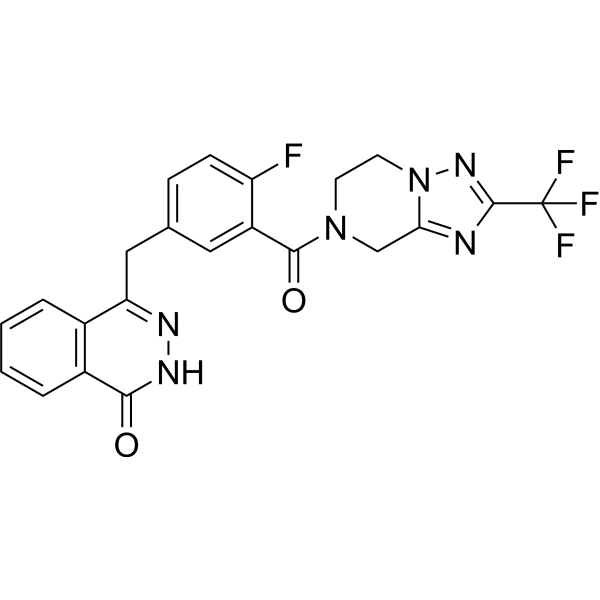
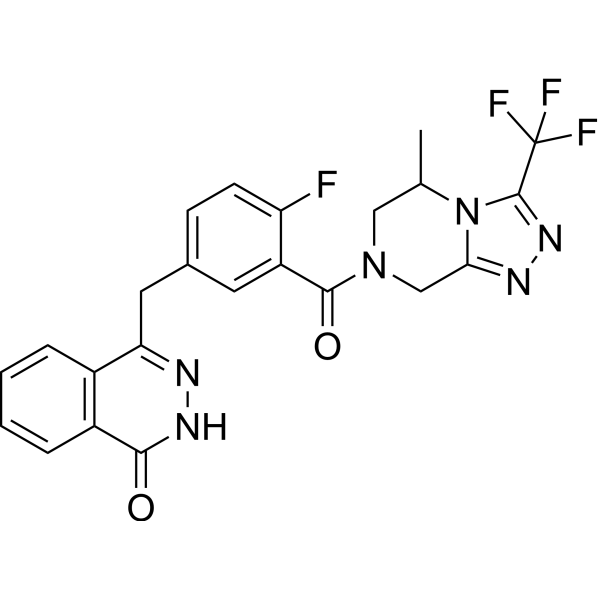
Fluzoparib (SHR3162) is a potent and orally active PARP1 inhibitor (IC50=1.46±0.72 nM, a cell-free enzymatic assay) with superior antitumor activity. Fluzoparib selectively inhibits the proliferation of homologous recombination repair (HR)-deficient cells, and sensitizes both HR-deficient and HR-proficient cells to cytotoxic agents. Fluzoparib exhibits good pharmacokinetic properties in vivo and can be used for BRCA1/2-mutant relapsed ovarian cancer research .
loading...
    loading...
1
1 Cited Publications
Cat. No.: HY-145804
CAS No.: 2756333-39-6
Purity:  98.54%
Synonyms: AZD-9574
Target:  

PPAR

Research Areas:  

Neurological Disease Cancer

AZD-9574 is a potent and brain penetrant PARP1 inhibitor and shows >8000-fold selectivity for PARP1 compared to PARP2/3/5a/6. AZD-9574 acts by selectively inhibiting and trapping PARP1 at the sites of SSBs. AZD-9574 is an anti-cancer agent and can be used for HRD +?breast cancer and advanced solid malignancies research .
loading...
    loading...
1
1 Cited Publications
Cat. No.: HY-150147
CAS No.: 2758364-02-0
Purity:  99.83%
Target:  

RAD51 Apoptosis

Research Areas:  

Cancer

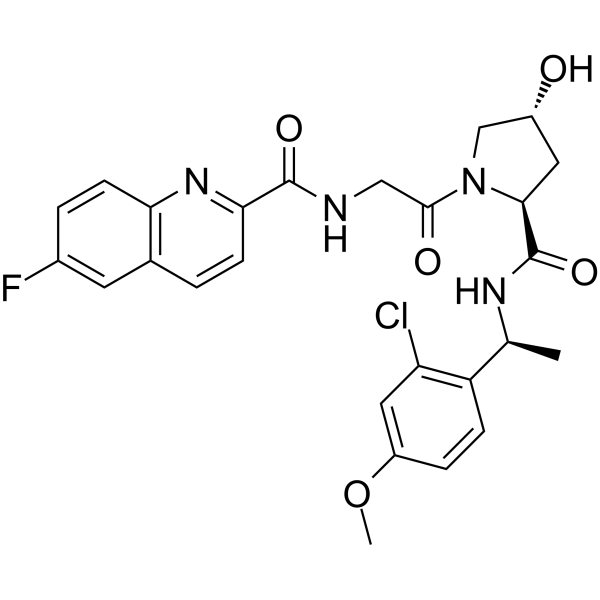
CAM833 is a potent orthosteric inhibitor of the interaction between BRCA2 and RAD51 with a Kd of 366 nM against the ChimRAD51 protein. CAM833 also inhibits RAD51 oligomerization. CAM833 increases the progression of G2/M-arrested cells into apoptosis .
loading...
    loading...
1
1 Cited Publications
Cat. No.: HY-16904
CAS No.: 1417162-36-7
Target:  

RAD51

Research Areas:  

Cancer

RI-2 is a reversible RAD51 inhibitor, with an IC50 of 44.17 μM, and specifically inhibits homologous recombination repair in human cells.
loading...
    loading...
1
1 Cited Publications
Cat. No.: HY-120836
CAS No.: 2089314-57-6
Purity:  99.30%
Research Areas:  

Cancer

AOH1160 is a potent oral small molecule proliferating cell nuclear antigen (PCNA) inhibitor that interferes with DNA replication, blocks homologous recombination-mediated DNA repair, leads to cell cycle arrest and induces apoptosis .
loading...
    loading...
1
1 Cited Publications
Cat. No.: HY-113064
CAS No.: 2897-21-4
Purity:  ≥99.0%
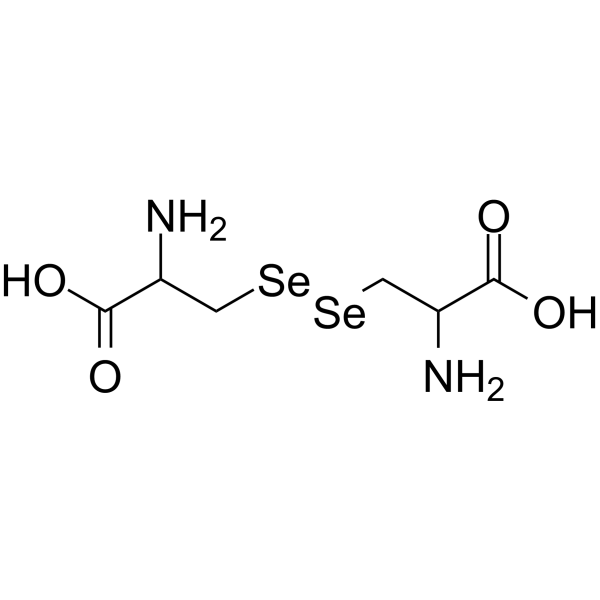
Selenocystine is a broad-spectrum anti-cancer agent. Selenocystine induces DNA damage in HepG2 cells, particularly in the form of DNA double strand breaks (DSBs). Selenocystine exhibits great promise as a therapeutic or adjuvant agent targeting DNA repair for cancer treatment .
loading...
    loading...
Cat. No.: HY-171689
CAS No.: 2760250-80-2
Synonyms: AZD 8205; P-Sam
Puxitatug samrotecan (AZD 8205) is an antibody-drug conjugate (ADC) targeting B7-H4, formed by the random conjugation of the Puxitatug (HY-P990059) antibody and AZ14170133 (HY-145399) via interchain cysteine reduction. Puxitatug samrotecan binds to B7-H4 to deliver the payload to B7-H4-expressing cells, inhibits topoisomerase I, and induces cytotoxicity in cancer cells and xenograft models. Puxitatug samrotecan can be used in studies of B7-H4-expressing tumors .
loading...
    loading...
Cat. No.: HY-160700
CAS No.: 2839740-79-1
Target:  

Deubiquitinase JNK

Research Areas:  

Cancer

TNG348 is an orally available allosteric inhibitor of the ubiquitin-specific protease USP1. TNG348 specifically and efficiently inhibits the activity of USP1, inhibiting its deubiquitination of proliferative PCNA and FANCD2, thereby disrupting the DNA repair process. TNG348 has inhibitory activity against breast and ovarian cancers carrying BRCA1/2 mutations and other homologous recombination defects (HRD) .
loading...
    loading...
Cat. No.: HY-138155
CAS No.: 730960-98-2
Purity:  99.90%
Target:  

DNA/RNA Synthesis

Research Areas:  

Cancer

NSC15520 is a small molecular inhibitor of Replication Protein A (RPA). NSC15520 specifically recognizes the RPA N-terminal DNA binding domain (DBD), and blocks the interaction of RPA with p53 or RAD9. NSC15520 also inhibtis helix destabilization of a duplex DNA (dsDNA) oligonucleotide, involves in DNA replication, DNA repair, DNA recombination, and DNA damage response signaling .
loading...
    loading...
Cat. No.: HY-145685
CAS No.: 2718170-45-5
Purity:  98.40%
Target:  

DNA/RNA Synthesis

Research Areas:  

Cancer

RECQL5-IN-1 (Compound 4a) acts as an orally effective RECQL5 inhibitor (targeting both enzymatic and nonenzymatic domain). RECQL5-IN-1 is a potent inhibitor of RECQL5 helicase activity (IC50=46.3 nM), stabilizes the interaction between RECQL5-RAD51 proteins, causes RAD51 aggregation and homologous recombination repair (HRR) inhibition, thereby exhibiting selective cytotoxicity in RECQL5-expressing cancer cells .
loading...
    loading...
Cat. No.: HY-N7065
CAS No.: 7327-87-9
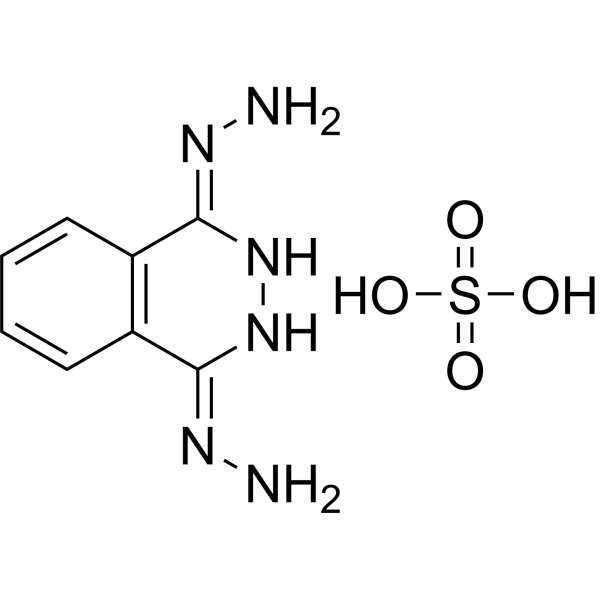
Dihydralazine sulfate is an antihypertensive hydrazine derivative and also a low-potency genotoxic agent. Dihydralazine sulfate is a direct-acting mutagen with a mixed gene mutation mechanism, which induces DNA fragmentation in the lung, kidney and spleen of mice, and induces sister chromatid exchange in mouse bone marrow cells. Dihydralazine sulfate specifically kills DNA repair-deficient bacteria. Dihydralazine sulfate is a vasodilator and antihypertensive agent that reduces systemic vascular resistance, increases cardiac output and heart rate, thereby lowering blood pressure. Dihydralazine sulfate can be used in research related to hypertension and severe early-onset preeclampsia .
loading...
    loading...
Cat. No.: HY-115552
CAS No.: 1551355-46-4
Purity:  99.01%
Target:  

PARP

Research Areas:  

Cancer

Simmiparib is a highly potent and orally active PARP1 and PARP2 inhibitor with IC50 values of 1.75 nM and 0.22 nM, respectively. Simmiparib has more potent PARP1/2 inhibition than its parent Olaparib (HY-10162). Simmiparib induces DNA double-strand breaks (DSB) accumulation and G2/M arrest in homologous recombination repair (HR)-deficient cells, thereby inducing apoptosis. Simmiparib exhibits remarkable anticancer activities in cells and nude mice bearing xenografts .
loading...
    loading...
Cat. No.: HY-151799
CAS No.: 2765180-17-2
Purity:  98.62%
Research Areas:  

Cancer

P62-RNF168 agonist-1 (compound 5a) is a low cytotoxicity P62-RNF168 agonist that enhances the interaction between P62 and RNF168. P62-RNF168 agonist-1 induces a reduction in H2A ubiquitination mediated by RNF168 and impairs homologous recombination-mediated DNA repair. P62-RNF168 agonist-1 also inhibits the growth of xenograft tumors in mice in a dose-dependent manner .
loading...
    loading...
Cat. No.: HY-144874
CAS No.: 2756333-42-1
Purity:  98.03%
Target:  

PARP

Research Areas:  

Neurological Disease Cancer

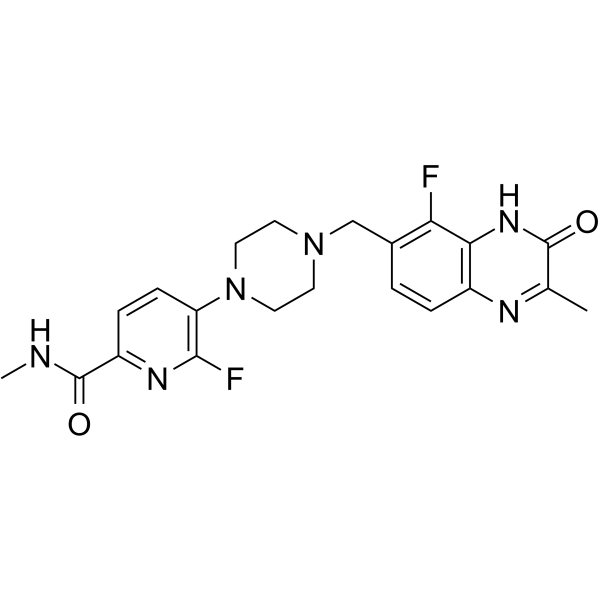
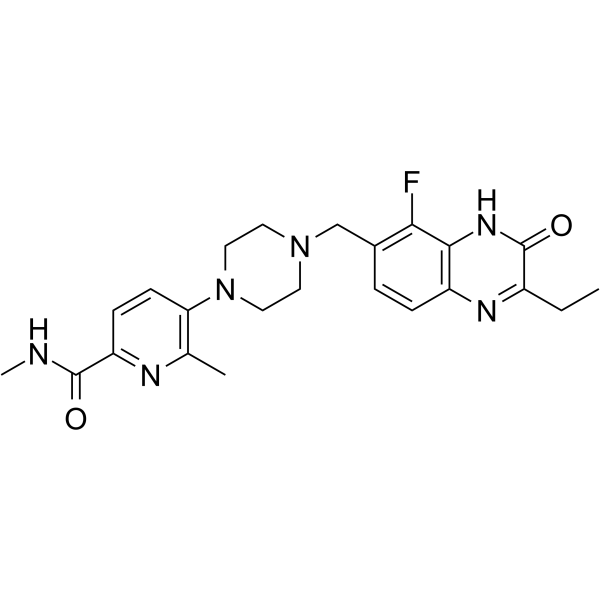
AZ3391 is a potent inhibitor of PARP. AZ3391 is a quinoxaline derivative. PARP family of enzymes play an important role in a number of cellular processes, such as replication, recombination, chromatin remodeling, and DNA damage repair. AZ3391 has the potential for the research of diseases and conditions occurring in tissues in the central nervous system, such as the brain and spinal cord (extracted from patent WO2021260092A1, compound 23) .
loading...
    loading...
Cat. No.: HY-115533
CAS No.: 1605301-58-3
Research Areas:  

Cancer

LBL1 is a Lamin A inhibitor with a Kd of 5.11 μM for LA (1-387). LBL1 directly binds to Lamin A and disrupts the Lamin A-Rad51 interaction, accelerates proteasome-mediated Rad51 degradation, and induces DNA double-strand breaks. LBL1 induces Apoptosis. LBL1 serves as a chemical tool for studying lamin biology and the post-translational regulation of Rad51. LBL1 can be used in studies related to breast cancer and non-small cell lung cancer .
loading...
    loading...
Cat. No.: HY-122583
CAS No.: 1225141-73-0
Target:  

RAD51

Research Areas:  

Cancer

D-G23 is a selective RAD52 inhibitor. D-G23 disrupts RAD52-mediated DNA repair pathways and suppresses the growth of BRCA1- and BRCA2-deficient cancer cells. D-G23 is promising for research of homologous recombination-related cancers, such as hereditary breast cancer and ovarian cancer caused by BRCA1/2 mutations .
loading...
    loading...
Cat. No.: HY-175812
CAS No.: 1208829-24-6
Target:  

Endonuclease

Research Areas:  

Cancer

MU876 (Compound 32) is a MUS81 inhibitor with an IC50 of 0.5  μM. MU876 effectively inhibits MUS81-dependent homologous recombination (HR) and break-induced replication (BIR) pathways. MU876 sensitizes cancer cells to DNA-damaging agents, such as Cisplatin (HY-17394), through impairing their ability to repair DNA lesions. MU876 can be used for cancers chemotherapy research .
loading...
    loading...
Cat. No.: HY-151939
CAS No.: 3037604-86-4
Research Areas:  

Cancer

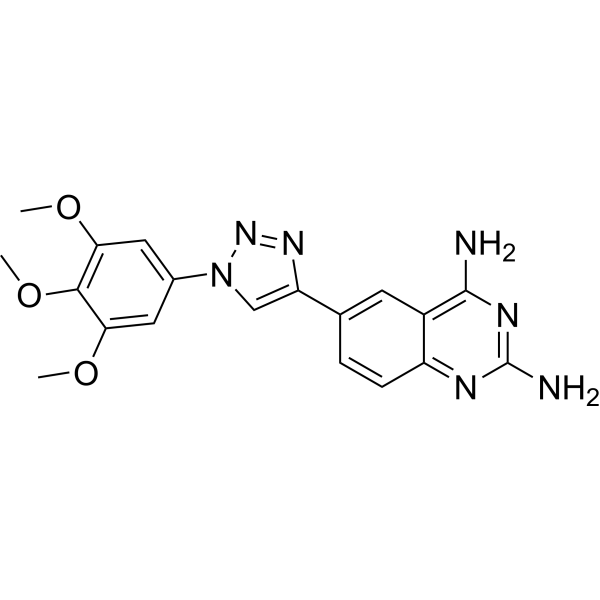
BLM-IN-2 is a Bloom's Syndrome Protein (BLM) inhibitor with an IC50 value of 0.8 μM. BLM-IN-2 effectively suppresses the proliferation, invasion, cell cycle arrest and apoptosis of CRC cells. BLM-IN-2 can be used for the reserarch of colorectal cancer (CRC) .
loading...
    loading...
Cat. No.: HY-173345
Target:  

RAD51

Research Areas:  

Cancer

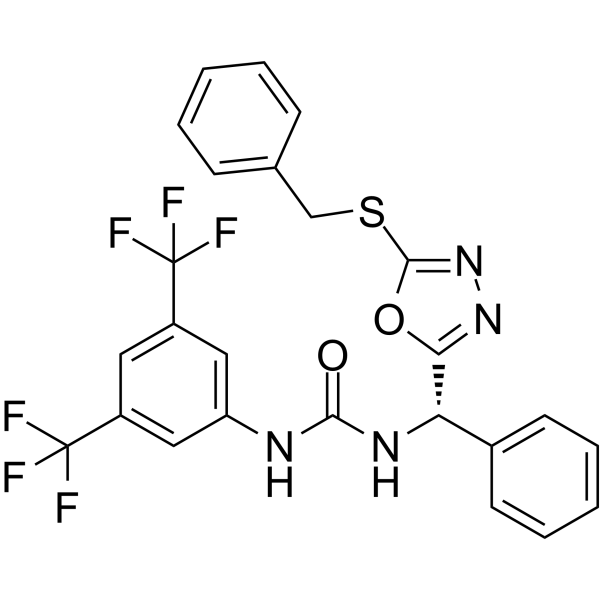
BRCA2-RAD51-IN-2 (compound S-35d) is a BRCA2-RAD51 inhibitor and inhibits homologous recombination repair in combination with 10 µM olaparib (HY-10162) .
loading...
    loading...

