6 Results for "

reticular

" in MedChemExpress (MCE) Product Catalog:
Products (6)

6 Results for "reticular" in MCE Product Catalog:

Cat. No.: HY-127086A
CAS No.: 33162-17-3
Purity:  98.93%
Target:  

Dopamine Receptor

Research Areas:  

Neurological Disease

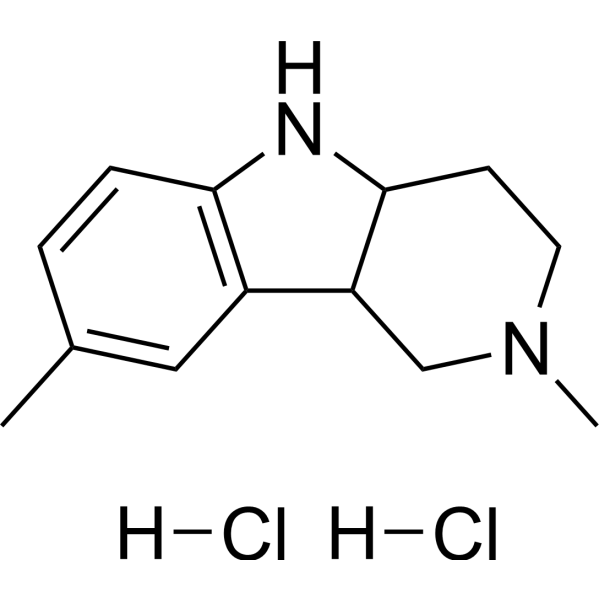
Dicarbine dihydrochloride blocks dopamine receptors in various brain parts and prevents the depression of the conditioned defence reflexes caused by stimulation of the mesencephalic portion of the reticular formation. Dicarbine dihydrochloride could be used in the schizophrenia and alcoholic psychosis studies .
loading...
    loading...
Cat. No.: HY-127086
CAS No.: 17411-19-7
Target:  

Dopamine Receptor

Research Areas:  

Neurological Disease

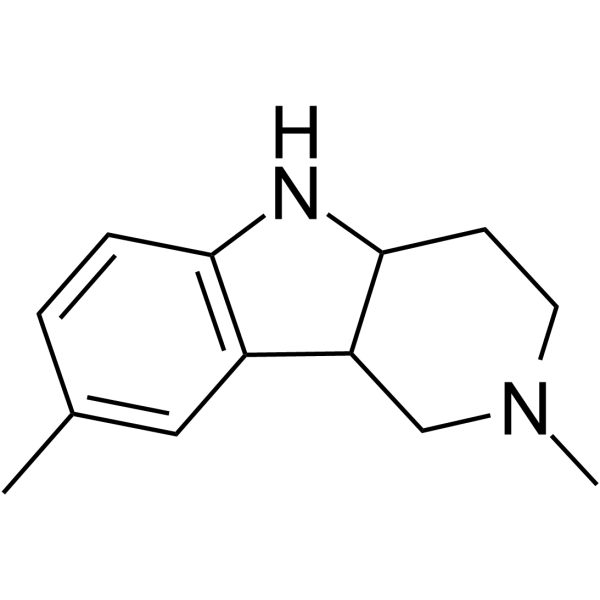
Dicarbine blocks dopamine receptors in various brain parts and prevents the depression of the conditioned defence reflexes caused by stimulation of the mesencephalic portion of the reticular formation. Dicarbine could be used in the schizophrenia and alcoholic psychosis studies .
loading...
    loading...
Cat. No.: HY-116738
CAS No.: 616-68-2
Target:  

Sodium Channel

Research Areas:  

Neurological Disease

Trimecaine, a local neural blockade agent, has a strong depressant effect on the cerebral cortex and the ascending reticular formation of the brain stem .
loading...
    loading...
Cat. No.: HY-120883
CAS No.: 150346-23-9
Rhizopodin is a new cytostatic compound isolated from the culture fluid of the slime mold Myxococcus stipitatus. Rhizopodin inhibits the growth of various animal cell cultures without killing the cells, with an ID50 value of 12 to 30 ng/ml, depending on the cell line. In particular, fibroblast-like cells show typical morphological changes, with cells becoming larger and forming long branched reticular extensions within hours, and these morphological changes are irreversible. Rhizopodin inhibits bleb formation in K-562 cells, possibly through interaction with protein phosphorylation.
loading...
    loading...
Cat. No.: HY-174723
Target:  

mRNA

Research Areas:  

Inflammation/Immunology

Human CXCR6 mRNA encodes the human C-X-C motif chemokine receptor 6 (CXCR6) protein, a G protein-coupled receptor that belongs to the CXC chemokine receptor family. CXCR6 and its exclusive ligand, chemokine ligand 16 (CCL16), are part of a signalling pathway that regulates T lymphocyte migration to various peripheral tissues (the liver, spleen red pulp, intestine, lungs, and skin) and promotes cell-cell interaction with dendritic cells and fibroblastic reticular cells.
loading...
    loading...
Cat. No.: HY-K0606

MCE Methenamine Silver Stain Kit For Basement Membrane (PASM) is developed based on the classical staining principle. Through an optimized staining system and standardized reagent combination, it enables clear visualization of basement membranes and related reticular structures in tissue sections. This method is particularly widely used in renal pathology research, where it is commonly applied to examine morphological alterations of the glomerular capillary basement membrane, such as thickening, rupture, folding, double-contour (tram-track) appearance, or abnormal proliferation caused by inflammatory injury. In addition, this method can also be applied to the histological investigation and morphological observation of glomerular diseases, diabetic nephropathy, and other basement membrane–associated pathological changes.

loading...
    loading...

