29 Results for "

ribosomal A site

" in MedChemExpress (MCE) Product Catalog:
Products (29)

29 Results for "ribosomal A site" in MCE Product Catalog:

16
16 Publications Verification
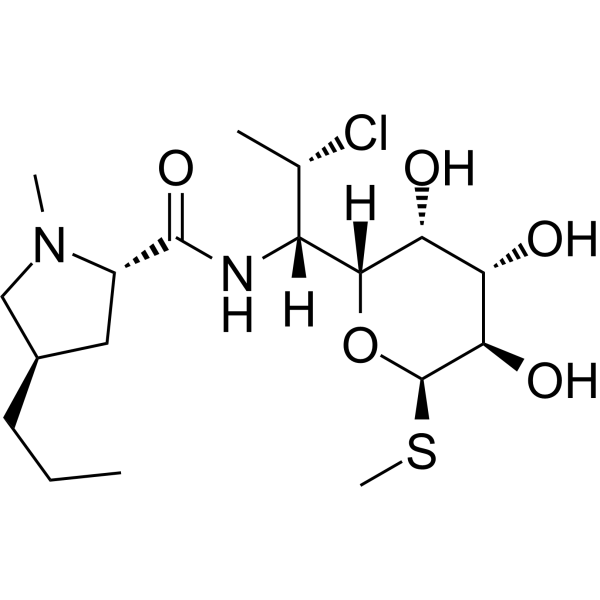
Cat. No.: HY-B1455
CAS No.: 18323-44-9
Research Areas:  

Infection Cancer

Clindamycin is an orally active and broad-spectrum bacteriostatic lincosamide antibiotic. Clindamycin can inhibit bacterial protein synthesis, possessing the ability to suppress the expression of virulence factors in Staphylococcus aureus at sub-inhibitory concentrations (sub-MICs). Clindamycin resistance results from enzymatic methylation of the antibiotic binding site in the 50S ribosomal subunit (23S rRNA). Clindamycin decreases the production of Panton-Valentine leucocidin (PVL), toxic-shock-staphylococcal toxin (TSST-1) or alpha-haemolysin (Hla). Clindamycin also can be used for researching malaria .
loading...
    loading...
16
16 Publications Verification
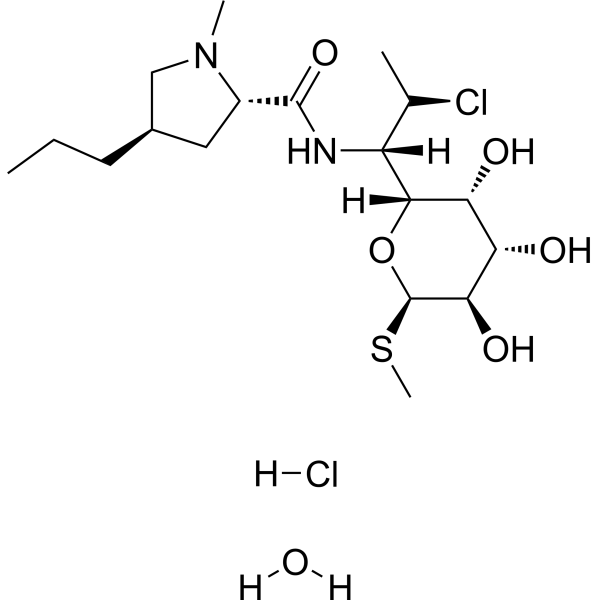
Cat. No.: HY-N7118
CAS No.: 58207-19-5
Target:  

Bacterial Antibiotic

Research Areas:  

Infection Cancer

Clindamycin hydrochloride monohydrate is an oral protein synthesis inhibitory agent that has the ability to suppress the expression of virulence factors in Staphylococcus aureus at sub-inhibitory concentrations (sub-MICs). Clindamycin hydrochloride monohydrate resistance results from enzymatic methylation of the antibiotic binding site in the 50S ribosomal subunit (23S rRNA). Clindamycin hydrochloride monohydrate decreases the production of Panton-Valentine leucocidin (PVL), toxic-shock-staphylococcal toxin (TSST-1) or alpha-haemolysin (Hla) .
loading...
    loading...
1
1 Cited Publications
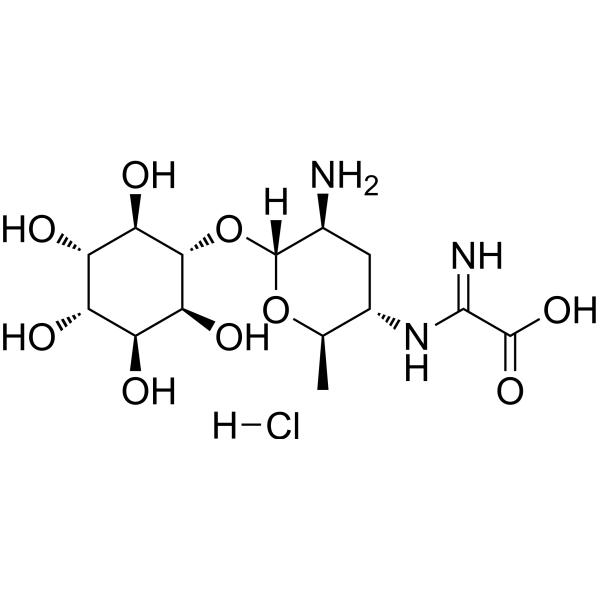
Cat. No.: HY-B1864A
CAS No.: 19408-46-9
Synonyms: Ksg hydrochloride
Kasugamycin (Ksg) hydrochloride is an aminoglycoside antibiotic (antibiotic) that binds to the bacterial 30S ribosomal subunit and inhibits canonical translation initiation. Kasugamycin hydrochloride binds to the P-site and E-site codon regions in the mRNA channel and interferes with mRNA-tRNA codon-anticodon interactions, thereby destabilizing initiator tRNA binding. Kasugamycin hydrochloride possesses anti-infective activity. Kasugamycin hydrochloride is used in research on bacterial translation and Pseudomonas infection .
loading...
    loading...
1
1 Cited Publications
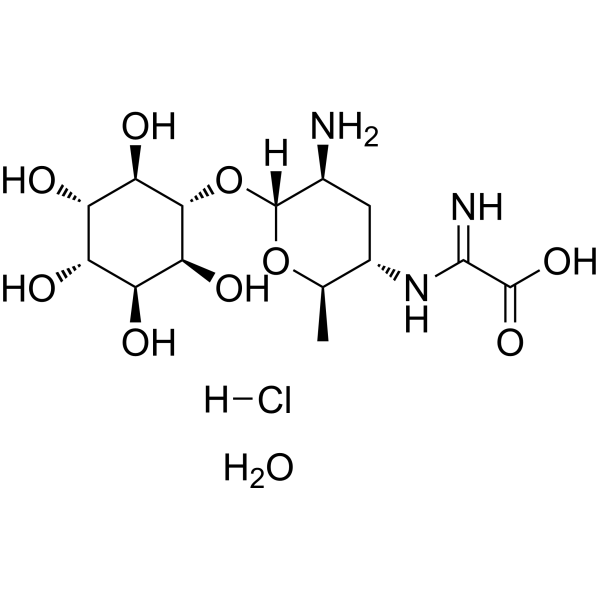
Cat. No.: HY-B1864B
CAS No.: 200132-83-8
Synonyms: Ksg hydrochloride hydrate
Target:  

Antibiotic Bacterial

Research Areas:  

Infection

Kasugamycin (Ksg) hydrochloride hydrate is an aminoglycoside antibiotic (antibiotic) that binds to the bacterial 30S ribosomal subunit and inhibits canonical translation initiation. Kasugamycin hydrochloride hydrate binds to the P-site and E-site codon regions in the mRNA channel and interferes with mRNA-tRNA codon-anticodon interactions, thereby destabilizing initiator tRNA binding. Kasugamycin hydrochloride hydrate possesses anti-infective activity. Kasugamycin hydrochloride hydrate is used in research on bacterial translation and Pseudomonas infection .
loading...
    loading...
1
1 Cited Publications
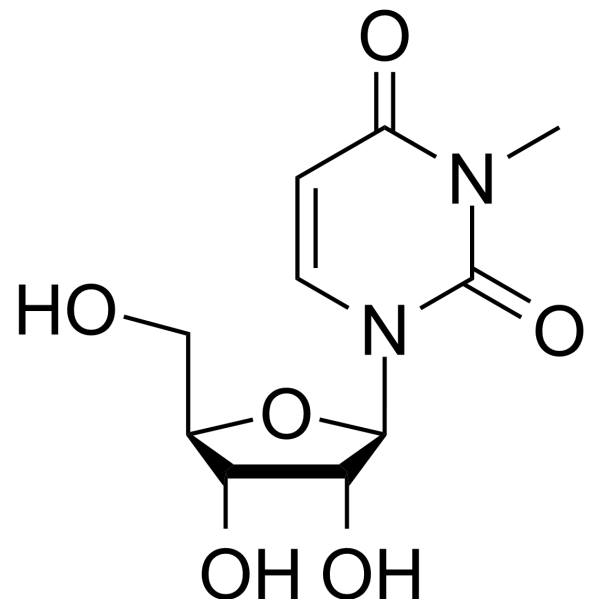
Cat. No.: HY-113138
CAS No.: 2140-69-4
Purity:  99.05%
Synonyms: N3-Methyluridine
3-Methyluridine (m 3U; N3-Methyluridine) is a methylated nucleotide present in ribosomal RNA (rRNA), mainly targeting specific base sites of RNA molecules such as 23S rRNA. 3-Methyluridine can introduce a methyl group at the N3 position of uracil, affecting the secondary structure stability and base pairing ability of RNA, and regulating ribosome function. For example, it affects ribosomal subunit binding and tRNA interaction. 3-Methyluridine is often used as a key raw material for the synthesis of modified nucleotides, and is used to construct RNA oligonucleotides containing methylation modifications to study the effects of RNA methylation on gene expression and drug resistance .
loading...
    loading...
1
1 Cited Publications
Cat. No.: HY-B1864
CAS No.: 6980-18-3
Synonyms: Ksg
Target:  

Antibiotic Bacterial

Research Areas:  

Infection

Kasugamycin (Ksg) is an aminoglycoside antibiotic (antibiotic) that binds to the bacterial 30S ribosomal subunit and inhibits canonical translation initiation. Kasugamycin binds to the P-site and E-site codon regions in the mRNA channel and interferes with mRNA-tRNA codon-anticodon interactions, thereby destabilizing initiator tRNA binding. Kasugamycin possesses anti-infective activity. Kasugamycin is used in research on bacterial translation and Pseudomonas infection .
loading...
    loading...
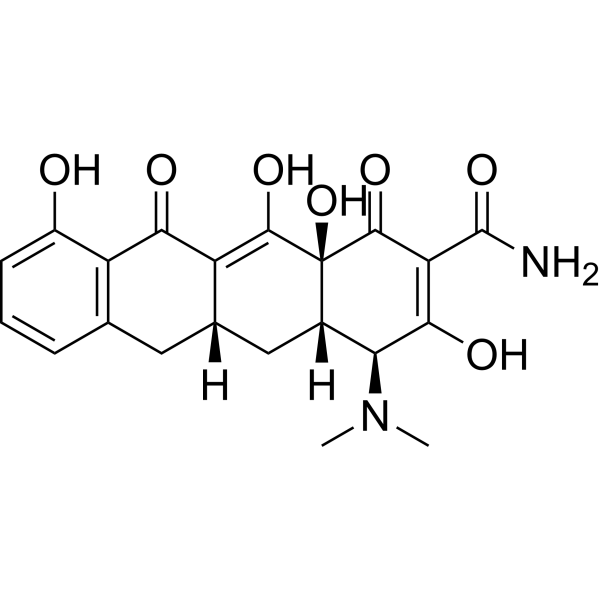
Cat. No.: HY-17466
CAS No.: 808-26-4
Synonyms: Bonomycin; 6-Demethyl-6-deoxytetracycline
Sancycline (6-Demethyl-6-deoxytetracycline) acts by reversibly binding to the 30 S ribosomal subunit and inhibiting protein translation by blocking entry of aminoacyl-tRNA into the ribosome a site similar to tetracycline (HY-A0107). Sancycline, four linearly fused six-membered rings with four stereocenters, is a rare semi-synthetic tetracycline (HY-A0107) prepared by hydrogenolysis of the chloro and benzylic hydroxy moieties of Declomycin .
loading...
    loading...
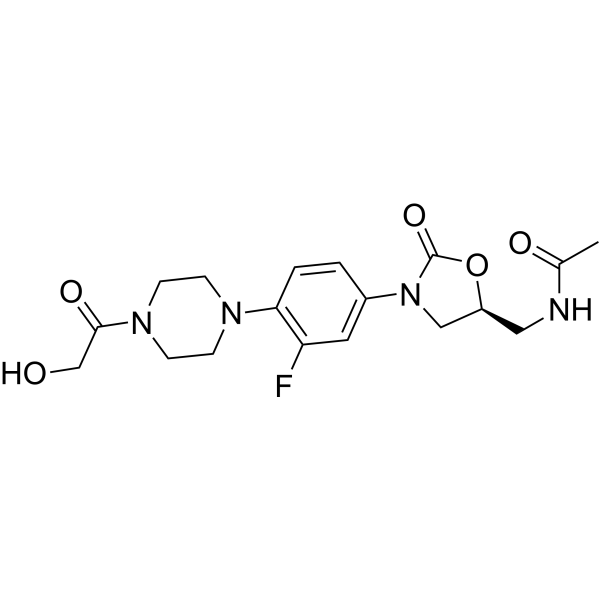
Cat. No.: HY-10393
CAS No.: 165800-04-4
Purity:  96.11%
Synonyms: PNU-100592
Target:  

Bacterial Antibiotic

Research Areas:  

Infection

Eperezolid (PNU-100592) is an orally active protein synthesis inhibitor that targets the bacterial 50S ribosomal subunit. Eperezolid competitively binds to a specific site on the ribosomal 50S subunit (overlapping with the binding sites of chloramphenicol (HY-B0239) and lincomycin (HY-117660)) to inhibit the translation initiation stage and exert antibacterial activity. Eperezolid can induce host cell autophagy to enhance the clearance of intracellular mycobacteria, and its MIC90 for Staphylococcus aureus and Enterococcus is 1-4 μg/mL. Eperezolid is mainly used for antibacterial research on infections with Gram-positive bacteria such as methicillin-resistant (HY-121544) Staphylococci and vancomycin-resistant (HY-B0671) Enterococci, as well as infections with intracellular bacteria such as Mycobacterium tuberculosis .
loading...
    loading...
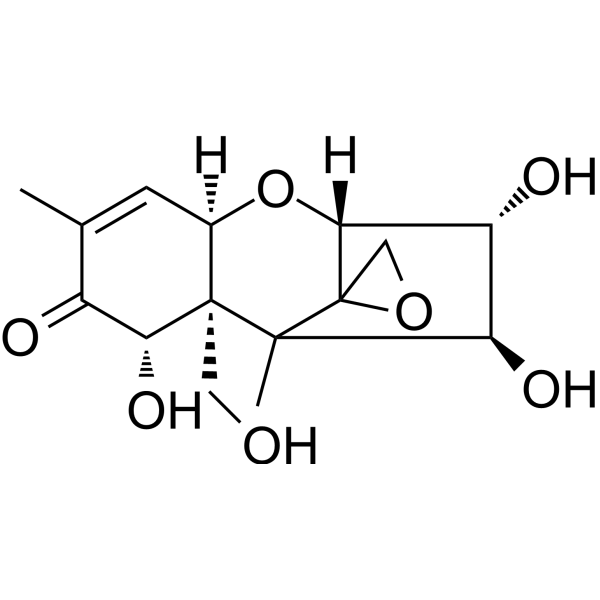
Cat. No.: HY-N6801
CAS No.: 23282-20-4
Nivalenol, a trichothecene mycotoxin that can be produced by Fusarium graminearum, is a fungal metabolite present in agricultural product. Nivalenol modulates apoptotic pathway, cell cycle regulation, Bax, ERK, caspase-3, and poly-ADP-ribose synthase activity in macrophages. Nivalenol inhibits ribosomal peptidyltransferase site, protein synthesis, DNA synthesis, and cell proliferation. Nivalenol induces late-stage apoptotic morphological changes, reduces cellular metabolism, and decreases cell proliferation in erythroleukemia cells. Nivalenol induces lymphocyte apoptosis in murine thymus, spleen, and Peyer's patches. Nivalenol can be used for the research of erythroleukemia .
loading...
    loading...
Cat. No.: HY-B1455S1
CAS No.: 2140264-63-5
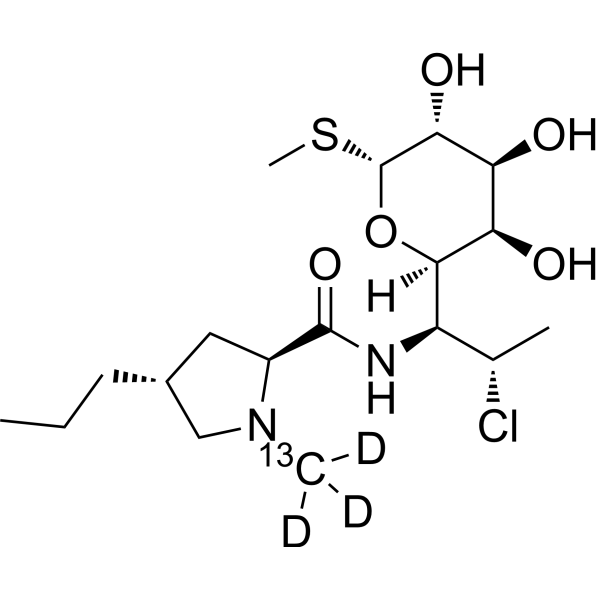
Clindamycin- 13C,d3 is the 13C- and deuterium labeled Clindamycin. Clindamycin is an orally active and broad-spectrum bacteriostatic lincosamide antibiotic. Clindamycin can inhibit bacterial protein synthesis, possessing the ability to suppress the expression of virulence factors in Staphylococcus aureus at sub-inhibitory concentrations (sub-MICs). Clindamycin resistance results from enzymatic methylation of the antibiotic binding site in the 50S ribosomal subunit (23S rRNA). Clindamycin decreases the production of Panton-Valentine leucocidin (PVL), toxic-shock-staphylococcal toxin (TSST-1) or alpha-haemolysin (Hla). Clindamycin also can be used for researching malaria .
loading...
    loading...
Cat. No.: HY-N6801S
CAS No.: 911392-40-0
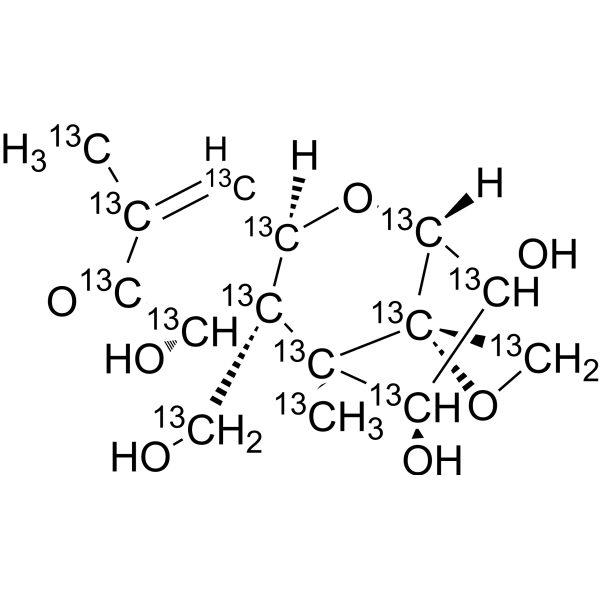
Nivalenol- 13C15 is the 13C labeled Nivalenol (HY-N6801) . Nivalenol, a trichothecene mycotoxin that can be produced by Fusarium graminearum, is a fungal metabolite present in agricultural product. Nivalenol modulates apoptotic pathway, cell cycle regulation, Bax, ERK, caspase-3, and poly-ADP-ribose synthase activity in macrophages. Nivalenol inhibits ribosomal peptidyltransferase site, protein synthesis, DNA synthesis, and cell proliferation. Nivalenol induces late-stage apoptotic morphological changes, reduces cellular metabolism, and decreases cell proliferation in erythroleukemia cells. Nivalenol induces lymphocyte apoptosis in murine thymus, spleen, and Peyer's patches. Nivalenol can be used for the research of erythroleukemia.
loading...
    loading...
Cat. No.: HY-177569
NVS1.1 is an orally active, blood-brain barrier-penetrant eRF1 degrader. NVS1.1 induces ubiquitination of eRF1 at Lys279, mediates proteasomal degradation via the E3 ubiquitin ligases RNF14 and RNF25 as well as the translational stress sensor GCN1, traps eRF1 at the ribosomal A-site, inhibits translation termination and triggers ribosome collision. As a readthrough enhancer, NVS1.1 enables near-cognate tRNA incorporation at premature termination codons by reducing intracellular eRF1 levels. NVS1.1 activates ribosome-associated quality control pathways via ribosome collision, including ubiquitination of small subunit ribosomal proteins. NVS1.1 restores functional full-length CFTR and IDUA proteins and reduces glycosaminoglycan accumulation in relevant models. NVS1.1 can be used in the research of cystic fibrosis and Hurler syndrome (mucopolysaccharidosis type I, MPS I) .
loading...
    loading...
Cat. No.: HY-17466A
CAS No.: 6625-20-3
Synonyms: Bonomycin hydrochloride; 6-Demethyl-6-deoxytetracycline hydrochloride
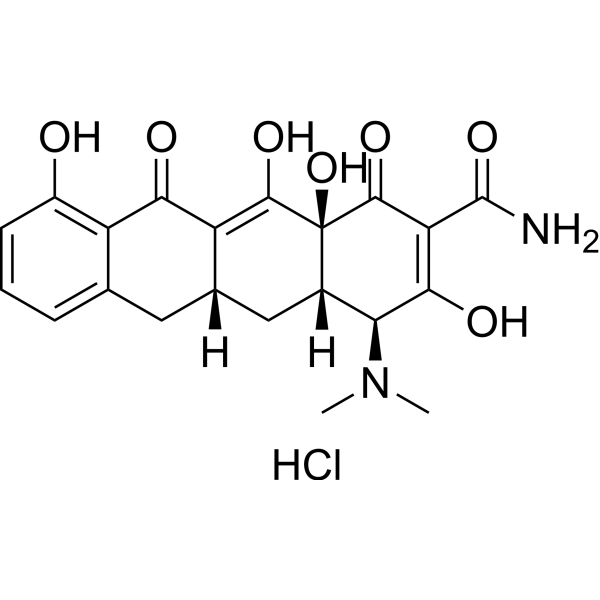
Sancycline (6-Demethyl-6-deoxytetracycline) hydrochloride acts by reversibly binding to the 30 S ribosomal subunit and inhibiting protein translation by blocking entry of aminoacyl-tRNA into the ribosome a site similar to tetracycline (HY-A0107). Sancycline hydrochloride, four linearly fused six-membered rings with four stereocenters, is a rare semi-synthetic tetracycline (HY-A0107) prepared by hydrogenolysis of the chloro and benzylic hydroxy moieties of Declomycin .
loading...
    loading...
Cat. No.: HY-B1455S
CAS No.: 1356933-72-6
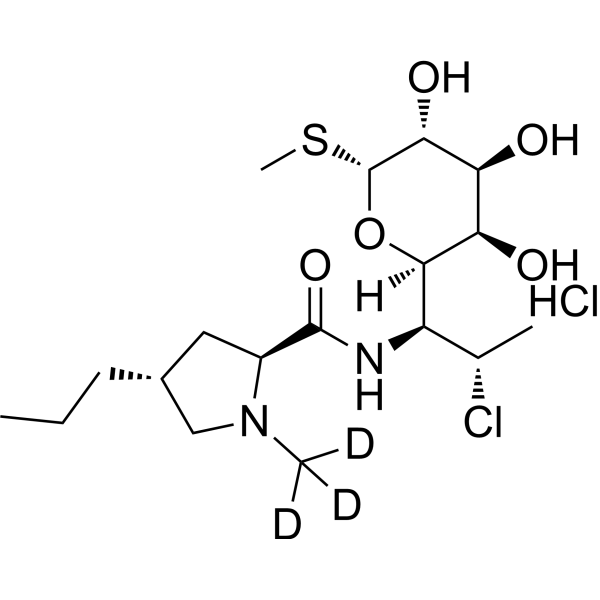
Clindamycin-d3 (hydrochloride) is the deuterium labeled Clindamycin. Clindamycin is an orally active and broad-spectrum bacteriostatic lincosamide antibiotic. Clindamycin can inhibit bacterial protein synthesis, possessing the ability to suppress the expression of virulence factors in Staphylococcus aureus at sub-inhibitory concentrations (sub-MICs). Clindamycin resistance results from enzymatic methylation of the antibiotic binding site in the 50S ribosomal subunit (23S rRNA). Clindamycin decreases the production of Panton-Valentine leucocidin (PVL), toxic-shock-staphylococcal toxin (TSST-1) or alpha-haemolysin (Hla). Clindamycin also can be used for researching malaria .
loading...
    loading...
Cat. No.: HY-N6801R
CAS No.: 23282-20-4
Nivalenol (Standard) is the analytical standard of Nivalenol (HY-N6801). This product is intended for research and analytical applications. Nivalenol, a trichothecene mycotoxin that can be produced by Fusarium graminearum, is a fungal metabolite present in agricultural product. Nivalenol modulates apoptotic pathway, cell cycle regulation, Bax, ERK, caspase-3, and poly-ADP-ribose synthase activity in macrophages. Nivalenol inhibits ribosomal peptidyltransferase site, protein synthesis, DNA synthesis, and cell proliferation. Nivalenol induces late-stage apoptotic morphological changes, reduces cellular metabolism, and decreases cell proliferation in erythroleukemia cells. Nivalenol induces lymphocyte apoptosis in murine thymus, spleen, and Peyer's patches. Nivalenol can be used for the research of erythroleukemia.
loading...
    loading...
Cat. No.: HY-B1864C
CAS No.: 78822-08-9
Synonyms: Ksg sulfate
Target:  

Antibiotic Bacterial

Research Areas:  

Infection

Kasugamycin (Ksg) sulfate is an aminoglycoside antibiotic (antibiotic) that binds to the bacterial 30S ribosomal subunit and inhibits canonical translation initiation. Kasugamycin sulfate binds to the P-site and E-site codon regions in the mRNA channel and interferes with mRNA-tRNA codon-anticodon interactions, thereby destabilizing initiator tRNA binding. Kasugamycin sulfate possesses anti-infective activity. Kasugamycin sulfate is used in research on bacterial translation and Pseudomonas infection .
loading...
    loading...
Cat. No.: HY-172216
Target:  

Enterovirus

Research Areas:  

Infection

EV-A71-IN-3 (Compound IRE-03-3) is the inhibitor for Enterovirus A71 EV-A71 that targets internal ribosomal entry site (IRES) of EV-A71, inhibits IRES-mediated translation, and inhibits the viral proliferation with an EC50 of 11.96 μM .
loading...
    loading...
Cat. No.: HY-12770R
CAS No.: 14367-47-6
Synonyms: Mebeverine metabolite Mebeverine alcohol (Standard)
Research Areas:  

Neurological Disease

Mebeverine alcohol (Standard) is an analytical standard for Mebeverine alcohol. This product is intended for research and analytical applications. Eperezolid (PNU-100592) is an orally active protein synthesis inhibitor that targets the bacterial 50S ribosomal subunit. Eperezolid competitively binds to a specific site on the ribosomal 50S subunit (overlapping with the binding sites of Chloramphenicol (HY-B0239) and Lincomycin (HY-117660)) to inhibit the translation initiation stage and exert antibacterial activity. Eperezolid can induce host cell autophagy to enhance the clearance of intracellular mycobacteria, and its MIC90 for Staphylococcus aureus and Enterococcus is 1-4 μg/mL. Eperezolid is mainly used for antibacterial research on infections with Gram-positive bacteria such as methicillin-resistant (HY-121544) Staphylococci and vancomycin-resistant (HY-B0671) Enterococci, as well as infections with intracellular bacteria such as Mycobacterium tuberculosis .
loading...
    loading...
Cat. No.: HY-134561
CAS No.: 651055-83-3
Synonyms: 6A-8tFP
Target:  

Prion Protein

Research Areas:  

Infection

6-Amino-8-trifluoromethylphenanthridine (6A-8tFP) is an antiprion agent and a derivative of 6-aminophenanthridine (HY-135189). It inhibits protein folding activity of the ribosome (PFAR) when used at a concentration of 150 μM.2 6A-8tFP directly competes with protein substrates for the ribosomal active site.
loading...
    loading...
Cat. No.: HY-B1864AR
CAS No.: 19408-46-9
Synonyms: Ksg hydrochloride (Standard)
Kasugamycin hydrochloride (Standard) (Ksg hydrochloride (Standard)) is the analytical standard of Kasugamycin hydrochloride (HY-B1864A). This product is intended for research and analytical applications. Kasugamycin (Ksg) hydrochloride is an aminoglycoside antibiotic (antibiotic) that binds to the bacterial 30S ribosomal subunit and inhibits canonical translation initiation. Kasugamycin hydrochloride binds to the P-site and E-site codon regions in the mRNA channel and interferes with mRNA-tRNA codon-anticodon interactions, thereby destabilizing initiator tRNA binding. Kasugamycin hydrochloride possesses anti-infective activity. Kasugamycin hydrochloride is used in research on bacterial translation and Pseudomonas infection .
loading...
    loading...

