1. Search Result
Search Result
Results for "

seeds

" in MedChemExpress (MCE) Product Catalog:

512

Inhibitors & Agonists

1

Screening Libraries

1

Fluorescent Dyes

15

Biochemical Assay Reagents

6

Peptides

5

Inhibitory Antibodies

385

Natural
Products

16

Isotope-Labeled Compounds

1

Click Chemistry

4

Oligonucleotides

Cat. No. Product Name Target Research Areas Chemical Structure
  • HY-129038
    GR24
    1 Publications Verification

    Strigolactone GR24

    Biochemical Assay Reagents Others
    (Rac)-GR24 (Strigolactone GR24) is a plant hormone analog. (Rac)-GR24 can mimic the natural germination stimulus of parasitic plant seeds, promoting seed germination in the absence of host plants, thereby reducing the number of parasitic seeds in the soil. (Rac)-GR24 can be used in agricultural research .
    GR24
  • HY-N7072
    Grape seed extract
    2 Publications Verification

    Apoptosis Metabolic Disease Inflammation/Immunology Cancer
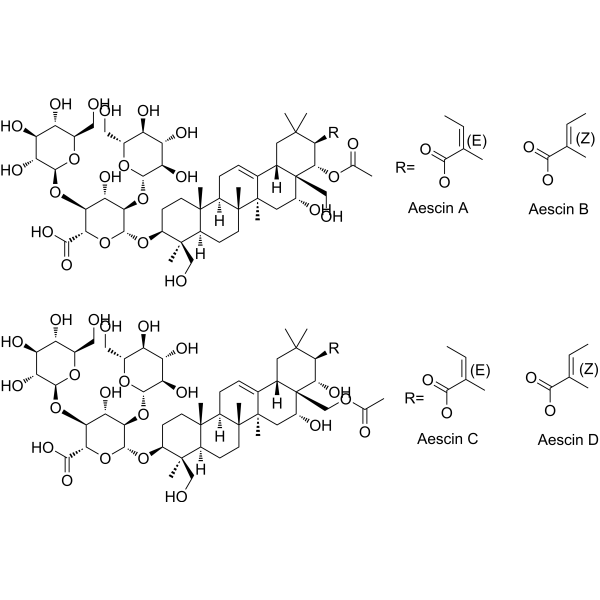
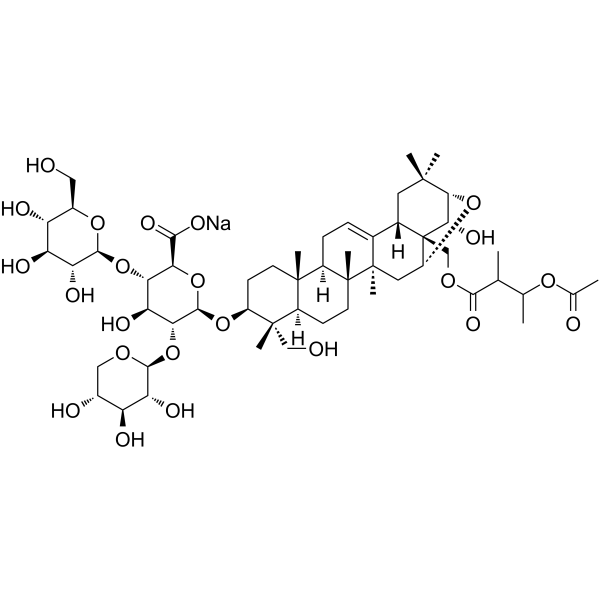
    Grape seed extract is a natural product, with anti-inflammatory and anti-proliferative effects. Grape seed extract shows inhibitory activity on the fat-metabolizing enzymes pancreatic lipase and lipoprotein lipase. Grape seed extract induces apoptotic in human colorectal cancer cells .
    Grape seed extract
  • HY-N7443
    Gibberellin A1
    1 Publications Verification

    Phytohormone Others
    Gibberellin A1 is a kind of plant hormones. Gibberellin A1 is a growth-promoting acids isolated from immature seed of Phaseolus multiflorus .
    Gibberellin A1
  • HY-W187279

    Phytohormone Others
    Karrikin 2 is a seed germination stimulant identified in smoke produced by plant combustion. Karrikins induce seed germination in Arabidopsis thaliana, lettuce, E. penduliflora and S. orbiculatum. Karrikin 2 upregulates the expression of gibberellin (GA) biosynthesis genes GA3ox1, GA3ox2 and the gibberellin GA4-responsive gene CP1 in Arabidopsis thaliana seeds .
    Karrikin 2
  • HY-139066
    Punicic acid
    1 Publications Verification

    Trichosanic acid

    TNF Receptor GLUT Proteasome Tau Protein PKC Neurological Disease Metabolic Disease Inflammation/Immunology
    Punicic acid is a bioactive compound of pomegranate seed oil. Punicic acid is an isomer of conjugated α-linolenic acid and ω-5 polyunsaturated fatty acids. Punicic acid has anti-inflammatory and antioxidant activities and can inhibit the expression of inflammatory mediators such as tumor necrosis factor α (TNF-α). Punicic acid can also reduce the formation of β-amyloid deposits and hyperphosphorylation of tau by increasing the expression of GLUT4 protein and inhibiting the overactivation of calpain, and is used to prevent and treat neurodegenerative diseases. In addition, punicic acid also has breast cancer inhibitor properties that depend on lipid peroxidation and PKC pathways .
    Punicic acid
  • HY-121447

    Endogenous Metabolite Metabolic Disease
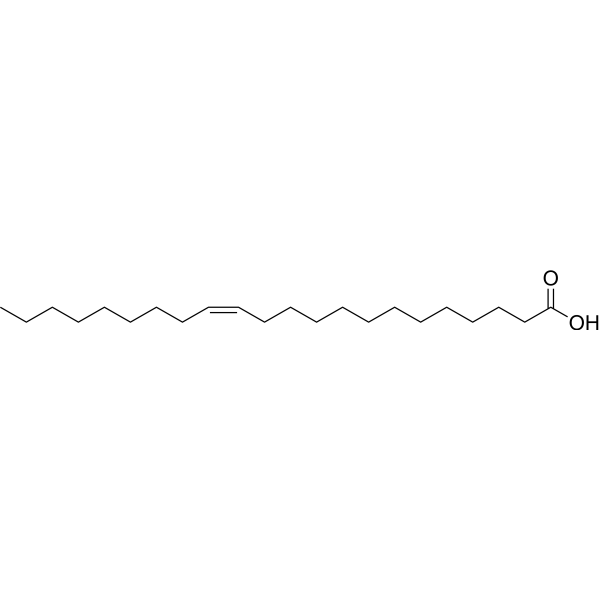
    Heneicosanoic acid is an odd-chain saturated fatty acid widely present in human milk, fish, seeds, and cerebrosides in the cell membranes of the nervous system. Heneicosanoic acid can form Langmuir monolayers and is often used as a model to study lipid self-assembly and disassembly processes in biological membranes and drug delivery systems. In the low-temperature L'2 and CS crystalline phases, Heneicosanoic acid undergoes local oscillations, which in turn drive the spontaneous formation and expulsion of micelles and vesicles .
    Heneicosanoic acid
  • HY-B2064
    Carboxin
    4 Publications Verification

    Carboxine; Fenoxan

    Environmental Pollutants Antibiotic Fungal Infection
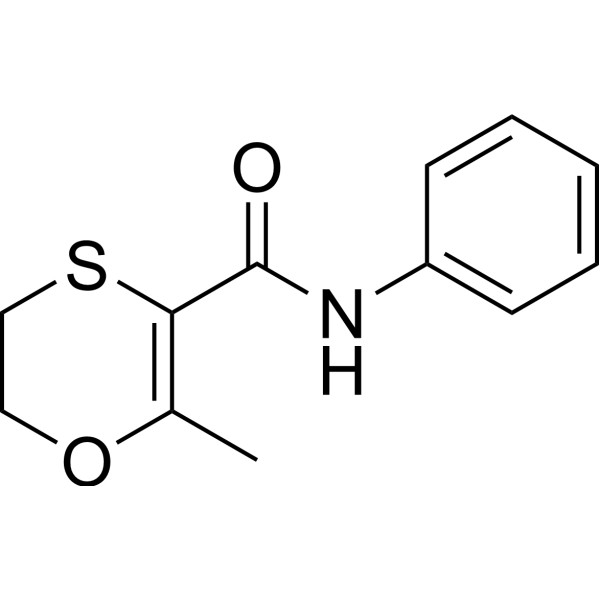
    Carboxin (Carboxine) is a systemic agricultural fungicide and seed protectant.
    Carboxin
  • HY-N4073
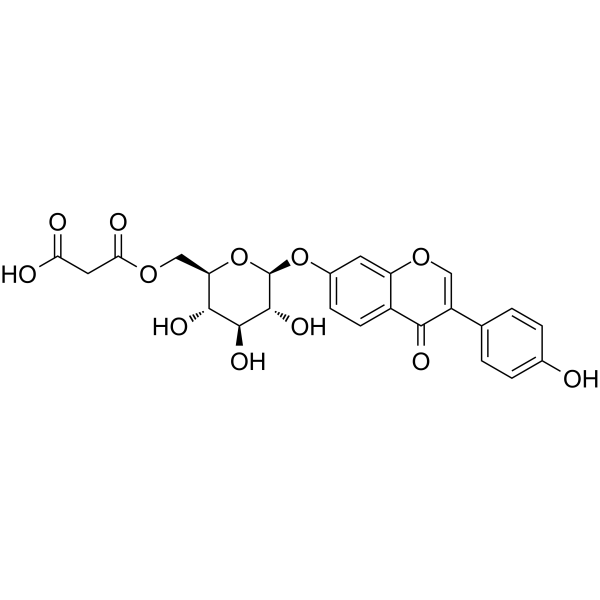
    6"-O-Malonyldaidzin
    1 Publications Verification

    Others Inflammation/Immunology
    6"-O-Malonyldaidzin is a malonylated isoflavone isolated from soybean seeds. 6"-O-Malonyldaidzin may has protective effect on eye .
    6
  • HY-116831

    Drug Metabolite Others
    4′-Dihydrophaseic acid is a metabolite of the plant hormone abscisic acid and is present in legume seeds .
    4′-Dihydrophaseic acid
  • HY-120161

    3'-Hexylsulfanylabscisic acid

    ABA Receptor Phosphatase Others
    AS6 (3'-Hexylsulfanylabscisic acid) is a PYL antagonist with a Kd value of 0.48 μM for Arabidopsis PYL5. AS6 binds to PYL proteins, and its S-hexyl chain blocks PP2C binding via steric hindrance. AS6 alleviates the inhibitory effect of ABA on seed germination in Arabidopsis and lettuce .
    AS6
  • HY-E70555

    Glycosidase Others
    PNGase A is a β-aspartylglucosaminidase and N-glycan-releasing enzyme. PNGase A catalyzes hydrolysis reactions to release the N-glycan moiety from glycoproteins or glycopeptides. PNGase A releases N-linked oligosaccharides containing core α-1,3 fucose from glycopeptides. PNGase A undergoes self-deglycosylation, which may cause contamination of endogenous glycan structures in N-glycan analysis. PNGase A cannot be heterologously expressed in recombinant expression systems; it can be extracted and purified from almond seeds .
    PNGase A
  • HY-107246

    Vaccarin D

    VEGFR Others
    Segetalin A is the compound isolated from the seeds of Vaccaria hispanica .
    Segetalin A
  • HY-N2244

    (+)-Hosenkoside M

    Others Inflammation/Immunology
    Hosenkoside M is a baccharane glycoside isolated from the seeds of impatiens balsamina.
    Hosenkoside M
  • HY-N2243

    Others Inflammation/Immunology
    Hosenkoside K is a baccharane glycoside isolated from the seeds of impatiens balsamina.
    Hosenkoside K
  • HY-W250146

    Locust bean gum, Polysaccharide>75%, 5000-6500 mPa·S

    Environmental Pollutants Biochemical Assay Reagents Others
    Locust bean gum is a natural polysaccharide derived from the seeds of the carob tree. It is commonly used as a thickening, stabilizing and gelling agent in a variety of foods, including dairy, baked goods and meat products. Locust bean gum has several properties suitable for these applications, including high water retention capacity, ability to form stable gels at low temperatures, and resistance to acidic conditions. Additionally, it can be used as a dietary fiber supplement due to its potential health benefits, including improving digestion and lowering cholesterol levels.
    Locust bean gum, from Ceratonia siliqua seeds
  • HY-W006267

    4-Cl-IAA

    Endogenous Metabolite Others
    4-Chloroindole-3-acetic acid (4-Cl-IAA) is a chlorinated analogue of indole-3-acetic acid (IAA) (HY-18569) auxin that functions as a plant hormone, which is found in the seeds of Medicago truncatulaMelilotus indicus and Trifolium .
    4-Chloroindole-3-acetic acid
  • HY-N7681
    Taxifolin 7-O-β-D-glucoside
    1 Publications Verification

    Taxifolin 7-O-glucoside

    Biochemical Assay Reagents Inflammation/Immunology
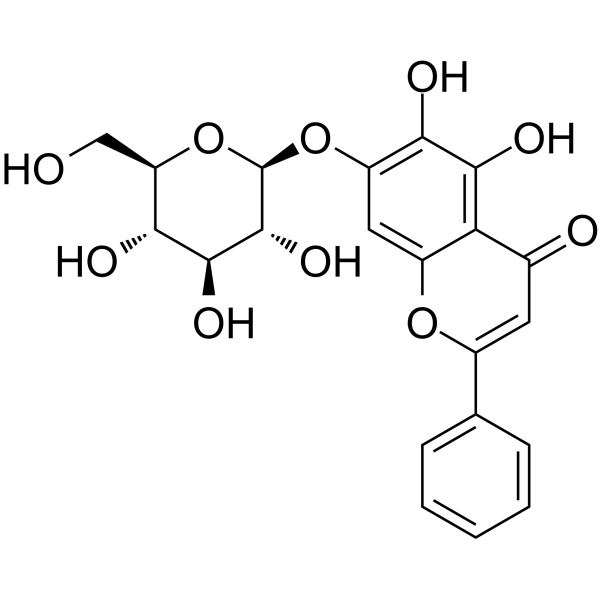
    Taxifolin 7-O-β-D-glucoside (Taxifolin 7-O-glucoside) is a flavonol and active antioxidant that can be isolated from Scutellaria baicalensis. Taxifolin 7-O-β-D-glucoside participates in pathogen defense and ultraviolet damage protection in the seed coat during seed germination of Scutellaria baicalensis .
    Taxifolin 7-O-β-D-glucoside
  • HY-W141774

    S-Carboxyethylcysteine

    Amino Acid Derivatives Metabolic Disease
    S-(2-Carboxyethyl)-L-cysteine (S-Carboxyethylcysteine) is a non-protein (modified) sulfur amino acid. S-(2-Carboxyethyl)-L-cysteine is present in Acacia seed. S-(2-Carboxyethyl)-L-cysteine can affect the seed’s protein use in rats. S-(2-Carboxyethyl)-L-cysteine suppresses the methionine-induced growth rate, and has a negative effect on the plasma amino acid levels in rats .
    S-(2-Carboxyethyl)-L-cysteine
  • HY-N5001

    Apoptosis Cancer
    Euphorbia factor L2, a lathyrane diterpenoid isolated from caper euphorbia seed (the seeds of Euphorbia lathyris L.), has been traditionally applied to treat cancer. Euphorbia factor L2 shows potent cytotoxicity and induces apoptosis via a mitochondrial pathway .
    Euphorbia Factor L2
  • HY-N1959

    Others Others
    Cannabisin A is a natural product in seeds in sprouts .
    Cannabisin A
  • HY-P2802B

    Glycosidase Metabolic Disease
    α-Glucosidase, rice is a GH31 glycoside hydrolase in rice seeds, with high selectivity for α-1,4-glycosidic bonds. α-Glucosidase, rice can be inhibited by rice husk extracts (IC50 = 1.25 μg/mL) and steroidal components (IC50 = 1.83 μg/mL). α-Glucosidase, rice exists in two major isoforms, among which isoform II is more sensitive to inhibitors. α-Glucosidase, rice can directly bind to and degrade starch granules in rice seeds. α-Glucosidase, rice can form ONG2-I and ONG2-II via post-translational proteolysis. α-Glucosidase, rice can be used in type 2 diabetes research .
    α-Glucosidase, rice
  • HY-N2249

    Others Inflammation/Immunology
    Hosenkoside A is a baccharane glycoside isolated from the seeds of impatiens balsamina.
    Hosenkoside A
  • HY-N2186
    Leucoside
    1 Publications Verification

    Others Others
    Leucoside is a natural compound isolated from tea seed extract .
    Leucoside
  • HY-126212

    Others Others
    Isorutarin is a natural product that can be isolated from the seeds of Apium graueolens .
    Isorutarin
  • HY-107210

    Others Others
    Avenasterol is a natural sterol isolated from seed oils of Testouri and Jebali cultivars .
    Avenasterol
  • HY-N10343

    Others Others
    epi-Progoitrin is the major thioglucoside of Crambe abyssinica seed .
    epi-Progoitrin
  • HY-W046071

    Drug Intermediate Others
    N-Boc-trans-4-fluoro-L-proline is a non-natural amino acid substitute used to construct monoclonal antibodies that specifically target the seed conformation of tau protein .
    N-Boc-trans-4-fluoro-L-proline
  • HY-N7448

    Others Others
    5-Deoxystrigol is a strigolactone found in Fabaceae plants. 5-Deoxystrigol can stimulate seed germination .
    5-Deoxystrigol
  • HY-N0351A

    cis-4-Hydroxycinnamic acid

    Apoptosis Metabolic Disease
    cis-p-Coumaric acid (cis-4-Hydroxycinnamic acid) is the cis-form of p-Coumaric acid (HY-N0351), which is higher in viable seeds of groundnuts than in non-viable ones. p-Coumaric acid is an isomer of cinnamic acid with oral activity. p-Coumaric acid inhibits cell proliferation and promotes Apoptosis .
    cis-p-Coumaric acid
  • HY-115051

    Others Others
    2-Hydroxymethyltetrahydropyran is a volatile compound in Sambucus williamsii (SW) seed oil. SW seed oil has potential antioxidant activity .
    2-Hydroxymethyltetrahydropyran
  • HY-N0764

    Others Inflammation/Immunology
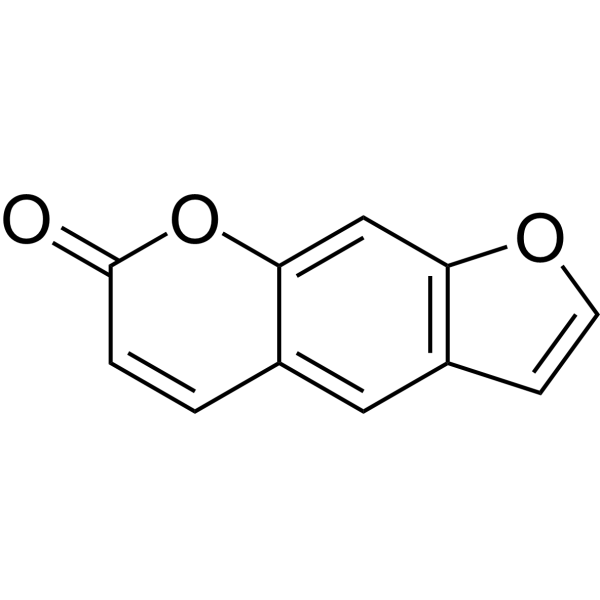
    Isobergapten is an allelopathic inhibitor isolated from seeds of Hevacleum laciniatum .
    Isobergapten
  • HY-N1276

    Others Neurological Disease
    Secoisolariciresinol Monoglucoside is a natural product isolated from the seeds of Linum usitatissimum L. .
    Secoisolariciresinol Monoglucoside
  • HY-133902

    Others Others
    Neoglucobrassicin is an endogenous metabolite that can be isolated from the seeds of the plant Sinapis alba L.
    Neoglucobrassicin
  • HY-167581

    Biochemical Assay Reagents
    Borage oil, from Borago officinalis seeds is a kind of biochemical reagent.
    Borage oil, from Borago officinalis seeds
  • HY-133225

    Others Others
    Caesalpine A, a cassane-type diterpene, is a natural product that could be isolated from the seeds of Caesalpinia minax .
    Caesalpine A
  • HY-W440039
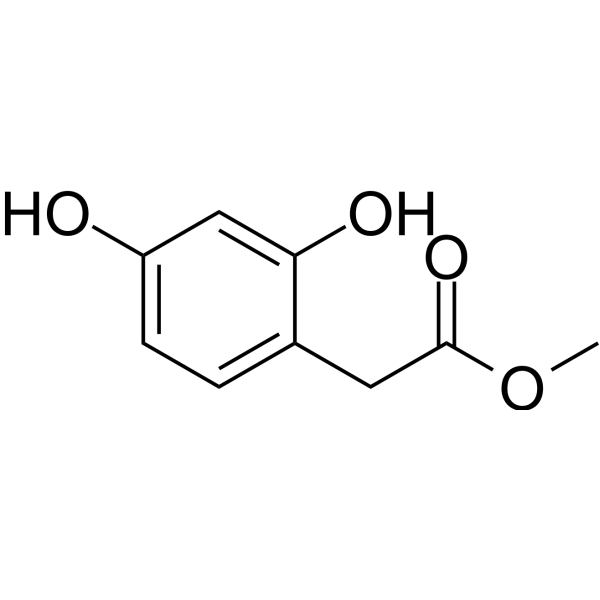
    Methyl 2-(2,4-dihydroxyphenyl)acetate
    2 Publications Verification

    Herbicide Inflammation/Immunology
    Methyl 2-(2,4-dihydroxyphenyl)acetate, a phenolic ester, is isolated from Nigella damascena seeds with selective phytotoxic effects .
    Methyl 2-(2,4-dihydroxyphenyl)acetate
  • HY-107965

    Safflower seed oil (from Carthamus tinctorius seed)

    Biochemical Assay Reagents Elastase Inflammation/Immunology
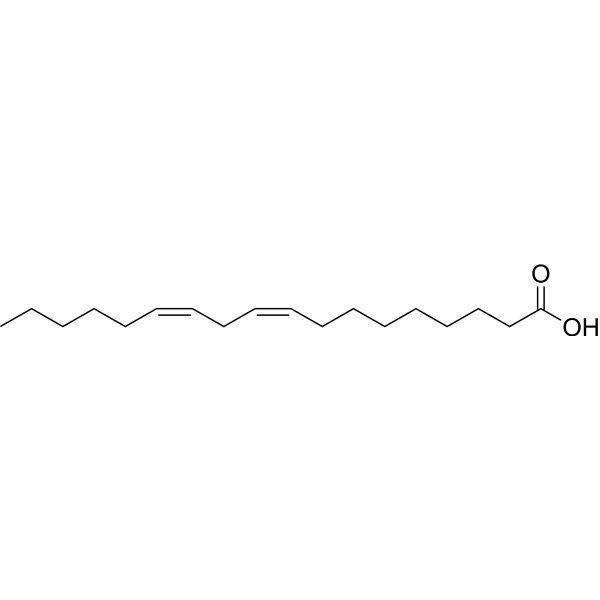
    Safflower oil (from Carthamus tinctorius seed) is rich in unsaturated fatty acids such as linoleic acid and oleic acid, as well as tocopherols and phenolic compounds, and exhibits antioxidant, anti-aging and blood lipid-regulating effects. Safflower oil (from Carthamus tinctorius seed) inhibits the activities of collagenase and elastase, and exerts antioxidant activity by scavenging free radicals. Linoleic acid in safflower oil (from Carthamus tinctorius seed) reduces blood cholesterol levels. Safflower oil (from Carthamus tinctorius seed) can be applied to research in fields such as skin aging, atherosclerosis, edible oil processing and industrial raw material development .
    Safflower oil (from Carthamus tinctorius seed)
  • HY-N3586

    Osmanthuside F

    Others Others
    Cimidahurinine can be extracted from the seeds of Perilla frutescens .
    Cimidahurinine
  • HY-N2241

    (+)-Hosenkoside F

    Others Inflammation/Immunology
    Hosenkoside F is a baccharane glycoside isolated from the seeds of impatiens balsamina.
    Hosenkoside F
  • HY-N1175

    Others Others
    Taxacin is a natural product, that can be isolated from seeds of Yew .
    Taxacin
  • HY-N12154

    Others Others
    Ajugose is a hexasaccharide that can be isolated from in the seeds of Vigna mungo L. .
    Ajugose
  • HY-123899

    HIV Others
    Cleomiscosin B, a coumarinolignoid, is could isloted from the seeds of Hyoscyamus niger. Cleomiscosin B has potent liver protective .
    Cleomiscosin B
  • HY-N7858

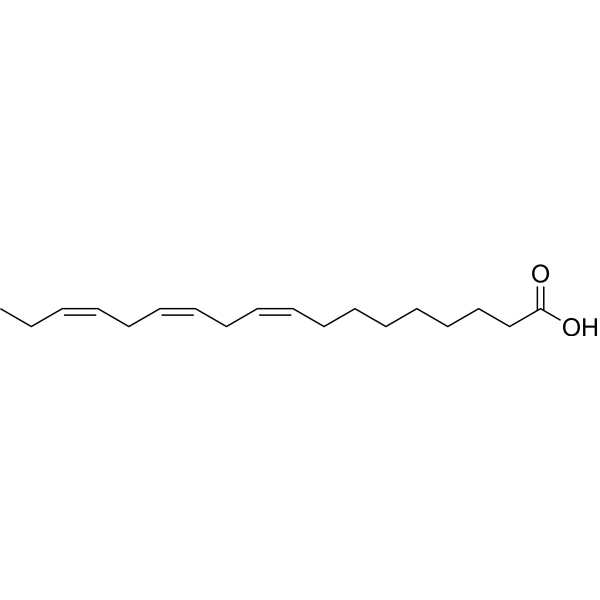
    α-Parinaric acid

    Others Cancer
    cis-Parinaric acid (α-Parinaric acid) is a fatty acid that can be isolated from Impatiens edgeworthii seed oil .
    cis-Parinaric acid
  • HY-136240

    Parasite Infection
    Tioxazafen is a disubstituted oxadiazole and a broad-spectrum seed treatment nematicide. Tioxazafen is designed to provide consistent broad-spectrum control of nematodes in corn, soy, and cotton .
    Tioxazafen
  • HY-134544

    Apoptosis Cancer
    Calendic acid (8(E),10(E),12(Z)-Octadecatrienoic acid) is a conjugated polyunsaturated fatty acid (PUFA) that can be isolated from C. officinalis seed oil. Calendic acid has anticancer activity .
    Calendic acid
  • HY-W763706A

    Tamarind seed polysaccharide, 98%

    Biochemical Assay Reagents Others
    Tamarind Gum from Tamarind seed, 98% (Tamarind seed polysaccharide, 98%) can be obtained from Tamarindus Indica L. Tamarind Gum from Tamarind seed is a polysaccharide thickener .
    Tamarind Gum from Tamarind seed, 98%
  • HY-169862

    Others Others
    Germinone A is a potent HTL/KAI2 agonist with germination-inducing activity for thermo-inhibited Arabidopsis seed. Germinone A can be utilized in seed germination research .
    Germinone A
  • HY-N2250

    Others Inflammation/Immunology
    Hosenkoside B is a baccharane glycoside isolated from the seeds of impatiens balsamina.
    Hosenkoside B
  • HY-126978

    Others Others
    Lepidimoide is an allelopathic substance in the exudates from germinated seeds .
    Lepidimoide
  • HY-W008927A

    Fungal Infection
    (Z)-Fluoxastrobin is fungicide agent. (Z)-Fluoxastrobin has excellent control of important seed and soilborne pathogens .
    (Z)-Fluoxastrobin

Inquiry Online

Your information is safe with us. * Required Fields.

Salutation


Country or Region *

Applicant Name *


Organization Name *

Department *


Email Address *


Product Name *

Cat. No.


Requested quantity *

Phone Number *


Remarks

Inquiry Online

Inquiry Information

Product Name:
Cat. No.:
Quantity:
MCE Japan Authorized Agent:

