







1. Search Result
Search Result
Results for "

skipping

" in MedChemExpress (MCE) Product Catalog:

32

Inhibitors & Agonists

21

Oligonucleotides

Cat. No. Product Name Target Research Areas Chemical Structure
  • HY-132611

    SRP-4053

    Dystrophin DNA/RNA Synthesis Neurological Disease
    Golodirsen (SRP-4053) is an antisense oligonucleotide of the phophorodiamidate morpholino oligomer (PMO). Golodirsen restores the reading frame of the Duchenne muscular dystrophy (DMD) gene by modifying the splicing process of the pre-mRNA, skipping exon 53. Golodirsen can restore the expression of the anti-myostatin protein. Golodirsen can be used for the research of duchenne muscular dystrophy (DMD) .
    Golodirsen
  • HY-132586

    NS-065/NCNP-01

    Nucleoside Antimetabolite/Analog Dystrophin Metabolic Disease
    Viltolarsen (NS-065/NCNP-01) is a phosphorodiamidate morpholino antisense oligonucleotide. Viltolarsen binds to exon 53 of the dystrophin mRNA precursor and restores the amino acid open-reading frame by skipping exon 53, resulting in the production of a shortened dystrophin protein that contains essential functional portions. Viltolarsen has the potential for Duchenne muscular dystrophy (DMD) research .
    Viltolarsen
  • HY-145724

    Kyndrisa; GSK2402968A; PRO051

    DNA/RNA Synthesis Dystrophin Neurological Disease
    Drisapersen (Kyndrisa) is a 2 '-O-methyl phosphorothioate RNA antisense oligonucleotide that induces exon 51 skipping. Drisapersen induces skipping of exon 51 during Dystrophin pre-mRNA splicing, allowing the synthesis of partially functional Dystrophin. Drisapersen can be used in research related to Duchenne muscular dystrophy .
    Drisapersen
  • HY-112777

    Microtubule/Tubulin Kinesin Others
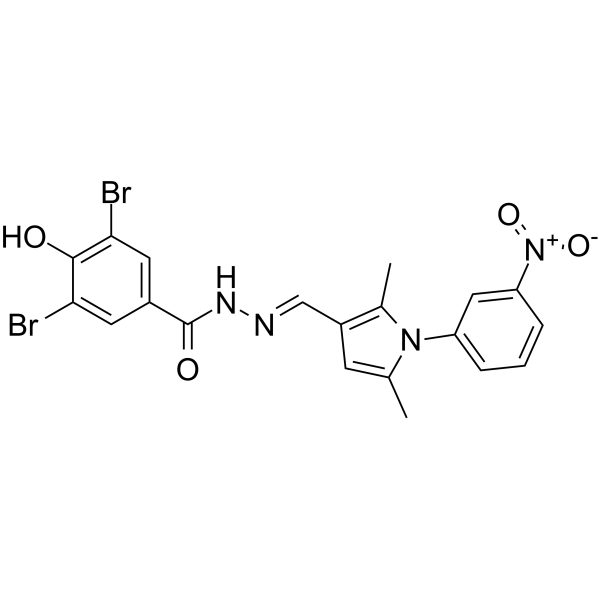
    Kinesore is an inhibitor of the KLC2-SKIP Interaction.
    Kinesore
  • HY-132611A

    SRP-4053 sodium

    DNA/RNA Synthesis Dystrophin Neurological Disease
    Golodirsen (SRP-4053) sodium is an antisense oligonucleotide of the phophorodiamidate morpholino oligomer (PMO). Golodirsen sodium restores the reading frame of the Duchenne muscular dystrophy (DMD) gene by modifying the splicing process of the pre-mRNA, skipping exon 53. Golodirsen sodium can restore the expression of the anti-myostatin protein. Golodirsen sodium can be used for the research of duchenne muscular dystrophy (DMD) .
    Golodirsen sodium
  • HY-147412

    QR-421a

    Nucleoside Antimetabolite/Analog DNA/RNA Synthesis Neurological Disease
    Ultevursen (QR-421a) is a splice-modulating antisense oligonucleotide targeting exon 13 of the USH2A gene, which restores the functional expression of Usherin protein by inducing exon skipping. Ultevursen binds to USH2A pre-mRNA and modulates the splicing process to specifically skip exon 13 carrying the pathogenic mutation c.2299delG, generating an in-frame transcript and a truncated yet functionally normal protein. Ultevursen exhibits concentration-dependent exon skipping activity in human cells and retinal organoid models, and restores Usherin expression and retinal function in zebrafish and gene-edited mouse models. Ultevursen can be used for related research on type 2 Usher syndrome and non-syndromic retinitis pigmentosa .
    Ultevursen
  • HY-132586A

    NS-065/NCNP-01 sodium

    Nucleoside Antimetabolite/Analog Dystrophin Metabolic Disease
    Viltolarsen (NS-065/NCNP-01) sodium is a phosphorodiamidate morpholino antisense oligonucleotide. Viltolarsen sodium binds to exon 53 of the dystrophin mRNA precursor and restores the amino acid open-reading frame by skipping exon 53, resulting in the production of a shortened dystrophin protein that contains essential functional portions. Viltolarsen sodium has the potential for Duchenne muscular dystrophy (DMD) research .
    Viltolarsen sodium
  • HY-144399

    Transmembrane Glycoprotein Neurological Disease
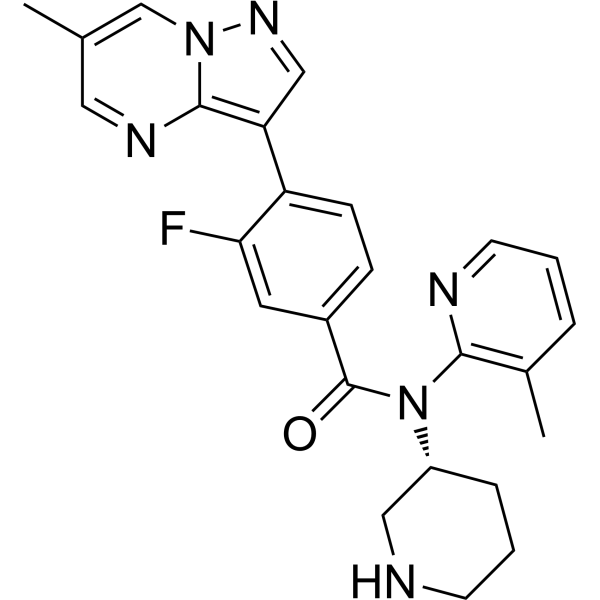
    CD33 splicing modulator 1 (Compound 1) is a CD33 splicing modulator. CD33/Siglec 3 is a myeloid lineage cell surface receptor that is known to regulate microglia activity. CD33 splicing modulator 1 increases exon 2 skipping in cellular mRNA pools. CD33 splicing modulator 1 has the potential for the research of neurodegenerative disease including Alzheimer's disease .
    CD33 splicing modulator 1
  • HY-177564

    Del-zota; AOC 1044

    Antibody-Oligonucleotide Conjugates (AOCs) Transferrin Receptor Dystrophin Neurological Disease
    Delpacibart zotadirsen (Del-zota), an antibody oligonucleotide conjugate (AOC), consists of a monoclonal antibody (Delpacibart) (HY-P990051) that binds to the transferrin receptor 1 (TfR1) conjugated to a phosphorodiamidate morpholino conjugate (PMO), Delpacibart zotadirsen is designed to deliver phosphorodiamidate morpholino oligomers (PMOs) to skeletal muscle and heart tissue to specifically skip exon 44 of the dystrophin gene and enable production of near-full length dystrophin. Delpacibart zotadirsen is used for the study of myotonic dystrophy type 1 (DM1) .
    Delpacibart zotadirsen
  • HY-158143

    Histone Methyltransferase Apoptosis Cancer
    AZD3470 is an orally active MTA-cooperative PRMT5 inhibitor, selective for MTAP-deficient tumors. AZD3470 induces cell cycle G2/M phase alterations, DNA damage, apoptosis, and symmetric dimethylarginine reduction. AZD3470 alters alternative splicing, increases skipped exon events in DNA repair and cell cycle pathways, and inhibits cancer cell proliferation and tumor growth. AZD3470 can be used for the research of non-small cell lung cancer and MTAP-deleted solid tumors .
    AZD3470
  • HY-177658

    DS-5141b

    Dystrophin Others
    Renadirsen is an antisense oligonucleotide that induces robust Exon 45 skipping for Dystrophin in vivo.
    Renadirsen
  • HY-177659

    Dystrophin Others
    Rimigorsen is an antisense oligonucleotide that induces skipping of exon 44 of the pre-mRNA encoding dystrophin in a Duchenne muscular dystrophy (DMD)
    Rimigorsen
  • HY-144399A

    Transmembrane Glycoprotein Neurological Disease
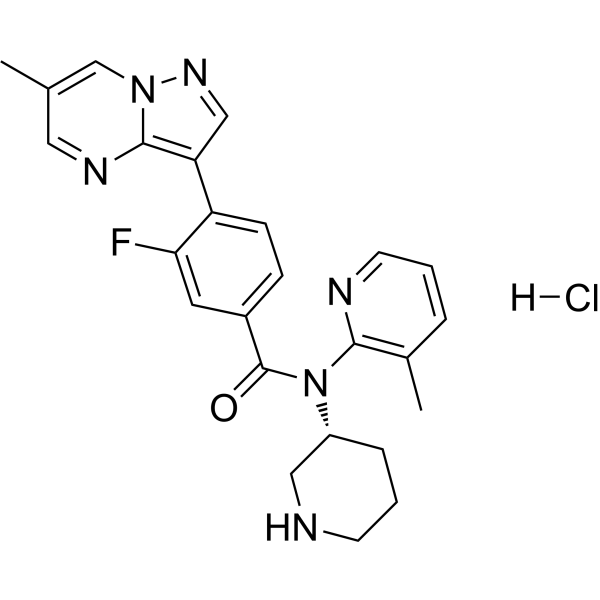
    CD33 splicing modulator 1 (Compound 1) hydrochloride is a CD33 splicing modulator. CD33/Siglec 3 is a myeloid cell surface receptor known to regulate microglial activity. CD33 splicing modulator 1 hydrochloride increases exon 2 skipping in the cellular mRNA pool and can be used to study neurodegenerative diseases including Alzheimer's disease .
    CD33 splicing modulator 1 hydrochloride
  • HY-E70758

    c-Met/HGFR Cancer
    Mesenchymal-to-epithelial transition (MET) is a receptor tyrosine kinase for hepatocyte growth factor (HGF). MET overactivation is strongly associated with angiogenesis, cellular motility, growth, and invasion. Aberrant MET signaling can drive tumorigenesis in several cancer types through various molecular mechanisms, including MET amplification, MET exon 14 skipping mutation, MET overexpression, and MET fusions. MET Y1235D is a mutant of MET. MET Y1235D Recombinant Human Active Protein Kinase is a recombinant MET Y1235D protein that can be used to study MET Y1235D-related functions .
    MET Y1235D Recombinant Human Active Protein Kinase
  • HY-E70751

    c-Met/HGFR Cancer
    Mesenchymal-to-epithelial transition (MET) is a receptor tyrosine kinase for hepatocyte growth factor (HGF). MET overactivation is strongly associated with angiogenesis, cellular motility, growth, and invasion. Aberrant MET signaling can drive tumorigenesis in several cancer types through various molecular mechanisms, including MET amplification, MET exon 14 skipping mutation, MET overexpression, and MET fusions. MET G1163R is a mutant of MET. MET G1163R Recombinant Human Active Protein Kinase is a recombinant MET G1163R protein that can be used to study MET G1163R-related functions .
    MET G1163R Recombinant Human Active Protein Kinase
  • HY-177659A

    Dystrophin Others
    Rimigorsen sodium is an antisense oligonucleotide that induces skipping of exon 44 of the pre-mRNA encoding dystrophin in a Duchenne muscular dystrophy (DMD)
    Rimigorsen sodium
  • HY-150237

    DNA/RNA Synthesis Dystrophin Others
    FITC-labeled Drisapersen (sodium) is Drisapersen labeled with FITC. Drisapersen, a antisense oligonucleotide, induces exon 51 skipping during dystrophin pre-mRNA splicing and allows synthesis of partially functional dystrophin in Duchenne muscular dystrophy (DMD) patients with amenable mutations.
    FITC-labeled Drisapersen sodium
  • HY-158829

    EGFR Cancer
    SSOe26 sodium is a 15mer antisense oligonucleotide targeting?HER4. SSOe26 sodium induces exon 26 skipping, leading to the generation of a novel mRNA transcript that excludes exon 26 (CYT2 isoform). SSOe26 sodium decreases tumour growth in mouse xenografts.
    SSOe26 sodium
  • HY-158828

    EGFR Cancer
    SSO111 sodium, a 20mer fully modified antisense oligonucleotide, targets the oncogene?HER2. SSO111 sodium induces exon 15 skipping during splicing, leading to the generation of a novel mRNA transcript that excludes exon 15. SSO111 sodium downregulated HER2 mRNA, which resulted in the inhibition of proliferation and induction of apoptosis in HER2-overexpressing tumor cells.
    SSO111 sodium
  • HY-E70754

    c-Met/HGFR Cancer
    Mesenchymal-to-epithelial transition (MET) is a receptor tyrosine kinase for hepatocyte growth factor (HGF). MET overactivation is strongly associated with angiogenesis, cellular motility, growth, and invasion. Aberrant MET signaling can drive tumorigenesis in several cancer types through various molecular mechanisms, including MET amplification, MET exon 14 skipping mutation, MET overexpression, and MET fusions. MET Y1230A is a mutant of MET. MET Y1230A Recombinant Human Active Protein Kinase is a recombinant MET Y1230A protein that can be used to study MET Y1230A-related functions .
    MET Y1230A Recombinant Human Active Protein Kinase
  • HY-E70756

    c-Met/HGFR Cancer
    Mesenchymal-to-epithelial transition (MET) is a receptor tyrosine kinase for hepatocyte growth factor (HGF). MET overactivation is strongly associated with angiogenesis, cellular motility, growth, and invasion. Aberrant MET signaling can drive tumorigenesis in several cancer types through various molecular mechanisms, including MET amplification, MET exon 14 skipping mutation, MET overexpression, and MET fusions. MET Y1230D is a mutant of MET. MET Y1230D Recombinant Human Active Protein Kinase is a recombinant MET Y1230D protein that can be used to study MET Y1230D-related functions .
    MET Y1230D Recombinant Human Active Protein Kinase
  • HY-E70749

    c-Met/HGFR Cancer
    Mesenchymal-to-epithelial transition (MET) is a receptor tyrosine kinase for hepatocyte growth factor (HGF). MET overactivation is strongly associated with angiogenesis, cellular motility, growth, and invasion. Aberrant MET signaling can drive tumorigenesis in several cancer types through various molecular mechanisms, including MET amplification, MET exon 14 skipping mutation, MET overexpression, and MET fusions. MET D1228N is a mutant of MET. MET D1228N Recombinant Human Active Protein Kinase is a recombinant MET D1228N protein that can be used to study MET D1228N-related functions .
    MET D1228N Recombinant Human Active Protein Kinase
  • HY-E70748

    c-Met/HGFR Cancer
    Mesenchymal-to-epithelial transition (MET) is a receptor tyrosine kinase for hepatocyte growth factor (HGF). MET overactivation is strongly associated with angiogenesis, cellular motility, growth, and invasion. Aberrant MET signaling can drive tumorigenesis in several cancer types through various molecular mechanisms, including MET amplification, MET exon 14 skipping mutation, MET overexpression, and MET fusions. MET D1228H is a mutant of MET. MET D1228H Recombinant Human Active Protein Kinase is a recombinant MET D1228H protein that can be used to study MET D1228H-related functions .
    MET D1228H Recombinant Human Active Protein Kinase
  • HY-E70755

    c-Met/HGFR Cancer
    Mesenchymal-to-epithelial transition (MET) is a receptor tyrosine kinase for hepatocyte growth factor (HGF). MET overactivation is strongly associated with angiogenesis, cellular motility, growth, and invasion. Aberrant MET signaling can drive tumorigenesis in several cancer types through various molecular mechanisms, including MET amplification, MET exon 14 skipping mutation, MET overexpression, and MET fusions. MET Y1230C is a mutant of MET. MET Y1230C Recombinant Human Active Protein Kinase is a recombinant MET Y1230C protein that can be used to study MET Y1230C-related functions .
    MET Y1230C Recombinant Human Active Protein Kinase
  • HY-E70752

    c-Met/HGFR Cancer
    Mesenchymal-to-epithelial transition (MET) is a receptor tyrosine kinase for hepatocyte growth factor (HGF). MET overactivation is strongly associated with angiogenesis, cellular motility, growth, and invasion. Aberrant MET signaling can drive tumorigenesis in several cancer types through various molecular mechanisms, including MET amplification, MET exon 14 skipping mutation, MET overexpression, and MET fusions. MET L1195V is a mutant of MET. MET L1195V Recombinant Human Active Protein Kinase is a recombinant MET L1195V protein that can be used to study MET L1195V-related functions .
    MET L1195V Recombinant Human Active Protein Kinase
  • HY-E70757

    c-Met/HGFR Cancer
    Mesenchymal-to-epithelial transition (MET) is a receptor tyrosine kinase for hepatocyte growth factor (HGF). MET overactivation is strongly associated with angiogenesis, cellular motility, growth, and invasion. Aberrant MET signaling can drive tumorigenesis in several cancer types through various molecular mechanisms, including MET amplification, MET exon 14 skipping mutation, MET overexpression, and MET fusions. MET Y1230H is a mutant of MET. MET Y1230H Recombinant Human Active Protein Kinase is a recombinant MET Y1230H protein that can be used to study MET Y1230H-related functions .
    MET Y1230H Recombinant Human Active Protein Kinase
  • HY-E70753

    c-Met/HGFR Cancer
    Mesenchymal-to-epithelial transition (MET) is a receptor tyrosine kinase for hepatocyte growth factor (HGF). MET overactivation is strongly associated with angiogenesis, cellular motility, growth, and invasion. Aberrant MET signaling can drive tumorigenesis in several cancer types through various molecular mechanisms, including MET amplification, MET exon 14 skipping mutation, MET overexpression, and MET fusions. MET M1250T is a mutant of MET. MET M1250T Recombinant Human Active Protein Kinase is a recombinant MET M1250T protein that can be used to study MET M1250T-related functions .
    MET M1250T Recombinant Human Active Protein Kinase
  • HY-177658A

    DS-5141b sodium

    Dystrophin Others
    Renadirsen sodium is an antisense oligonucleotide that induces robust Exon 45 skipping for Dystrophin in vivo.
    Renadirsen sodium
  • HY-147412D

    Fluorescent Dye Neurological Disease
    FAM labled Ultevursen sodiumis a FAM labled Ultevursen sodium (HY-147412A). Ultevursen sodium (QR-421a) is a splice-modulating antisense oligonucleotide targeting exon 13 of the USH2A gene, which restores the functional expression of Usherin protein by inducing exon skipping. Ultevursen sodium binds to USH2A pre-mRNA and modulates the splicing process to specifically skip exon 13 carrying the pathogenic mutation c.2299delG, generating an in-frame transcript and a truncated yet functionally normal protein. Ultevursen sodium exhibits concentration-dependent exon skipping activity in human cells and retinal organoid models, and restores Usherin expression and retinal function in zebrafish and gene-edited mouse models. Ultevursen sodium can be used for related research on type 2 Usher syndrome and non-syndromic retinitis pigmentosa .
    FAM labled Ultevursen sodium
  • HY-147412E

    Fluorescent Dye Neurological Disease
    Cy3 labled Ultevursen sodium is a Cy3 labled Ultevursen sodium (HY-147412A). Ultevursen sodium (QR-421a) is a splice-modulating antisense oligonucleotide targeting exon 13 of the USH2A gene, which restores the functional expression of Usherin protein by inducing exon skipping. Ultevursen sodium binds to USH2A pre-mRNA and modulates the splicing process to specifically skip exon 13 carrying the pathogenic mutation c.2299delG, generating an in-frame transcript and a truncated yet functionally normal protein. Ultevursen sodium exhibits concentration-dependent exon skipping activity in human cells and retinal organoid models, and restores Usherin expression and retinal function in zebrafish and gene-edited mouse models. Ultevursen sodium can be used for related research on type 2 Usher syndrome and non-syndromic retinitis pigmentosa .
    Cy3 labled Ultevursen sodium
  • HY-177972

    Antibody-Oligonucleotide Conjugates (AOCs) Neurological Disease
    Zotadirsen, one of the components of the AOC Delpacibart zotadirsen (HY-177564), is composed of a phosphorodiamidate morpholino oligomers (PMOs) and SMCC linker (HY-42360). Zotadirsen specifically skip exon 44 of the dystrophin gene and enable production of near-full length dystrophin. Zotadirsen can be used to synthesize AOC drugs. Zotadirsen can also be used in the research of Duchenne muscular dystrophy (DM) .
    Zotadirsen
  • HY-E70750

    c-Met/HGFR Cancer
    Mesenchymal-to-epithelial transition (MET) is a receptor tyrosine kinase for hepatocyte growth factor (HGF). MET overactivation is strongly associated with angiogenesis, cellular motility, growth, and invasion. Aberrant MET signaling can drive tumorigenesis in several cancer types through various molecular mechanisms, including MET amplification, MET exon 14 skipping mutation, MET overexpression, and MET fusions. MET F1200I is a mutant of MET. MET F1200I Recombinant Human Active Protein Kinase is a recombinant MET F1200I protein that can be used to study MET F1200I-related functions .
    MET F1200I Recombinant Human Active Protein Kinase

Inquiry Online

Your information is safe with us. * Required Fields.

Salutation


Country or Region *

Applicant Name *


Organization Name *

Department *


Email Address *


Product Name *

Cat. No.


Requested quantity *

Phone Number *


Remarks

Inquiry Online

Inquiry Information

Product Name:
Cat. No.:
Quantity:
MCE Japan Authorized Agent:

