211 Results for "

small molecule compound

" in MedChemExpress (MCE) Product Catalog:
Products (211)

211 Results for "small molecule compound" in MCE Product Catalog:

8
8 Publications Verification
Cat. No.: HY-123834
CAS No.: 824983-91-7
Purity:  99.85%
Target:  

FLAP ATM/ATR

Research Areas:  

Cancer

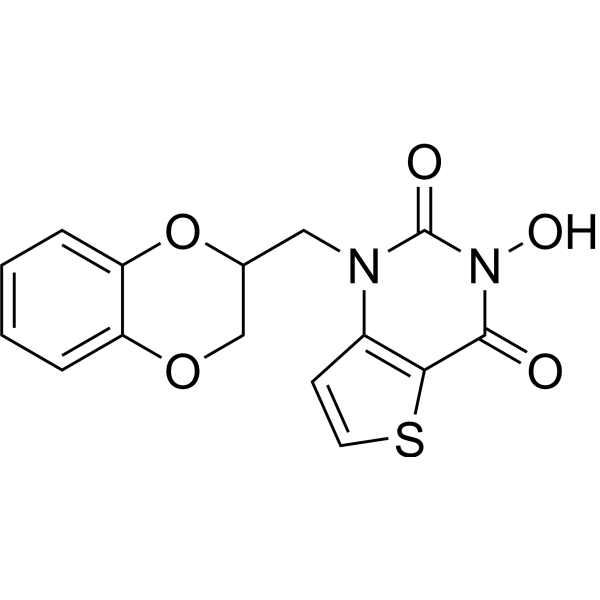
FEN1-IN-1 (compound 1) is a small molecule flap endonuclease 1 (FEN1) inhibitor with antitumor activity. FEN1-IN-1 binds to the active site of FEN1 and partly achieves inhibition by the co-ordination of Mg 2+ ions. FEN1-IN-1 initiaties a DNA damage response and activates the ATM checkpoint signalling pathway, the phosphorylation of histone H2AX and the ubiquitination of FANCD2 in mammalian cells. FEN1-IN-1 is promising for research of cancers .
loading...
    loading...
8
8 Publications Verification
Cat. No.: HY-15908
CAS No.: 979-88-4
Purity:  99.52%
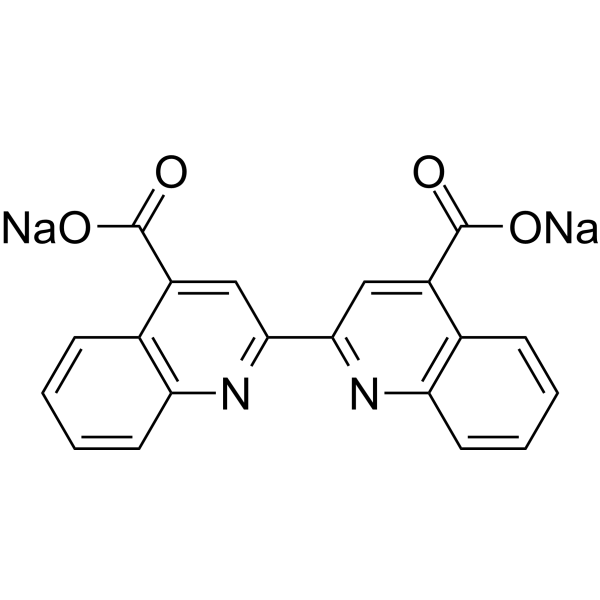
Synonyms: Disodium bicinchoninate
Research Areas:  

Others

BCA is a chelating agent targeting Cu I. BCA forms a water-soluble complex with Cu I at a 2:1 stoichiometric ratio, which not only inhibits its oxidation and disproportionation reactions, but also mediates the Cu I-catalyzed azide-alkyne cycloaddition click chemistry reaction to achieve bioconjugation of fluorophores or biotin with functionalized proteins. BCA chelates Cu + from proteins that reduce Cu 2+, forming a purple compound detectable by colorimetry, and thus is used to determine the total protein concentration in solution. BCA is a potential small-molecule candidate for AHAS inhibitors .
loading...
    loading...
8
8 Publications Verification
Cat. No.: HY-W004599
CAS No.: 1245-13-2
Research Areas:  

Others

Bicinchoninic acid is a chelating agent targeting Cu I. Bicinchoninic acid forms a water-soluble complex with Cu I at a 2:1 stoichiometric ratio, which not only inhibits its oxidation and disproportionation reactions, but also mediates the Cu I-catalyzed azide-alkyne cycloaddition click chemistry reaction to achieve bioconjugation of fluorophores or biotin with functionalized proteins. Bicinchoninic acid chelates Cu + from proteins that reduce Cu 2+, forming a purple compound detectable by colorimetry, and thus is used to determine the total protein concentration in solution. Bicinchoninic acid is a potential small-molecule candidate for AHAS inhibitors .
loading...
    loading...
8
8 Publications Verification
Cat. No.: HY-15908A
CAS No.: 63451-34-3
Research Areas:  

Others

Dipotassium [2,2'-biquinoline]-4,4'-dicarboxylate is a chelating agent targeting Cu I. Dipotassium [2,2'-biquinoline]-4,4'-dicarboxylate forms a water-soluble complex with Cu I at a 2:1 stoichiometric ratio, which not only inhibits its oxidation and disproportionation reactions, but also mediates the Cu I-catalyzed azide-alkyne cycloaddition click chemistry reaction to achieve bioconjugation of fluorophores or biotin with functionalized proteins. Dipotassium [2,2'-biquinoline]-4,4'-dicarboxylate chelates Cu + from proteins that reduce Cu 2+, forming a purple compound detectable by colorimetry, and thus is used to determine the total protein concentration in solution. Dipotassium [2,2'-biquinoline]-4,4'-dicarboxylate is a potential small-molecule candidate for AHAS inhibitors .
loading...
    loading...
6
6 Cited Publications
Cat. No.: HY-10704
CAS No.: 612530-44-6
Purity:  99.65%
Synonyms: PTP1B inhibitor
PTP1B-IN-1 (Compound 7a) is a small molecule inhibitor of PTP1B with an IC50 value of 1.6 mM. It is often used as the mother core for derivatives of analogues .
loading...
    loading...
2
2 Cited Publications
Cat. No.: HY-14454
CAS No.: 21306-65-0
Purity:  99.81%
Synonyms: Triphenyl compound A
Research Areas:  

Cancer

TPh A (Triphenyl Compound A) is a potent inhibitor of the nuclear protein pirin and binds specifically to pirin with a Ki of 0.6 uM. TPh A disrupts the formation of the bcl3–pirin complex. TPh A can be used as a novel small molecule tool to regulate pirin in cells .
loading...
    loading...
2
2 Cited Publications
Cat. No.: HY-W097453
CAS No.: 50-66-8
Synonyms: 6-Methylmercaptopurine
Target:  

Endogenous Metabolite

Research Areas:  

Others

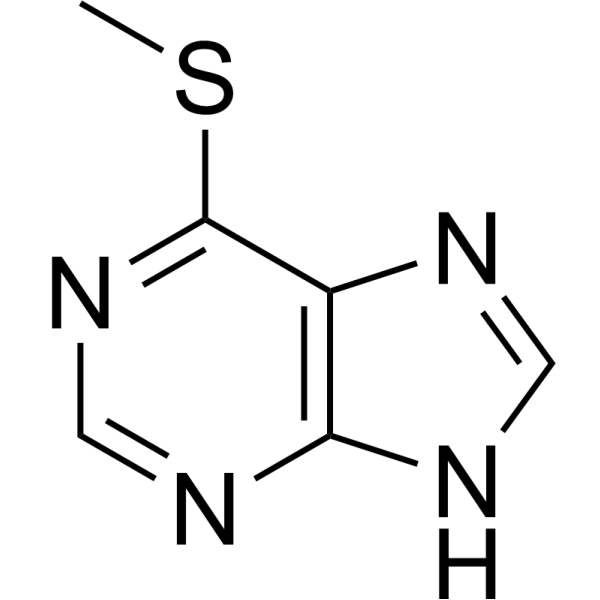
6-(Methylthio)purine (6-Methylmercaptopurine) is a small molecule that can be used for compound synthesis .
loading...
    loading...
1
1 Cited Publications
Cat. No.: HY-150190
CAS No.: 2304465-89-0
Purity:  99.38%
Research Areas:  

Cancer

F5446 (Compound 1) is a selective small molecule inhibitor of SUV39H1 methyltransferase. F5446 decreases H3K9me3 deposition at the FAS promoter, increases Fas expression and increases colorectal carcinoma cell sensitivity to FasL-induced apoptosis in vitro. F5446 suppresses human colon tumor xenograft growth in vivo .
loading...
    loading...
1
1 Cited Publications
Cat. No.: HY-117259
CAS No.: 1034190-08-3
Purity:  98.83%
Synonyms: ALZ-801
Target:  

Amyloid-β

Research Areas:  

Neurological Disease

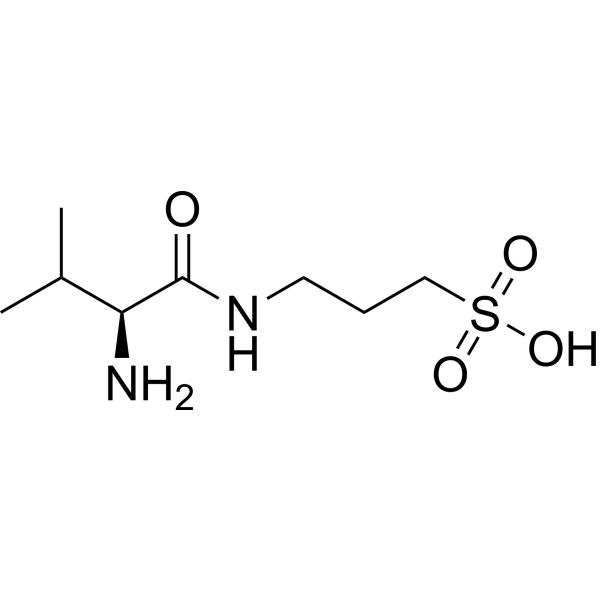
ALZ-801 is a potent and orally available small-molecule β-amyloid (Aβ) anti-oligomer and aggregation inhibitor, valine-conjugated proagent of Tramiprosate with substantially improved PK properties and gastrointestinal tolerability compared with the parent compound . ALZ-801 is an advanced and markedly improved candidate for the treatment of alzheimer’s disease .
loading...
    loading...
1
1 Cited Publications
Cat. No.: HY-148263
Purity:  ≥98.0%
Target:  

Fluorescent Dye

Research Areas:  

Cancer

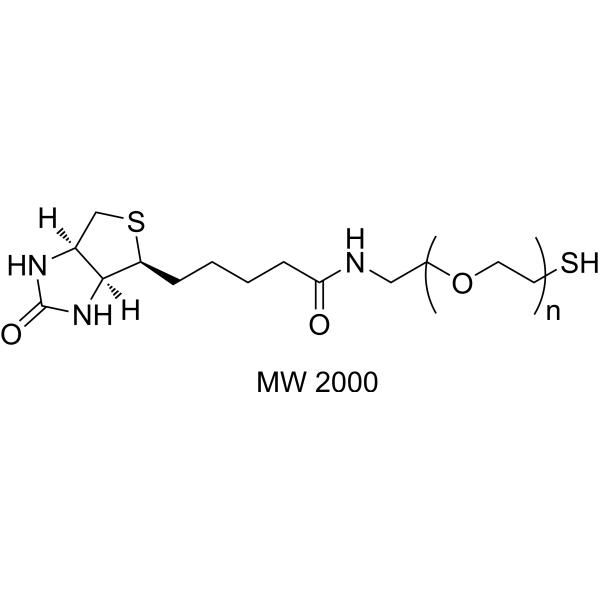
Biotin-PEG2000-Thiol is an active compound. Biotin-PEG2000-Thiol is pegylated by binding to streptavidin or antibiotin with high affinity and specificity. Biotin-PEG2000-Thiol can modify biomolecules, proteins, peptides and other small molecule materials. Biotin-PEG2000-Thiol is widely used in the research of agent release and nano new materials .
loading...
    loading...
1
1 Cited Publications
Cat. No.: HY-113965
CAS No.: 334998-36-6
Purity:  99.04%
Target:  

Hedgehog Smo Apoptosis

Research Areas:  

Inflammation/Immunology

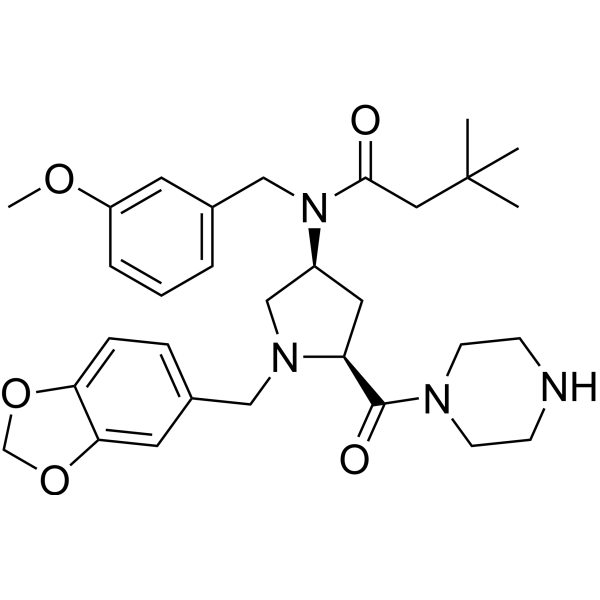
CUR61414 is a novel, potent and cell permeable Hedgehog signaling pathway inhibitor (IC50 =100-200 nM). CUR61414 is a small-molecule aminoproline class compound and selectively binds to smoothened (Smo) with a Ki value of 44 nM. CUR-61414 can induce apoptosis in cancer cells without affecting neighboring non-tumor cells .
loading...
    loading...
1
1 Cited Publications
Cat. No.: HY-117002
CAS No.: 1030769-75-5
Purity:  98.92%
Target:  

Wnt

Research Areas:  

Cancer

SRI 37892 is a small molecule compound inhibitor of Frizzled protein 7 (Fzd7) with inhibitory activity against cancer cell proliferation (IC50=2μM). SRI 37892 significantly blocks Wnt/Fzd7 signaling. SRI 3789 can be used in the research of developing cancer therapeutic agents .
loading...
    loading...
1
1 Cited Publications
Cat. No.: HY-B1406
CAS No.: 85-36-9
Research Areas:  

Others

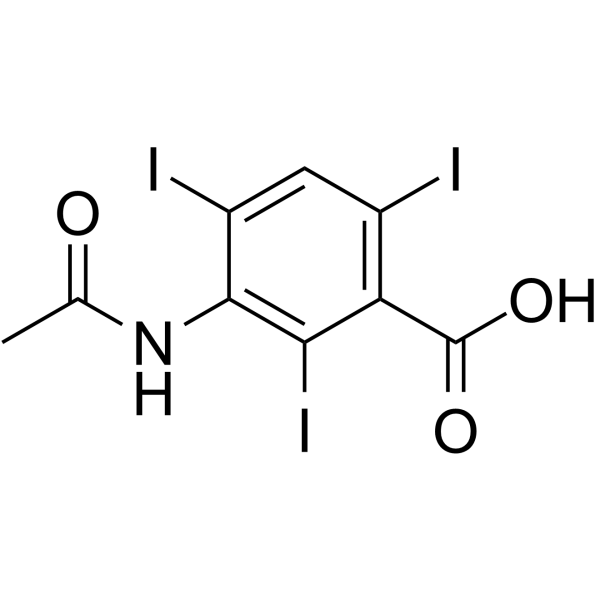
Acetrizoic acid is a small molecule compound that is used as a developing agent.
loading...
    loading...
1
1 Cited Publications
Cat. No.: HY-135813
CAS No.: 877950-01-1
Purity:  95.05%
Target:  

Bacterial

Research Areas:  

Infection

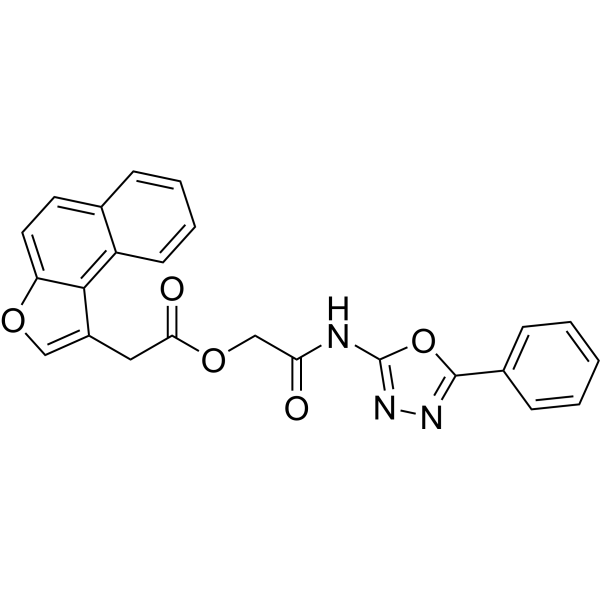
LtaS-IN-1 (compound 1771) is a potent small-molecule inhibitor of Lipoteichoic acid (LTA) synthesis in multidrug-resistant (MDR) E. faecium and by altering the cell wall morphology. LtaS-IN-1 alone inhibits Enterococcus.spp 28 strains with varying MIC values ranging from 0.5 μg/mL to 64 μg/mL. LtaS-IN-1 combination with antibiotics abolishs multidrug-resistant E. faecium growth almost completely .
loading...
    loading...
1
1 Cited Publications
Cat. No.: HY-149508
CAS No.: 6325-13-9
Purity:  99.19%
Research Areas:  

Cancer

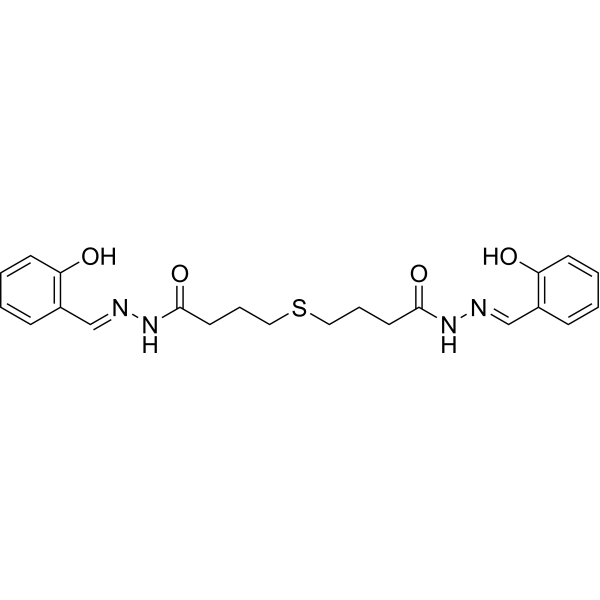
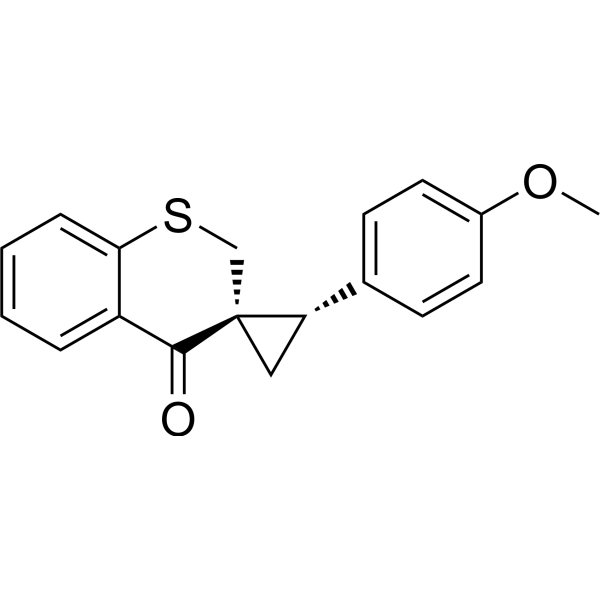
Nrf2-IN-3 (Compound R16) is a small-molecule NRF2 inhibitor and increases reactive oxygen species (ROS) production. Nrf2-IN-3 selectively binds KEAP1 mutants and restores their NRF2-inhibitory function by repairing the disrupted KEAP1/NRF2 interactions, leading to proteasome-dependent NRF2 degradation in cells. Nrf2-IN-3 sensitizes KEAP1-mutated tumor cells to Cisplatin (HY-17394), Gefitinib (HY-50895), and KEAP1 G333C-mutated xenograft to Cisplatin .
loading...
    loading...
Cat. No.: HY-151719
CAS No.: 18523-48-3
Purity:  99.09%
Synonyms: 2-Azidoacetic acid
Target:  

ADC Linkers

Research Areas:  

Others

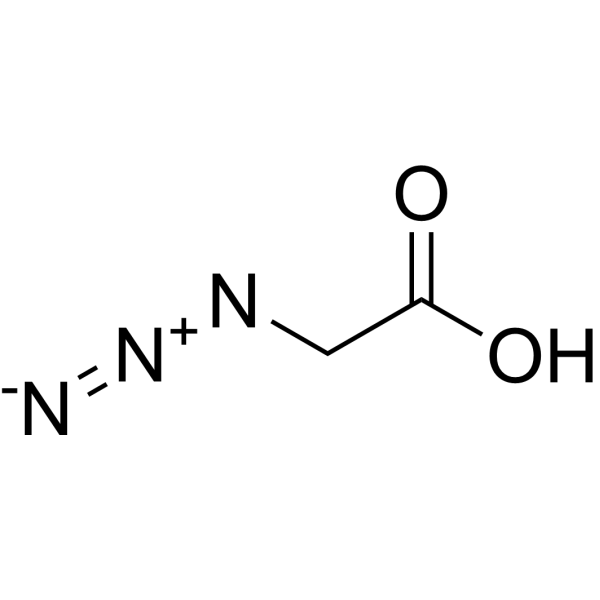
Azidoacetic Acid (2-Azidoacetic acid) (compound 92-1) is a click chemistry reagent containing an azide group. Azidoacetic Acid can be used as a small molecule tool for the synthesis of PROTAC . It contains an azide group and can undergo copper-catalyzed azide-alkyne cycloaddition (CuAAc) with molecules containing alkyne groups. It can also undergo ring strain-promoted alkyne-azide cycloaddition (SPAAC) with molecules containing DBCO or BCN groups.
loading...
    loading...
Cat. No.: HY-117389
CAS No.: 172286-77-0
Purity:  99.88%
Synonyms: PK4C9
Target:  

DNA/RNA Synthesis

Research Areas:  

Others

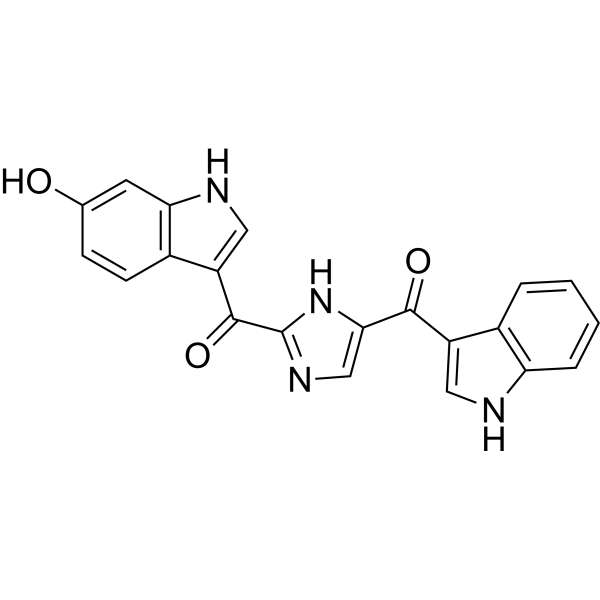
Homocarbonyltopsentin (PK4C9) is a small-molecule TSL2-binding compound, binds to pentaloop conformations of TSL2 and promotes a shift to triloop conformations that display enhanced SMN2 exon 7 (E7) splicing with EC50 value of 16 μM .
loading...
    loading...
Cat. No.: HY-P10739
CAS No.: 1021155-39-4
Target:  

Exosomes Collagen

Research Areas:  

Inflammation/Immunology

WYRGRL is a selective, high-affinity collagen type II-binding peptide with a IC50 of 140 nM. Collagen type II is the most abundant and specific structural protein in the extracellular matrix of articular cartilage. WYRGRL can precisely target small-molecule compounds such as Dexamethasone (HY-14648) and nanocarrier-engineered exosomes to cartilage, significantly enhancing their therapeutic effects on osteoarthritis .
loading...
    loading...
Cat. No.: HY-141591
CAS No.: 1799392-31-6
Purity:  99.80%
Research Areas:  

Others

CYT296 is a target chromatin de-condensation compound. CYT296 can improve the induction of induced pluripotent stem cell (iPSCs) mediated by defined factors (OSKM) and induce an open chromatin state in Mouse Embryonic Fibroblast (MEFs) to facilitate somatic cell reprogramming. CYT296 can be used for cell replacement therapies and drug screening research .
loading...
    loading...
Cat. No.: HY-146324
CAS No.: 2458170-54-0
Purity:  98.64%
Target:  

PROTACs Apoptosis CaMK

Research Areas:  

Cancer

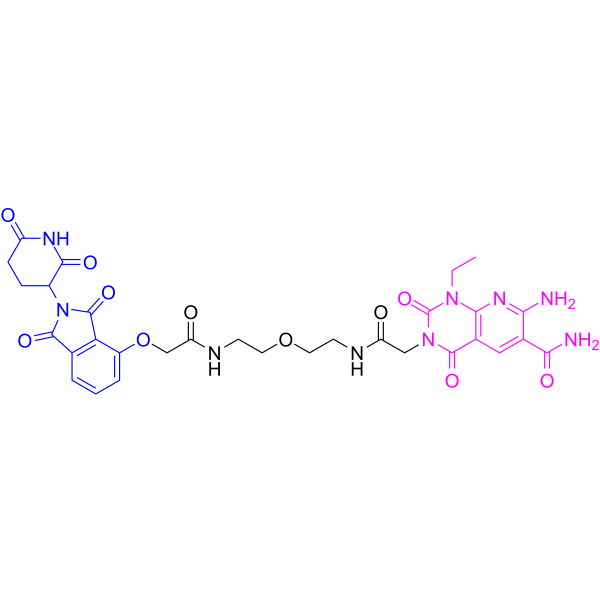
PROTAC eEF2K degrader-1 (Compound 11l) is an eEF2K-Targeting PROTAC small molecule that induces apoptosis in MDA-MB-231 cells. PROTAC eEF2K degrader-1 mediates eEF2K degradation .
loading...
    loading...