
84 Results for "

ternary complex formation

" in MedChemExpress (MCE) Product Catalog:
Products (84)

84 Results for "ternary complex formation" in MCE Product Catalog:

2
2 Cited Publications
Cat. No.: HY-14769
CAS No.: 3432-99-3
Purity:  86.60%
Synonyms: 5,10-Methylenetetrafolate; ANX-510 free acid
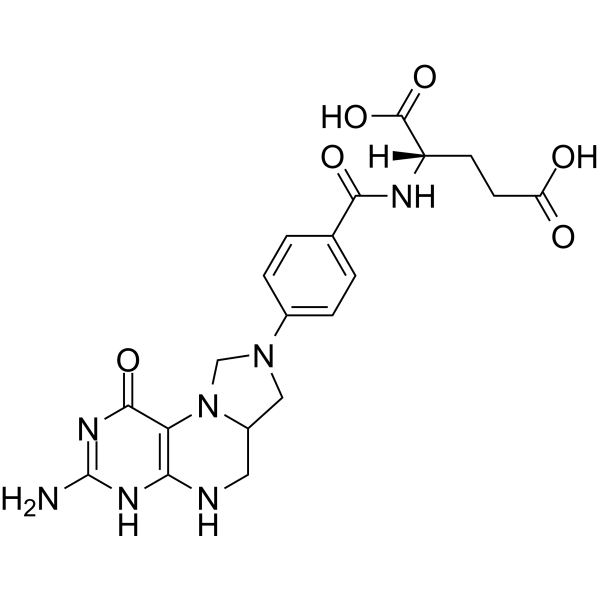
Folitixorin (5,10-Methylenetetrafolate; ANX-510 free acid) is a reduced form of Folic acid (HY-16637) and a cofactor of thymidylate synthase . Folitixorin acts as an essential cofactor to promote the formation of a tight ternary complex between thymidylate synthase and FdUMP, thereby enhancing the inhibitory effect of FdUMP on thymidylate synthase. Folitixorin in combination with 5-fluorouracil and αVEGF reduces tumor volume in colorectal tumor models of nude mice. Folitixorin is used in related research on Yoshida sarcoma, P-388 leukemia, and colorectal cancer .
loading...
    loading...
1
1 Cited Publications
Cat. No.: HY-P5133
CAS No.: 1259384-47-8
Synonyms: SSTN92-119
Target:  

Integrin

Research Areas:  

Cancer

Synstatin (92-119) is an inhibitor of αvβ3/αvβ5 integrins and IGF1R with anti-angiogenic, anti-proliferative, antioxidant and anti-tumor activities. Synstatin (92-119) competitively blocks the capture of αvβ3/αvβ5 integrins and IGF1R by syndecan-1, disrupts the formation of the syndecan-1 : integrin : IGF1R ternary complex, inhibits integrin activation and talin-mediated signaling pathways, and blocks VEGF-induced angiogenesis. Synstatin (92-119) is applicable to research related to cancer and hepatocellular carcinoma .
loading...
    loading...
Cat. No.: HY-153356
CAS No.: 2803881-11-8
Purity:  99.91%
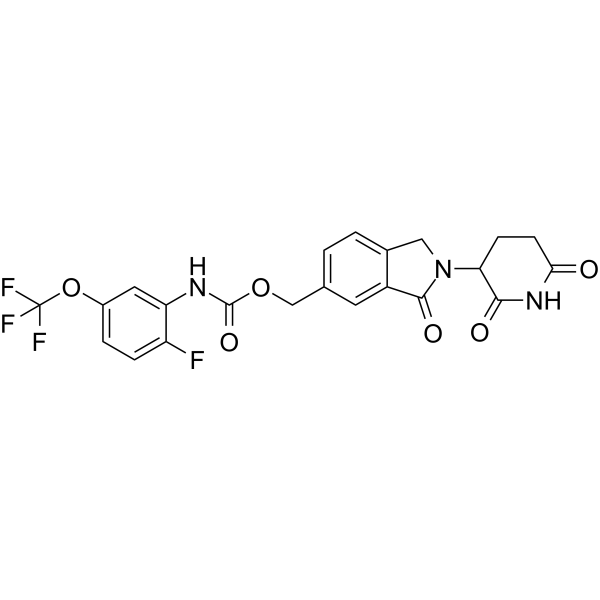
MRT-2359 is an orally active and selective GSPT1 molecular glue degrader, with a DC50 of 5 nM. MRT-2359 induces CRBN/GSPT1 ternary complex formation to drive CRBN- and degron-dependent proteasomal GSPT1 degradation, with selectivity for wild-type GSPT1 over the GSPT1G575N mutant. MRT-2359 disrupts protein translation, induces ribosome stalling, downregulates MYC family proteins and their transcriptional output, reduces proliferation, and induces apoptosis in cancer cells. MRT-2359 can be used for the research of non-small cell lung cancer (NSCLC), small cell lung cancer (SCLC), neuroendocrine lung cancer, high grade neuroendocrine cancers, diffuse large B-cell lymphoma, prostate cancer, and MYC-driven solid tumors .
loading...
    loading...
Cat. No.: HY-158409
CAS No.: 3034673-92-9
Purity:  98.00%
Research Areas:  

Cancer

Pan-rasin-2 (compound 6A) is an orally active molecular glues that targets RAS. Pan-RAS-IN-2 inhibits pERK (IC50 in AsPC-1 cells: 0.3 nM). Pan-rasin-2 has significant inhibitory activity on cell proliferation of RAS mutant cell lines. Pan-rasin-2 can form ternary complexes with cyclophilin A (CYPA) and RAS (ON) proteins and the formation of ternary complexes can block the binding of RAF downstream of RAS, which has anti-tumor (such as colorectal cancer, pancreatic cancer) effects .
loading...
    loading...
Cat. No.: HY-159607
CAS No.: 2755761-78-3
Target:  

PROTACs SWI/SNF Complex

Research Areas:  

Cancer

PRT3789 is a selective SMARCA2 PROTAC degrader (DC50 in HeLa cell: 0.72 nM for SMARCA2, 14 nM for SMARCA4). PRT3789 forms a stable ternary complex with Von Hippel-Lindau (VHL) E3 ligase, induces polyubiquitination at SMARCA2-specific lysine residues, and drives proteasome-dependent SMARCA2 degradation. PRT3789 disrupts SWI/SNF chromatin remodeling complex integrity, induces dissociation of specific subunits, suppresses oncogenic gene expression, reduces chromatin accessibility, and upregulates antigen processing/presentation-related gene expression. PRT3789 induces synthetic lethality, inhibits proliferation and colony formation, and drives tumor growth inhibition and regression in SMARCA4-deficient contexts. PRT3789 can be used for the research of SMARCA4-mutated solid tumors, non-small cell lung cancer, endometrial cancer, colorectal cancer, bladder cancer, esophageal cancer, ovarian cancer, and gastric cancer .
loading...
    loading...
Cat. No.: HY-176521
CAS No.: 3083307-42-7
Research Areas:  

Cancer

AR/BRD4 RIPTAC-1 (Compound II-5) is an orally active Regulatory-inducible proximity-targeting chimera (RIPTAC). AR/BRD4 RIPTAC-1 induces the formation of a stable ternary complex between the androgen receptor (AR) and BRD4, thereby blocking BRD4 function. AR/BRD4 RIPTAC-1 inhibits the growth and proliferation of tumor cells. AR/BRD4 RIPTAC-1 holds promise for use in prostate cancer research .
loading...
    loading...
Cat. No.: HY-175452
MRT-3486 is a molecular glue degrader.MRT-3486 induces ternary complex formation between CRBN and predicted β-hairpin G-loop proteins.MRT-3486 is selected from an internal compound library for proximity-ligation experiments .
loading...
    loading...
Cat. No.: HY-151886
CAS No.: 2759420-43-2
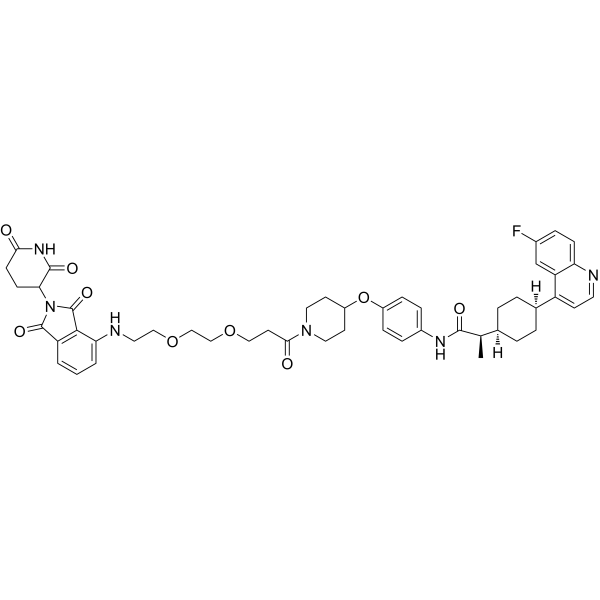
NU223612 is a cereblon (CRBN)-recruiting IDO1 PROTAC degrader, with a DC50 value of 0.329-0.5438 μM against human IDO1, and it is capable of penetrating the blood-brain barrier. NU223612 directly binds to IDO1, mediates the degradation of both wild-type and catalytically inactive mutant IDO1 proteins, and does not degrade TDO2. NU223612 inhibits IDO1-mediated enzymatic activity. NU223612 directly binds to CRBN and promotes the formation of a cooperative ternary complex with IDO1. NU223612 induces ubiquitin-dependent proteasomal degradation of the IDO1 protein. NU223612 suppresses IDO1-mediated non-enzymatic phosphorylation of NF-κB p65 and the DNA-binding activity of downstream transcription factors. NU223612 can be used in studies of glioblastoma (malignant glioma) .
loading...
    loading...
Cat. No.: HY-49444
CAS No.: 793719-01-4
Research Areas:  

Cancer

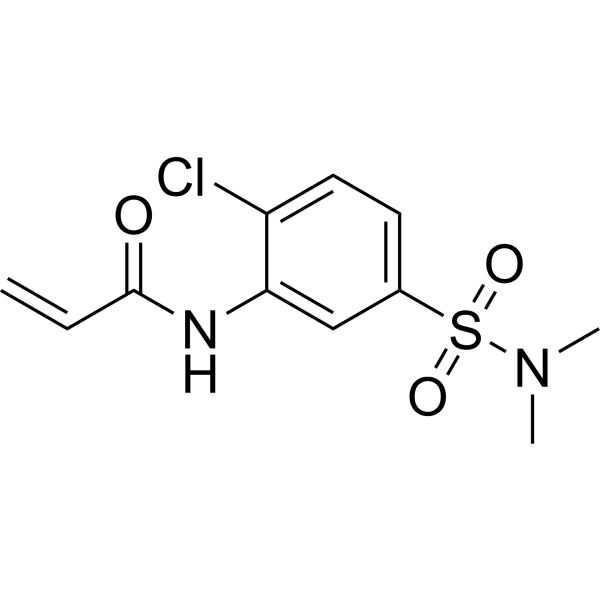
EN450 is a cysteine-reactive covalent molecular glue degrader targeting NF-κB. EN450 interacts with allosteric C111 in the E2 ubiquitin ligase UBE2D. EN450 induces the ternary complex formation between UBE2D and NFKB1. EN450 exerts its anti-proliferative effects through a Cullin E3 ligase and proteasome-dependent mechanism .
loading...
    loading...
Cat. No.: HY-153598
CAS No.: 2782022-40-4
Research Areas:  

Inflammation/Immunology Cancer

LD4172 is a selective RIPK1 PROTAC degrader with a Ki of 4.8 nM. LD4172 induces RIPK1 protein degradation via ternary complex formation with RIPK1 and VHL E3 ligase, driving ubiquitination and proteasomal breakdown. LD4172 abrogates TNF-induced classical NF-κB signaling in TRAF2-deficient cells, impairing IκBα phosphorylation and degradation, and reducing IL-8 production. LD4172 induces apoptosis and immunogenic cell death in tumor cells, enhances tumor-infiltrating lymphocyte responses, and sensitizes tumors to anti-PD1 therapy. LD4172 acts as a chemical probe for investigating RIPK1 scaffolding functions. LD4172 can be used for the research of melanoma, colon cancer .
loading...
    loading...
Cat. No.: HY-173679
CAS No.: 2569517-30-0
Research Areas:  

Infection Cancer

RBN012811 is a highly selective PROTAC-based PARP14 degrader. RBN012811 forms a ternary complex with cereblon by binding to the NAD + site of PARP14, and mediates the specific degradation of PARP14 via the ubiquitin-proteasome pathway (IC50=10 nM). RBN012811 effectively depletes endogenous PARP14 in various cell lines and primary human macrophages, thereby downregulating IL-10 production and IFN-β mRNA levels, increasing phosphorylated STAT1 levels to enhance inflammatory signaling, and inhibiting interferon-induced ADPr condensate formation. RBN012811 also modulates viral replication, exhibiting increased HSV1 replication while reducing VSV replication. RBN012811 has important application value in research related to cancer and viral infections .
loading...
    loading...
Cat. No.: HY-142662A
Purity:  99.26%
Target:  

PROTACs IRAK

Research Areas:  

Others

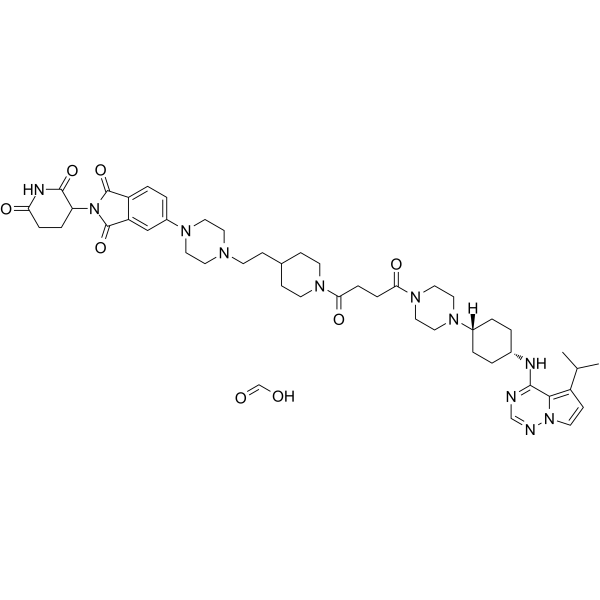
PROTAC IRAK3 degrader-1 formic is a potent and selective IRAK3 degrader with a DC50 of 0.002 μM. PROTAC IRAK3 degrader-1 formic induces proteasome-dependent degradation of IRAK3 via ternary complex formation with IRAK3 and CRBN. PROTAC IRAK3 degrader-1 formic can be used for cancer research .
loading...
    loading...
Cat. No.: HY-161168
CAS No.: 3055008-98-2
Target:  

Molecular Glues CDK

Research Areas:  

Cancer

Cyclin K degrader 1 is a molecular glue degrader derived from the pan-CDK inhibitor AT-7519 (HY-50940), with potent Cyclin K degrading activity and a DC50 of 21 nM. Cyclin K degrader 1 binds to CDK12, mediates the formation of a CDK12-DDB1 ternary protein complex, recruits the E3 ubiquitin ligase complex, and induces ubiquitination and proteasomal degradation of Cyclin K. Cyclin K degrader 1 can be used in the research of various Cyclin K-related diseases such as cancer .
loading...
    loading...
Cat. No.: HY-145125
CAS No.: 2882065-25-8
Purity:  98.84%
SJ995973 is a BRD4 PROTAC degrader with DC50 values of 0.87 nM (12 h) and 0.16 nM (24 h), respectively. SJ995973 induces the formation of a ternary complex between purified BRD4 and CRBN-DDB1 proteins, with an IC50 of 17 nM against CRBN. SJ995973 inhibits the viability of human acute myeloid leukemia cells. SJ995973 can be used in studies related to acute myeloid leukemia and medulloblastoma .
loading...
    loading...
Cat. No.: HY-W587753
CAS No.: 22601-59-8
Research Areas:  

Infection

Bacitracin A is an antibiotic with antibacterial activity against Gram-positive bacteria. Bacitracin A forms a ternary complex with divalent metal ions and C55-isopentenyl pyrophosphate, thereby inhibiting peptidoglycan biosynthesis and cell wall synthesis. Bacitracin A induces the formation of protoplasts and L-form bacteria, alters membrane permeability, regulates metal ion transport, inhibits in vitro enzyme biosynthesis, disrupts the cytoplasmic membrane and exerts bactericidal activity. Bacitracin A can be used in studies related to bacterial infections, fungal infections and amoebic infections .
loading...
    loading...
Cat. No.: HY-143904
CAS No.: 2953426-43-0
Purity:  98.01%
Target:  

PROTACs Mps1

Research Areas:  

Cancer

PROTAC TTK degrader-1 is a PROTAC degrader targeting Threonine Tyrosine Kinase (TTK), with a DC50 of 5.8 nM in HCT-116 cells and 1.7 nM in COLO-205 cells. PROTAC TTK degrader-1 induces the formation of a ternary complex with TTK and the CRBN E3 ubiquitin ligase, triggering proteasome-mediated degradation. PROTAC TTK degrader-1 exhibits activity against colon cancer cells and shows anti-tumor activity in a colon cancer xenograft mouse model. It can be used in colon cancer-related research .
loading...
    loading...
Cat. No.: HY-123911
CAS No.: 1957234-83-1
Purity:  95.83%
Research Areas:  

Cancer

dBET23 is a highly potent and selective BRD4 PROTAC degrader, with a DC50/5h of approximately 50 nM against the BRD4BD1 protein. dBET23 induces the formation of a ternary complex consisting of CRBN, itself, and BRD4BD1, thereby mediating the degradation of BRD4BD1. dBET23 causes downregulation of BRD4 expression in cancer cells. dBET23 can be used for research on malignant tumors .
loading...
    loading...
Cat. No.: HY-172798
Target:  

PROTACs Bcl-2 Family

Research Areas:  

Cancer

XZ338 is a highly potent and selective BCL-XL PROTAC degrader derived from A-1331852 (HY-19741), with a DC50 of 0.43 nM in MOLT‑4 cells. XZ338 induces the formation of a ternary complex with BCL-XL and VHL E3 ligase, mediates target protein degradation via the ubiquitin-proteasome system, and exhibits significantly weaker degradation activity in platelets than in tumor cells. XZ338 possesses anti-cancer activity. XZ338 can be used in the research of T-cell acute lymphoblastic leukemia (T-ALL) .
loading...
    loading...
Cat. No.: HY-145737A
Purity:  99.38%
Target:  

PROTACs SOS1 Ras PERK

Research Areas:  

Cancer

PROTAC SOS1 degrader-1 TFA is a degrader of SOS1 PROTAC, with a DC50 of 98.4 nM and a Kd value of 44 nM. PROTAC SOS1 degrader-1 TFA induces the formation of a ternary complex with SOS1 and the VCB E3 ubiquitin ligase complex, thereby promoting the ubiquitination and proteasomal degradation of SOS1. PROTAC SOS1 degrader-1 TFA reduces KRAS-GTP levels, inhibits the phosphorylation of ERK in the RAS-RAF-MEK-ERK pathway, and suppresses the proliferation of cancer cells carrying KRAS mutations. PROTAC SOS1 degrader-1 TFA inhibits tumor growth in mouse xenograft models. PROTAC SOS1 degrader-1 TFA can be used for the research of KRAS-driven cancers .
loading...
    loading...
Cat. No.: HY-170952
CAS No.: 3053857-55-6
Research Areas:  

Cancer

LYG-409 is a highly potent, selective, and orally active GSPT1 molecular glue degrader. LYG-409 induces GSPT1 degradation in KG-1 cells with a DC50 of 7.87 nM. LYG-409 binds to Cereblon with an IC50 of 191 nM, promotes the formation of the CRBN-GSPT1 ternary complex, and induces proteasome-dependent degradation of GSPT1. LYG-409 exhibits broad antiproliferative and GSPT1-degrading activities in a variety of hematologic and solid tumor cells. LYG-409 can be used for studies related to GSPT1-targeted protein degradation, acute myeloid leukemia, and prostate cancer .
loading...
    loading...

