1. Search Result
Search Result
Pathways Recommended: Stem Cell/Wnt Cell Cycle/DNA Damage
Results for "

tumor cell proliferation

" in MedChemExpress (MCE) Product Catalog:

945

Inhibitors & Agonists

13

Screening Libraries

4

Fluorescent Dyes

7

Biochemical Assay Reagents

43

Peptides

64

Inhibitory Antibodies

132

Natural
Products

27

Isotope-Labeled Compounds

5

Click Chemistry

21

Oligonucleotides

3

GMP Molecules

Cat. No. Product Name Target Research Areas Chemical Structure
  • HY-P99041
    Panitumumab
    2 Publications Verification

    ABX-EGF

    EGFR Cancer
    Panitumumab (ABX-EGF) is a fully human IgG2 anti-EGFR monoclonal antibody with anti-tumor activity. Panitumumab inhibits tumor cell proliferation, survival and angiogenesis. Panitumumab can be used in the research of cancers, such as colon cancer .
    Panitumumab
  • HY-105129
    Pimonidazole hydrochloride
    5+ Cited Publications

    Biochemical Assay Reagents Cancer
    Pimonidazole is a novel hypoxia marker for complementary study of tumor hypoxia and cell proliferation in tumor . Pimonidazole accumulates in hypoxic cells via covalent binding with macromolecules or by forming reductive metabolites after reduction of its nitro group, it can be used for qualitative and quantitative assessment of tumor hypoxia .
    Pimonidazole hydrochloride
  • HY-105129A
    Pimonidazole
    5+ Cited Publications

    Biochemical Assay Reagents Cancer
    Pimonidazole is a novel hypoxia marker for complementary study of tumor hypoxia and cell proliferation in tumor . Pimonidazole accumulates in hypoxic cells via covalent binding with macromolecules or by forming reductive metabolites after reduction of its nitro group, it can be used for qualitative and quantitative assessment of tumor hypoxia .
    Pimonidazole
  • HY-147081
    AS 1411
    2 Publications Verification

    AGRO-100

    Histone Methyltransferase Bcl-2 Family Cancer
    AS 1411 (AGRO-100) is an oligonucleotide aptamer targeting nucleoproteins. AS 1411 inhibits tumor cell proliferation by affecting the activity of nucleoprotein-containing complexes and can be used as a carrier to precisely deliver nanoparticles, oligonucleotides and small molecules to cancer cells. AS 1411 reduces PRMT5 expression to inhibit tumor growth in DU145 prostate cancer cells. AS 1411 works by blocking the binding of nucleoproteins to bcl-2 mRNA in MCF-7 breast cancer cells. AS 1411-coupled Jin nanospheres can inhibit breast cancer cell proliferation in vitro and in mouse models, has the ability to cross the blood-brain barrier with low tissue toxicity .
    AS 1411
  • HY-157122
    VJDT
    3 Publications Verification

    TREM receptor Transmembrane Glycoprotein Akt PI3K Interleukin Related NF-κB Inflammation/Immunology Cancer
    VJDT is a TREM1 inhibitor that can effectively block TREM1 signaling. VJDT inhibits tumor cell proliferation and migration and induces cell cycle arrest. VJDT has immunomodulatory and antitumor activities, and can be used for the research of tumors such as melanoma .
    VJDT
  • HY-50909
    Perifosine
    Maximum Cited Publications
    19 Publications Verification

    KRX-0401; NSC 639966; D21266

    Akt Autophagy Apoptosis Cancer
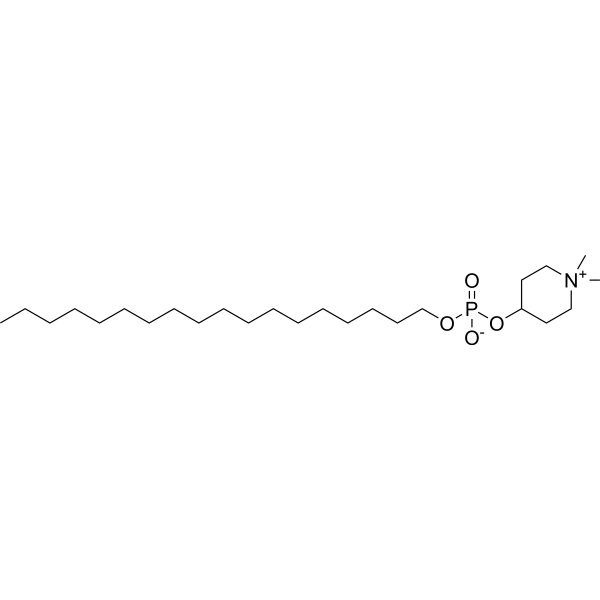
    Perifosine is an oral Akt inhibitor which inhibits proliferation of different tumor cell lines with IC50s of 0.6-8.9 μM.
    Perifosine
  • HY-137471
    RBPJ Inhibitor-1
    5+ Cited Publications

    RIN1

    Notch Cancer
    RBPJ Inhibitor-1 (RIN1), the first RBPJ inhibitor, blocks the functional interaction of RBPJ with SHARP. RBPJ Inhibitor-1 (RIN1) inhibits NOTCH-dependent tumor cell proliferation .
    RBPJ Inhibitor-1
  • HY-P99948

    AMG-596

    EGFR CD3 Neurological Disease Cancer
    Etevritamab (AMG-596) is a bispecific T-cell engager that targets EGFRvIII and CD3. Etevritamab simultaneously binds CD3 on T cells and EGFRvIII on glioblastoma multiforme cells, thereby forming a bridge structure. Etevritamab triggers T-cell activation, proliferation, secretion of cytotoxic substances, and tumor cell lysis. Etevritamab extends overall survival and induces tumor regression in mouse models of glioblastoma multiforme. Etevritamab can be used for research related to glioblastoma .
    Etevritamab
  • HY-N0211
    Cyasterone
    2 Publications Verification

    EGFR Apoptosis Cancer
    Cyasterone, a natural EGFR inhibitor, mainly isolated from Ajuga decumbens Thunb (Labiatae). Cyasterone manifests anti-proliferation effect by induced apoptosis and cell cycle arrests. Cyasterone may serves as a therapeutic anti-tumor agent against human tumors .
    Cyasterone
  • HY-N2547
    Steviolbioside
    1 Publications Verification

    Drug Intermediate Bacterial Infection Metabolic Disease Inflammation/Immunology Cancer
    Steviolbioside is a sweetener and also an important pharmaceutical intermediate. Steviolbioside can inhibit the proliferation of various tumor cells. Steviolbioside has an MIC of 3.8 µg/mL for Mycobacterium tuberculosis. Steviolbioside also has antidiabetic activity. Steviolbioside can be used in the research of tuberculosis, diabetes and tumors such as breast cancer .
    Steviolbioside
  • HY-50914

    CDK Cancer
    AZD5597 is an inhibitor of CDK with IC50 values of both 2 nM for CDK1 and CDK2. AZD5597 can inhibit the proliferation of tumor cells and has anti-tumor activity .
    AZD5597
  • HY-75954
    2-Hydroxyhexanoic acid
    2 Publications Verification

    Endogenous Metabolite Cancer
    2-Hydroxyhexanoic acid is a metabolite. 2-Hydroxyhexanoic acid is elevated in metastatic pancreatic neuroendocrine tumors. 2-Hydroxyhexanoic acid does not promote the proliferation, migration or invasion of pancreatic neuroendocrine tumor cells. 2-Hydroxyhexanoic acid can be used in the research of metastatic pancreatic neuroendocrine tumors .
    2-Hydroxyhexanoic acid
  • HY-P99041A

    EGFR Cancer
    Panitumumab (anti-EGFR) is a fully human IgG2 anti-EGFR monoclonal antibody with anti-tumor activity. Panitumumab (anti-EGFR) inhibits tumor cell proliferation, survival and angiogenesis. Panitumumab (anti-EGFR) can be used in the research of cancers, such as colon cancer .
    Panitumumab (anti-EGFR)
  • HY-N2232

    N-trans-Feruloyloctopamine

    Akt p38 MAPK Apoptosis Cadherin Cancer
    N-Feruloyloctopamine (N-trans-Feruloyloctopamine) is an antioxidant component that can be isolated from garlic skin. N-Feruloyloctopamine can inhibit tumor cell proliferation and invasion, and induce apoptosis. N-Feruloyloctopamine has antitumor activity and can be used in the research of tumors such as hepatocellular carcinoma .
    N-​Feruloyloctopamine
  • HY-124676A
    DB2115 tertahydrochloride
    1 Publications Verification

    Apoptosis Cancer
    DB2115 tetrahydrochloride is a highly selective PU.1 inhibitor that suppresses the binding of PU.1 to DNA (IC50: 2.3 nM). DB2115 tetrahydrochloride can inhibit tumor cell proliferation and induce apoptosis. DB2115 tetrahydrochloride can be used in the research of tumors such as leukemia .
    DB2115 tertahydrochloride
  • HY-128749

    Potassium D-glucarate

    Endogenous Metabolite Apoptosis Metabolic Disease Inflammation/Immunology Cancer
    D-Glucaric acid potassium (Potassium D-glucarate) is an orally active end product of the D-glucuronic acid pathway in mammals. D-Glucaric acid potassium is present in a variety of fruits and vegetables. D-Glucaric acid potassium has cholesterol-lowering and anti-tumor activities. D-Glucaric acid potassium can inhibit tumor cell proliferation and inflammation, and induce apoptosis .
    D-Glucaric acid potassium
  • HY-100395

    Apoptosis Cancer
    F16 is a potent growth inhibitor of the neu-overexpressing cells and also selectively inhibits proliferation of mammary epithelial as well as a variety of mouse mammary tumor and human breast cancer cell lines.
    F16
  • HY-160020

    Androgen Receptor Cancer
    ET516 is a potent inhibitor of Androgen Receptor. ET516 significantly inhibits the proliferation and tumor growth of prostate cancer cells expressing AR-resistant mutants .
    ET516
  • HY-103036

    Epigenetic Reader Domain Apoptosis Cancer
    BET bromodomain-IN-5 is an orally active BET inhibitor with an IC50 of 14 nM against BRD4 (1). BET bromodomain-IN-5 can inhibit the proliferation of tumor cells and induce cell cycle arrest and apoptosis. BET bromodomain-IN-5 can be used in the research of tumors .
    BET bromodomain-IN-5
  • HY-N3181

    Apoptosis Wnt β-catenin c-Myc Survivin GSK-3 Ferroptosis Keap1-Nrf2 Heme Oxygenase (HO) NF-κB Interleukin Related Cardiovascular Disease Neurological Disease Metabolic Disease Inflammation/Immunology Cancer
    Nodosin is an orally active diterpenoid compound that can be isolated from Isodon serra. Nodosin can inhibit the proliferation and induce cell cycle arrest and apoptosis of tumor cells. Nodosin can also inhibit oxidative stress, inflammatory responses, and ferroptosis. Nodosin has anti-inflammatory and anti-tumor activities .
    Nodosin
  • HY-N0114A
    (±)-Evodiamine
    1 Publications Verification

    Topoisomerase Apoptosis Cardiovascular Disease Inflammation/Immunology Cancer
    (±)-Evodiamine, a quinazolinocarboline alkaloid, is a Top1 inhibitor. Evodiamine exhibits anti-inflammatory, antiobesity, and antitumor effects. (±)-Evodiamine inhibits the proliferation of a wide variety of tumor cells by inducing their apoptosis .
    (±)-Evodiamine
  • HY-N8284
    Tomentosin
    1 Publications Verification

    Apoptosis Reactive Oxygen Species (ROS) Fungal SOD Interleukin Related NF-κB Toll-like Receptor (TLR) Keap1-Nrf2 Infection Neurological Disease Inflammation/Immunology Cancer
    Tomentosin is an orally active natural sesquiterpenoid lactone. Tomentosin exhibits multiple activities such as anti-tumor, anti-fungal, anti-inflammatory, anti-oxidant and neuroprotective effects. Tomentosin can inhibit tumor cell proliferation, migration and invasion, and induce apoptosis. Tomentosin can be used in the research of tumors, inflammation and nervous system diseases .
    Tomentosin
  • HY-153090

    Transketolase Infection Cancer
    Transketolase-IN-4 is a potent inhibitor of transketolase with an IC50 value of 3.9 μM. Transketolase-IN-4 inhibits the proliferation of tumor cells including SW620, LS174T and MIA PaCa-2. Transketolase-IN-4 can be used for tumor research .
    Transketolase-IN-4
  • HY-112062

    DNA/RNA Synthesis Apoptosis Cancer
    POL1-IN-1 is a class of RNA polymerase I inhibitors with broad-spectrum antiproliferative activity against tumor cells, while selectively inhibiting RNA polymerase I transcription. By blocking RNA polymerase I-mediated rRNA synthesis, POL1-IN-1 impairs ribosome biogenesis, thereby inhibiting tumor cell proliferation and inducing apoptosis. POL1-IN-1 can be used for the research of malignant tumors .
    POL1-IN-1
  • HY-B0515B
    Ibandronate Sodium
    1 Publications Verification

    Apoptosis Metabolic Disease Cancer
    Ibandronate Sodium is an orally active, selective inhibitor of farnesyl pyrophosphate synthase (FPP synthase). Ibandronate Sodium can block the mevalonate pathway to inhibit the isoprenylation modification of small GTPases (such as RAS, RHO family proteins), induce tumor cell apoptosis and inhibit bone resorption. Ibandronate Sodium inhibits tumor cell proliferation (such as ER+ breast cancer cells), promotes the expression of the pro-apoptotic gene FAS, and can produce synergistic anti-tumor effects with anti-estrogen compounds. Ibandronate Sodium is used in the study of osteoporosis and bone metastatic tumors (such as breast cancer bone metastasis) .
    Ibandronate Sodium
  • HY-147081A
    AS 1411 sodium
    2 Publications Verification

    AGRO-100 sodium

    Histone Methyltransferase Bcl-2 Family Cancer
    AS 1411 (AGRO-100) sodium is an oligonucleotide aptamer targeting nucleoproteins. AS 1411 sodium inhibits tumor cell proliferation by affecting the activity of nucleoprotein-containing complexes and can be used as a carrier to precisely deliver nanoparticles, oligonucleotides and small molecules to cancer cells. AS 1411 sodium reduces PRMT5 expression to inhibit tumor growth in DU145 prostate cancer cells. S 1411 sodium works by blocking the binding of nucleoproteins to bcl-2 mRNA in MCF-7 breast cancer cells. S 1411 sodium-coupled Jin nanospheres can inhibit breast cancer cell proliferation in vitro and in mouse models, has the ability to cross the blood-brain barrier with low tissue toxicity
    AS 1411 sodium
  • HY-171158

    Liposome Cancer
    Glycerophosphoglycerol is a precursor for phospholipid biosynthesis. Glycerophosphoglycerol supports tumor cell membrane reconstruction and proliferation by promoting phospholipid synthesis. Glycerophosphoglycerol is promising for research of breast cancers .
    Glycerophosphoglycerol
  • HY-160859

    DNA/RNA Synthesis Cancer
    WRN inhibitor 8 is an inhibitor of WRN helicase with an IC50 value of 48 nM. WRN inhibitor 8 can inhibit the proliferation of tumor cells and be used in the study of cancer .
    WRN inhibitor 8
  • HY-163939

    SOS1 Ras Cancer
    RGT-018 is a potent and orally active SOS1 inhibitor with anti-tumor effects. RGT-018 exerts anti-cancer cell proliferation activity by inhibiting KRAS activation .
    RGT-018
  • HY-110151

    NF-κB Interleukin Related Inflammation/Immunology Cancer
    Bengamide B is an alkaloid with anti-tumor and anti-inflammatory activities. Bengamide B reduces the phosphorylation level of IκBα, thereby blocking the activation of NF-κB. Bengamide B inhibits the proliferation of tumor cells. Bengamide B can be used in research related to inflammatory diseases and cancers .
    Bengamide B
  • HY-18969

    CDK Cancer
    LDC3140 is a selective CDK7 inhibitor (IC50<5 nM). By inhibiting the activity of CDK7, LDC3140 affects the regulation of the cell cycle, leading to cell cycle arrest and thus inhibiting the proliferation of tumor cells. LDC3140 can be used in the research of cancer treatment .
    LDC3140
  • HY-N15194A

    Bacterial Apoptosis Infection Cancer
    Inostamycin A sodium is an inhibitor of cytidine-5'-diphosphate-1,2-diacyl-sn-glycerol (CDP-DG):inositol transferase. Inostamycin A sodium reduces phosphatidylinositol turnover, and inhibits cell proliferation and transformation. Inostamycin A sodium inhibits cancer cell proliferation, induces apoptosis, and prevents tumor recurrence. Inostamycin A sodium exhibits antibacterial activity. Inostamycin A sodium is applicable to research related to infection and cancer .
    Inostamycin A sodium
  • HY-P99516

    HLX-06

    VEGFR Cancer
    Vulinacimab (HLX-06) is a human monoclonal antibody directed against human vascular endothelial growth factor receptor 2 (VEGFR-2). Vulinacimab specifically binds to and inhibits VEGFR-2, which may inhibit tumor angiogenesis and tumor cell proliferation. Vulinacimab can be used for the research of solid tumors and non-small cell lung cancer .
    Vulinacimab
  • HY-100498A
    GSK-2256098 hydrochloride
    5+ Cited Publications

    FAK Apoptosis Cancer
    GSK-2256098 hydrochloride is a focal adhesion kinase (FAK) inhibitor that exhibits potential antiangiogenic and antineoplastic activities. GSK-2256098 hydrochloride targets FAK to inhibit tumor cell growth by regulating cell adhesion, migration, proliferation, and survival.
    GSK-2256098 hydrochloride
  • HY-N12677

    Caflanone; FBL-03G

    SARS-CoV Apoptosis Autophagy Akt Infection Cancer
    Isocannflavin B (Caflanone) is a flavonoid compound. Isocannflavin B exhibits anti-tumor and anti-viral activities. Isocannflavin B induces apoptosis, autophagy and cell cycle arrest in tumor cells, and inhibits cell proliferation. Isocannflavin B inhibits HCoV-OC43. Isocannflavin B can be used in research related to cancer and COVID-19 .
    Isocannflavin B
  • HY-P10370

    Bacterial Apoptosis Infection Cancer
    d-(KLAKLAK)2, as an antibacterial and anti-tumor polypeptide, is a representative of the antimicrobial peptide group, and also has good anticancer properties. d-(KLAKLAK)2 is able to kill bacteria by damaging their cell membranes, causing cell contents to leak out. d-(KLAKLAK)2 can also inhibit tumor cell proliferation by causing mitochondrial swelling and mitochondrial membrane destruction, triggering apoptosis (programmed cell death) .
    d-(KLAKLAK)2, Proapoptotic Peptide
  • HY-W111005

    DNA Alkylator/Crosslinker Cancer
    1-Chloromethylpyrene is an alkylating agent that enters the DNA double helix structure through intercalation, forms covalent bonds with electrophilic groups, resulting in DNA cross-linking, thereby inhibiting the proliferation of tumor cells .
    1-Chloromethylpyrene
  • HY-P10553

    Apoptosis Cancer
    ARF(26–44), cell-permeable is a cell-penetrating peptide derived from a specific amino acid sequence of the p14ARF tumor suppressor protein. As a functional inhibitor of FoxM1, ARF(26–44) cell-permeable shows significant anti-tumor activity in the treatment of mouse hepatocellular carcinoma (HCC), significantly increasing tumor cell apoptosis and reducing tumor cell proliferation and angiogenesis. ARF(26–44), cell-permeable can be used in research on tumor therapy .
    ARF(26–44), cell-permeable
  • HY-P99041B

    ABX-EGF (powder)

    EGFR Cancer
    Panitumumab (ABX-EGF) (powder) is a fully human IgG2 anti-EGFR monoclonal antibody with anti-tumor activity. Panitumumab (powder) inhibits tumor cell proliferation, survival and angiogenesis. Panitumumab (powder) can be used in the research of cancers, such as colon cancer .
    Panitumumab (powder)
  • HY-126412

    Apoptosis Cancer
    Neochamaejasmine A is a biflavonoid that can be isolated from the roots of Stellera chamaejasme L.. Neochamaejasmine A inhibits proliferation, induces cell cycle arrest and apoptosis in tumor cells. Neochamaejasmine A can be used in the research of cancers such as prostate cancer, hepatoma cancer .
    Neochamaejasmine A
  • HY-158143

    Histone Methyltransferase Apoptosis Cancer
    AZD3470 is an orally active MTA-cooperative PRMT5 inhibitor, selective for MTAP-deficient tumors. AZD3470 induces cell cycle G2/M phase alterations, DNA damage, apoptosis, and symmetric dimethylarginine reduction. AZD3470 alters alternative splicing, increases skipped exon events in DNA repair and cell cycle pathways, and inhibits cancer cell proliferation and tumor growth. AZD3470 can be used for the research of non-small cell lung cancer and MTAP-deleted solid tumors .
    AZD3470
  • HY-19916A

    BAL-101553 dihydrochloride

    Microtubule/Tubulin Checkpoint Kinase (Chk) Cancer
    Lisavanbulin (BAL-101553) dihydrochloride is the prodrug of the microtubule targeting agent Avanbulin (BAL 27862) (HY-106008). Lisavanbulin dihydrochloride exhibits antitumor activity, especially in tumors that express high levels of end-binding protein 1. Lisavanbulin dihydrochloride has ability to target tumor cell proliferation and affects the tumor microenvironment by reducing tumor microvasculature. Lisavanbulin dihydrochloride is also a spindle assembly checkpoint activator. Lisavanbulin dihydrochloride induces cell cycle arrest and subsequent death or aberrant chromosome segregation. Lisavanbulin dihydrochloride can be studied in research for diffuse large B cell lymphoma (DLBCL) and glioblastoma .
    Lisavanbulin dihydrochloride
  • HY-136110

    D-​Galactosone

    DNA/RNA Synthesis Cancer
    2-Keto-D-galactose (D-Galactosone) inhibits DNA synthesis, and inhibits proliferation of in vitro grown Ehrlich ascites tumor cells .
    2-Keto-D-galactose
  • HY-126830

    Antifolate Apoptosis Cancer
    Antifolate C2 is an anti-folate compound that has inhibitory effects on the proliferation of non-squamous non-small cell lung cancer (NS-NSCLC). Antifolate C2 achieves tumor selectivity by targeting proton-coupled folate transporter (PCFT), which is more selective to PCFT than the commonly used anti-folate drug Pemetrexed (HY-10820). Antifolate C2 blocks the biosynthesis of deoxypurine nucleotides by inhibiting glycinamide ribonucleotide formyltransferase (GARFTase), ultimately inhibiting the proliferation of tumor cells. Antifolate C2 can be used in studies of NS-NSCLC, especially in patients who do not respond well to Pemetrexed .
    Antifolate C2
  • HY-161886

    SWI/SNF Complex Epigenetic Reader Domain Cancer
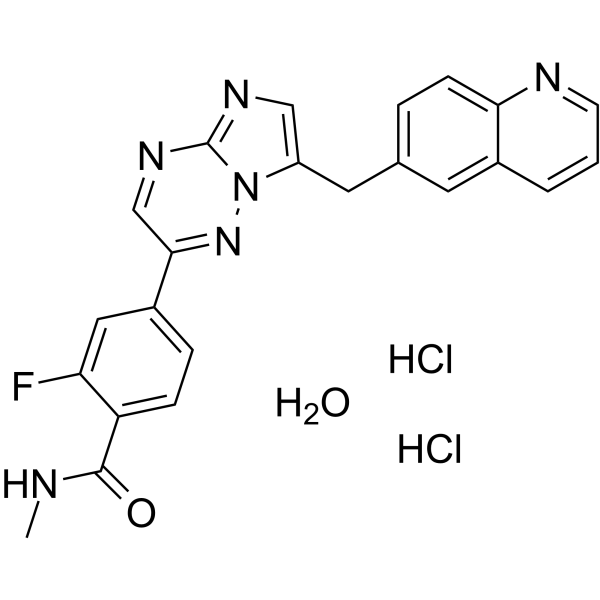
    SMARCA2-IN-7 (compound 12), a dual inhibitor of BRM and BRG1 (IC50 < 0.005 for both), has an anti-tumor proliferation effect that inhibits BRG1-deleted SKMEL5 tumor proliferation with a cell proliferation activity AAC50 of 13 nM in SKMEL5. The cell proliferation activity AAC50 of KRT880 in H1299 cells was 42 nM .
    SMARCA2-IN-7
  • HY-P10553A

    Apoptosis Cancer
    ARF(26–44), cell-permeable acetate is a cell-penetrating peptide derived from a specific amino acid sequence of the p14ARF tumor suppressor protein. As a functional inhibitor of FoxM1, ARF(26–44) cell-permeable acetate shows significant anti-tumor activity in the treatment of mouse hepatocellular carcinoma (HCC), significantly increasing tumor cell apoptosis and reducing tumor cell proliferation and angiogenesis. ARF(26–44), cell-permeable acetate can be used in research on tumor therapy .
    ARF(26–44), cell-permeable acetate
  • HY-120429

    Apoptosis Cancer
    SKLB-163 is an orally active inhibitor for Rho GDP-dissociation (RhoGDI). SKLB-163 inhibits highly expressed RhoGDI tumor cell proliferation and migration, and increases radiosensitivity of tumor cells. SKLB-163 induces cancer cell Apoptosis .
    SKLB-163
  • HY-P991244

    EGFR Cancer
    REGN-1400 is a humanized monoclonal antibody inhibitor targeting ErbB3. REGN-1400 reduces tumor cell proliferation by inhibiting ErbB3 and blocking related signaling pathways. REGN-1400 is promising for research of solid tumors such as non-small cell lung cancer (NSCLC), colorectal cancer (CRC), and squamous cell carcinoma of the head and neck (SCCHN) .
    REGN-1400
  • HY-137062

    CDK Cancer
    CGP-79807 is a purine-based CDK inhibitor. CGP-79807 can block the cell cycle by inhibiting CDK activity to suppress the proliferation of tumor cells. CGP-79807 can be used in the study of cancer .
    CGP-79807
  • HY-177134

    VEGFR c-Met/HGFR Cancer
    Taligantinib (Compound Example 70) is an orally active and selective dual inhibitor targeting vascular endothelial growth factor receptor 2 (VEGFR-2) and hepatocyte growth factor receptor (c-Met). Taligantinib suppresses tumor angiogenesis and cell proliferation. Taligantinib is promising for research of solid tumors such as non-small cell lung cancer and hepatocellular carcinoma .
    Taligantinib

Inquiry Online

Your information is safe with us. * Required Fields.

Salutation


Country or Region *

Applicant Name *


Organization Name *

Department *


Email Address *


Product Name *

Cat. No.


Requested quantity *

Phone Number *


Remarks

Inquiry Online

Inquiry Information

Product Name:
Cat. No.:
Quantity:
MCE Japan Authorized Agent:

