14 Results for "

yeast models

" in MedChemExpress (MCE) Product Catalog:
Products (14)

14 Results for "yeast models" in MCE Product Catalog:

Cat. No.: HY-160971
CAS No.: 9014-25-9
Ribonucleic Acid, Transfer from Brewing yeast is tRNA, which is isolated from brewer yeast. Ribonucleic Acid, Transfer from Brewing yeast is arranged in a cloverleaf model in total sequence. Ribonucleic Acid, Transfer from Brewing yeast is utilized as a substrate in reactions with participant of tRNAs .
loading...
    loading...
Cat. No.: HY-W012846
CAS No.: 2418-52-2
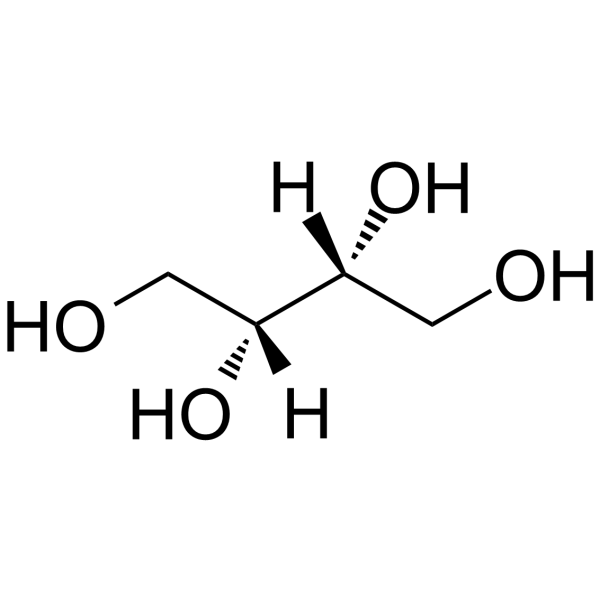
D-Threitol is a naturally occurring four-carbon sugar alcohol and an α-glucosidase (α‑glucosidase) inhibitor with an IC50 of 49 mM against yeast α-glucosidase, and it is orally active. D-Threitol modulates gut microbiota composition, increases microbial diversity, enriches beneficial bacterial genera, and restores fecal short-chain fatty acid levels. D-Threitol reduces body weight gain and fat accumulation, improves glucose tolerance and insulin sensitivity, and alleviates liver, kidney, and pancreatic tissue damage. D-Threitol inhibits hepatic accumulation of ceramides and diacylglycerols. D-Threitol preserves glomerular morphology and islet structure in diabetes models. D-Threitol is also a low-calorie sweetener. D-Threitol serves as a cryoprotective polyol that stabilizes protein structure at low temperatures. D-Threitol is used in research on type 2 diabetes and as an antifreeze agent for the Alaskan beetle .
loading...
    loading...
Cat. No.: HY-122297A
Target:  

Inhibitory Antibodies

Research Areas:  

Others

H-​Arg-​Phe-​OH TFA is an amphipathic peptide. H-​Arg-​Phe-​OH TFA has the ability to induce native-like protein aggregation. H-​Arg-​Phe-​OH TFA can induce aggregation of the neutral model protein yeast alcohol dehydrogenase (ADH) .
loading...
    loading...
Cat. No.: HY-169937
Target:  

SWI/SNF Complex

Research Areas:  

Cancer

(R)-SR-C-107 is an orally available inhibitor of ENL (YEAST domain-containing protein) designed to target acute myeloid leukemia (AML). (R)-SR-C-107 targets ENL with IC50 and KD of 40 nM and 144 nM, respectively. (R)-SR-C-107 demonstrates in vivo efficacy in a xenograft mouse model of AML, with a tumor regression rate of 45% at a dose of 200 mg/kg (PO; QD) .
loading...
    loading...
Cat. No.: HY-122297
CAS No.: 2047-13-4
Target:  

Inhibitory Antibodies

Research Areas:  

Others

H-​Arg-​Phe-​OH is an amphipathic peptide. H-​Arg-​Phe-​OH has the ability to induce native-like protein aggregation. H-​Arg-​Phe-​OH can induce aggregation of the neutral model protein yeast alcohol dehydrogenase (ADH) .
loading...
    loading...
Cat. No.: HY-123452
CAS No.: 83674-78-6
Target:  

Others

Research Areas:  

Neurological Disease

SCH 30497 is a potent and orally active analgesic agent. SCH 30497 exhibits analgesic activity in the rat yeast-induced paw pain model, the mouse acetic acid-induced writhing test, and the squirrel monkey electric shock titration test. SCH 30497 can be used in pain research .
loading...
    loading...
Cat. No.: HY-167715
CAS No.: 58712-69-9
Traxanox is an orally available diuretic that enhances phagocytosis of yeast granules by mouse peritoneal macrophages and rat peritoneal polymorphonuclear leukocytes in vitro. Traxanox inhibits IgE-mediated histamine release and cyclic AMP phosphodiesterase activity.Traxanox exhibits anti-inflammatory activity, as it inhibits the anaphylactoid reaction and reduces pleural fluid accumulation in experimental models of inflammation. Traxanox also demonstrates a synergistic effect when combined with hydrocortisone or indomethacin in suppressing adjuvant arthritis in rats.
loading...
    loading...
Cat. No.: HY-121365
CAS No.: 71522-58-2
Target:  

Bacterial

Research Areas:  

Infection

Forphenicinol is an immunomodulator and a derivative of the bacterial metabolite forphenicine. It increases the phagocytosis of yeast by peritoneal macrophages isolated from thioglycolate-stimulated mice. Forphenicinol (100 μg/animal) prevents cyclophosphamide-induced suppression of delayed-type hypersensitivity (DTH), as well as enhances DTH in response to the hapten oxazolone or sheep red blood cells in mice. It enhances the bactericidal activity of macrophages against P. aeruginosa in mice when administered at a dose of 0.5 mg/kg.2 Forphenicinol (15.6-1,000 μg/animal) increases survival in a mouse model of P. aeruginosa infection. It also inhibits tumor growth in S180 sarcoma and IMC carcinoma mouse xenograft models when administered at doses ranging from 0.05 to 5 mg/kg per day.
loading...
    loading...
Cat. No.: HY-159585
Target:  

Cytochrome P450 Fungal

Research Areas:  

Infection

CYP51-IN-20 (compound 5b) is an inhibitor of CYP51 and has antifungal activity. CYP51-IN-20 has a significant inhibitory effect on Candida albicans ATCC 10231, downregulates ERG11 (Cyp51) gene expression, and significantly reduces the yeast-to-hyphae morphological transition. CYP51-IN-20 can synergize with Voriconazole (HY-76200) to occupy the entire CYP51 binding site and exert a synergistic inhibitory effect in the Glechoma moth model .
loading...
    loading...
Cat. No.: HY-P5340
CAS No.: 339091-39-3
Target:  

Inhibitory Antibodies

Research Areas:  

Others

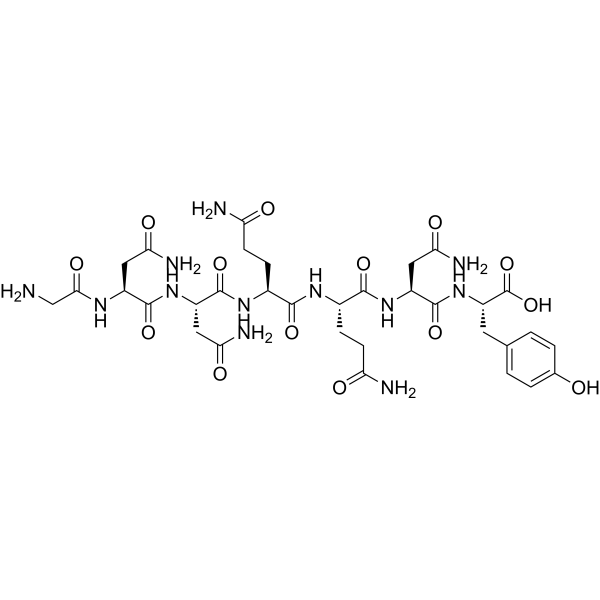
Amyloid-Forming peptide GNNQQNY is a biological active peptide. (This is a heptapeptide from the N-terminal prion-determining domain of the yeast protein Sup35 that forms amyloid fibrils. The availability of its detailed atomic oligomeric structure makes it a good model for studying the early stage of aggregation. The GNNQQNY dimer forms three stable sheet structures. in-register parallel, off-register parallel, and anti-parallel. The in-register parallel dimer, which is close to the amyloid beta-sheet structure, has few interpeptide hydrogen bonds, making hydrophobic interactions more important and increasing the conformational entropy compared to the anti-parallel sheet.)
loading...
    loading...
Cat. No.: HY-W012846R
CAS No.: 2418-52-2
D-Threitol (Standard) is the analytical standard of D-Threitol (HY-W012846). This product is intended for research and analytical applications. D-Threitol is a naturally occurring four-carbon sugar alcohol and an α-glucosidase (α‑glucosidase) inhibitor with an IC50 of 49 mM against yeast α-glucosidase, and it is orally active. D-Threitol modulates gut microbiota composition, increases microbial diversity, enriches beneficial bacterial genera, and restores fecal short-chain fatty acid levels. D-Threitol reduces body weight gain and fat accumulation, improves glucose tolerance and insulin sensitivity, and alleviates liver, kidney, and pancreatic tissue damage. D-Threitol inhibits hepatic accumulation of ceramides and diacylglycerols. D-Threitol preserves glomerular morphology and islet structure in diabetes models. D-Threitol is also a low-calorie sweetener. D-Threitol serves as a cryoprotective polyol that stabilizes protein structure at low temperatures. D-Threitol is used in research on type 2 diabetes and as an antifreeze agent for the Alaskan beetle .
loading...
    loading...
Cat. No.: HY-126443A
CAS No.: 1352296-65-1
Target:  

Fungal

Research Areas:  

Infection

Antifungal agent 173 is an orally active antifungal (fungal) agent. Antifungal agent 173 disrupts fungal cell membrane integrity, inhibits yeast-hypha transition in Candida species, and suppresses biofilms. Antifungal agent 173 prevents mouse mortality in a mouse model of systemic candidiasis and reduces tongue lesions in a mouse model of oropharyngeal candidiasis. Antifungal agent 173 is applicable to research related to candidiasis .
loading...
    loading...
Cat. No.: HY-187376
Target:  

Fungal Cytochrome P450

Research Areas:  

Infection

CZx-243 is an orally active broad-spectrum antifungal agent. CZx-243 binds to the active site of fungal CYP51 and interferes with ergosterol biosynthesis by depleting ergosterol and causing the accumulation of upstream sterol intermediates. CZx-243 blocks yeast-to-hypha transition; it inhibits the membrane integrity of fungi such as Candida glabrata and Cryptococcus neoformans. CZx-243 significantly reduces renal fungal burden in a systemic mouse model of invasive fungal infection resistant to Fluconazole (HY-B0101). CZx-243 can be used in the research of fungal infections .
loading...
    loading...
Cat. No.: HY-N9932
CAS No.: 125519-47-3
11β,13-Dihydrolactucopicrin is a sesquiterpene lactone and the main bitter component of chicory root. 11β,13-Dihydrolactucopicrin inhibits yeast α-glucosidase activity (IC50 = 27.49 μM) and inhibits Crz1 activation and nuclear accumulation. 1β,13-Dihydrolactucopicrin possesses blood-brain barrier penetration capacity in an in vitro HBMEC blood-brain barrier model and can generate cysteine-conjugated metabolites within brain microvascular endothelial cells. 11β,13-Dihydrolactucopicrin can regulate the lncRNA H19/miR-21-3p signaling axis; it upregulates the expression of ABCG2 and lncRNA H19, downregulates miR-21-3p, inhibits the release of IL-6, TNF-α, and hs-CRP pro-inflammatory mediators, and alleviates urate-induced inflammatory injury in renal epithelial cells. 11β,13-Dihydrolactucopicrin can be used in research on diabetes and renal urate deposition .
loading...
    loading...
  • 1

