



TAT-14
Based on 1 publication(s) in Google Scholar
TAT-14 is a 14-mer peptide that acts as Nrf2 activator with an anti-inflammatory effect. TAT-14 has no effect on Nrf2 mRNA expression, but increases Nrf2 protein level due to targeting the Nrf2 binding site on Keap1.
For research use only. We do not sell to patients.
- Purity : 99.71%
- CAS No.: 1362661-34-4
- Formula: C137H230N48O39
- Molecular Weight:3173.59
-
Storage:
Sealed storage, away from moisture.
Powder -80°C, 2 years , -20°C, 1 year* In solvent : -80°C, 6 months; -20°C, 1 month (sealed storage, away from moisture)


To place orders, for customer services and technical support, please contact: MedChemExpress USA
Tel: 609-228-6898 E-mail: [email protected] [email protected]


-
 Biological Activity
-
Chemical Information
-
Solvent & Solubility
- Protocols
- Purity & Documentation
- References
-
 Help & FAQs


-
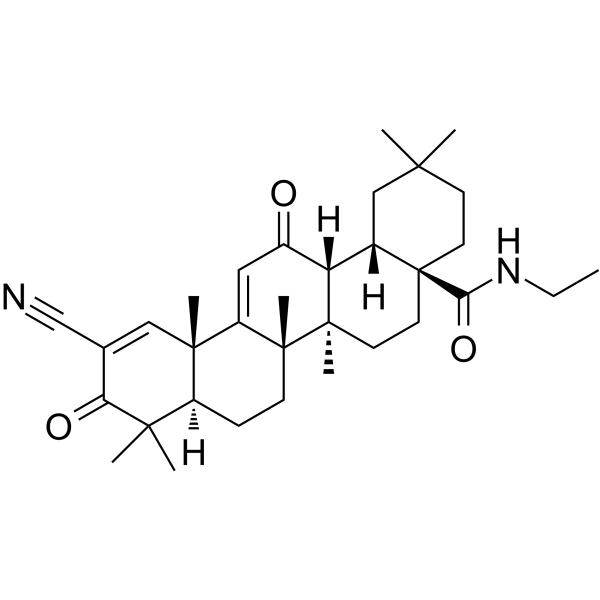
HY-12213
CDDO-EAKeap1-Nrf2 Activator -
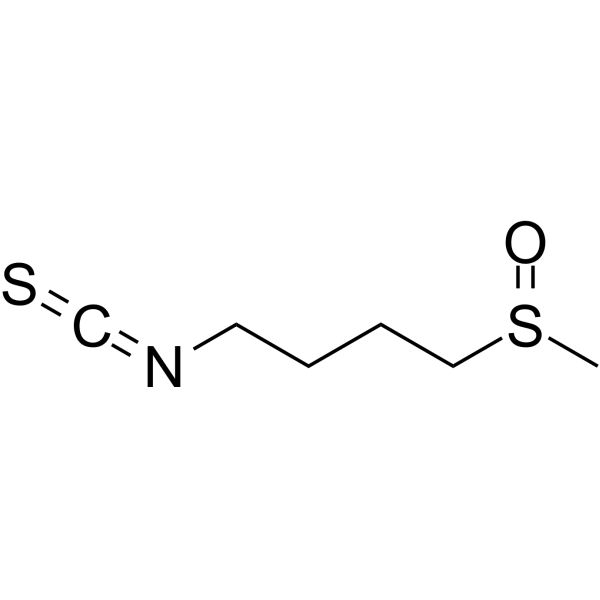
HY-13755
SulforaphaneKeap1/Nrf2/ARE Inducer -
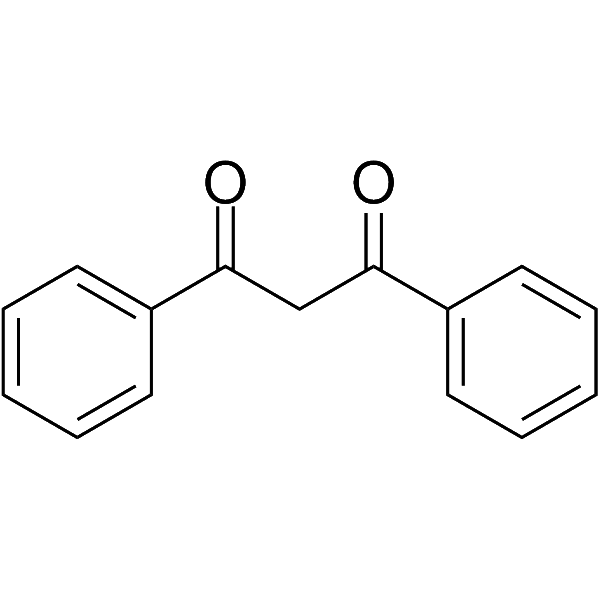
HY-W009731
Dibenzoylmethane -
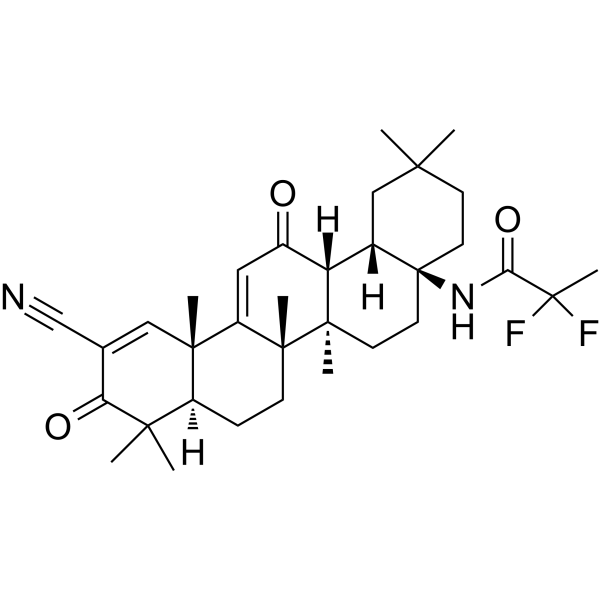
HY-12212
OmaveloxoloneNrf2 Activator -
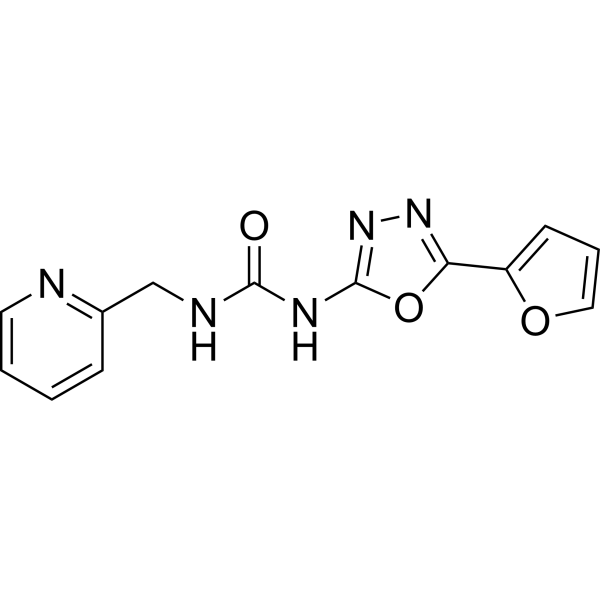
HY-19734
NK-252Nrf2 Activator -
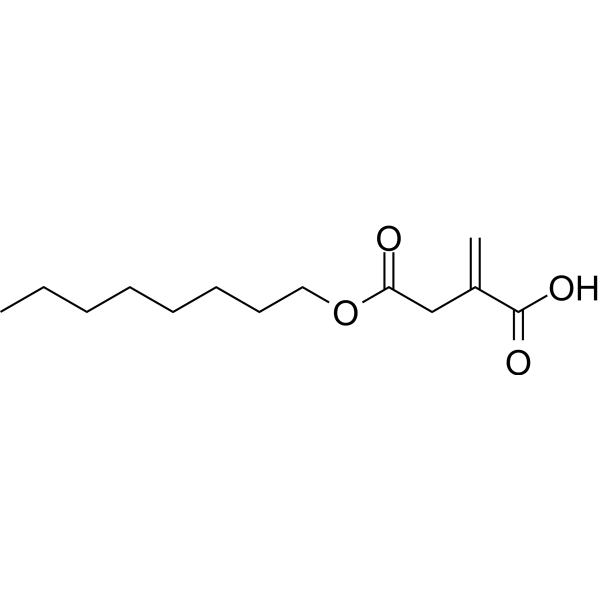
HY-112675
4-Octyl itaconateNrf2 Activator -
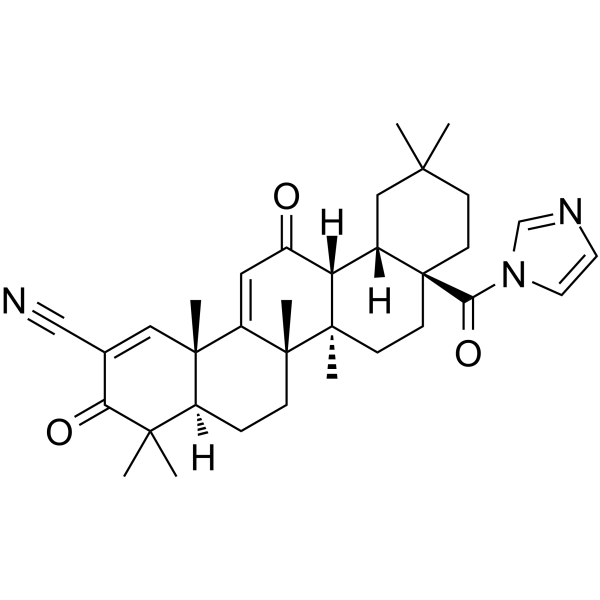
HY-15725
CDDO-ImNrf2 Activator -
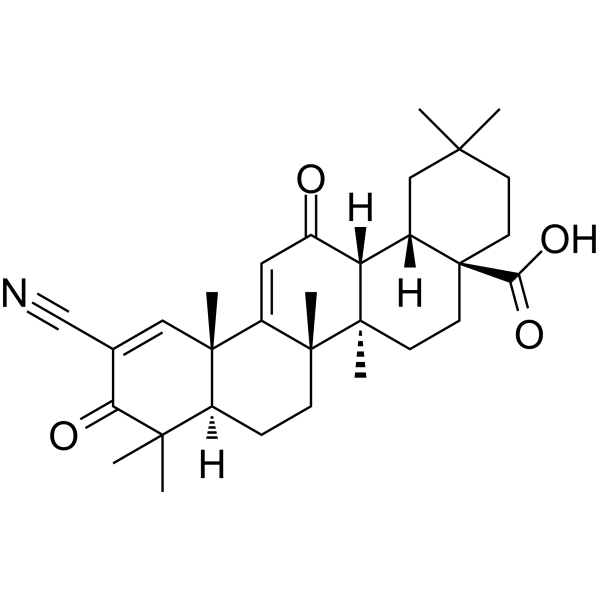
HY-14909
BardoxoloneNrf2 Activator -
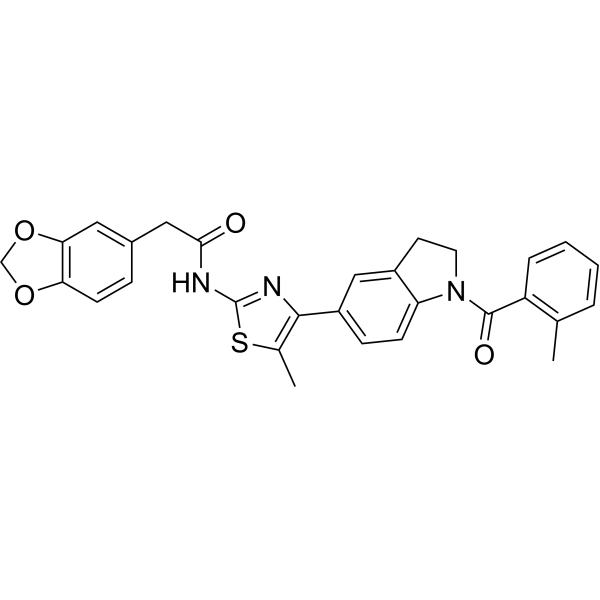
HY-100523
ML385Nrf2 Inhibitor -

HY-130495
CDDO-TFEA -
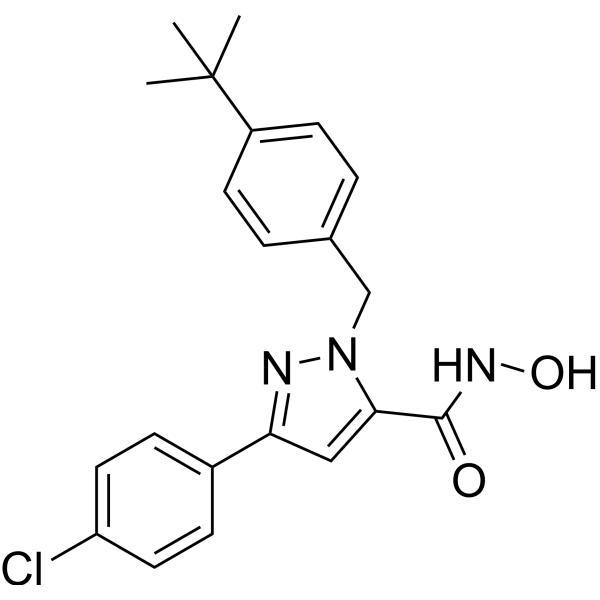
HY-101025
Nrf2-IN-1Nrf2 Inhibitor -
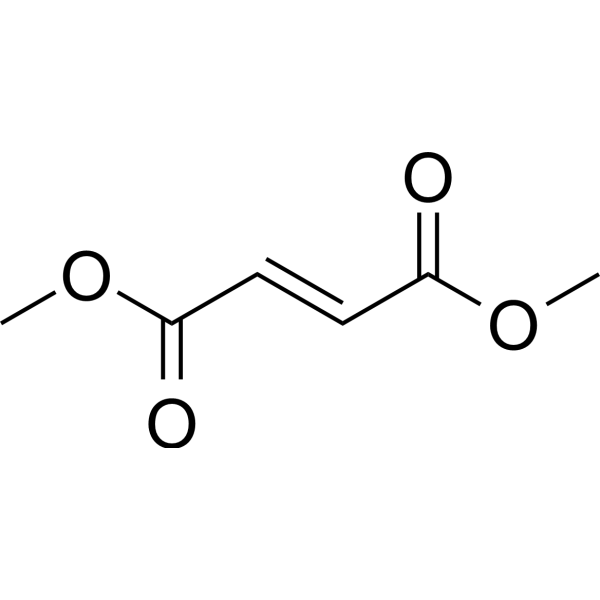
HY-17363
Dimethyl fumarateNrf2 Activator
Publications Citing Use of MedChemExpress (MCE) TAT-14
More

Biological Activity
Description
IC50 & Target
IC50: Nrf2[1]


Chemical Information
-
CAS No. 1362661-34-4
-
Appearance Solid
-
Molecular Weight 3173.59
-
Formula C137H230N48O39
-
Color White to off-white
-
Sequence
Tyr-Gly-Arg-Lys-Lys-Arg-Arg-Gln-Arg-Arg-Arg-Leu-Gln-Leu-Asp-Glu-Glu-Thr-Gly-Glu-Phe-Leu-Pro-Ile-Gln
-
Sequence Shortening
YGRKKRRQRRRLQLDEETGEFLPIQ
-
Shipping
Room temperature in continental US; may vary elsewhere.
-
Storage
Sealed storage, away from moisture
Powder -80°C 2 years -20°C 1 year * In solvent : -80°C, 6 months; -20°C, 1 month (sealed storage, away from moisture)


Publications (1)
-
Journal Impact Factor
-
Most Recent
-
Oxid Med Cell Longev
The Activation of AMPK/NRF2 Pathway in Lung Epithelial Cells Is Involved in the Protective Effects of Kinsenoside on Lipopolysaccharide-Induced Acute Lung Injury. [Abstract]2022 Mar 18:2022:3589277. PMID: 35340214


Solvent & Solubility
In Vitro:
H2O : 100 mg/mL (31.51 mM; Need ultrasonic)
Please refer to the solubility information to select the appropriate solvent. Once prepared, please aliquot and store the solution to prevent product inactivation from repeated freeze-thaw cycles.
Storage method and period of stock solution: -80°C, 6 months; -20°C, 1 month (sealed storage, away from moisture). When stored at -80°C, please use it within 6 months. When stored at -20°C, please use it within 1 month.
* Note: If you choose water as the stock solution, please dilute it to the working solution, then filter and sterilize it with a 0.22 μm filter before use.
Please refer to the solubility information to select the appropriate solvent. Once prepared, please aliquot and store the solution to prevent product inactivation from repeated freeze-thaw cycles.
Storage method and period of stock solution: -80°C, 6 months; -20°C, 1 month (sealed storage, away from moisture). When stored at -80°C, please use it within 6 months. When stored at -20°C, please use it within 1 month.
* Note: If you choose water as the stock solution, please dilute it to the working solution, then filter and sterilize it with a 0.22 μm filter before use.
Concentration (start) × Volume (start) = Concentration (final) × Volume (final)
In Vivo:
For the following dissolution methods, please prepare the working solution directly:
It is recommended to prepare fresh solutions and use them promptly within a short period of time.
The percentages shown for the solvents indicate their volumetric ratio in the final prepared solution. If precipitation or phase separation occurs during preparation, heat and/or sonication can be used to aid dissolution.
Add each solvent one by one: PBS
Solubility: 50 mg/mL (15.76 mM); Clear solution; Need ultrasonic

Protocols
-
RT-PCR
Reverse transcription technology uses RNA as a template to synthesize DNA. RT-PCR is simple, specific and sensitive, and can be used to detect gene expression levels and expression differences in cells; detect RNA virus content; clone cDNA sequences of specific genes.
-
RNA extraction experimental
By lysing cells, releasing RNA, and removing impurities such as proteins and DNA, high-purity RNA products are finally obtained. The commonly used traditional method is the guanidine isothiocyanate/phenol/chloroform method (Trizol), which is suitable for a variety of animal materials including animal tissues, microorganisms, cultured cells, etc., and most plant materials.
-
Western Blot
Western blotting (WB) is a commonly used experimental method in molecular biology, biochemistry, and immunogenetics for identifying and quantifying target proteins. It combines gel electrophoresis with immunoassay, enabling researchers to analyze protein expression, post-translational modifications, and molecular weight.
-
Research Protocol for Inflammation-related Diseases
The NLRP3 inflammasome is a cytosolic innate immune signaling platform that integrates priming signals and danger-signal activation to promote caspase-1 activation, maturation of IL-1β and IL-18, and gasdermin D-mediated pyroptotic cell death. The core experimental logic is to determine whether inflammatory disease phenotypes are driven by increased NLRP3 expression, ASC-containing inflammasome assembly, caspase-1 cleavage, GSDMD cleavage, and extracellular release of IL-1β/IL-18 rather than by nonspecific cell injury alone. The pathway is strongly linked to inflammation-related disease phenotypes because monosodium urate crystals activate NALP3/NLRP3 inflammasome signaling in gout-like crystal inflammation, cholesterol crystals activate NLRP3 inflammasomes in atherogenesis models, and DSS-induced intestinal inflammation has been reported to involve NLRP3 inflammasome activity. However, experimental colitis studies also show context-dependent protective effects of NLRP3 inflammasome co
-
Real Time qPCR (Q-PCR)
Real-time quantitative PCR (qPCR) quantifies an amplifiable nucleic-acid target by monitoring fluorescence during PCR cycling rather than measuring product only after amplification. The increase in fluorescence tracks accumulation of PCR product, and the quantification cycle (Cq; historically also Ct/CP) is related to the initial amount of target: samples containing more starting target generally reach the defined fluorescence threshold in fewer cycles.


Purity & Documentation
-
Data Sheet (268 KB)
-
SDS (252 KB)
- English - EN (252 KB)
- Français - FR (252 KB)
- Deutsch - DE (252 KB)
- Norwegian - NO (252 KB)
- Español - ES (252 KB)
- Swedish - SV (252 KB)
- Italian - IT (252 KB)
- Korean - KR (252 KB)
- Portuguese - PT (252 KB)
-
Handling Instructions (2659 KB)
References


Complete Stock Solution Preparation Table
Please refer to the solubility information to select the appropriate solvent. Once prepared, please aliquot and store the solution to prevent product inactivation from repeated freeze-thaw cycles.
Storage method and period of stock solution: -80°C, 6 months; -20°C, 1 month (sealed storage, away from moisture). When stored at -80°C, please use it within 6 months. When stored at -20°C, please use it within 1 month.
| Optional Solvent | Concentration Solvent Mass | 1 mg | 5 mg | 10 mg | 25 mg |
|---|---|---|---|---|---|
| H2O | 1 mM | 0.3151 mL | 1.5755 mL | 3.1510 mL | 7.8775 mL |
| 5 mM | 0.0630 mL | 0.3151 mL | 0.6302 mL | 1.5755 mL | |
| 10 mM | 0.0315 mL | 0.1576 mL | 0.3151 mL | 0.7878 mL | |
| 15 mM | 0.0210 mL | 0.1050 mL | 0.2101 mL | 0.5252 mL | |
| 20 mM | 0.0158 mL | 0.0788 mL | 0.1576 mL | 0.3939 mL | |
| 25 mM | 0.0126 mL | 0.0630 mL | 0.1260 mL | 0.3151 mL | |
| 30 mM | 0.0105 mL | 0.0525 mL | 0.1050 mL | 0.2626 mL |
* Note: If you choose water as the stock solution, please dilute it to the working solution, then filter and sterilize it with a 0.22 μm filter before use.


TAT-14 Related Classifications
HY-P1328 Related Classifications
 Powered by Bioz