



Tetrakis(decyl)ammonium bromide

Based on 1 Customer Validation
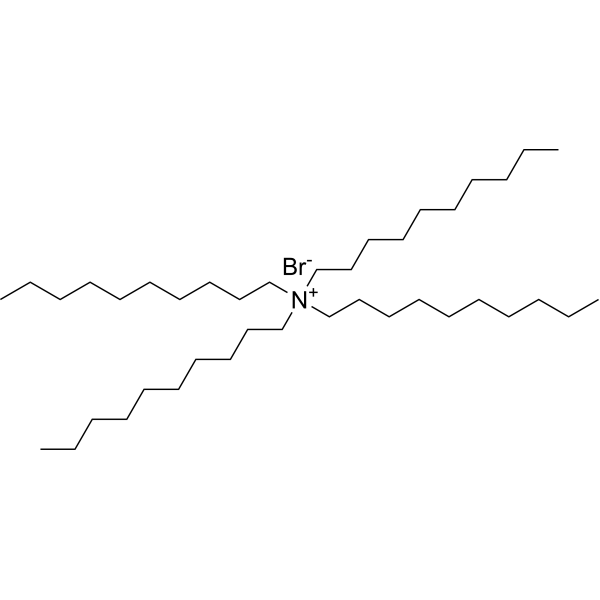
Tetrakis(decyl)ammonium bromide is a compound belonging to the class of quaternary ammonium compounds. It is a salt with cationic properties and is used in various industrial and biomedical applications. Tetrakis(decyl)ammonium bromide is commonly used as an emulsifier, solubilizer and antimicrobial agent in personal care products, cleansers and pharmaceutical formulations. It is also used as a phase transfer catalyst in organic synthesis reactions, facilitating the movement of reactants between immiscible phases.
For research use only. We do not sell to patients.
- CAS No.: 14937-42-9
- Formula: C40H84BrN
- Molecular Weight:659.02
-
Storage:
Store at room temperature, keep dry and cool.
In solvent -80°C, 1 year , -20°C, 6 months

To place orders, for customer services and technical support, please contact: MedChemExpress USA
Tel: 609-228-6898 E-mail: [email protected] [email protected]


-
 Biological Activity
-
Chemical Information
- Protocols
- Purity & Documentation
-
 Help & FAQs


-
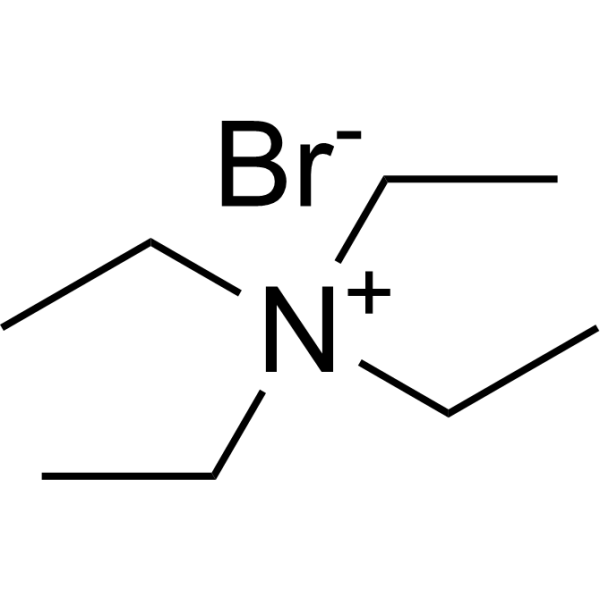
HY-W014408
Tetraethylammonium bromideBiochemical Reagent -
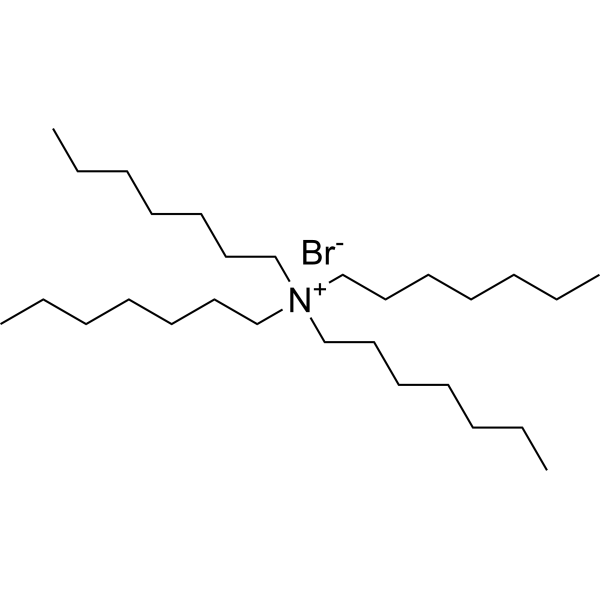
HY-W010795
Tetraheptylammonium bromide (>98%,BC)Biochemical Assay Reagent -
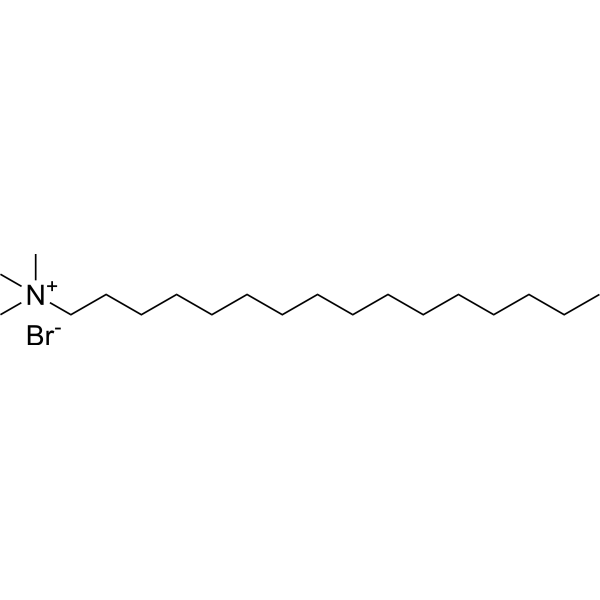
HY-B1260
Cetrimonium bromideCationic Surfactant -

HY-D0172
Tetrabutylammonium bromideBiochemical Assay Reagent -
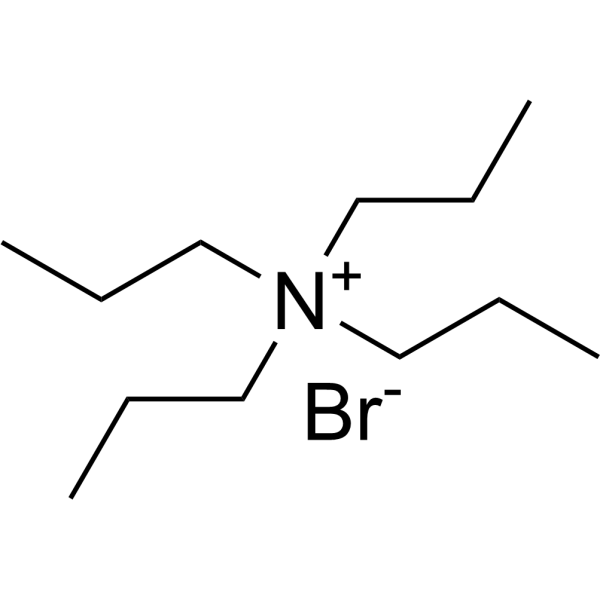
HY-W096993A
TPABr, 98%Biochemical Assay Reagent -
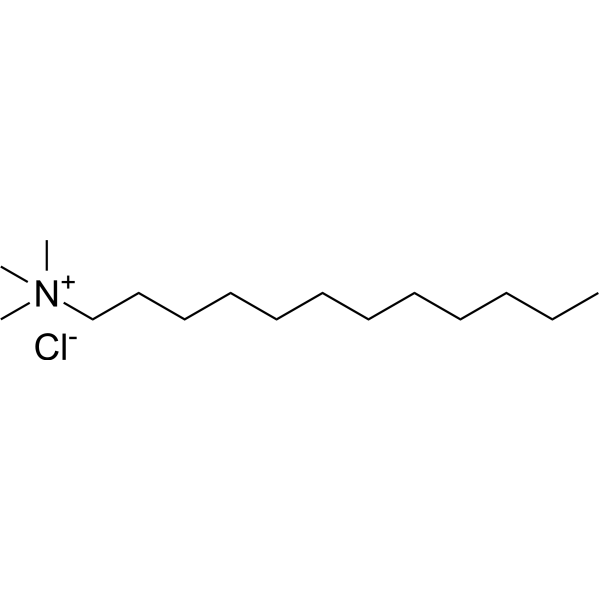
HY-W096983
DTAC,for IPC,≥99%Cationic Surfactant -
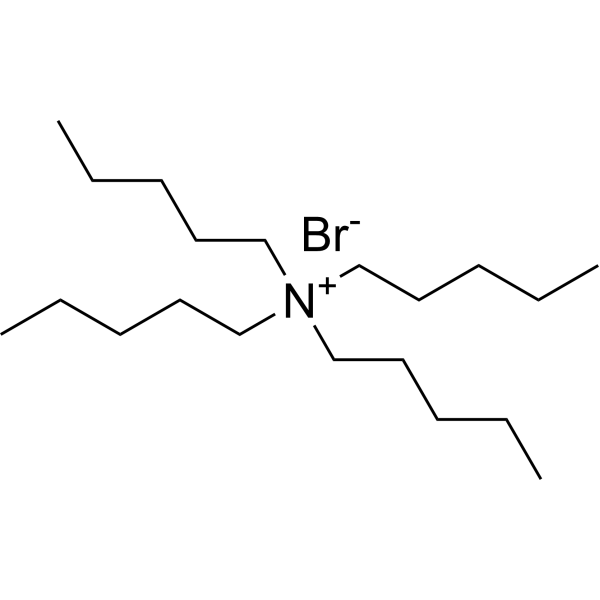
HY-W011052
Tetrapentylammonium bromideBiochemical Assay Reagent -
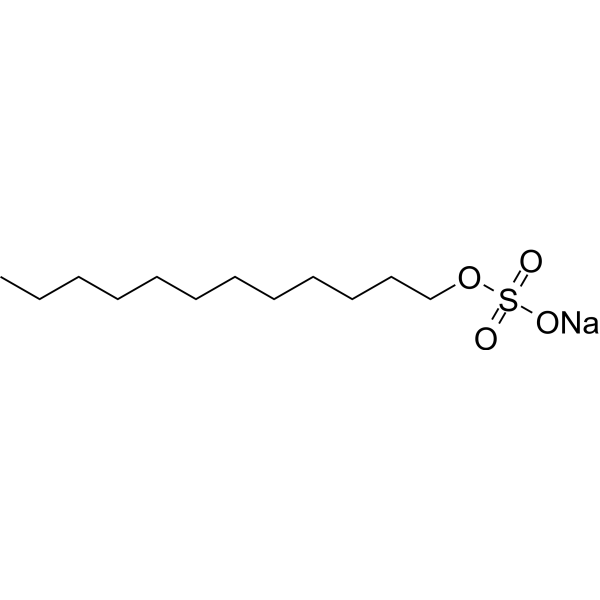
HY-Y0316B
Sodium dodecyl sulfate for electrophoresisBiochemical Assay Reagent -
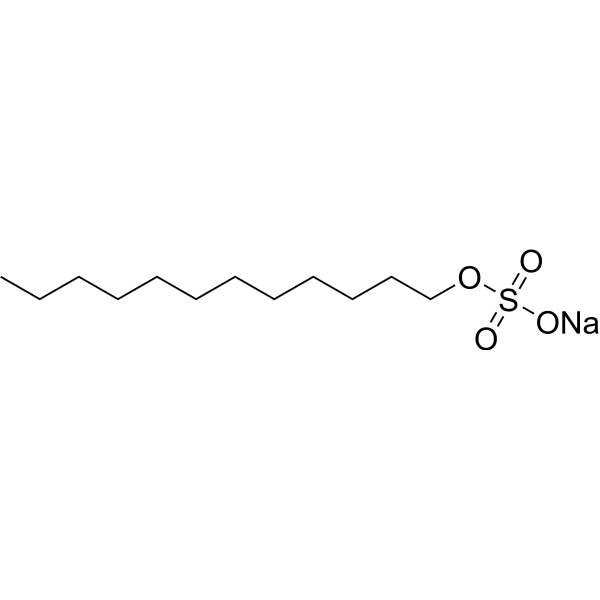
HY-Y0316
Sodium dodecyl sulfatePharmaceutical Excipient -
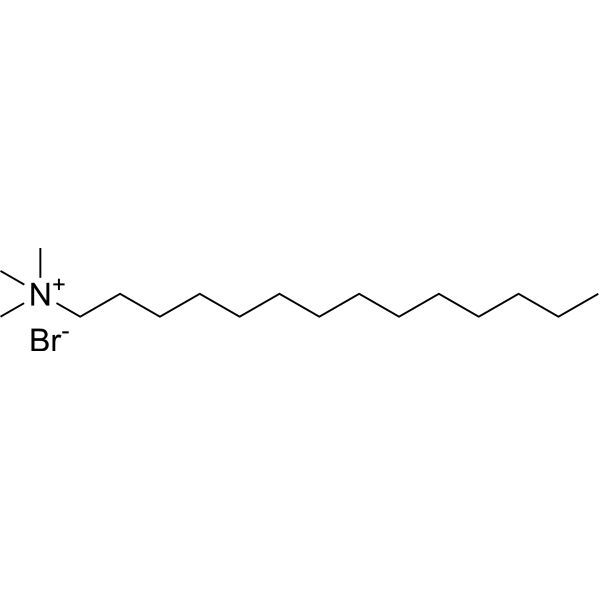
HY-D0839
Tetradecyltrimethylammonium bromideCationic Surfactant -
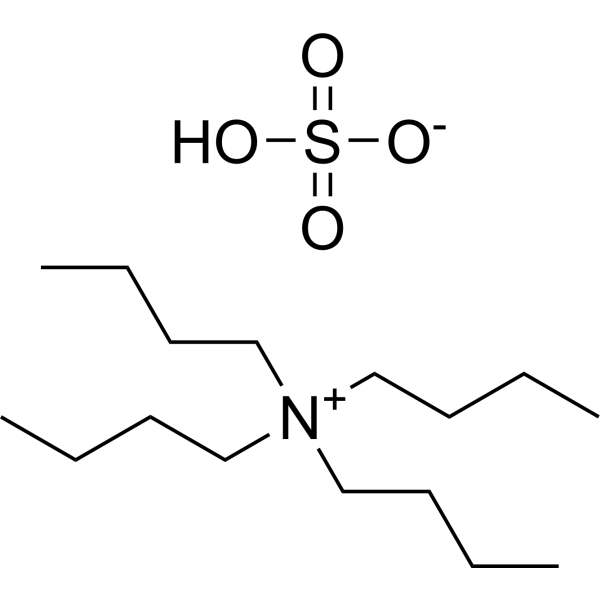
HY-Y1045
Tetrabutylammonium hydrogensulfateBiochemical Reagent -
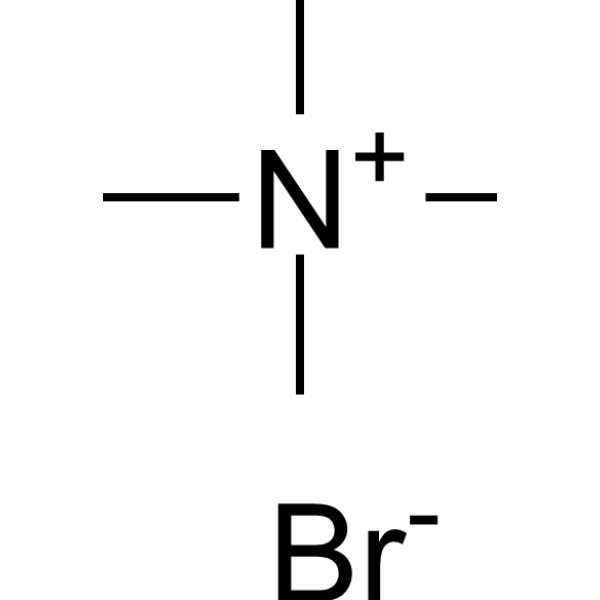
HY-Y0658
Tetramethylammonium bromideBiochemical Assay Reagent


Biological Activity
Description
In Vitro
Tetrakis(decyl)ammonium bromide is a biochemical reagent that can be used as a biological material or organic compound for life science related research.
MedChemExpress (MCE) has not independently confirmed the accuracy of these methods. They are for reference only. Further protocols information, click here.


Chemical Information
-
CAS No. 14937-42-9
-
Appearance Solid
-
Molecular Weight 659.02
-
Formula C40H84BrN
-
Color White to off-white
-
SMILES
CCCCCCCCCC[N+](CCCCCCCCCC)(CCCCCCCCCC)CCCCCCCCCC.[Br-]
-
Synonyms
tetra(decyl)ammonium bromide
-
Shipping
Room temperature in continental US; may vary elsewhere.
-
Storage
Store at room temperature, keep dry and cool
In solvent -80°C 1 year -20°C 6 months

Protocols
-
Research Protocol for Infectious Diseases
Infectious-disease experiments test how pathogens interact with host barriers, innate immune receptors, inflammatory signaling, pathogen replication, and tissue injury; pattern-recognition receptors such as TLRs, RIG-I-like receptors, NOD-like receptors, and inflammasomes detect microbial molecules and activate NF-κB, interferon, and cytokine responses. The central hypothesis is that infection severity reflects the balance between pathogen burden and host response: protective inflammation restricts pathogen growth, whereas excessive or mislocalized inflammation contributes to tissue damage and disease phenotype. Unresolved questions include which host pathways are protective versus pathogenic, why some infection models fail to translate to human disease, and which combined readouts best predict clinically relevant infection outcomes.


Purity & Documentation
-
Data Sheet (237 KB)
-
SDS (393 KB)
- English - EN (393 KB)
- Français - FR (393 KB)
- Deutsch - DE (393 KB)
- Norwegian - NO (393 KB)
- Español - ES (393 KB)
- Swedish - SV (393 KB)
- Italian - IT (393 KB)
- Korean - KR (393 KB)
- Portuguese - PT (393 KB)
-
Handling Instructions (2659 KB)

Calculators
Concentration (start) × Volume (start) = Concentration (final) × Volume (final)


Tetrakis(decyl)ammonium bromide Related Classifications
HY-W013076 Related Classifications
 Powered by Bioz