



Valganciclovir
Valganciclovir is an orally active antiviral agent. Valganciclovir can inhibit the growth of adenoviruses and have a protective effect on immunosuppressed hamsters. Valganciclovir can be used for the research of Cytomegalovirus.
For research use only. We do not sell to patients.
- CAS No.: 175865-60-8
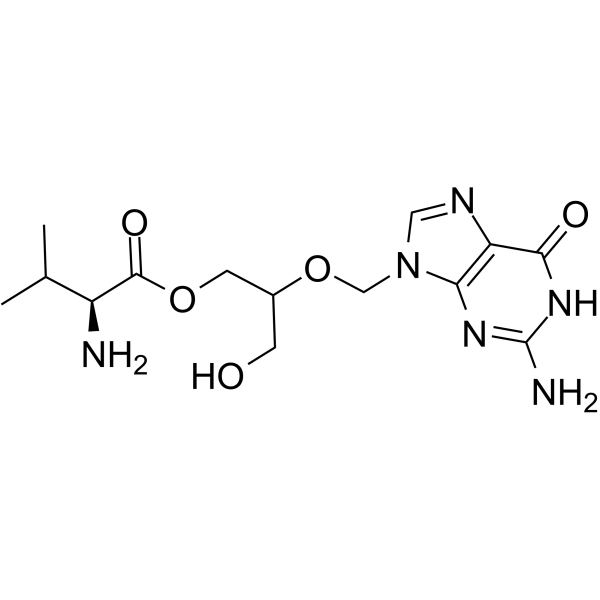
- Formula: C14H22N6O5
- Molecular Weight:354.36
-
Storage:
Please store the product under the recommended conditions in the Certificate of Analysis.

To place orders, for customer services and technical support, please contact: MedChemExpress USA
Tel: 609-228-6898 E-mail: [email protected] [email protected]


-
 Biological Activity
-
Chemical Information
- Protocols
- Purity & Documentation
- References
-
 Help & FAQs


-
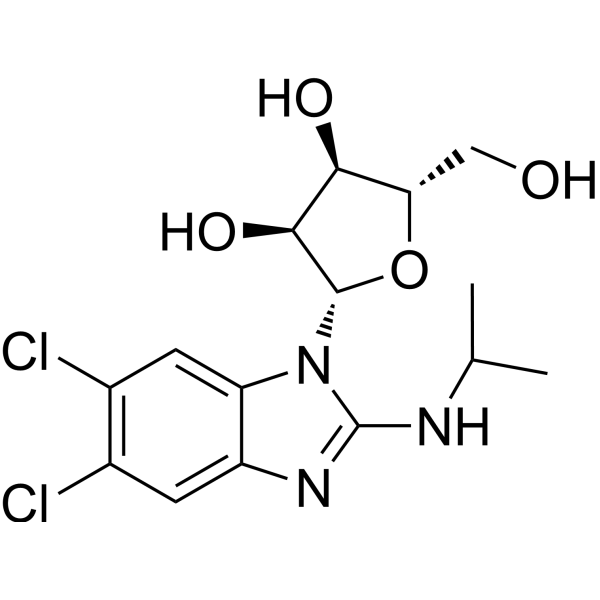
HY-16305
MaribavirAnti-CMV Agent -
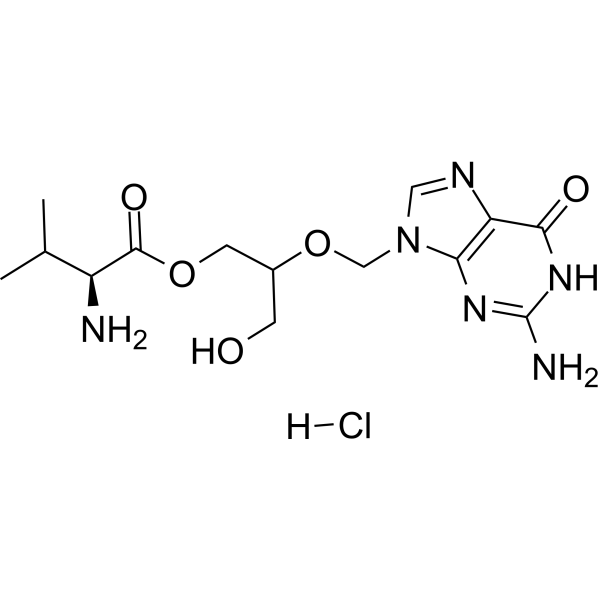
HY-A0032A
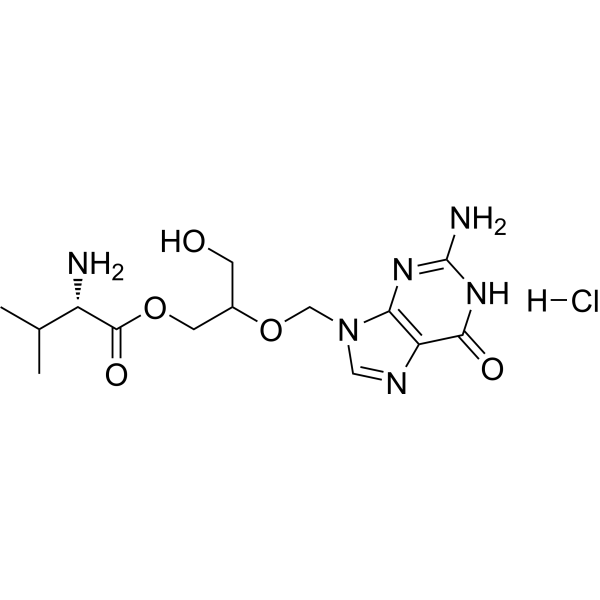
Valganciclovir hydrochlorideAntiviral Agent -
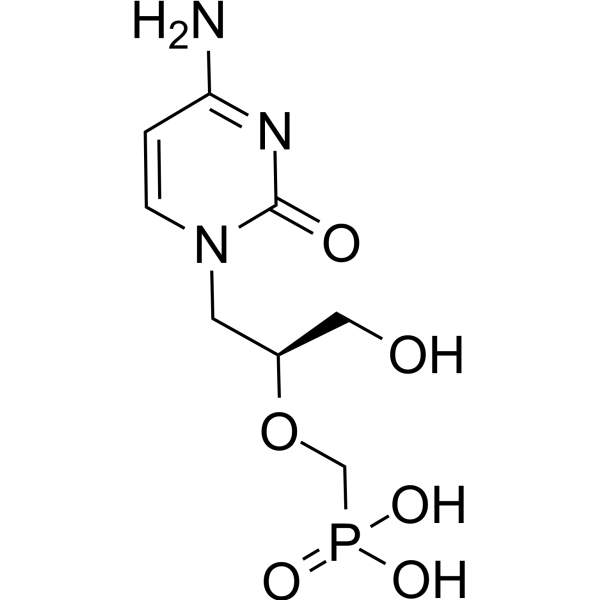
HY-17438
CidofovirCMV Inhibitor -

HY-16305R
Maribavir (Standard)Anti-CMV Agent -
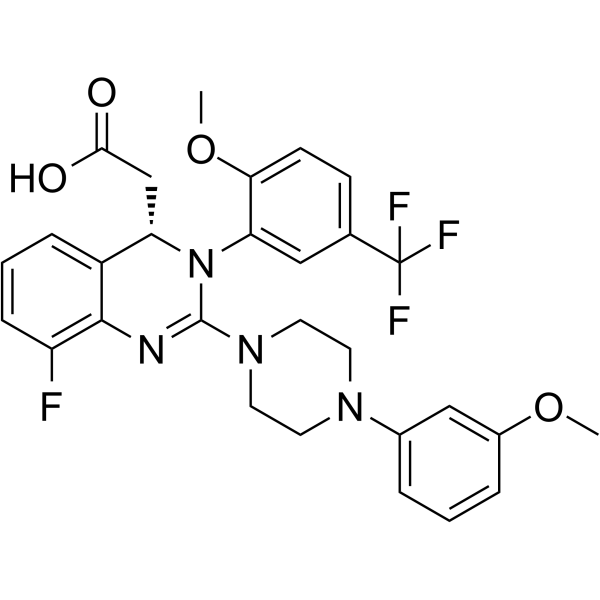
HY-15233
LetermovirCMV Inhibitor -
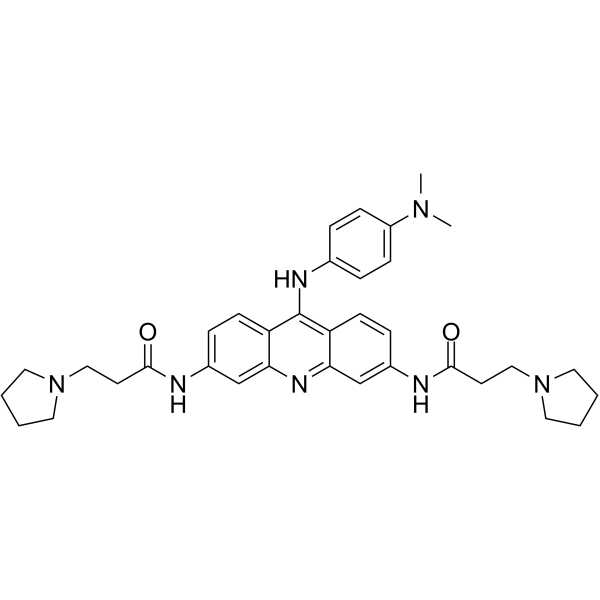
HY-15523
Braco-19Telomerase Inhibitor -
HY-109528
Fomivirsen sodiumCMV Inhibitor -
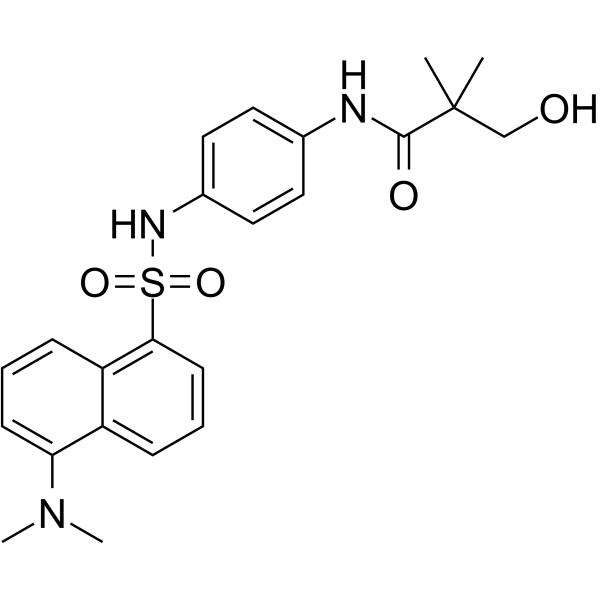
HY-108261
TomeglovirCMV Inhibitor -
HY-A0032AR
Valganciclovir hydrochloride (Standard)Antiviral Agent -

HY-108261R
Tomeglovir (Standard)Reference Standard -
HY-14532
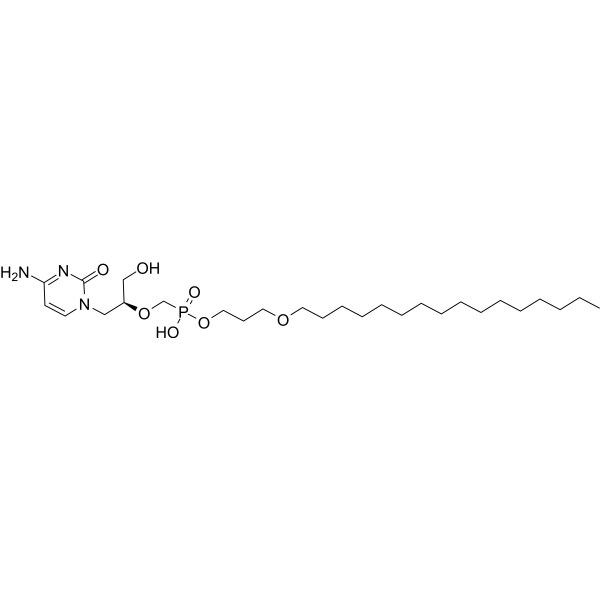
BrincidofovirAntiviral Agent -
HY-N1127
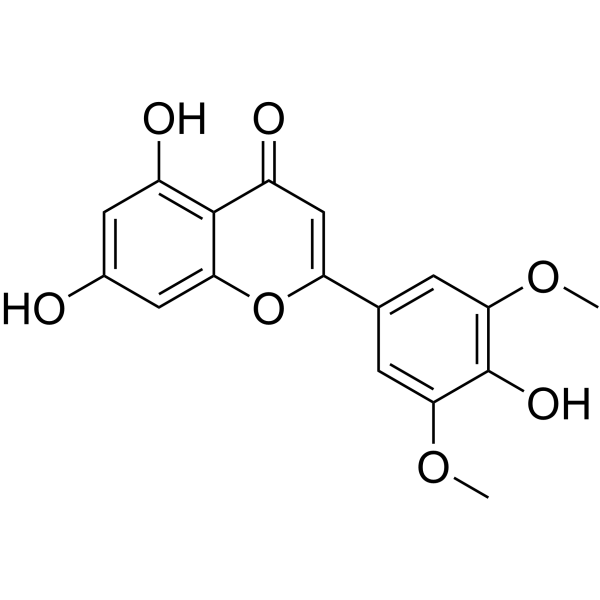
TricinCMV Inhibitor


Biological Activity
Description
In Vitro
Valganciclovir (500 μM, 5-7 days) inhibits the growth of human adenoviruses (Ads) in A549 cells[1].
Valganciclovir (0.003-10 mM, 10 min) with ganciclovir (HY-13637) inhibits the uptake of glycylsarcosine in Caco-2 cells[2].
MedChemExpress (MCE) has not independently confirmed the accuracy of these methods. They are for reference only. Further protocols information, click here.
-
Cell Line:A549 cells
-
Concentration:500 μM
-
Incubation Time:5 days, 7days
-
Result:Showed EC50 values ranged from 120.5 μM (Ad4) to 244.4 μM (Ad6). Showed IC50 values was calculated to be 11.74 mM at 7 days post-infection.
In Vivo
MedChemExpress (MCE) has not independently confirmed the accuracy of these methods. They are for reference only.
-
Animal Model:Immunosuppressed hamsters[1]
-
Dosage:200 mg/kg
-
Administration:Oral gavage (p.o.)
-
Result:Resulted in significantly smaller magnitude of weight loss for all groups.
Reduced the liver pathology.
Clinical Trial
| NCT Number | Sponsor | Condition | Start Date |
Phase

|
|---|---|---|---|---|
| NCT01329991 | Plexxikon| | 2011-05 | PHASE1 |


Chemical Information
-
CAS No. 175865-60-8
-
Molecular Weight 354.36
-
Formula C14H22N6O5
-
SMILES
N[C@@H](C(C)C)C(OCC(OCN1C=NC2=C1N=C(N)NC2=O)CO)=O
-
Shipping
Room temperature in continental US; may vary elsewhere.
-
Storage
Please store the product under the recommended conditions in the Certificate of Analysis.

Protocols
-
Research Protocol for Infectious Diseases
Infectious-disease experiments test how pathogens interact with host barriers, innate immune receptors, inflammatory signaling, pathogen replication, and tissue injury; pattern-recognition receptors such as TLRs, RIG-I-like receptors, NOD-like receptors, and inflammasomes detect microbial molecules and activate NF-κB, interferon, and cytokine responses. The central hypothesis is that infection severity reflects the balance between pathogen burden and host response: protective inflammation restricts pathogen growth, whereas excessive or mislocalized inflammation contributes to tissue damage and disease phenotype. Unresolved questions include which host pathways are protective versus pathogenic, why some infection models fail to translate to human disease, and which combined readouts best predict clinically relevant infection outcomes.


Purity & Documentation
References
[1]. Toth K, et al. Valganciclovir inhibits human adenovirus replication and pathology in permissive immunosuppressed female and male Syrian hamsters [J]. Viruses, 2015, 7(3): 1409-1428. [Content Brief]
[2]. Sugawara M, et al. Transport of valganciclovir, a ganciclovir prodrug, via peptide transporters PEPT1 and PEPT2. J Pharm Sci. 2000 Jun;89(6):781-9. [Content Brief]
[3]. Cvetkovic R S, et al. Valganciclovir: a review of its use in the management of CMV infection and disease in immunocompromised patients [J]. Drugs, 2005, 65: 859-878. [Content Brief]

Calculators
Concentration (start) × Volume (start) = Concentration (final) × Volume (final)


Valganciclovir Related Classifications
HY-A0032 Related Classifications
 Powered by Bioz