



β-Amyloid (40-1)
Based on 1 publication(s) in Google Scholar
β-Amyloid (40-1) is a biological active peptide. (non-toxic reverse fragment Aβ(40–1), control of HY-P0265)
For research use only. We do not sell to patients.
- CAS No.: 144409-99-4
- Formula: C194H295N53O58S
- Molecular Weight:4329.80
-
Storage:
Please store the product under the recommended conditions in the Certificate of Analysis.

To place orders, for customer services and technical support, please contact: MedChemExpress USA
Tel: 609-228-6898 E-mail: [email protected] [email protected]


-
 Biological Activity
-
Chemical Information
- Protocols
- Purity & Documentation
-
 Help & FAQs


-
HY-P0128
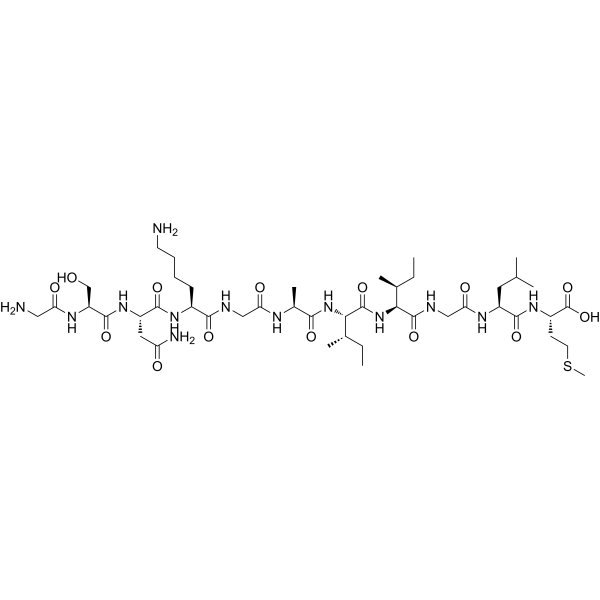
β-Amyloid (25-35)Amyloid β Peptide -

HY-P0128A
β-Amyloid (25-35), HFIP-treatedAmyloid β Peptide -

HY-P1363A
β-Amyloid (1-42), humanAmyloid β Peptide -

HY-P1363B
β-Amyloid (1-42), human, HFIP-treatedβ-Amyloid (1-42) Peptide -
HY-P1362
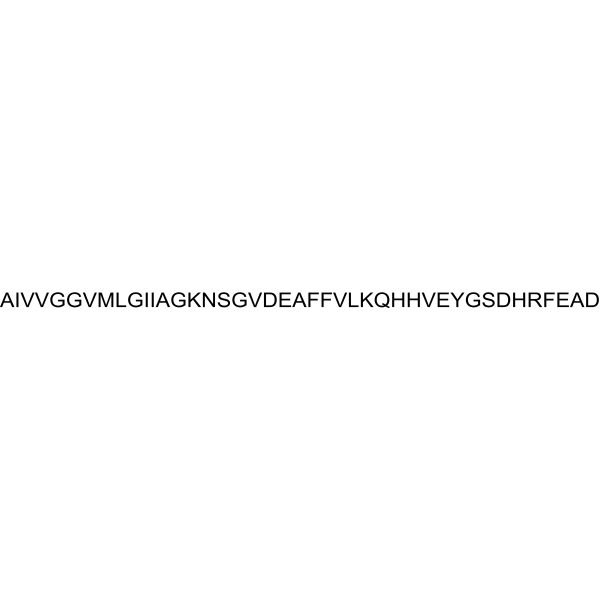
β-Amyloid (42-1), humanInactive Form of Aβ(1-42) -

HY-P3688
β-Amyloid (1-38)Aβ Peptide -

HY-P1387
β-Amyloid (1-40) (rat)Apoptosis Inducer -
HY-P5124
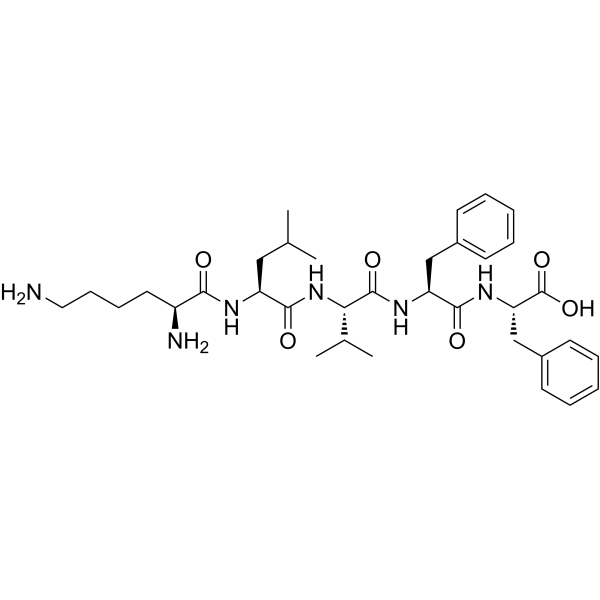
β-Amyloid peptide(16-20)Abeta Inhibitor -
HY-P1046
β-Amyloid (1-15)Peptide Fragment -
HY-P2283
β-Amyloid (1-37) (human)Amyloid β -

HY-P1053
β-Amyloid (10-20)β-Amyloid Peptide Fragment -
HY-P4740
β-Amyloid (35-25)reverse version of β-Amyloid (25-35) (HY-P0128)
Publications Citing Use of MedChemExpress (MCE) β-Amyloid (40-1)
More

Biological Activity
Description


Chemical Information
-
CAS No. 144409-99-4
-
Molecular Weight 4329.80
-
Formula C194H295N53O58S
-
Sequence
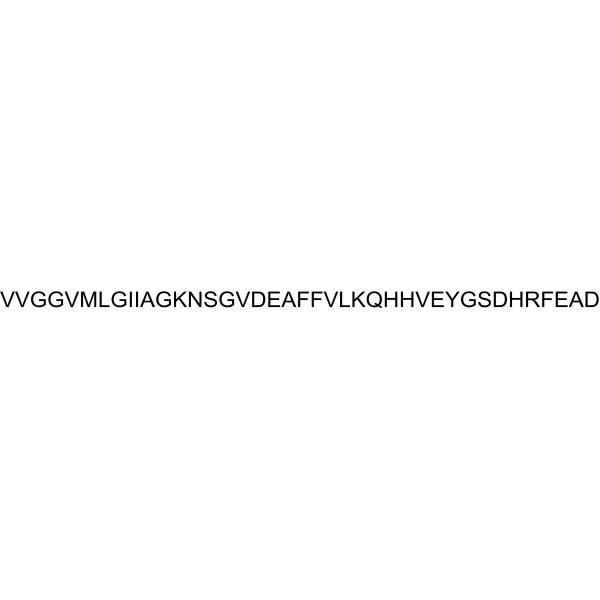
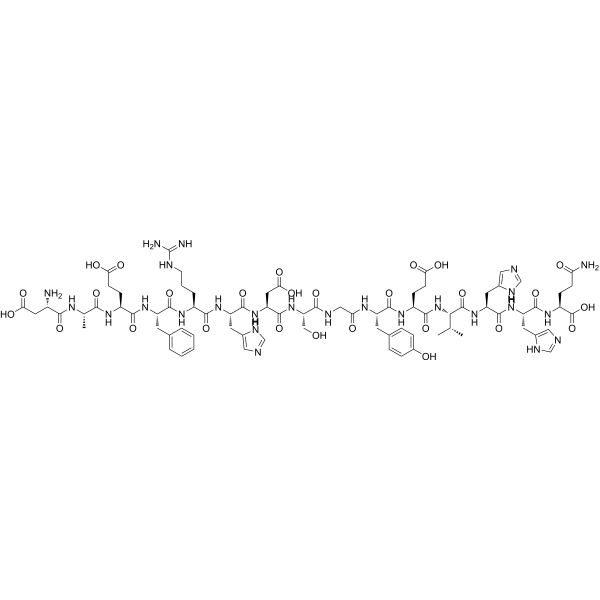
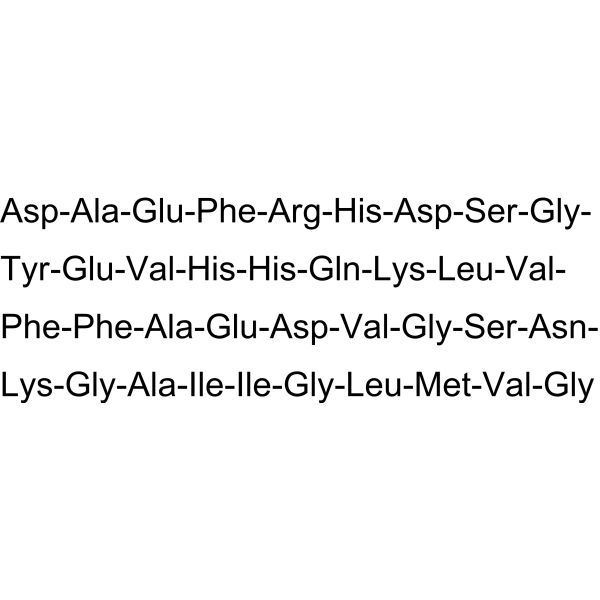
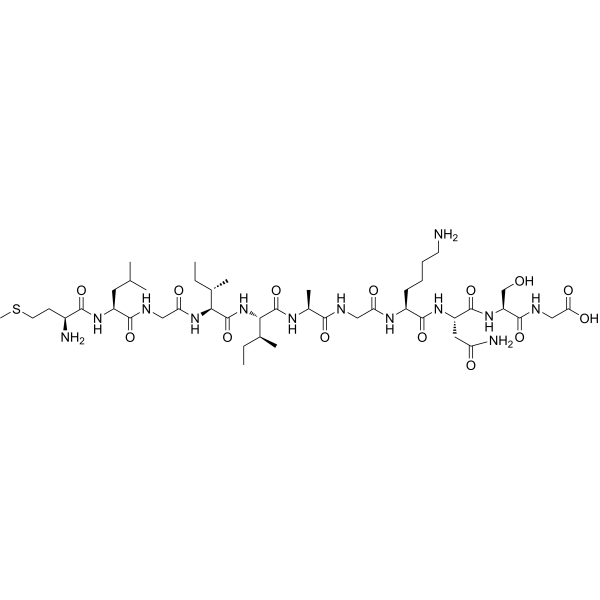
Val-Val-Gly-Gly-Val-Met-Leu-Gly-Ile-Ile-Ala-Gly-Lys-Asn-Ser-Gly-Val-Asp-Glu-Ala-Phe-Phe-Val-Leu-Lys-Gln-His-His-Val-Glu-Tyr-Gly-Ser-Asp-His-Arg-Phe-Glu-Ala-Asp
-
Sequence Shortening
VVGGVMLGIIAGKNSGVDEAFFVLKQHHVEYGSDHRFEAD
-
Shipping
Room temperature in continental US; may vary elsewhere.
-
Storage
Please store the product under the recommended conditions in the Certificate of Analysis.


Publications (1)
-
Journal Impact Factor
-
Most Recent

Protocols
-
Amyloid: Congo Red Amyloid Staining
Congo red amyloid staining is a histochemical method used to detect extracellular amyloid deposits in tissue sections based on the affinity of Congo red dye for β-pleated sheet-rich protein aggregates. When bound to amyloid, Congo red produces characteristic apple-green birefringence under polarized light microscopy, which is widely regarded as a diagnostic feature of amyloid deposition in histopathology. The diagnostic principle relies on the combination of dye binding (congophilia) and optical anisotropy under polarized illumination, which distinguishes amyloid from most non-amyloid eosinophilic extracellular deposits in routine histological evaluation. Amyloid identification by Congo red staining remains a cornerstone in diagnostic pathology despite the availability of adjunct methods such as immunohistochemistry and mass spectrometry, particularly because of its ability to localize deposits directly within tissue architecture. The specificity of Congo red-positive deposits is incre
-
Alzheimer’s Disease Modeling
Alzheimer’s Disease (AD) is a neurodegenerative disorder characterized by a progressive decline in cognitive functions and loss of specific types of neurons and synapses. Alzheimer's symptoms can be simulated in mice by injecting drugs (such as Aβ) or genetically modified.


Purity & Documentation

Calculators
Concentration (start) × Volume (start) = Concentration (final) × Volume (final)


β-Amyloid (40-1) Related Classifications
HY-P5361 Related Classifications
 Powered by Bioz