



β-Sheet Breaker Peptide iAβ5

Based on 1 Customer Validation
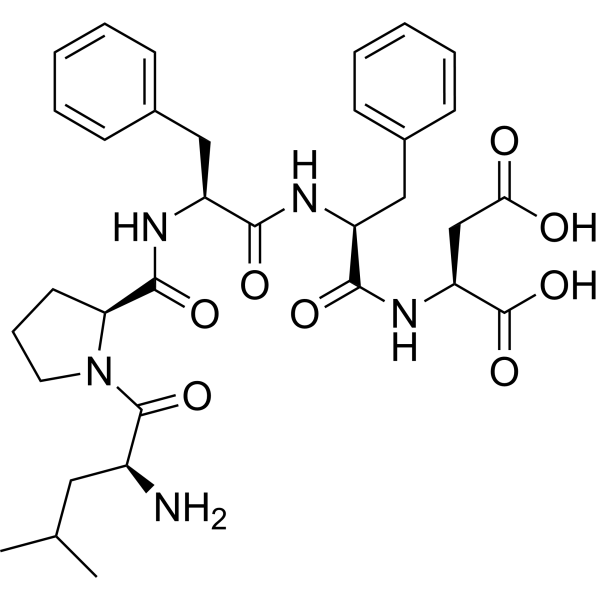
β-Sheet Breaker Peptide iAβ5 ([Pro18, Asp21] β-Amyloid (17-21)) is an amyloid fibril disaggregation inducer. β-Sheet Breaker Peptide iAβ5 inhibits fibril formation and disaggregates preformed fibrils by binding to the central hydrophobic region of Aβ (LVFFA) and disrupting the interactions between Aβ monomers/oligomers. β-Sheet Breaker Peptide iAβ5 reproducibly induces the disaggregation of fibrillar amyloid deposits in rat brain. β-Sheet Breaker Peptide iAβ5 prevents and reverses Aβ-induced neuronal shrinkage, reduces IL-1β-positive microglia surrounding Aβ deposits, and decreases the size of cerebral amyloid plaques. β-Sheet Breaker Peptide iAβ5 labeled with HBA enables blue quantitative detection under acidic conditions. β-Sheet Breaker Peptide iAβ5 is used in research related to Alzheimer's disease.
For research use only. We do not sell to patients.
- Purity : 98.64%
- CAS No.: 182912-74-9
- Formula: C33H43N5O8
- Molecular Weight:637.72
-
Storage:
Sealed storage, away from moisture and light, under nitrogen.
Powder -80°C, 2 years , -20°C, 1 year* In solvent : -80°C, 6 months; -20°C, 1 month (sealed storage, away from moisture and light, under nitrogen)

To place orders, for customer services and technical support, please contact: MedChemExpress USA
Tel: 609-228-6898 E-mail: [email protected] [email protected]


-
 Biological Activity
-
Chemical Information
-
Solvent & Solubility
- Protocols
- Purity & Documentation
- References
-
 Help & FAQs


-
HY-P0128
β-Amyloid (25-35)Amyloid β Peptide -
HY-117259
Valiltramiprosateβ-Amyloid Inhibitor -
HY-P1048
Myelin Basic Protein (MBP) (68-82), guinea pigMBP Fragment -

HY-P0128A
β-Amyloid (25-35), HFIP-treatedAmyloid β Peptide -
HY-P1046
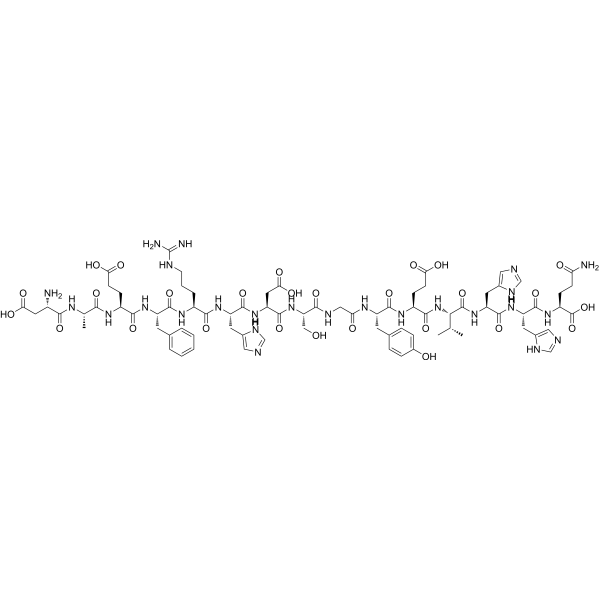
β-Amyloid (1-15)Peptide Fragment -

HY-P1052
Myelin Basic Protein(87-99)Encephalitogenic Peptide -

HY-P1252
Parathyroid Hormone (1-34), bovinePTH Receptor Agonist -

HY-P1050
COG 133ApoE Mimetic Peptide -

HY-P1051
β-Amyloid (12-28)Amyloid Peptide -

HY-P1510
β-Amyloid (1-11) -
HY-123495
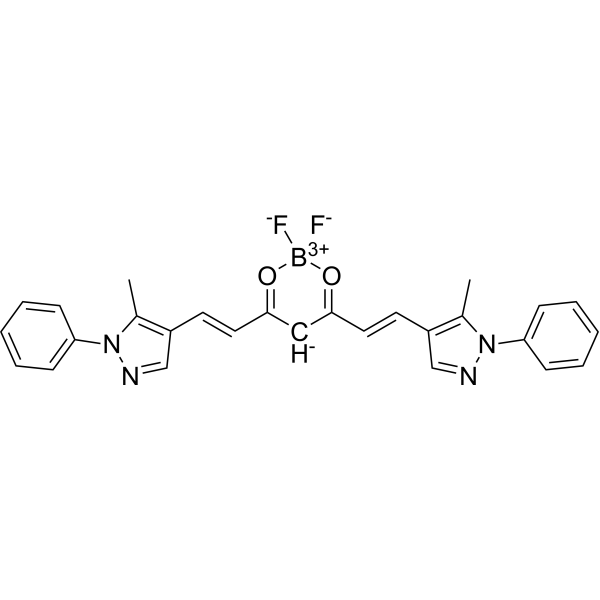
CRANAD-28beta Plaques Probe -

HY-P1053
β-Amyloid (10-20)β-Amyloid Peptide Fragment


Biological Activity
Description
In Vitro
β-Sheet Breaker Peptide iAβ5 (0.074-1.5 μg/μl; 7 days) dose-dependently inhibits Aβ1-40 and Aβ1-42 fibril formation and disaggregates preformed fibrils[1].
β-Sheet Breaker Peptide iAβ5 (60-366 μM; 48 h), when co-incubated with Aβ1-42 at a 1:1 molar ratio, prevents the deleterious effects induced by Aβ1-42 in IMR-32 human neuroblastoma cells[1][2].
MedChemExpress (MCE) has not independently confirmed the accuracy of these methods. They are for reference only. Further protocols information, click here.
-
Cell Line:Human neuroblastoma IMR-32 cells
-
Concentration:60 μM (final); 366 μM (pre-incubation)
-
Incubation Time:48 h
-
Result:Reduced 3H-thymidine incorporation and cell viability to approximately 30% of control when cells were treated with 50 μM aggregated Aβ1-42 alone.
Produced a marked inhibition of Aβ1-42 detrimental effects when co-incubated with Aβ1-42.
At 60 μM, iAβ5 was not significantly detrimental, with cell loss of less than 10% compared with control cells.
In Vivo
β-Sheet Breaker Peptide iAβ5 (100.0-200.0 nmol/3.0 µl; bilateral amygdala injection; single dose) dose-dependently induces the depolymerization of pre-existing fibrillar Aβ deposits in the rat amygdala and prevents and reverses Aβ-induced neuronal shrinkage[2].
β-Sheet Breaker Peptide iAβ5 (200.0 nmol/3.0 µl; bilateral intra-amygdala injection; single dose)-induced Aβ fibril disaggregation is reproducible and reduces Aβ deposit size[2].
MedChemExpress (MCE) has not independently confirmed the accuracy of these methods. They are for reference only.
-
Animal Model:Fischer-344 (male, 250-300 g, 3-4 months old)[1]
-
Dosage:100 nmol per amygdala
-
Administration:Intra-amygdala injection; co-injected with Aβ1-42
-
Result:Reduced Aβ deposit size to 51% of control.
Blocked amyloid fibril formation completely, as deposits were Congo red-negative and thioflavine S-negative.
-
Animal Model:Fischer-344 (male, 250-300 g, 3-4 months old)[2]
-
Dosage:100.0 nmol/3.0 µl; 200.0 nmol/3.0 µl
-
Administration:bilateral intra-amygdala injection; single dose; Day 8
-
Result:Reduced Aβ deposit size by 29% at 100.0 nmol and 67% at 200.0 nmol.
Increased average neuronal cell area to 256 µm2 at 100.0 nmol and 235 µm2 at 200.0 nmol compared to 208 µm2 in the Aβ/VEH2 group.
Reduced IL-1β positive microglia-like cells surrounding Aβ deposits at 100.0 nmol and virtually absent at 200.0 nmol.
Induced numerous OX-42 positive phagocytic cells at the injection site at 200.0 nmol and to a lesser extent at 100.0 nmol.
-
Animal Model:Fischer-344 (male, 250-300 g, 3-4 months old)[2]
-
Dosage:200.0 nmol/3.0 µl
-
Administration:bilateral intra-amygdala injection; single dose; Day 8
-
Result:Reduced Aβ deposit size by 60%.


Chemical Information
-
CAS No. 182912-74-9
-
Appearance Solid
-
Molecular Weight 637.72
-
Formula C33H43N5O8
-
Color White to off-white
-
Synonyms
[Pro18, Asp21] β-Amyloid (17-21)
-
Sequence
Leu-Pro-Phe-Phe-Asp
-
Sequence Shortening
LPFFD
-
Shipping
Room temperature in continental US; may vary elsewhere.
-
Storage
Sealed storage, away from moisture and light, under nitrogen
Powder -80°C 2 years -20°C 1 year * In solvent : -80°C, 6 months; -20°C, 1 month (sealed storage, away from moisture and light, under nitrogen)


Solvent & Solubility
In Vitro:
H2O : 50 mg/mL (78.40 mM; Need ultrasonic)
Please refer to the solubility information to select the appropriate solvent. Once prepared, please aliquot and store the solution to prevent product inactivation from repeated freeze-thaw cycles.
Storage method and period of stock solution: -80°C, 6 months; -20°C, 1 month (sealed storage, away from moisture and light, under nitrogen). When stored at -80°C, please use it within 6 months. When stored at -20°C, please use it within 1 month.
* Note: If you choose water as the stock solution, please dilute it to the working solution, then filter and sterilize it with a 0.22 μm filter before use.
Please refer to the solubility information to select the appropriate solvent. Once prepared, please aliquot and store the solution to prevent product inactivation from repeated freeze-thaw cycles.
Storage method and period of stock solution: -80°C, 6 months; -20°C, 1 month (sealed storage, away from moisture and light, under nitrogen). When stored at -80°C, please use it within 6 months. When stored at -20°C, please use it within 1 month.
* Note: If you choose water as the stock solution, please dilute it to the working solution, then filter and sterilize it with a 0.22 μm filter before use.
Concentration (start) × Volume (start) = Concentration (final) × Volume (final)

Protocols
-
Amyloid: Congo Red Amyloid Staining
Congo red amyloid staining is a histochemical method used to detect extracellular amyloid deposits in tissue sections based on the affinity of Congo red dye for β-pleated sheet-rich protein aggregates. When bound to amyloid, Congo red produces characteristic apple-green birefringence under polarized light microscopy, which is widely regarded as a diagnostic feature of amyloid deposition in histopathology. The diagnostic principle relies on the combination of dye binding (congophilia) and optical anisotropy under polarized illumination, which distinguishes amyloid from most non-amyloid eosinophilic extracellular deposits in routine histological evaluation. Amyloid identification by Congo red staining remains a cornerstone in diagnostic pathology despite the availability of adjunct methods such as immunohistochemistry and mass spectrometry, particularly because of its ability to localize deposits directly within tissue architecture. The specificity of Congo red-positive deposits is incre
-
Alzheimer’s Disease Modeling
Alzheimer’s Disease (AD) is a neurodegenerative disorder characterized by a progressive decline in cognitive functions and loss of specific types of neurons and synapses. Alzheimer's symptoms can be simulated in mice by injecting drugs (such as Aβ) or genetically modified.
-
Pyroptosis Solutions
Pyroptosis is a lytic inflammatory cell-death pathway executed by gasdermin pores, most classically through inflammasome-mediated activation of caspase-1, cleavage of gasdermin D, membrane pore formation, LDH release, and secretion of IL-1β and IL-18. The canonical pathway is commonly modeled by priming cells with an inflammatory signal such as LPS to induce pro-IL-1β and inflammasome components, followed by an activation signal such as ATP or nigericin to activate NLRP3, ASC speck formation, caspase-1 cleavage, GSDMD cleavage, cytokine release, and pyroptotic membrane rupture. The non-canonical pathway is triggered when cytosolic LPS activates mouse caspase-11 or human caspase-4/5, leading to GSDMD cleavage and pyroptosis, and this can secondarily activate NLRP3-dependent IL-1β release. Pyroptosis is linked to inflammatory injury, infection, cancer, liver disease, ocular disease, placental inflammation, and other disease phenotypes, but unresolved questions include which gasdermin fam


Purity & Documentation
-
Data Sheet (304 KB)
-
SDS (252 KB)
- English - EN (252 KB)
- Français - FR (252 KB)
- Deutsch - DE (252 KB)
- Norwegian - NO (252 KB)
- Español - ES (252 KB)
- Swedish - SV (252 KB)
- Italian - IT (252 KB)
- Korean - KR (252 KB)
- Portuguese - PT (252 KB)
-
Handling Instructions (2659 KB)
References
[1]. Soto C, et al. Beta-sheet breaker peptides inhibit fibrillogenesis in a rat brain model of amyloidosis: implications for Alzheimer's therapy. Nature medicine. 1998 Jul;4(7):822-6. [Content Brief]
[2]. Sigurdsson EM, et al. In vivo reversal of amyloid-beta lesions in rat brain. Journal of neuropathology and experimental neurology. 2000 Jan;59(1):11-7. [Content Brief]
[3]. Okada Y, et al. Acid-Triggered Colorimetric Hydrophobic Benzyl Alcohols for Soluble Tag-Assisted Liquid-Phase Synthesis. Organic letters. 2015 Sep 04;17(17):4264-7. [Content Brief]


Complete Stock Solution Preparation Table
Please refer to the solubility information to select the appropriate solvent. Once prepared, please aliquot and store the solution to prevent product inactivation from repeated freeze-thaw cycles.
Storage method and period of stock solution: -80°C, 6 months; -20°C, 1 month (sealed storage, away from moisture and light, under nitrogen). When stored at -80°C, please use it within 6 months. When stored at -20°C, please use it within 1 month.
| Optional Solvent | Concentration Solvent Mass | 1 mg | 5 mg | 10 mg | 25 mg |
|---|---|---|---|---|---|
| H2O | 1 mM | 1.5681 mL | 7.8404 mL | 15.6809 mL | 39.2022 mL |
| 5 mM | 0.3136 mL | 1.5681 mL | 3.1362 mL | 7.8404 mL | |
| 10 mM | 0.1568 mL | 0.7840 mL | 1.5681 mL | 3.9202 mL | |
| 15 mM | 0.1045 mL | 0.5227 mL | 1.0454 mL | 2.6135 mL | |
| 20 mM | 0.0784 mL | 0.3920 mL | 0.7840 mL | 1.9601 mL | |
| 25 mM | 0.0627 mL | 0.3136 mL | 0.6272 mL | 1.5681 mL | |
| 30 mM | 0.0523 mL | 0.2613 mL | 0.5227 mL | 1.3067 mL | |
| 40 mM | 0.0392 mL | 0.1960 mL | 0.3920 mL | 0.9801 mL | |
| 50 mM | 0.0314 mL | 0.1568 mL | 0.3136 mL | 0.7840 mL | |
| 60 mM | 0.0261 mL | 0.1307 mL | 0.2613 mL | 0.6534 mL |
* Note: If you choose water as the stock solution, please dilute it to the working solution, then filter and sterilize it with a 0.22 μm filter before use.


β-Sheet Breaker Peptide iAβ5 Related Classifications
HY-P1047 Related Classifications
 Powered by Bioz
Keywords
- β-Sheet Breaker Peptide iAβ5
- 182912-74-9
- [Pro18, Asp21] β-Amyloid (17-21)
- Amyloid-β
- Alzheimer disease
- Aβ fibrillogenesis
- microglial phagocytosis
- thioflavin fluorometric assay
- IMR-32 human neuroblastoma cells
- Aβ fibrils
- intra-amygdala injection
- rat brain model of amyloidosis
- IL-1β positive microglia-like cells
- amyloid beta-protein
- Inhibitor
- inhibitor
- inhibit