



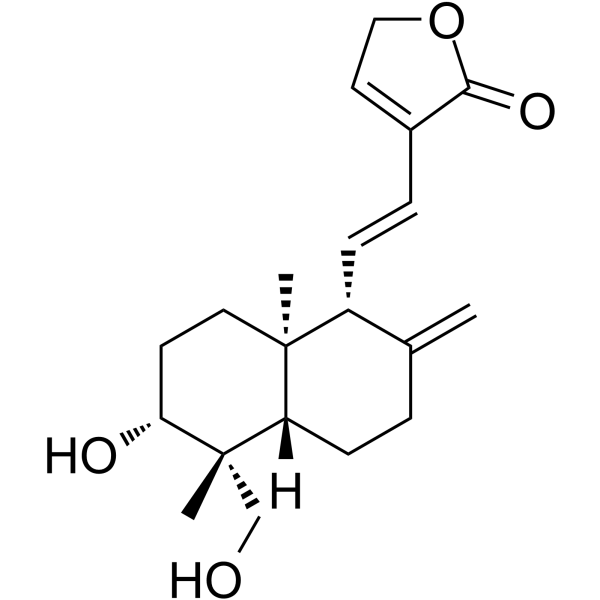
14-Deoxy-11,12-didehydroandrographolide
Based on 4 publication(s) in Google Scholar
14-Deoxy-11,12-didehydroandrographolide is an analogue of Andrographolide. 14-Deoxy-11,12-didehydroandrographolide inhibits NF-κB activation.
For research use only. We do not sell to patients.
- Purity : 99.93%
- CAS No.: 42895-58-9
- Formula: C20H28O4
- Molecular Weight:332.43
-
Storage:Powder -20°C, 3 years , 4°C, 2 years ; In solvent -80°C, 2 years , -20°C, 1 year

To place orders, for customer services and technical support, please contact: MedChemExpress USA
Tel: 609-228-6898 E-mail: [email protected] [email protected]


-
 Biological Activity
-
Chemical Information
-
Solvent & Solubility
- Protocol
- Purity & Documentation
- References
-
 Help & FAQs


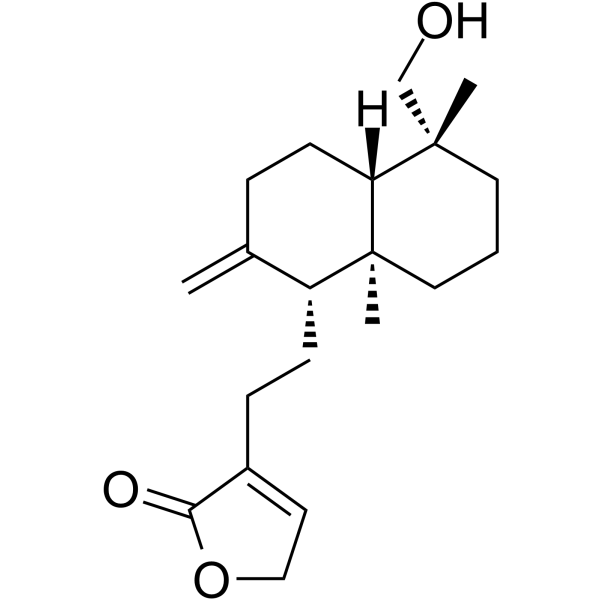
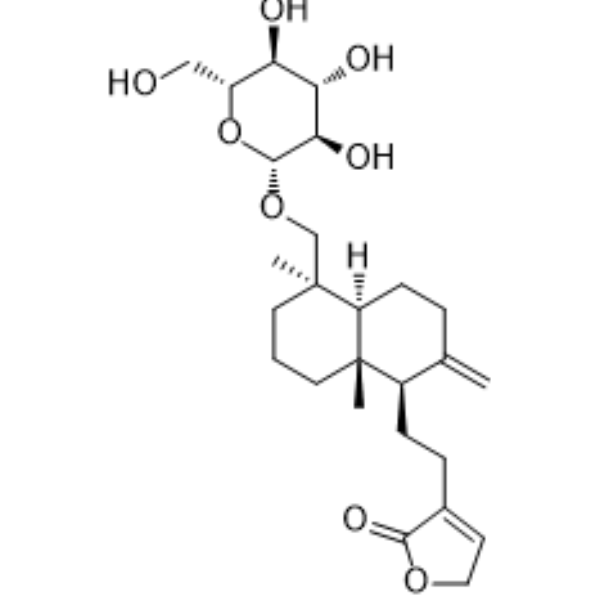
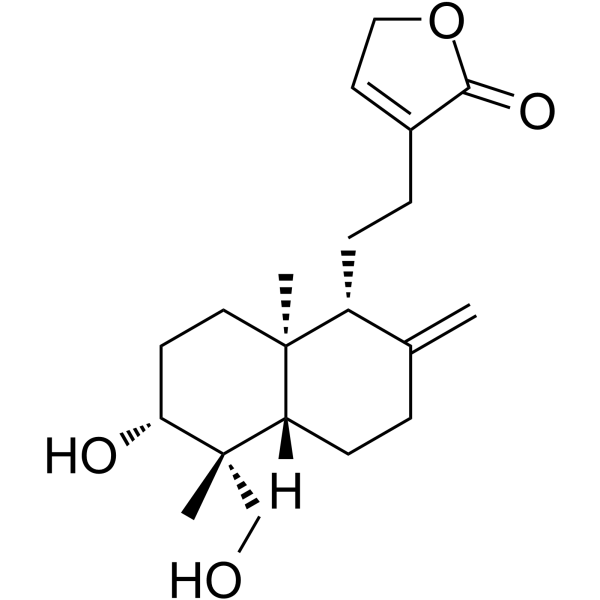



Publications Citing Use of MedChemExpress (MCE) 14-Deoxy-11,12-didehydroandrographolide
More

Biological Activity
Description
IC50 & Target
[1]|
NF-κB |
Cellular Effect
|
Cell Line

|
Type | Value | Description | References |
|---|---|---|---|---|
| A549 | ED50 |
28.15 μM
Compound: 2
|
Growth inhibition of human A549 cells after 72 hrs by SRB assay
Growth inhibition of human A549 cells after 72 hrs by SRB assay
|
[PMID: 29097170] |
| A549 | IC50 |
117.4 μg/mL
Compound: 2
|
Cytotoxicity against human A549 cells by MTT assay
Cytotoxicity against human A549 cells by MTT assay
|
10.1039/C4MD00566J |
| ACHN | IC50 |
327.77 μg/mL
Compound: 2
|
Cytotoxicity against human ACHN cells by MTT assay
Cytotoxicity against human ACHN cells by MTT assay
|
10.1039/C4MD00566J |
| B16 | IC50 |
25.17 μg/mL
Compound: 2
|
Cytotoxicity against mouse B16 cells by MTT assay
Cytotoxicity against mouse B16 cells by MTT assay
|
10.1039/C4MD00566J |
| BMMC | CC50 |
>30 μM
Compound: 2
|
Cytotoxicity against C57BL/6 mouse BMM cells assessed as reduction in cell viability measured after 48 hrs in presence of M-CSF by CCK8 assay
Cytotoxicity against C57BL/6 mouse BMM cells assessed as reduction in cell viability measured after 48 hrs in presence of M-CSF by CCK8 assay
|
[PMID: 33485256] |
| BMMC | IC50 |
8.34 μM
Compound: 2
|
Anti-osteoporosis activity in C57BL/6 mouse BMM cells assessed as inhibition of M-CSF/RANKL-induced osteoclastogenesis by measuring reduction in multinucleated TRAP+ cells incubated for 5 days with media replenishment for every 48 hrs measured by TRAP-sta
Anti-osteoporosis activity in C57BL/6 mouse BMM cells assessed as inhibition of M-CSF/RANKL-induced osteoclastogenesis by measuring reduction in multinucleated TRAP+ cells incubated for 5 days with media replenishment for every 48 hrs measured by TRAP-sta
|
[PMID: 33485256] |
| HEK293 | ED50 |
7.53 μM
Compound: 2
|
Growth inhibition of human HEK293 cells after 72 hrs by SRB assay
Growth inhibition of human HEK293 cells after 72 hrs by SRB assay
|
[PMID: 29097170] |
| HeLa | IC50 |
149.09 μg/mL
Compound: 2
|
Cytotoxicity against human HeLa cells by MTT assay
Cytotoxicity against human HeLa cells by MTT assay
|
10.1039/C4MD00566J |
| HepG2 2.2.15 | CC50 |
197 μM
Compound: 1a
|
Cytotoxicity against human HepG2.2.15 cells by MTT assay
Cytotoxicity against human HepG2.2.15 cells by MTT assay
|
[PMID: 24731274] |
| HepG2 2.2.15 | IC50 |
22.6 μM
Compound: 1a
|
Antiviral activity against HBV infected in human HepG2.2.15 cells assessed as inhibition of DNA replication
Antiviral activity against HBV infected in human HepG2.2.15 cells assessed as inhibition of DNA replication
|
[PMID: 24731274] |
| HL-60 | GI50 |
25.62 μM
Compound: 8
|
Antiproliferative activity against human HL60 cells by trypan blue assay
Antiproliferative activity against human HL60 cells by trypan blue assay
|
[PMID: 18357994] |
| HT-29 | ED50 |
28.55 μM
Compound: 2
|
Growth inhibition of human HT-29 cells after 72 hrs by SRB assay
Growth inhibition of human HT-29 cells after 72 hrs by SRB assay
|
[PMID: 29097170] |
| HuCC-A1 | ED50 |
35.83 μM
Compound: 2
|
Growth inhibition of human HuCCa1 cells after 72 hrs by SRB assay
Growth inhibition of human HuCCa1 cells after 72 hrs by SRB assay
|
[PMID: 29097170] |
| IEC-6 | IC50 |
169.36 μg/mL
Compound: 2
|
Cytotoxicity against rat IEC-6 cells by MTT assay
Cytotoxicity against rat IEC-6 cells by MTT assay
|
10.1039/C4MD00566J |
| KB | ED50 |
5.07 μM
Compound: 2
|
Growth inhibition of human KB cells after 72 hrs by SRB assay
Growth inhibition of human KB cells after 72 hrs by SRB assay
|
[PMID: 29097170] |
| MCF7 | ED50 |
18.67 μM
Compound: 2
|
Growth inhibition of human MCF7 cells after 72 hrs by SRB assay
Growth inhibition of human MCF7 cells after 72 hrs by SRB assay
|
[PMID: 29097170] |
| NIH3T3 | IC50 |
64.27 μM
Compound: 2
|
Antifibrotic activity against mouse NIH/3T3 cells assessed as inhibition of cell proliferation after 72 hrs by MTT assay
Antifibrotic activity against mouse NIH/3T3 cells assessed as inhibition of cell proliferation after 72 hrs by MTT assay
|
[PMID: 30144698] |
| P388 | ED50 |
35.01 μM
Compound: 2
|
Growth inhibition of mouse P388 cells after 72 hrs by SRB assay
Growth inhibition of mouse P388 cells after 72 hrs by SRB assay
|
[PMID: 29097170] |
| Vero | CC50 |
>200 μM
Compound: 2
|
Cytotoxicity against african green monkey Vero cells incubated for 96 hrs
Cytotoxicity against african green monkey Vero cells incubated for 96 hrs
|
[PMID: 36055002] |
In Vitro
14-deoxy-11,12-didehydroandrographolide, a naturally occurring noncytotoxic analogue of Andrographolide, effectively reduces Ovalbumin (OVA)-induced inflammatory cell recruitment into bronchoalveolar lavage (BAL) fluid, IL-4, IL-5, IL-13, and eotaxin production, serum IgE synthesis, pulmonary eosinophilia, mucus hypersecretion, mast cell degranulation, and airway hyper-responsiveness (AHR) in a mouse asthma model, probably via inhibition of NF-κB activity[1].
MedChemExpress (MCE) has not independently confirmed the accuracy of these methods. They are for reference only.
In Vivo
MedChemExpress (MCE) has not independently confirmed the accuracy of these methods. They are for reference only.


Chemical Information
-
CAS No. 42895-58-9
-
Appearance Solid
-
Molecular Weight 332.43
-
Formula C20H28O4
-
Color White to light yellow
-
SMILES
O=C1OCC=C1/C=C/[C@@H]2C(CC[C@]3([H])[C@](C)(CO)[C@H](O)CC[C@@]23C)=C
-
Synonyms
14-dehydro Andrographolide; AP10
-
Structure Classification
-
Initial Source
-
Shipping
Room temperature in continental US; may vary elsewhere.
-
Storage
Powder -20°C 3 years 4°C 2 years In solvent -80°C 2 years -20°C 1 year


Publications (4)
-
Journal Impact Factor
-
Most Recent
-
Eur J Pharmacol
Andrographolide analogues are agonists of the estrogen receptor alpha in vitro and in vivo. [Abstract]2026 Feb 28:1016:178641. PMID: 41643829 -
ChemMedChem
Andrographolide Derivatives Target the KEAP1/NRF2 Axis and Possess Potent Anti-SARS-CoV-2 Activity. [Abstract]2022 Mar 4;17(5):e202100732. PMID: 35099120 -
J Pharm Biomed Anal
Harmonizing international quality standards for Andrographis paniculata: A comparative analysis of content determination methods across pharmacopeias. [Abstract]2024 Mar 15:240:115924. PMID: 38142499 -


Solvent & Solubility
In Vitro:
DMSO : 110 mg/mL (330.90 mM; Need ultrasonic; Hygroscopic DMSO has a significant impact on the solubility of product, please use newly opened DMSO)
DMF : 100 mg/mL (300.82 mM; Need ultrasonic)
Please refer to the solubility information to select the appropriate solvent. Once prepared, please aliquot and store the solution to prevent product inactivation from repeated freeze-thaw cycles.
Storage method and period of stock solution: -80°C, 2 years; -20°C, 1 year. When stored at -80°C, please use it within 2 years. When stored at -20°C, please use it within 1 year.
Please refer to the solubility information to select the appropriate solvent. Once prepared, please aliquot and store the solution to prevent product inactivation from repeated freeze-thaw cycles.
Storage method and period of stock solution: -80°C, 2 years; -20°C, 1 year. When stored at -80°C, please use it within 2 years. When stored at -20°C, please use it within 1 year.
Concentration (start) × Volume (start) = Concentration (final) × Volume (final)
In Vivo:
Select the appropriate dissolution method based on your experimental animal and administration route.
- For the following dissolution methods, please ensure to first prepare a clear stock solution using an In Vitro approach and then sequentially add co-solvents:
- To ensure reliable experimental results, the clarified stock solution can be appropriately stored based on storage conditions. As for the working solution for In Vivo experiments, it is recommended to prepare freshly and use it on the same day.
- The percentages shown for the solvents indicate their volumetric ratio in the final prepared solution. If precipitation or phase separation occurs during preparation, heat and/or sonication can be used to aid dissolution.
Add each solvent one by one: 10% DMSO 40% PEG300 5% Tween-80 45% Saline
Solubility: ≥ 2.75 mg/mL (8.27 mM); Clear solution
This protocol yields a clear solution of ≥ 2.75 mg/mL (saturation unknown).
Taking 1 mL working solution as an example, add 100 μL DMSO stock solution (27.5 mg/mL) to 400 μL PEG300, and mix evenly; then add 50 μL Tween-80 and mix evenly; then add 450 μL Saline to adjust the volume to 1 mL.
Preparation of Saline: Dissolve 0.9 g sodium chloride in ddH₂O and dilute to 100 mL to obtain a clear Saline solution.
Add each solvent one by one: 10% DMSO 90% (20% SBE-β-CD in Saline)
Solubility: ≥ 2.75 mg/mL (8.27 mM); Clear solution
This protocol yields a clear solution of ≥ 2.75 mg/mL (saturation unknown).
Taking 1 mL working solution as an example, add 100 μL DMSO stock solution (27.5 mg/mL) to 900 μL 20% SBE-β-CD in Saline, and mix evenly.
Preparation of 20% SBE-β-CD in Saline (4°C, storage for one week): 2 g SBE-β-CD powder is dissolved in 10 mL Saline, completely dissolve until clear.
In Vivo Dissolution Calculator
Please enter the basic information of animal experiments:
-
-
-
-
Recommended: Prepare an additional quantity of animals to account for potential losses during experiments.
Please enter your animal formula composition:
-
%DMSO +
Recommended: Keep the proportion of DMSO in working solution below 2% if your animal is weak.
-
%+
-
+%Tween-80 + +
-
%Saline +
The co-solvents required include: DMSO, . All of co-solvents are available by MedChemExpress (MCE). , Tween 80. All of co-solvents are available by MedChemExpress (MCE).
Working solution concentration: 0.22 mg/mL
Method for preparing stock solution: mg drug dissolved in μL DMSO. Stock solution concentration: mg/mL.
1. Take μL DMSO stock solution;
2. Add μL .
μL , mix evenly;
3. Then add μL Tween 80, mix evenly;
4. Then add μL
Please ensure that the stock solution in the first step is dissolved to a clear state, and add co-solvents in sequence. You can use ultrasonic heating (ultrasonic cleaner, recommended frequency 20-40 kHz), vortexing, etc. to assist dissolution.

Protocol
Cell Assay[1]
A549 cells (3×10³/well), BEAS-2B cells (5×10³/well), and RBL-2H3 cells (3×10³/well) are seeded in flat-bottomed 96-well plates overnight and then incubated with increasing concentrations (3-120 μM) of 14-deoxy-11,12-didehydroandrographolide or Andrographolide for 24 and 48 h at 37°C. Cell viability is analyzed using the CellTiter 96 AQueous cell proliferation assay. This MTS assay is based on the ability of viable cells to convert a soluble tetrazolium salt to a colored formazan product. Absorbance is recorded at 490 nm[1].
MedChemExpress (MCE) has not independently confirmed the accuracy of these methods. They are for reference only.
Animal Administration[1]
Mice[1]
Female BALB/c mice, 6 to 8 weeks old, are sensitized and challenged with OVA. Briefly, mice are sensitized by ip injections of 20 μg of OVA and 4 mg of Al(OH)3 suspended in 0.1 mL of saline on days 0 and 14. On days 22, 23, and 24, mice are challenged with 1% OVA aerosol for 30 min. 14-deoxy-11,12-didehydroandrographolide (0.1, 0.5, and 1 mg/kg) or vehicle (1% DMSO) in 0.1 mL of saline is given by ip injections 2 h before and 10 h after each OVA aerosol challenge. Saline aerosol is used as a negative control.
MedChemExpress (MCE) has not independently confirmed the accuracy of these methods. They are for reference only.


Purity & Documentation
-
Data Sheet (279 KB)
-
SDS (252 KB)
- English - EN (252 KB)
- Français - FR (252 KB)
- Deutsch - DE (252 KB)
- Norwegian - NO (252 KB)
- Español - ES (252 KB)
- Swedish - SV (252 KB)
- Italian - IT (252 KB)
- Korean - KR (252 KB)
- Portuguese - PT (252 KB)
-
Handling Instructions (2659 KB)
References


Complete Stock Solution Preparation Table
Please refer to the solubility information to select the appropriate solvent. Once prepared, please aliquot and store the solution to prevent product inactivation from repeated freeze-thaw cycles.
Storage method and period of stock solution: -80°C, 2 years; -20°C, 1 year. When stored at -80°C, please use it within 2 years. When stored at -20°C, please use it within 1 year.
| Optional Solvent | Concentration Solvent Mass | 1 mg | 5 mg | 10 mg | 25 mg |
|---|---|---|---|---|---|
| DMF / DMSO | 1 mM | 3.0082 mL | 15.0408 mL | 30.0815 mL | 75.2038 mL |
| 5 mM | 0.6016 mL | 3.0082 mL | 6.0163 mL | 15.0408 mL | |
| 10 mM | 0.3008 mL | 1.5041 mL | 3.0082 mL | 7.5204 mL | |
| 15 mM | 0.2005 mL | 1.0027 mL | 2.0054 mL | 5.0136 mL | |
| 20 mM | 0.1504 mL | 0.7520 mL | 1.5041 mL | 3.7602 mL | |
| 25 mM | 0.1203 mL | 0.6016 mL | 1.2033 mL | 3.0082 mL | |
| 30 mM | 0.1003 mL | 0.5014 mL | 1.0027 mL | 2.5068 mL | |
| 40 mM | 0.0752 mL | 0.3760 mL | 0.7520 mL | 1.8801 mL | |
| 50 mM | 0.0602 mL | 0.3008 mL | 0.6016 mL | 1.5041 mL | |
| 60 mM | 0.0501 mL | 0.2507 mL | 0.5014 mL | 1.2534 mL | |
| 80 mM | 0.0376 mL | 0.1880 mL | 0.3760 mL | 0.9400 mL | |
| 100 mM | 0.0301 mL | 0.1504 mL | 0.3008 mL | 0.7520 mL |


14-Deoxy-11,12-didehydroandrographolide Related Classifications
HY-N1490 Related Classifications
 Powered by Bioz