



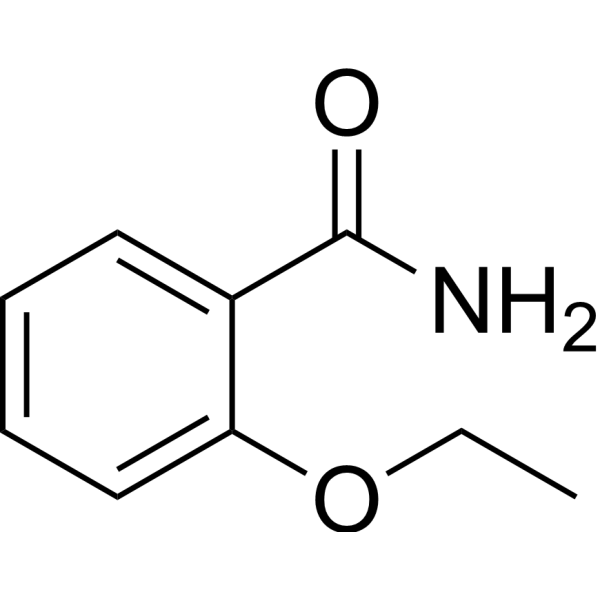
2-Ethoxybenzamide

Based on 1 Customer Validation
2-Ethoxybenzamide (Ethenzamide) is a nonsteroidal anti-inflammatory agent that shows analgesic and antipyretic effects. 2-Ethoxybenzamide induces melanin synthesis via cAMP response element-binding protein (CREB) phosphorylation. 2-Ethoxybenzamide can be used in the research of hypopigmentation and inflammation-related diseases.
For research use only. We do not sell to patients.
- Purity : 99.72%
- CAS No.: 938-73-8
- Formula: C9H11NO2
- Molecular Weight:165.19
-
Storage:Powder -20°C, 3 years , 4°C, 2 years ; In solvent -80°C, 2 years , -20°C, 1 year

To place orders, for customer services and technical support, please contact: MedChemExpress USA
Tel: 609-228-6898 E-mail: [email protected] [email protected]


-
 Biological Activity
-
Chemical Information
-
Solvent & Solubility
- Protocols
- Purity & Documentation
- References
-
 Help & FAQs


-

HY-B1428R
2-Ethoxybenzamide (Standard)Nonsteroidal Anti-inflammatory Agent -
HY-B0476
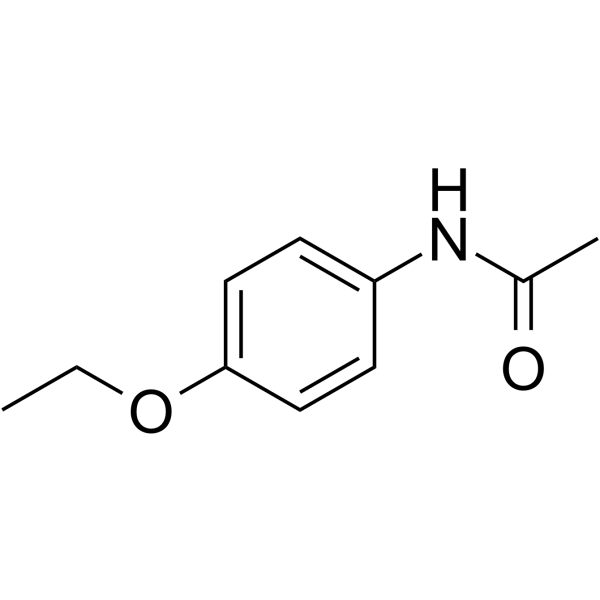
PhenacetinCOX-3 Inhibitor -
HY-B0476R
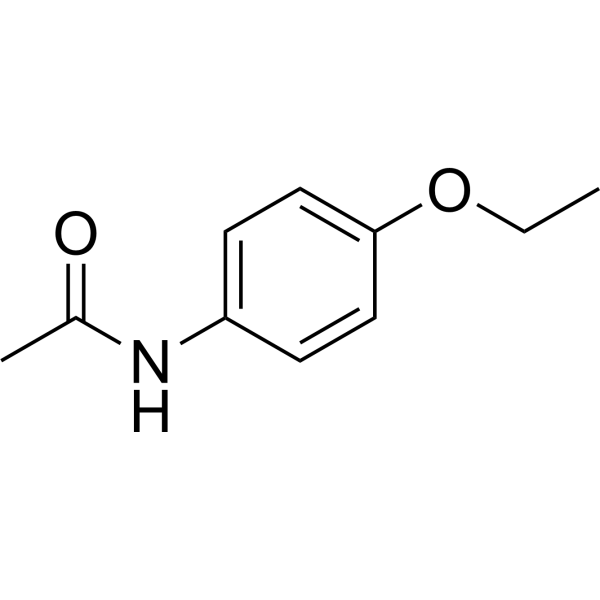
Phenacetin (Standard) -
HY-B0811
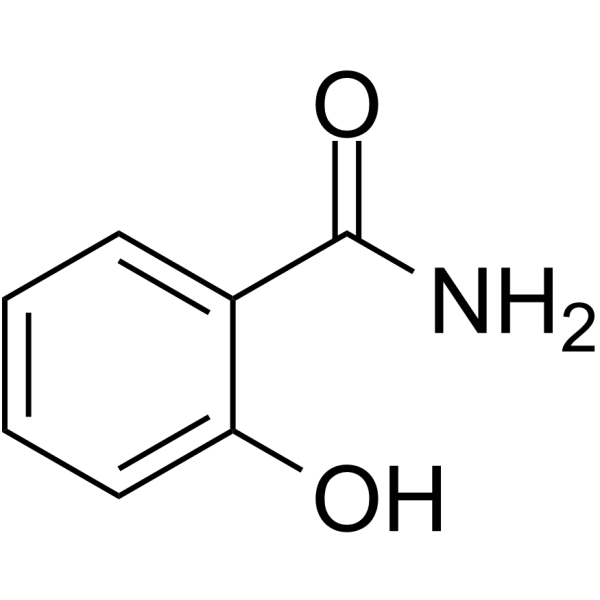
SalicylamideUDP-Glucuronosyltransferase Inhibitor -
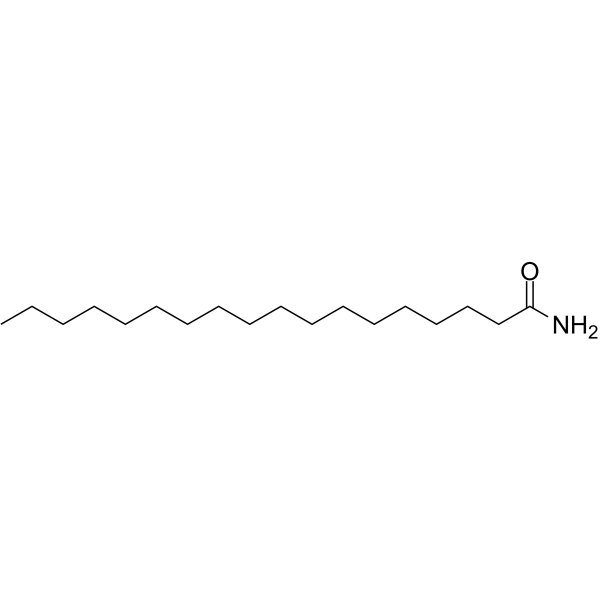
HY-W130610
StearamideCorrosion Inhibitor -
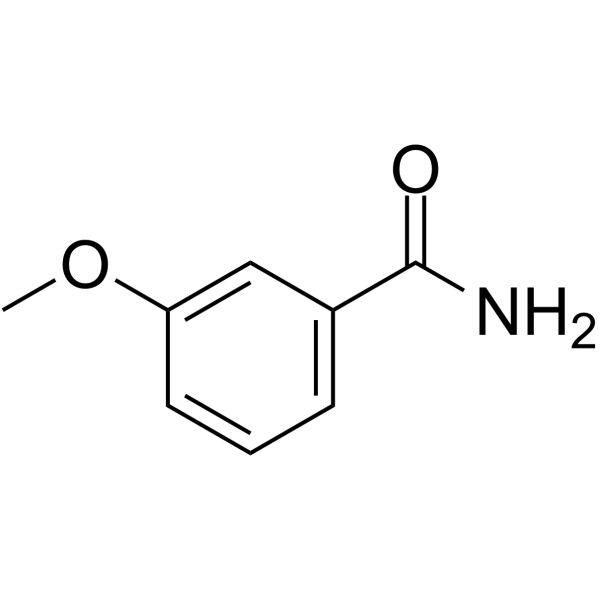
HY-121497
3-MethoxybenzamideADPRTs Inhibitor -

HY-W015972
Propionamide -
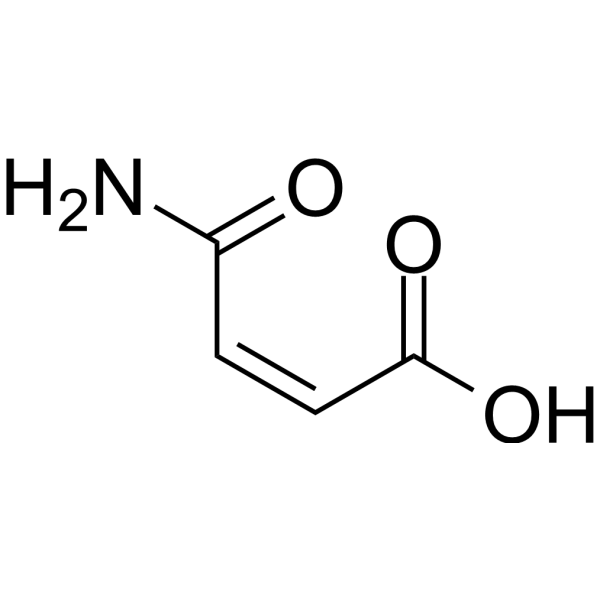
HY-128750
(Z)-4-Amino-4-oxobut-2-enoic acidEndogenous Metabolite -

HY-W130610R
Stearamide (Standard) -

HY-B0811R
Salicylamide (Standard)UDP-Glucuronosyltransferase Inhibitor -

HY-121497R
3-Methoxybenzamide (Standard)ADPRTs Inhibitor


Biological Activity
Description
In Vitro
2-Ethoxybenzamide (125-500 μM; 24-72 h) can increase the ROS level, enhance the expression of melanogenesis-related genes, and promote melanin synthesis in B16F1 murine melanoma cells. The mechanism involves the phosphorylation of ERK/CREB[1].
MedChemExpress (MCE) has not independently confirmed the accuracy of these methods. They are for reference only. Further protocols information, click here.
-
Cell Line:B16F1 melanoma cells
-
Concentration:0, 125, 250 and 500 μM
-
Incubation Time:72 h
-
Result:Significantly increased the level of tyrosinase.
Slightly increased TRP-1 protein level and did not affect TRP-2 expression.


Chemical Information
-
CAS No. 938-73-8
-
Appearance Solid
-
Molecular Weight 165.19
-
Formula C9H11NO2
-
Color White to off-white
-
SMILES
O=C(N)C1=CC=CC=C1OCC
-
Synonyms
Ethenzamide
-
Shipping
Room temperature in continental US; may vary elsewhere.
-
Storage
Powder -20°C 3 years 4°C 2 years In solvent -80°C 2 years -20°C 1 year


Solvent & Solubility
In Vitro:
DMSO : ≥ 47 mg/mL (284.52 mM; Hygroscopic DMSO has a significant impact on the solubility of product, please use newly opened DMSO)
* "≥" means soluble, but saturation unknown.
Please refer to the solubility information to select the appropriate solvent. Once prepared, please aliquot and store the solution to prevent product inactivation from repeated freeze-thaw cycles.
Storage method and period of stock solution: -80°C, 2 years; -20°C, 1 year. When stored at -80°C, please use it within 2 years. When stored at -20°C, please use it within 1 year.
Please refer to the solubility information to select the appropriate solvent. Once prepared, please aliquot and store the solution to prevent product inactivation from repeated freeze-thaw cycles.
Storage method and period of stock solution: -80°C, 2 years; -20°C, 1 year. When stored at -80°C, please use it within 2 years. When stored at -20°C, please use it within 1 year.
Concentration (start) × Volume (start) = Concentration (final) × Volume (final)

Protocols
-
Kinase activity and phosphorylation assays
Kinase activity assays measure the ability of kinases to transfer phosphate groups from ATP to specific substrates, while phosphorylation assays detect the presence and levels of phosphorylated proteins. Common methods include radiolabeled ATP incorporation (e. g. ,), ADP release detection via bioluminescence (e. g. ,[3]), enzyme-linked immunosorbent assays (ELISA) for phospho-specific epitopes (e. g. ,[6]), and microtiter-based formats for high-throughput screening (e. g. ,[8]). The ADP-Glo assay quantifies kinase activity by measuring ADP produced during phosphorylation using a luciferase-based system. Radiometric assays involve autoradiography or scintillation counting after incorporation of 32P-labeled ATP into substrate proteins. ELISA-based approaches rely on phospho-specific antibodies to detect activated kinases in cell lysates or purified samples.
-
Western Blot
Western blotting (WB) is a commonly used experimental method in molecular biology, biochemistry, and immunogenetics for identifying and quantifying target proteins. It combines gel electrophoresis with immunoassay, enabling researchers to analyze protein expression, post-translational modifications, and molecular weight.
-
Research Protocol for Inflammation-related Diseases
The NLRP3 inflammasome is a cytosolic innate immune signaling platform that integrates priming signals and danger-signal activation to promote caspase-1 activation, maturation of IL-1β and IL-18, and gasdermin D-mediated pyroptotic cell death. The core experimental logic is to determine whether inflammatory disease phenotypes are driven by increased NLRP3 expression, ASC-containing inflammasome assembly, caspase-1 cleavage, GSDMD cleavage, and extracellular release of IL-1β/IL-18 rather than by nonspecific cell injury alone. The pathway is strongly linked to inflammation-related disease phenotypes because monosodium urate crystals activate NALP3/NLRP3 inflammasome signaling in gout-like crystal inflammation, cholesterol crystals activate NLRP3 inflammasomes in atherogenesis models, and DSS-induced intestinal inflammation has been reported to involve NLRP3 inflammasome activity. However, experimental colitis studies also show context-dependent protective effects of NLRP3 inflammasome co
-
Protocol for Kinase activity and phosphorylation assays
Kinase activity assays measure transfer of phosphate from ATP to a protein or peptide substrate, generating phosphorylated substrate, ADP, or incorporated radiolabeled phosphate as the readout; phosphorylation assays measure site-specific phosphorylation in cells or tissues as a proxy for kinase-pathway activation, inhibition, or substrate regulation. Phosphorylation can be detected by phospho-specific Western blot, immunoprecipitation kinase assay, phospho-immunofluorescence, phospho-flow cytometry, luminescent ADP detection, radiolabeled ATP incorporation, or reporter-based pathway assays, and these readouts can be applied to cancer cells, primary neurons, mouse tumors, organoids, inflammatory macrophages, ferroptosis studies, and mitophagy studies when the kinase target is biologically relevant.


Purity & Documentation
-
Data Sheet (276 KB)
-
SDS (396 KB)
- English - EN (396 KB)
- Français - FR (396 KB)
- Deutsch - DE (396 KB)
- Norwegian - NO (396 KB)
- Español - ES (396 KB)
- Swedish - SV (396 KB)
- Italian - IT (396 KB)
- Korean - KR (396 KB)
- Portuguese - PT (396 KB)
-
Handling Instructions (2659 KB)
References


Complete Stock Solution Preparation Table
Please refer to the solubility information to select the appropriate solvent. Once prepared, please aliquot and store the solution to prevent product inactivation from repeated freeze-thaw cycles.
Storage method and period of stock solution: -80°C, 2 years; -20°C, 1 year. When stored at -80°C, please use it within 2 years. When stored at -20°C, please use it within 1 year.
| Optional Solvent | Concentration Solvent Mass | 1 mg | 5 mg | 10 mg | 25 mg |
|---|---|---|---|---|---|
| DMSO | 1 mM | 6.0536 mL | 30.2682 mL | 60.5364 mL | 151.3409 mL |
| 5 mM | 1.2107 mL | 6.0536 mL | 12.1073 mL | 30.2682 mL | |
| 10 mM | 0.6054 mL | 3.0268 mL | 6.0536 mL | 15.1341 mL | |
| 15 mM | 0.4036 mL | 2.0179 mL | 4.0358 mL | 10.0894 mL | |
| 20 mM | 0.3027 mL | 1.5134 mL | 3.0268 mL | 7.5670 mL | |
| 25 mM | 0.2421 mL | 1.2107 mL | 2.4215 mL | 6.0536 mL | |
| 30 mM | 0.2018 mL | 1.0089 mL | 2.0179 mL | 5.0447 mL | |
| 40 mM | 0.1513 mL | 0.7567 mL | 1.5134 mL | 3.7835 mL | |
| 50 mM | 0.1211 mL | 0.6054 mL | 1.2107 mL | 3.0268 mL | |
| 60 mM | 0.1009 mL | 0.5045 mL | 1.0089 mL | 2.5223 mL | |
| 80 mM | 0.0757 mL | 0.3784 mL | 0.7567 mL | 1.8918 mL | |
| 100 mM | 0.0605 mL | 0.3027 mL | 0.6054 mL | 1.5134 mL |


2-Ethoxybenzamide Related Classifications
HY-B1428 Related Classifications
 Powered by Bioz