



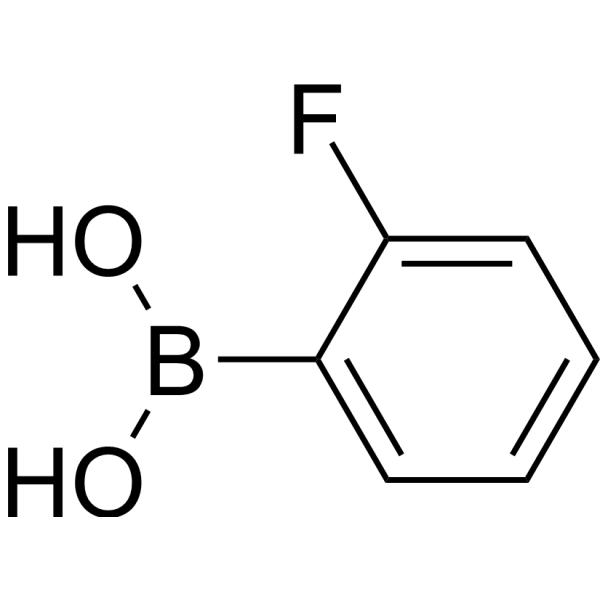
2-Fluorophenylboronic acid

Based on 1 Customer Validation
2-Fluorophenylboronic acid is an organic synthesis intermediate belonging to the fluorinated arylboronic acid class. The electron-withdrawing fluorine substituent in 2-Fluorophenylboronic acid reduces its pKa, thereby enhancing boronate bond formation with diols. 2-Fluorophenylboronic acid serves as a key synthetic intermediate for inhibitors of Plasmodium phosphatidylinositol 4-kinase IIIβ (PI4K). 2-Fluorophenylboronic acid can also be used to functionalize linear polyglycerols for constructing dual dynamic covalent cross-linked hydrogels that support 3D tumor spheroid culture of various cancer cells. 2-Fluorophenylboronic acid is applicable to research related to malaria and tumors.
For research use only. We do not sell to patients.
- Purity : 99.99%
- CAS No.: 1993-03-9
- Formula: C6H6BFO2
- Molecular Weight:139.92
-
Storage:Powder -20°C, 3 years , 4°C, 2 years ; In solvent -80°C, 6 months , -20°C, 1 month

To place orders, for customer services and technical support, please contact: MedChemExpress USA
Tel: 609-228-6898 E-mail: [email protected] [email protected]


-
 Biological Activity
-
Chemical Information
-
Solvent & Solubility
- Protocols
- Purity & Documentation
- References
-
 Help & FAQs


-
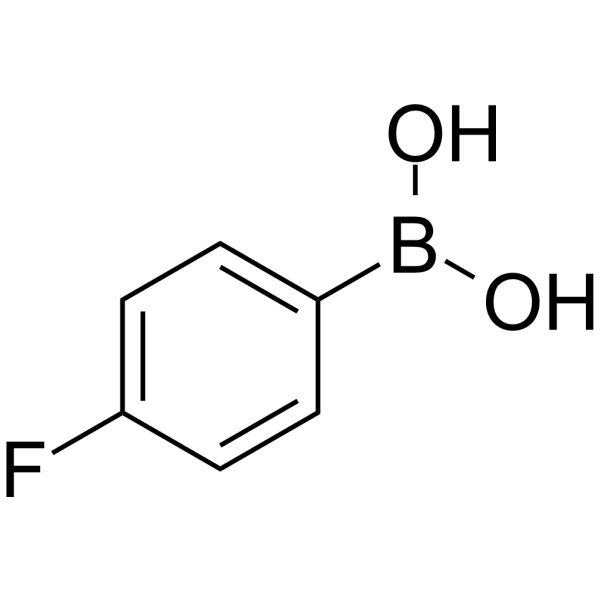
HY-I0201
4-Fluorobenzeneboronic acidSulfonamide Intermediate -
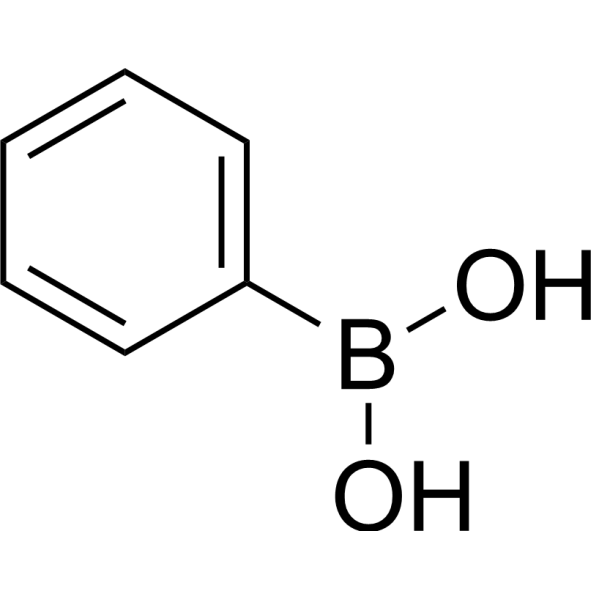
HY-W001090
Phenylboronic acidBiochemical Reagent -
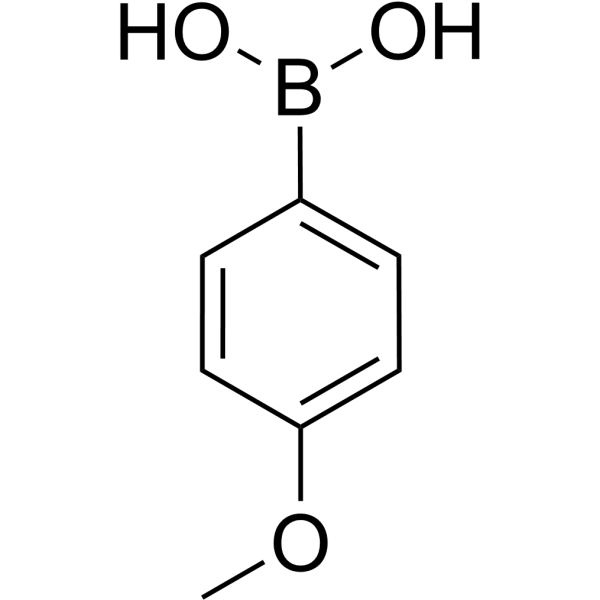
HY-W002177
4-Methoxyphenylboronic acidBiochemical Reagent -
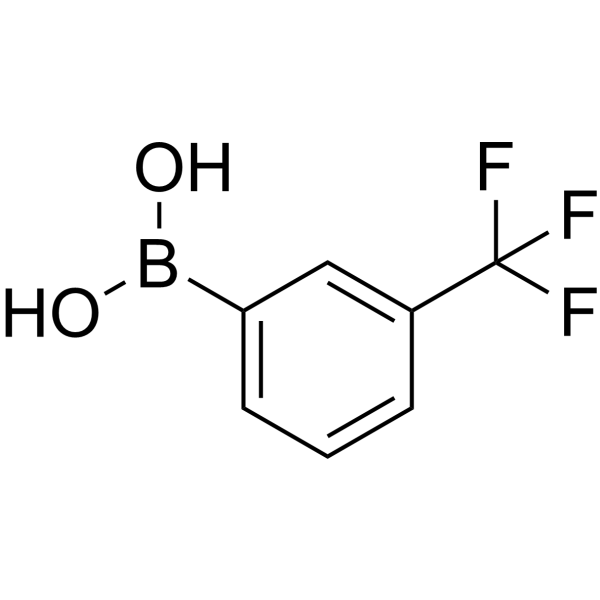
HY-32902
3-(Trifluoromethyl)phenylboronic acidBiochemical Reagent -
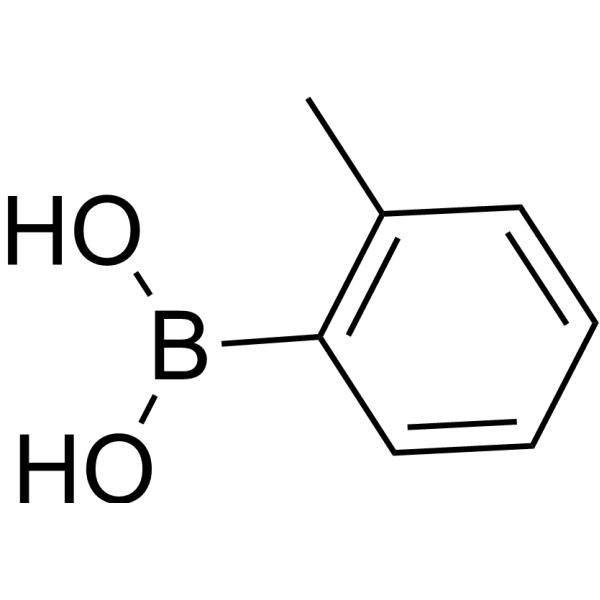
HY-W001232
2-Tolylboronic acidBiochemical Reagent -
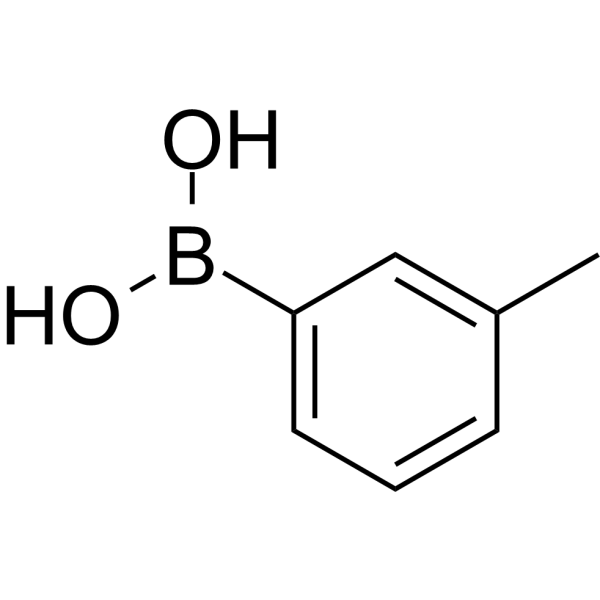
HY-W007381
3-Tolylboronic acidBiochemical Reagent -
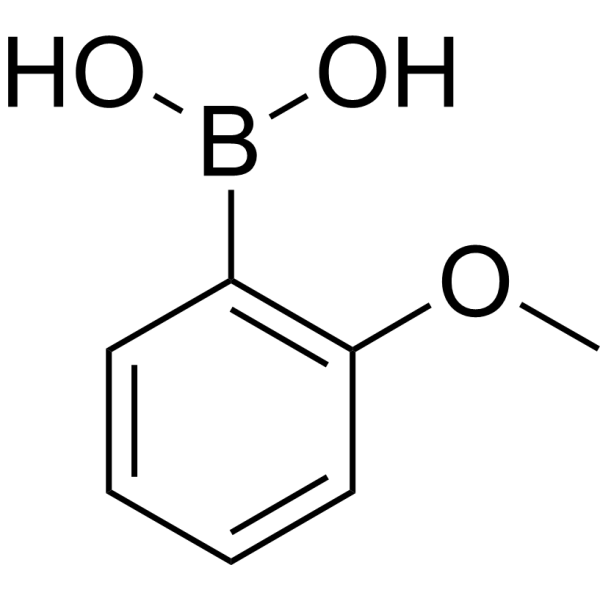
HY-W002569
2-Methoxyphenylboronic acidBiochemical Reagent -
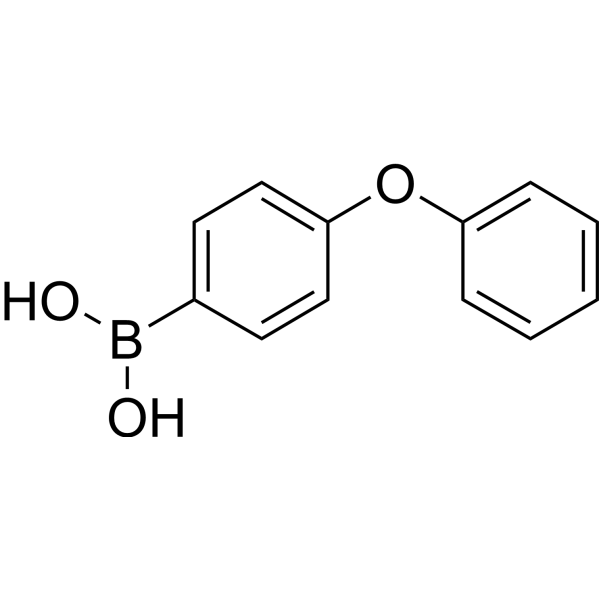
HY-76584
4-Phenoxyphenylboronic acidBiochemical Reagent -
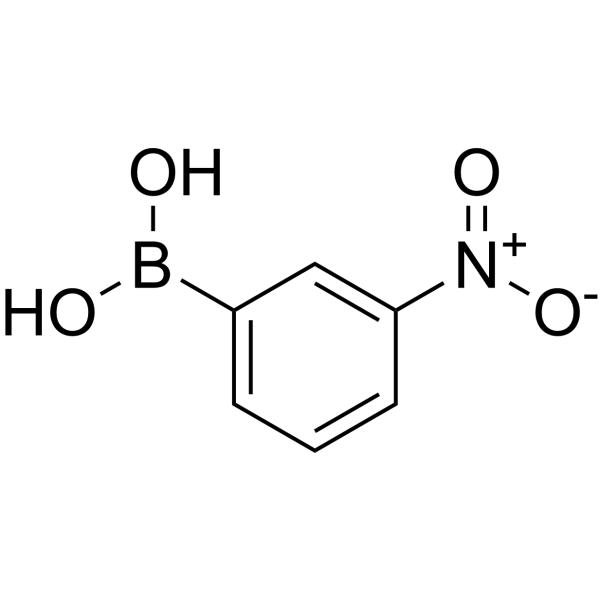
HY-W007413
3-Nitrophenylboronic acidBiochemical Reagent -
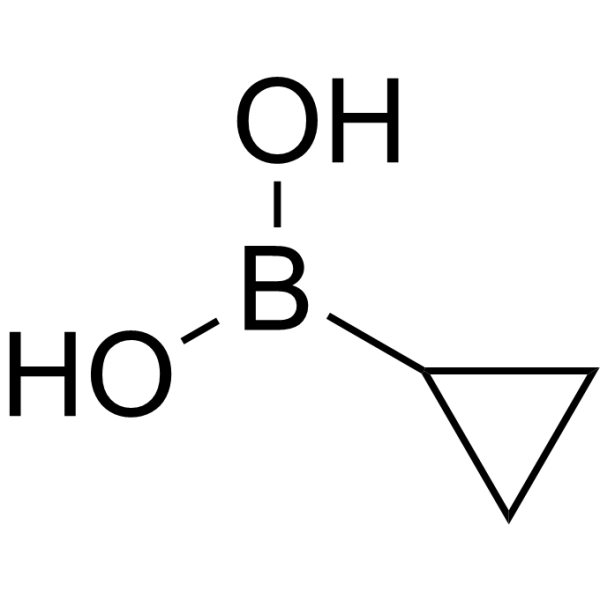
HY-59219
Cyclopropylboronic acidIntermediate -
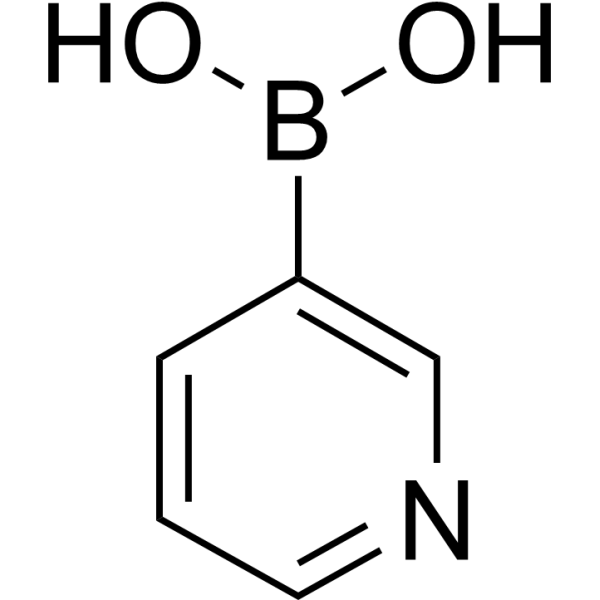
HY-75129
Pyridin-3-ylboronic acidSynthetic Intermediate -
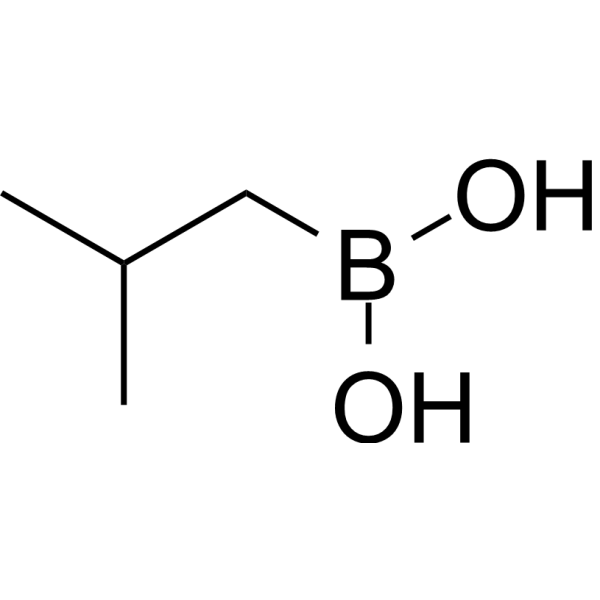
HY-W000978
2-Methylpropylboronic acidBiochemical Reagent


Biological Activity
Description
In Vitro
When 2-Fluorophenylboronic acid-functionalized linear polyglycerol (lPG) is mixed with oxidized hyperbranched polyglycerol (hbPG-CHO), a dynamic hydrogel (5 wt/v%) forms via boronate ester bonds and Schiff base interactions. Its shear modulus increases with the rising number of phenylboronic acid groups, and it supports the in-situ encapsulation of various cancer cell lines and the formation of 3D tumor spheroids[1].
2-Fluorophenylboronic acid can couple with brominated imidazo[4,5-c]quinolin-2-one in the Suzuki-Miyaura coupling reaction to generate the 8-(2-fluorophenyl)-substituted PI4K inhibitor[2].
MedChemExpress (MCE) has not independently confirmed the accuracy of these methods. They are for reference only. Further protocols information, click here.


Chemical Information
-
CAS No. 1993-03-9
-
Appearance Solid
-
Molecular Weight 139.92
-
Formula C6H6BFO2
-
Color White to off-white
-
SMILES
FC1=CC=CC=C1B(O)O
-
Shipping
Room temperature in continental US; may vary elsewhere.
-
Storage
Powder -20°C 3 years 4°C 2 years In solvent -80°C 6 months -20°C 1 month


Solvent & Solubility
In Vitro:
DMSO : 100 mg/mL (714.69 mM; Need ultrasonic; Hygroscopic DMSO has a significant impact on the solubility of product, please use newly opened DMSO)
Please refer to the solubility information to select the appropriate solvent. Once prepared, please aliquot and store the solution to prevent product inactivation from repeated freeze-thaw cycles.
Storage method and period of stock solution: -80°C, 6 months; -20°C, 1 month. When stored at -80°C, please use it within 6 months. When stored at -20°C, please use it within 1 month.
Please refer to the solubility information to select the appropriate solvent. Once prepared, please aliquot and store the solution to prevent product inactivation from repeated freeze-thaw cycles.
Storage method and period of stock solution: -80°C, 6 months; -20°C, 1 month. When stored at -80°C, please use it within 6 months. When stored at -20°C, please use it within 1 month.
Concentration (start) × Volume (start) = Concentration (final) × Volume (final)

Protocols
-
Suspension Spheroid Formation (Low-Adhesion/Forced Aggregation)
Suspension spheroid formation by low-adhesion or forced aggregation is a scaffold-free 3D culture method in which cells are prevented from attaching to plastic and are guided to interact with each other, forming compact multicellular aggregates through cell-cell adhesion, gravity-driven settling, microwell confinement, or centrifugation-assisted aggregation. The method detects the capacity of a cell population to self-assemble into spheroids, and the main readouts are spheroid formation efficiency, morphology, compactness, projected area or diameter, circularity, viability, proliferation, and experimental responses such as drug sensitivity. Classic implementations include hanging drops, agarose or hydrogel microwells, ultra-low-attachment round-bottom wells, and centrifugation-assisted aggregation in non-adherent wells. Low-adhesion culture shifts the system away from cell-substrate adhesion and toward cell-cell adhesion, while round-bottom or microwell geometry concentrates cells into
-
Hanging Drop Spheroid Culture
Hanging drop spheroid culture is a scaffold-free 3D culture method in which a small droplet of cell suspension is inverted so that suspended cells sediment by gravity toward the lowest point of the drop, aggregate, and form a multicellular spheroid with direct cell-cell contact. Spheroids generated by this method are used to study 3D cell cohesion, cell-ECM interactions, drug response, co-culture organization, and tumor-like microenvironmental behavior. The primary readouts are spheroid formation efficiency, spheroid size, circularity or compactness, viability, and treatment response; these can be measured by bright-field microscopy, fluorescence viability staining, ATP-, fluorescence-, or colorimetric-based assays, and image-based diameter or volume calculations.
-
3D Tumor Spheroid Invasion Assay
3D tumor spheroid invasion assay measures outward tumor-cell movement from a compact multicellular spheroid into a surrounding extracellular matrix, producing image-based readouts such as invasion area, invasion distance, cell dispersion, or time-resolved cell movement. The method models tumor-cell interaction with matrix components in three dimensions and is used to study invasive phenotypes in cancer models including glioblastoma, squamous cell carcinoma, breast cancer, prostate cancer, ovarian cancer, and other solid tumor systems.


Purity & Documentation
-
Data Sheet (286 KB)
-
SDS (394 KB)
- English - EN (394 KB)
- Français - FR (394 KB)
- Deutsch - DE (394 KB)
- Norwegian - NO (394 KB)
- Español - ES (394 KB)
- Swedish - SV (394 KB)
- Italian - IT (394 KB)
- Korean - KR (394 KB)
- Portuguese - PT (394 KB)
-
Handling Instructions (2659 KB)
References
[1]. Feng J, et al. Dual-Dynamic Covalently Cross-Linked Polyglycerol Hydrogels for Tumor Spheroid Culture. Biomacromolecules. 2025 Jun 09;26(6):3331-3343. [Content Brief]
[2]. Dziwornu GA, et al. Novel Inhibitors of Phosphatidylinositol 4-kinase IIIβ with Low Propensity for Resistance: Life Cycle Stage Activity and Efficacy in a Humanized Mouse Malaria Infection Model. Journal of medicinal chemistry. 2025 Aug 28;68(16):17736-17751. [Content Brief]


Complete Stock Solution Preparation Table
Please refer to the solubility information to select the appropriate solvent. Once prepared, please aliquot and store the solution to prevent product inactivation from repeated freeze-thaw cycles.
Storage method and period of stock solution: -80°C, 6 months; -20°C, 1 month. When stored at -80°C, please use it within 6 months. When stored at -20°C, please use it within 1 month.
| Optional Solvent | Concentration Solvent Mass | 1 mg | 5 mg | 10 mg | 25 mg |
|---|---|---|---|---|---|
| DMSO | 1 mM | 7.1469 mL | 35.7347 mL | 71.4694 mL | 178.6735 mL |
| 5 mM | 1.4294 mL | 7.1469 mL | 14.2939 mL | 35.7347 mL | |
| 10 mM | 0.7147 mL | 3.5735 mL | 7.1469 mL | 17.8674 mL | |
| 15 mM | 0.4765 mL | 2.3823 mL | 4.7646 mL | 11.9116 mL | |
| 20 mM | 0.3573 mL | 1.7867 mL | 3.5735 mL | 8.9337 mL | |
| 25 mM | 0.2859 mL | 1.4294 mL | 2.8588 mL | 7.1469 mL | |
| 30 mM | 0.2382 mL | 1.1912 mL | 2.3823 mL | 5.9558 mL | |
| 40 mM | 0.1787 mL | 0.8934 mL | 1.7867 mL | 4.4668 mL | |
| 50 mM | 0.1429 mL | 0.7147 mL | 1.4294 mL | 3.5735 mL | |
| 60 mM | 0.1191 mL | 0.5956 mL | 1.1912 mL | 2.9779 mL | |
| 80 mM | 0.0893 mL | 0.4467 mL | 0.8934 mL | 2.2334 mL | |
| 100 mM | 0.0715 mL | 0.3573 mL | 0.7147 mL | 1.7867 mL |


2-Fluorophenylboronic acid Related Classifications
HY-W001240 Related Classifications
 Powered by Bioz